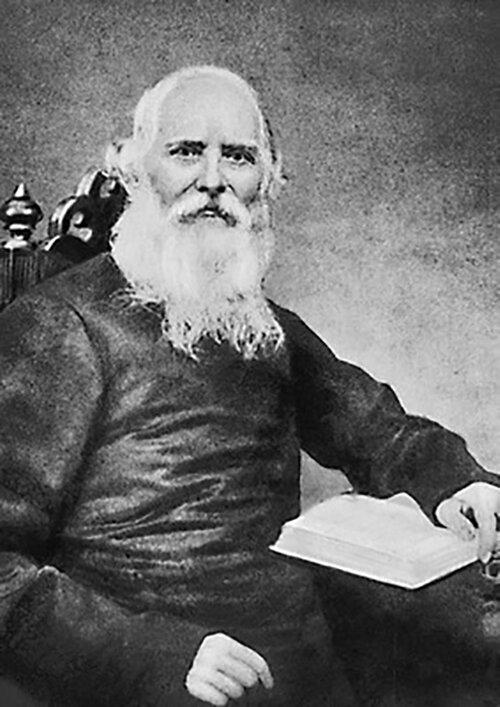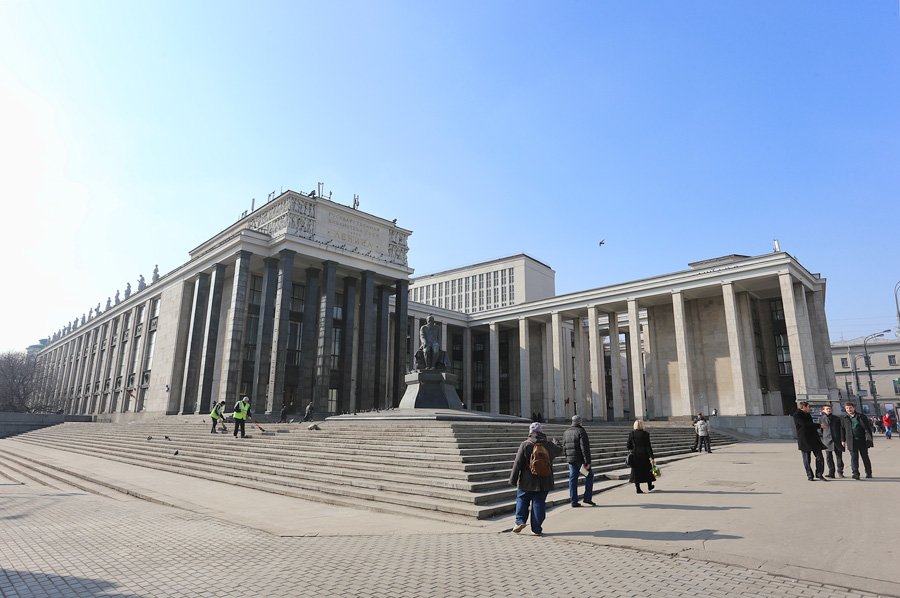
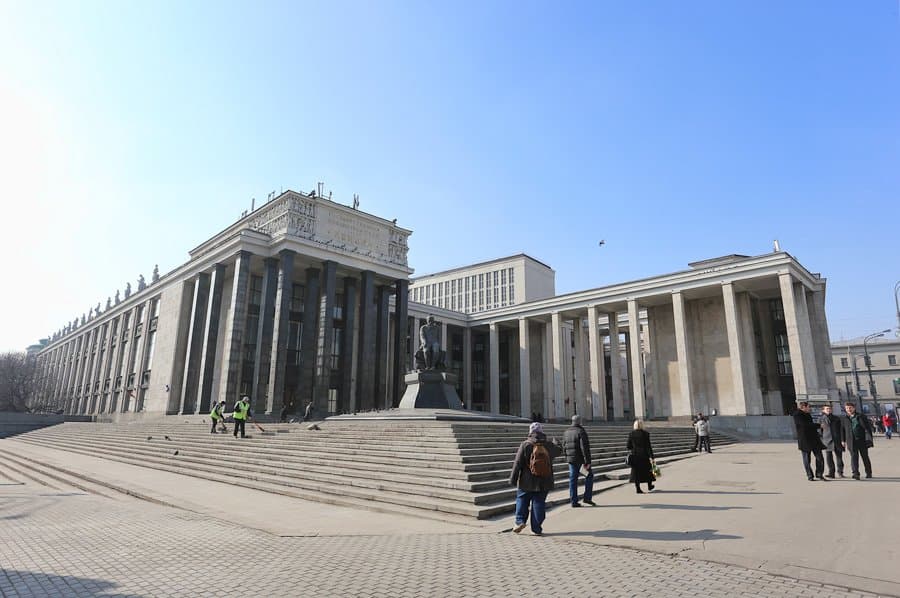
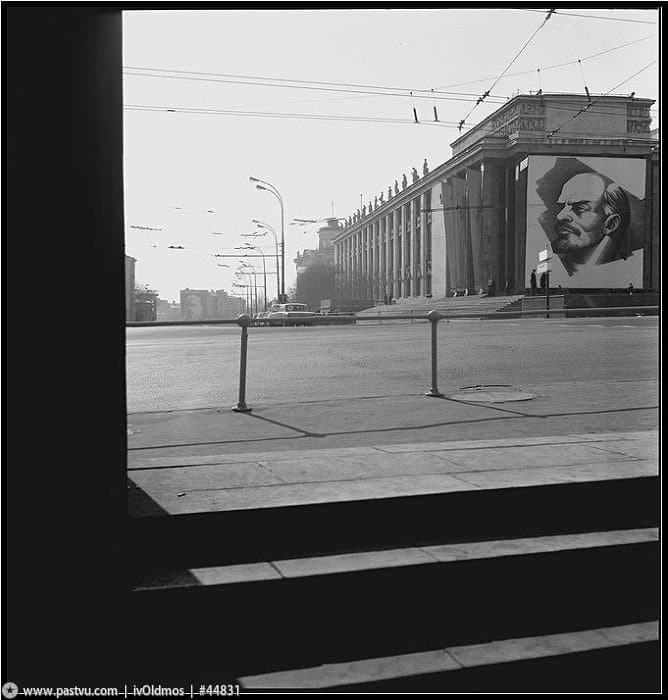
История создания комплекса зданий Российской государственной библиотеки (до 1992 г. — Государственной библиотеки СССР им. Владимира Ильича Ленина) началась в конце 1920-х годов. В архитектурном конкурсе победили академик архитектуры Владимир Алексеевич Щуко и Владимир Георгиевич Гельфрейх.
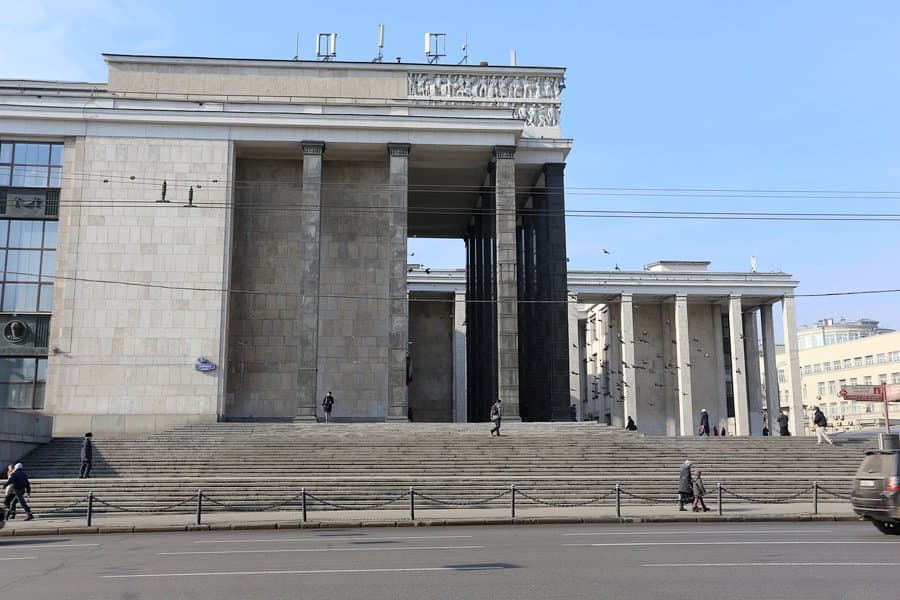
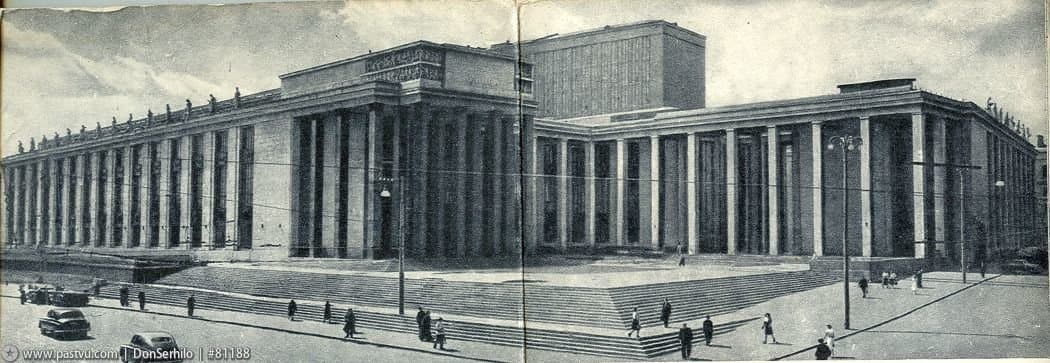
Архитекторы спроектировали сложный комплекс из шести зданий, образующий систему дворов и колоннад. Замысел предполагал создание своеобразного «пролетарского форума» в самом сердце Москвы, напротив Кремля. При этом зодчие проявили удивительное чувство такта: самый высокий корпус — девятнадцатиэтажное книгохранилище — был отодвинут вглубь участка, чтобы не соперничать с кремлёвскими башнями. В работе над Библиотекой Щуко и Гельфрейх постарались совместить общее решение в духе конструктивизма с приёмами исторической архитектуры во внешнем оформлении. Строительство комплекса началось в 1928 году и растянулось на три десятилетия, завершившись лишь в конце 1950-х годов.
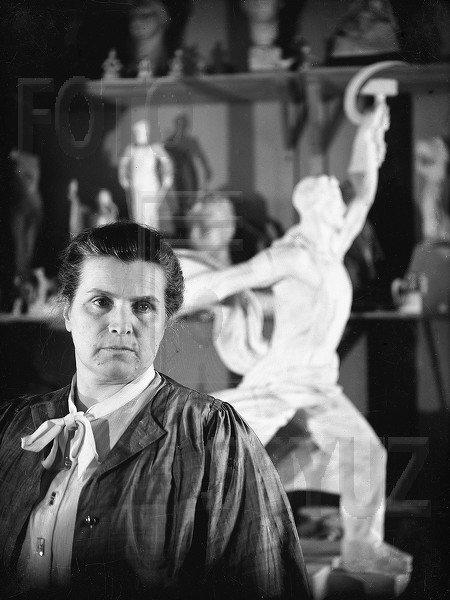
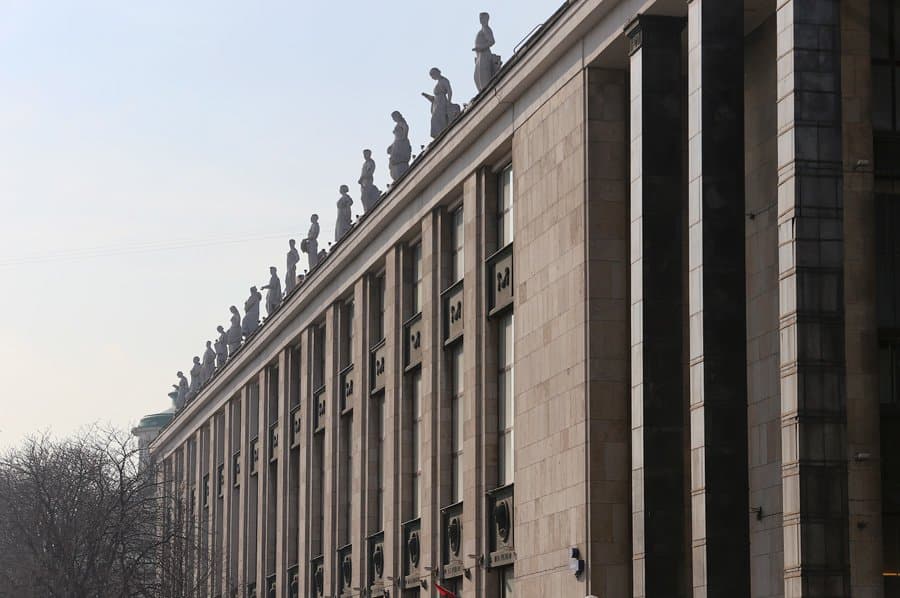
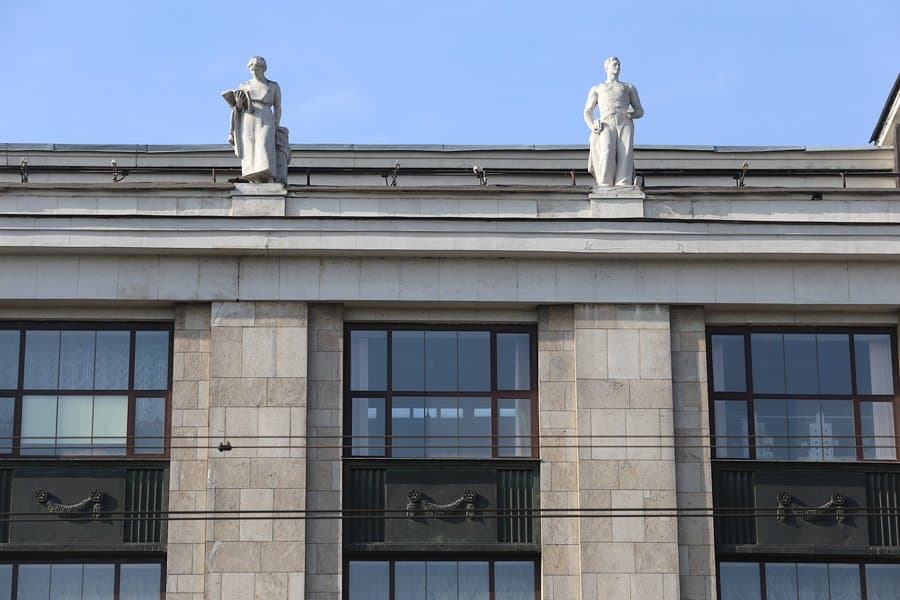
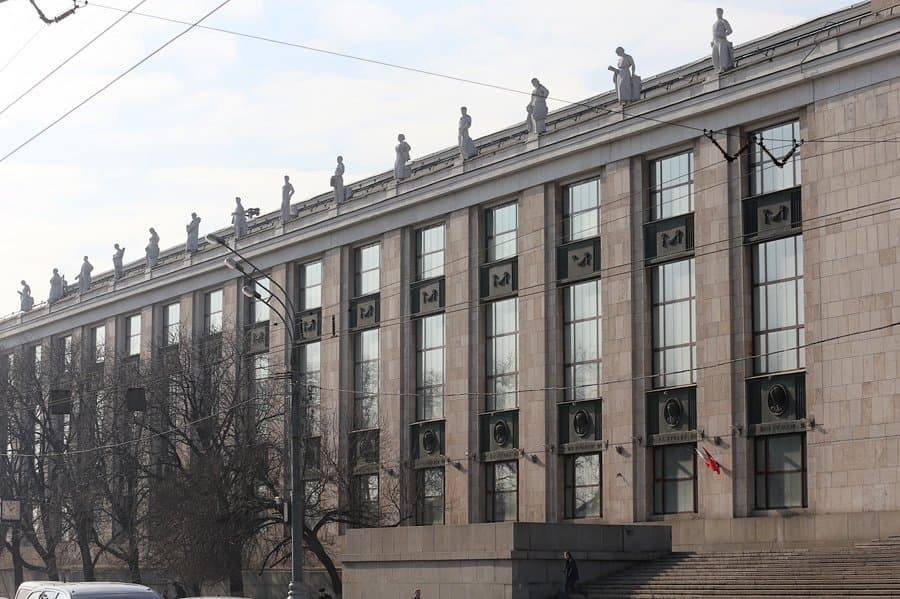
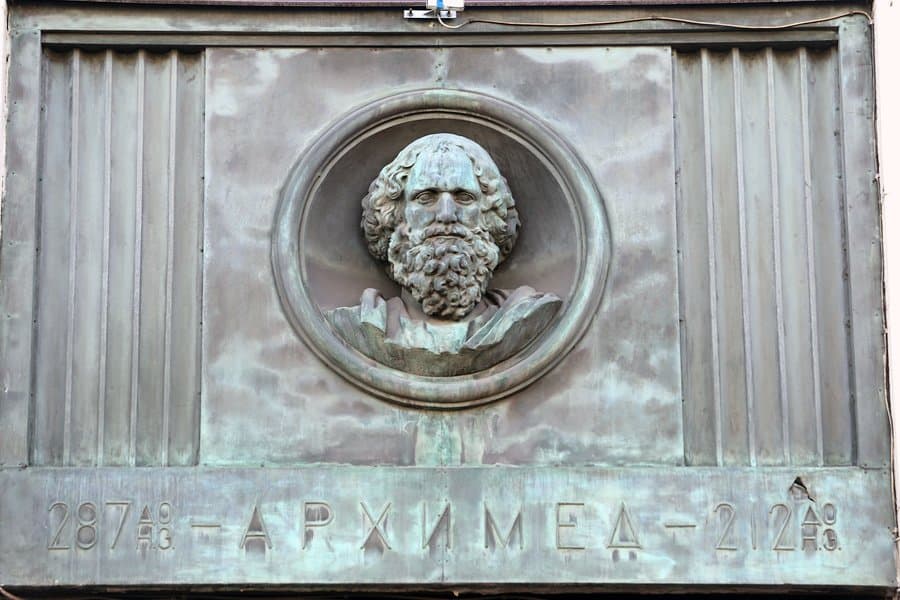
Здание библиотеки органично вписалось в ансамбль центра Москвы, став одним из символов советской эпохи. Его фасады украсил двухрядный скульптурный фриз, напоминающий о древнеримских традициях. На крыше здания можно увидеть 22 скульптуры. Они сделаны из бетона, их высота около трех метров, и у них есть общее название: «Социалистический труд и знание». Над их созданием трудились выдающиеся скульпторы: Вера Игнатьевна Мухина, Матвей Генрихович Манизер, Надежда Васильевна Крандиевская и др. Круглые медальоны-«тондо» с портретами писателей расположены в простенках между окнами вдоль двух стен.
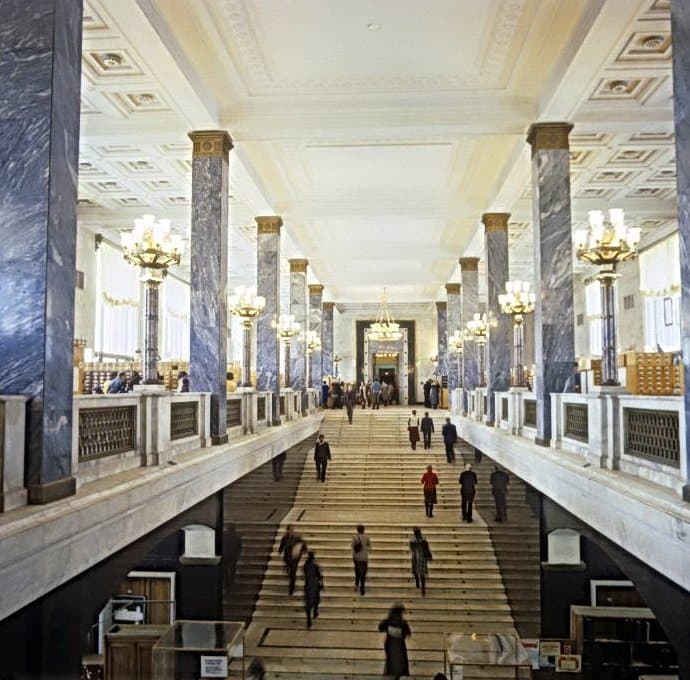
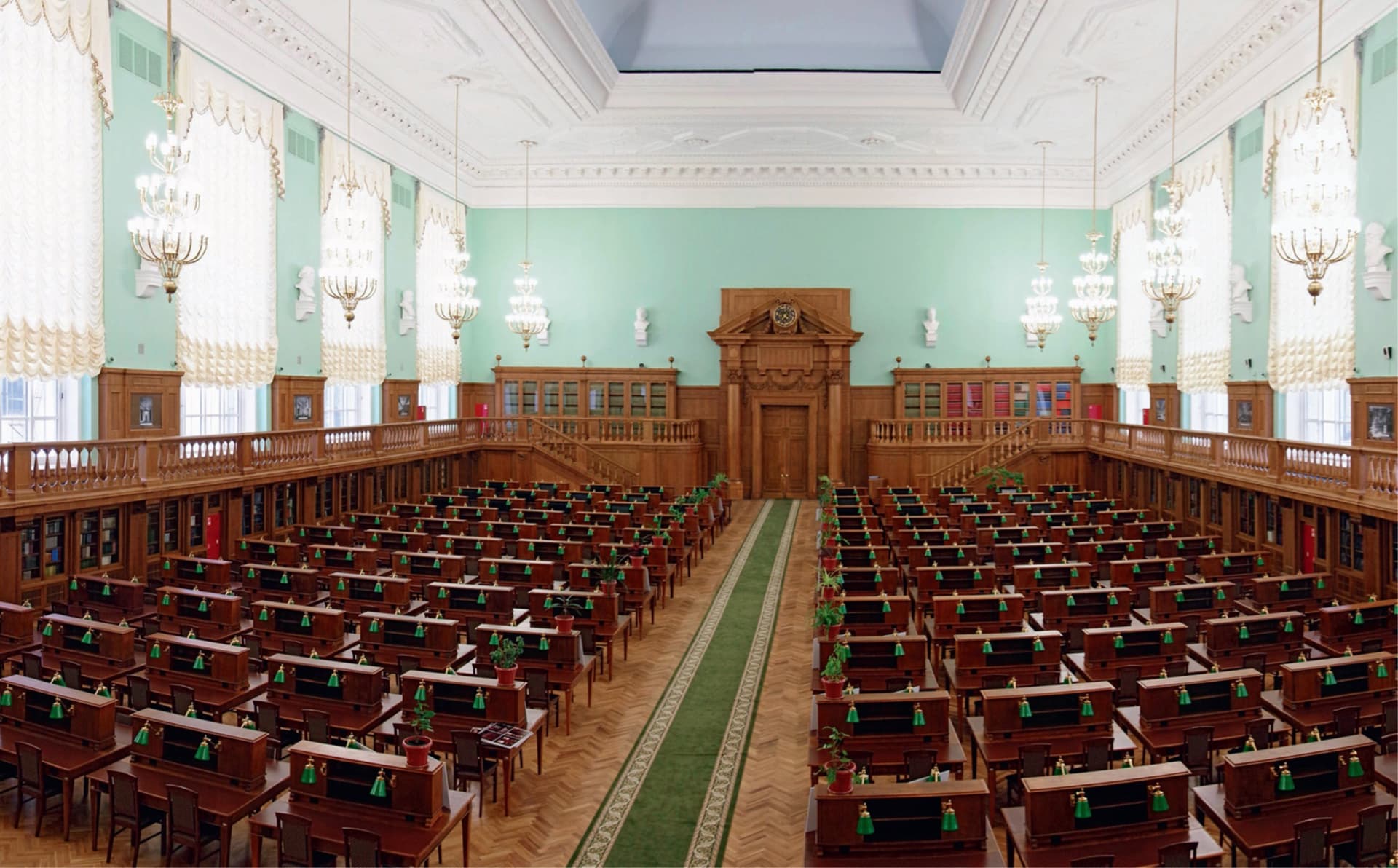
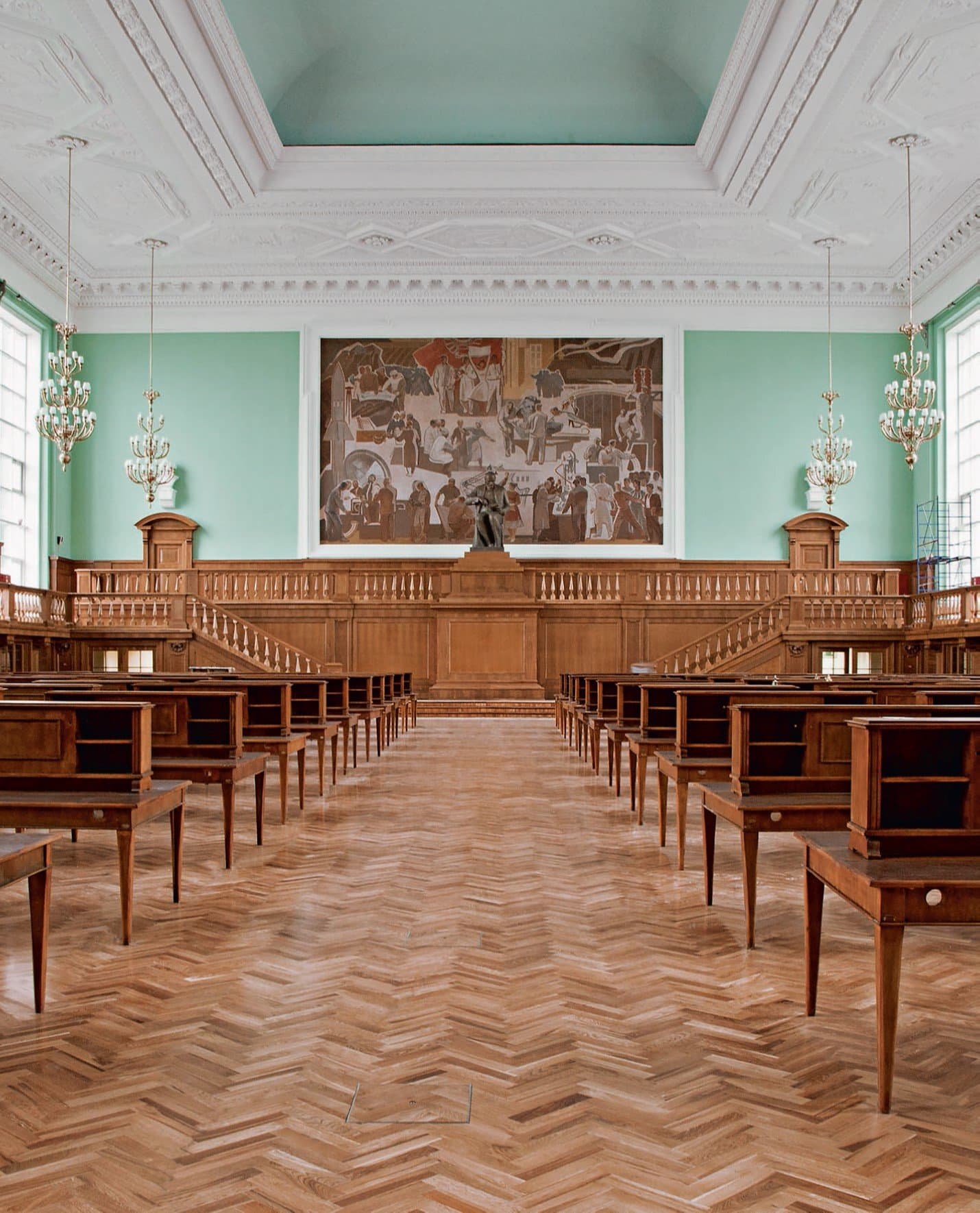
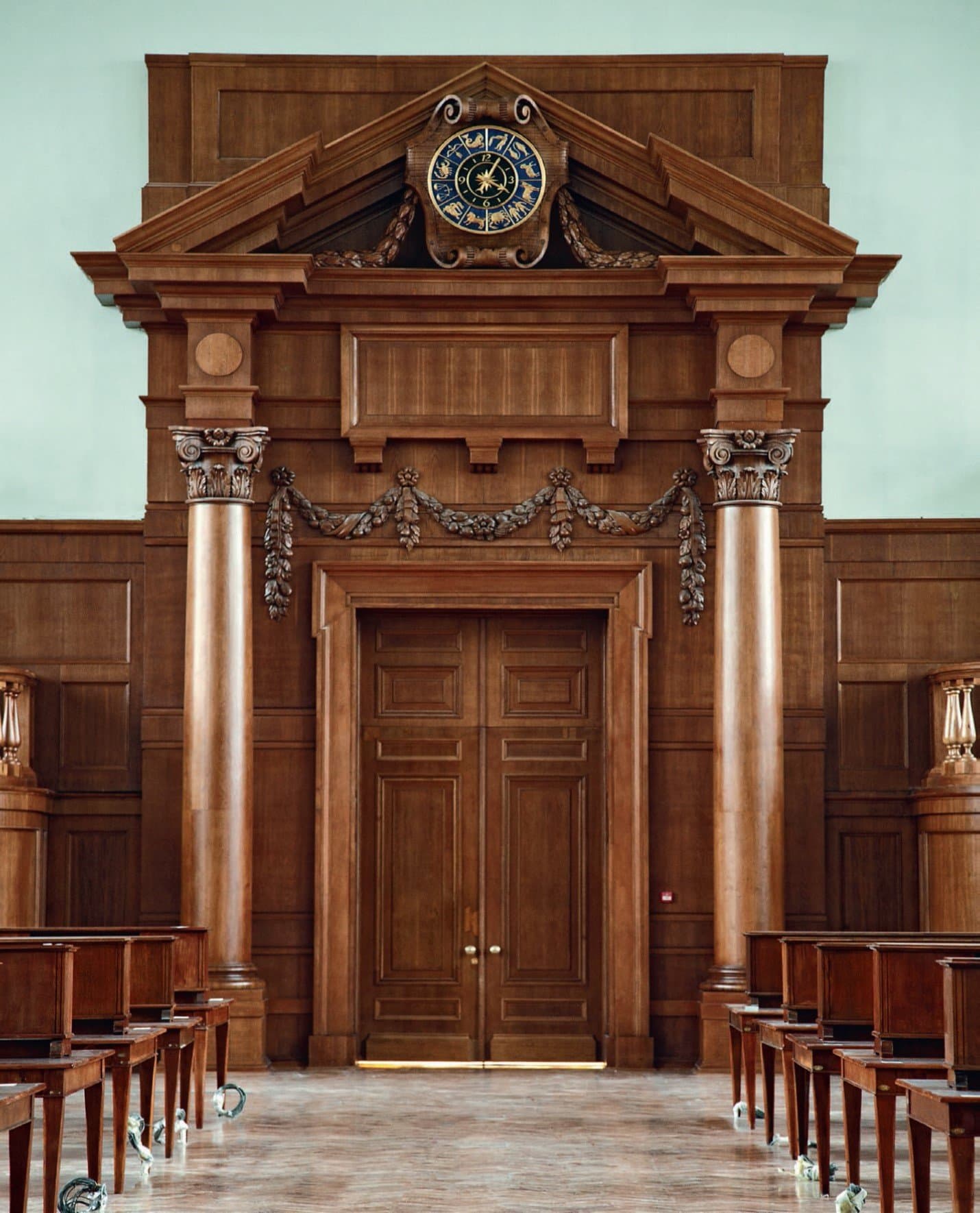
Особое место в комплексе занял читальный зал № 3 (Зал гуманитарных наук), открытый в 1958 году. Этот зал, рассчитанный на 464 посадочных места, стал воплощением идеи «храма науки». Двусветное пространство площадью 1208 кв. м и высотой потолков более 10 м было решено в стиле парадного зала-палаццо.
Shuko, the academician of the pre-revolutionary academic proficiency from St. Petersburg together with Gelfreich, the architect of the younger generation, developed a sophisticated complex of six buildings, forming a system of courtyards, colonnades and a kind of Roman forum for the new Soviet proletarian capital.
The building was projected on the corner of two planned avenues - Ilyich Alley (planned route from the Palace of the Soviets to the Three railway stations square) and the future Kalinin Prospekt that did not have a name yet at that time.
But academic training did not allow the architects to create a new dominant near the Kremlin and the highest body of nineteen-storey library was pushed back as far away as they can from the intersection.
The complex of the library includes the principles and techniques of architecture of different eras organically. There are Roman Forum, Constructivists’ asymmetric plans and discreet stylized decor (borrowed from the ancient Rome for the most part).
Cult of learning and knowledge was almost universal and overshadowed only by the cult of workers and Red Army soldiers. So the building was decorated with sculptured frieze resembling the second famous job of these architects - a theater in Rostov- on-Don, separate statues on the balustrade overlooking to Mohovaya street and medallions with portraits of the great scholars and writers, starting with Archimedes.
A large group of sculptural, including S.A. Evseev, M.G. Manizer, E.A. Janson Manizer, N.V. Krandievskaya, V.V. Lishev, V.I. Mukhina worked on the decoration of the complex.
The first phase of the metro affected the stilobat building. Alexander Garden subway station was installed into the concourse of the Lenin Library. The Land Pavilion, built at the corner of Mohovaya and Vozdvizenka streets in 1935 was demolished later.
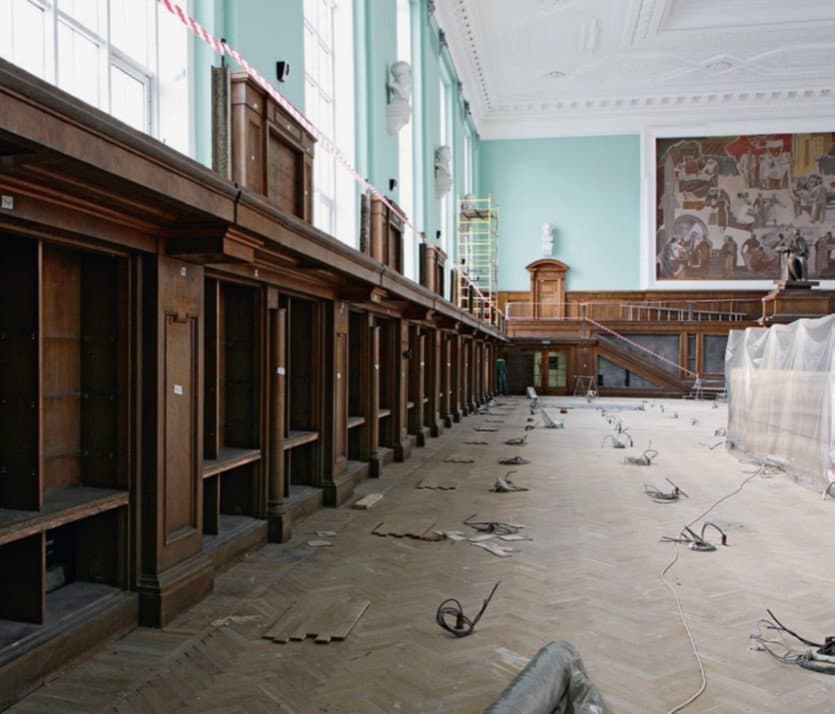
К началу XXI века здание библиотеки, и особенно интерьеры читального зала № 3, нуждались в серьёзной реставрации. Масштабные работы начались в 2012 году и продолжались до 2018 года.
В ходе реставрации читального зала № 3 были восстановлены выполненные из шпона и массива дуба галерея, лестницы, двери, порталы, мебель и элементы отделки. Особое внимание было уделено реставрации художественного паркета, трехъярусных латунных люстр и живописного панно «Дружба народов».
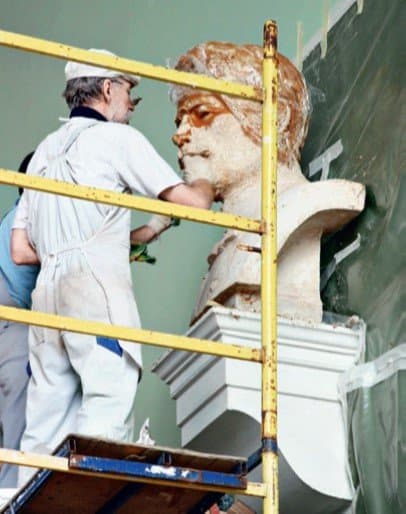
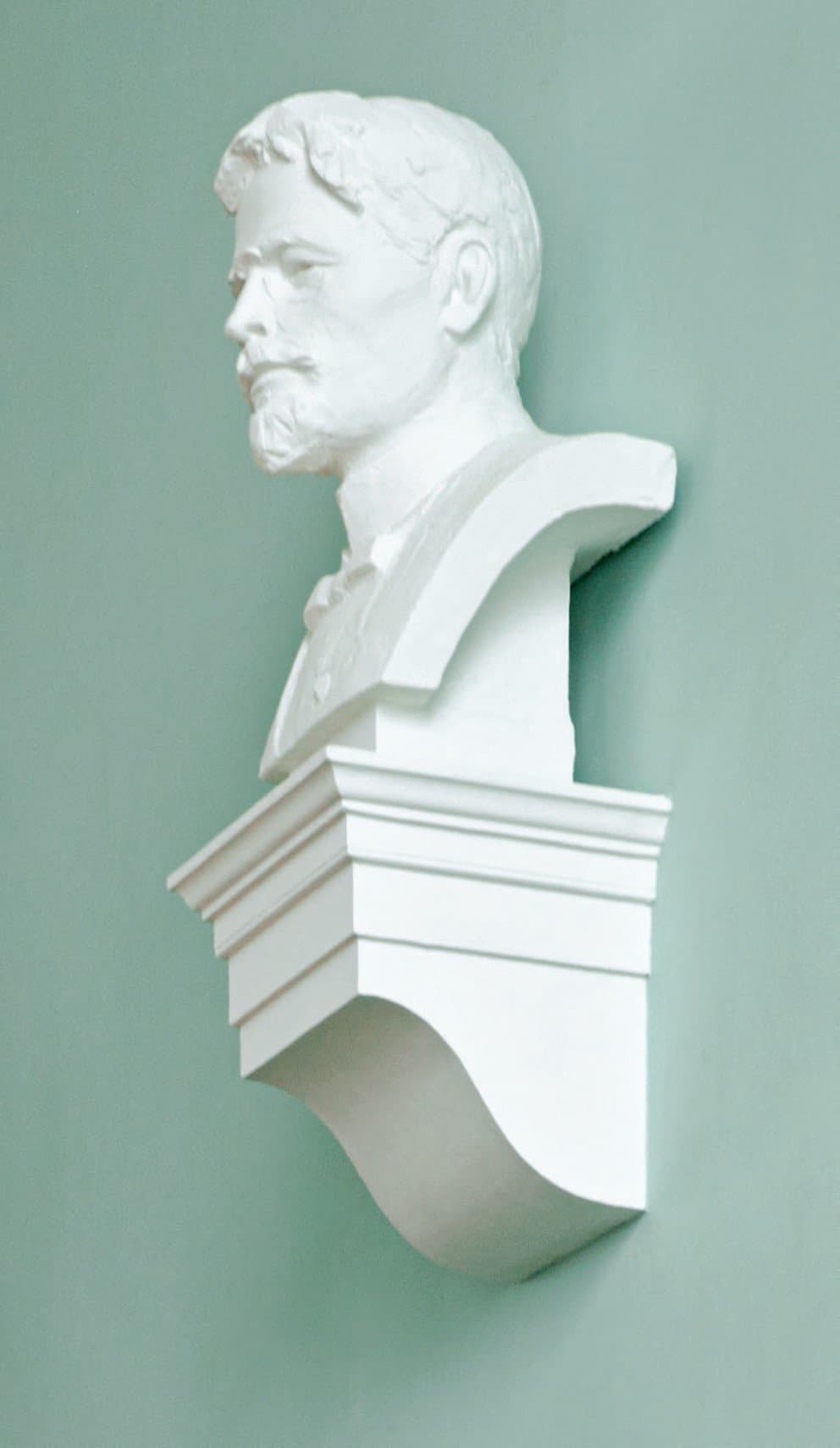
Реставраторы бережно восстановили 16 гипсовых бюстов деятелей науки, культуры и искусств, украшающих зал. Была отреставрирована и знаменитая бронзовая скульптура Владимира Ильича Ленина.
Помимо восстановления исторического облика, зал был оснащён современным оборудованием с доступом к электронному архиву библиотеки.
Высокое качество проведённых работ было отмечено профессиональным сообществом. В 2018 году читальный зал № 3 Российской государственной библиотеки стал лауреатом конкурса Правительства Москвы «Московская реставрация».
Сегодня обновлённый читальный зал № 3, являющийся самым большим в Европе, вновь открыт для посетителей. Он не только сохранил свой исторический облик, но и стал комфортным современным пространством для работы и учёбы, достойным звания главного читального зала крупнейшей библиотеки страны.