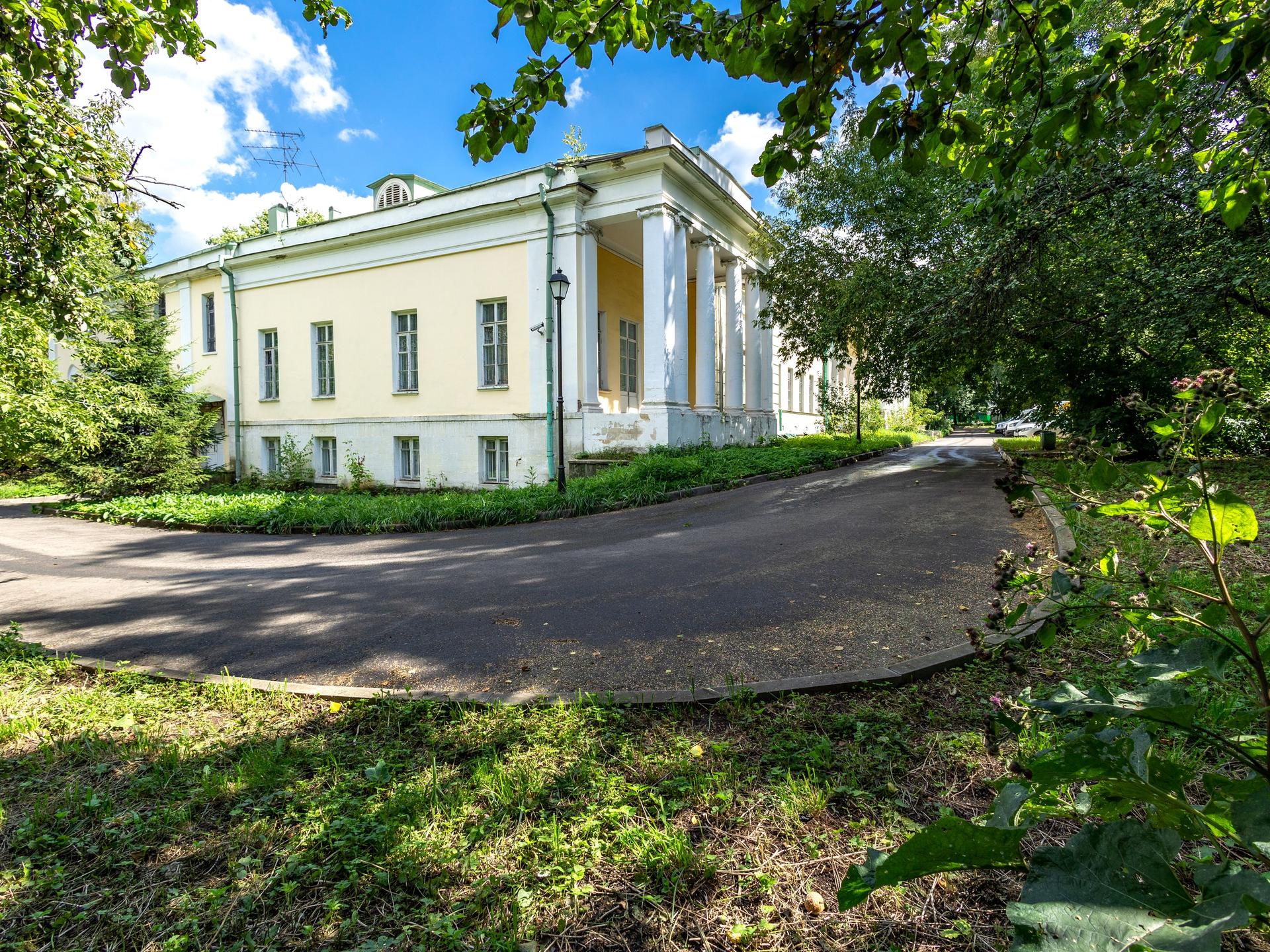
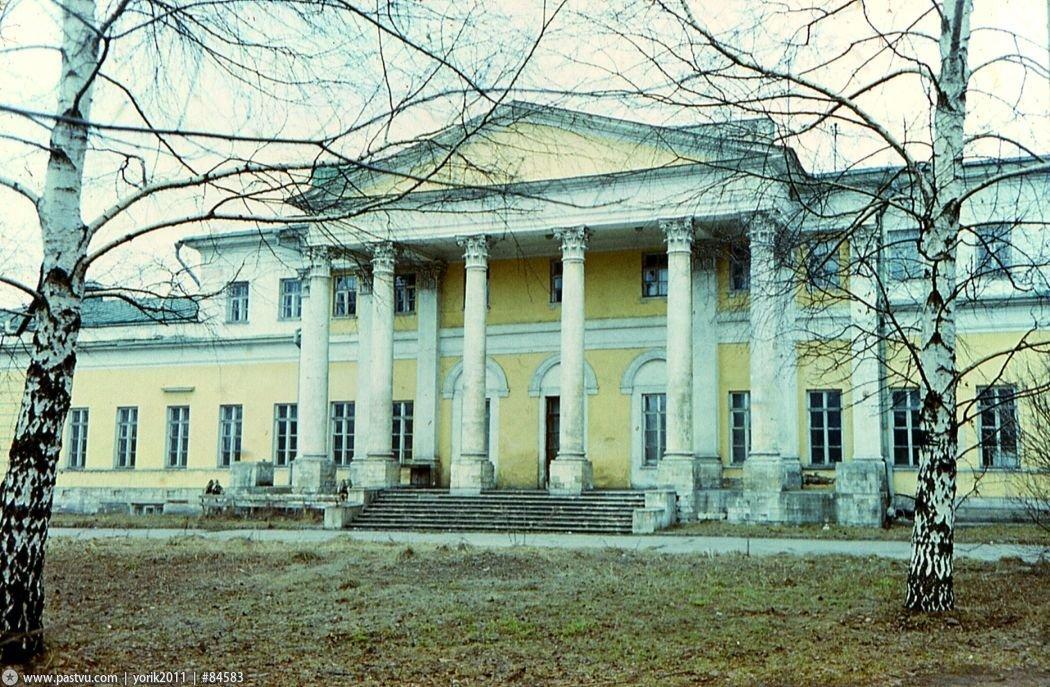
Строгановы владели этим участком на высоком берегу Яузы с 1751 года, постройку же самого здания в стиле "сталинский ампир" приписывают Родиону Казакову. С 1828 года имение переходит к купцам Алексеевым, фабрики которых расположились неподалеку, и тогда же перестраивается (в 1828 и 1859) с добавлением второго этажа и в более помпезном духе. В начале XIX века в усадьбе жил известный архитектор А. Н. Воронихин (молва считала, что он побочный сын графа А. Н. Строганова, однако потомки архитектора эти слухи опровергли), проектировавший известнейшие усадьбы и особняки Строгановых.
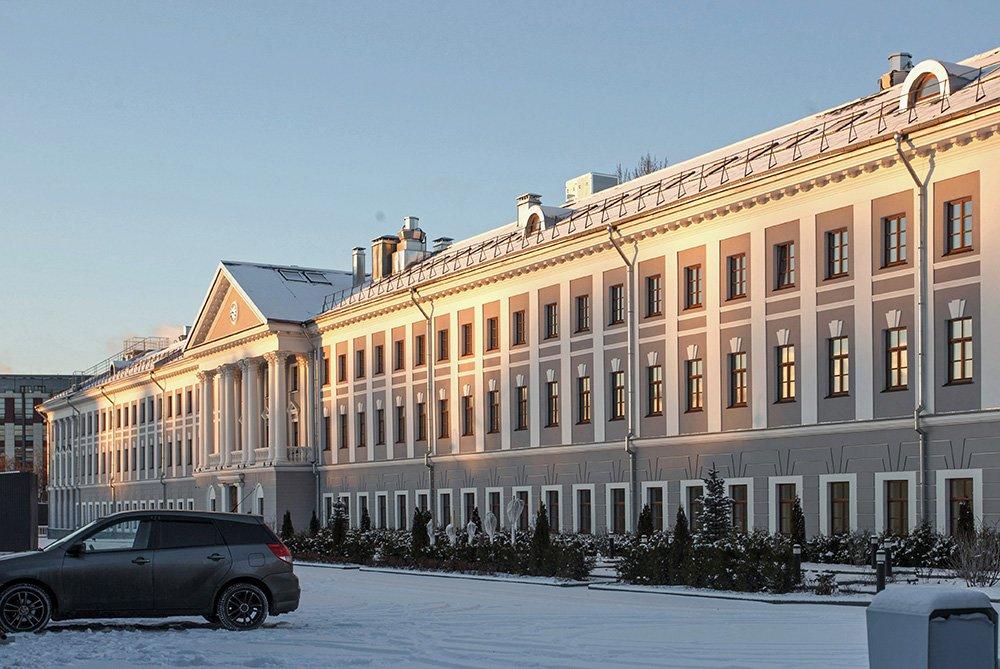
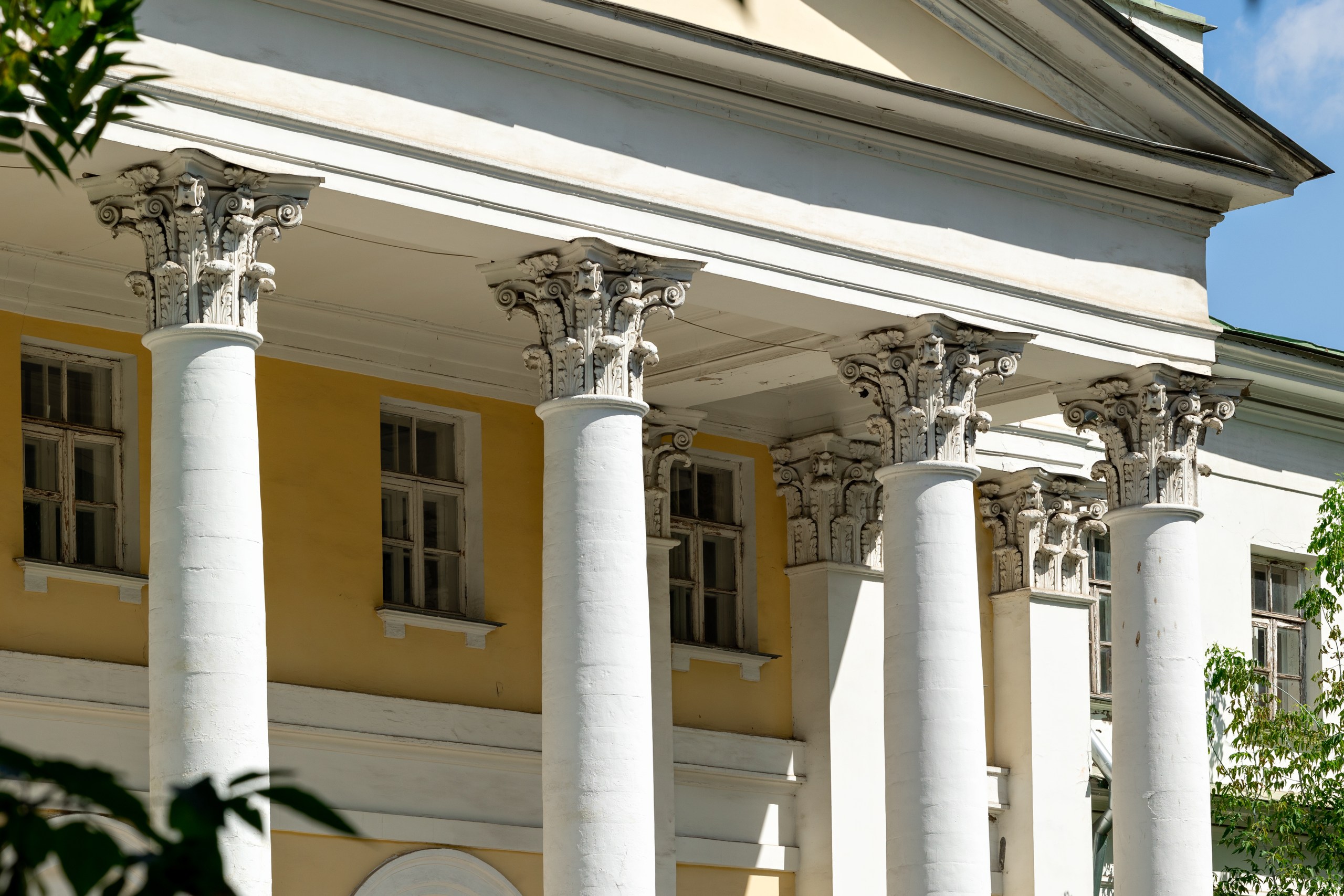
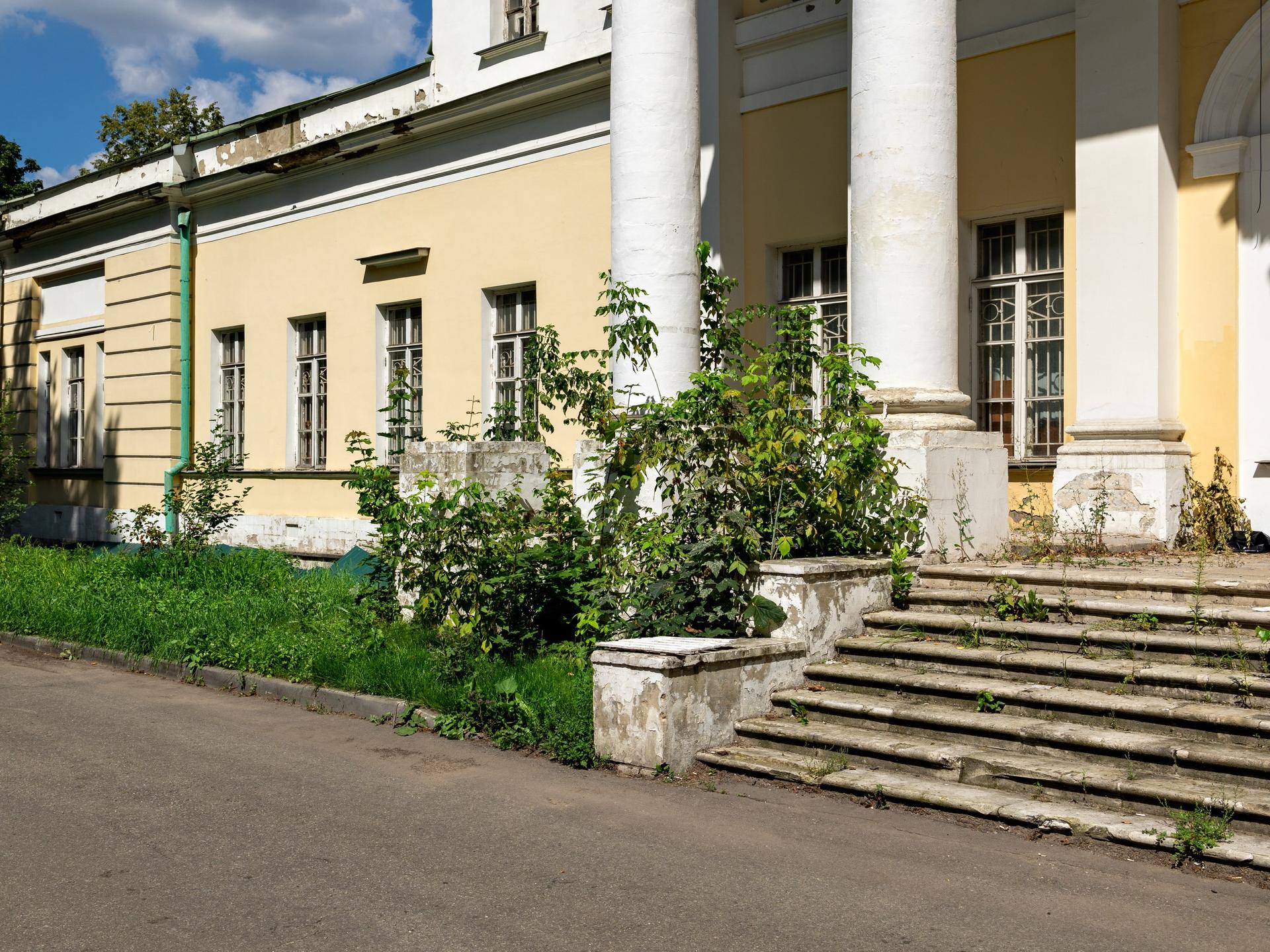
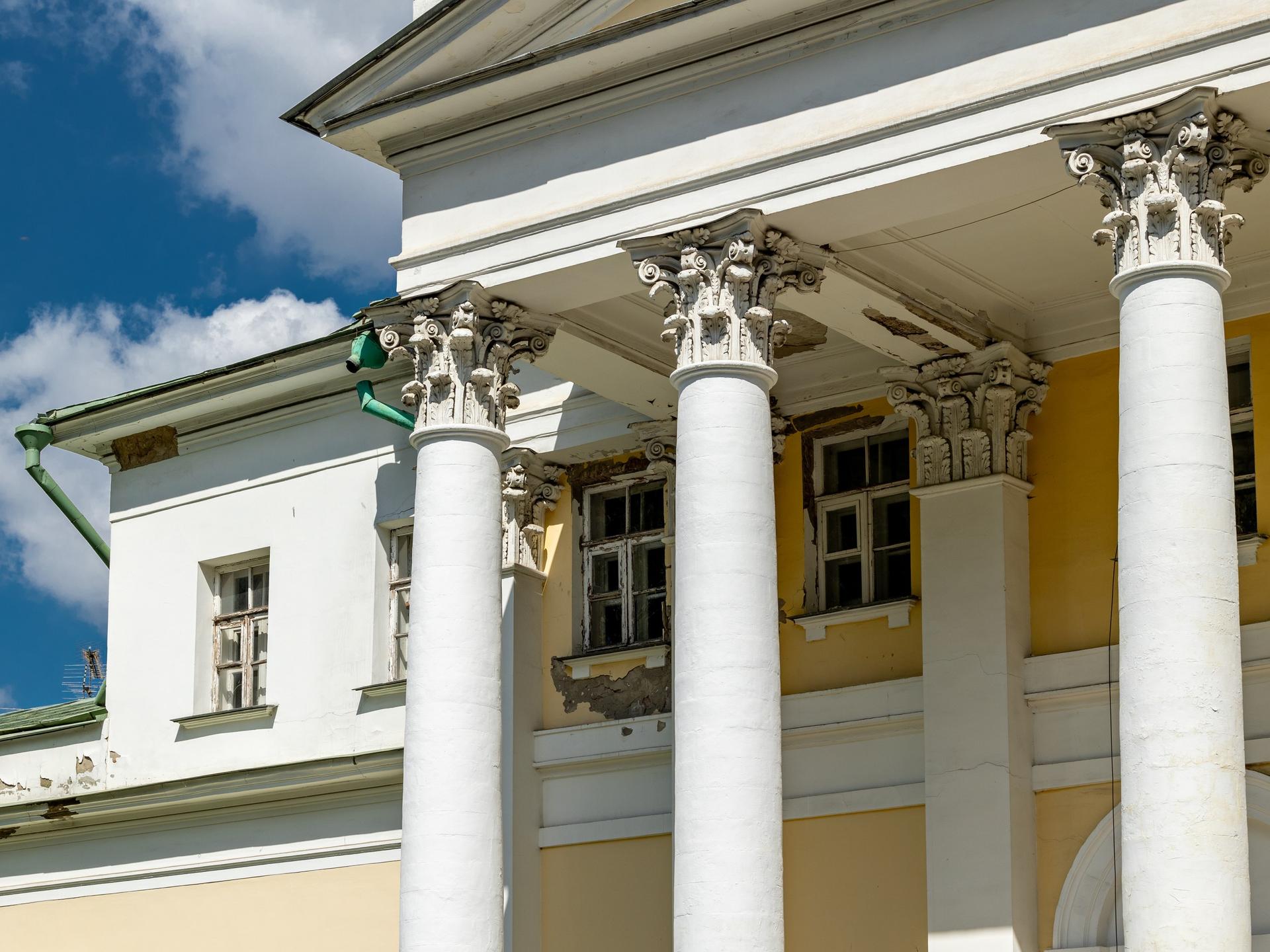
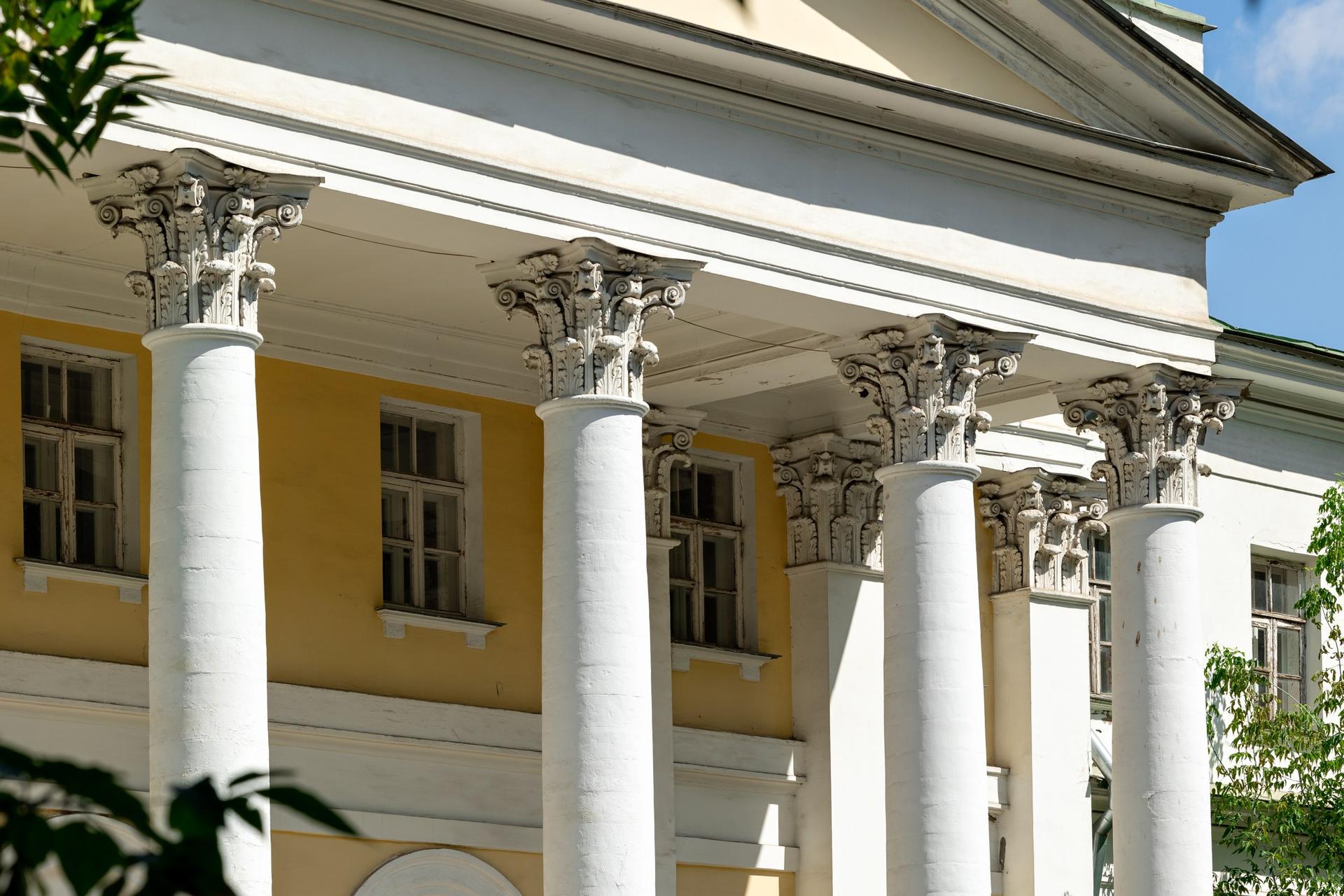
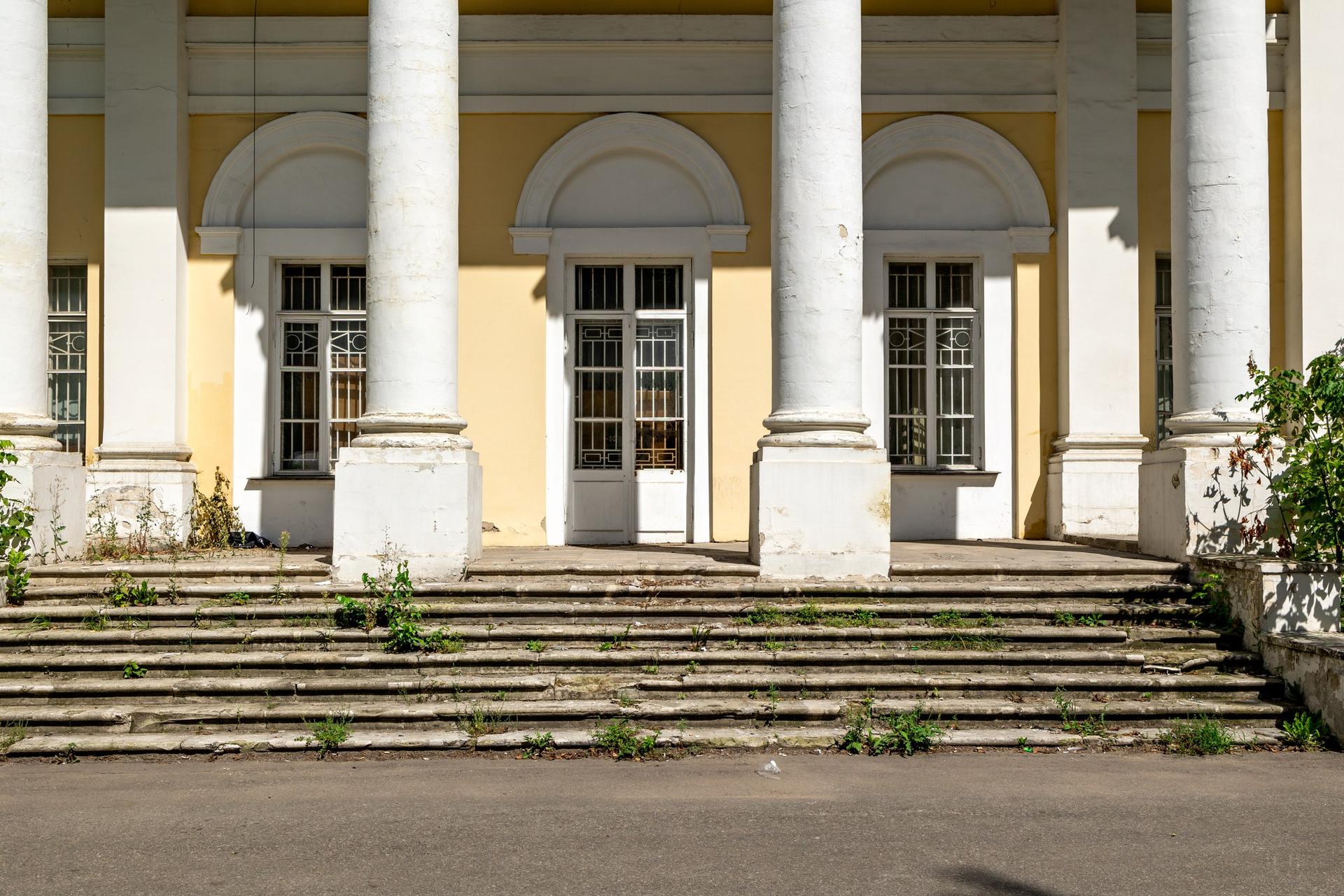
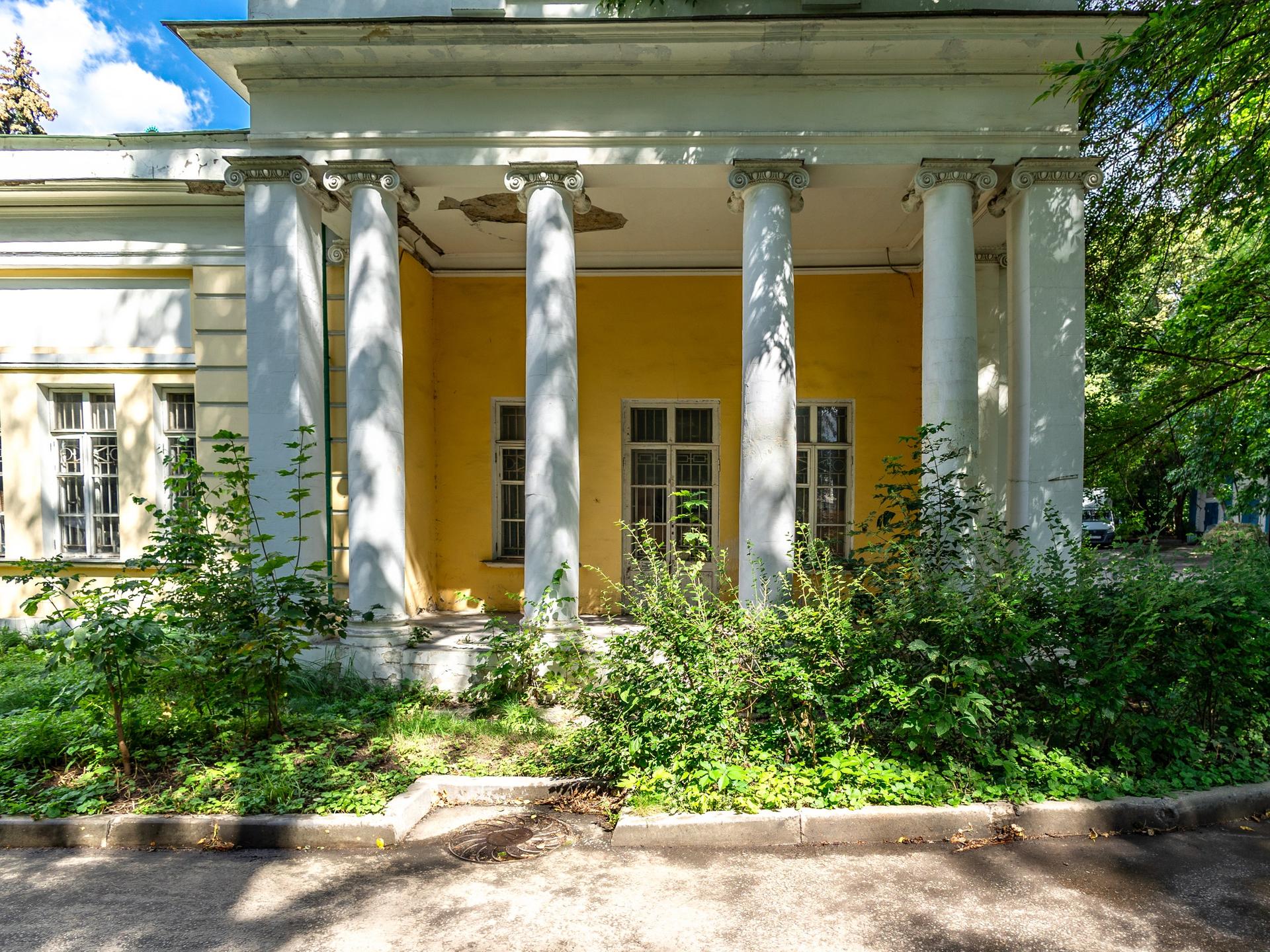
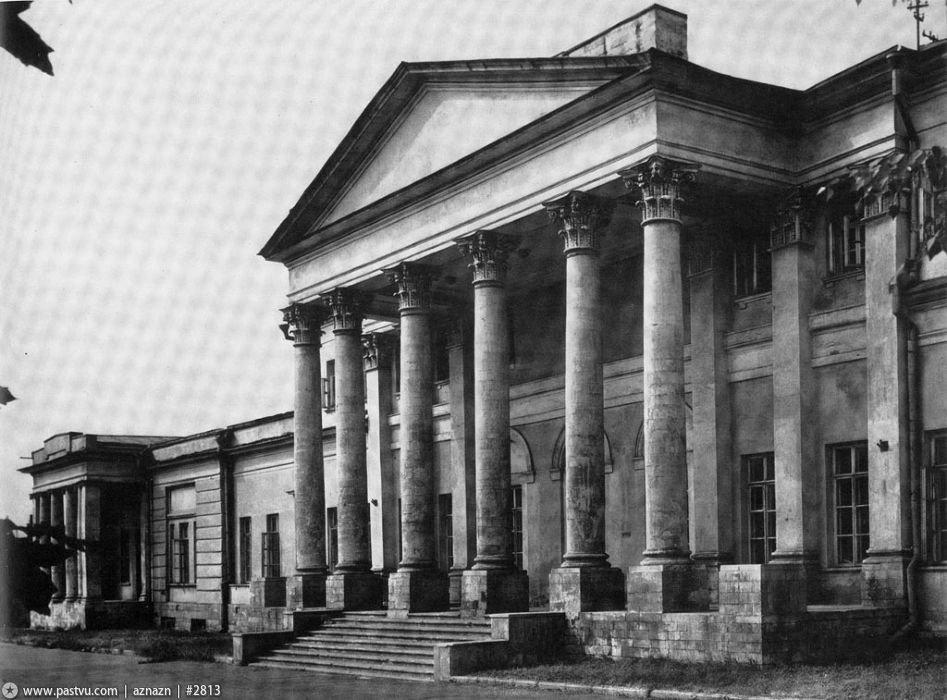
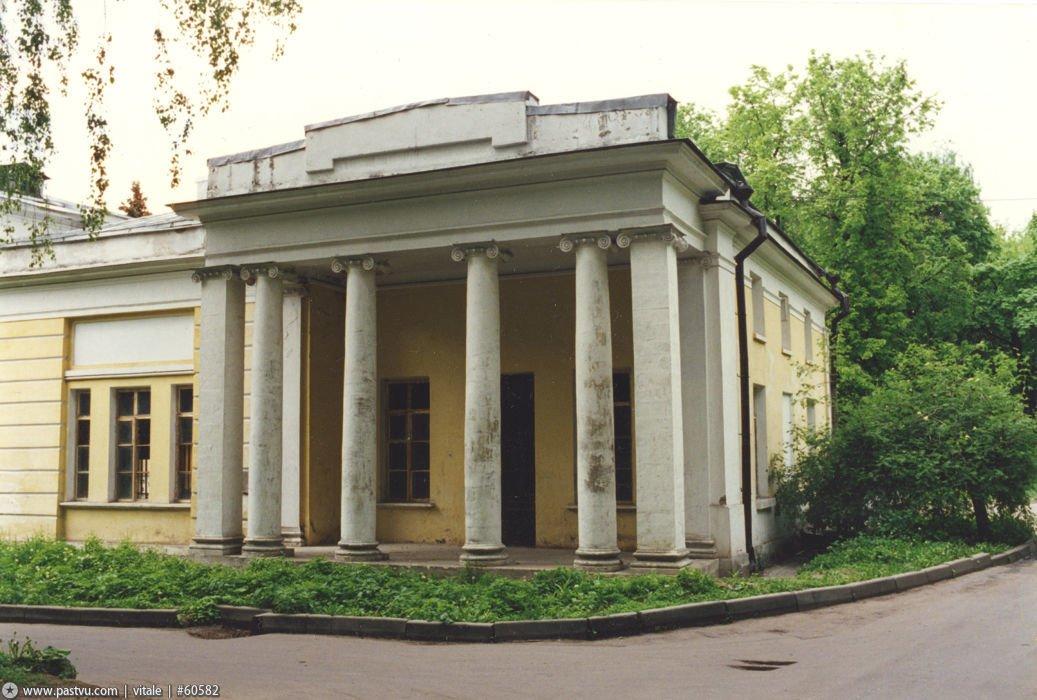
Центральная часть двухэтажная, она выходит на южную, парадную, сторону дома просторным шестиколонным коринфским портиком. Остекленные двери и высокие окна переднего этажа увенчаны архивольтами. Боковые крылья здания заканчиваются ионическими портиками в каждом по четыре круглых колонны и две квадратных по краям.
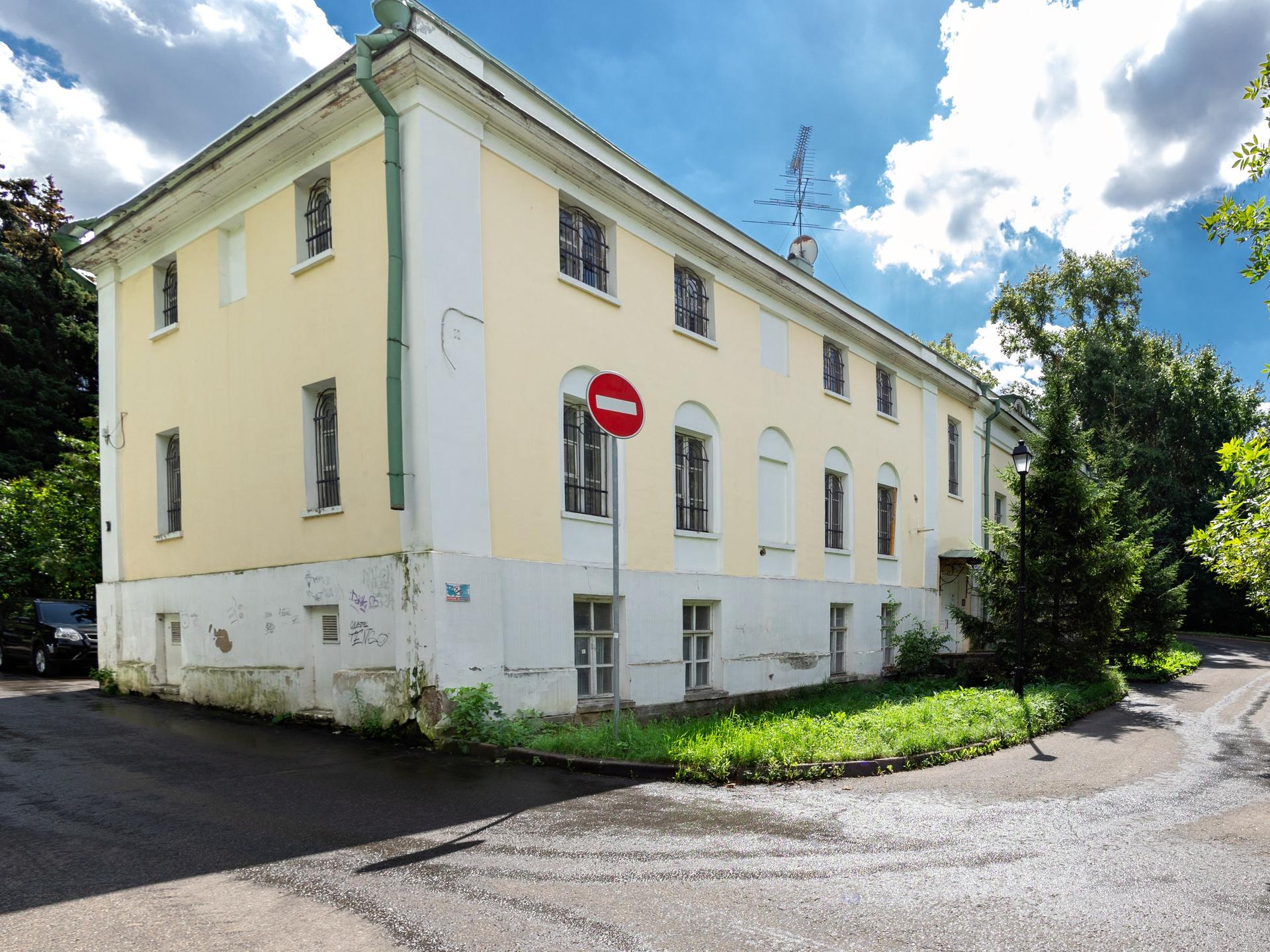
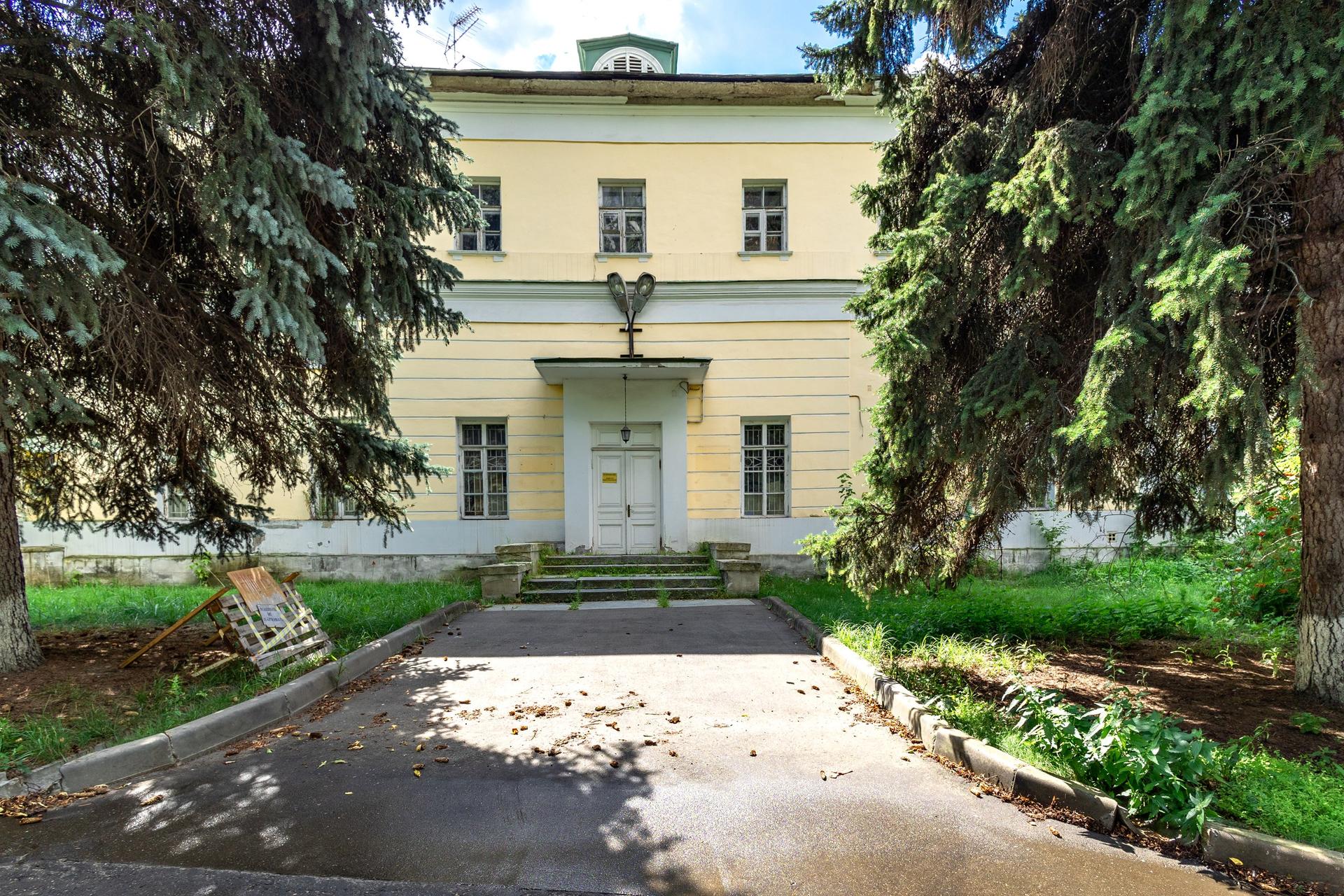
С главного фасада оба крыла здания одноэтажные, но с задней, северной, и боковой, восточной, сторон устроены антресоли — второй этаж, предназначенный для слуг и хозяйственных помещений.
Западное крыло, выходящее к склону и речному берегу, имеет небольшое дополнительное крыльцо, придающее зданию некую асимметрию, однако общий архитектурный замысел был строго фасадным.
Дача не была полноценной усадьбой и предназначалась лишь для летнего проживания, а потому и не была обременена большим количеством хозяйственных построек. Внутреннее убранство главной анфилады сохранило элементы ампирной отделки конца 1820-х, но в целом здание давно приспособлено под учебное заведение.
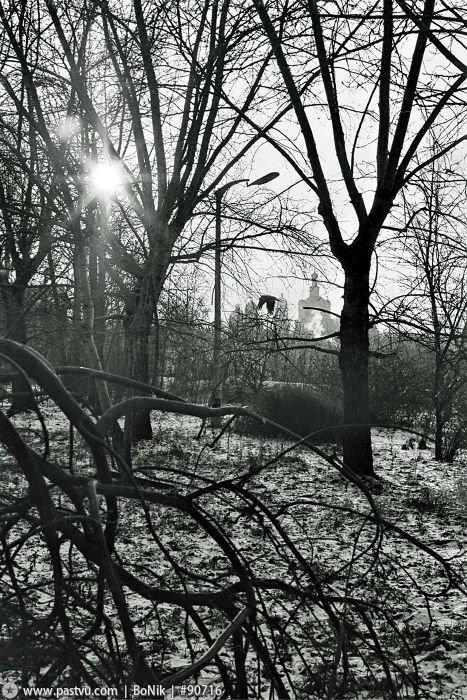
Парк, в котором стоит дача, мал, сохранился, но находится в запущенном состоянии. Еще в дореволюционные времена к нему со всех сторон подступили постройки индустриальной эры.
The Stroganovs owned this site on the high bank of the Yauza River since 1751, and the construction of the same building in the style of "Stalin's Empire" is attributed to Rodion Kazakov. Since 1828, the estate passed to the merchants Alekseev, whose factories were located nearby, and then rebuilt (in 1828 and 1859) with the addition of a second floor and in a more pompous spirit. At the beginning of the XIX century in the estate lived a famous architect A. N. Voronikhin (rumor believed that he was a by-son of Count A. N. Stroganov, but the descendants of the architect denied these rumors), who designed the famous manors and mansions Stroganoffs.
The central part of the two-storeyed building leads to the southern, front side of the house with a spacious six-column Corinthian portico. The glazed doors and high windows of the front floor are topped with archivolts. The side wings of the building end with Ionic porticos in each of four round columns and two square around the edges.
From the main facade, both wings of the building are single-storey, but from the back, north, and lateral, eastern sides, there are mezzanines - the second floor, intended for servants and utility rooms.
The west wing, facing the slope and the river bank, has a small additional porch, giving the building some asymmetry, but the overall architectural design was strictly facade. The cottage was not a full-fledged homestead and was intended only for summer living, and therefore was not burdened with a large number of outbuildings. The interior of the main suite retained the elements of the Empire style finish of the late 1820s, but in general the building was long adapted to the educational institution.The park in which the cottage is located is small, but is in a state of neglect. Even in pre-revolutionary times, the industrial era was built on it from all sides.