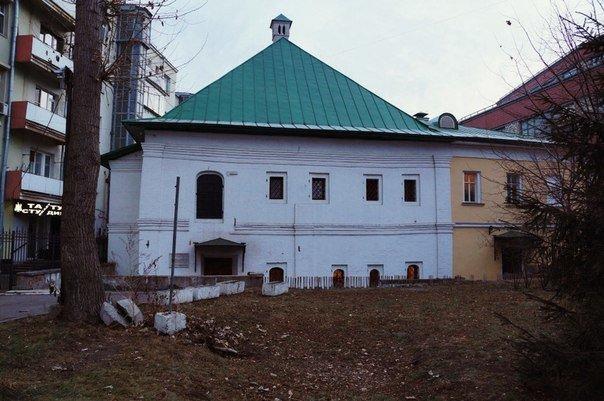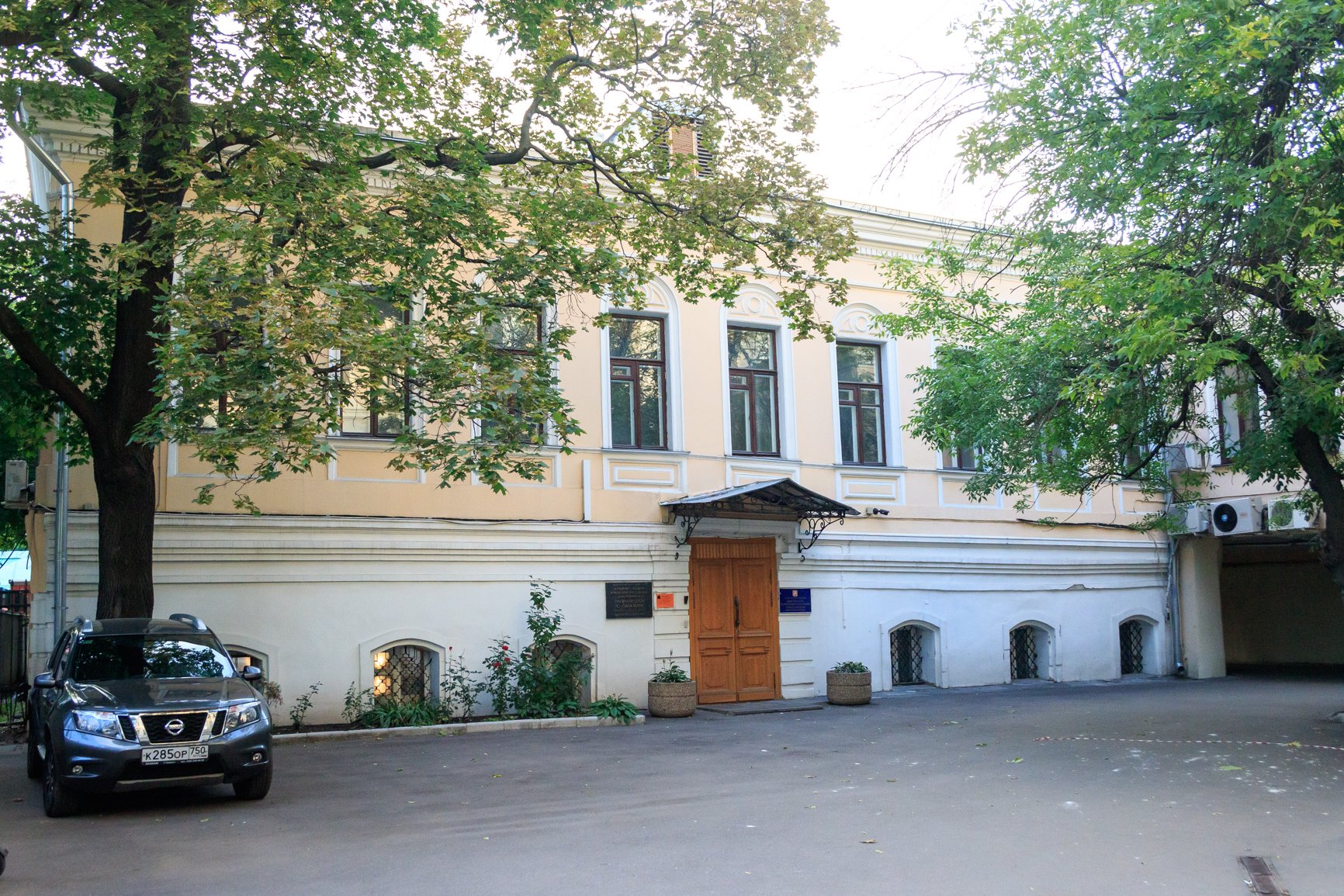
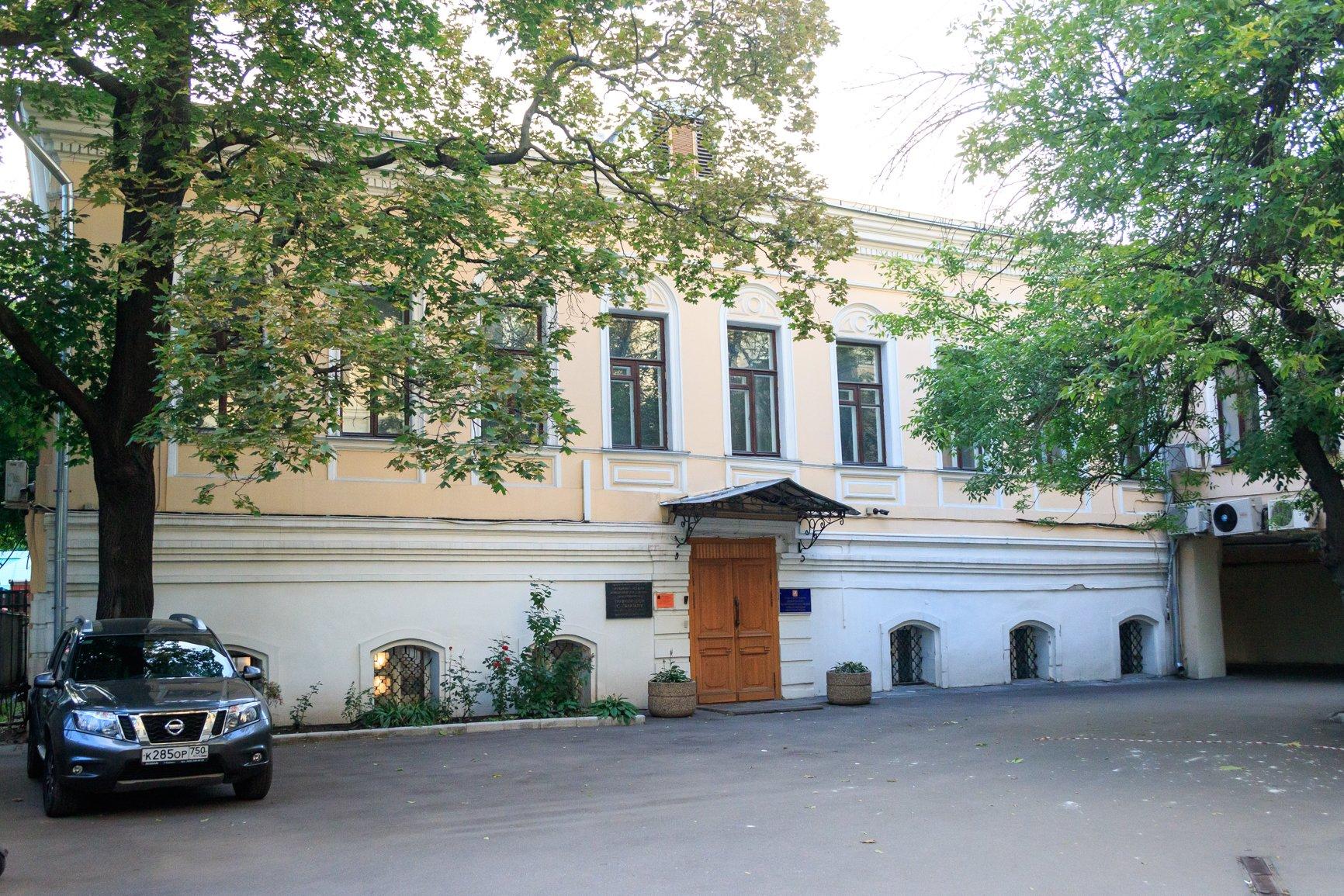
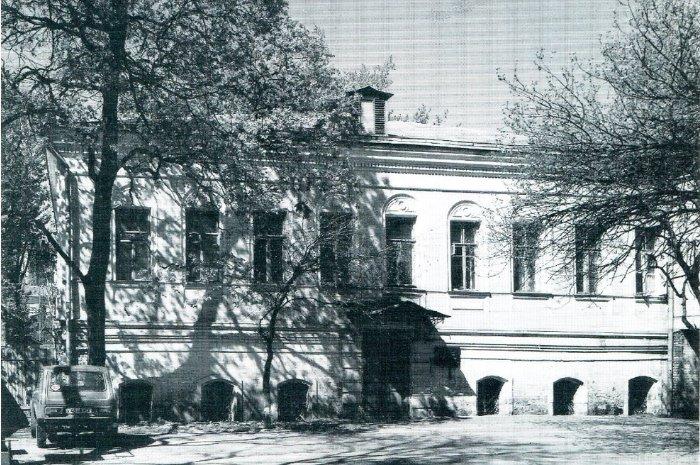
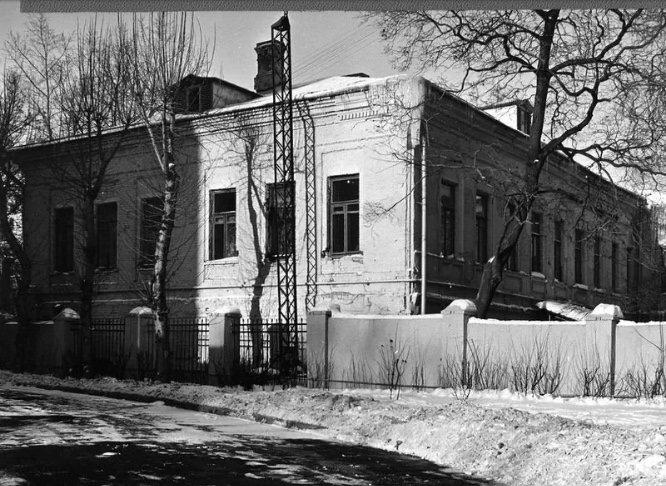
Двухэтажный дом, прячущийся во дворе за пятиэтажным доходным домом, выстроенным в начале ХХ столетия в том же владении по красной линии Пятницкой улицы, – единственное сооружение, уцелевшее от купеческой усадьбы XVIII века. Это объект культурного наследия федерального значения.
В 1750-е годы усадьбой владел купец и суконный фабрикант И.Г.Журавлев, один из ктиторов снесенного в 1930-е годы изящного барочного храма Параскевы Пятницы, давшего название улице. В 1759 году он начал строить посреди участка каменные палаты. Сводчатые помещения первого хозяйственного этажа разделял сквозной проезд на задний двор. Второй, жилой, этаж первоначально был деревянным; в кирпиче его отстроили в 1770-е годы. Архитектурное убранство двух этажей различно: оформление окон второго выдержано в классическом стиле, и даже ритм оконных проемов в двух этажах не совпадает.
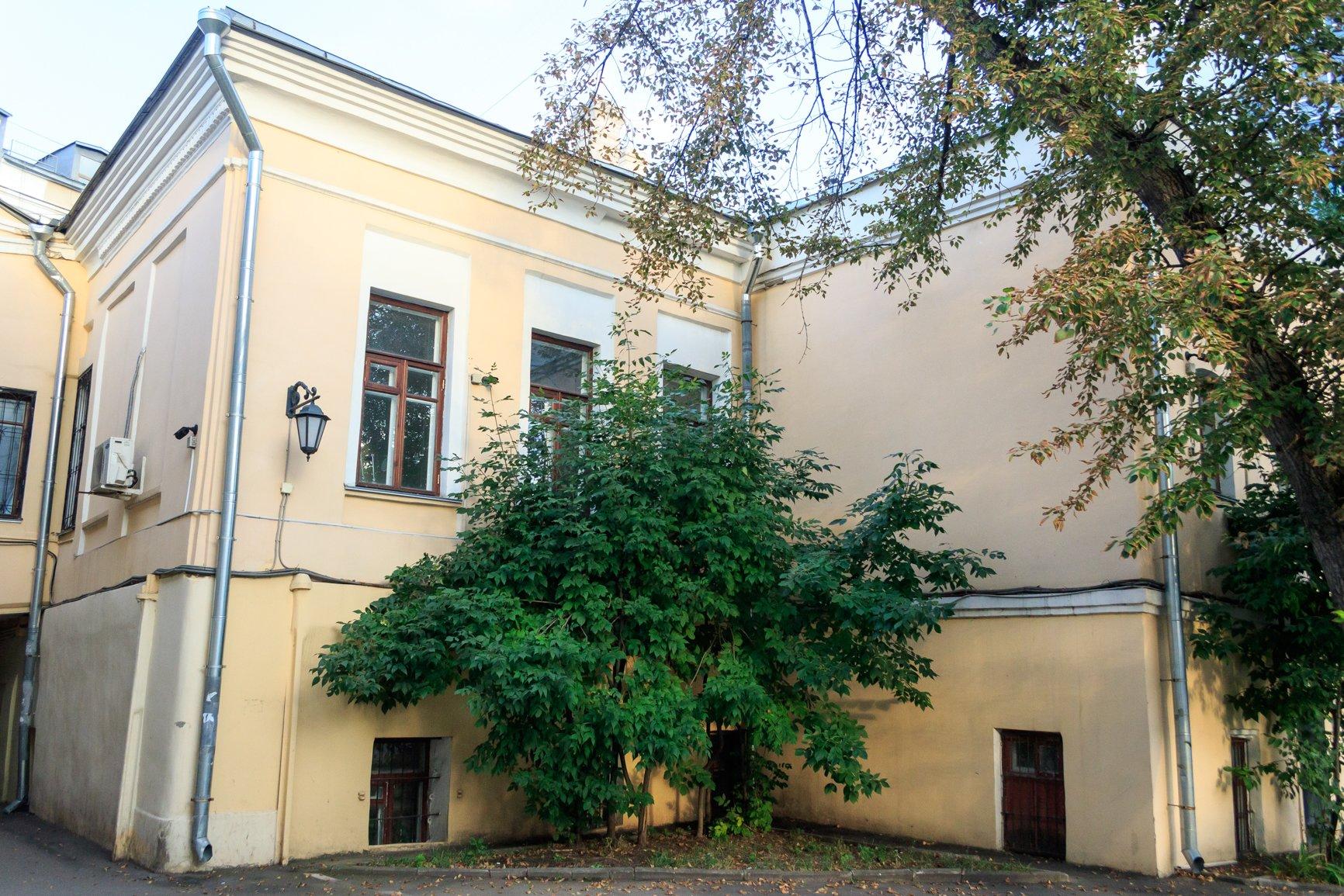
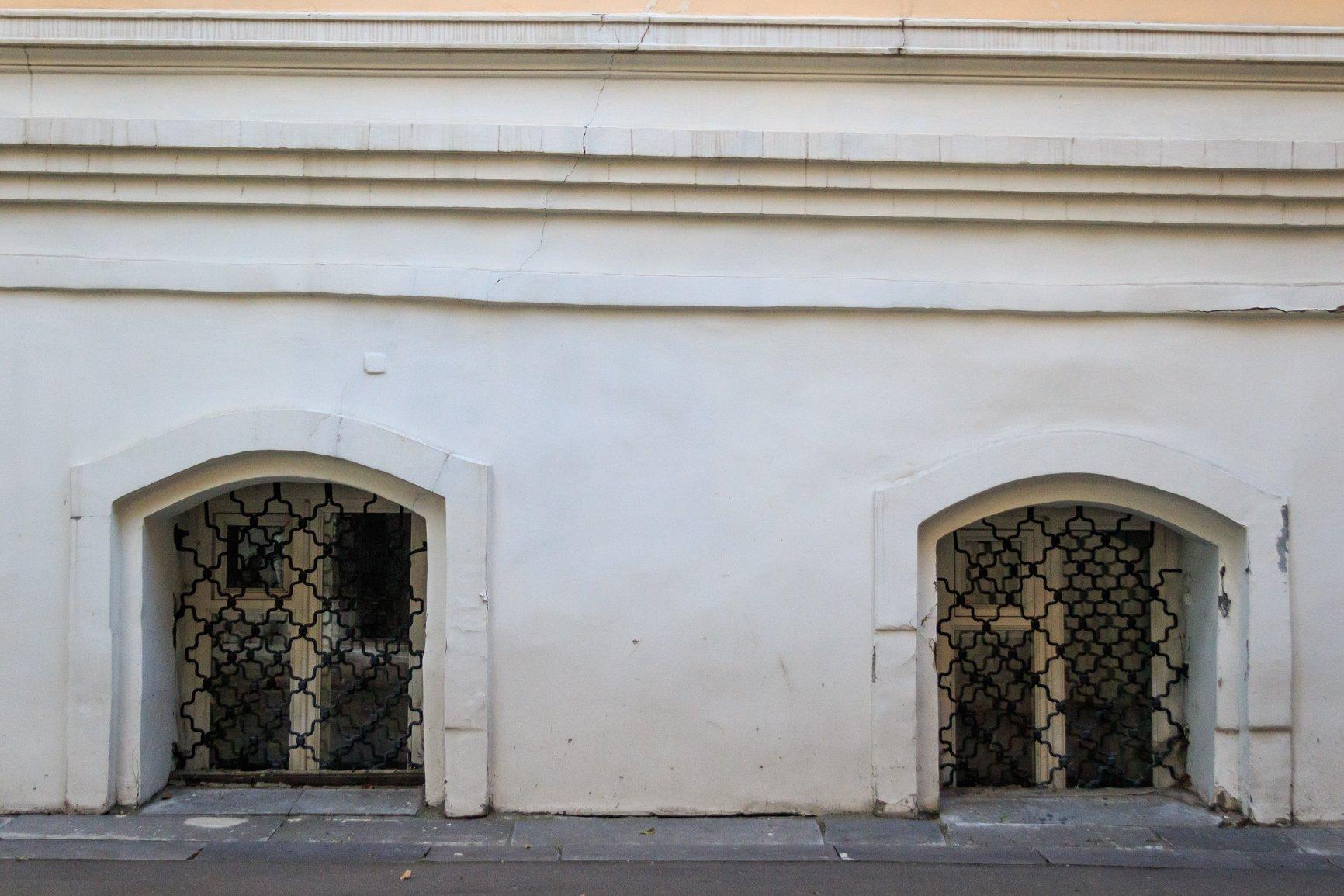
Дом со временем врос в землю, и первый этаж стал напоминать цокольный. Под ним, в южной части, сохранился глубокий сводчатый подвал. Его конструктивное решение восходит к средневековым образцам: стены сложены из белого камня, а кирпичные своды опираются на белокаменный столп. О XVIII веке на фасадах напоминают лучковые очертания окон первого этажа, а также подоконные «полочки» во втором. На заднем фасаде реставраторами 1980-х гг. восстановлены вертикальные оконные ниши, не вполне совпадающие с поздними проемами. Уцелели также подлинные подставы для ставен, фрагменты оконных решеток, рустованные лопатки, отмечавшие углы здания и места примыкания капитальных внутренних стен к наружным.
После наполеоновского пожара усадьба отстраивается новым владельцем – купцом Ф.П.Степановым; дом ремонтируется в 1813–1824 гг. Следующий владелец – купец Л.И.Шевцов – делает пристройку с дворового фасада. При купцах Любимовых в 1880-е годы обновляется декор фасадов и интерьеров. В начале ХХ века усадьбой владел купец Н.Г.Григорьев, хозяин колбасной фабрики в Кадашах – он и построил доходный дом (строение 1), заслонивший старинные палаты от улицы.
Вдоль главного, некогда обращенного к Пятницкой улице, восточного фасада дома (строение 2) проходит анфилада парадных помещений. В них сохранилась отделка интерьеров: лепнина, кафельные угловые печи, паркет, старинная лестница.
In 1750s, the homestead belonged to the merchant and wool cloth manufacturer I.G. Zhuravliov, one of the church wardens at the Saint Paraskeve Church designed in the Baroque style. The street was named after the Church (Paraskeve in Greek is Friday and Pyatnitsa in Russian). In 1759, Zhuravliov started construction of stone chambers in the middle of the plot. Vaulted rooms on the ground floor used for household needs have been divided by a drive through leading to the backyard. The first, residential floor initially was built of wood; in 1770s it has been rebuilt in brick. Architectural styles of the two floors are different: the first floor windows are in classical style; even window apertures of the two floors are not aligned.
With the time, the building has sunken into soil, so that the ground floor looked more like semi basement. Underneath, in the Southern part, there still is a deep vaulted cellar. Its structure follows medieval traditions: the walls are made of white stone, the brickwork vaults rest on a white stone pillar. There are 18th century's features on the facade: shallow arched shape of the ground floor windows as well as window "shelves" in the first floor. In 1980s, restorers have recreated vertical window niches on the back facade that do not completely match the later window apertures. Authentic shutter supports, fragments of window lattices, rusticated lesenes at the building corners and at the joints between the bearing interior and exterior walls have also survived.
After the fire that followed Napoleon's capturing Moscow, the homestead has been rebuilt by its new owner — merchant F.P. Stepanov; the reconstruction took from 1813 to 1824. The next owner — merchant L.I. Shevtsov — has had an extension added to the back facade facing the courtyard. In 1880s, while owned by the Liubimov merchant family, the building facades and interiors have been renovated. In the early 20th century, the homestead belonged to merchant N.G. Grigoriev who owned a sausage factory in Kadashi. It was him who has had the tenement building built ("Structure No. 1"); it separated the old chambers from the street.
Along the main Eastern facade that once used to face the Piatnitskaya Street ("Sturcture No. 2"), there is a suite of main rooms. There, the interior decoration has survived: moulding, tiled corner stoves, parquet floors, old staircase.
Konstantin Mikhailov