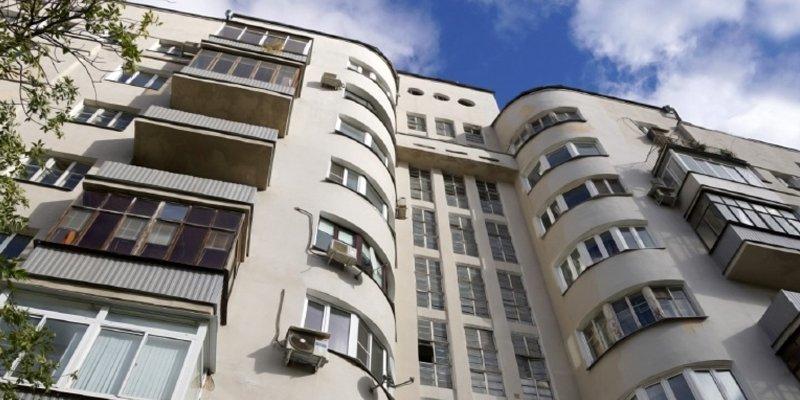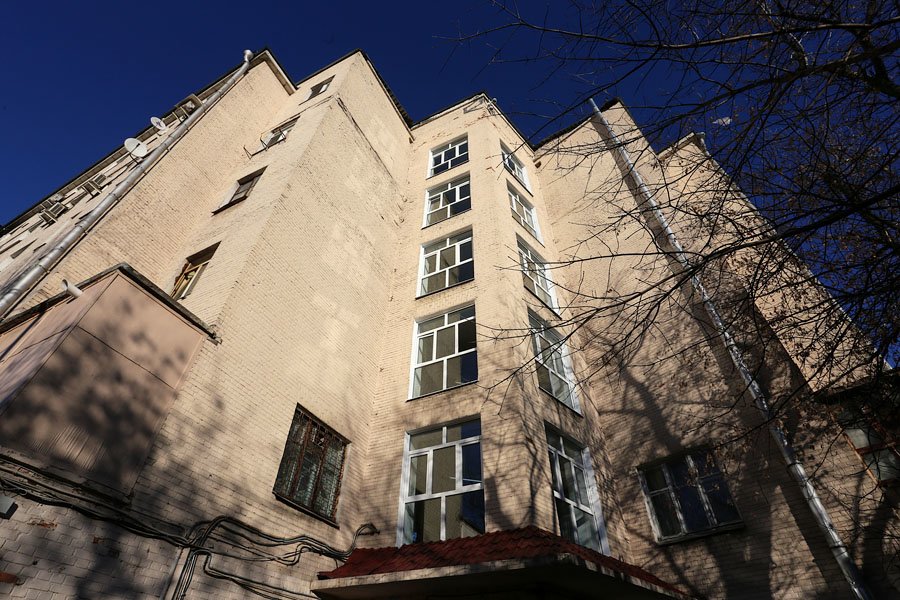
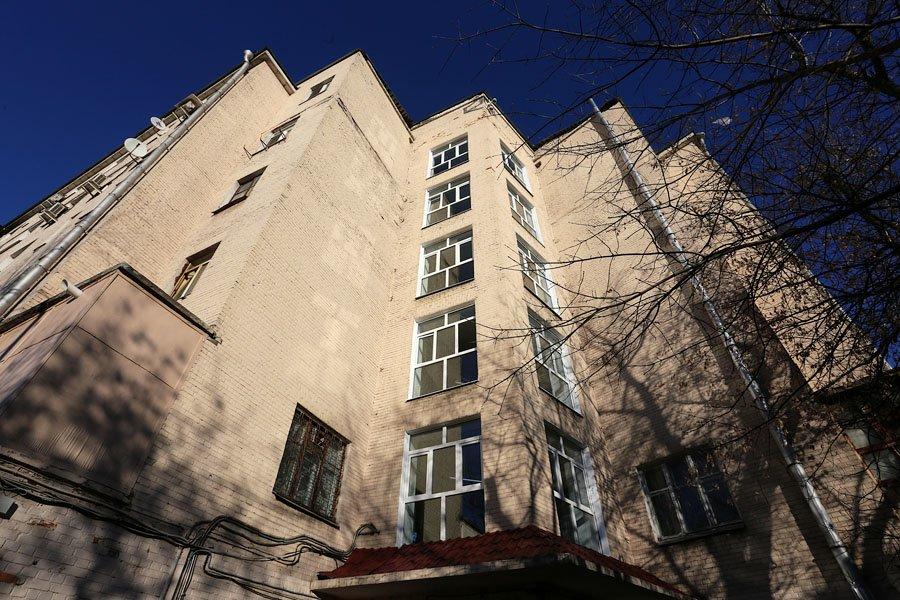
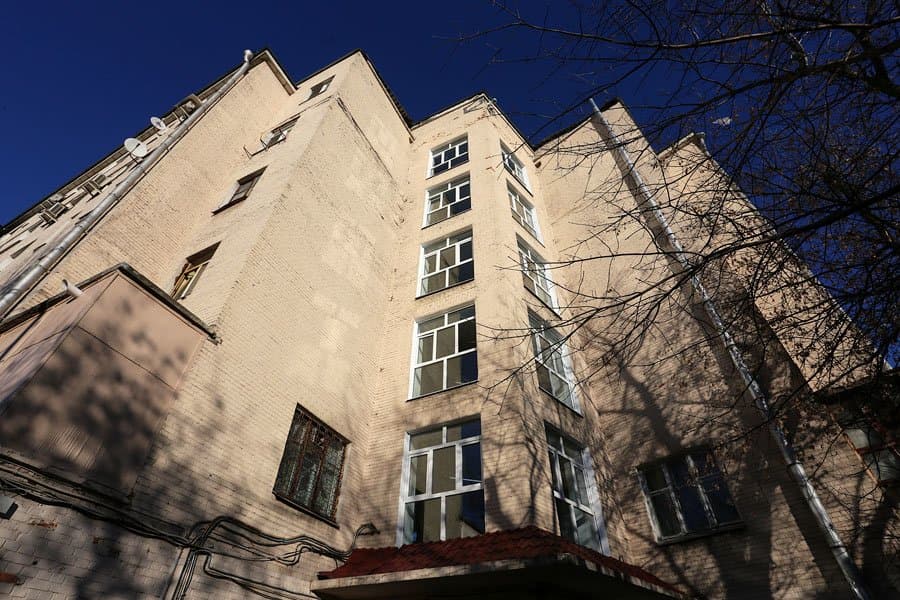
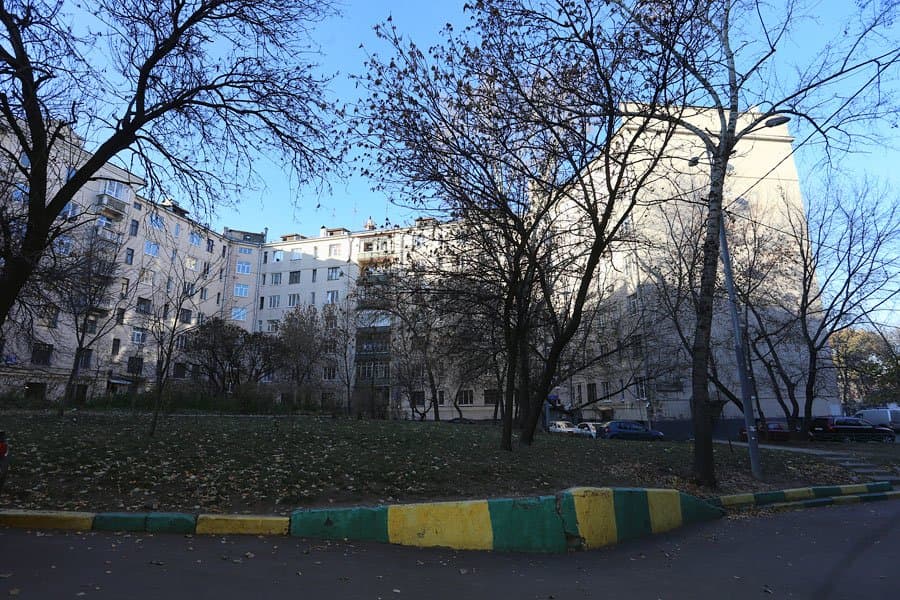
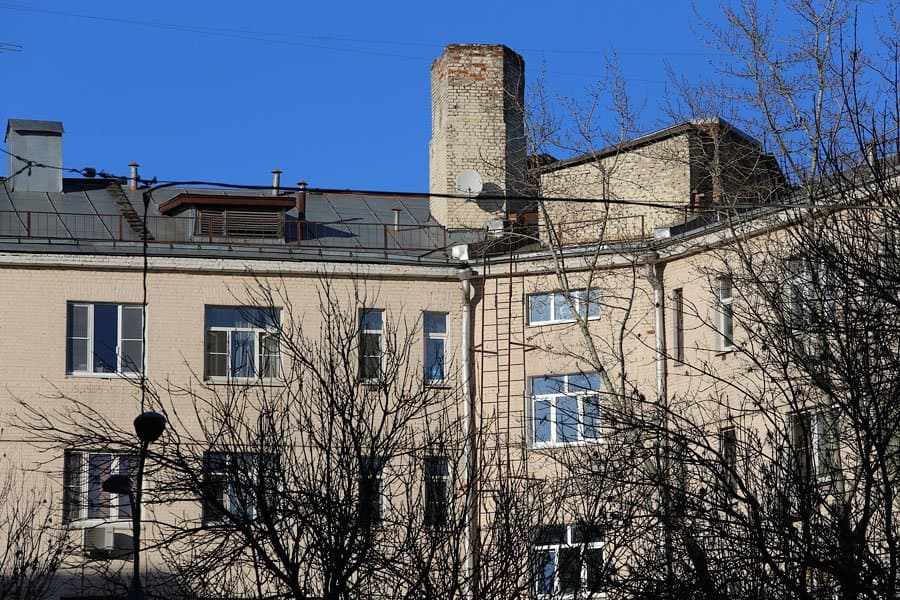
Дом-коммуна в Сыромятниках задумывался как жилье нового типа; непривычная коридорная структура заставила поздних жильцов даже думать, что один из корпусов был когда-то гостиницей.
На самом деле жилье с обобществлением быта было одной из передовых социальных и архитектурных идей 1920-х гг. С одной стороны жилищный кризис тех лет заставлял искать любые способы обеспечить граждан жильем, с другой — единицей общества стала мыслиться не только и не столько семья, сколько трудо-бытовой коллектив — коммуна.
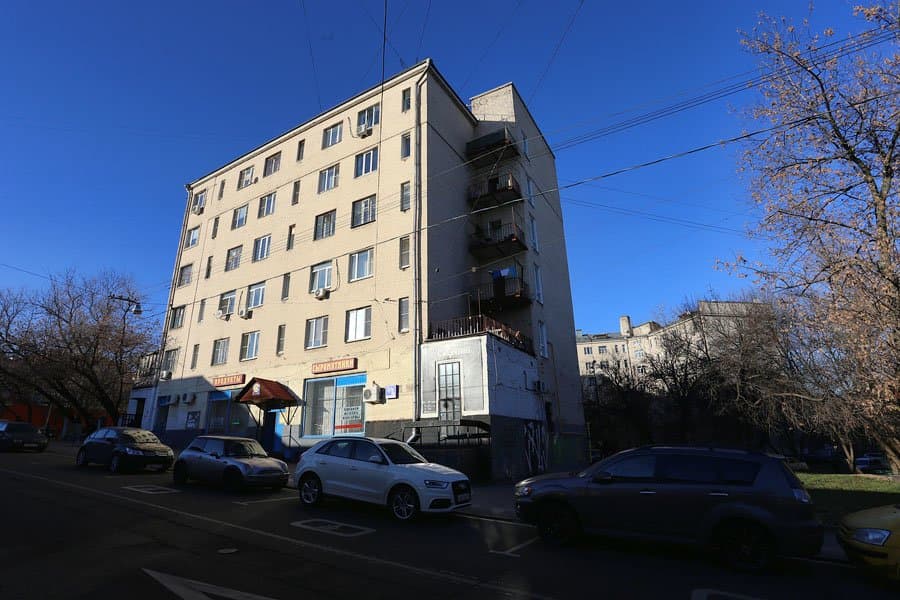
В Сыромятниках архитектор Георгий Мапу задумал выстроить три корпуса, охватывающих двор в форме правильного пятиугольника. Двор мыслился не как утилитарная хозяйственная постройка дореволюционной купеческой Москвы, но и не как двор-колодец буржуазных доходных домов — это должно быть важнейшее место совместного досуга и сплочения жильцов. Работа началась в 1927 г., а 1930 г. два корпуса были заселены, третий так и не был построен. Проезд между двумя корпусами — большим и малым — был превращен в арку и застроен в 1954 г. Шестиэтажные жилые корпуса пронизывают коридоры, а лестничные площадки (две из трех сделаны пятиугольными) эффектно освещены через сплошное остекление. Один из корпусов был построен для семейного заселения, там не предполагалось полного обобществления быта — при жилых комнатах были кухни и санузлы (их узкие окна видны на фасаде), два других корпуса предназначались для холостяков и малосемейных жильцов — с общими кухнями и санузлами в коридоре.
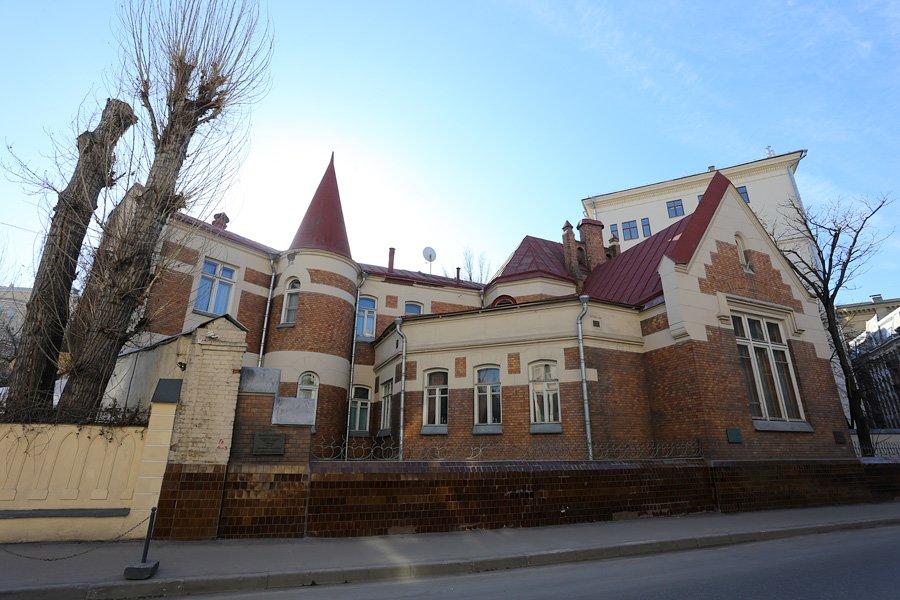
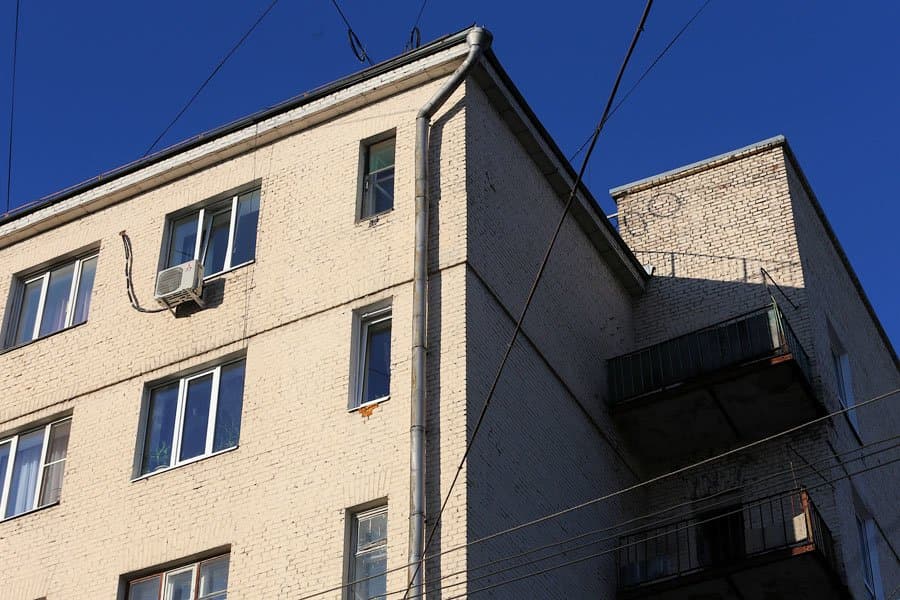
Во дворе когда-то стоял фонтан, его остатки видны в центре устроенной на его месте клумбы. Жилые корпуса сохранили первоначальный облик, однако поздняя, достроенная часть была сделана уже совсем в другом стиле — ее балконы украшены балясинами, фасад венчает карниз и аттик, первый этаж прорезан арками.
Communal house in Syromyatniki was conceived as a new type of housing. The unusual structure of the corridor made later tenants even think that one of the buildings was once a hotel.
Architect George Mapu planned to build three buildings covering the courtyard in the form of a regular pentagon in Syromyatniki. The yard was conceived not as a utilitarian household building of pre-revolutionary Moscow merchant, but not as Courtyard bourgeois tenement houses. It should be the most important place joint leisure and rallying residents. Work began in 1927, and in 1930 two buildings were populated, and the third house was never built. Passage between two buildings has been transformed into an arch and was built in 1954. Six-storey residential buildings permeate corridors and staircases (two of three are made pentagonal) are effectively illuminated through continuous glazing. One of the buildings was built for family settlement,it was not supposed for complete socialization of everyday life. In the living rooms there were kitchens and bathrooms (their narrow windows are visible on the facade), two other buildings were intended for bachelors and small families with shared kitchens and bathrooms in the corridor.
In the courtyard once stood a fountain, its remains are visible in the center of the flowerbed arranged in its place. Residential buildings retained their original appearence, but later, unfinished piece was made in quite a different style. Its balconies are decorated with balusters, the facade is crowned by a cornice and attic, the first floor is cut by arches. During the Soviet era communal houses were made in the house, and by the end of the century the house was settled and housed the Russian Academy of Theater Arts - the famous GITIS, its faculties of scenography and music theater. Despite quite a different use, the large living rooms of the apartments were well suited for re-equipment in rehearsal classes.