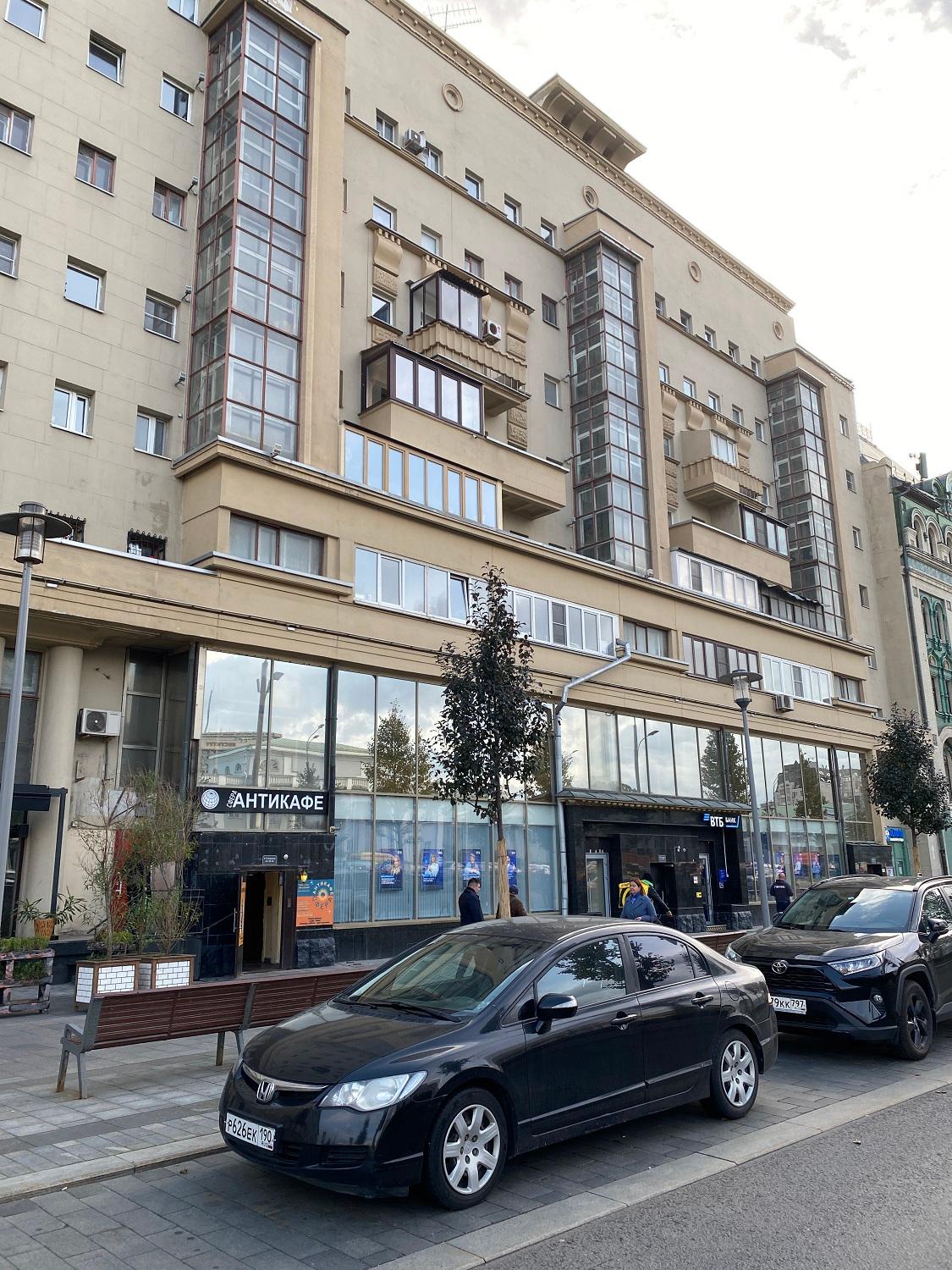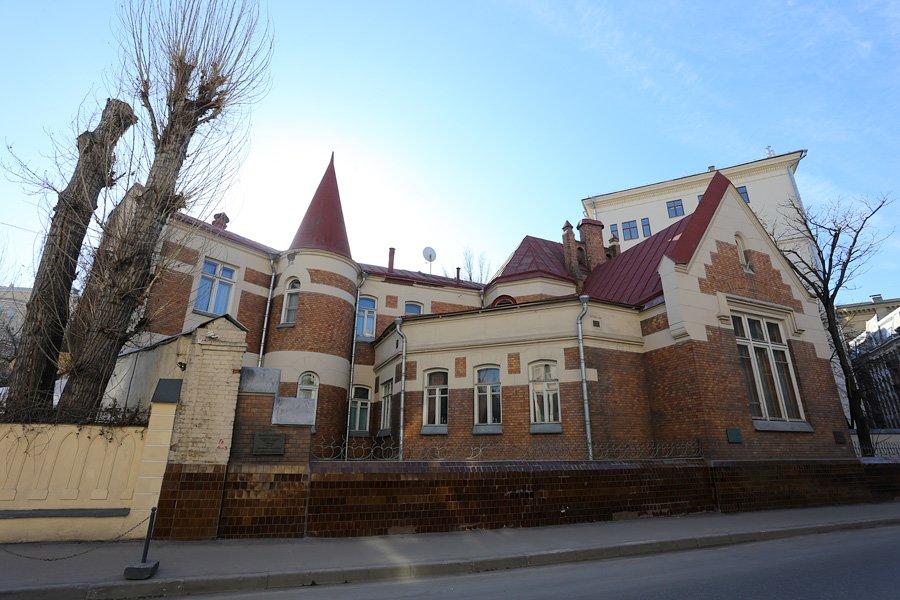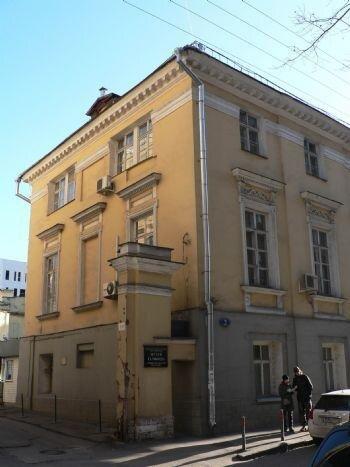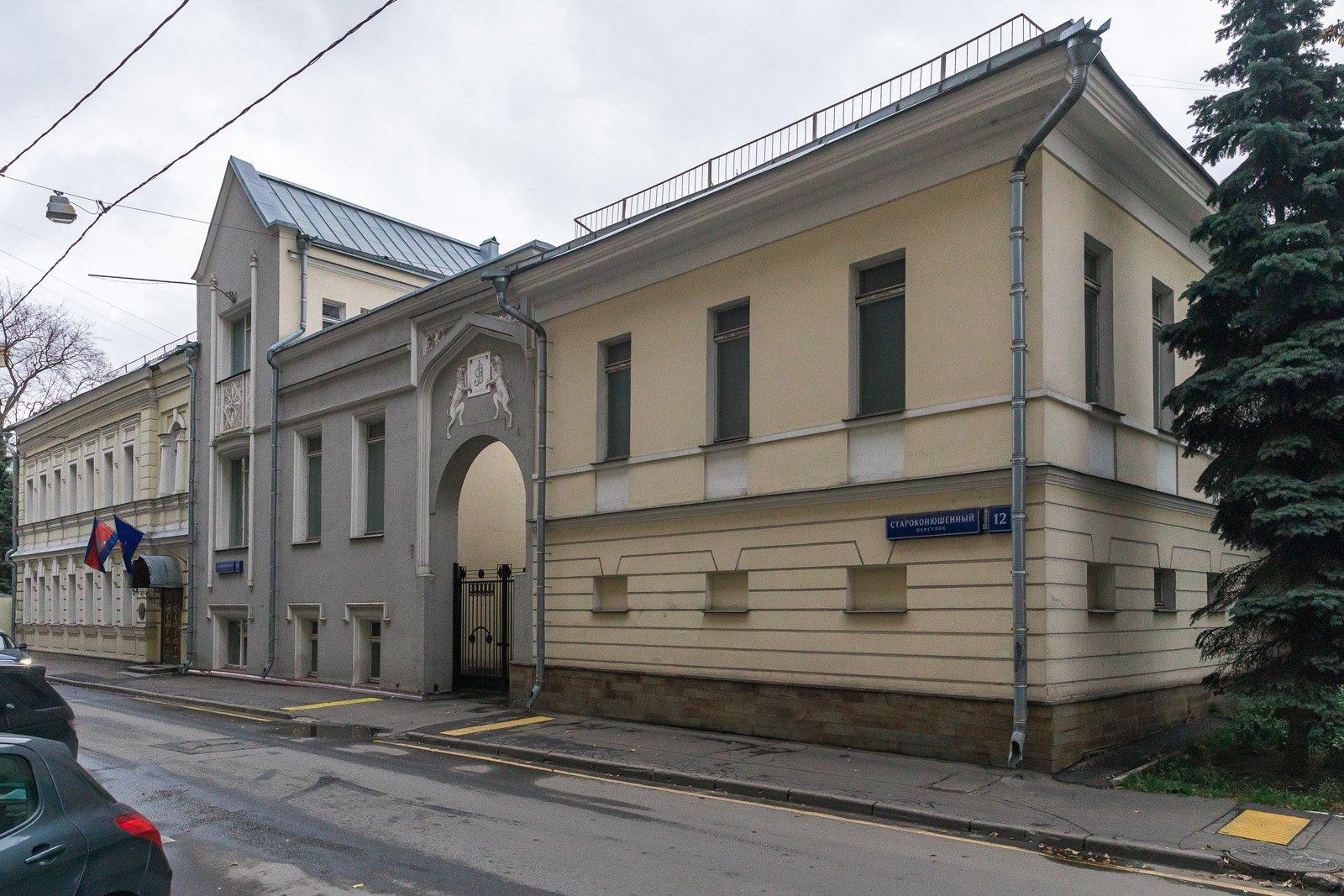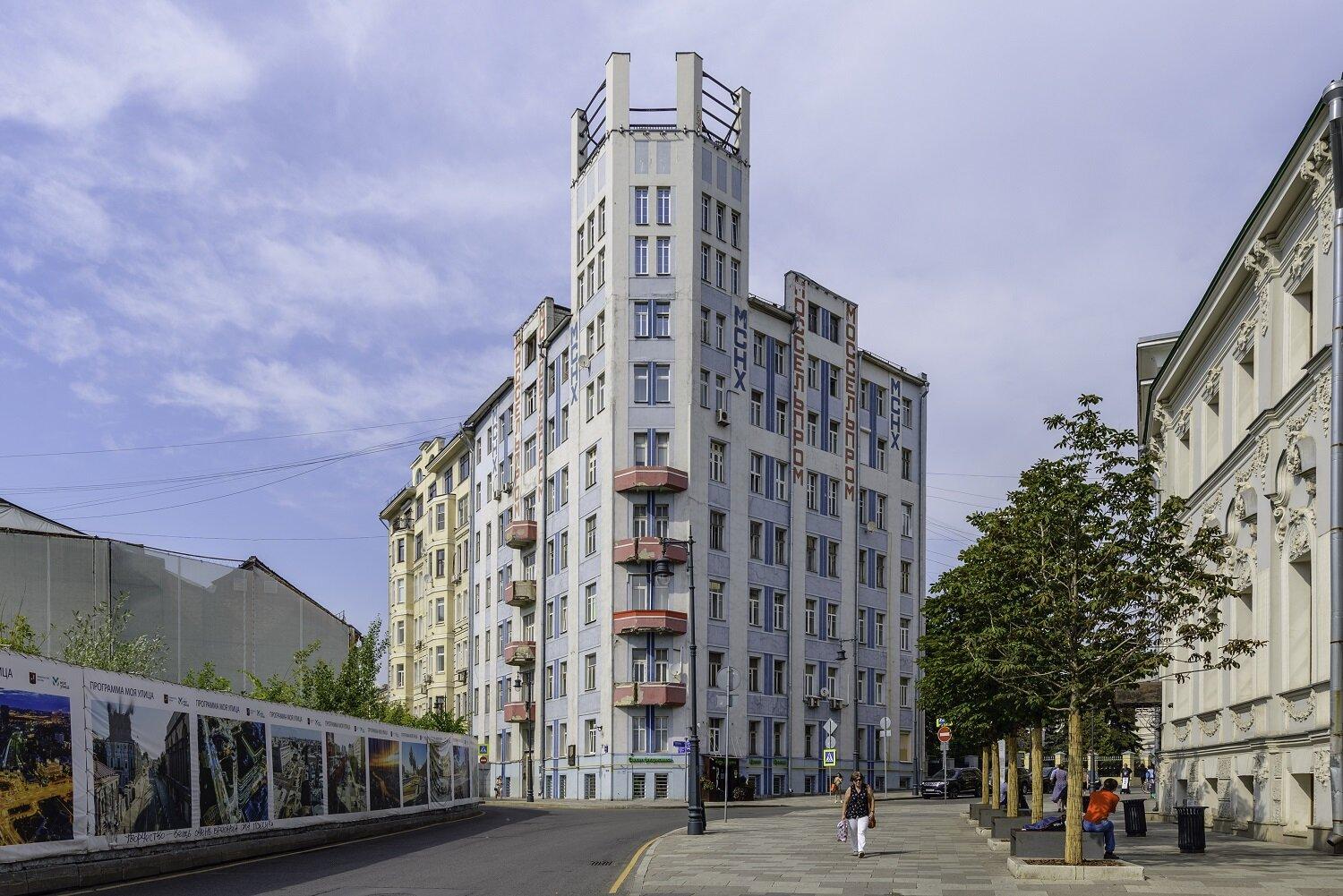


Этот семиэтажный угловой дом с башней и простыми штукатурными фасадами привлекает внимание цветовыми акцентами в простенках окон и балконов, а также вертикальными надписями рубленым шрифтом. Изначально это был один из типичных для начала века доходных домов.
Дом был построен в 1913 году по проекту гражданского инженера Н. Д. Струкова для мещанина А. И. Титова. Однако, здание обрушилось сразу после постройки и было перестроено гражданским инженером В. Д. Цветаевым. Вторая стройка затянулась из-за военных и революционных событий, последовавшей разрухи и была завершена только в 1925 году. В здании разместилась администрация и склады треста Моссельпром. На первом этаже – хранилище муки, администрация пивных и магазинов, над ними – дирекция, бухгалтерия, отдел статистики и даже комячейка и местком. Гражданский инженер А. Ф. Лолейт украсил это здание башней, на которой были часы, хорошо видимые с Арбатской площади, не сохранившиеся к настоящему времени.
Первое, что бросается в глаза, это окраска здания, изображающая конструктивный каркас и призванная осовременить здание в духе новейшей архитектуры. Однако, самое интересное кроется с противоположной стороны. На восточном торце здания была сделана роспись по эскизам Александра Родченко с изображениями основной продукции (конфет, пачек папирос, шоколада, пива и воды в бутылках) и шрифтовыми вставками лозунга «Нигде кроме как в Моссельпроме!», придуманного Владимиром Маяковским. По воспоминаниям современников, продукция Моссельпрома была дорогой, и ей требовалась агрессивная реклама. Художник А. Родченко и поэт В. Маяковский часто работали вместе в рекламе - всем известны их плакаты ««Окна сатиры РОСТА».
В декабре 1997 года были проведены работы по восстановлению росписи. Первоначально она была сделана прямо по кирпичу, а клейма с изображением продукции были выкрашены на листах фанеры. Впоследствии торцевую стену оштукатурили. Воссоздание росписей, сделанное поверх штукатурки оказалось, к сожалению, не слишком долговечным.
This seven-story corner building with a tower and a simple plaster facade attracts the attention by color accents in the spaces between windows and balconies, as well as by vertical inscriptions written with serif font. Initially, it was one of the typical tenement houses of the beginning of the XX century.
This seven-story corner building with a tower and a simple plaster facade attracts the attention by color accents in the spaces between windows and balconies, as well as by vertical inscriptions written with serif font. Initially, it was one of the typical tenement houses of the beginning of the XX century.
The house built by the civil engineer ND Strukov for tradesman AI Titov in 1913. However, the building collapsed soon after the building and rebuilt by a civil engineer VD Tsvetaev. The second building delayed because of the war and the revolutionary events, devastation that followed it and was completed only in 1925. The building housed the administration and warehouses of the Mosselprom trust. The repository of flour and administration of beer stores were on the first floor, management, accounting, statistics department and even the Communist cell and the local committee were on the second floor. Civil Engineer AF Loleyt graced this building with clock tower, clearly visible from the Arbat Square. The tower did not make it to the present time.
The first thing that catches the eye is the color of the building, showing a constructive framework, which aims to modernize the building in the spirit of modern architecture. However, the most interesting thing lies on the opposite side. Paintings based on sketches by Alexander Rodchenko with images of the main products (candy, packs of cigarettes, chocolate, beer and bottled water) and Font inserts slogan "Nowhere except in Mosselprome!", Invented by Vladimir Mayakovsky are on the east end of the building. According to his contemporaries, Mosselprom products were expensive, and it needed an aggressive advertising. The artist Alexander Rodchenko and poet Vladimir Mayakovsky often worked together in advertising - all known for their posters " Windows satire of growth."
In December 1997, painting restauration work was completed. Originally, it made directly on brick and stamp with the image of products were painted on sheets of plywood. Subsequently, end walls are plastered. Recreating paintings made over the plaster was, unfortunately, not very durable.