Интерактивный гид по городу
С мобильным приложением бродить по городу гораздо интереснее!

Majolica house

From year to year, every minute, someone in the house diligently recorded the time and make of vehicle, leaving the walls of the Kremlin.

Majolica house
Majolica house
From year to year, every minute, someone in the house diligently recorded the time and make of vehicle, leaving the walls of the Kremlin.
5.00
Вы можете воспользоваться QR-кодом, чтобы открыть эту страницу в нашем приложении
Архитектурный стиль:
,
Годы постройки:
1912-1913
Архитекторы:
Эпоха:
1910s
Информация о здании

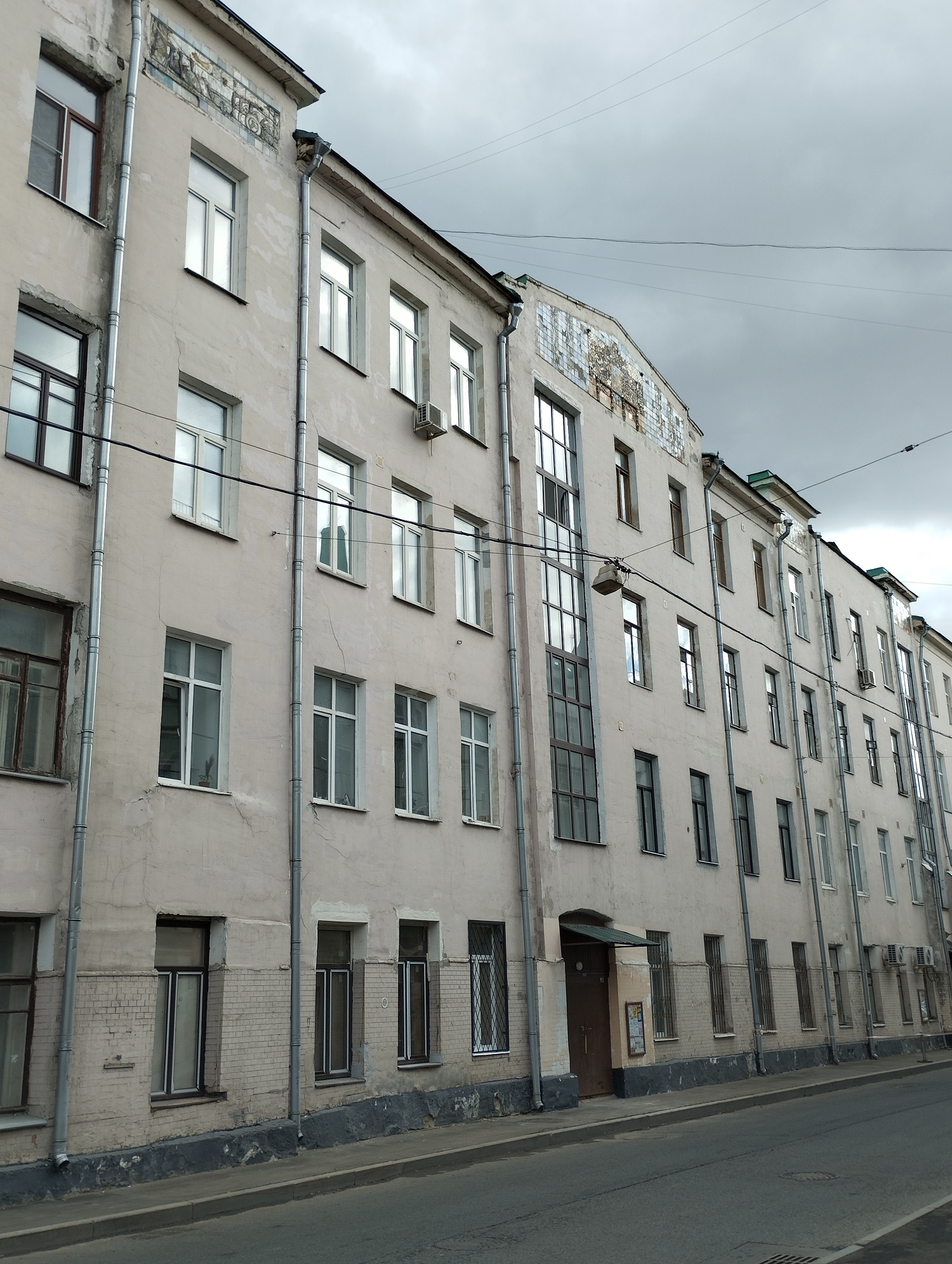
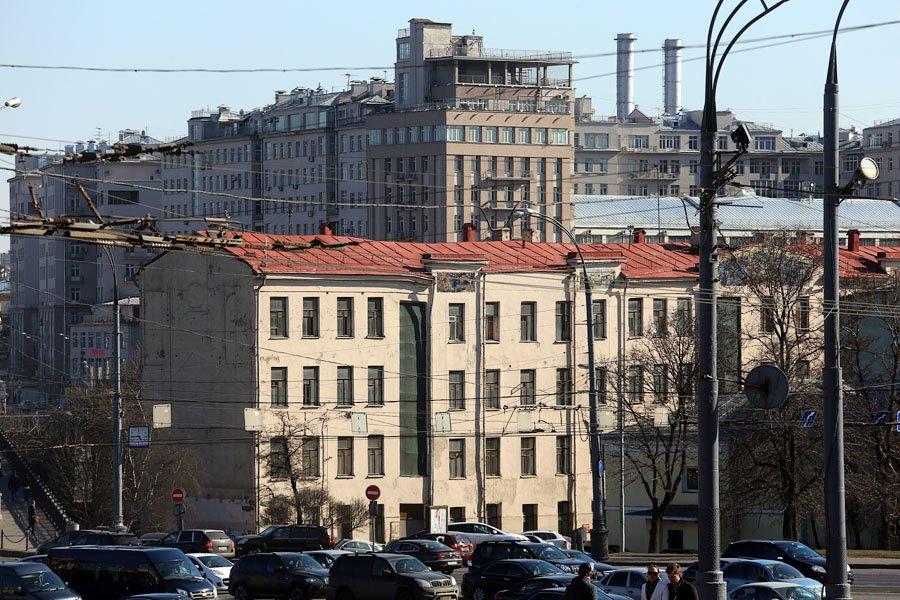
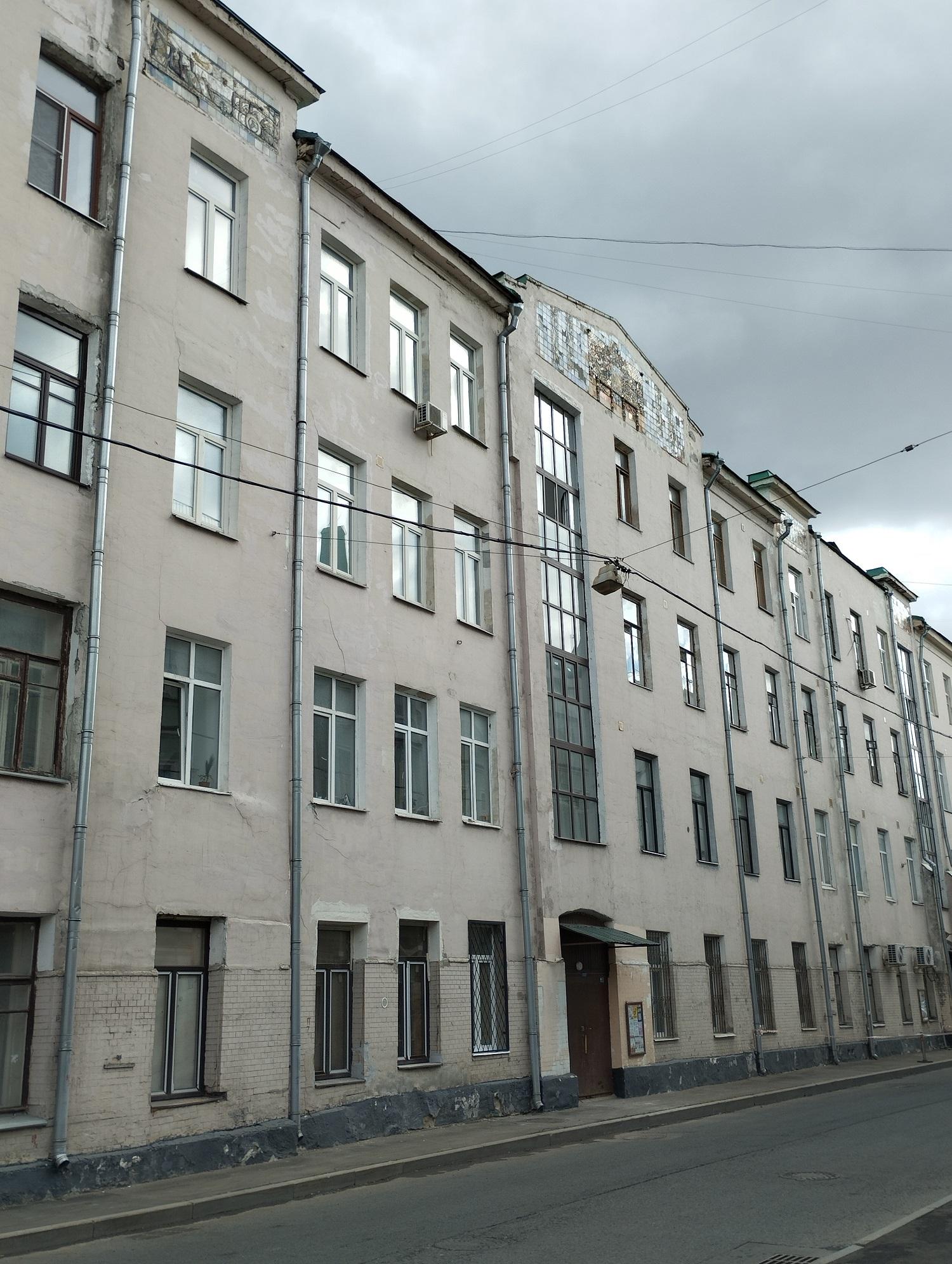
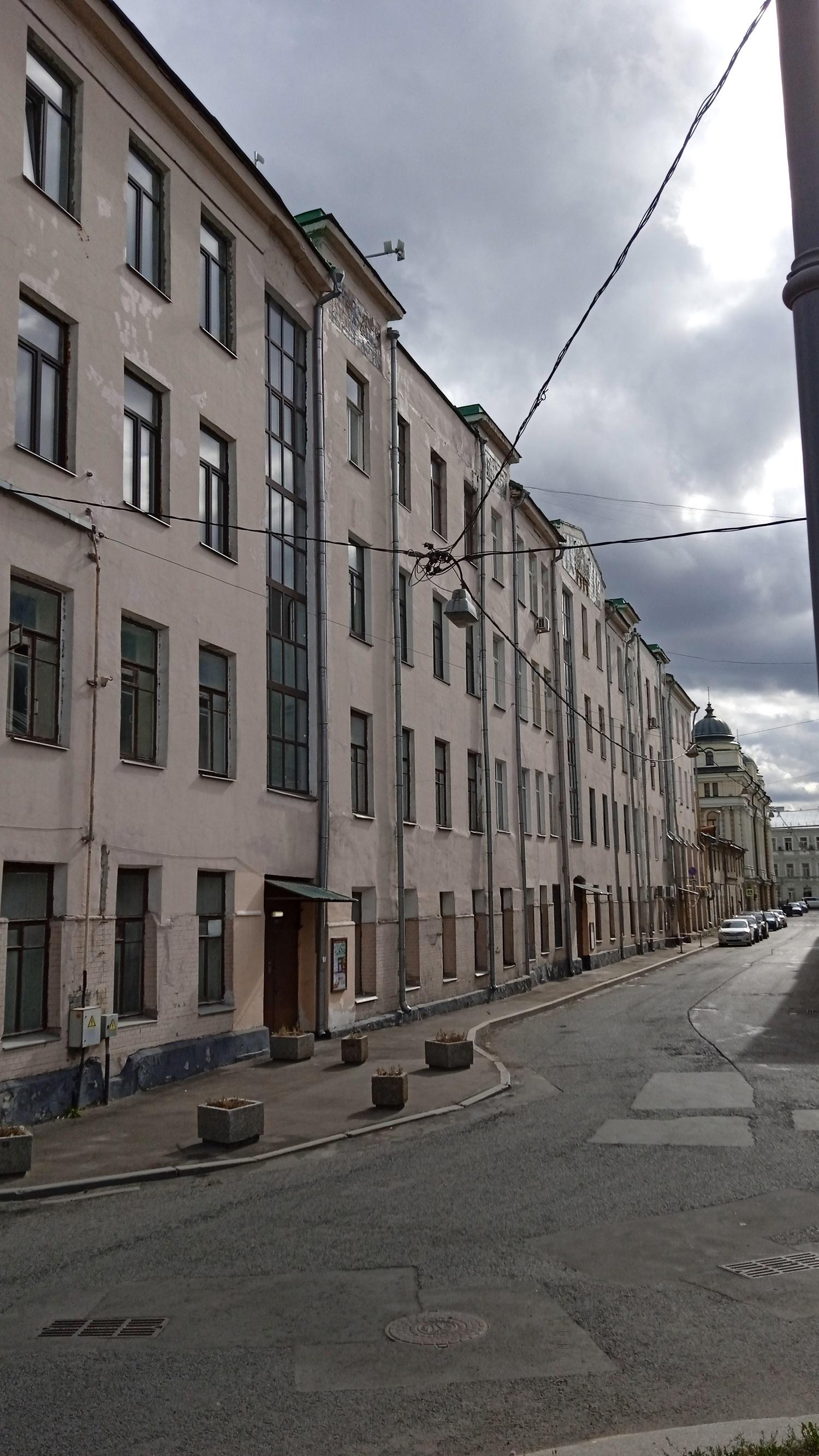
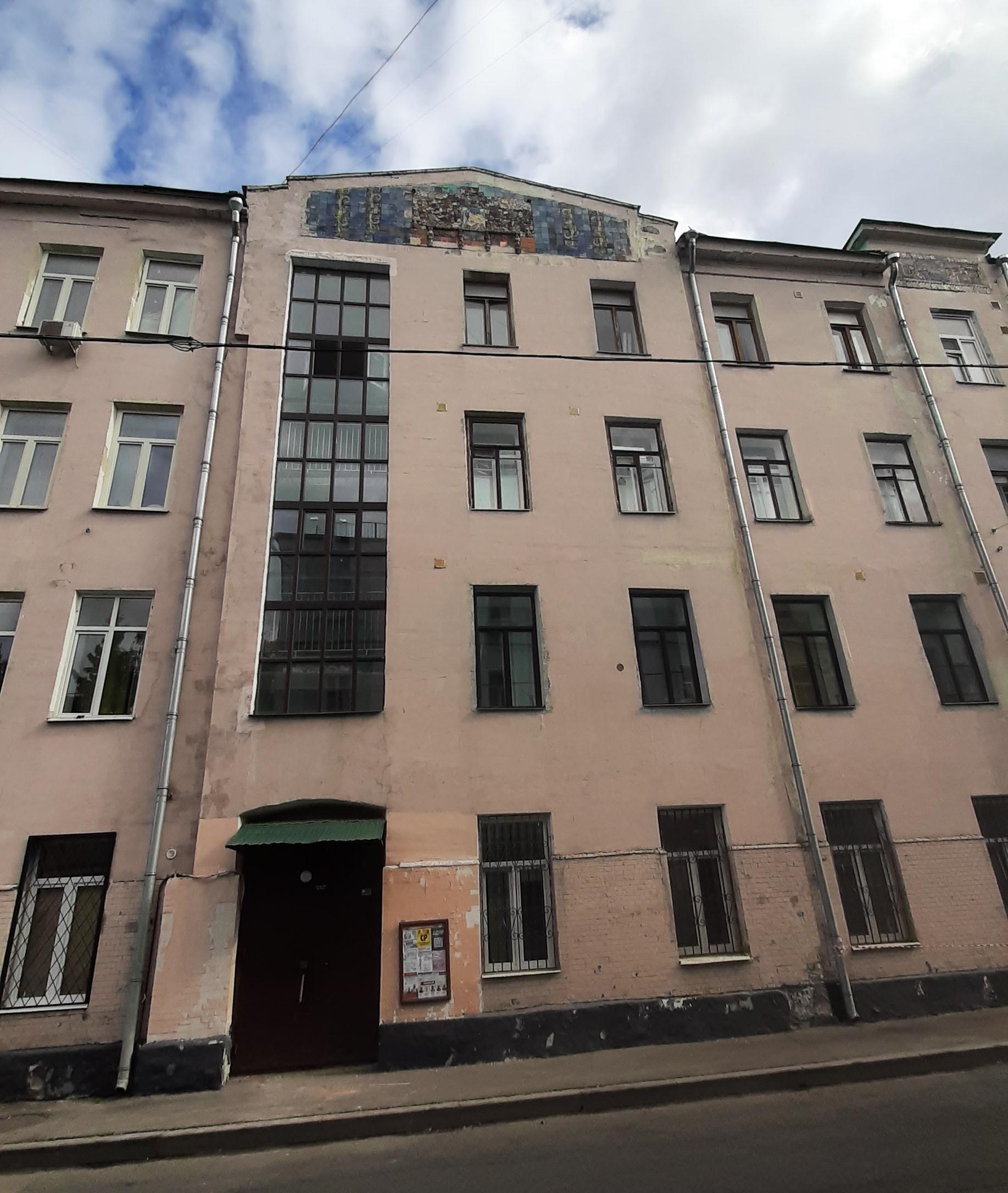
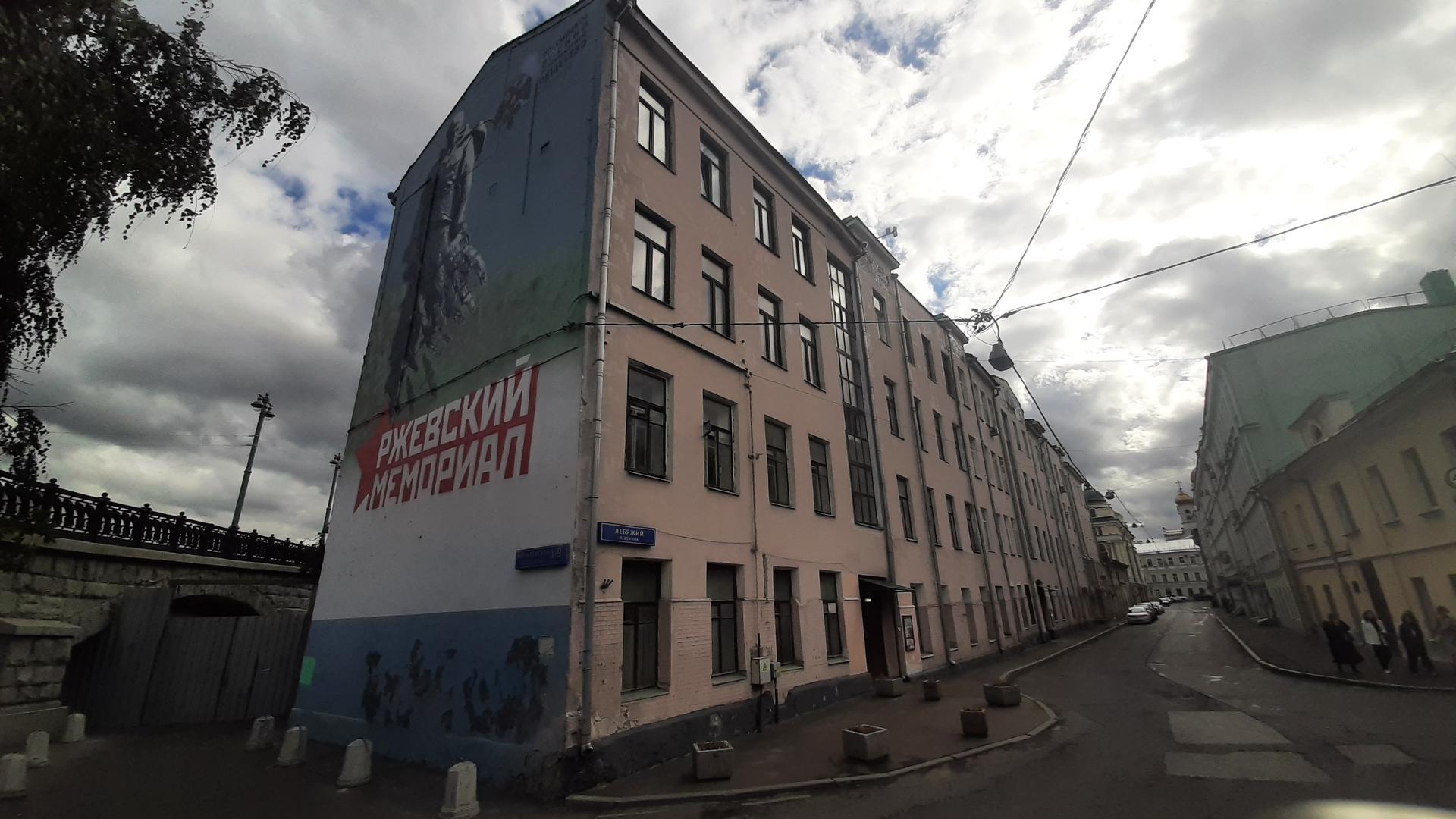
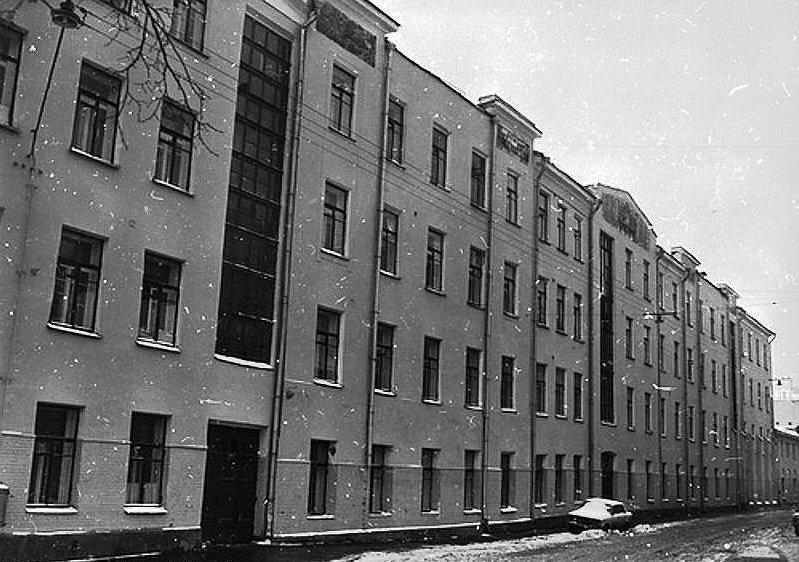
Дом этот выходит окнами прямо на Кремль. В одной из квартир новые постояльцы как-то обнаружили толстенные бухгалтерские книги. Из года в год, каждую минуту, в них кто-то прилежно фиксировал время и марку автомобилей, выезжающих из кремлевских стен…

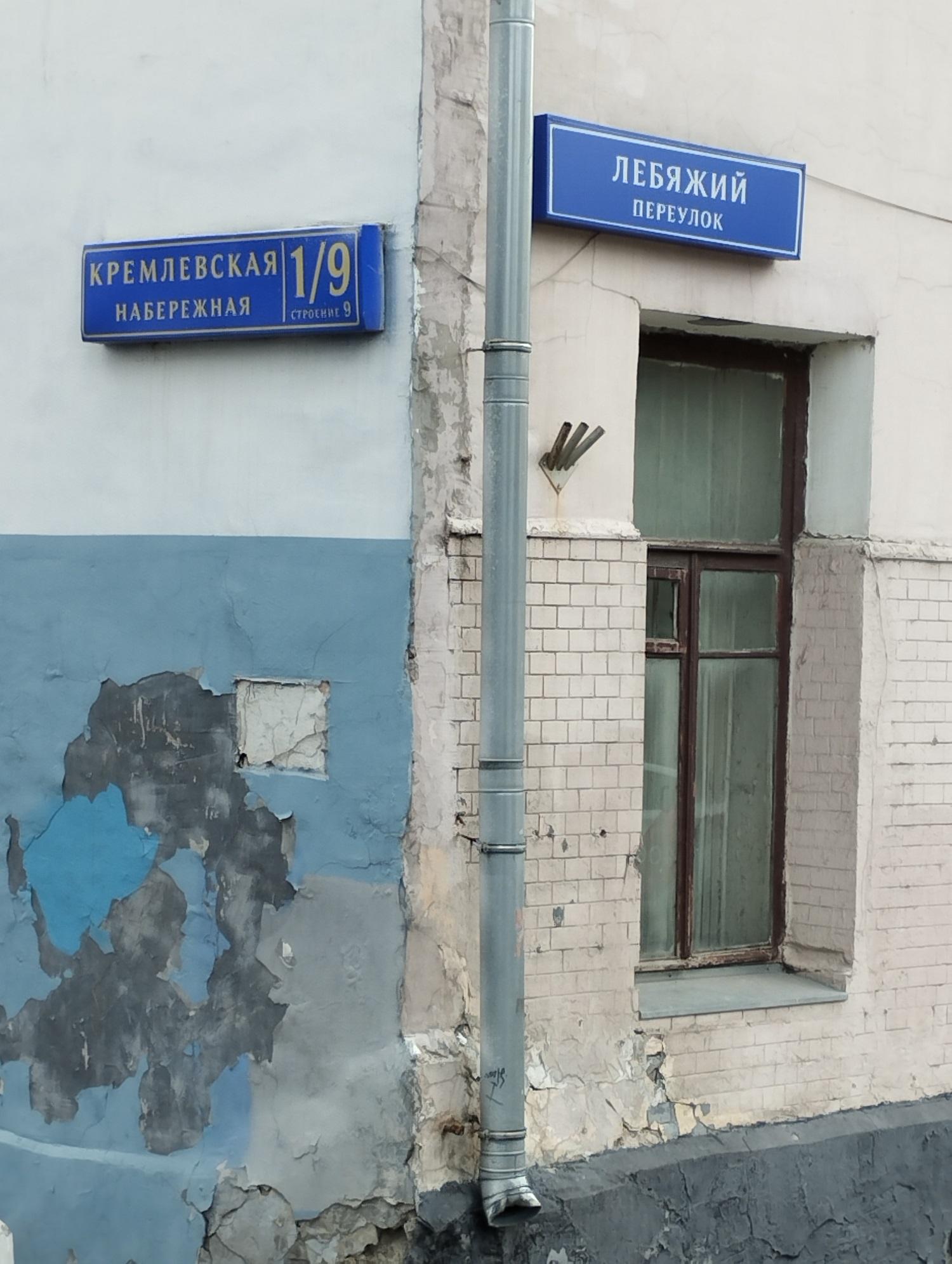
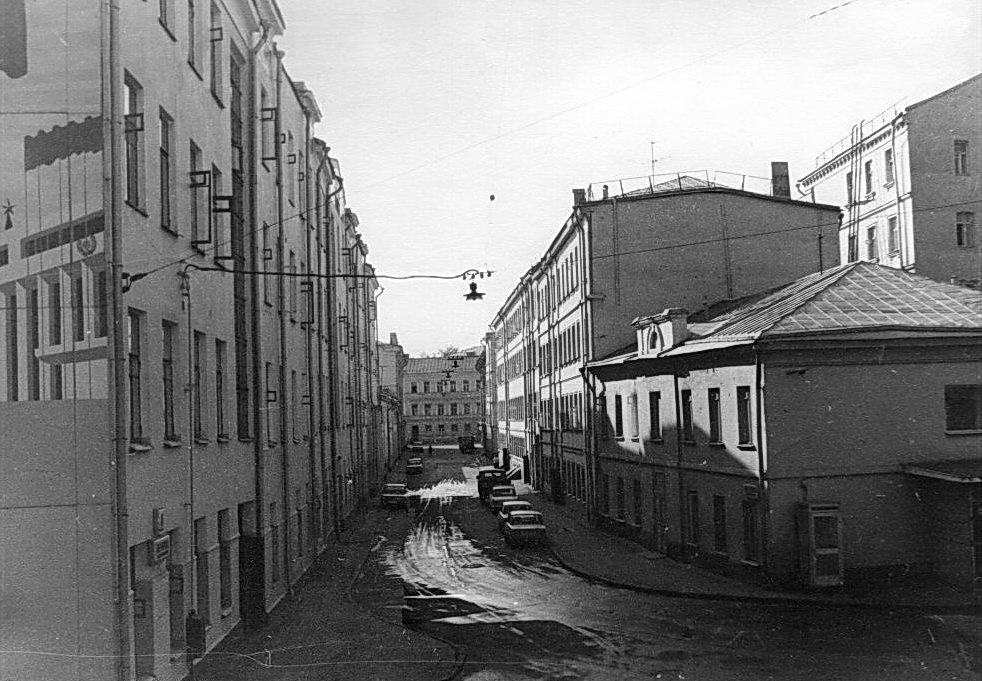
До 1780-х годов квартал, в котором теперь расположен дом в Лебяжьем переулке, оставался за потомками Зотова и Головина. С конца XVIII века владельцы часто менялись и все время перестраивали усадьбу, главный дом которой и теперь стоит по адресу Кремлевская наб., 1/9. В 1868 году благородное имение приобрел губернский секретарь Михаил Андреевич Попов и устроил здесь водочный завод. Владение интенсивно застраивалось — ставились корпуса по Лебяжьему переулку, по направлению к Неглинной улице. Характер застройки понятен — склады, производство. После смерти хозяина фабрики производством некоторое время ведала его вдова, а в 1878 году оно перешло к потомственным гражданам Протопоповым, учредившим «Товарищество водочного завода преемников вдовы Поповой». «Товарищество» просуществовало на Кремлевской набережной до 1908 года.

В 1911 году усадьбу приобрел Петр Гаврилович Солодовников, сын известного промышленника и содержателя театра на Большой Дмитровке Г. Г. Солодовникова. По заказу Петра Гавриловича в 1912 году архитектор С. М. Гончаров перестроил складские помещения в западной части владения (со стороны Ленивки) и по Лебяжьему переулку. Там разместились театр миниатюр на 520 мест и «Электротеатр», то есть синематограф, на 280 мест. Со двора к ним было пристроено помещение для фойе, а перестроенное здание по Кремлевской набережной использовалось как вход в театр и для театральных касс.

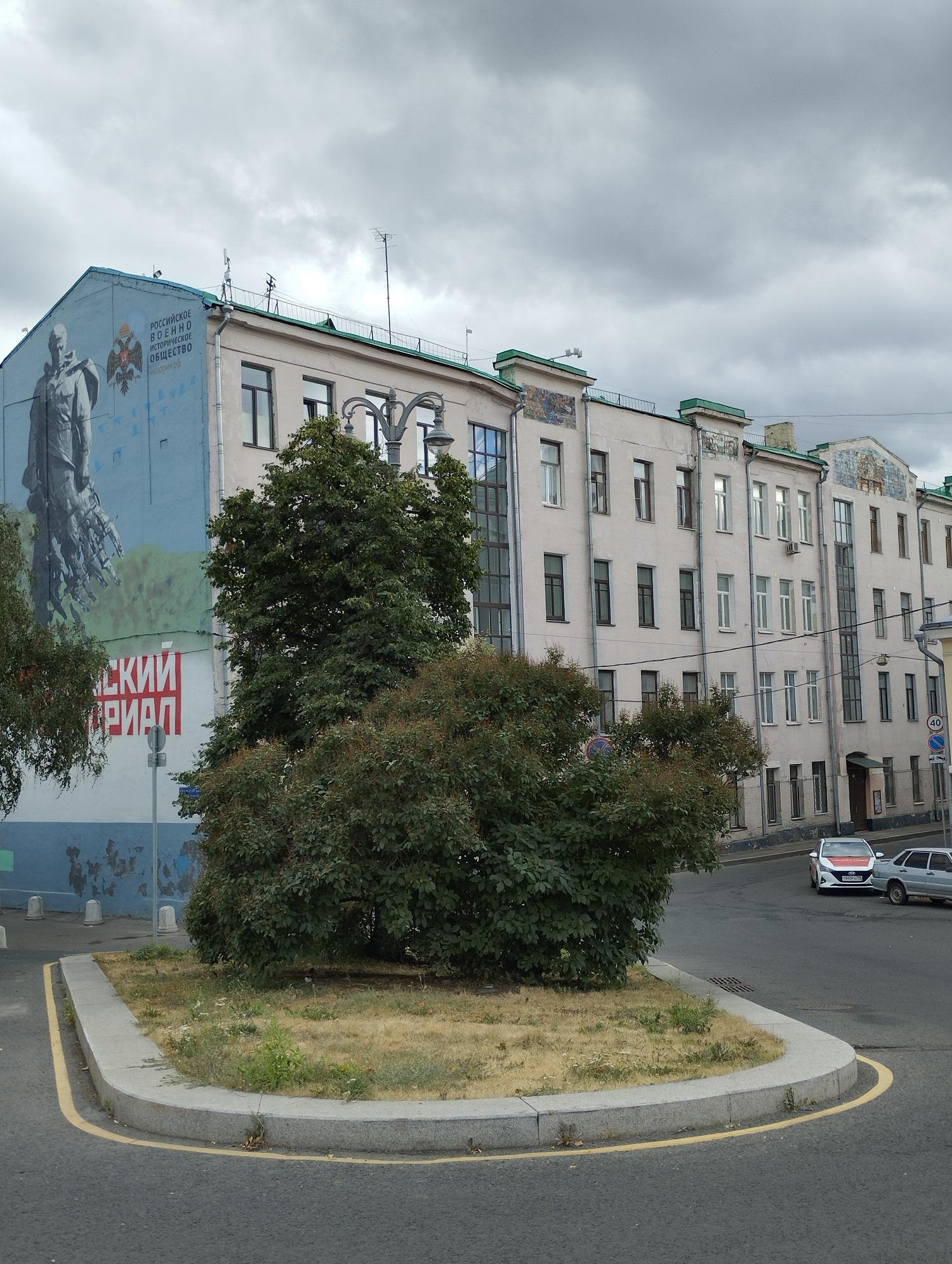
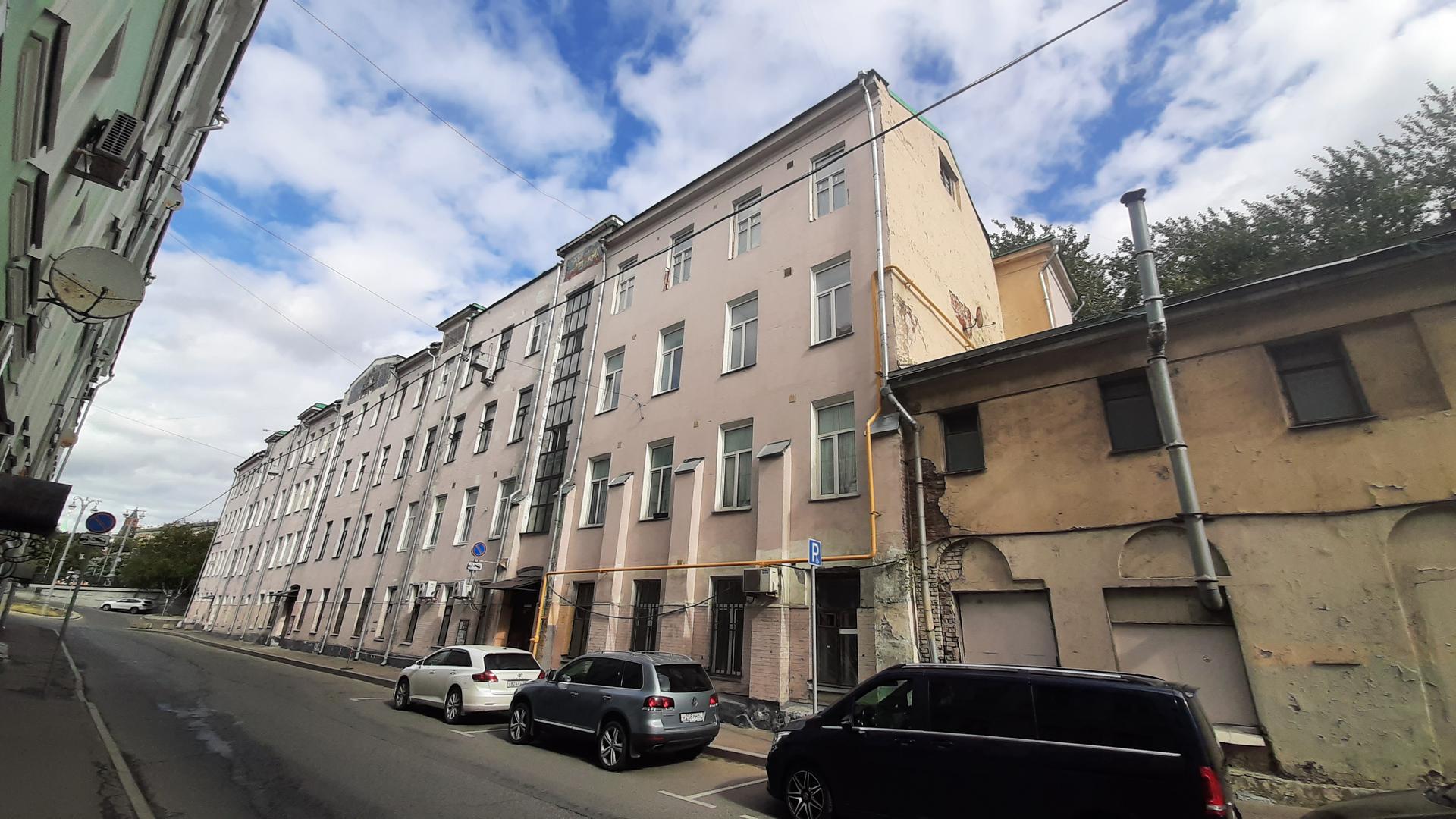
Помимо зданий театра перестройке подверглись также и расположенное рядом двухэтажное здание по Лебяжьему переулку, незадолго до того горевшее. В 1912 году тут все тем же архитектором С. М. Гончаровым строится трехэтажный доходный дом, в 1913 году подросший на этаж. Дом с пяти- и шестикомнатными квартирами был оборудован лифтами.

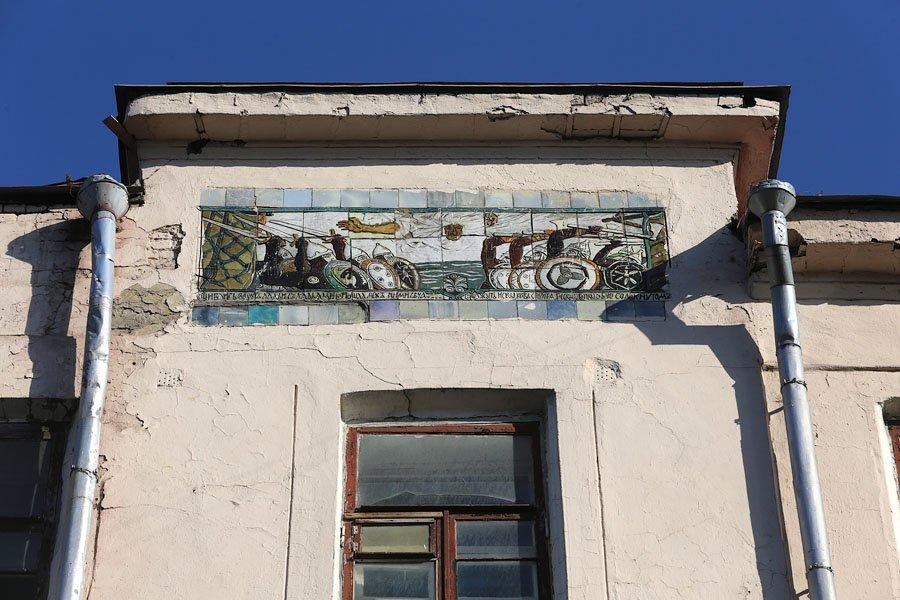
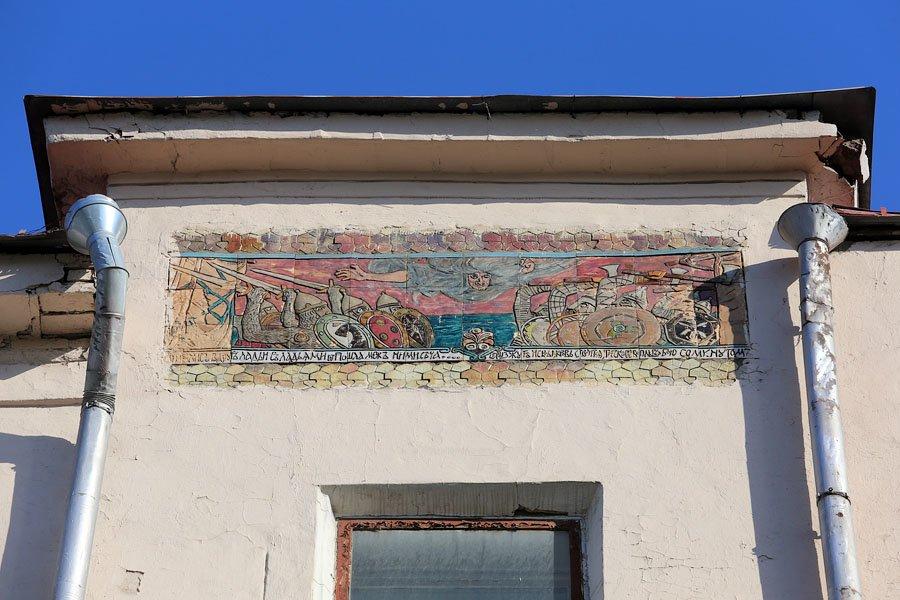
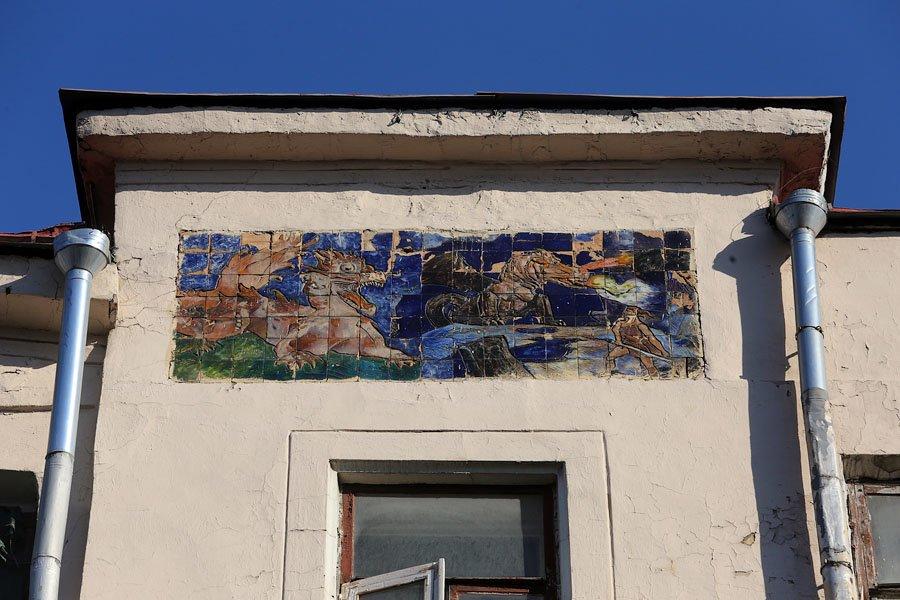
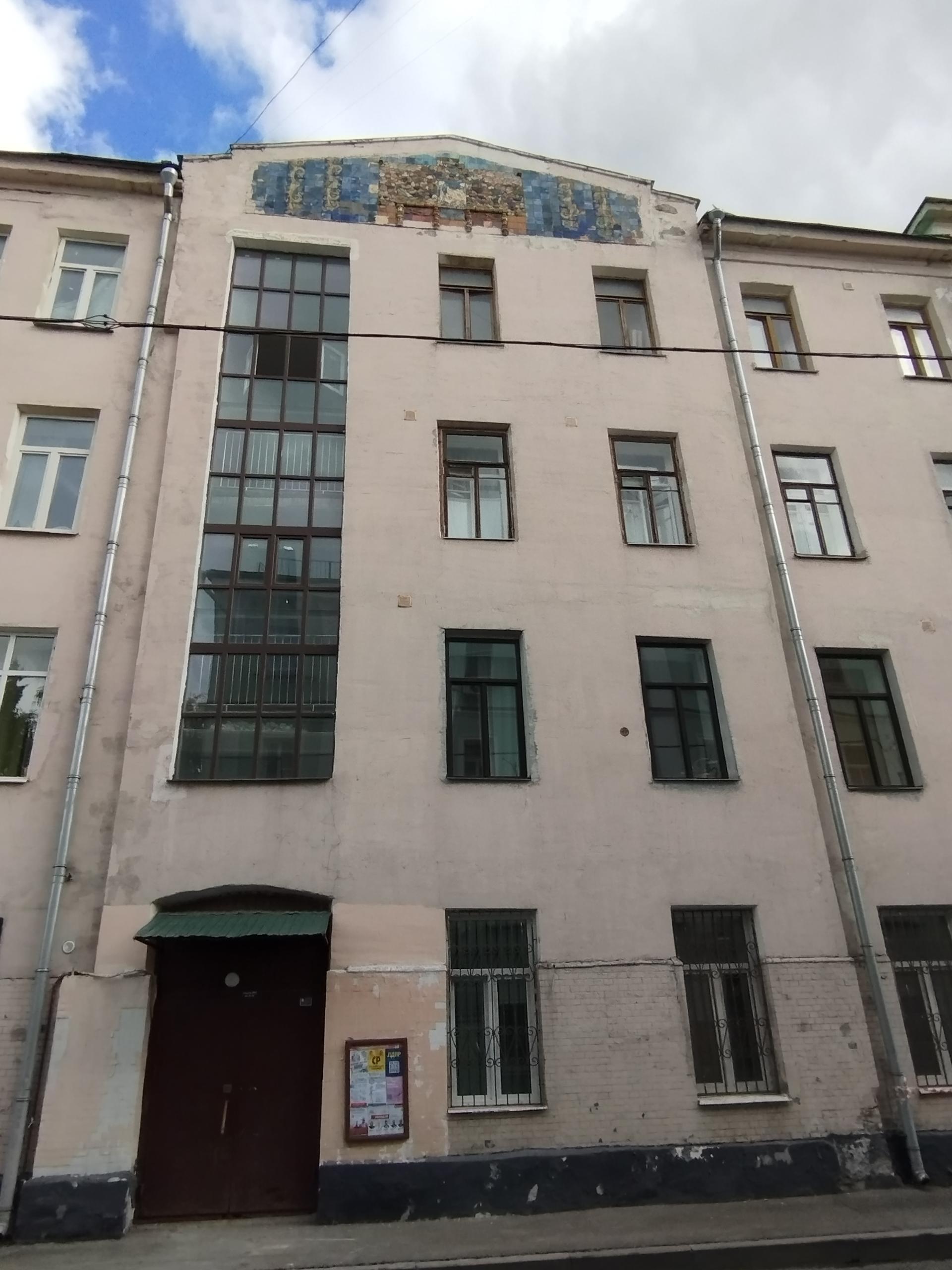
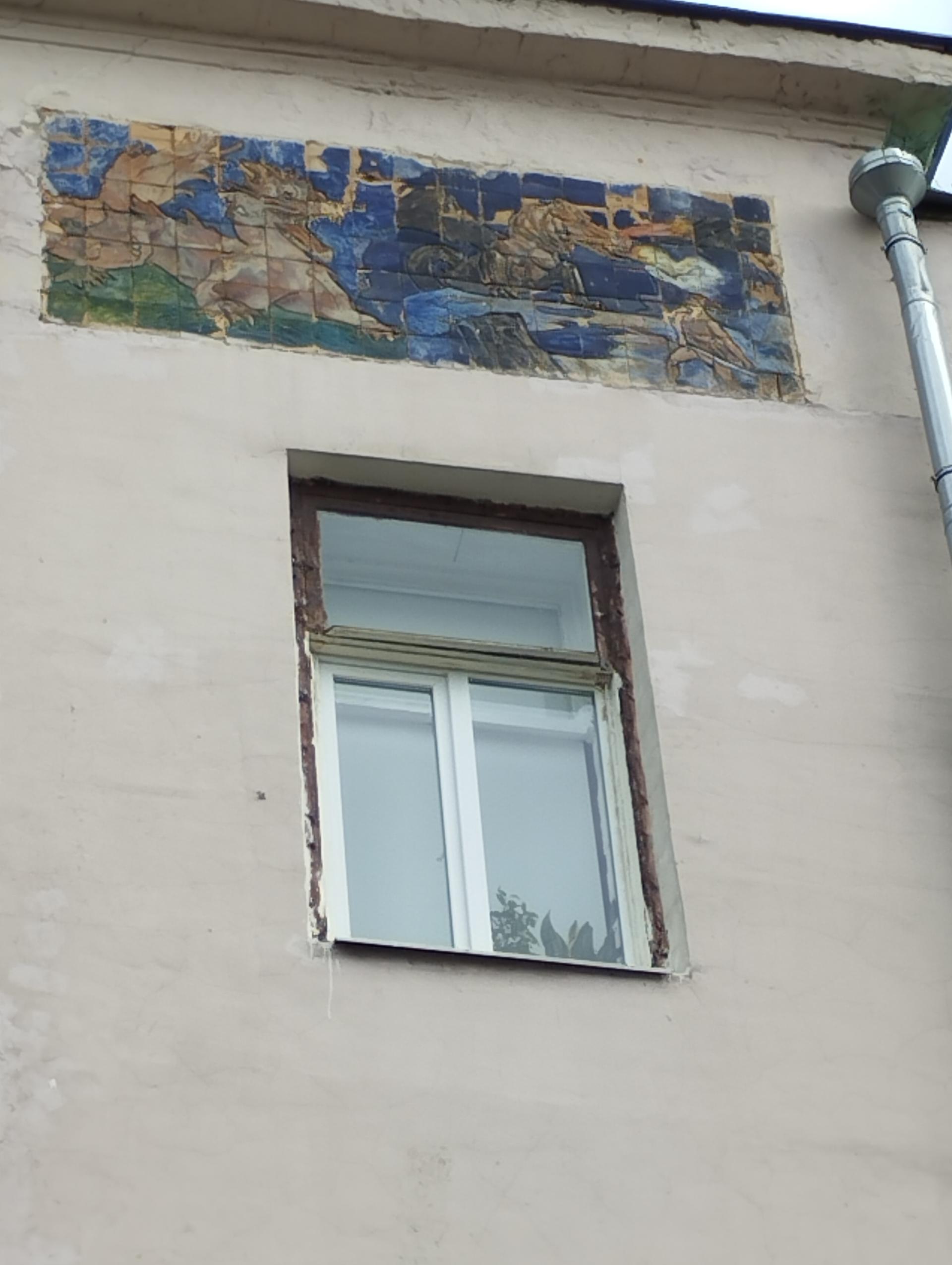
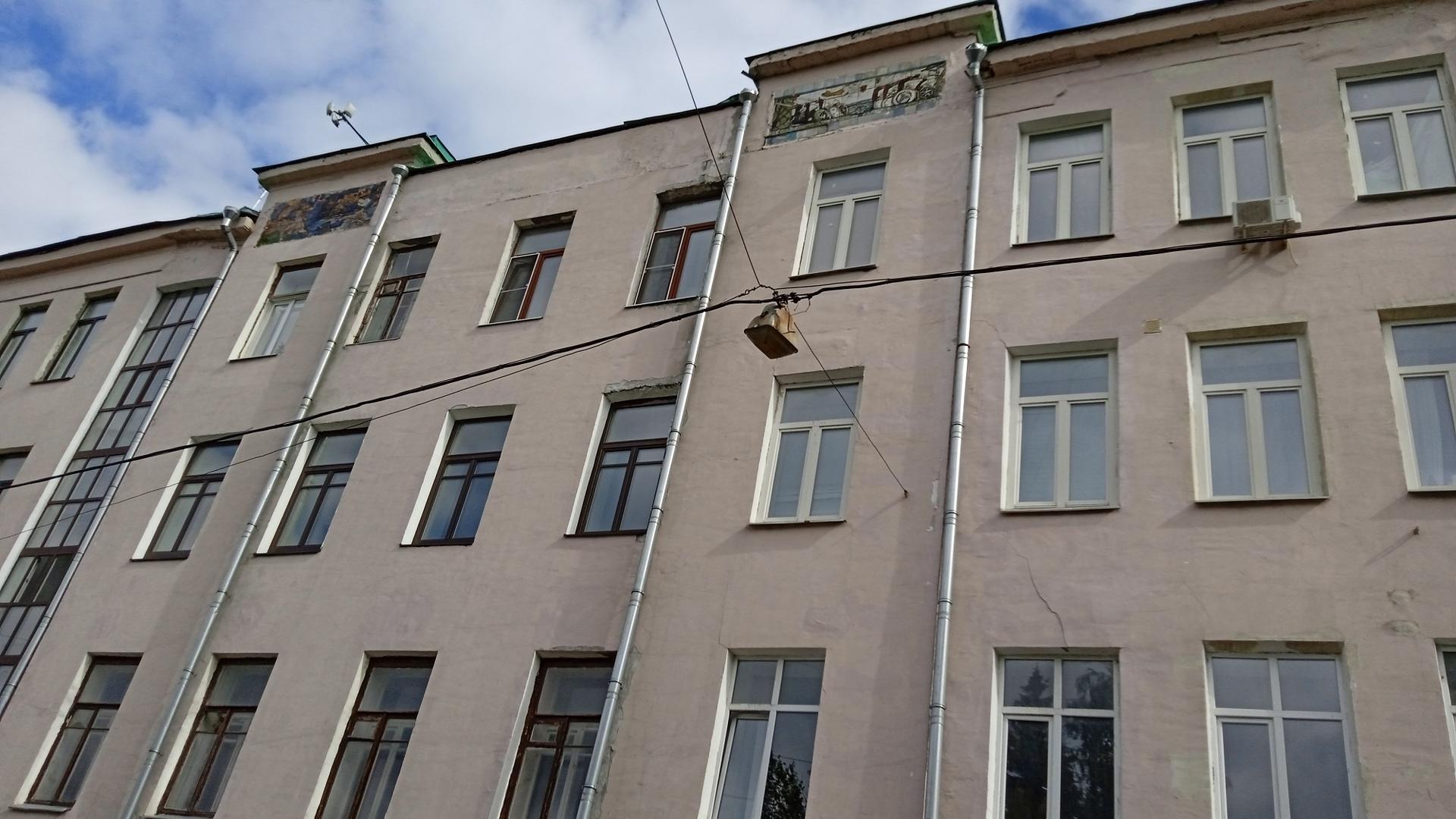
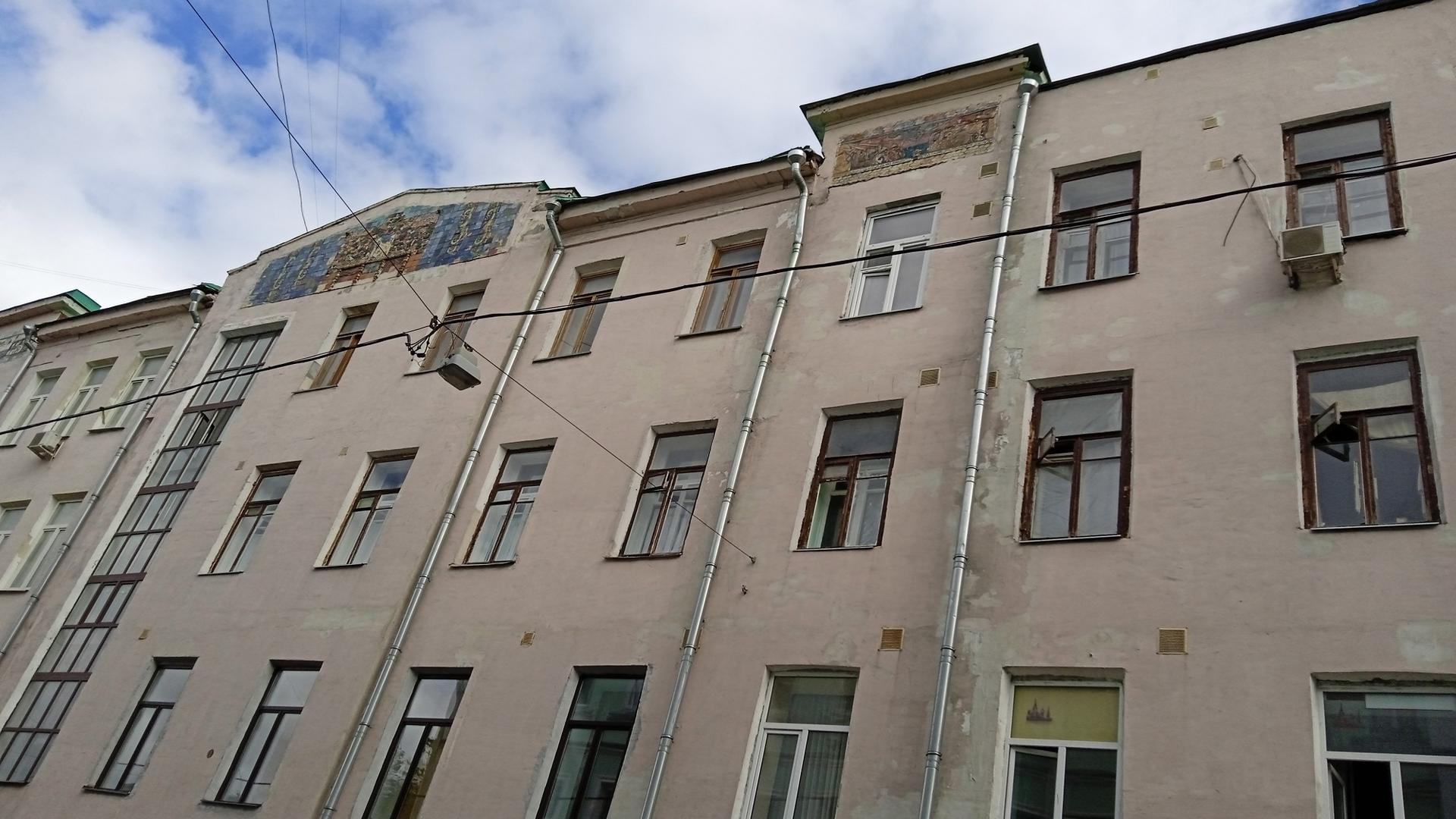
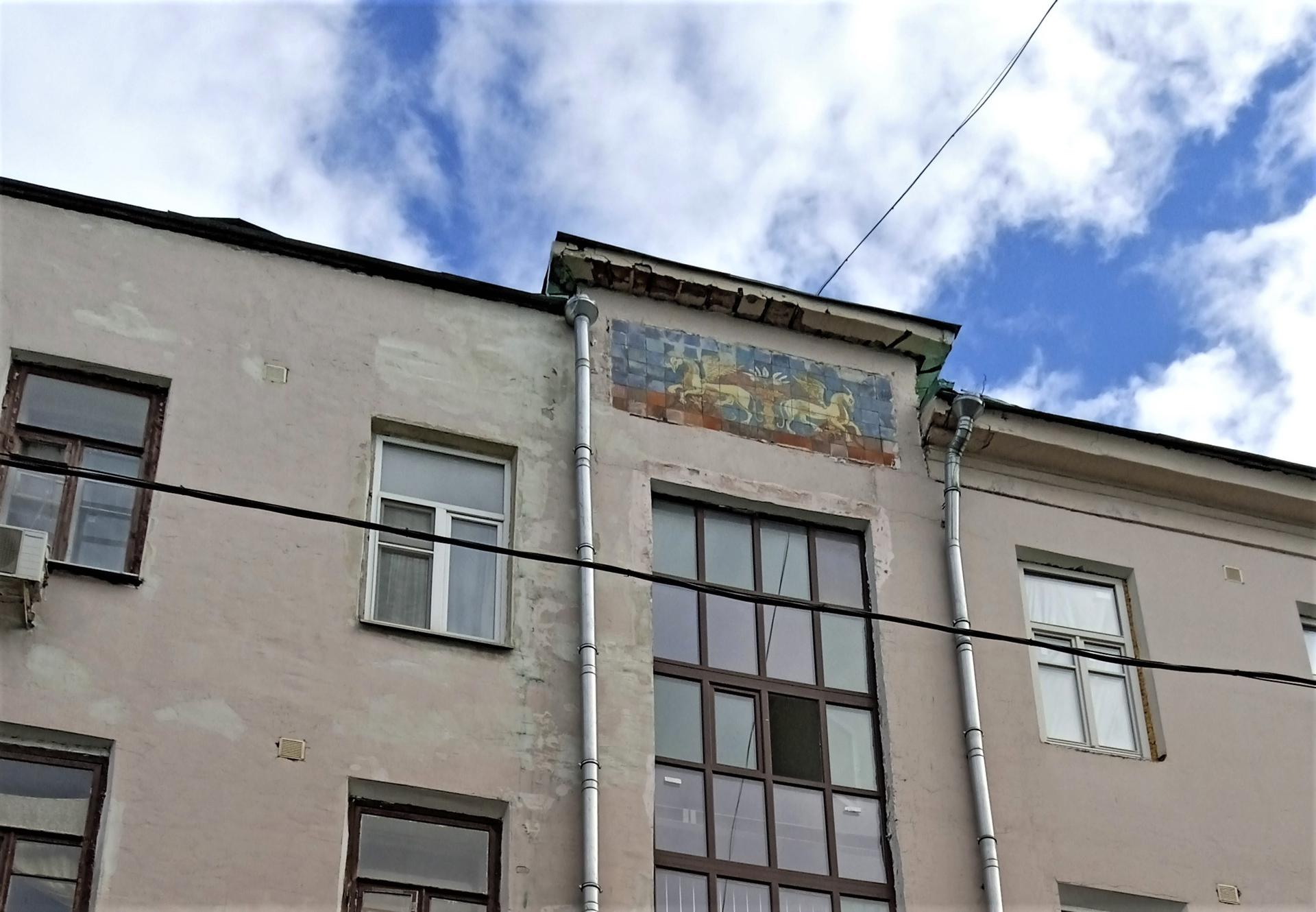
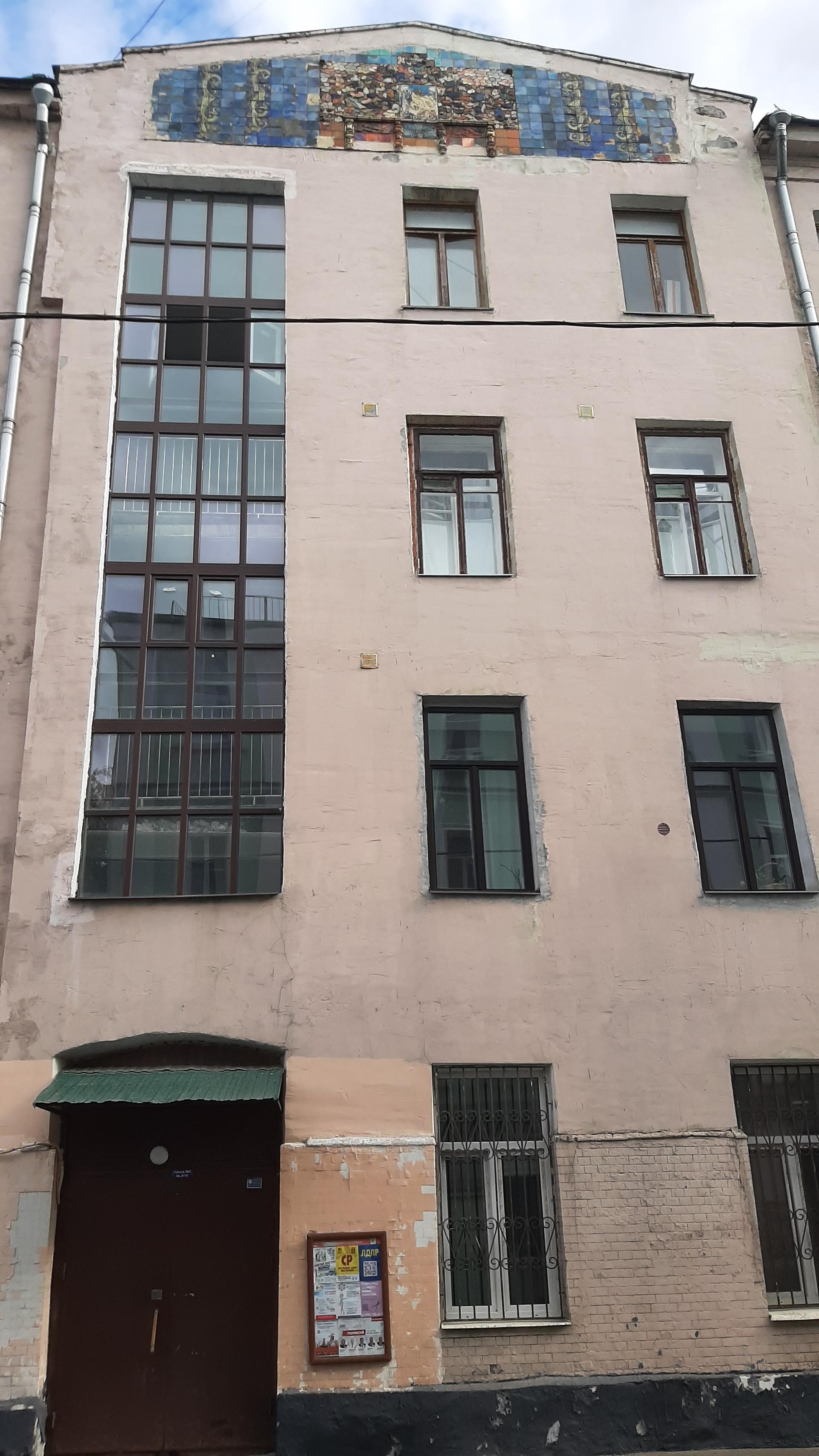
Получившаяся постройка была бы совершенно заурядной, если бы не замечательные керамические панно под самой ее кровлей. С улицы трудно различить подписи под их былинно-батальными сценами, но это цитаты из баллады А. К. Толстого «Боривой»: «Сшиблись вдруг ладьи с ладьями, и пошла меж ними сеча, брызжут искры, кровь струится, треск и вопль в бою сомкнутом…»

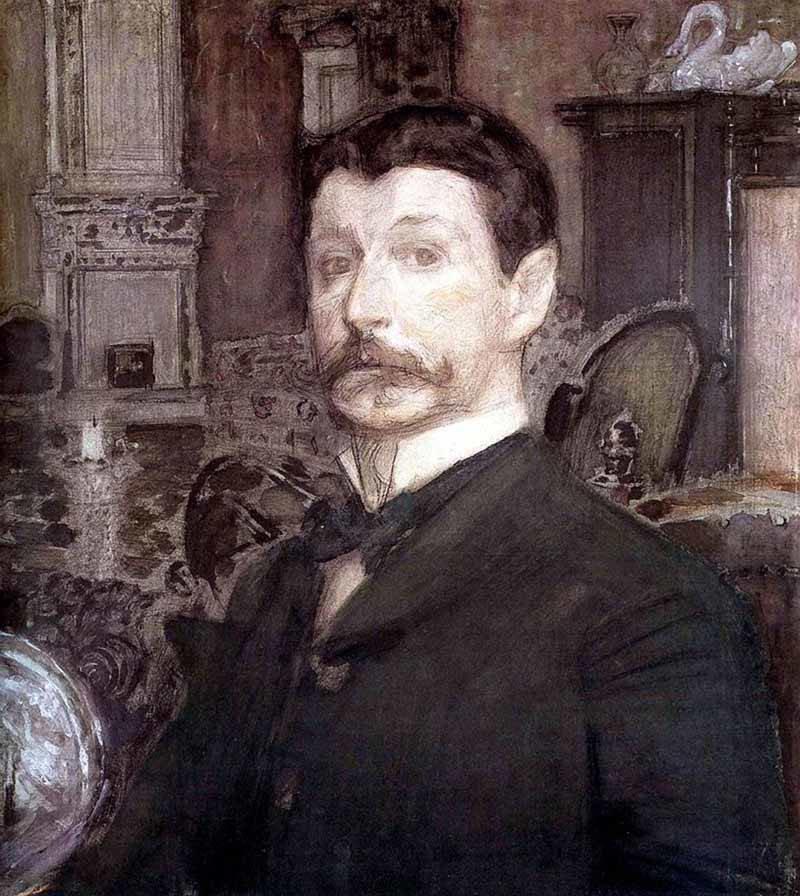
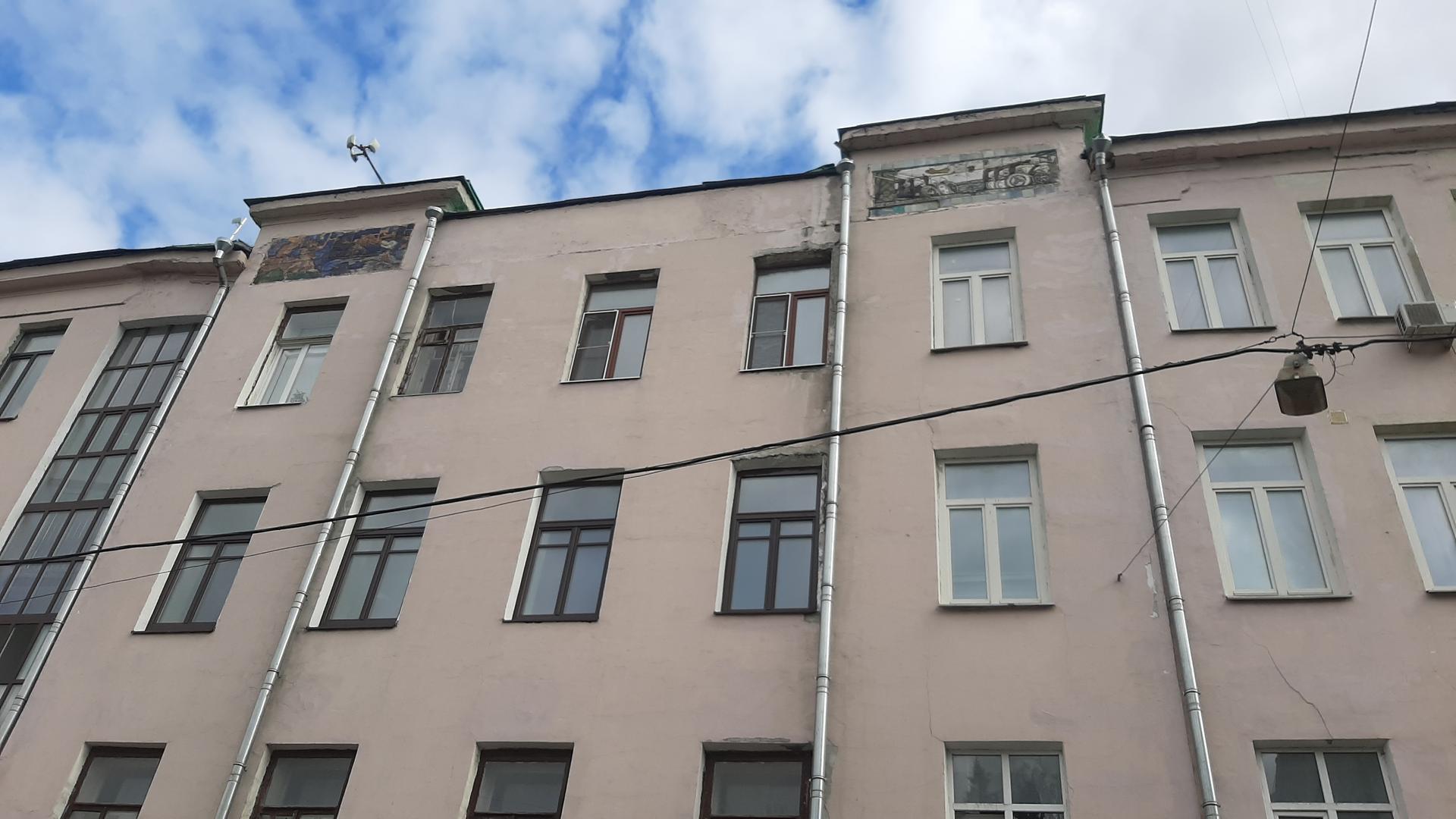
Всего на доме пять панно. По предположению исследователей В. Петровой, М. В. Нащокиной и С. Величко, рельефные детали самого большого центрального панно с девушкой в окружении морского царства выполнены по отливкам М. А. Врубеля. Кстати, эту же девушку с сережкой можно встретить… в Таганроге. Двухэтажный особняк Шаронова (музей градостроительства и быта, ул. Фрунзе, д. 80). Существует даже предположение, кто именно изображен на панно — балерина Гузикевич, о которой, к сожалению, почти ничего не известно. Но возможно, она работала в театре Солодовникова, и тогда ее изображение могло служить так же и рекламой.

По обеим сторонам центрального панно в соседних аттиках расположены две картины с изображением батальной сцены и подписью: «Сшиблись вдруг ладьи с ладьями, и пошла меж ними сеча. Брызжут искры, кровь струится, треск и вопль в бою сомкнутом».

Подлинное авторство панно со стихотворными строками пока установить не удалось. Есть предположение, что это также Врубель.

Владельцы и значимые персоны

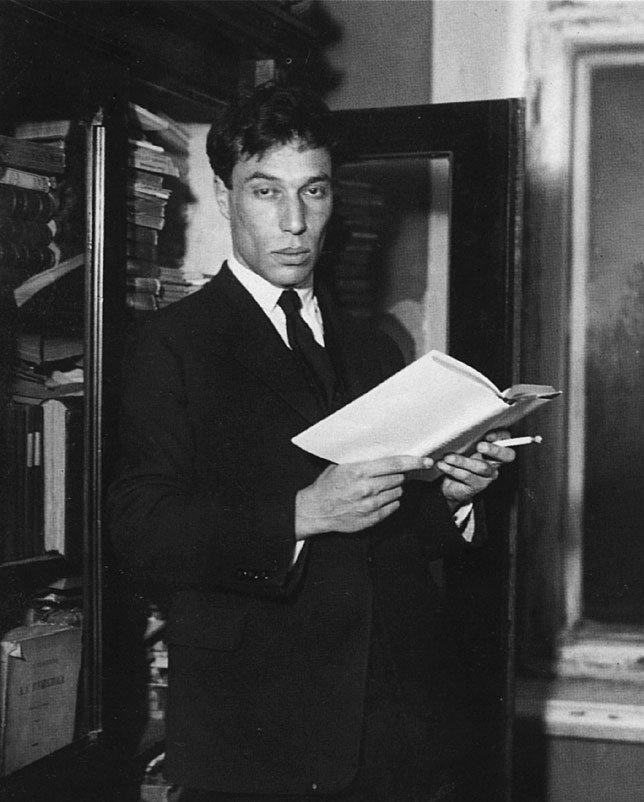
Доходный дом № 1 в Лебяжьем переулке в определенной степени является еще и «литературным домом», т. к. связан с именами Бориса Пастернака и Александра Межирова. Борис Леонидович Пастернак жил в этом доме дважды (осенью 1913 и весною 1917 гг.). «Вернувшись в Москву, Пастернак снял маленькую комнату у въезда в Лебяжий переулок (дом 1, кв. 7). Ее окно выходило на Кремль и Софийскую набережную, поверх деревьев Александровского сада, который в этом месте был гораздо шире теперешнего. „Коробка с красным померанцем — моя каморка…“ — писал он об этой комнате в 1917 году в стихотворении „Из суеверья“. Это значило — размером со спичечный коробок. Сравнение было понятно современникам: на этикетке спичек часто изображался яркий оранжево-красный померанец, горьковатый родственник апельсина». (Пастернак Е. Б. Борис Пастернак. Биография).


Александр Петрович Межиров 6 сентября 1923 года в коммунальной квартире этого дома родился. «Дом, в котором я родился и рос, и теперь стоит на берегу Москвы-реки, окнами на Кремлевскую набережную и Лебяжий переулок. На другом берегу — Замоскворечье, Болотный рынок, Кадашевские бани, купеческие особняки в тихих переулках, особый, еще не разбавленный замоскворецкий говорок. Помню старый Каменный мост, его деревянные пролеты, храм Христа Спасителя, в который водила меня няня, боясь оставить на мраморных плитах площади. В этом храме она совсем тихо подпевала хору, по-своему молилась. Помню, как храм взорвали. Видел с крыши котовского доходного дома (№ 6), еще ничего не понимая. Помню, как на противоположном берегу стали строить большой серый дом…» (А. Межиров. Артиллерия бьет по своим. Избранное. Вместо предисловия).

Лебяжий переулок упоминается в ряде стихов Межирова, также называется и целый стихотворный сборник, вышедший в 1968 году.

«Мою шинель походы разлохматили,
Прожгли костры пылающих руин.
А в медальоне спрятан адрес матери:
Лебяжий переулок, дом 1…»

Медальон, 1951 г.

 …В 1938 году Большой Каменный мост был перенесен от устья Ленивки на новое место, ближе к Кремлю — как раз на место зотовского двора. Новостройка съела треть его территории, но главный дом, по счастью, остался цел. Уцелел и дом в Лебяжьем. Однако давно ходят разговоры о необходимости строительства еще одного съезда с Боровицкой площади на Кремлевскую набережную. И тогда судьба дома, являющегося ценным градоформирующим объектом, окажется под вопросом.
This house directly overlooks the Kremlin. New tenants ones found several thick books when they moved to one of the apartments. Year by year, every minute someone diligently recorded the time and make of vehicles, leaving the Kremlin walls... Descendants of Zotovs and Golovins families owned the quarter in Lebyazhy Lane where the house is now located until the 1780s. Since the end of XVIII century, the owners changed frequently and always rebuilt the manor house, the main house which now stands at 1/9 Kremlin embankment. Provincial Secretary Michael A. Popov acquired the noble estate in 1868 and arranged a Distillery here. Property was building up intensively at that time – new corpuses were placed on Lebyazhy Lane toward Neglinnaya street. The character development is clear - warehouses, manufacturing buildings. After the death of the plant owner,his widow managed the production for some time and in 1878 it passed to the hereditary Protopopoff citizens, to establish a "Partnership distillery successors Popov’s widow." "Partnership" existed on the Kremlin embankment until 1908. In 1911 Peter Gavrilovic Solodovnikov, the son of a famous industrialist and landlord of the theater on the Great Dmitrovka G.G. Solodovnikov purchased the estate. Architect S.M. Goncharov rebuilt warehouses in the western part of the ownership (from the Lenivka side) and Lebyazhy lane by the order of Peter Gavrilovic in 1912. There housed the theater of miniatures for 520 seats and "Electrotheater", ie cinematography, with 280 seats. From the courtyard to the lobby was attached, and the building on the Kremlin embankment was remodeled and was used as the entrance to the theater and the theater box office. In addition to rebuilding the theater buildings were also located near a two-story building on Lebyazhy lane, that burned recently. The same architect S.M. Goncharov later built a three-story apartment building in 1912. Then the building grew by one floor in 1913. House with five-and six-room apartment was equipped with elevators. The resulting structure would be quite mediocre, if not remarkable ceramic panels just under the roof. It is difficult to distinguish the signatures uner their Epic - battle scenes from far away, however, but these are quotes from ballads AK Tolstoy "Borivoi": "Rooks knocked down suddenly with other rooks and the battle went between them, slashing, gush sparks, blood flows, pops and cry in the closed fight... " There are total of five panels on the building. By hypothesis of the researchers V. Petrova, M.V. Nashchokin and Velichko, embossed details of the large central panel with a girl surrounded by marine realm castings made ​​by M.A. Vrubel. By the way, this is the girl with the earring can be found... in Taganrog. A two-storey Sharonov mansion (Urban and Rural Life Museum, Frunze Str., 80). There is even a guess who is depicted on the mural - a ballerina Guzikevich. Unfortunately, almost nothing is known about her. But maybe, she worked in the theater Solodovnikov, and then her image could serve as and advertising. On either side of the central panel in the neighboring attics are two paintings depicting the battle scene and the caption: " knocked down suddenly with a rook rooks, and went among them slashing. Sparks are running, blood flows, pops and cry in the closed battle." The true authorship of the panels with poetic lines while are not determined. There is an assumption that this is also Vrubel. Apartment building number 1 on Lebiazhy lane to a certain extent is also a "literary home" because of the association with the names of Boris Pasternak and Alexander Mezhirov. Boris Leonidovich Pasternak lived in this house twice (in the autumn of 1913 and spring of 1917). "Back in Moscow, Pasternak took a small room at the entrance to Swan Lane (Building 1, Apt. 7). Her window was facing the Kremlin and Sofia Embankment, on top of the trees of the Alexander Garden, which at this point was much wider than the present one. "A box with a red orange - my little room..." - He wrote about this room in 1917, in the poem "out of superstition." This meant - about the size of a matchbox. The comparison was clear to contemporaries: the label matches often portrayed a bright orange- red bitter orange, bitter cousin of orange." (E.B. Pasternak Boris Pasternak. Biography). Alexander Petrovich Mezhirov was born here in a communal apartment on September 6th, 1923. "The house where I was born and grew up, even now stands on the banks of the Moscow River, the views of the Kremlin Embankment and Lebyazhy Lane. On the other side - Zamoskvorech'e, Bolotniy market and Kadashevskiy baths, merchant houses in the quiet lanes, special, has not diluted Zamoskvoretskiy patter. I remember the old Kamenniy bridge with its wooden spans, the Cathedral of Christ the Savior where my nanny took me into the church, fearing to leave me on the marble slabs of the square. She sang with the chorus very quietly in his own prayers. I remember the day when the church was blown up. I saw it from the roof of Kotovsky apartment building (№ 6). I did not understand much at the time. I remember that on the other side began to build a large gray house... "(A. Mezhirov. Artillery hits our troops. Favorites. Instead of preface). Swan Lane is mentioned in several verses Mezhirova, entire book of poems published in 1968 named after the Lebyazhy lane: "My coat weather-beaten in campaigns, Burned the fires burning ruins. But my mother's address is still hidden in the medallion hidden: Lebyazhy Lane, 1... " “Medallion”, 1951 Bolshoy Kamenny Bridge was moved from the estuary of Lenivka to a new location closer to the Kremlin - just in place of Zotovsky yard. Newly built bridge ate a third of its territory, but the main house and the building on Lebyazhy, fortunately, remained untouched. However, there has been talk about the need to build another exit from the Borovitsky square to the Kremlin embankment for a long time. And then the fate of the house, which is a valuable cigy-forming object, will be at risk.
Автор статьи: Юлия Мезенцева
Рекомендации
Отзывы
(2)
Поделитесь статьей с друзьями
Интересное рядом(9)
Москва, Берсеневский переулок д. 2 стр. 1
Polyanka, Kropotkinskaya
Кремлёвская набережная
Pasternak B. L.
поэт
архитектор
живописец
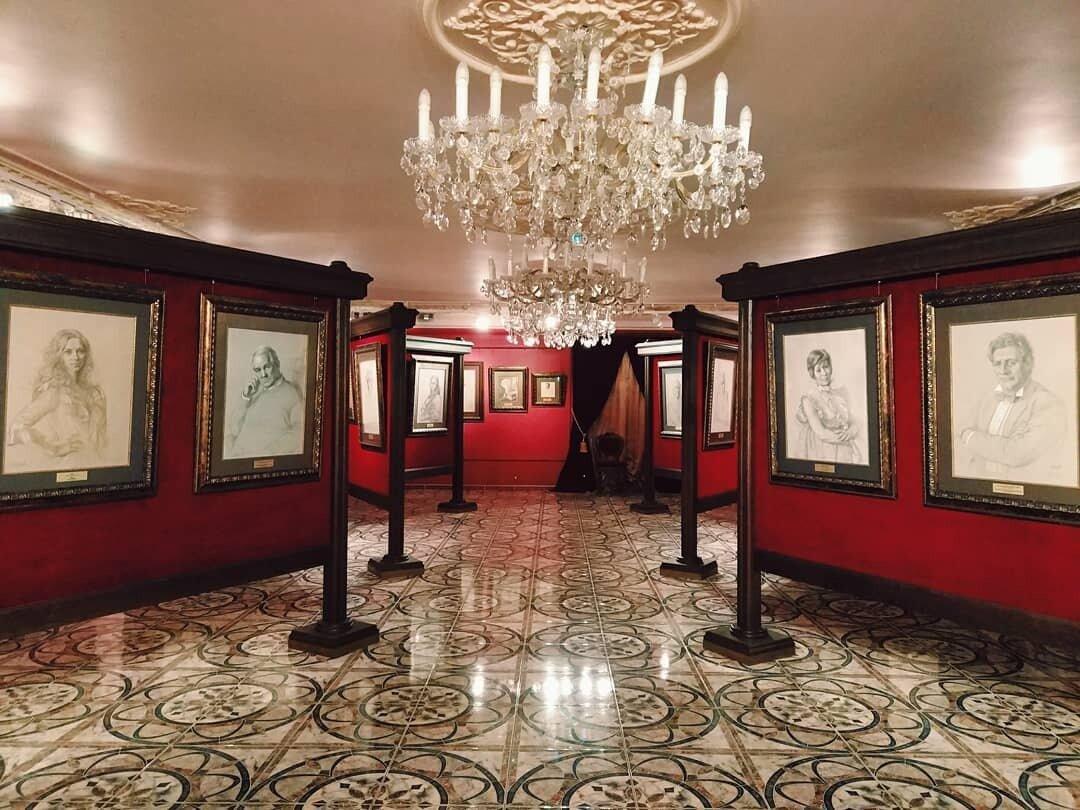
Shilov GalleryMoscow State art gallery of the National Artist of the USSR A. Shilov was opened in May, 1997. Taking into account the demand for the master's work, the audience’s love for his art, the importance of A. Shilov’s activities in continuing the realistic traditions of Russian classical art, the artist’s importance in civic education and patriotism, a unanimous resolution of the State Duma and the Government of Moscow decided to allocate an old mansion of the 19th century to house there is a collection in it, originally consisting of 355 paintings and graphic works, donated by the Artist to his Fatherland. The collection was constantly replenished, and in 2003, a new building of Gallery was built according to the project of architect M. Posokhin. In 2010, the reconstruction of the Gallery complex was completed. The complex of the Gallery constituted a single architectural and artistic ensemble, which returned Znamenka Street to the cozy atmosphere of old Moscow. Today, the Gallery has more than 950 paintings and graphics, donated by the artist to his people. From the very first days of its existence, the gallery has become one of the most beloved and visited places by Muscovites and guests of the capital places and a special cultural center. The concerts “Stars on a visit to A. Shilov”, creative evenings “Meeting at a portrait”, evenings of classical music and ancient romance, which create a special atmosphere of spirituality and beauty, continuity of Russian classical art culture, so necessary to our contemporaries, have become traditional. Great Russia from time immemorial gave birth to talents with which all mankind is justly proud. They entered the history of world culture. Their names are immortal. A. M. Shilov is one of the outstanding artists of our time, a living legend, pride and glory of Russia. In the portrait gallery of the Artist the multifaceted creativity of the master is reflected. It is based on the best traditions of classical realistic art and affirms the enduring value of the ideals of humanism and beauty.
Znamenka Street, 3
Borovickaya, Biblioteka Lenina