Интерактивный гид по городу
С мобильным приложением бродить по городу гораздо интереснее!

Городская усадьба Заборова – Филипповых

The main house facades have retained their authentic decor while the interiors have been partly restored in 1950s.

Городская усадьба Заборова – Филипповых
The main house facades have retained their authentic decor while the interiors have been partly restored in 1950s.
Вы можете воспользоваться QR-кодом, чтобы открыть эту страницу в нашем приложении
Архитектурный стиль:
Годы постройки:
1790-е
Архитекторы:
Эпоха:
18th century, 19th century
Информация о здании

Двухэтажное каменное здание с подвалами появилось на углу Яузской улицы и одноименного бульвара в 1770–1780-е годы, когда усадьба принадлежала купцу П.И.Заборову. Создавая ее, он объединил два участка: сначала купил три «лавочных места» у купчихи М.С.Панковой, а затем – два земельных надела у купца Ф.С.Сафонова. Так что владение это – исконно купеческое.

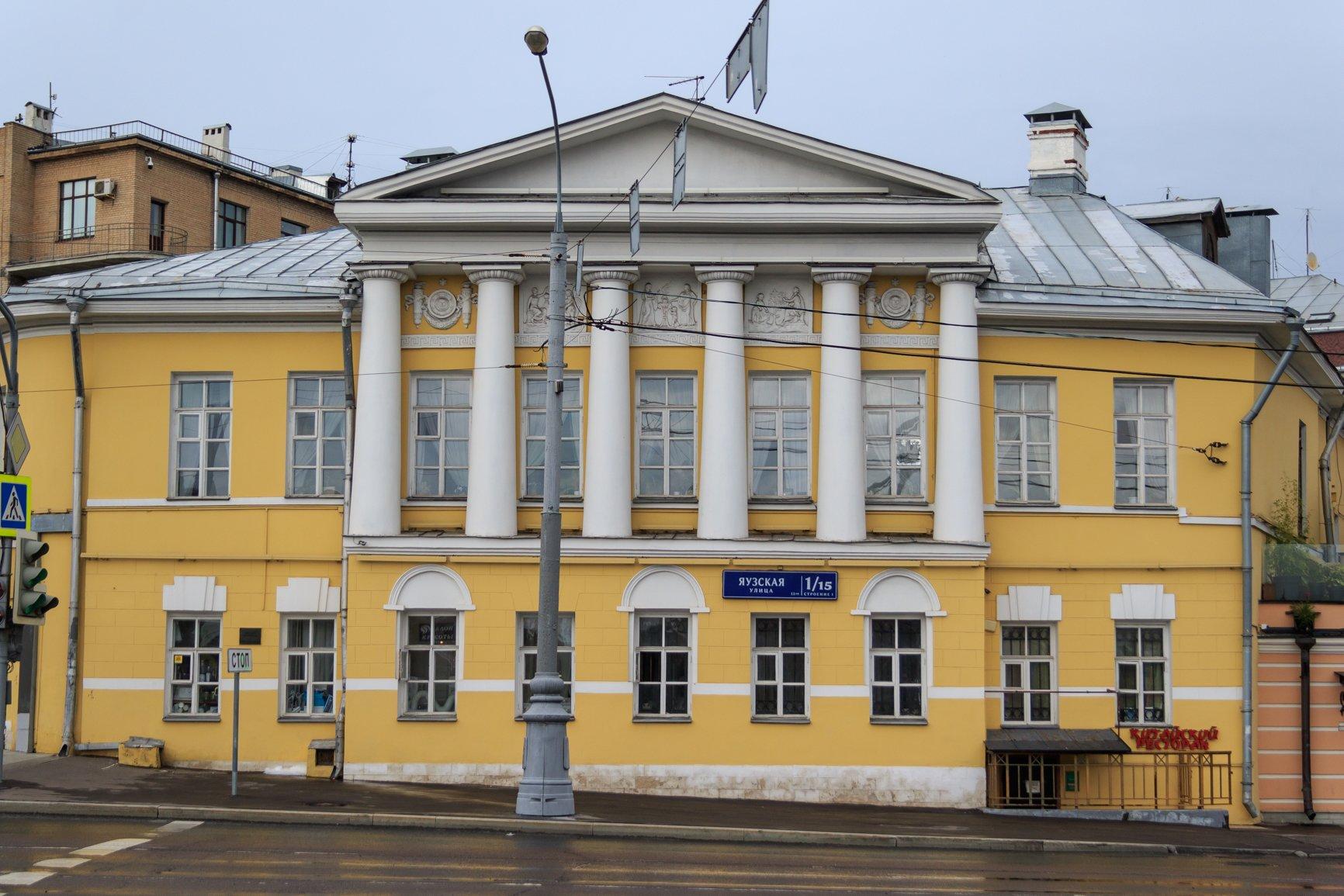
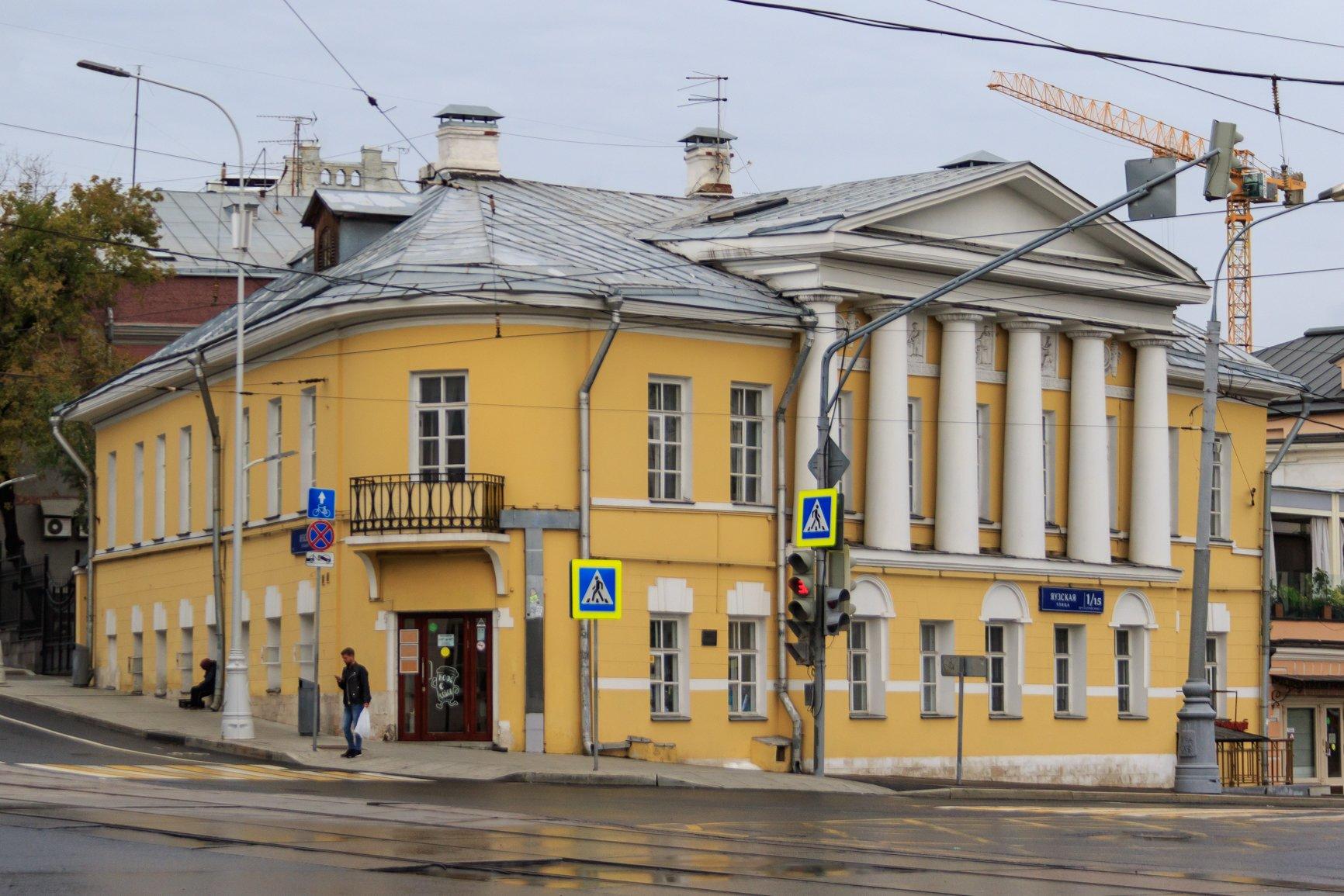
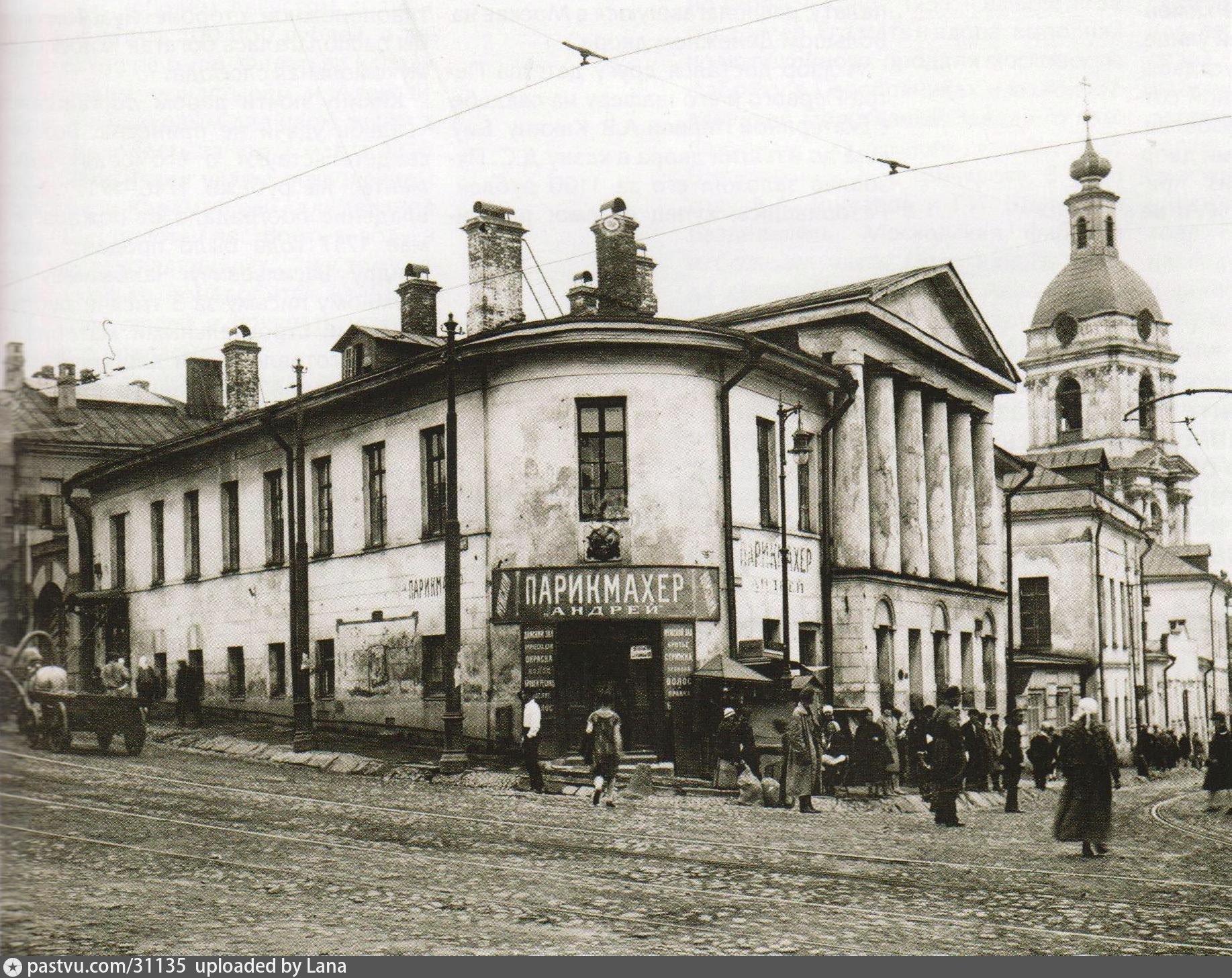
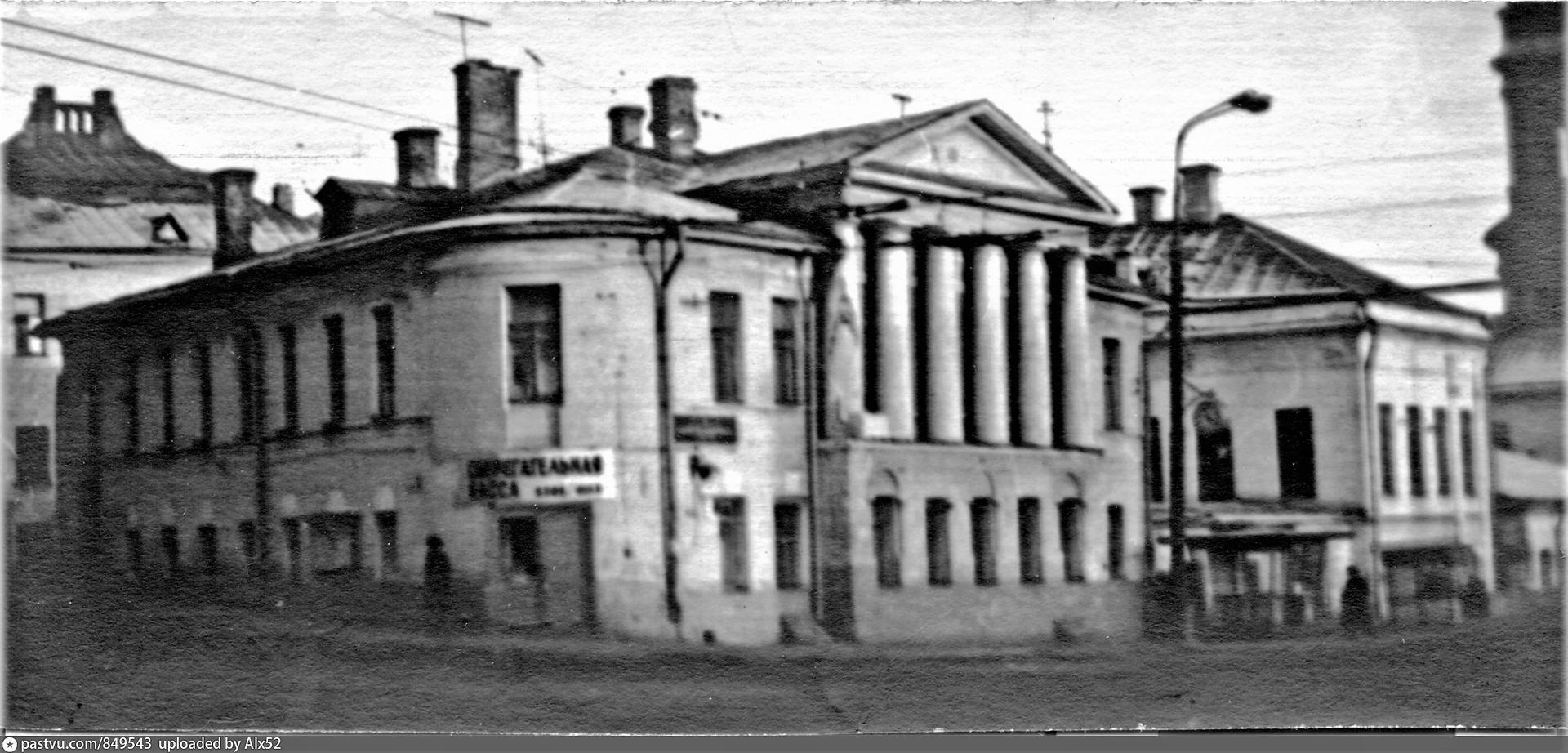
Дом Заборова уцелел в основе нынешнего усадебного дома, он составляет его центральную часть. Пострадавший в пожаре 1812 года дом был в конце 1810-х или в начале 1820-х гг. восстановлен и отделан в стиле зрелого классицизма. Симметричный фасад по Яузской улице удачно маскирует «неправильность» дома, расположенного на угловом участке в квартале, так что продольные капитальные внешние и внутренние стены отнюдь не перпендикулярны главному фасаду.

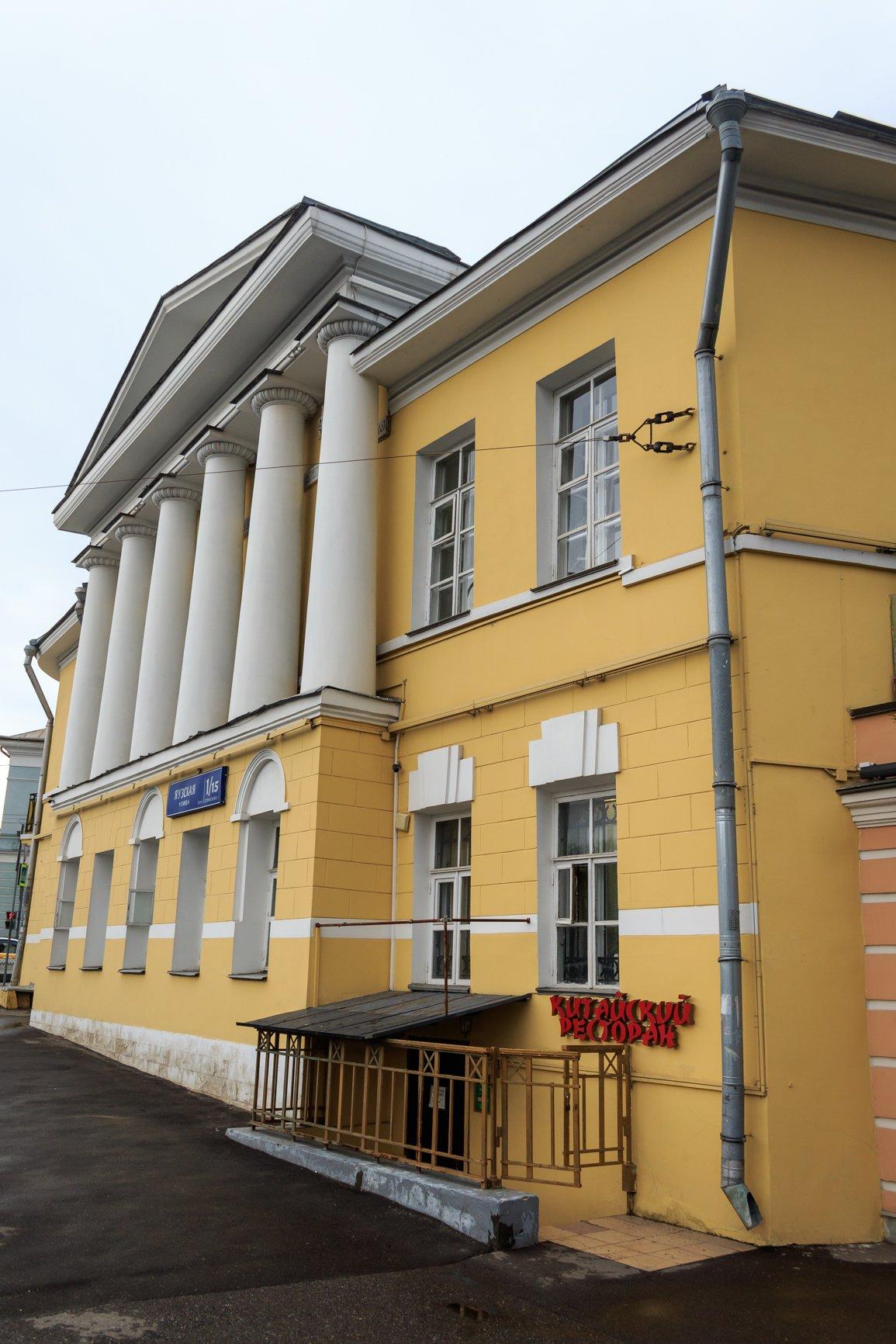
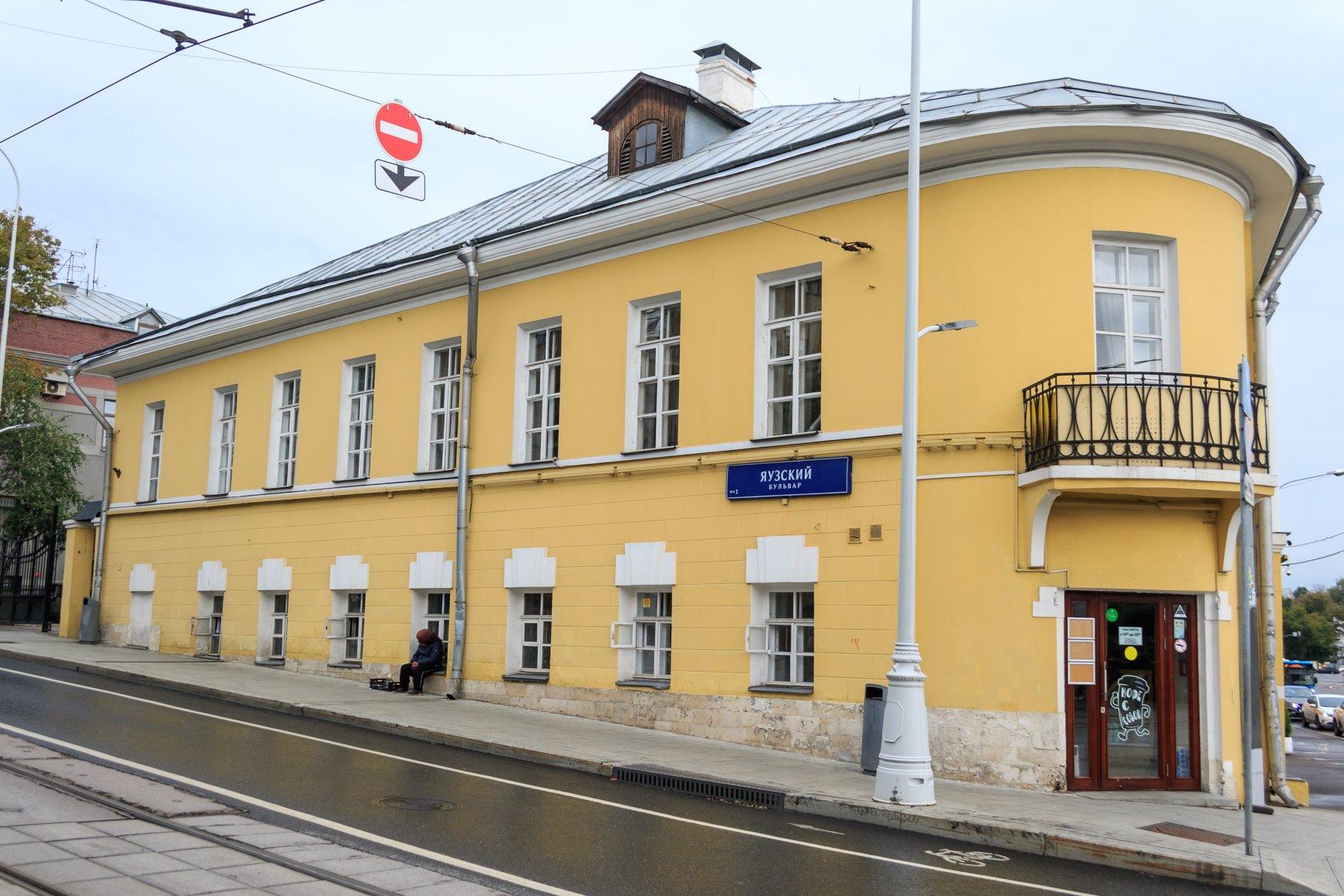
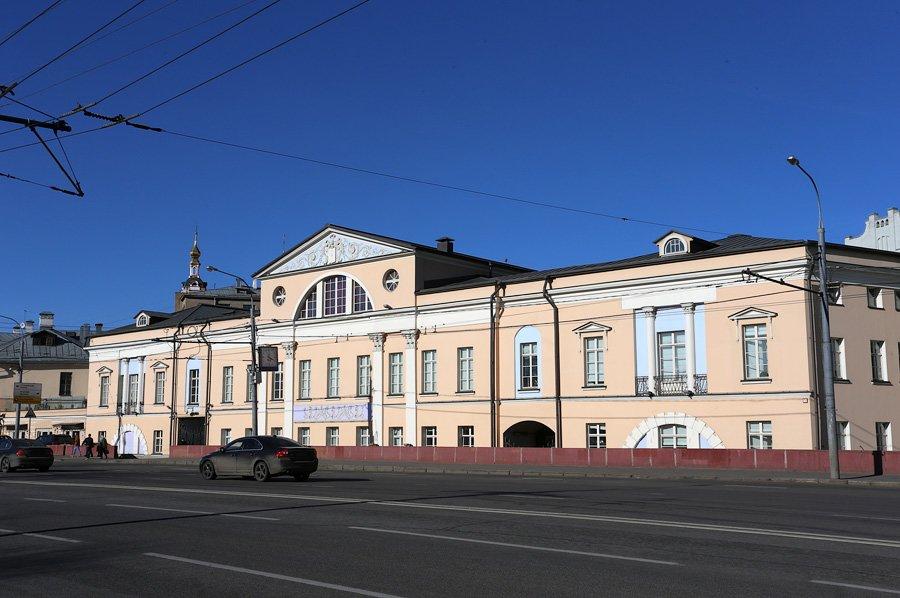
Фасад по Яузской улице украсил шестиколонный портик с фронтоном. Портик опирается на ризалит первого этажа. Между колоннами размещены лепные розетки с факелами и барельефы. Угловая часть здания, украшенная балконом с металлической решеткой, получила при перестройке характерные для градостроительства времен классицизма округлые очертания.

Первый этаж здания по купеческой традиции был отдан под торговые лавки. На втором и антресольном этажах располагались жилые покои.

Усадьбой после Отечественной войны владели дамы купеческого сословия – А.М.Смирнова, затем А.В.Филиппова. В 1870-е годы участок числится за майоршей Р.Ф.Шидловской; усадьба в эти годы начинает превращаться в доходное владение, дворовые корпуса и флигели реконструируются и сдаются внаем.

В начале ХХ столетия земельный участок на углу улицы и бульвара, как и соседний, принадлежали семье предпринимателей Филипповых.

Фасады главного дома городской усадьбы сохранили свой исторический облик. А интерьеры были частично воссозданы в процессе реставрации 1950-х гг., проводившейся под руководством В.Я.Либсона. Дом, как отмечают исследователи, имеет несколько тяжеловатый объем, но внушительный облик. Как и положено по канонам позднего классицизма.

В настоящее время выходящая на Яузскую улицу часть дома – по-прежнему двухэтажное строение. А вот дворовая часть – трехэтажная, она перестроена в 1990-е годы. В здании расположены офисы.

Дом является объектом культурного наследия федерального значения.
The two storey stone building with cellars was constructed at the Yauzskaya Street and the Yauzsky Boulvard in 1770–1780s, when the estate belonged to merchant P.I. Zaborov. In order to build the estate, two properties were combined: first, Zaborov bought three "shop places" from merchant M. S. Pankova; then two land plots from merchant F. S. Safonov. Thus, the property was always belonging to merchants from the very beginning. Zaborov's house survived as the core of today's main house, in its central part. The house was damaged in the 1812 fire. In the late 1810s or in the early 1820s, it was restored and redecorated in the neoclassical style. The symmetrical facade along the Yauzskaya Street succeeds in disguising "irregularity" of the house in the corner of the block of buildings; its longitudinal main walls — both external and internal — are far from perpendicular to the main facade. The facade on the Yauzskaya Street was decorated with six column portico and a pediment. The portico rests on the ground floor risalit. Between the columns, there are stucco roses with torches and bas reliefs. The building's corner, decorated with a balcony with metal lattice, was given a curved shape typical for neoclassical architecture. The building's ground floor, according to the merchant tradition was intended for shops. In the first floor and the mezzanine there were residences. After the 1812 Napoleonic Wa, the estate was owned by merchants A.M. Smirnova, then by A.V. Filippova. In 1870s, the property belonged to a major's wife R.F. Shidlovskaya. Those years, the estate became quite a profitable property, the outbuildings and wings were reconstructed and let out. In the early twentieth century, the property at the corner of the Yauzskaya Street and the Boulevard, as well as the next one belonged to the Filippov entrepreneur family. The facades of the main house of the city estate preserved their historical look. The interiors were partially recreated in the process of the 1950s restoration performed under the supervision by V.Ya. Libson. To experts' opinion, the building looks somewhat bulky but impressive. It fully conforms to the canons of the late Classicism. Currently, the part of the building facing the Yauzskaya Street is still a two storey building. But the yard facing part has three storeys, it was rebuilt in the 1990s. Nowadays the building is used for offices. The building is a cultural heritage site of federal significance. Oleg Fochkin
Автор статьи: Олег Фочкин