Интерактивный гид по городу
С мобильным приложением бродить по городу гораздо интереснее!

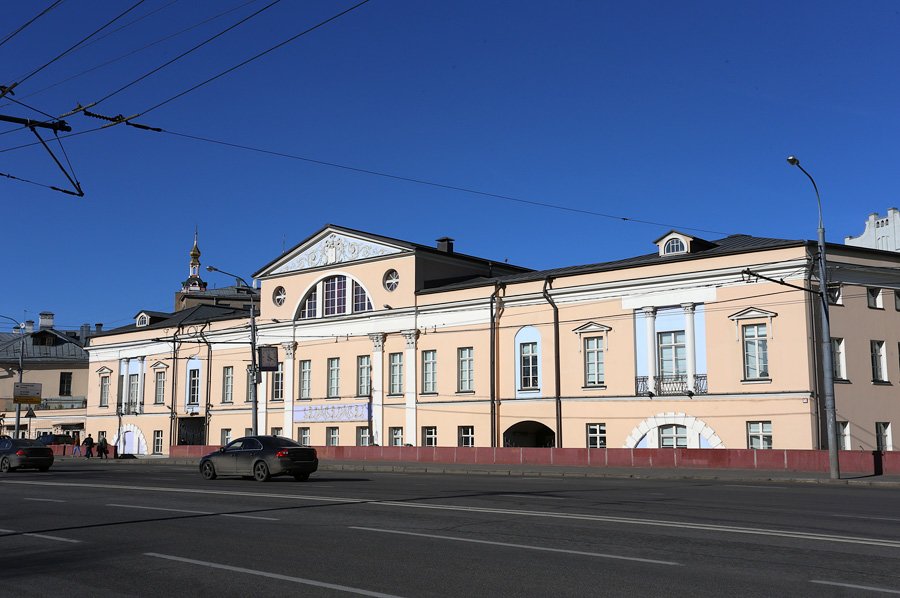
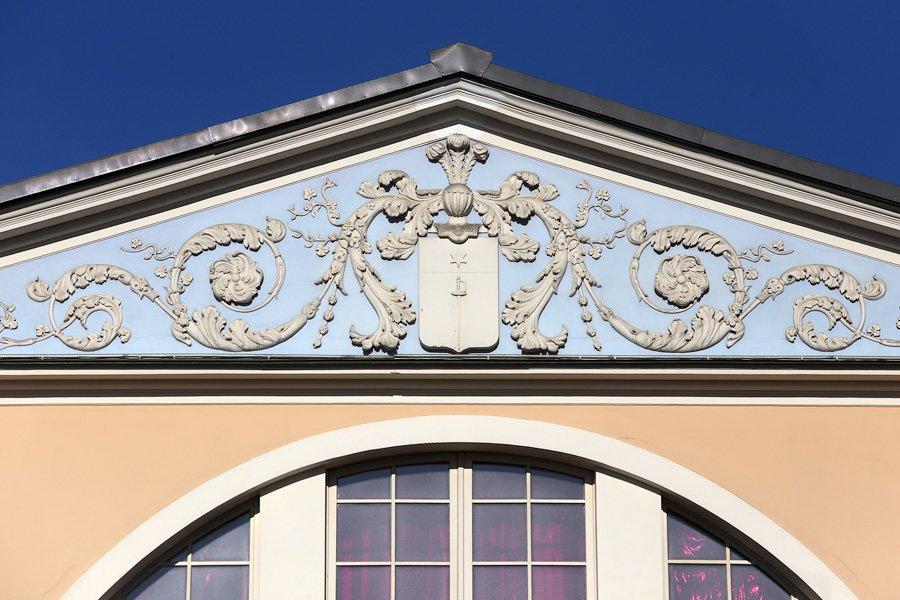
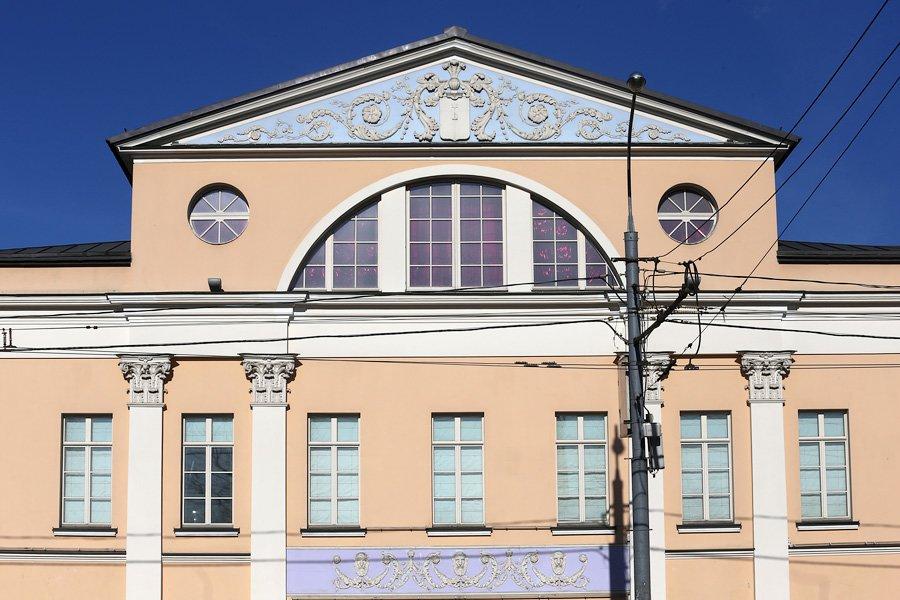
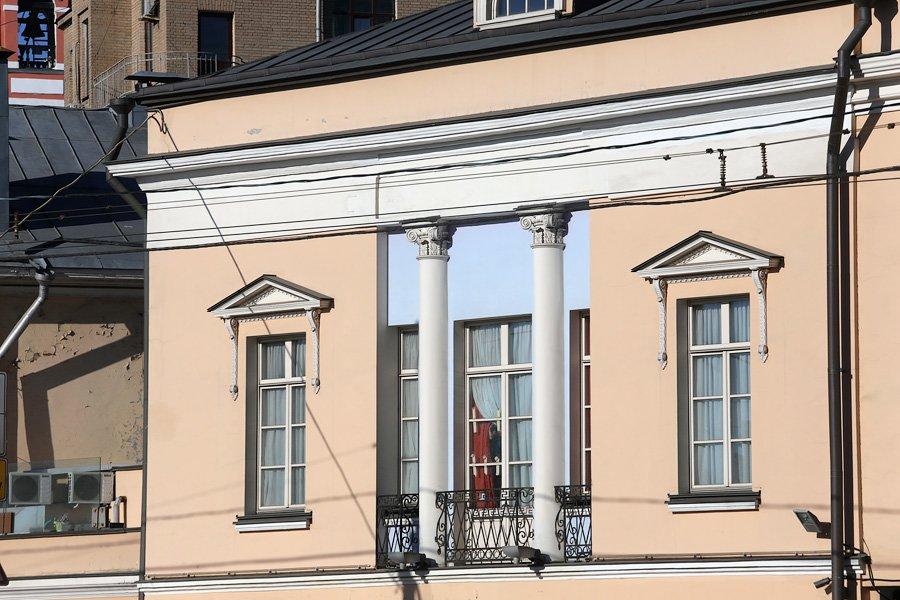
A.A. Goncharov-Philippovs urban homestead

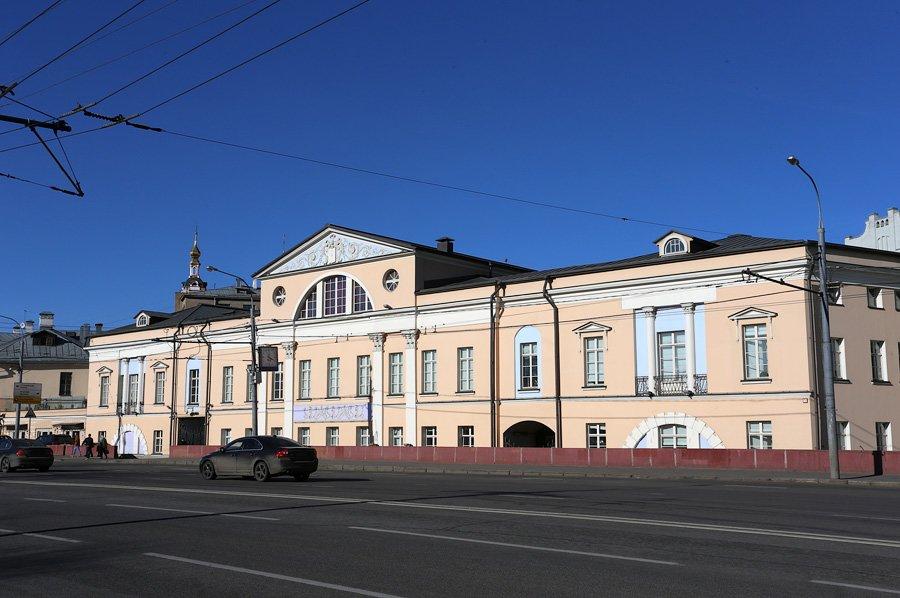
This is the house of the ancestors of Pushkin's wife N.N. Goncharova, which for its beauty was included in the famous "Architectural albums" of M.F. Kazakova.

A.A. Goncharov-Philippovs urban homestead
This is the house of the ancestors of Pushkin's wife N.N. Goncharova, which for its beauty was included in the famous "Architectural albums" of M.F. Kazakova.
3.62
Вы можете воспользоваться QR-кодом, чтобы открыть эту страницу в нашем приложении
Архитектурный стиль:
Годы постройки:
XVIII-XIX вв.
Архитекторы:
Эпоха:
17th century, 18th century, 19th century
Дата открытия, История появления

В XVII в. владение за Яузскими воротами Белого города подле церкви Живоначальной Троицы в Серебряниках принадлежало князю И.Б. Черкасскому. В начале следующего столетия он продал свой двор вместе со стоявшими здесь каменными палатами А.А. Гончарову — прапрадеду жены Пушкина Натальи Гончаровой. В 1718 г. Афанасий Абрамович, уже владевший к тому времени полотняной мануфактурой под Калугой, построил в своей московской усадьбе парусную полотняную фабрику на 10 станов. От нее до наших дней сохранился одноэтажный объем возле церкви.

В 1789 г. внук А.А. Гончарова Афанасий Николаевич (дед Н.Н. Гончаровой) был пожалован дворянством. По его заказу архитектор И.В. Еготов в конце 1790-х гг. существенно перепланировал усадьбу. Он частично разобрал старинные палаты и возвел по красной линии Яузской улицы главный дом в стиле классицизма, соединенный деревянными галереями-переходами с двумя боковыми каменными флигелями. Второй этаж главного дома и мезонин, в отличие от каменного первого, были выполнены из дерева. По окончании строительства усадебный дом был включен М.Ф. Казаковым в знаменитые «Архитектурные альбомы».

К началу XIX столетия финансовое положение семьи Гончаровых существенно ухудшилось. Причиной этого явилась пагубная страсть Афанасия Николаевича, прокутившего и проигравшего в карты все фамильные миллионы. Усадьбу на Яузской улице пришлось продать. Новым ее владельцем стал генерал-фельдмаршал граф И.В. Гудович, главнокомандующий Москвы в 1809–1812 гг. Недолго пробыв ее хозяином, он уступил владение купцу А.М. Смирнову.

В пожар 1812 г. усадьба серьезно пострадала. После войны она была отремонтирована и перестроена. Разобран сгоревший деревянный второй этаж и галереи-переходы от флигелей к главному дому. В виде трех отдельных строений — одноэтажного главного дома и двух двухэтажных боковых флигелей — усадьба и простояла до 2000-х гг.

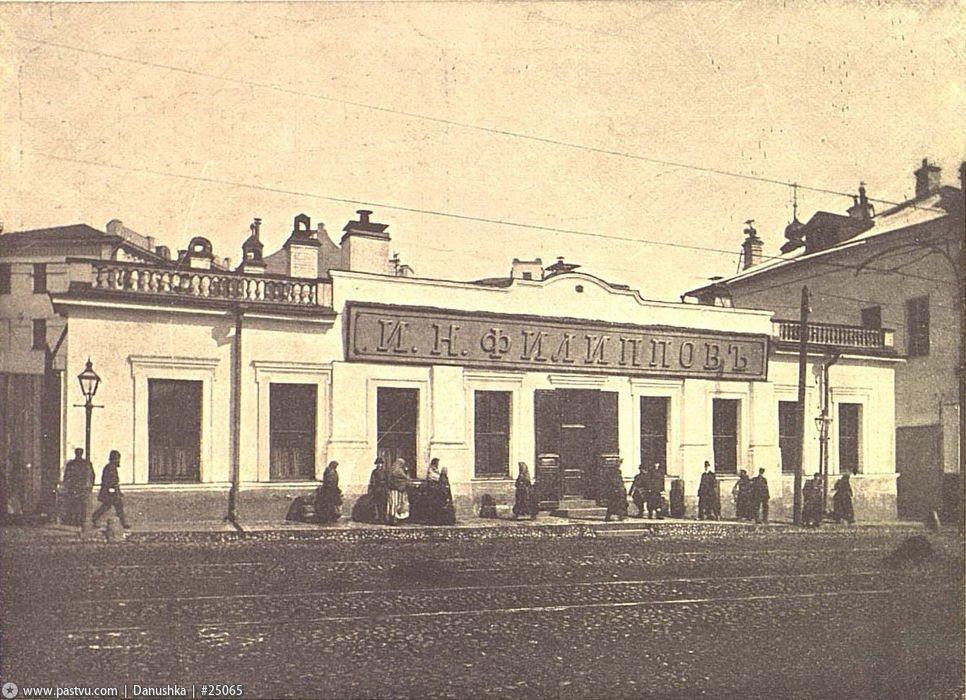
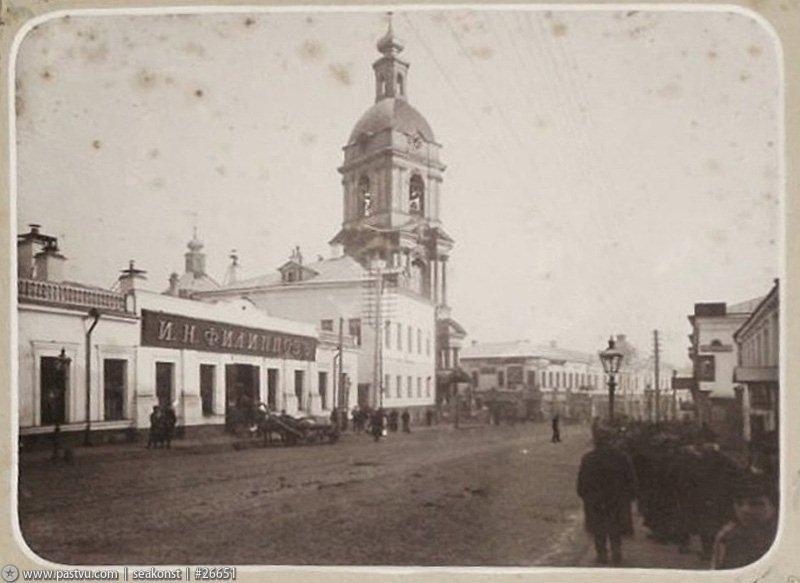
Смирнов удержал за собой только соседний особняк, располагавшийся на углу Яузского бульвара и выстроенный им для своего сына, профессора Московского университета С.А. Смирнова. Бывшее же владение Гончаровых в 1818 г. он продал вологодскому купцу-чаеторговцу Филиппову, который устроил здесь сначала лавки, а потом чаеразвесочную фабрику, просуществовавшую до 1917 г.

Перестройка и реставрация

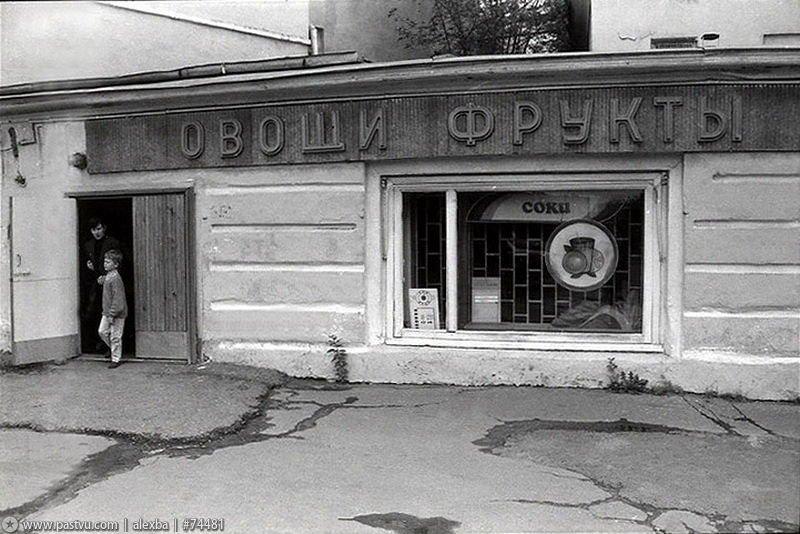
После революции усадьба была переоборудована под размещение коммунальных квартир, располагавшихся здесь до 1990-х гг.

В 2007 г. началась реставрация, в ходе которой были найдены и законсервированы палаты XVII в., кирпичные своды конца XVIII столетия, восстановлена прекрасная изразцовая печь, установленная в доме вскоре после пожара 1812 г. Усадьбе возвращен облик начала XIX в. Сейчас она предстает перед нами в том виде, в каком зафиксирована на страницах «Архитектурных альбомов» М.Ф. Казакова.

После реставрации здесь разместились дома моды, рестораны и различные конторы.
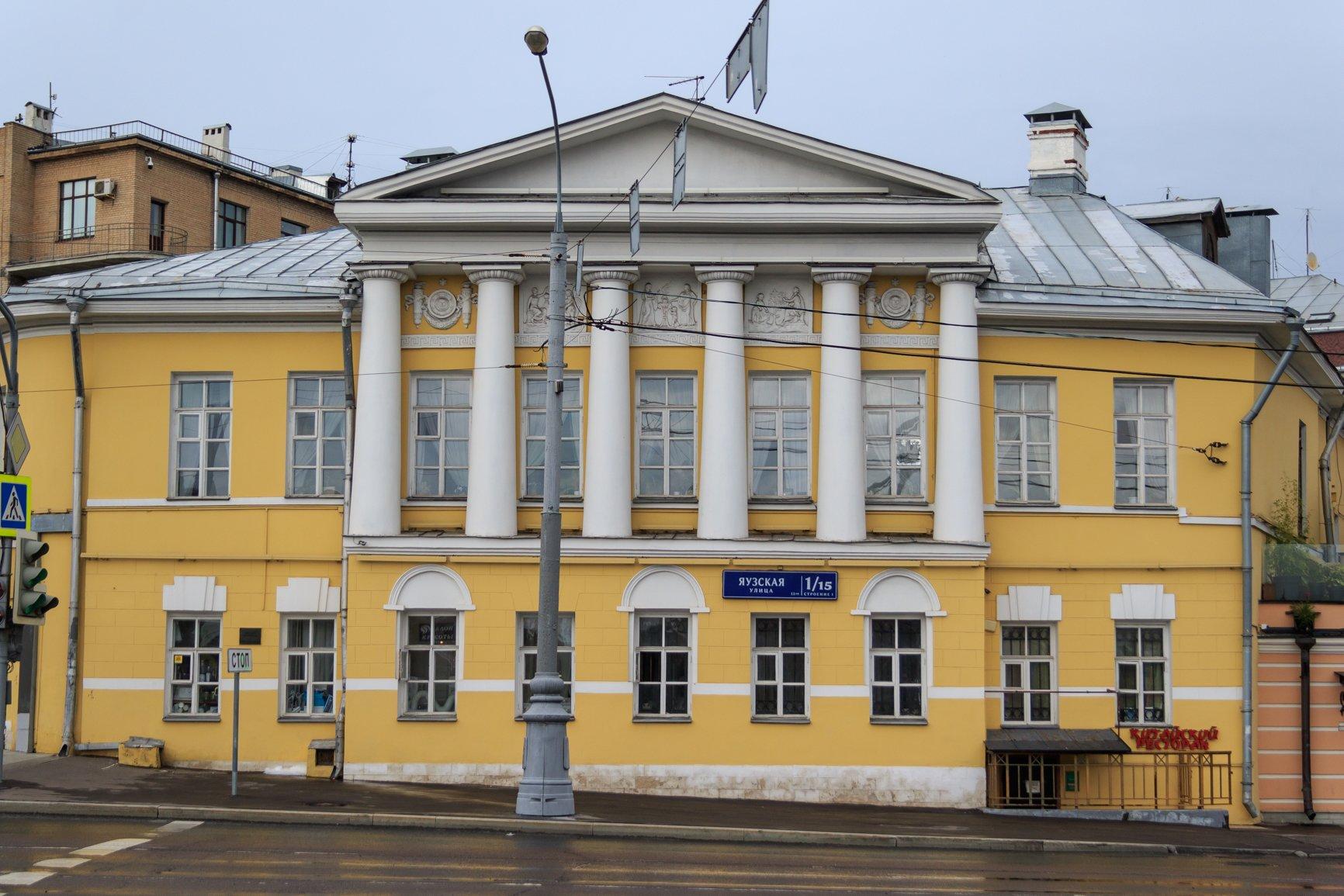
This is the house of the ancestors of Pushkin's wife N.N. Goncharova, which for its beauty was included in the famous "Architectural albums" of M.F. Kazakov. Prince I.B. Cherkassky was the owner of the property located behind Yauzskie gates of the White City near the church of the Holy Trinity in Serebryaniki in the XVII century. He sold his yard with stone chambers that were standing here to A.A. Goncharov, the great-grandfather of Pushkin's wife Natalya Goncharova at the beginning of the next century. In 1718, Afanasii Abramovich, who already owned by that time a linen factory under Kaluga, built a sailing factory in his Moscow estate for 10 mills. From it to our days there is a one-story volume near the church. Athanasius Nikolayevich, the grandson of A.A. Goncharov and grandfather of N.N. Goncharova was granted nobility in 1789. Architect I.V. Egotov significantly redesigned the estate at his request in late 1790s. He partially disassembled vintage chamber and erected the main house in the classical style along the red line of Jauzskaya street connected with two side stone outbuildings by wooden transitions galleries. The second floor of the main house and a mezzanine, unlike the first stone, were made ​​of wood. Upon completion of construction manor house was included by M.F. Kazakov in his famous "Architectural albums." Goncharov’s family financial situation deteriorated significantly by the beginning of XIX century. Athanasius Nikolayevich squandered and lost in cards all family millions. He had to sell the homestead at Yauzskaya street. Field Marshal Earl I.V. Gudovich, commander in chief of Moscow in 1809-1812 became the new owner of the mansion. He sold the property to merchant A.M. Smirnov shortly after the acquisition. A fire seriously damaged the homestead in 1812. After the war it was rebuilt and renovated. Burned wooden second floor and gallery transitions from the wings to the main house were stripped. The farmstead stood in three separate buildings - one-story main house and two two-storey side wings up to the 2000s. Smirnov only kept the neighboring house, which was located at the corner of Yauzsky Boulevard and built it for his son S.A. Smirnov, the professor at Moscow University. He sold former Goncharovs’ property to the tea merchant Philippov from Vologda in 1818. He arranged the tea shop here at first and then tea-packing factory, which lasted until 1917. The estate was converted into communal apartments after the revolution, which was located here until the 1990s. Restorations started in 2007. Chambers of the XVII century and brick arches of the XVIII century were found and conserved. Beautiful tiled stove installed in the house shortly after the fire of 1812 was restored. Mansion was returned the appearance of the beginning of the XIX century. Now it appears to us in the form in which it is described on the pages of "Architectural album" by M.F. Kazakov. After restoration it housed fashion houses, restaurants and various offices.
Автор статьи: Алексей Дедушкин
Рекомендации
Ленинский просп., д. 20
Shabolovskaya, Ploshad Gagarina, Leninskij prospekt
Поделитесь статьей с друзьями
Интересное рядом(6)
Marksistskaya, Taganskaya
Улица Высоцкого
Taganskaya, Таганская (Краснопресненская линия)
Chkalovskaya
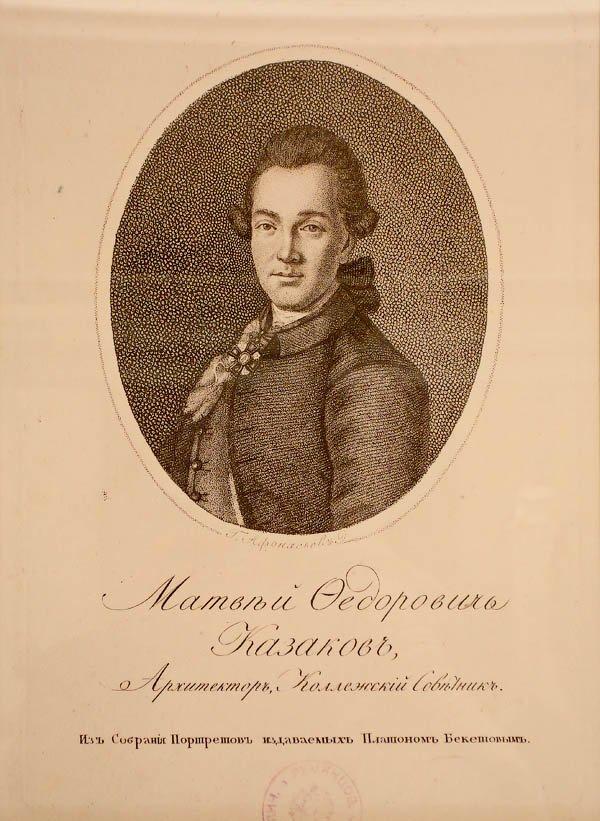
Kazakov M. F.
архитектор
Egotov I. V.
архитектор