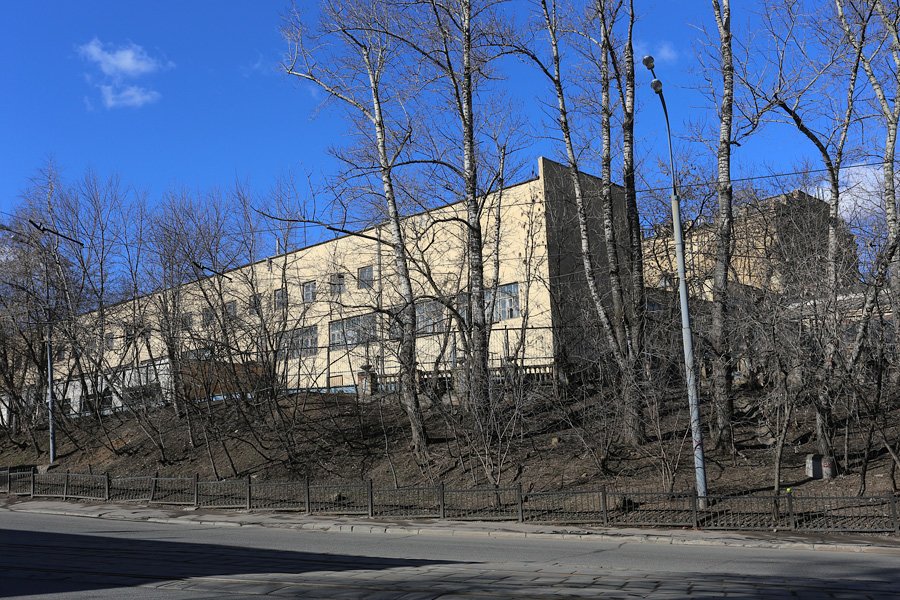
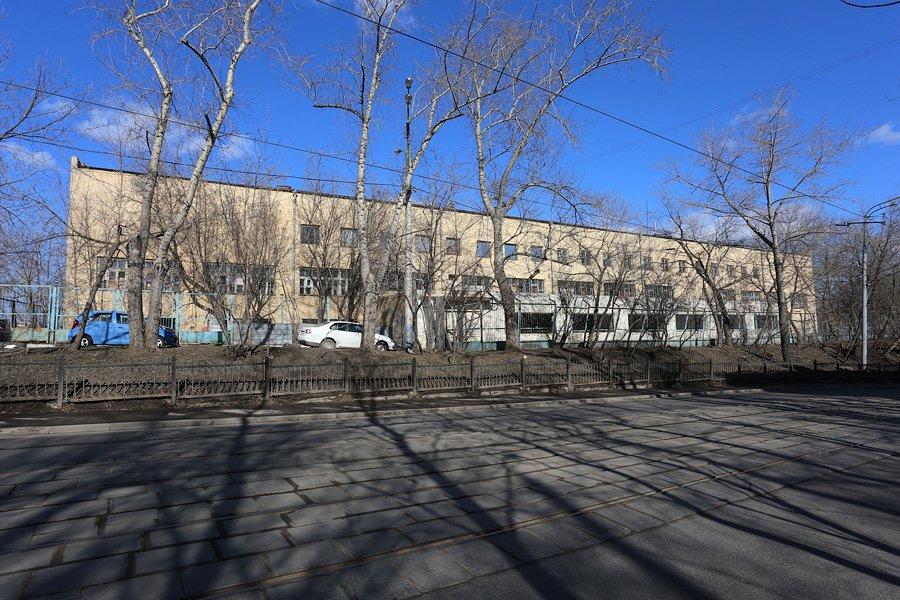
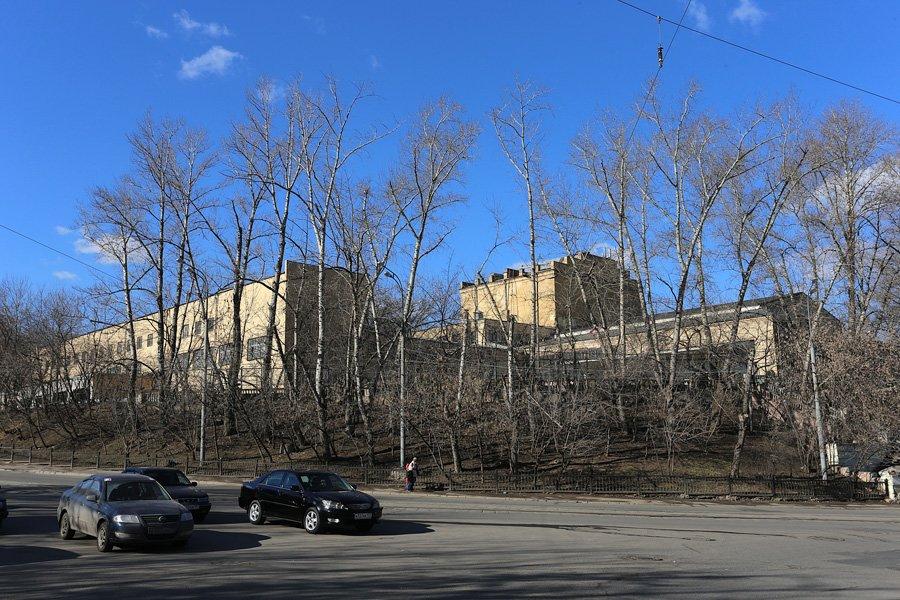
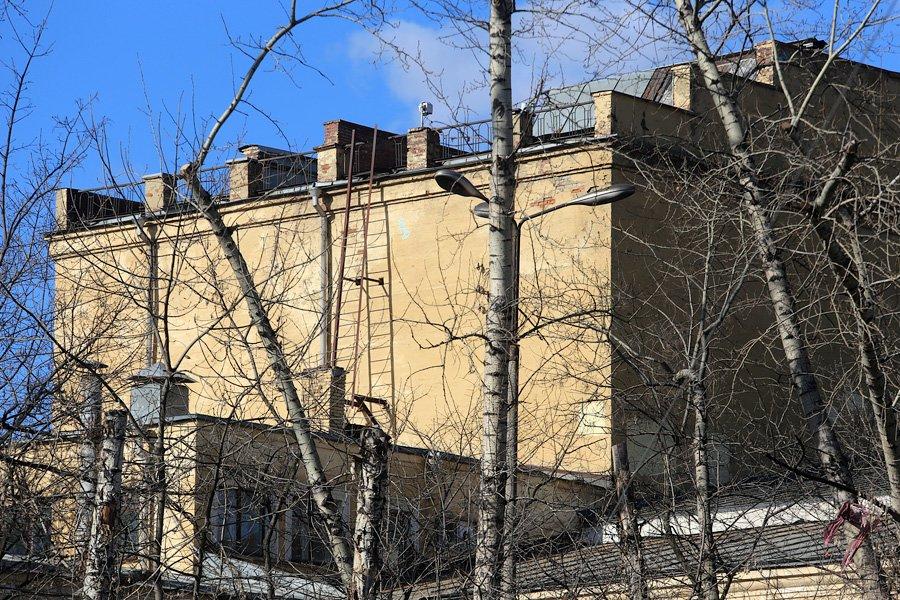
Это здание было задумано как крупный общественный комплекс для Союза металлистов. Архитектор Игнатий Милинис занял второе место на объявленном конкурсе, но именно его проект был принят к осуществлению из-за наиболее удачного использования участка. Сам он так описывал обустройство этой территории:
«С правой стороны аллеи выставка строительных машин с трибунами и лекторской кафедрой, к которой по узкоколейке подается со своего постоянного места для рассмотрения нужная машина. /…/ Непосредственно за демонстрационным полем расположено здание клуба. Значительная часть участка, примыкающая к левой границе, отведена под парк. Парку уделено должное внимание как необходимому условию хорошего отдыха. Правая сторона занята летним фойе зала и показательным полем сельскохозяйственных культур, где соответствующий кружок ведет работу по ликвидации агрономической неграмотности. Наконец, по границе участка, примыкающей к второстепенной улице, расположен спорт» (из пояснительной записки к проекту).
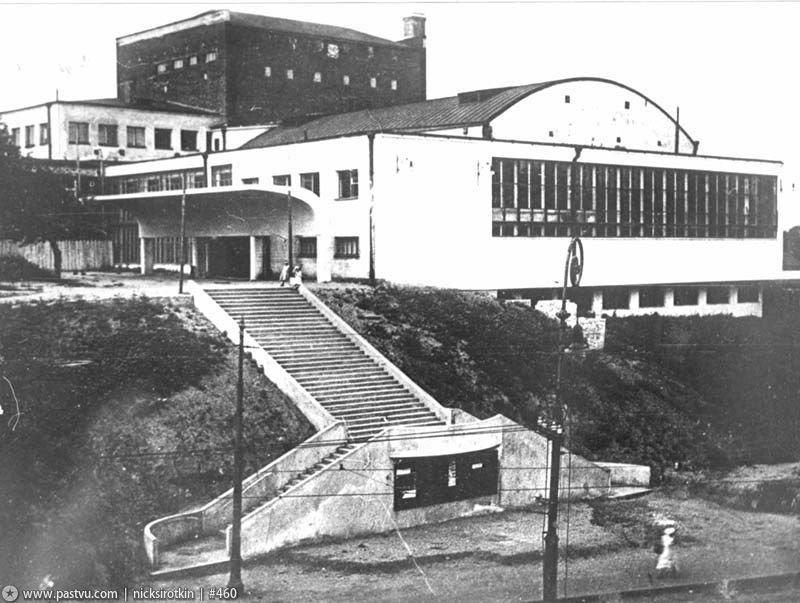
Монументальные формы клуба, построенного в 1927–33 годах, отражали пафос возрождения отечественной экономики в годы первой пятилетки, а функциональная свободная планировка — один из ключевых принципов архитектуры конструктивизма.
Два корпуса клуба поставлены параллельно друг другу и соединены третьим, перпендикулярным корпусом-переходом, приподнятым по моде тех лет на столбы. Самый большой корпус вмещал театральный зал и фойе. В двух других, узких и длинных, размещались клубные помещения и спортивный зал, ленточное остекление демонстрировало большие и светлые внутренние пространства. Перед входом в клуб была установлена статуя сталевара.
В 1970-е годы между опорами корпуса-перехода были встроены дополнительные помещения, а интерьеры окончательно перестроены в 2000-е. Об эффектном главном фасаде клуба теперь напоминает только большой козырек полуциркульного профиля, но его круглые опоры превращены в квадратные.
This building was conceived as a major public facility for the Union of Metalworkers. Architect Ignatius Milinis won the second place in the designed competition and his design that was adopted for the implementation because of the most successful use of the site. He described the arrangement of the territory as following:
"On the right side of the alley will be construction machinery exhibition with stands and tribune for lecturers, to which the necessary machine is fed from its permanent place on the narrow-gauge railroad track. / ... / Clubhouse is located just behind the demonstration field. A significant part of the site, adjacent to the left border, reserved for the park. An attention is paid to the park as a necessary condition for a good rest. The right side is occupied by the summer foyer of the hall and an indicative field of agricultural crops, where the appropriate circle is working to eliminate agronomic illiteracy. Finally, on the border of the site adjacent to the secondary street, there is a sport "(from an explanatory note to the draft).
Monumental forms of the club, built in 1927-33, reflected the pathos of the revival of the national economy during the first five-year plan period, and functional free planning is one of the key principles of the constructivism architecture.
Two buildings of the club are placed parallel to each other and are connected by a third, perpendicular body-transition, elevated in the fashion of those years to the pillars. The largest building housed the theater hall and foyer. In the other two, narrow and long, there were club rooms and a gym, tape glazing showed large and bright interior spaces. Before the entrance to the club was installed a statue of the steelmaker.The building was heavily changed during the reconstruction of the 1950s, the facades and interiors were decorated with plaster pilasters, rosettes and other unusual architectural avant-garde details. The external staircase leading to the hill was decorated with decorative vases. In the 1970s, additional rooms were built between the supports of the transfer hull, and the interiors were finally rebuilt in the 2000s. The spectacular main facade of the club now resembles only a large visor of the semi-circular profile, but its round pillars are turned into square ones.