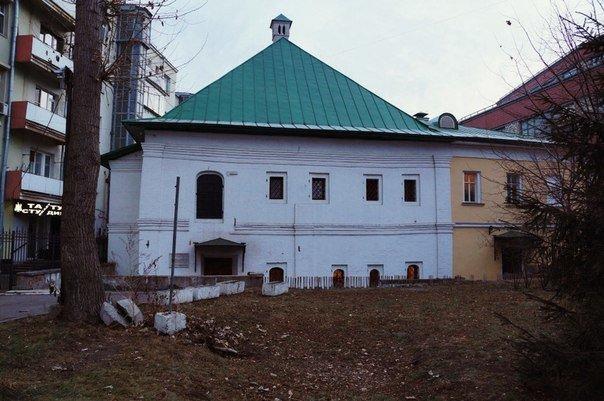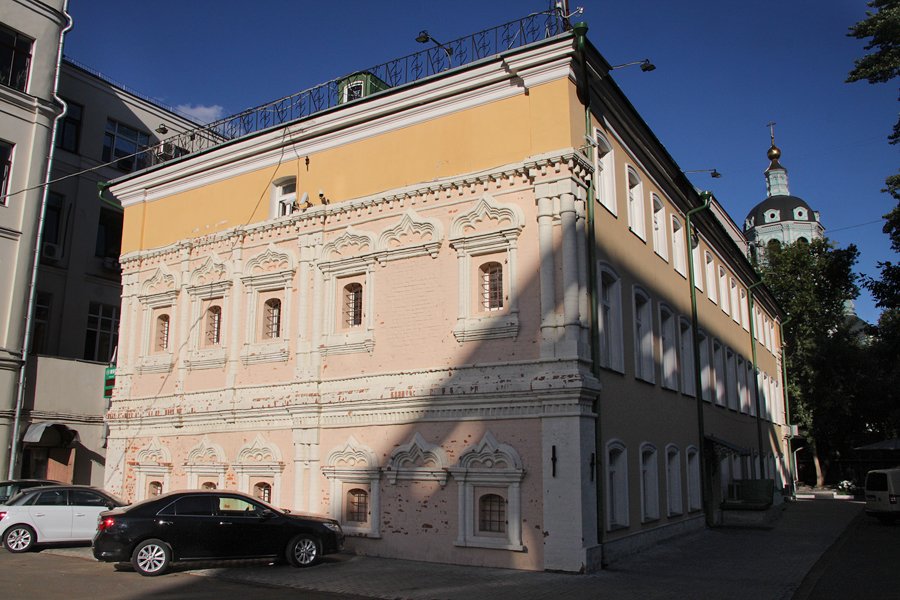
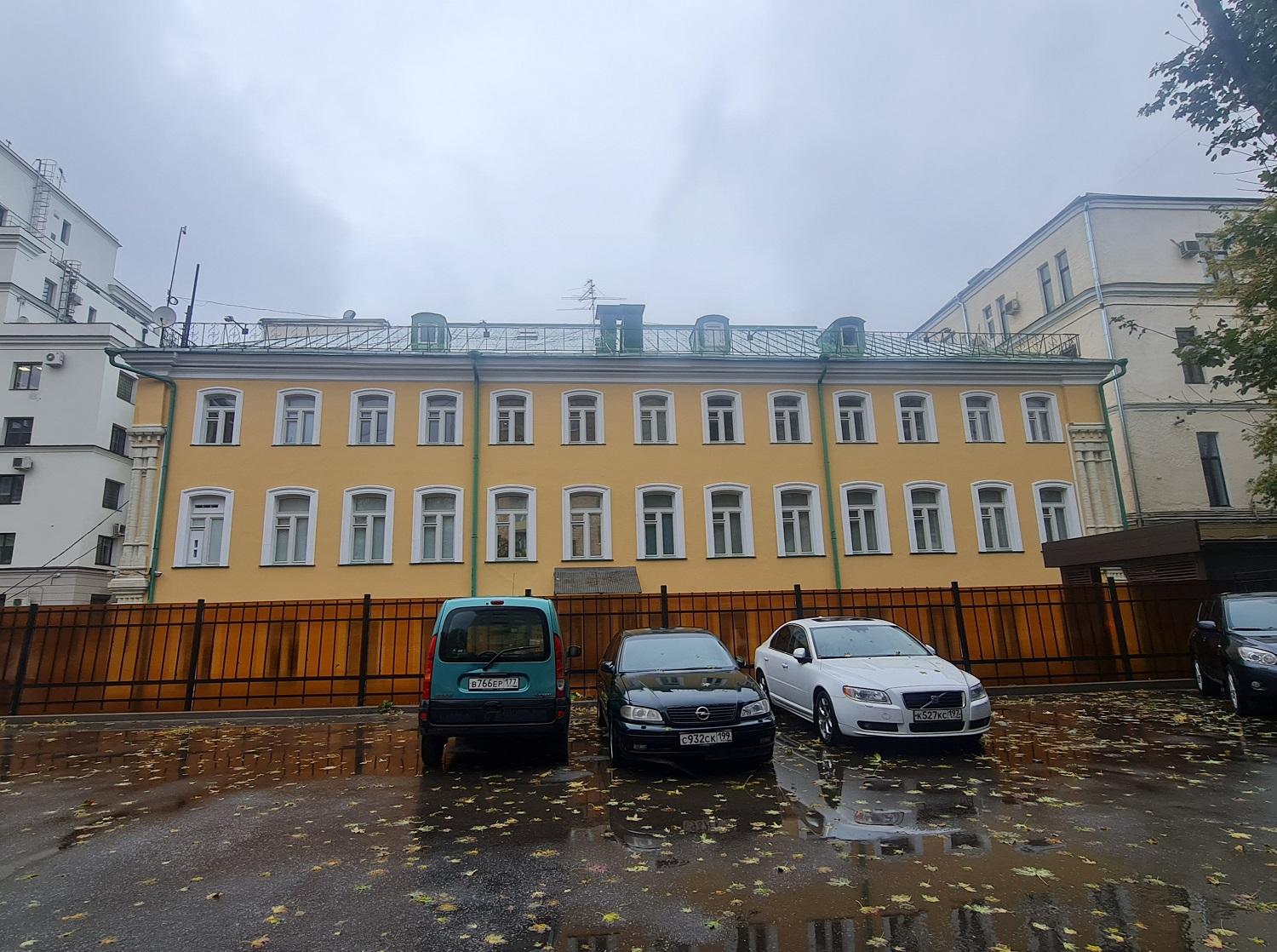
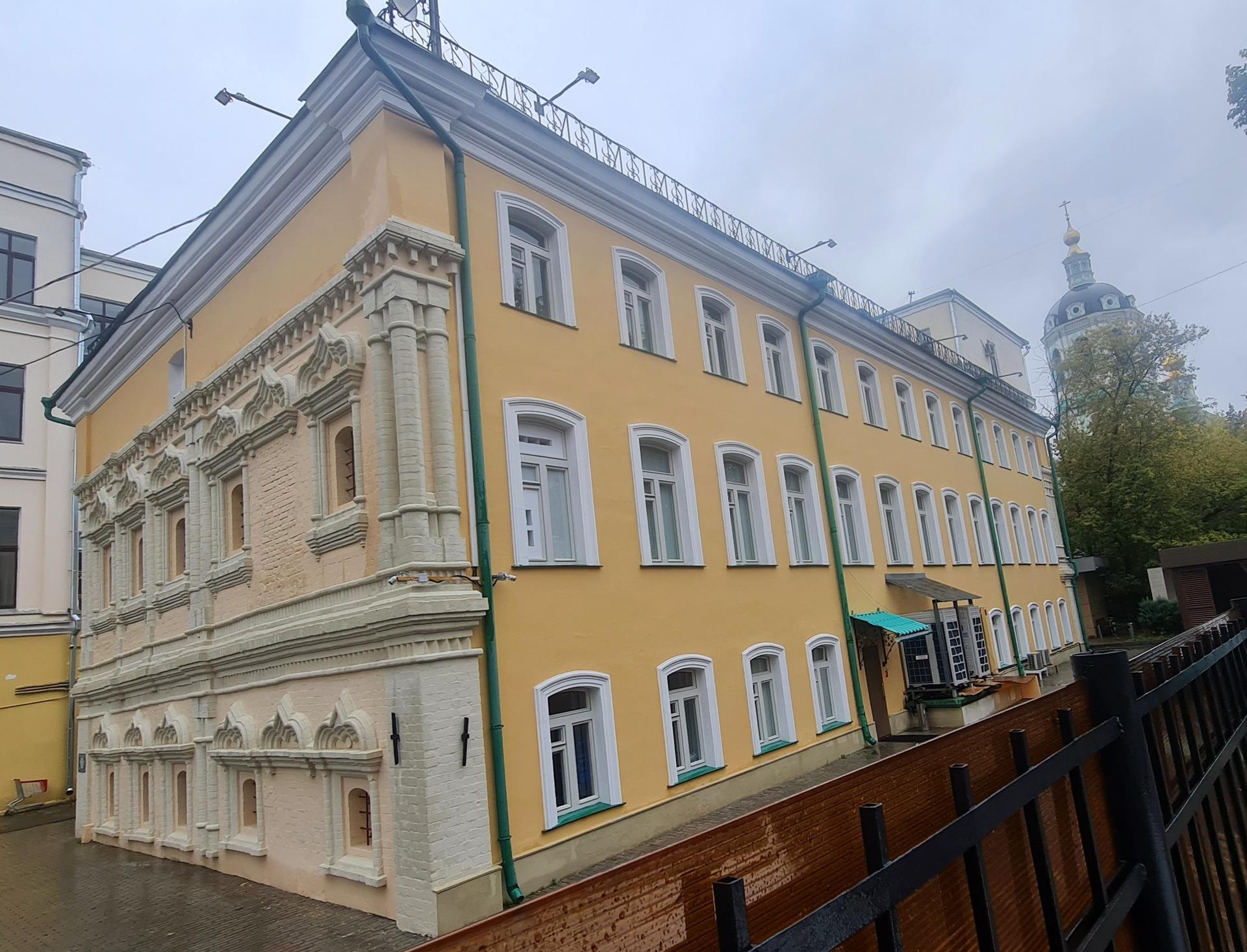
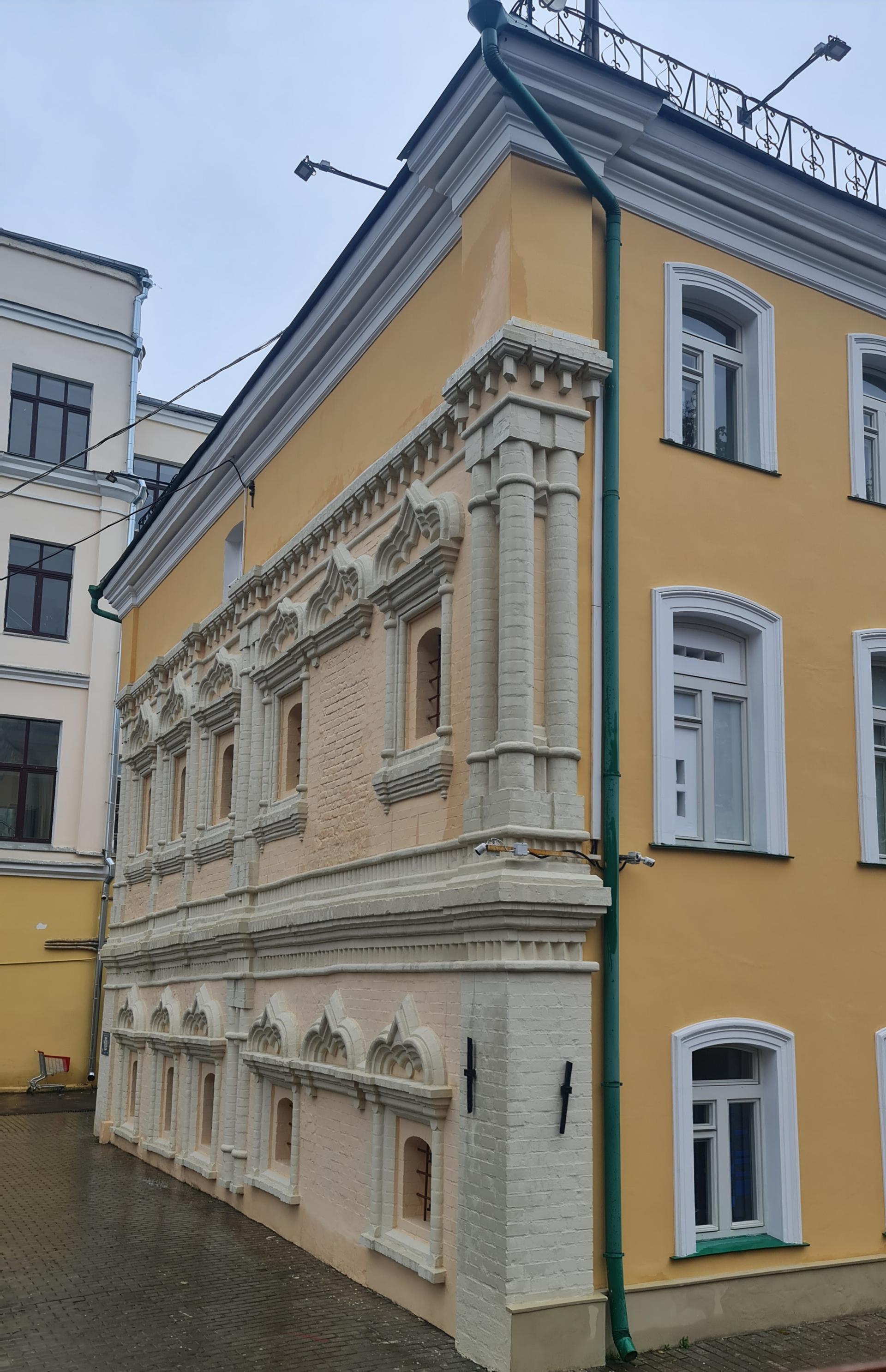
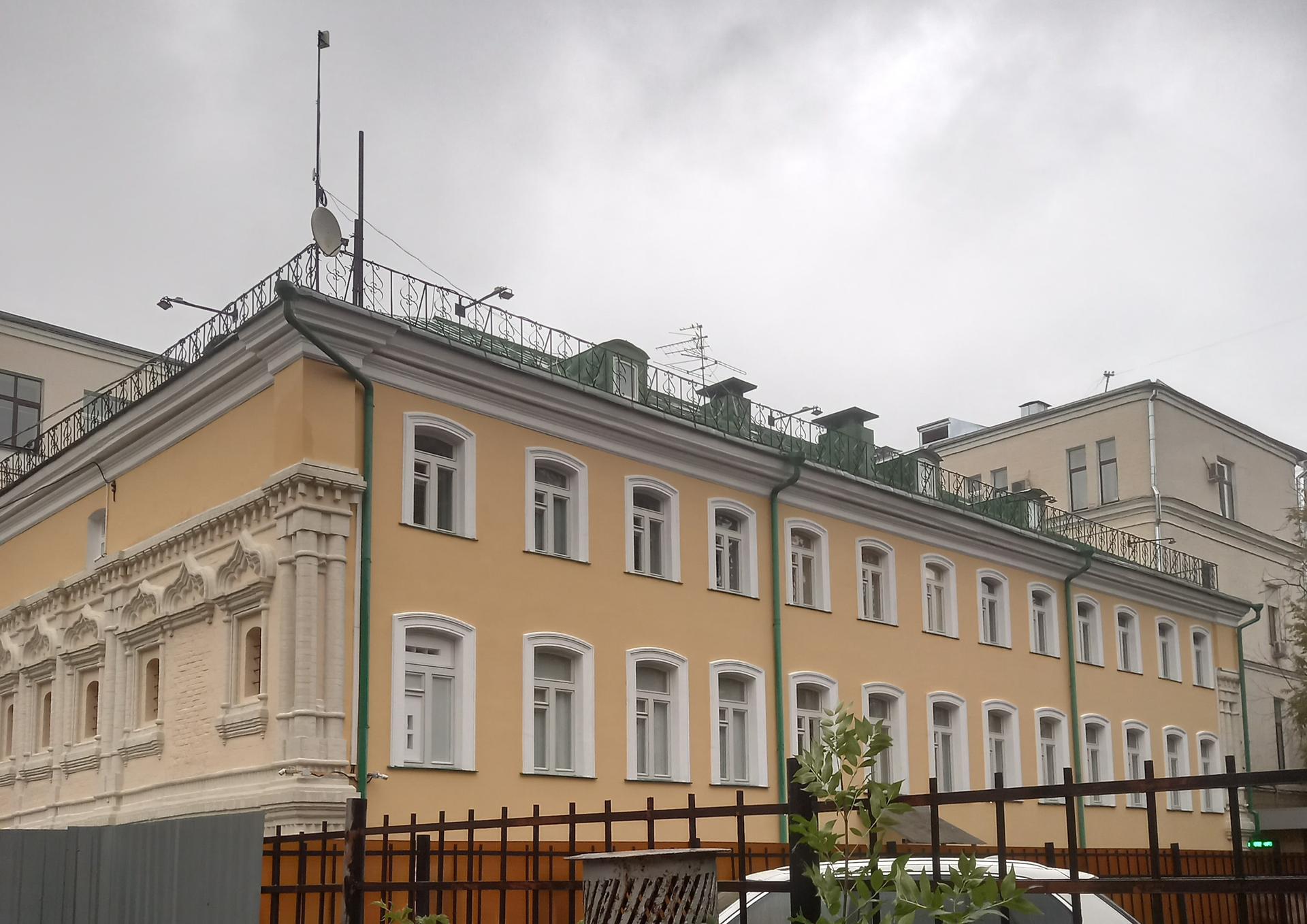
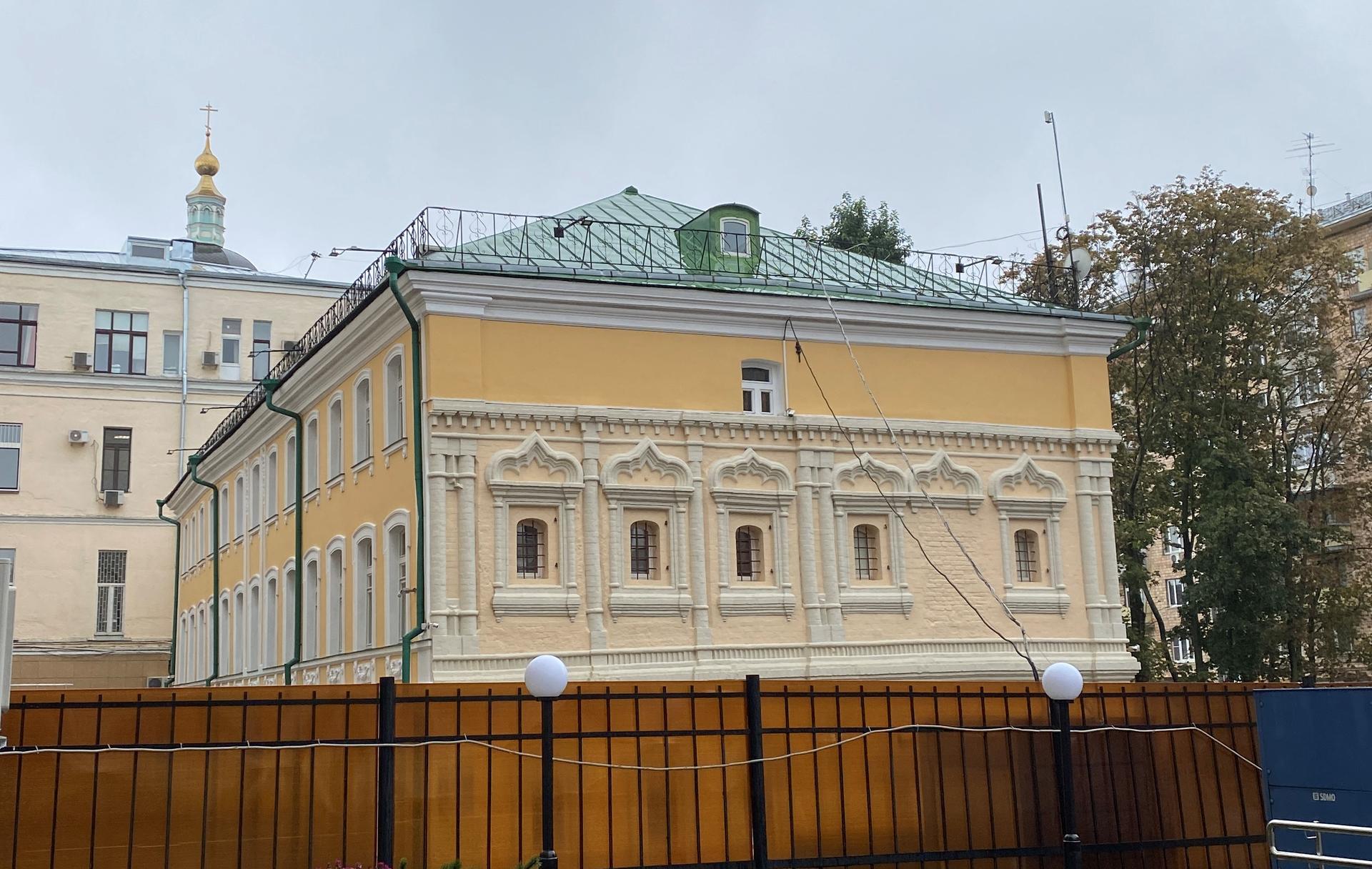
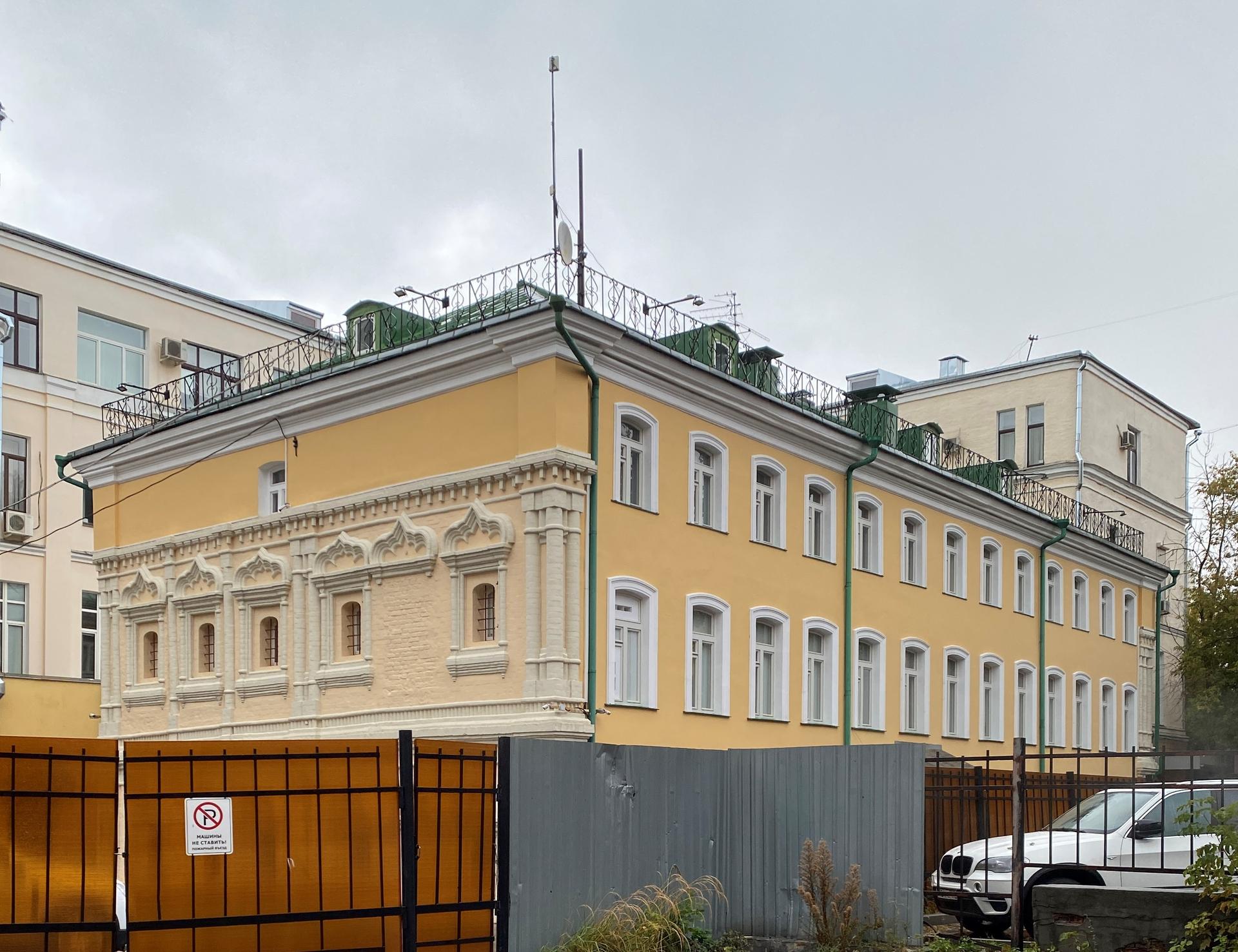
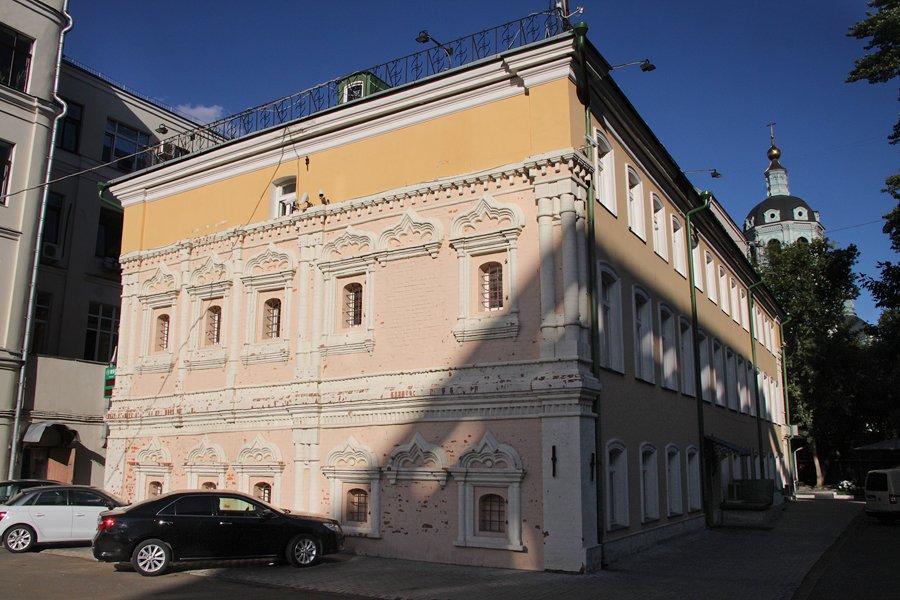
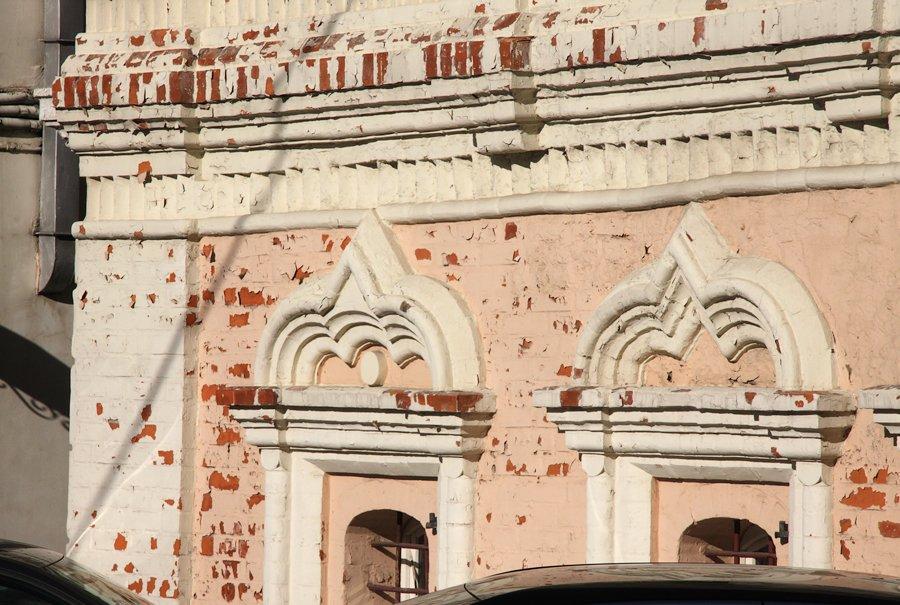
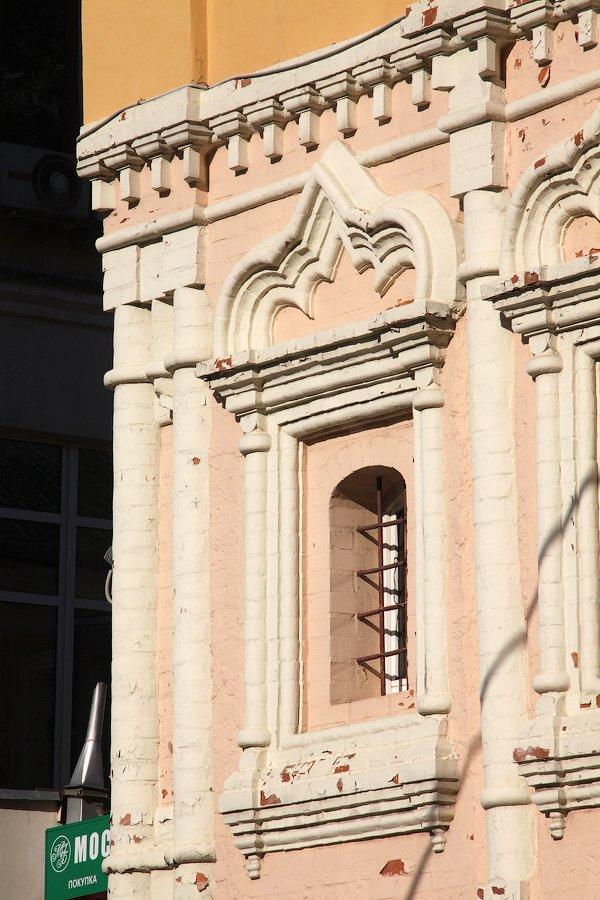
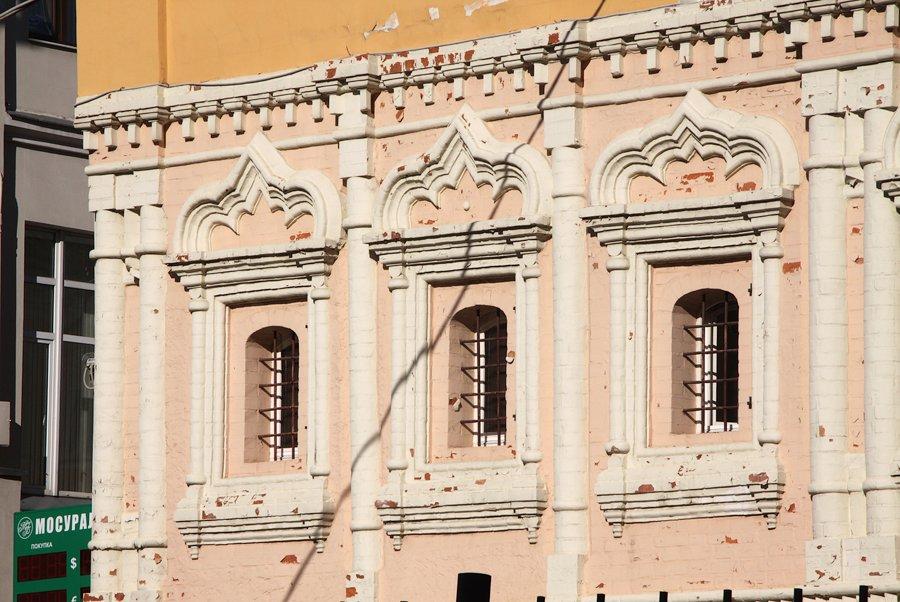
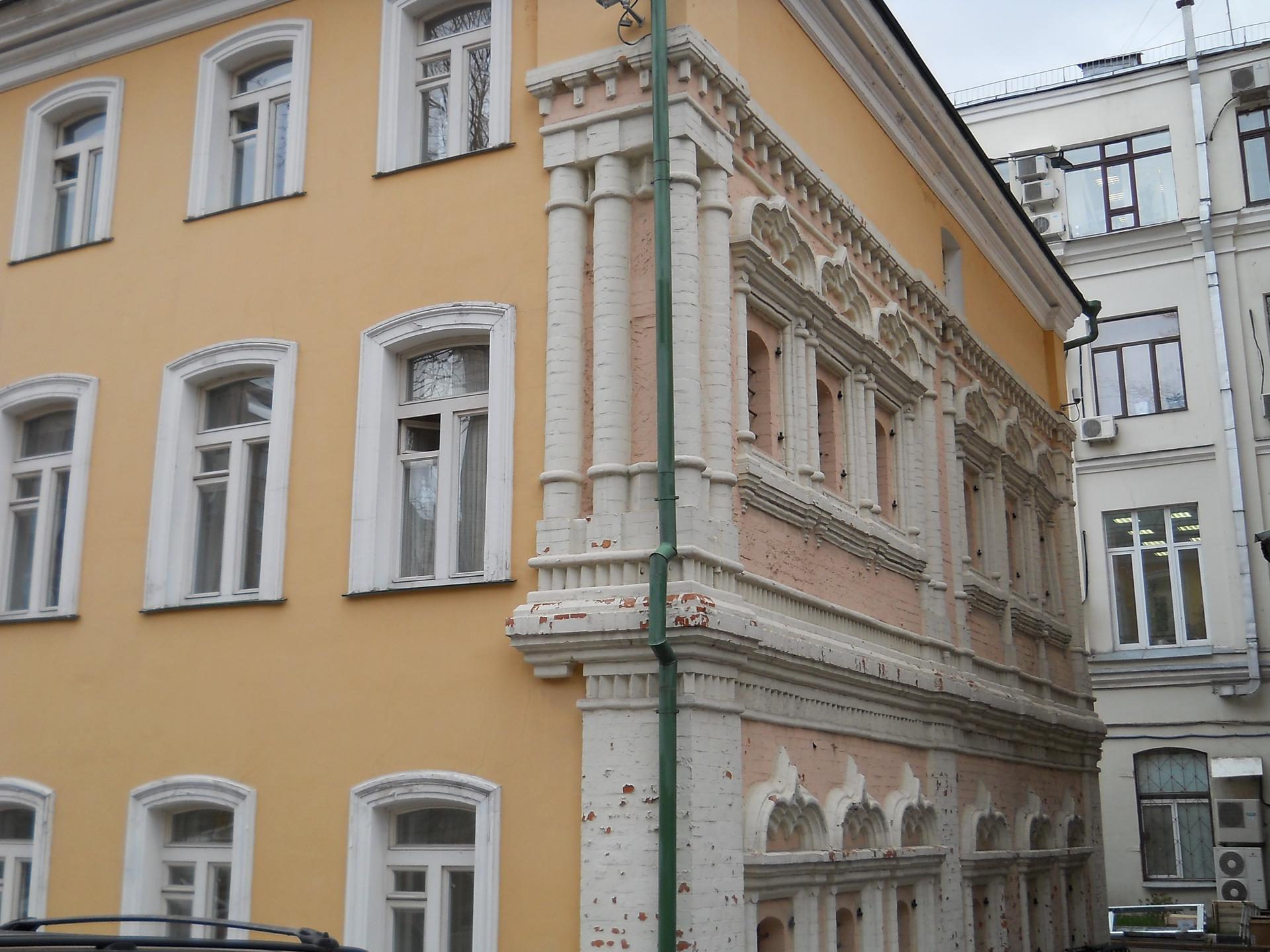
Во дворе комплекса зданий «Мосгортранса» трехэтажное здание с основного фасада, вдоль набережной, имеет классицистический декор, а с торцов отделано в узорочном стиле конца XVII века. Это результат реставрации начала 2002-2004 годов: старинные палаты, ранее скрывавшиеся за ординарной отделкой XIX века, обнаружили только при контрольных обмерах, проводившихся для подготовки к сносу. Находка стала одним из важнейших краеведческих открытий в Москве за последние десятилетия.
Участок на стыке Средних и Нижних Садовников до середины XVII столетия часто подвергался затоплениям, поэтому каменное строительство здесь стало вестись только после прокладки «ровушек»- водосточных рвов между Москвой-рекой и старицей, в честь которых названа и набережная. Датировка и принадлежность каменных палат документально неизвестна, но по стилю постройку можно отнести к последним десятилетиям XVII века.
Протяженные двухэтажные палаты, построенные когда-то имели наружные крыльца, были богато декорированы узорочными наличниками и шатрами. Палаты впервые документально зафиксированы на известном плане Москвы Горихвостова 1760-х годов. В течение XVIII – начала XIX веков изменилась планировка участка: дом оказался заслонен от набережной позднейшими каменными постройками, которые раньше были ниже и выполнены в дереве. Появился и мансардный этаж, а декор фасадов несколько раз менялся. По документам 1790-х годов и позднейшим дом принадлежал последовательно нескольким богатым дворянским семьям и сдавался ими в аренду купцам.
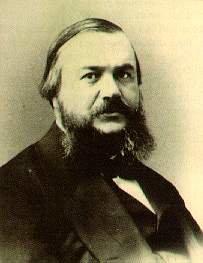
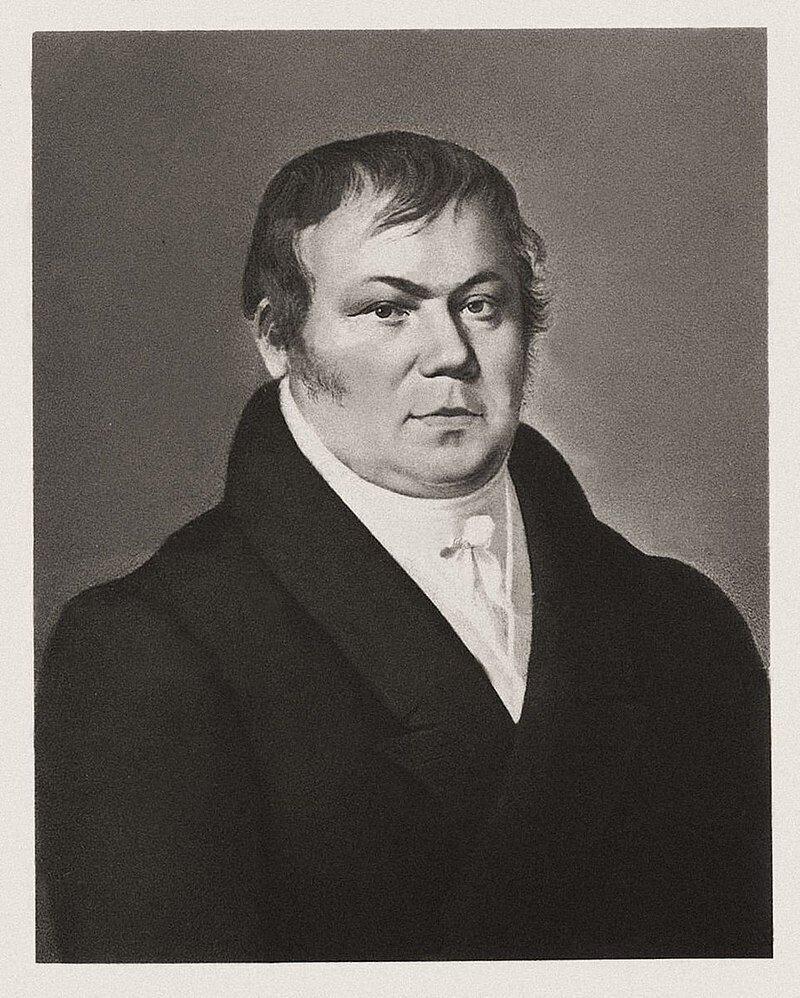
Последняя коренная реконструкция дома произошла во второй половине XIX века по проекту Михаила Чичагова. Владельцем дома тогда был городской голова князь Александр Щербатов. Позже в здании размещалась одна из частей комплекса чаеторговой фирмы «Боткин и сыновья», затем управление городского трамвая, позже «Мосгортранс».
В конце 1990-х годов обветшавшее здание, сохранившее отделку второй половины XIX в., было предназначено к сносу. Однако контрольные замеры, произведенные Ириной Изосимовой и Алексеем Ждановым в 2000 году, выявили истинный возраст дома Князя Щербатова. Реставрация по проекту ЦНРПМ проводилась сразу в двух эпохах: фасад со стороны набережной «по Чичагову», торцевые фасады на изначальный вид здания (конец XVII в.).
The site at the junction of the Middle and Lower Gardeners until the middle of the XVII century was often flooded, so stone construction was only carried out after laying "rovushek" - drainage ditches between the Moscow River and staritsa, in honor of whom the quay was named. The dating and ownership of the stone chambers is not documentarily known, but the style can be attributed to the last decades of the XVII century.
The long two-storeyed chambers with external porches were richly decorated with patterned platbands and tents. The chambers were documented for the first time on the well-known plan of Moscow in the Gorikhvostov of the 1760s. During the XVIII - early XIX centuries, the layout of the site changed: the house was blocked from the quay by later stone buildings, which earlier were lower and executed in the tree. There was also an attic floor, and the decor of the facades changed several times. According to the documents of the 1790s and later, the house belonged successively to several wealthy noble families and rented them out to merchants.
Last radical reconstruction of the house took place in the second half of the XIX century by Michael Chichagov. The owner of the house was Mayor Prince Alexander Shcherbatov. Later, the building housed one of the parts of the complex tea trading firm "Botkin and Sons", then control of the city tram, later "Mosgortrans".
In the late 1990s, a dilapidated building that preserved the finish of the second half of the 19th century was destined for demolition. However, the control measurements made by Irina Izosimova and Alexei Zhdanov in 2000 revealed the true age of Prince Shcherbatov's house. Restoration of the project TSNRPM was carried out immediately in two epochs: the facade from the embankment side "along the Chichagov", the front facades to the original view of the building (late 17th century).