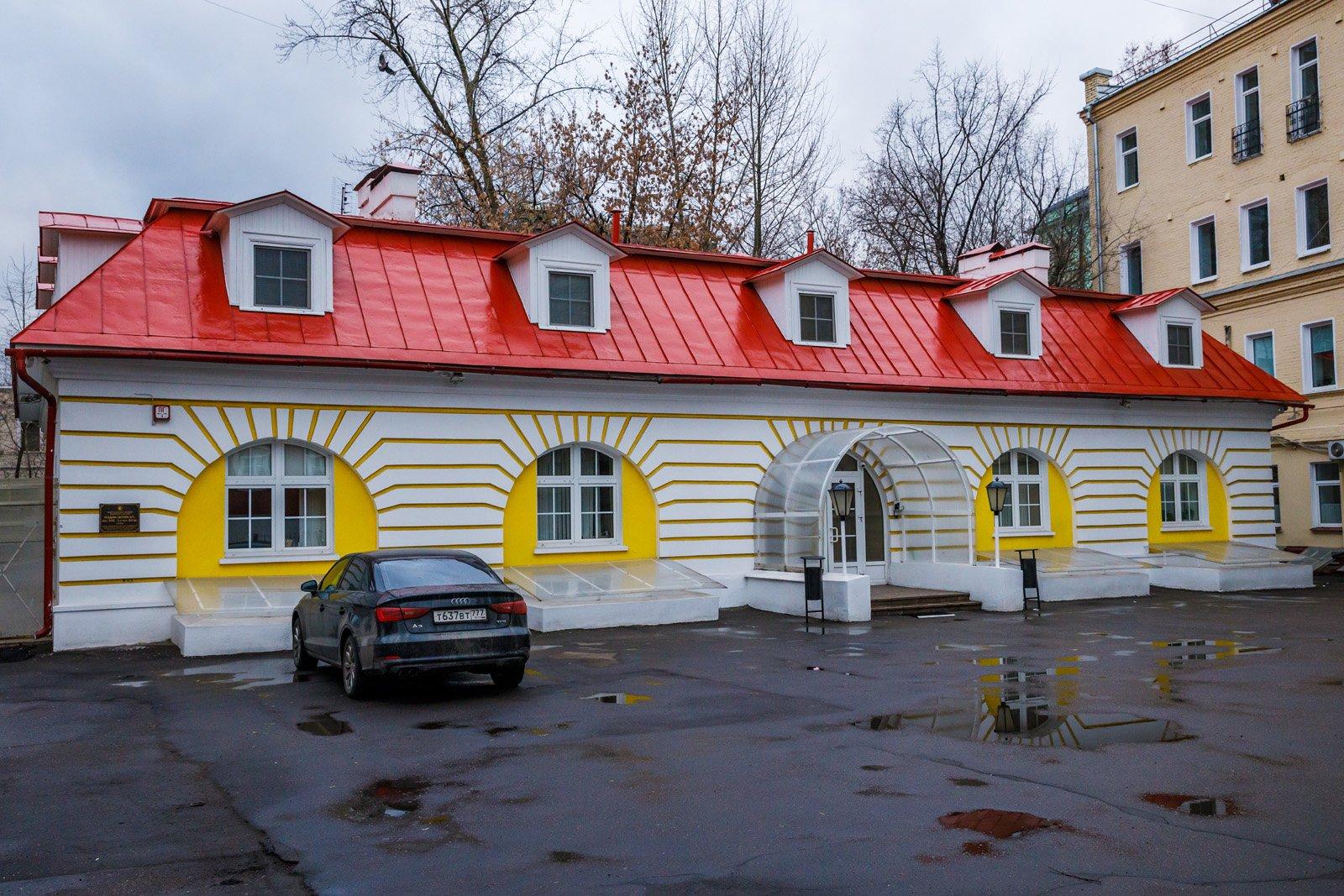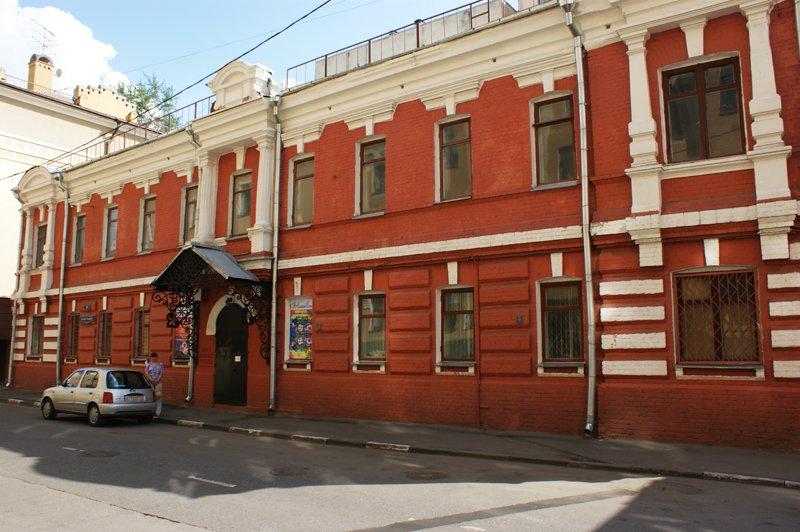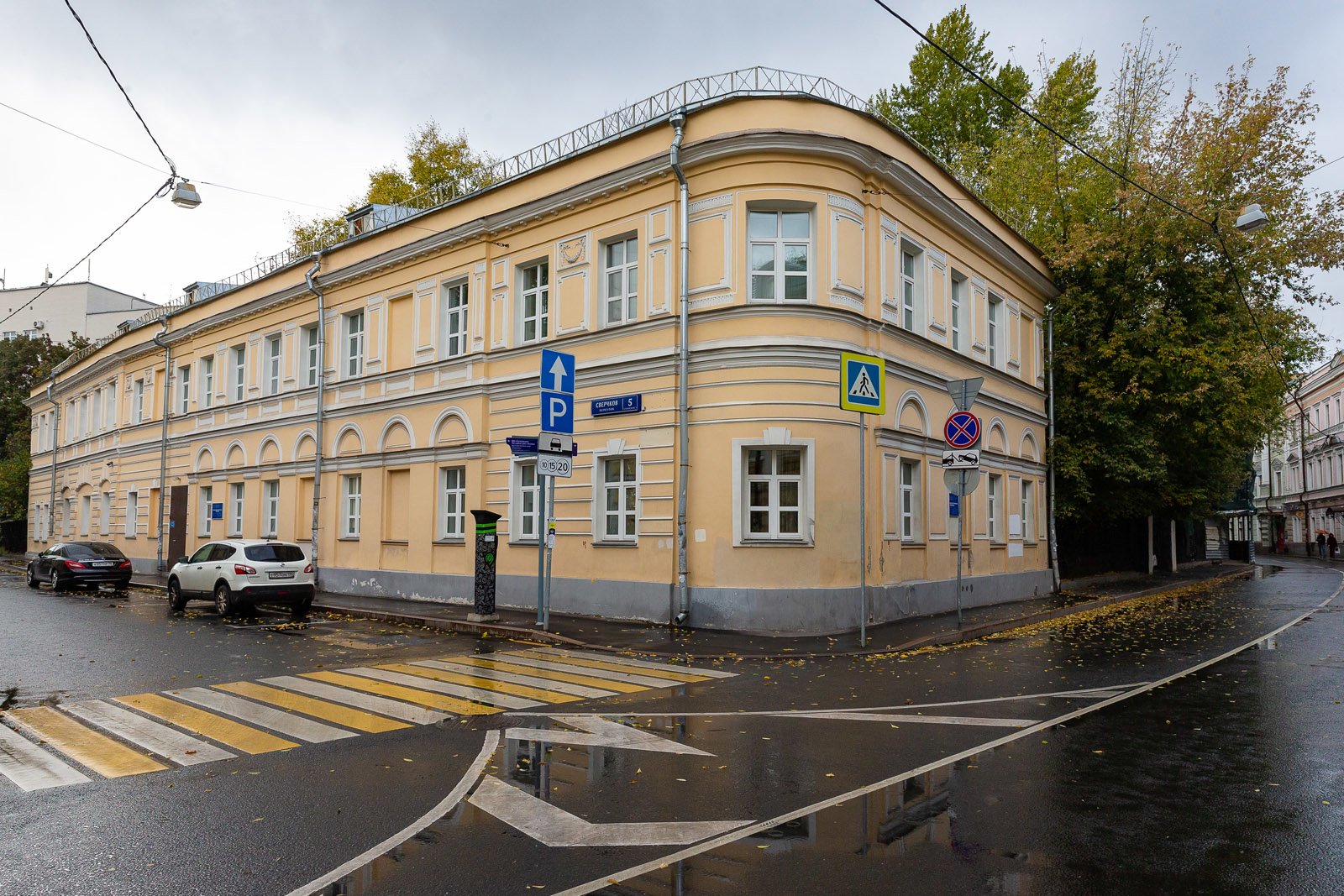
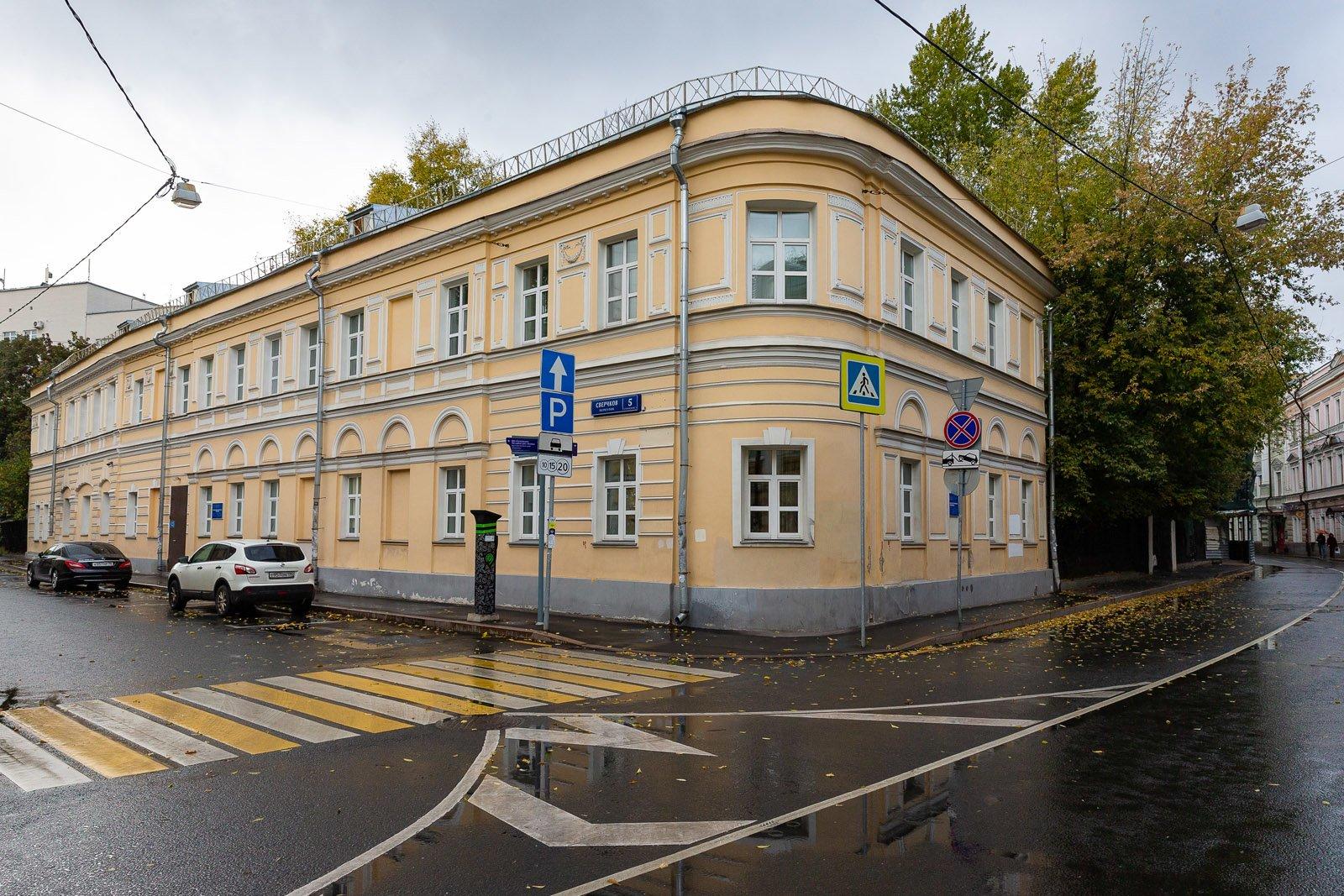
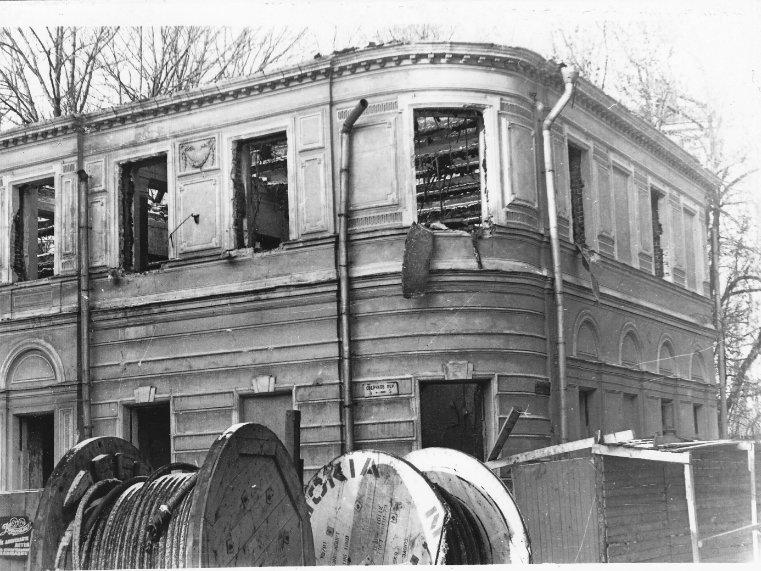
Датой строительства флигеля по Сверчкову переулку (ранее Малый Успенский переулок) считают 1789 год. Сохранился план строения, датированный 1863 годом, когда усадьбой владел гвардии ротмистр А.М. Золотарев.
Флигель – часть усадьбы, главный дом которой стоит по Потаповскому переулку (ранее Большой Успенский), дом 6.
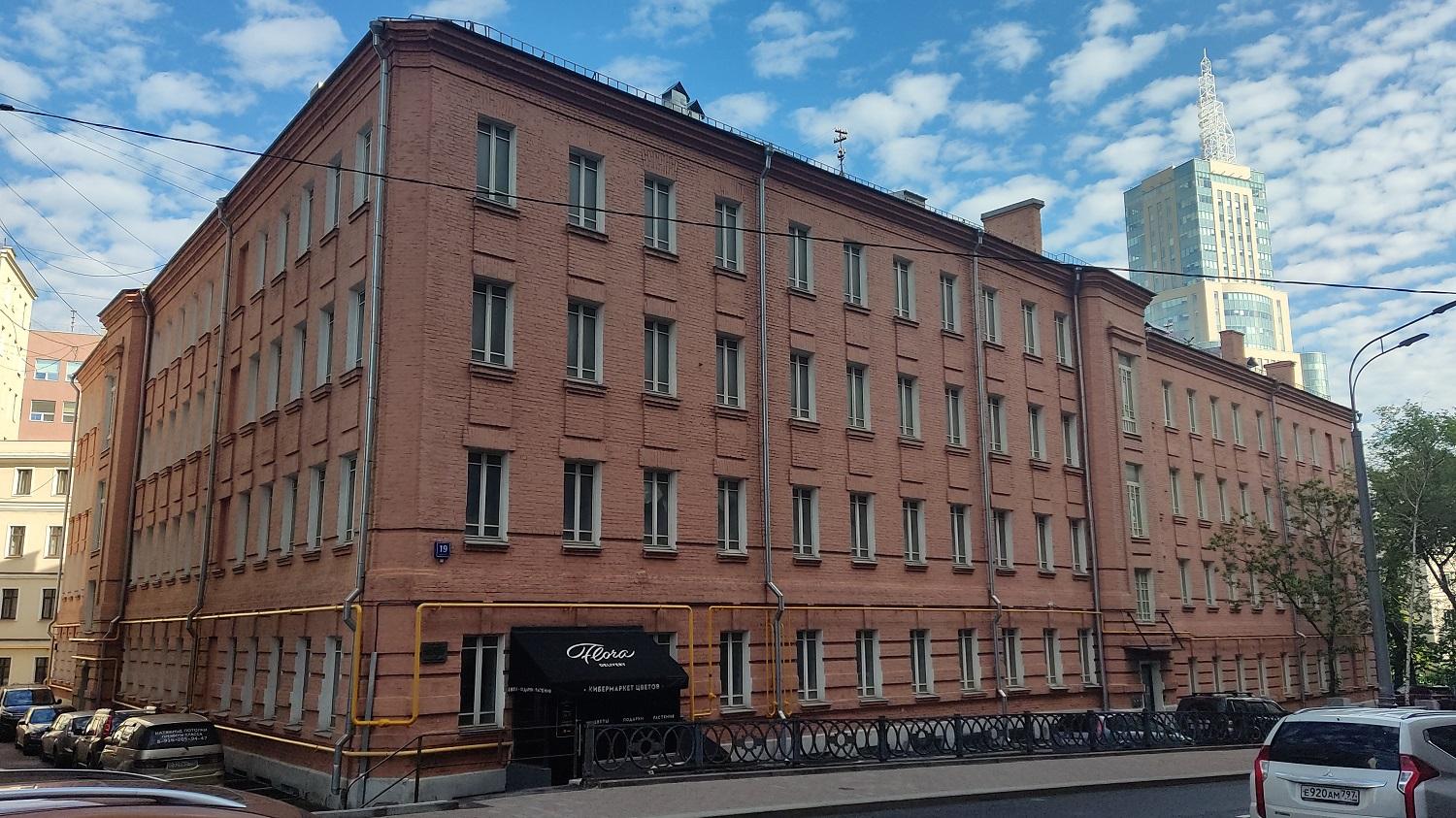
Когда-то на месте флигеля был двор и въезд в усадьбу. В 1671 г. ее владельцами числились братья Гурьевы – богатые купцы, имевшие статус "гостей" и относившиеся, таким образом, к самой привилегированной части купечества. По всей видимости, они и построили каменные палаты, которые находятся в основе дома № 6. В 1728 г. Алексей Гурьев продал усадьбу шталмейстеру Дворцового конюшенного ведомства Родиону Кошелеву. Кошелевы владели усадьбой до 1780-х годов, затем собственники часто менялись: купец Михаил Колосов, английский купец Доути. Они расширяли и перестраивали здания усадьбы. В пожаре 1812 года она не пострадала, чего не скажешь о пожаре 2009 года. Тогда в огне серьезно пострадал главный дом, а флигель по Сверчкову переулку уцелел.
В 1821 г. усадьбу купил калужский купец Петр Золотарев и сделал ее доходным владением: дом (надстроенный в 1840-е годы еще одним этажом) и флигеля сдавались внаем. С той же целью дохода использовалась усадьба и купцом Василием Кокоревым, который владел участком с 1870 года. При нем была надстроена часть главного дома, устроена большая арка для проезда во двор, фасады приобрели тот облик, который сохраняется до сих пор.
С 1881 г. и до революции хозяевами усадьбы были купцы Абрикосовы, владельцы знаменитой кондитерской фабрики в Москве (ныне Бабаевская), крупнейшие производители сладостей в Российской империи. Квартиры – в той части главного дома, что выходит в переулок, и во флигелях – сдавались внаем.
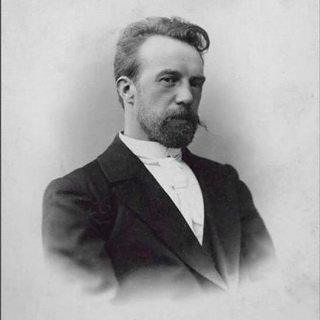
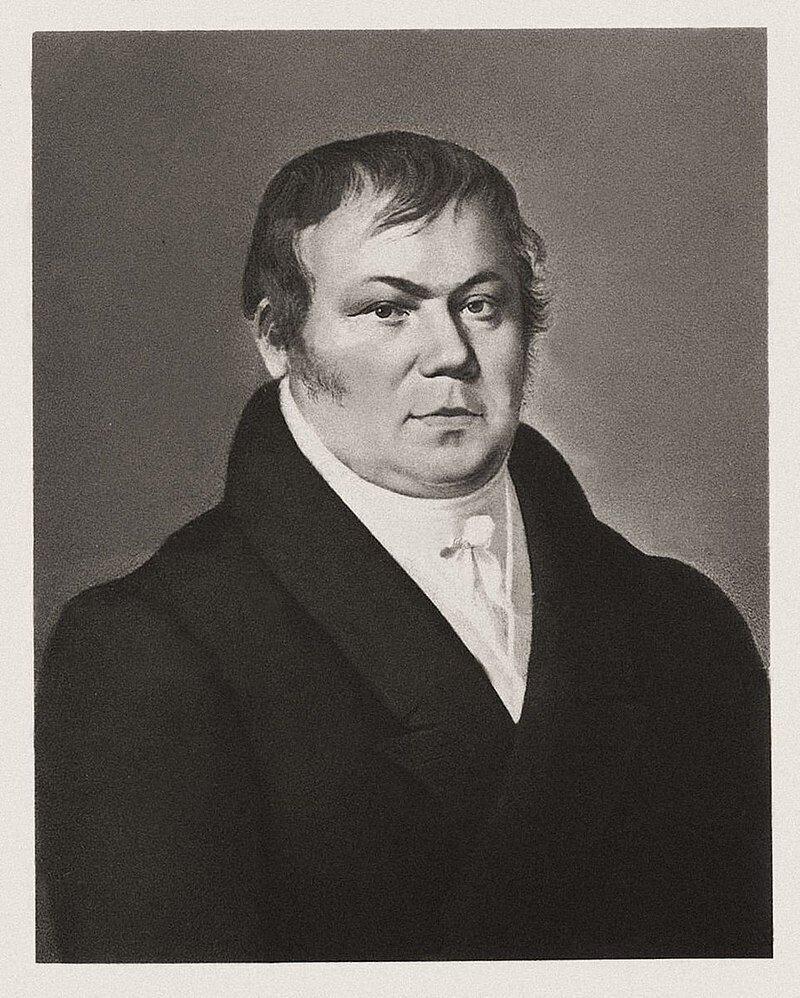
Наиболее известным заведением, которое занимало флигель по Сверчкову переулку, был престижный пансион пастора Л. Эннеса, выходца из Эльзаса. Он работал с 1845 по 1859 год. Учебное заведение было открыто для представителей богатого купечества. Там же обучались и дети практически всех живущих в Москве иностранцев. Преподавание велось на немецком и французском. Среди педагогов – много известных имен: фольклорист А.Н. Афанасьев, преподававший русский язык и историю, историк экономист И.К. Бабст, занимавшийся уроками всеобщей истории, математику преподавал А.Ю. Давидов, занявший вскоре кафедру математики в Московском университете.
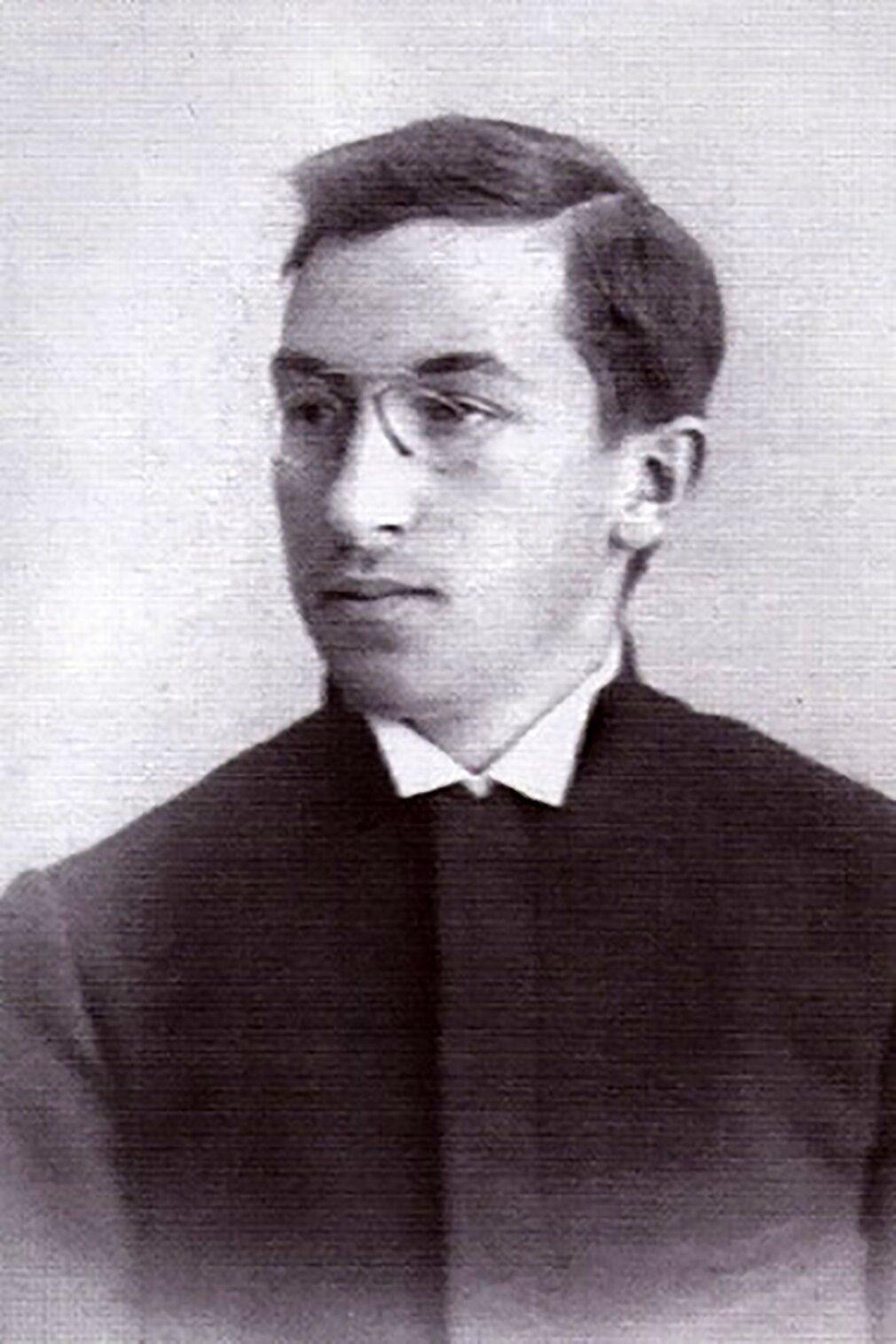
Пансион Эннеса помнят благодаря именам выдающихся воспитанников: врача Сергея Боткина, историка Владимира Герье.
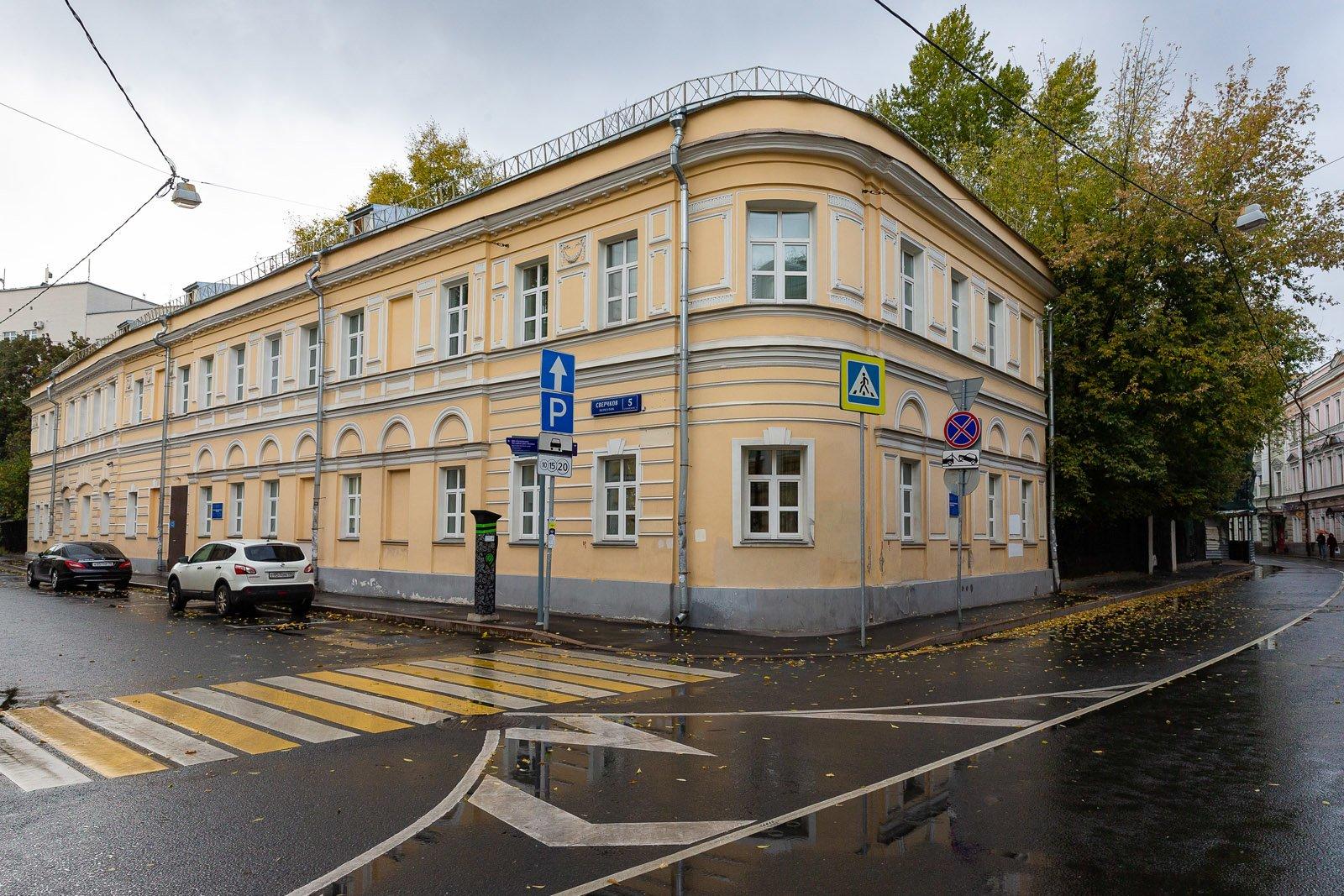
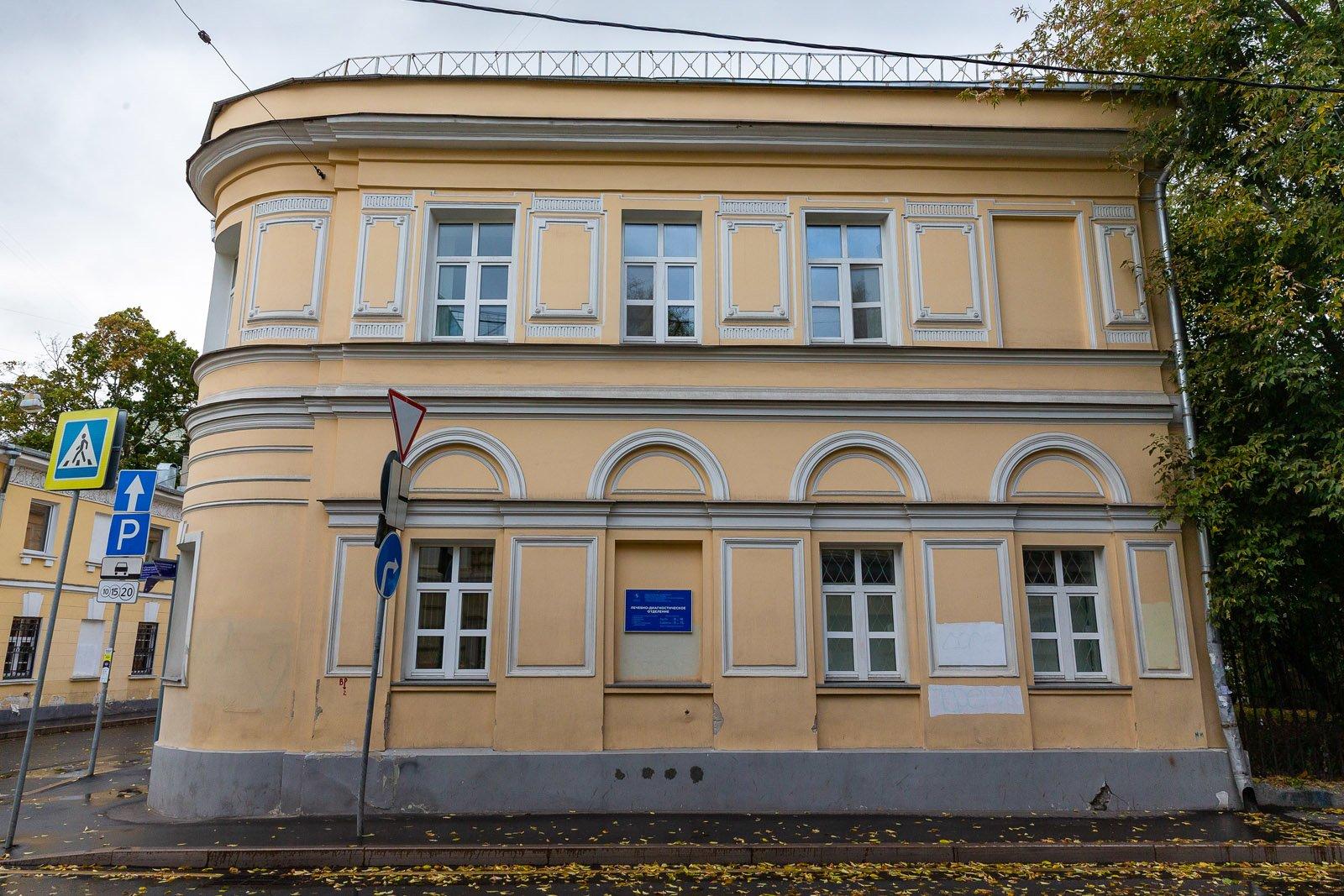
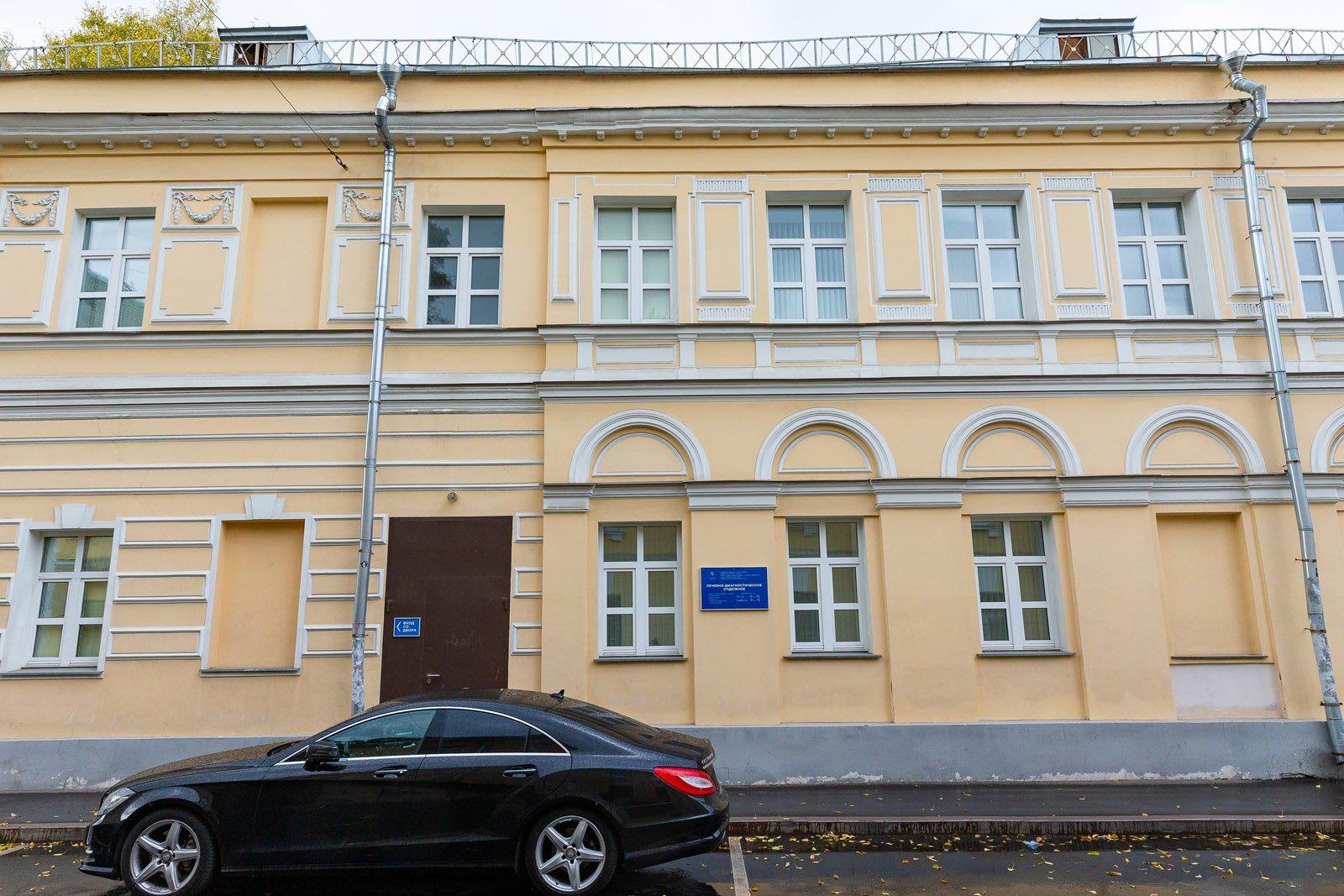
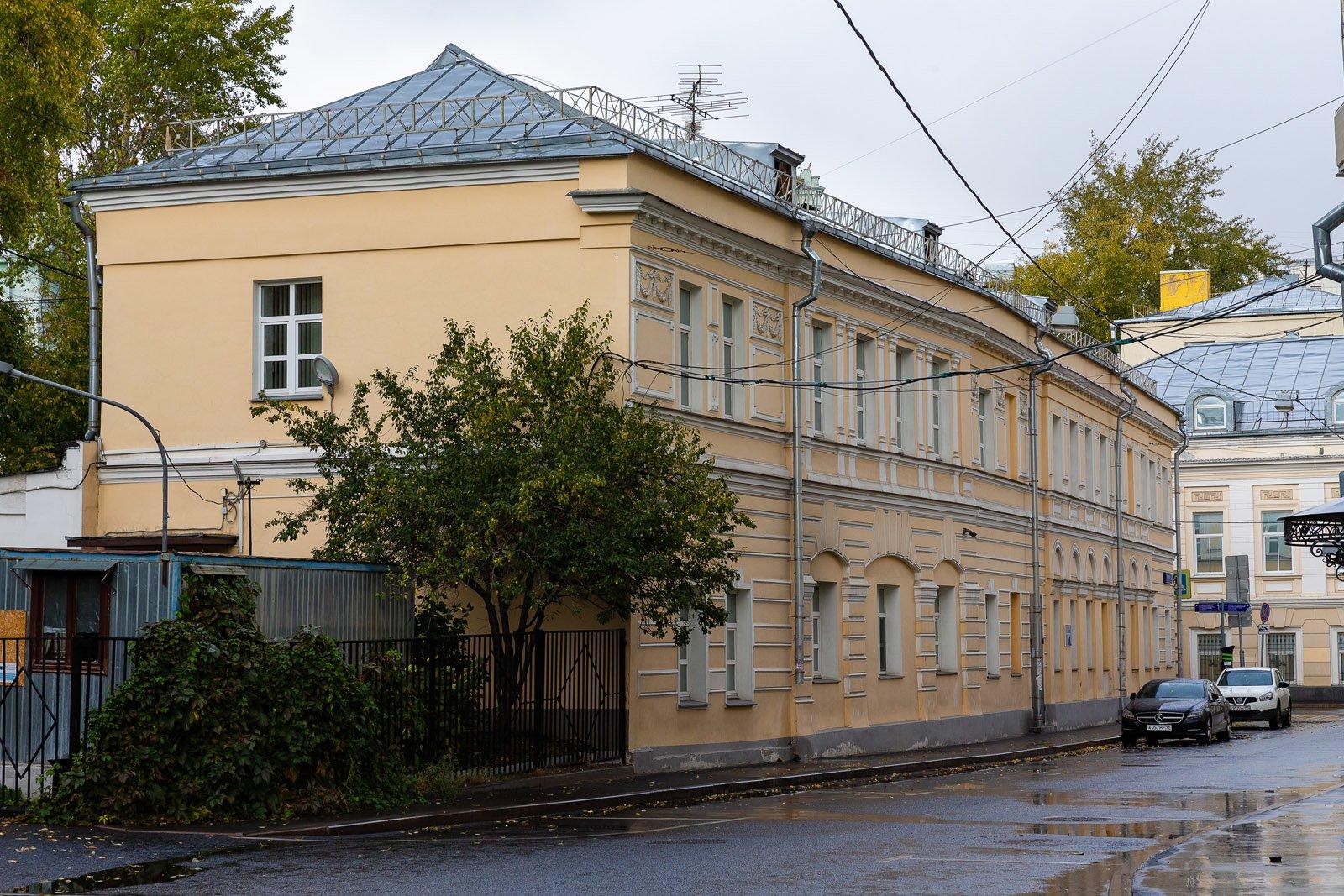
В архитектурном облике флигеля видна классическая основа: ризалит с заложенной аркадой на первом этаже, симметричное построение основной части здания (не считая пристройки слева). Однако измельченный декор фасада, особенно второго этажа с филенками и лепными панно над окнами, указывает на вторую половину XIX столетия, время эклектики. При этом, общий облик здания вполне гармоничен.
Флигель – объект культурного наследия регионального значения.
Сегодня в здании располагается Лечебно-диагностическое отделение Научно-практического центра интервенционной кардиоангиологии.
Автор статьи
The outbuilding is a part of the estate which main house is located at 6, Potapovsky (once Bolshoy Uspensky) Lane.
Before the outbuilding was constructed, there were the estate's courtyard and drivethrough. In 1671, the estate was owned by brothers Guryev — rich merchants with a status of guests that was the highest rank among the merchantry.Most likely it were they who had the stone chambers build which later were used as a base for the building No. 6. In 1728, Alexey Guryev sold the estate to Rodion Koshelev, Master of the Horse with the Royal Horse and Carriage Service. The Koshelevs owned the estate up to the 1780; after them, the estate changed many owners: merchant Mikhail Kolosov, English merchant Doughty. They had the estate buildings expanded and reconstructed. It did not suffer from the 1812 fire; the same cannot be said of the fire in 2009. Then, the main house was seriously damaged while the outbuilding in the Sverchkov Lane survived.
In 1821, the estate was bought by merchant Piotr Zolotariov from Kaluga who converted it into a tenement: both the main house (with another floor added in 1840s) and the outbuildings were let out. Merchant Vasily Kokarev who owned the estate from 1870, was using the estate for the same commercial purpose. During his time, another floor was added to one part of the main house, a large drive through arch leading to the courtyard was built, and the facades became what they look today.
From 1881 up to the revolution, the estate was owned by merchants Abrikosov, owners of the famous Moscow confectionery (nowadays it is the Babayevskaya factory) and the major producers of sweets in the Russian Empire. Apartments in the lane facing part of the main house and in the outbuildings were let out.
The most famous institution that ever occupied the outbuilding in the Sverchkov Lane was the prestigious boarding school of Pastor L. Ennes from Alsace. The boarding school functioned from 1845 to 1859. It admitted children of rich merchants. Children of virtually all foreigners in Moscow were aslo students of the school. Instruction languages were German and French. Among the school's teachers were many well known names: folklore researcher A.N. Afanasyev taught the Russian language and history; historian and economist I.K. Babst taught general history; A.Yu. Davidov taught mathematics — later he took the Mathematics Chair at the Moscow University.
The Ennes Boarding School is remembered for its outstanding alumni: Doctor Sergey Botkin, historian Vladimir Gerye.
The outbuilding's architecture has obvious neoclassical features: an avant corps with walled up colonnade in the ground floor, symmetry of the main body of the building (except for the left side annex). However, smaller decor elements of the facade, especially in the first floor with its raised panels with molded ornaments are rather features of the eclectic style typical for the second half of the 19th century. Nevertheless, the overall appearance of the building is quite balanced.
The outbuilding is a cultural heritage site of regional significance.
Nowadays, it houses the Therapy and Diagnostic Department of the Research and Practice Center for Interventional Cardioangiology.
Yevgenia Tvardovskaya