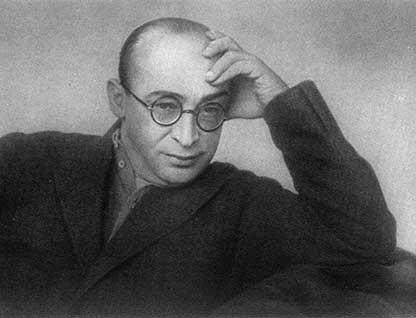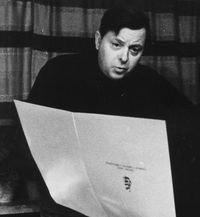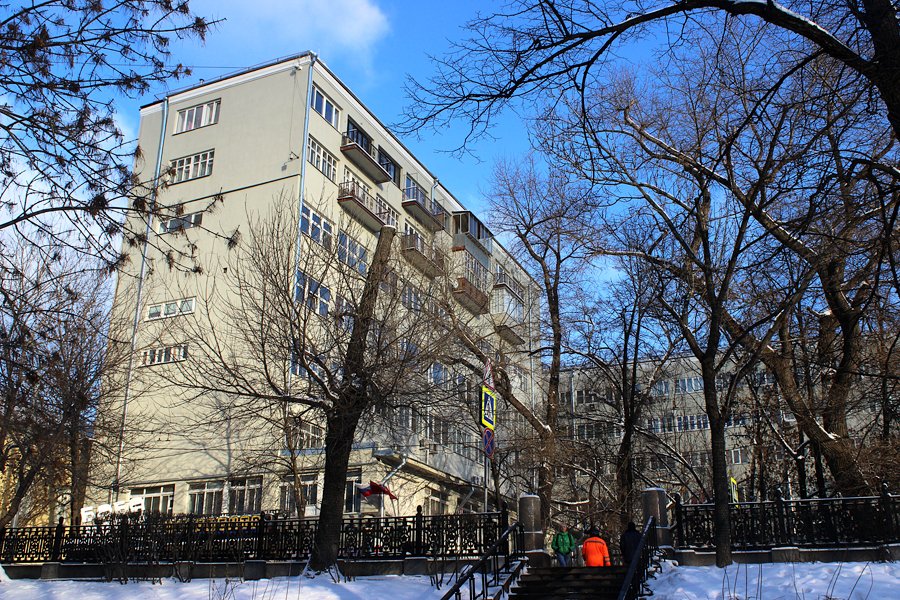
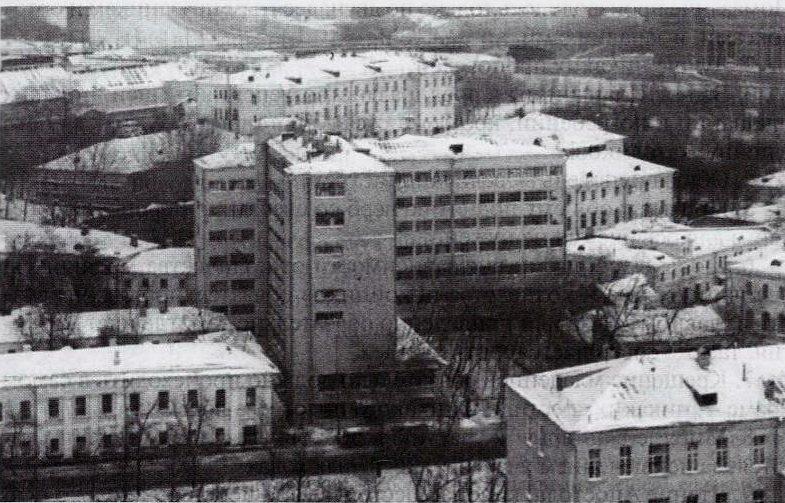
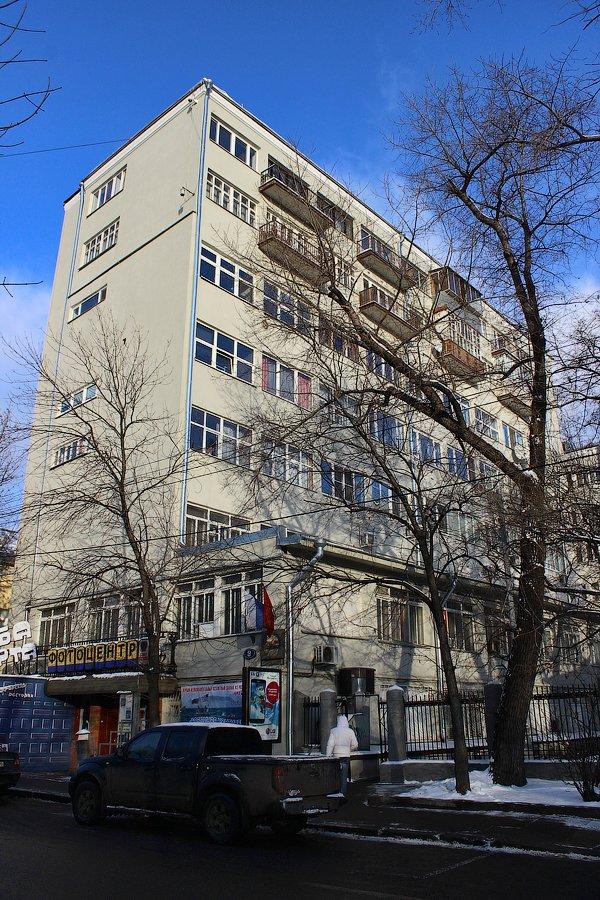
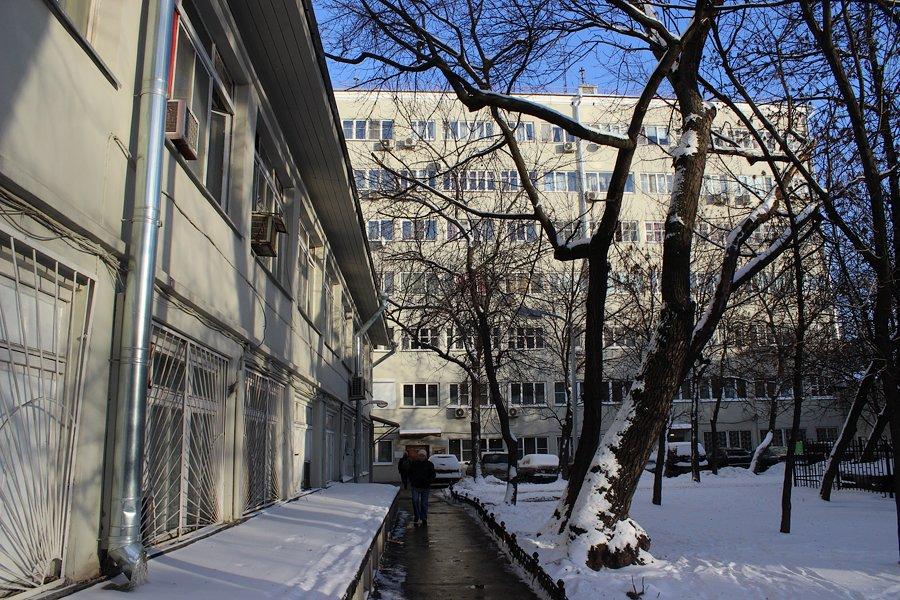
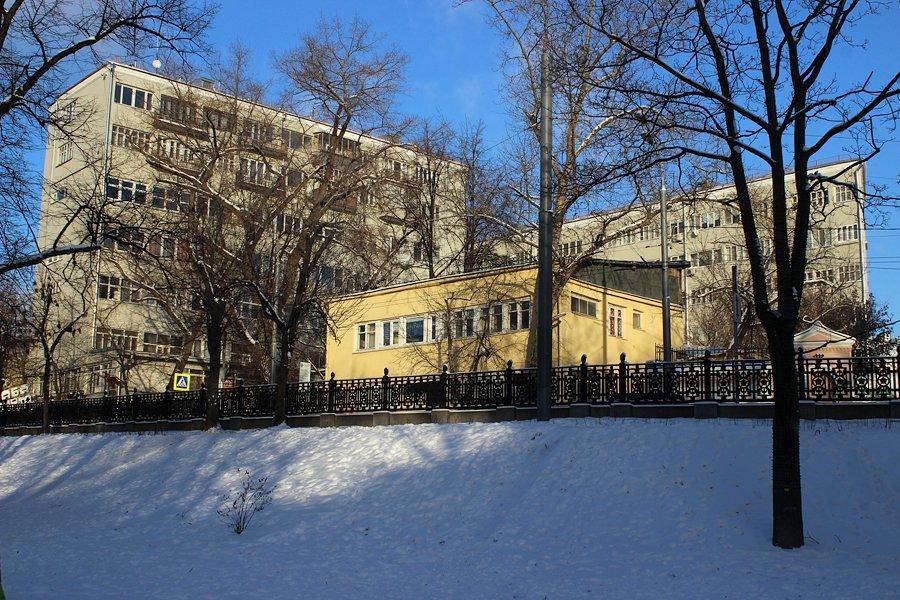
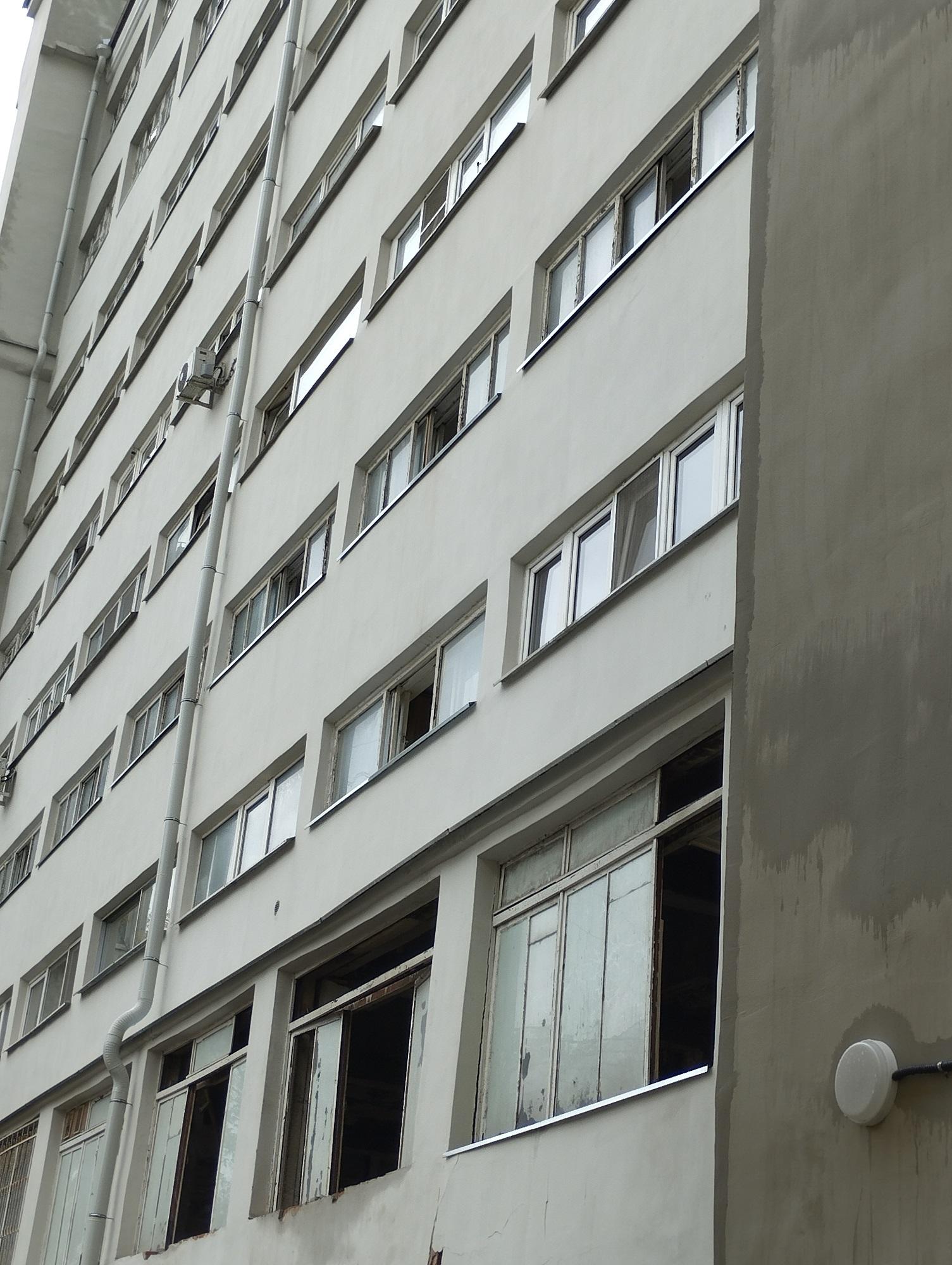
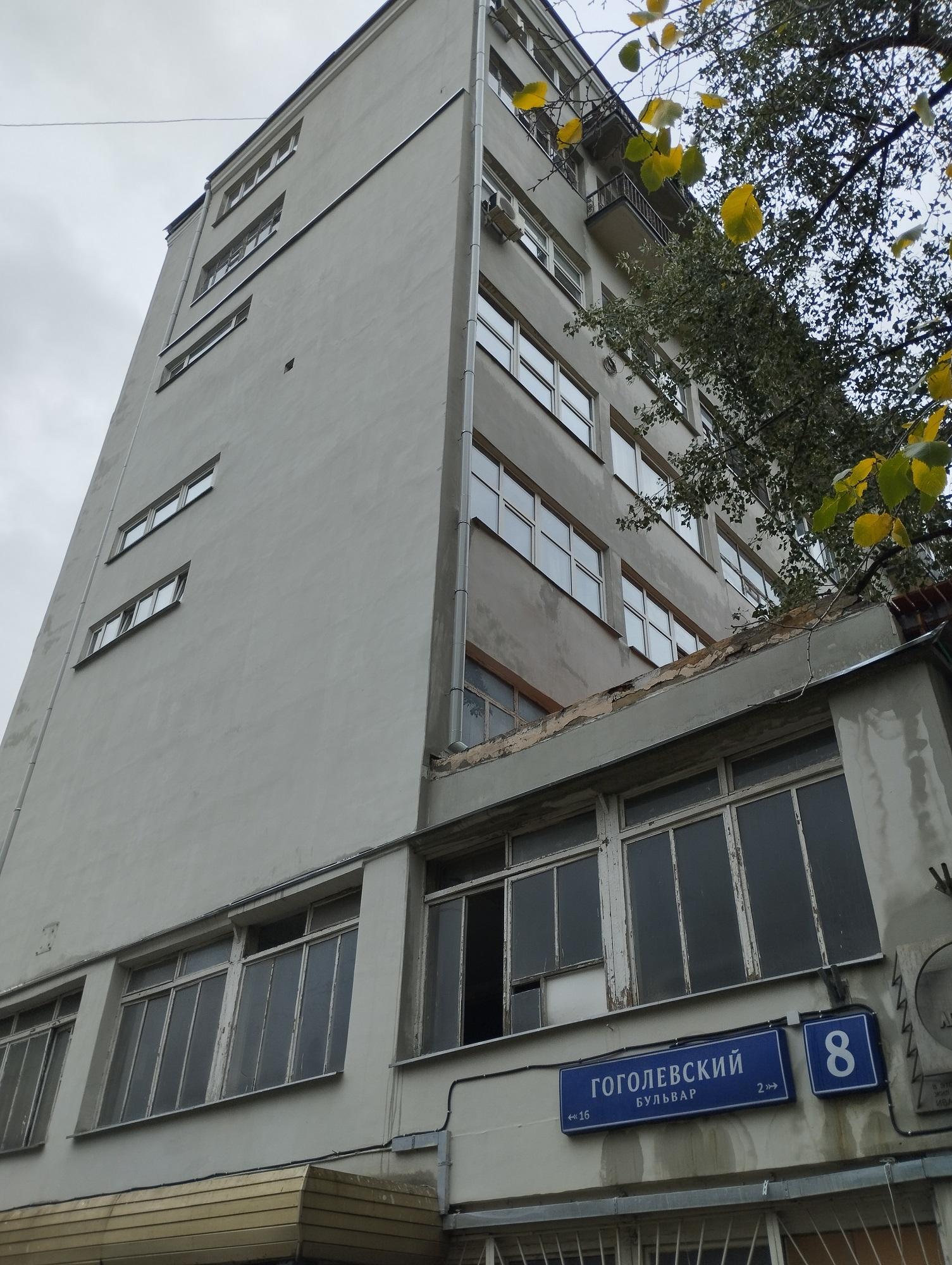
Жилой комплекс жилищного кооператива на Гоголевском бульваре выстроен по проекту группы архитекторов-сотрудников Стройкома РСФСР М. Барща, В. Владимирова, И. Милиниса, А. Пастернака, Л. Славиной под руководством М.Я. Гинзбурга в 1928–1931 годах как экспериментальное жилище с элементами бытового обслуживания.
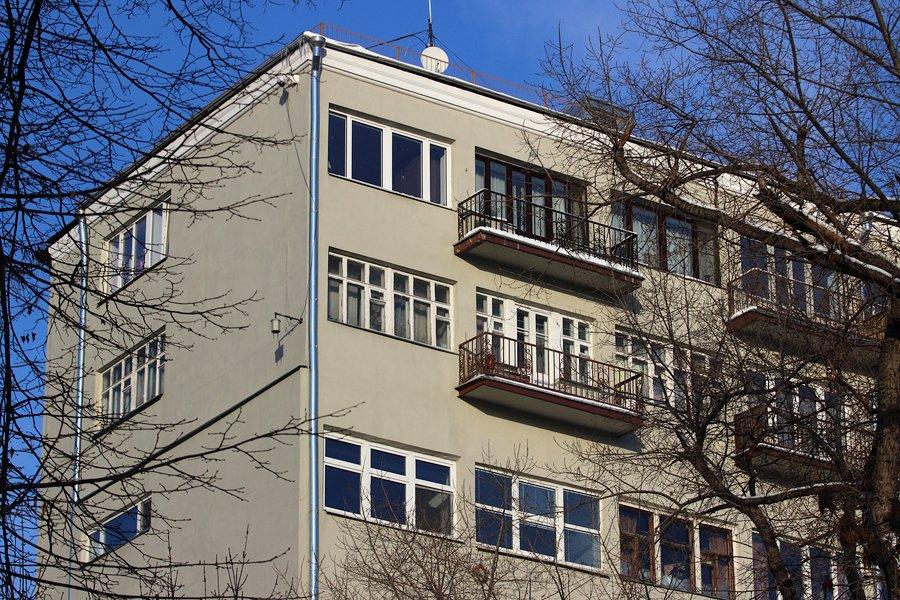
Это программное произведение архитектуры авангарда состоит из двух жилых корпусов, один из которых поставлен торцом к бульвару, а другой — вдоль Большого Знаменского переулка. Третий, отдельно стоящий корпус общественного назначения примыкает к бульвару. В жилом корпусе, выходящем на бульвар были применены двухуровневые жилые ячейки, разработанные Стройкомом РСФСР под руководством М. Гинзбурга. Это были наиболее компактные квартиры, категории F, выходящие на две стороны корпусов. Они были рассчитаны на небольшие семьи, члены которых могут питаться в общественной столовой. Поэтому в квартирах были сделаны не кухни, а только специальные шкафы с минимальным кухонным оборудованием, а также крохотные санузлы.
Данный жилой комплекс считался «переходным» к дому-коммуны. Тем не менее, большинство жильцов жило дружно, совместно пользуясь крышей террасой и переходом-мостом между корпусами. В общественных пространствах, занимаемых сейчас «Фотоцентром», располагалась архитектурная мастерская М. Гинзбурга, где работали многие архитекторы, по совместительству жильцы дома.
После войны, «Стальпроект» занявший мастерские, надстроил ещё два жилых этажа одного из корпусов, уничтожив плоскую кровлю-террасу и мостик. Вся группа архитекторов, проектировавших жилой комплекс в составе Михаила Барща, Вячеслава Владимирова, Игнатия Милиниса, Александра Пастернака, Любови Славиной, инженера Сергея Орловского, получили квартиры в этом доме на одном этаже в ячейках типа F.
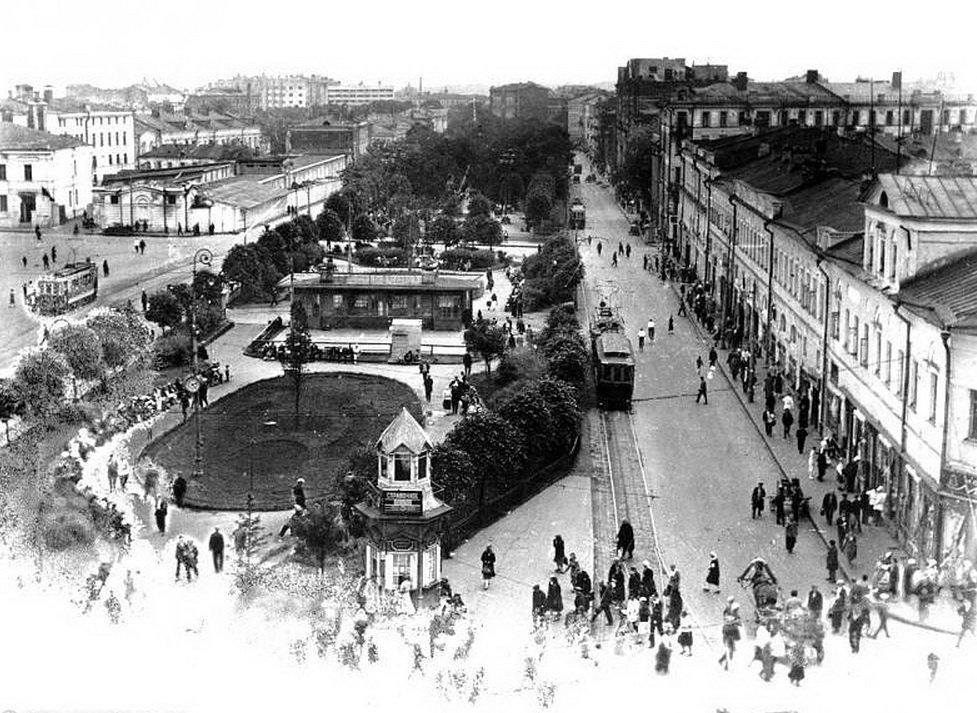
Также квартиры тут получили и другие архитекторы — Иван Леонидов, Андрей Буров, Соломон Лисагор, образовав своеобразную «коммуну» архитекторов на одном этаже. Исключением стал А. Пастернак, поселившийся в соседнем корпусе, где были однотажные квартиры типа A. У него в 1932 году жил брат Борис, знаменитый поэт. Ради постройки этого дома была снесена церковь Ржевской Божьей Матери, стоявшей на этом месте. Церковный подклет частично вошел в состав подвала дома.
This program-based product of avant-garde architecture consists of two residential buildings, where one put with the side to the boulevard, and the other one was along Bolshoy Znamensky alley. Third detached building adjacent to the boulevard housed public facilities. In a residential building, overlooking the boulevard were applied duplex residential units developed by Stroikom RSFSR under the leadership of the M. Ginsburg. These were the most compact apartments, category F, fronting the two sides of the body. It was designed for small families whose members can eat out in the café. Therefore, apartments were not equipped with kitchen, only with special cases with minimal kitchen facilities, as well as tiny bathrooms. This apartment complex was considered "transitional" to the house-commune. Nevertheless, the majority of residents lived amicably together using a roof terrace and a transition bridge between buildings. In public spaces, now occupied by "Photo Capture center", Architectural Studio M. Ginzburg is located. After the war, "Stalproekt" took workshops, overbuilt another two residential floors of one of the buildings, destroying the flat roof-terrace and a bridge. The whole group of architects who designed residential complex consisting of Michael Barshch, Vyacheslav Vladimirov, Milinis Ignatius, Alexander Pasternak, Lubov Slavin, engineer Sergei Orlovsky got their apartments in this house on one floor in the cells of type F. Also other architects got apartments here - Ivan Leonidov, Andrei Burov, Solomon Lisagor, and all of them formed a kind of "commune" of architects on the same floor. The exception was A. Pasternak, who settled in the neighboring building, where they were single-floor apartments of the type A. His brother Boris, a famous poet lived in his apartment in 1932. Church of Our Lady of Rzhev located on this site was demolished for the construction of this house. The church basement is partially entered into the basement of the house.