Интерактивный гид по городу
С мобильным приложением бродить по городу гораздо интереснее!

Simonov monastery

Over two -thirds of Simonov monastery was lost in the Soviet times.

Simonov monastery
Simonov monastery
Over two -thirds of Simonov monastery was lost in the Soviet times.
3.49
Вы можете воспользоваться QR-кодом, чтобы открыть эту страницу в нашем приложении
Архитектурный стиль:
,
Годы постройки:
1370, 1379
Эпоха:
14th century, 17th century, 18th century, 19th century
Информация о здании

Один из наиболее пострадавших московских монастырей и один из самых значимых в истории столицы. Симонов монастырь был утрачен более чем на две трети, в ХХ веке был уничтожен его собор – один из древнейших в Москве. И всё же осколки его истории дошли до наших дней, словно показывая, к чему может привести неуемная жажда разрушений.

Первоначально Симонов монастырь был основан в 1370 году чуть поодаль от своего сегодняшнего места – там, где сейчас располагается церковь Рождества Богородицы в Старом Симонове. Его основателем стал святой Федор – ученик и племянник преподобного Сергия Радонежского. А название обитель получила не от храма, а по монашескому имени боярина Степана Ховрина, который пожертвовал землю для создания монастыря и принял в нем иночество с именем Симон. В 1379 году обитель была перенесена немного на север и больше уже не меняла свое местоположение. В это же время началось строительство каменного собора Успения Божией Матери, завершенное к 1405 году. В XVI веке построены существующие каменные стены: архитектором, предположительно, был Федор Конь, создатель Смоленского кремля, стен Белого города в Москве и Малого собора Донского монастыря. Стены и башни Симонова монастыря – шедевр русской фортификации, он не раз принимал участие в боях и выдерживал осады неприятеля. Сохранившиеся до наших дней башни «Дуло», «Соляная» и «Кузнечная» перестроены в 1640‑х годах. Монастырь был упразднен в 1771 году для размещения в его стенах чумного карантина, но в 1795 году снова был восстановлен по ходатайству графа Мусина‑Пушкина.

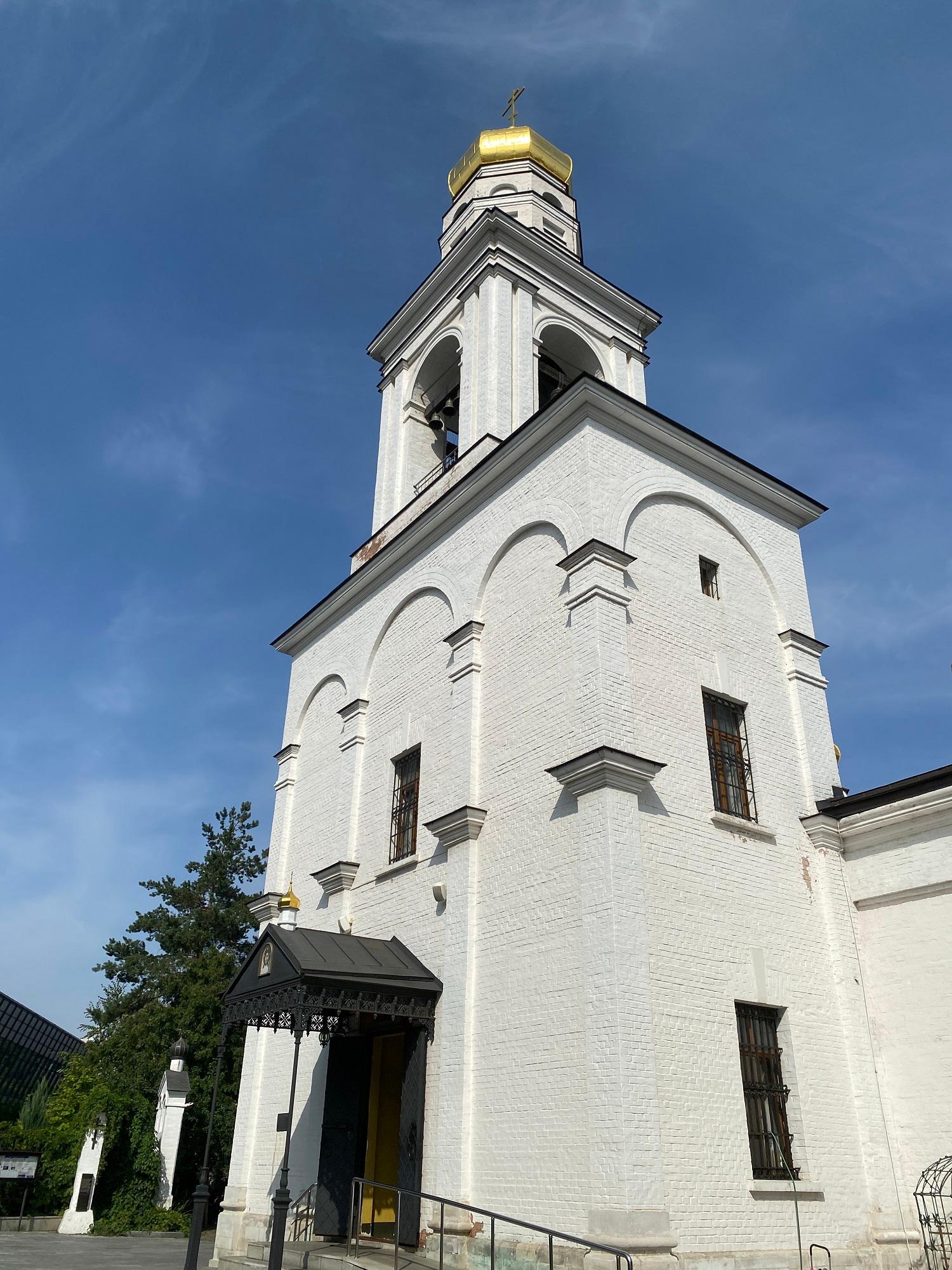
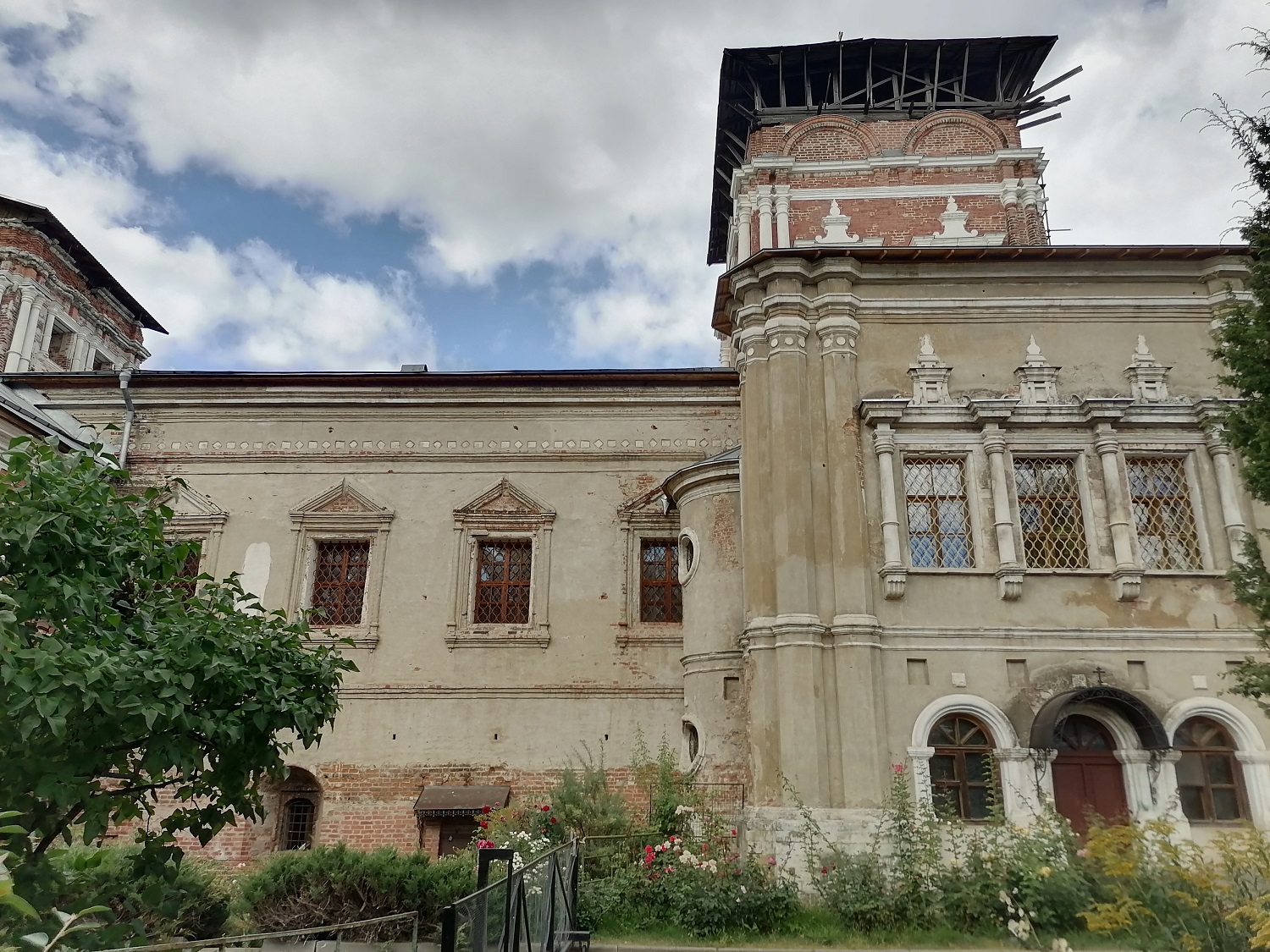
Центром монастырского ансамбля являлся массивный пятиглавый собор Успения Божией Матери. Южнее располагалась трапезная, построенная в 1677 году на средства царя Федора Алексеевича с церковью Тихвинской иконы Божией Матери на основе старой постройки. В архитектурном отношении это было очень необычное здание: помимо четверика церкви, особо выделялась широкая смотровая башня, с которой царь любовался видами Москвы и окрестностей. Её фасады были украшены окнами с наличниками сложной формы, с запада она венчалась декоративной ступенчатой композицией с голландскими мотивами. Над западными вратами возвышалась церковь Всемилостивого Спаса, построенная в 1593 году в память о победе над крымским ханом Казы‑Гиреем, а над восточными – храм святого Николая Чудотворца. С севера в составе монастырской стены находилась колокольня, построенная на средства купца Ивана Игнатьева в 1835‑1839 годах по проекту архитектора К.А. Тона – создателя Храма Христа Спасителя. Наконец, при здании монастырской больницы был одноглавый храм преподобного Александра Свирского.

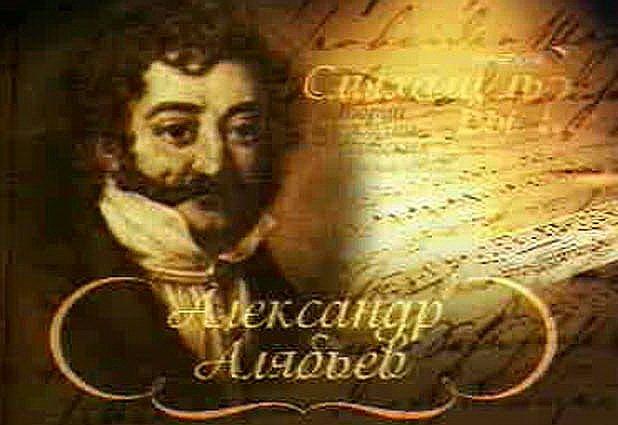
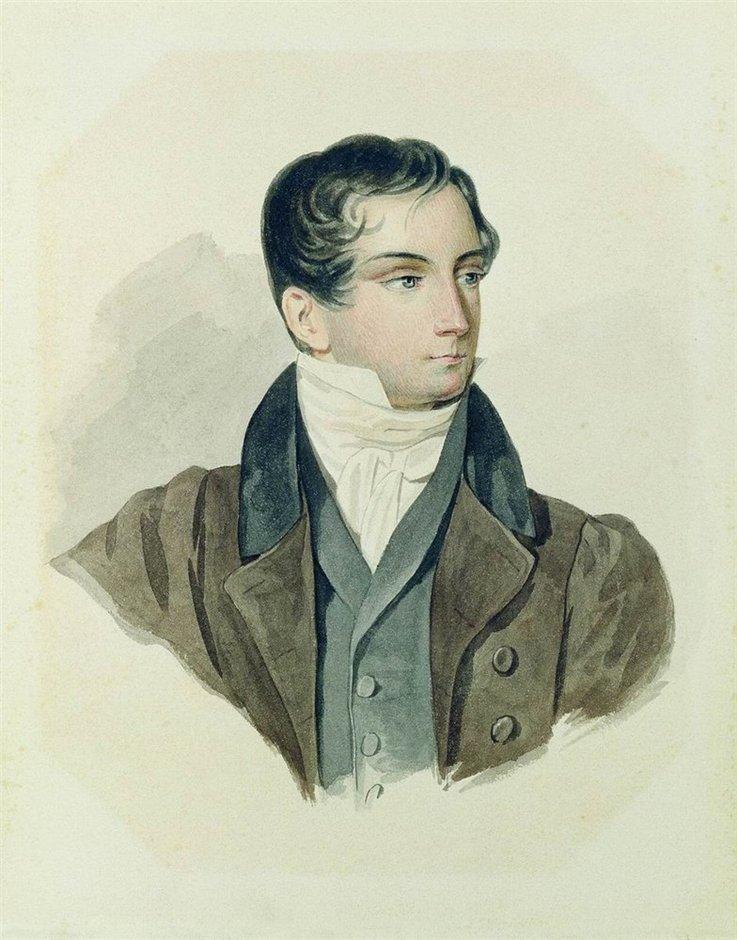
Целый ряд русских святых и известных архиереев, вошедших в историю, начинали свой монашеский путь в Симоновом монастыре: митрополит Московский Иона, патриарх Иосиф, святой Кирилл Белозерский. Монастырский некрополь был полон известных имен русской литературы и искусства: Д.В. Веневитинов, С.Т. и К.С Аксаковы, А.А. Алябьев и многие другие.

Возле Симонова монастыря находился пруд, который, согласно легенде, выкопал сам преподобный Сергий Радонежский. Однако в литературу и народную память он вошёл под названием «Лизин пруд» благодаря книге Н.М. Карамзина «Бедная Лиза»: главная героиня произведения покончила с собой из-за предательства возлюбленного, бросившись в этот пруд.

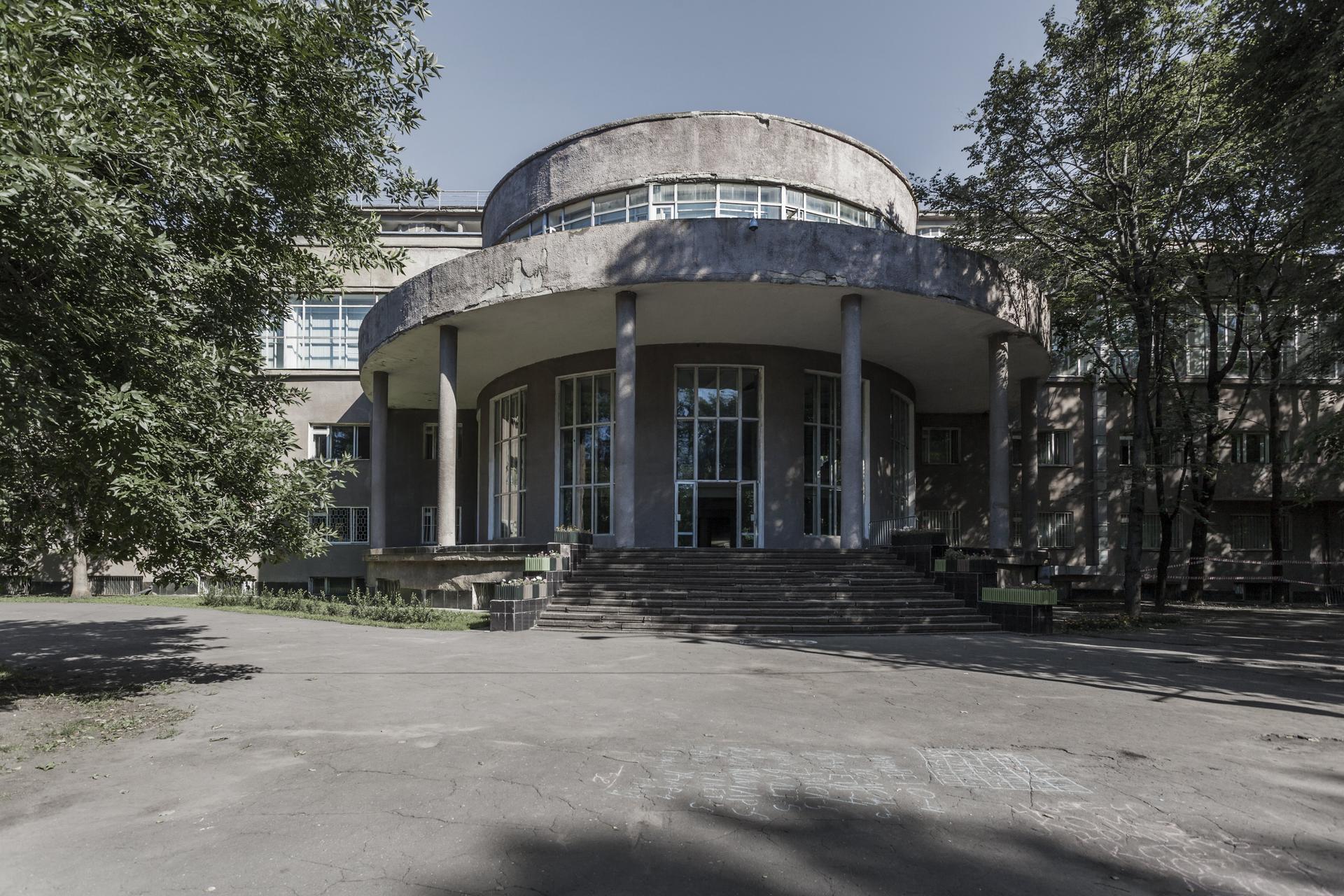
В 1920 году монастырь был упразднен, но здания поначалу сохранялись: в части из них был устроен музей фортификации. Однако к 1930 году и он оказался закрыт, а в ночь на 21 января 1930 года бо́льшая часть монастыря вместе с Успенским собором начала XV века была взорвана. Это самая крупная потеря культурного наследия Москвы в 1930‑х годах. Тогда же полностью уничтожен монастырский некрополь, лишь некоторые могилы были перенесены на Новодевичье кладбище. На месте уничтоженной части монастыря появился Дворец культуры завода «ЗИЛ», созданный по проекту братьев Весниных.

Сегодня мы можем видеть не более трети монастырского ансамбля: из шести храмов остался только один – во имя Тихвинской иконы Божией Матери. Также сохранилось три башни с полуразрушенными фрагментами монастырских стен, келарский корпус, трапезная, солодёжня и казначейские кельи. Эти постройки долгое время использовались в производственных целях, здесь делались рыболовные крючки и снасти, поэтому все они находятся в очень плохом состоянии. Искаженное перестройками здание Тихвинской церкви с трапезной передано верующим в 1995 году, с этого момента ведется реставрация. Община здесь особенная – для глухонемых и слабослышащих.


Simonov monastery is one of the Moscow monasteries that hit the hardest during the soviet times and one of the most significant in the history of the capital. Over two -thirds of Simonov monastery was lost in the Soviet times. The monastery Cathedral was destroyed in the twentieth century. It was one of the oldest cathedrals in Moscow. Yet the pieces of its history survived till our days while demonstrating the consequences of irrepressible thirst for destruction. Originally Simonov monastery was founded in 1370 at some distance from its present location - there is now the Church of the Nativity of the Virgin in Old Simonov. Its founder was St. Theodore - the pupil and nephew of St. Sergius of Radonezh. And the name of the monastery did not receive from the temple, and in the monastic name of Stepan Hovrina nobleman, who donated the land to build the monastery and took it with a monk named Simon. In 1379, the monastery was moved slightly to the north and never changed its location. At the same time the construction of the stone cathedral of the Assumption of the Mother of God, completed in 1405. In the XVI century, built the existing stone walls : the architect was allegedly Fyodor Kon, creator of the Smolensk Kremlin wall in Moscow 's White City and Small Cathedral of the Donskoi Monastery. The walls and towers of the Simonov Monastery - a masterpiece of Russian fortification, it often took part in battles and endured the siege of the enemy. The extant tower "Muzzle ", "Salt" and "Blacksmith" were rebuilt in 1640's. The monastery was abolished in 1771 to house plague quarantine within the walls, but in 1795 was again reinstated at the request of Count Musin-Pushkin. The center of the monastery ensemble was the massive five-domed cathedral of the Assumption of the Mother of God. To the south there was a refectory built in 1677 at the expense of Tsar Feodor Alekseevich with the church of the Tikhvin Icon of the Mother of God on the basis of the old building. Architecturally it was a very unusual building: apart from the four-storey church, there was a wide observation tower, where the king admired the views of Moscow and its environs. Its facades were decorated with windows with casings of complex shapes, from the west it was crowned with a decorative stepped composition with Dutch motifs. Above the western gates rose the Church of the All-Merciful Savior, built in 1593 in memory of the victory over the Crimean Khan Kazi-Girey, and over the east - the church of St. Nicholas the Wonderworker. From the north in the monastery wall there was a bell tower, built with the money of the merchant Ivan Ignatiev in 1835-1839, according to the project of the architect K.A. Tone - creator of the Cathedral of Christ the Savior. Finally, at the monastery hospital building there was a single-domed church of the Monk Alexander. A number of well-known Russian saints and bishops who make the history, began their monastic way in the Simonov Monastery: Jonah, Metropolitan of Moscow, Patriarch Joseph, St. Cyril of White Lake. The monastery necropolis was full of famous names of Russian literature and the arts : D. Venevitinov, S.T. and K.S. Aksakovs, A.A. Alyabyev and many others. Near the Simonov Monastery was a pond, which, according to legend, was dug by the Monk Sergius of Radonezh. However, in literature and popular memory, he entered under the name "Lizin pond" thanks to the book of N.M. Karamzin "Poor Liza": the main heroine of the work committed suicide because of the betrayal of her lover, rushing into this pond. In 1920, the monastery was abolished, but the buildings remained at first : part of them was a museum of fortification. However, by 1930, it was closed, and on the night of January 21, 1930 a large part of the monastery together with Assumption Cathedral beginning of the XV century, was blown up. This is the biggest loss of the cultural heritage of Moscow in the 1930s. At the same time completely destroyed the monastery necropolis, only some graves were moved to the Novodevichy Cemetery. At the site of the destroyed part of the monastery appeared Palace of Culture Factory "ZIL ", created by proektubratev Vesnins. Today we can not see more than a third of the ensemble of the monastery : of the six churches there was only one - in the name of the Tikhvin Icon of the Mother of God. Also survived three towers crumbling fragments of the monastery walls, cellarer's body, refectory, solodezhnya and treasury cell. These buildings have long been used for production purposes, fishing hooks and tackles have been made here, so they are all in very poor condition. Distorted by rebuilding the building of the Tikhvin church with the refectory was given to the believers in 1995, from this moment the restoration is being carried out. The community here is special - for the deaf and hard of hearing.
Автор статьи: Никита Брусиловский
Отзывы
(3)
Поделитесь статьей с друзьями