Интерактивный гид по городу
С мобильным приложением бродить по городу гораздо интереснее!

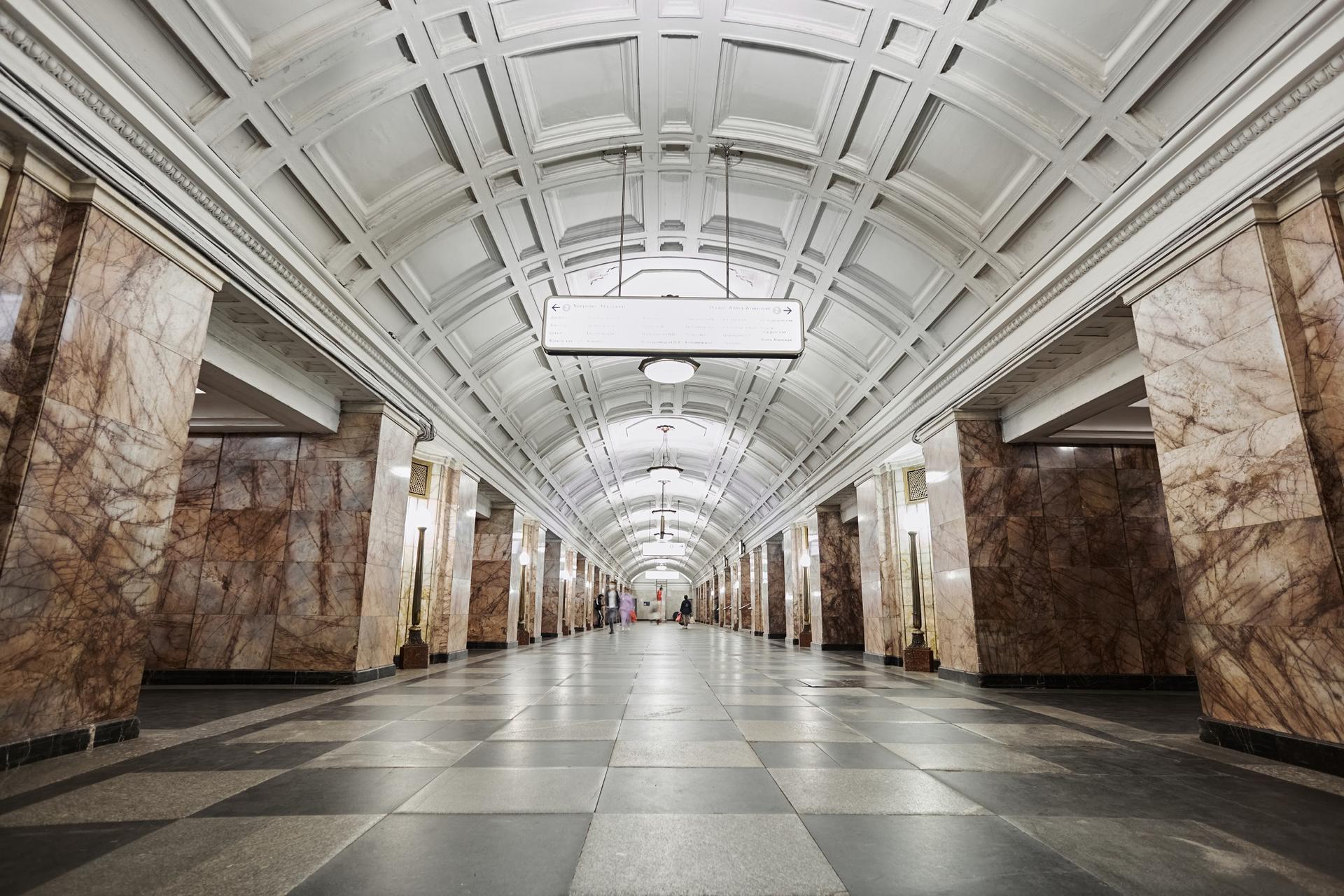
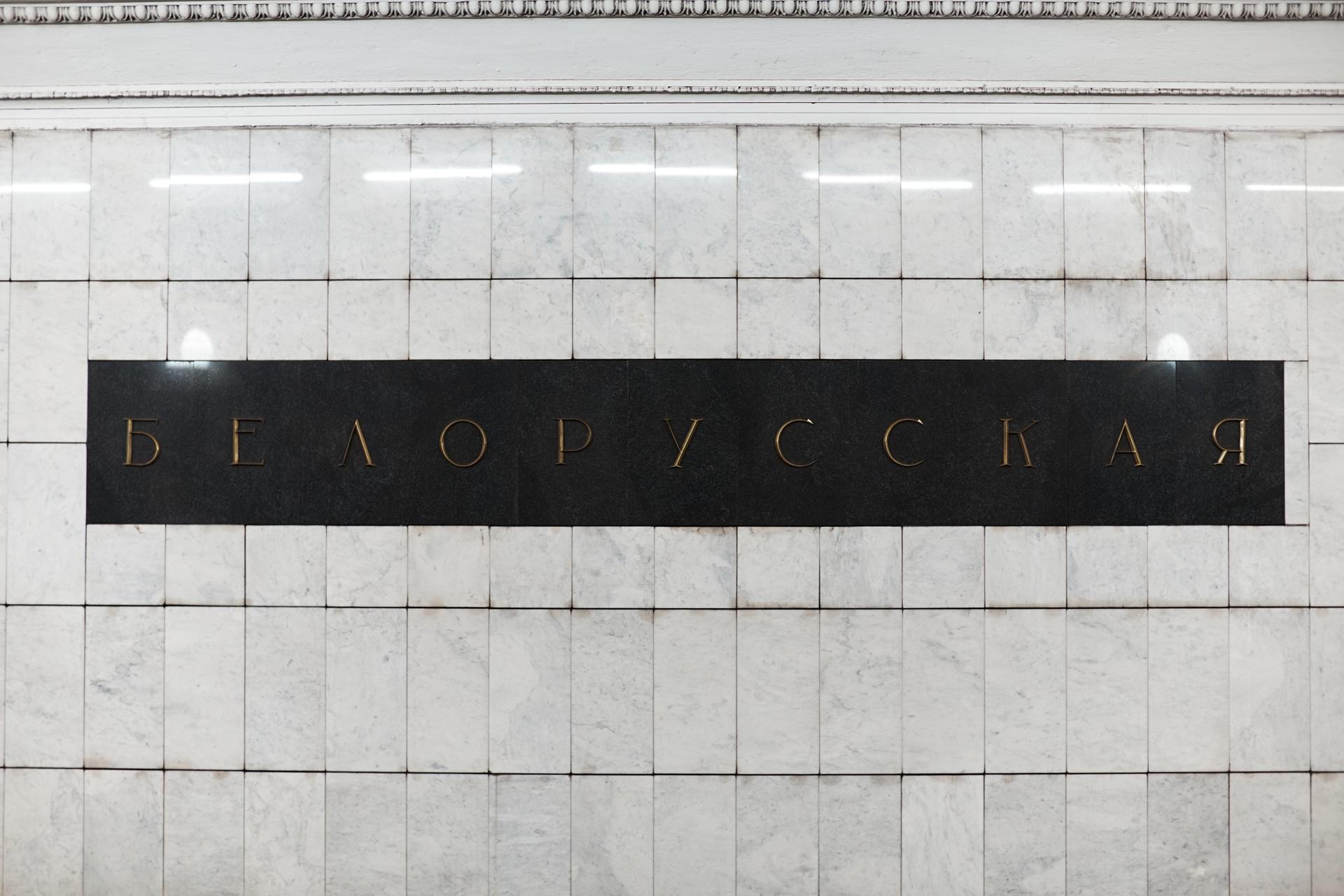
Станция метро "Белорусская" (кольцевая)

На этой станции можно отыскать рисунки белорусской народной вышивки.

Станция метро "Белорусская" (кольцевая)
На этой станции можно отыскать рисунки белорусской народной вышивки.

3.38
Вы можете воспользоваться QR-кодом, чтобы открыть эту страницу в нашем приложении
Архитектурный стиль:
Архитекторы:
И.Г. Таранов, Н.А. Быкова, Ю.А. Черепанов
Эпоха:
1950s
Информация о здании

Дата открытия станции "Белорусская" кольцевой линии: 30.01.1952.
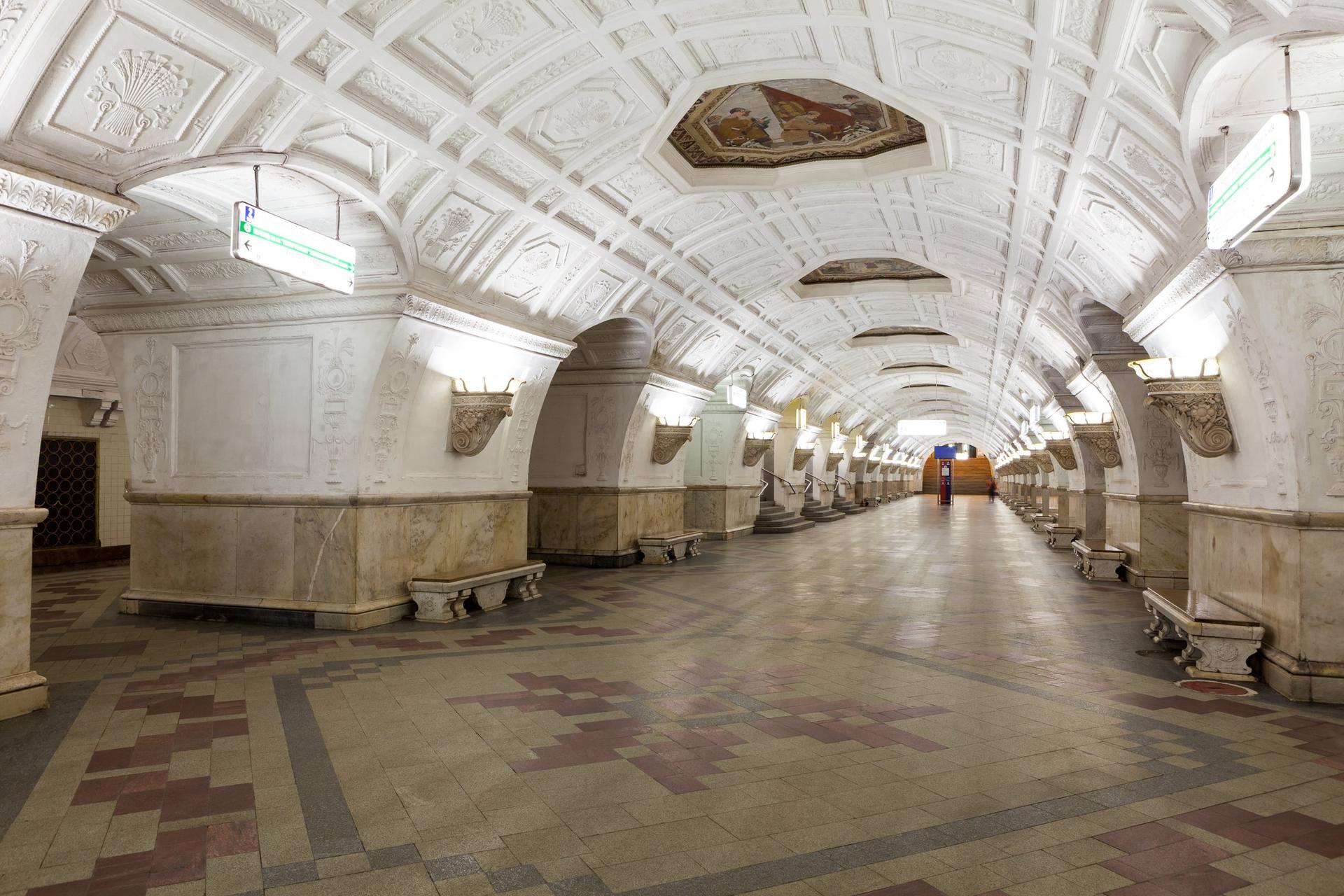
Открыта в составе участка "Курская" - "Белорусская". Конструкция станции - пилонная трехсводчатая глубокого заложения.
Построена по типовому проекту.
Архитекторы: И.Г. Таранов, Н.А. Быкова, соавторы Я.В. Татаржинская, А.А. Марова, при участии З.Ф. Абрамовой
Архитекторы западного вестибюля: И.Г. Таранов, Ю.А. Черепанов
Инженеры-конструкторы: Б.М. Прикот, А.И. Семенов, К. Сапуненко

В 1951 году И.Г. Таранов, Н.А. Быкова и Г.И. Опрышко удостоены за станцию Белорусская Сталинской премии.

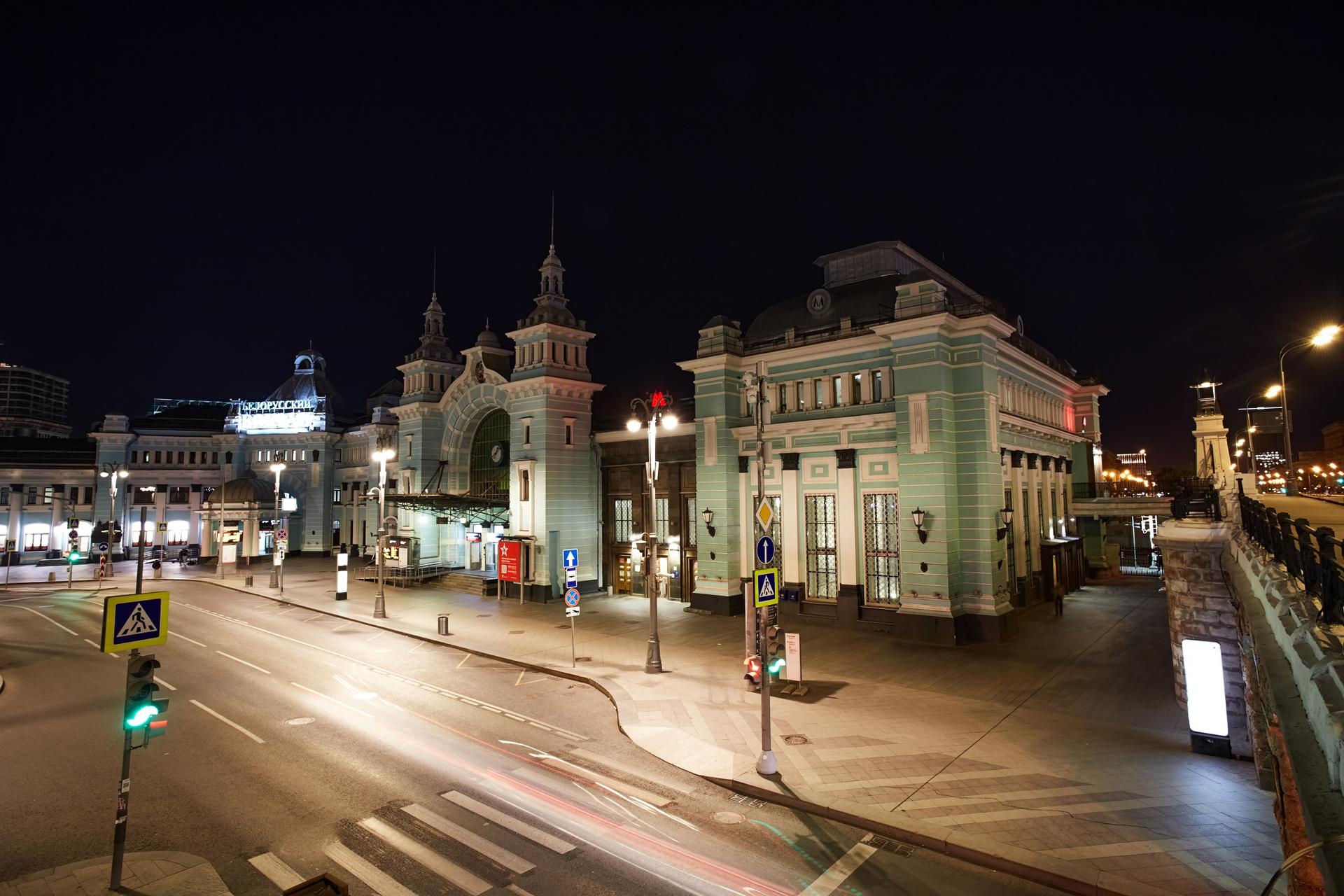
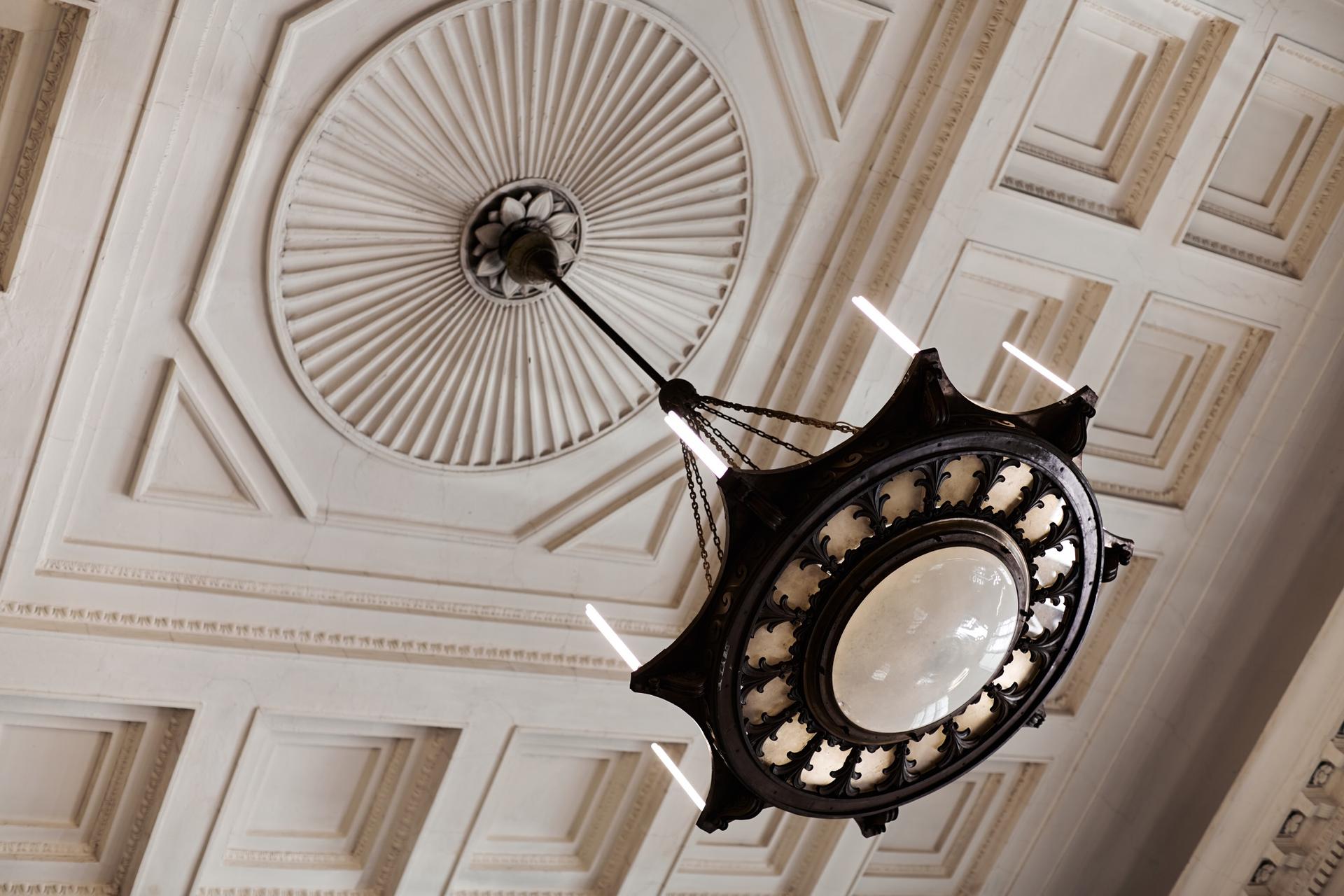
Художественное оформление станции посвящено теме рассвета хозяйства и культуры Белоруссии. Цоколи пилонов облицованы светлым мрамором. На пилонах вазы-светильники из мрамора и стекла. Своды потолка декорированы рельефным орнаментом и, впервые примененными в сооружениях метрополитена, двенадцатью мраморно-мозаичными панно на тему рассвета хозяйства и культуры Советской Белоруссии (по эскизам художника Г.И. Опрышко, мастера мраморного завода Метростроя С. Волков, И. Морозов). Путевые стены облицованы белой керамической плиткой. Пол выложен мелкими керамическими плитками серого, белого и красного цветов и воспроизводит рисунки белорусской народной вышивки.

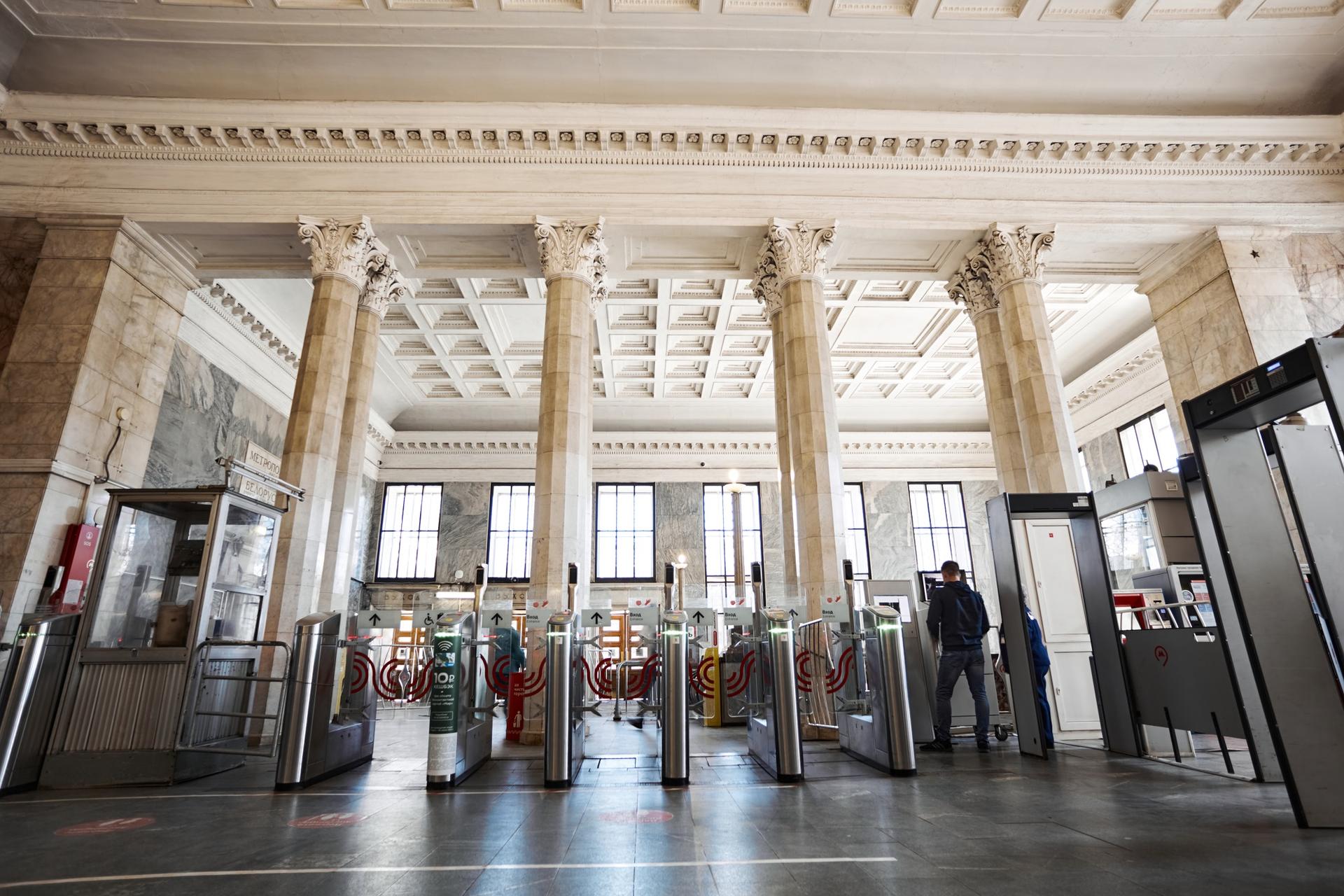
До 1997 года восточную торцевую стену центрального зала украшала скульптурная группа «Советская Белоруссия» (скульптор М.Г. Манизер). При строительстве второго выхода со станции скульптурная группа исчезла и долгое время считалась утраченной, пока в 2018 году ее не обнаружили в одном из электродепо. В 2021 году после реставрации скульптуру вернули на станцию «Белорусская» Замоскворецкой линии. Западный наземный вестибюль станции находится у Белорусского вокзала, на углу Грузинского вала и площади Тверской заставы. Барельефы по фризу вестибюля выполнили скульпторы С.М. Рабинович и И.Л. Слоним в мастерской С.М. Орлова.

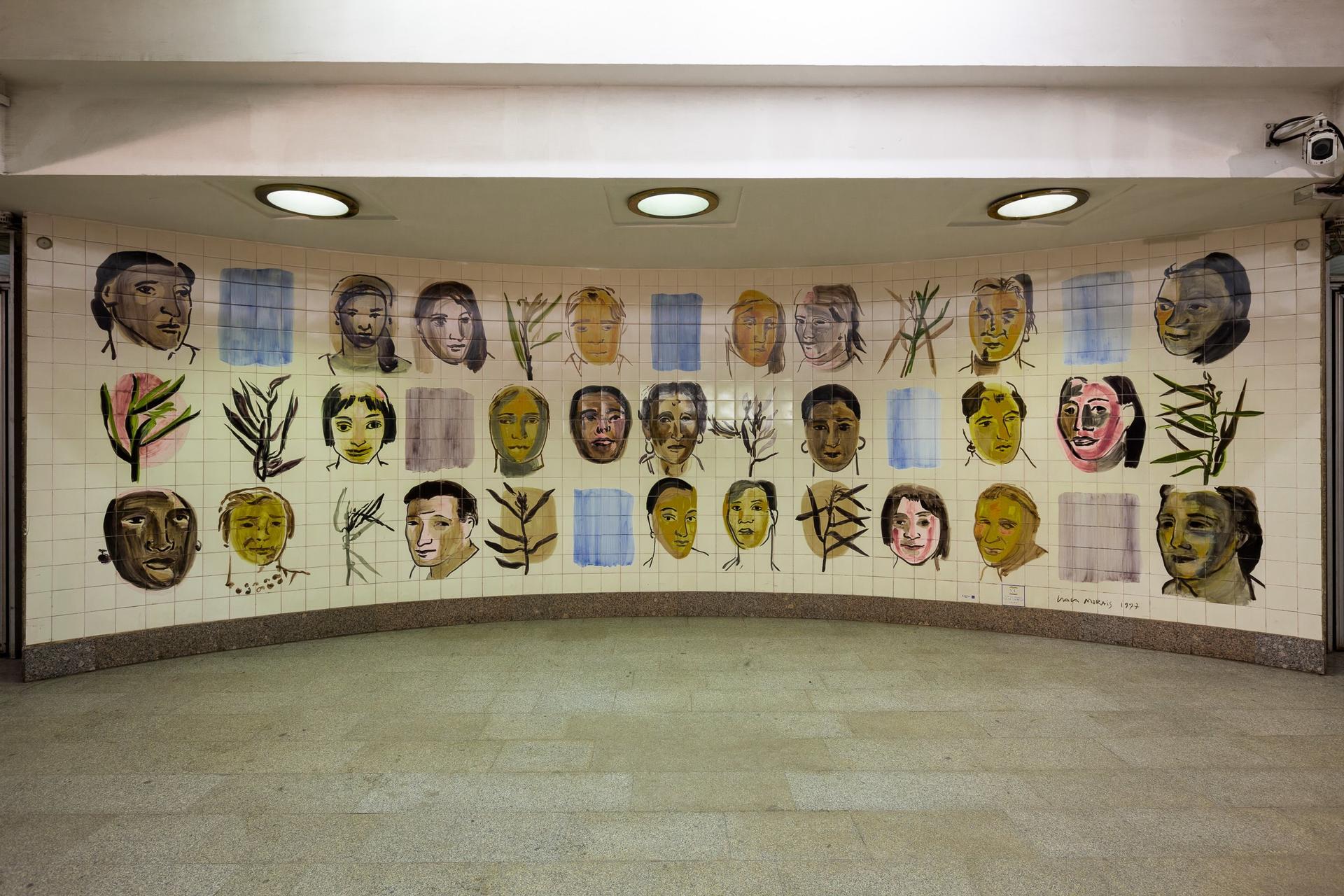
Восточный вестибюль открыт 25 августа 1997 году на Лесной улице и украшен майоликовым панно португальского художника Graça Morais.

Три лестницы из центрального зала и переход с эскалаторами ведут на одноименную станцию Замоскворецкой линии. В переходе установлена монументальная композиция «Белорусские партизаны» (скульпторы С.М. Орлов, С.Л. Рабинович и И.А. Слоним). Арки лестничных спусков на станцию отделаны художником Г.И. Опрышко.

Дата открытия станции "Белорусская" кольцевой линии: 30.01.1952.

Открыта в составе участка "Курская" - "Белорусская". Конструкция станции - пилонная трехсводчатая глубокого заложения.
Построена по типовому проекту.

Архитекторы: И.Г. Таранов, Н.А. Быкова, соавторы Я.В. Татаржинская, А.А. Марова, при участии З.Ф. Абрамовой
Архитекторы западного вестибюля: И.Г. Таранов, Ю.А. Черепанов
Инженеры-конструкторы: Б.М. Прикот, А.И. Семенов, К. Сапуненко

В 1951 году И.Г. Таранов, Н.А. Быкова и Г.И. Опрышко удостоены за станцию Белорусская Сталинской премии.


Художественное оформление станции посвящено теме рассвета хозяйства и культуры Белоруссии. Цоколи пилонов облицованы светлым мрамором. На пилонах вазы-светильники из мрамора и стекла. Своды потолка декорированы рельефным орнаментом и, впервые примененными в сооружениях метрополитена,  двенадцатью мраморно-мозаичными панно на тему рассвета хозяйства и культуры Советской Белоруссии (по эскизам художника Г.И.Опрышко, мастера мраморного завода Метростроя С. Волков, И. Морозов). Путевые стены облицованы белой керамической плиткой. Пол выложен мелкими керамическими плитками серого, белого и красного цветов и воспроизводит рисунки белорусской народной вышивки.

До 1997 года восточную торцевую стену центрального зала украшала скульптурная группа «Советская Белоруссия» (скульптор М.Г. Манизер). При строительстве второго выхода со станции скульптурная группа была утрачена. Западный наземный вестибюль станции находится у Белорусского вокзала, на углу Грузинского вала и площади Тверской заставы. Барельефы по фризу вестибюля выполнили скульпторы С.М.Рабинович и И.Л. Слоним в мастерской С.М. Орлова.
Восточный вестибюль открыт 25 августа 1997 году на Лесной улице и украшен майоликовым панно португальского художника Graça Morais.
Три лестницы из центрального зала и переход с эскалаторами ведут на одноименную станцию Замоскворецкой линии. В переходе установлена монументальная композиция «Белорусские партизаны» (скульпторы С.М.Орлов, С.Л.Рабинович и И.А.Слоним). Арки лестничных спусков на станцию отделаны художником Г.И.Опрышко.

Поделитесь статьей с друзьями
Интересное рядом(5)
House on Brestskaya Street“House on Brestskaya” is the congress and exhibition center of the state-owned institution “Mosstroyinform”, a key platform for demonstrating the plans for urban development and the results of the work of the Construction Complex of Moscow. The main task of the center is to hold congress and exhibition events in the field of urban planning, architecture and design. The House on Brest begins its history from the moment of the creation of the first wooden model of Moscow. In 1975, in connection with the 30th anniversary of the liberation of Budapest from the fascist aggressors, the Hungarian exhibition at the VDNH was organized, in which the model of the central part of Budapest was one of the exhibits. The chief architect of Moscow M.V.Posokhin highly appreciated the model and addressed the Chairman of the Moscow Soviet V. F. Promyslov with a proposal to create a similar model of Moscow in 1960-1982. The idea was approved and for 10 years, from 1976 to 1986, two brigades of mockups at the "Kartolitografiya" factory created a model. Since the model of the whole of Moscow would be too huge, given the chosen scale of 1: 500, it was decided to confine only to the central part of the city within the Garden Ring. The mockup drawings were developed on the basis of the existing geo-baseline, additional geodetic surveys, and photographs of existing buildings and materials of the designed buildings by the architects Mosproject-1 and Mosproject-2. Mosgorgeotrest was also brought to work. The buildings were made of maple, the relief - from birch. The Kremlin ensemble is made of mahogany, lemon tree, amaranth, and holly. The domes of the Kremlin cathedrals are covered with gold leaf. The Moscow River and the Yauza River are made of rosewood. At the same time the issue of model placement was resolved. In March 1986, a 12x12m model (144 sq.m.) was installed in the hall of a specially constructed building on Brest Street. The model served as a working tool for architects, all houses are removable. The model consists of sliding parts of 2x2 meters. Architects could remove houses from the model in the area of the designed building, put a new building on this place and evaluate the planning solution. Fidel Castro and Boris Yeltsin were among the first visitors to the exhibition at the House on Brestskaya. There were receptions of foreign delegations. At present, the model has been disassembled and mothballed, stored in the “House on Brestskaya”. The idea of creating a new modern model of Moscow appeared in 2011. It was originally planned to make the model in color by analogy with the model of New York at a scale of 1:1200, covering the entire territory of Moscow in the historical boundaries. However, after the joining to the capital of the new territories, the concept of the model was revised. According to the decision of the Mayor of Moscow Sergey Sobyanin, the work on the new model began in the fall of 2012 and was included in the state program “Urban Planning Policy of the City of Moscow”, implemented by the Moscow Building Complex. With an increase in scale up to 1:400, emphasis was placed on the central part of the city, covering the Third Transport Ring, all railway stations, as well as the territory of the Vorobyovy Gory (including the highest “Stalinist high-rise” - MSU building) and the currently actively developing ZIL industrial zone. The main distinctive feature of the new model is the amazing detailing of all 6.5 thousand buildings and the reconstruction of the landscape relief of the capital. Mosaics and bas-reliefs are recreated on the facades of historic houses. A smooth surface of the Moscow River is made in a special technique that creates the effect of water ripples. The model is equipped with an interactive system for illuminating buildings from the inside, which can be controlled by selecting objects in accordance with the plan - from the administrative division of the city to the typology of objects (houses, administrative buildings, cultural objects, transportation objects, etc.). To achieve even greater expressiveness allowed miniature architectural lighting, which was used in the design of exits from the subway, temple complexes, bridges and such iconic structures as the Moscow Kremlin. The famous chiming clock on the Spasskaya Tower of the Kremlin and the ringing of the bells of the Cathedral of Christ the Savior with accuracy reproduce on a model due to the speakers mounted inside. Currently, the area of he exposed model is 120 square meters. Work on the production will be completed in 2017 and will make an area of 945 square meters, which will cover the middle zone of Moscow, beyond the limits of the Third Transport Ring. In 2012, it was decided to create a map of the city, which will be installed in the floor. The development of the project and preparation for construction work begin in the "House on Brestskaya". The model of the city is transported to the territory of VDNH in pavilion №75. In 2014, the festive opening of the map of Moscow in the scale of 1:500 took place. This is a floor lightbox with a size of 178 square meters. The card is inherently unique, the glass blocks are illuminated from below, and the software-defined images are projected from above, from which the map display scenarios are composed. Today, with the help of a map and video walls, the specialists of "House on Brestskaya" tell the Muscovites and guests of the capital about the city’s development programs, architectural styles, the history of the Metropolitan, the renovation of industrial zones, the reconstruction of the Moscow Ring Railroad, the history of urban planning.
125047 Moscow, 2nd Brest Street, 6
1-я Тверская-Ямская улица