Интерактивный гид по городу
С мобильным приложением бродить по городу гораздо интереснее!

"Dobryninskaya" metro station

Named in honor of the revolutioner and dedicated to the heroic work of the Soviet people, "Dobryninskaya" station was inspired by the... Church of the Intercession on the Nerl !

"Dobryninskaya" metro station
Named in honor of the revolutioner and dedicated to the heroic work of the Soviet people, "Dobryninskaya" station was inspired by the... Church of the Intercession on the Nerl !
3.48
Вы можете воспользоваться QR-кодом, чтобы открыть эту страницу в нашем приложении
Годы постройки:
1950
Архитекторы:
М.А. Зеленин, Л.Н. Павлов, М.А. Ильин
Эпоха:
1950s
Информация о здании

Станция «Добрынинская» открылась 1 января 1950 г. в составе участка «Парк культуры» – «Курская».

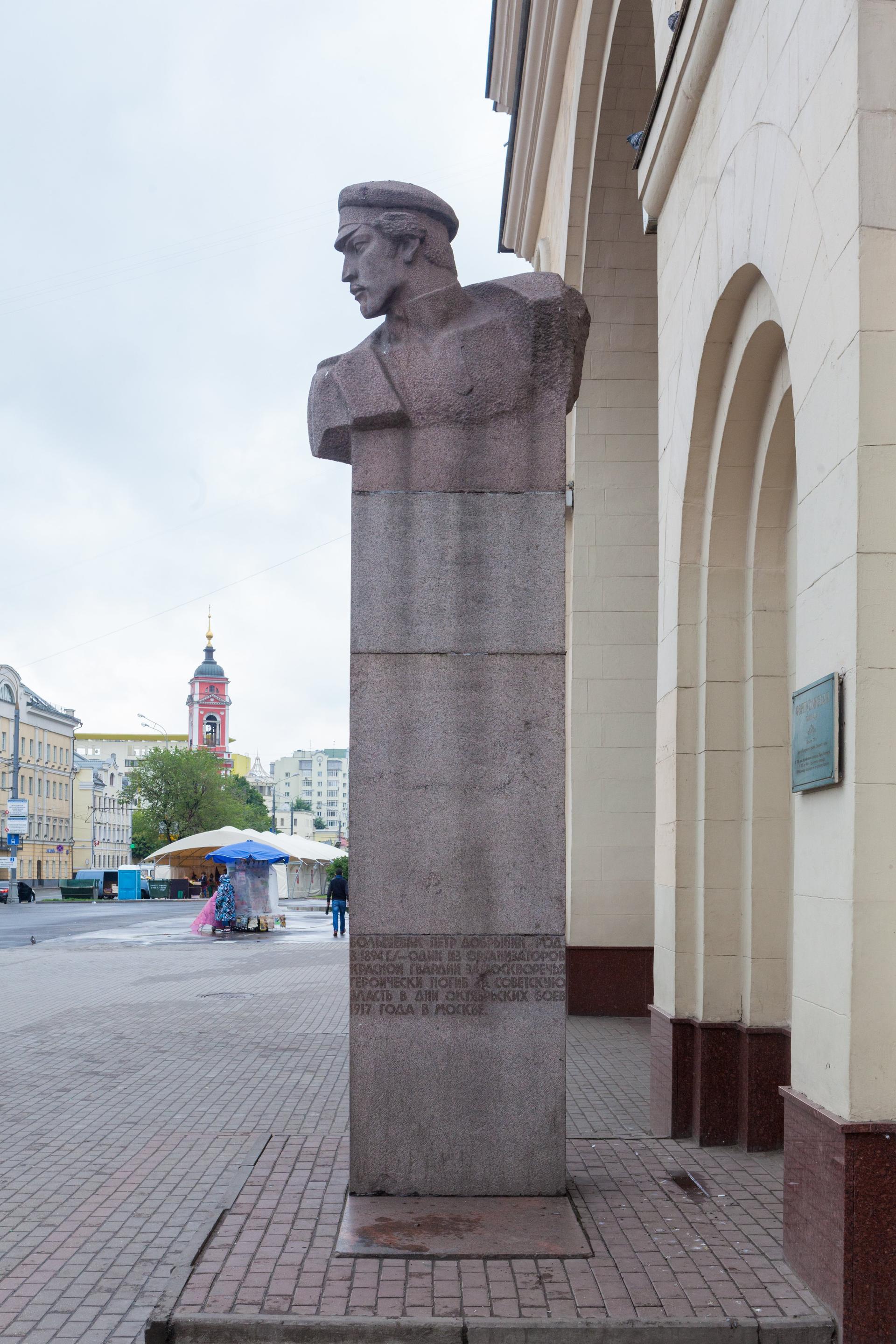
До 1961 г. называлась «Серпуховская», нынешнее название получила в честь участника Октябрьской революции Петра Григорьевича Добрынина. Его бюст на высоком гранитном постаменте (работы скульптора Г.Д. Распопова) установлен перед входом в наземный вестибюль.

Наземный павильон — типичное для Кольцевой линии массивное сооружение. Это прямоугольное в плане здание, с фасада оформленное как двухпроходная (двухпролетная) триумфальная арка. Его внутреннее пространство представляет собой единый двухсветный зал с плоским потолком. В нем большое количество углублений, в которых подвешены люстры-блюдца с рубиновыми звездами в центре. Три высокие смальтовые мозаики (авторы Г.И. Рублев и Б.В. Иорданский), набранные в виде ало-сине-золотых полотнищ, и грандиозные торшеры, стоящие по обе стороны от эскалаторного тоннеля, украшают вестибюль.

Это пилонная трехсводчатая станция глубокого заложения (35,5 м.).

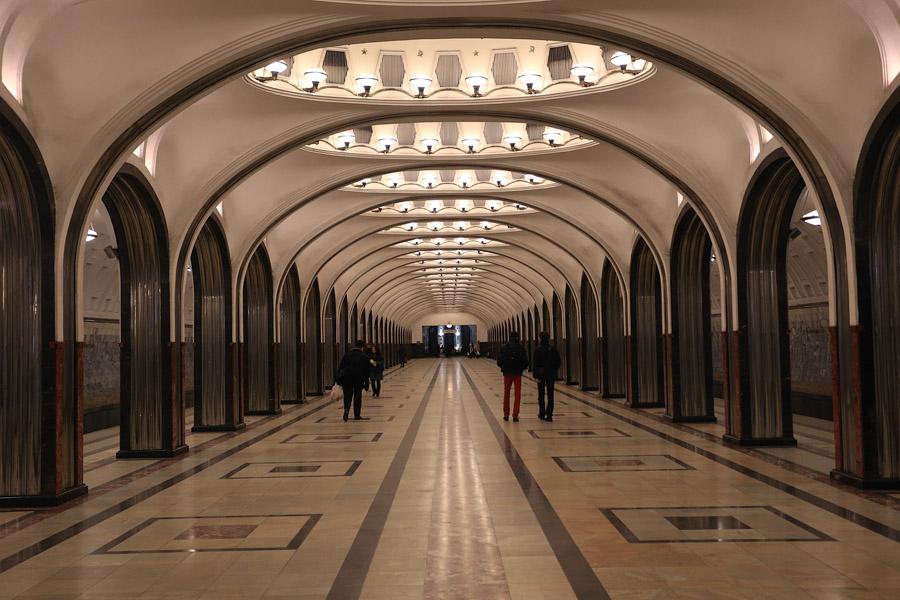
Перронный зал станции спроектирован архитектором Павловым под впечатлением от Храма Покрова на Нерли. В основу пропорций станции положено именно это великолепное сооружение. Архитектурное оформление станции выполнено в простых и ясных конструктивных формах. Оно многократно и ритмично повторяет мотив перспективных порталов памятников древнерусской архитектуры: проходы между массивными кубическими пилонами, пилонные ниши, арка тупиковой стены. 

В отделке путевых стен архитектор использовал своеобразные пластические приемы, навеянные древнерусским зодчеством. На путевой стене он расположил выступающую полосу, облицованную мрамором, которая отражает свет люстр прямо в глаза пассажирам. Создается эффект того, что по всей горизонтали стены проходит четкая световая черта. К сожалению, в настоящее время увидеть ее сложно, так как люстры заменили на новые, не дающие такого мягкого и рассеивающегося света, как старые.

Тема декоративного оформления станционного зала — труд советского народа. В нишах пилонов со стороны центрального зала находятся 12 барельефов скульптора Е.А. Янсон-Манизер. Арку тупиковой стены украшает мозаика «Утро космической эры» (художник С.А. Павловский). Она выполнена из смальты в приглушенных тонах: мать и дитя на фоне открытого космоса.
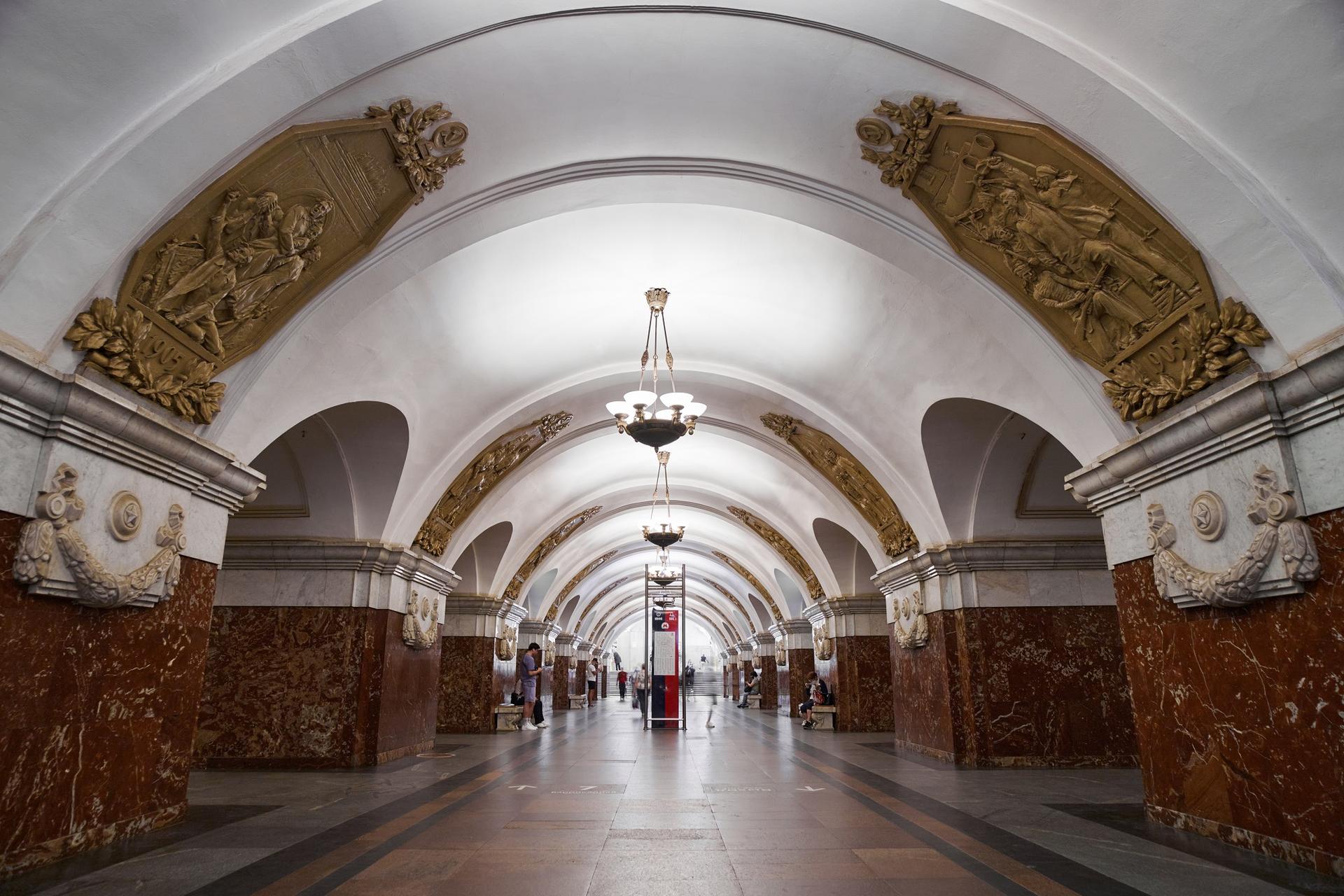
"Dobryninskaya" station opened on January 1st, 1950 in the section "Park Kultury" - "Kurskaya " of the circular line of the Moscow Metro. Until 1961 it was called "Serpukhovskaya" and acquired the present name in honor of Peter G. Dobrynin, the active participant of the October Revolution. His bust was installed in front of the ground lobby on a high granite pedestal (the sculptor G. Raspopov ). Land pavilion is a massive structure, typical for the Circular Line ground pavilions. This is a rectangular building with a facade decorated as a two-pass (double span) triumphal arch. The station has a single double-height living room interior with a flat ceiling. There is a large number of chandelier wells where saucer-shape chandelier with ruby star in the center. Three high smalt mosaic (authors: G.I. Rublev and B.V. Jordansky ) scored in the form of scarlet, blue and gold panels, and the grand floor lamps, standing on either side of the escalator tunnel to decorate the lobby. This three-vaulted pylon station is of the deep foundations (35.5 m). Platform hall of the station was designed by architect Pavlov inspired by the Temple of the Intercession on the Nerl. This magnificent building proportions are used as a basis of the station design. The architectural design of the station was executed in clear and simple forms. The decoration is rhythmically repeating motifs of promising portals of ancient architectural monuments: the passages between the massive cubic pylons, pylon niches and the arch of a deadlock wall. Plastic techniques, inspired by the ancient Russian architecture were used for platform decorations. Protruding strips, lined with marble, which reflects the light of chandeliers in the eye passengers, were put on the wall along the track. It creates the effect of clear light touch running along the entire horizontal length. Unfortunately, it is hard to see it at the present time since chandeliers were replaced by new ones and new chandeliers do not produce such soft and diffuse light as the old ones. The main subject of the station’s decoration is the heroic labor of the Soviet people. In the niches of the pylons of the central hall there are 12 bas-reliefs created by sculptor E. Janson Manizer. The deadlock arch is decorated with "Morning of the Space Age" mosaic by artist S. Pawlowski. It was made of glazes in muted tones representing a mother and a child on a background of deep space.
Автор статьи: Евгения Стаханова
Поделитесь статьей с друзьями
Интересное рядом(5)
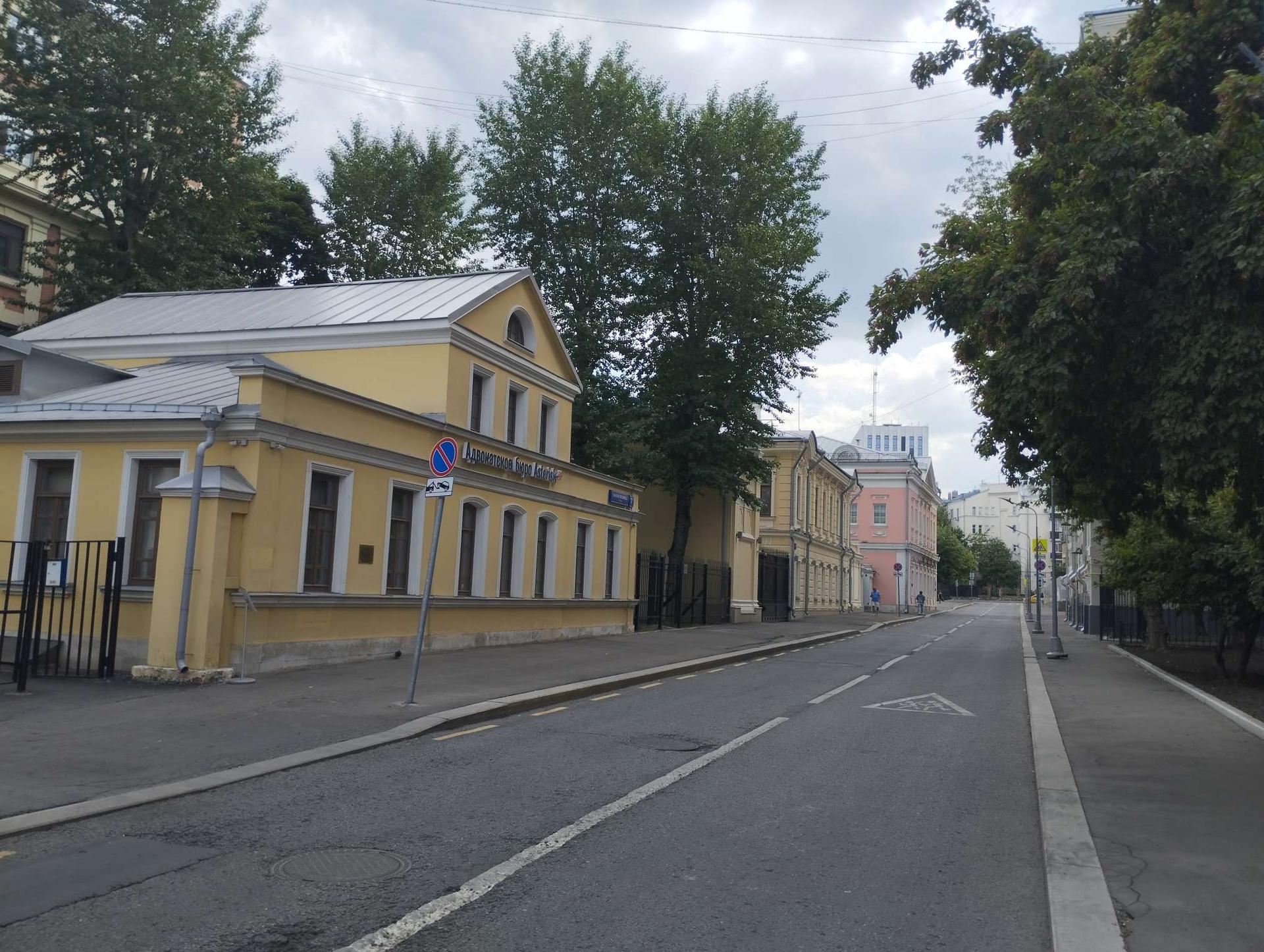
Malaya Polyanka

Long ago, here begins the field.

Улица Малая Полянка
Polyanka, Oktyabrskaya