.jpg&w=1920&q=75)
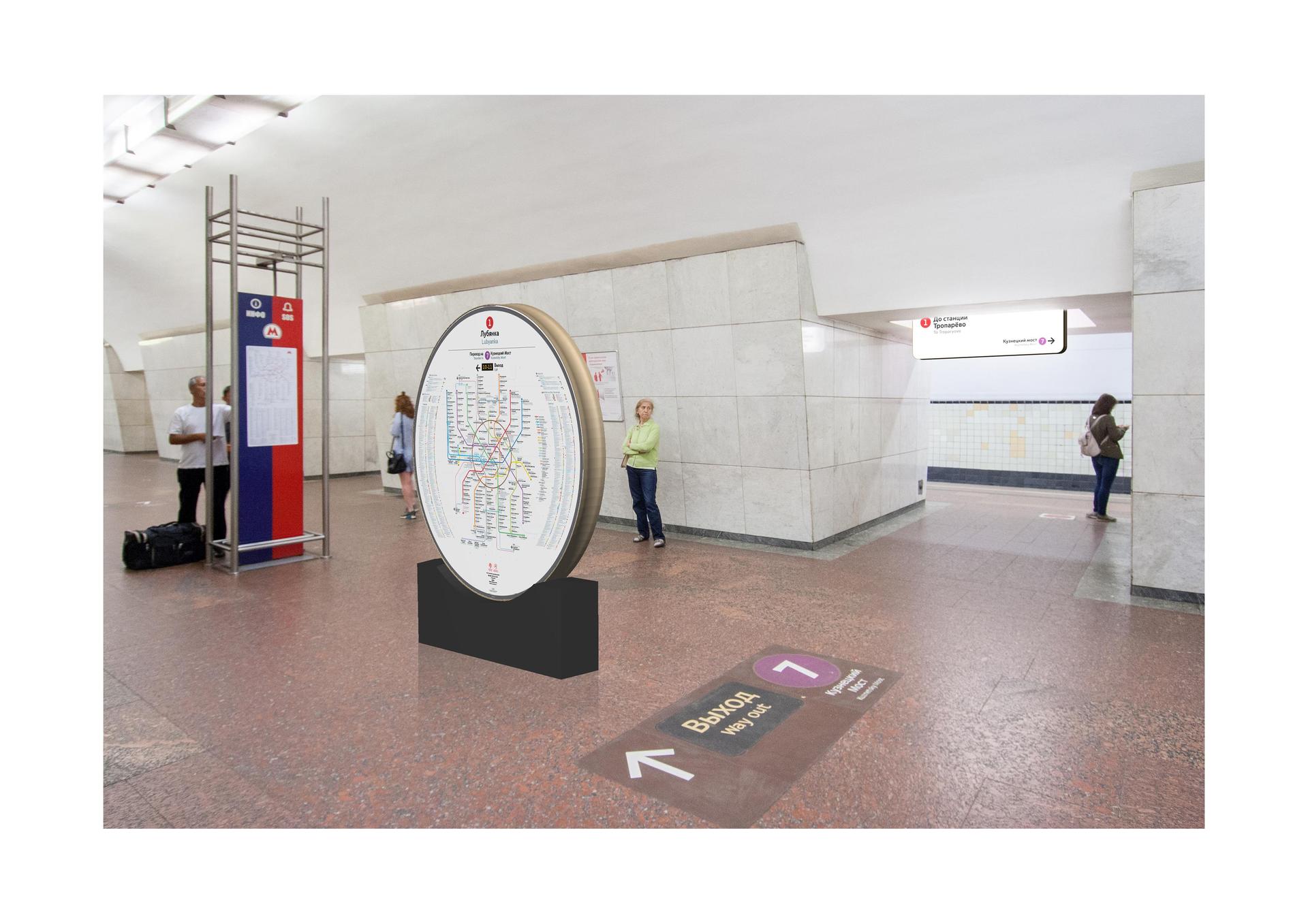
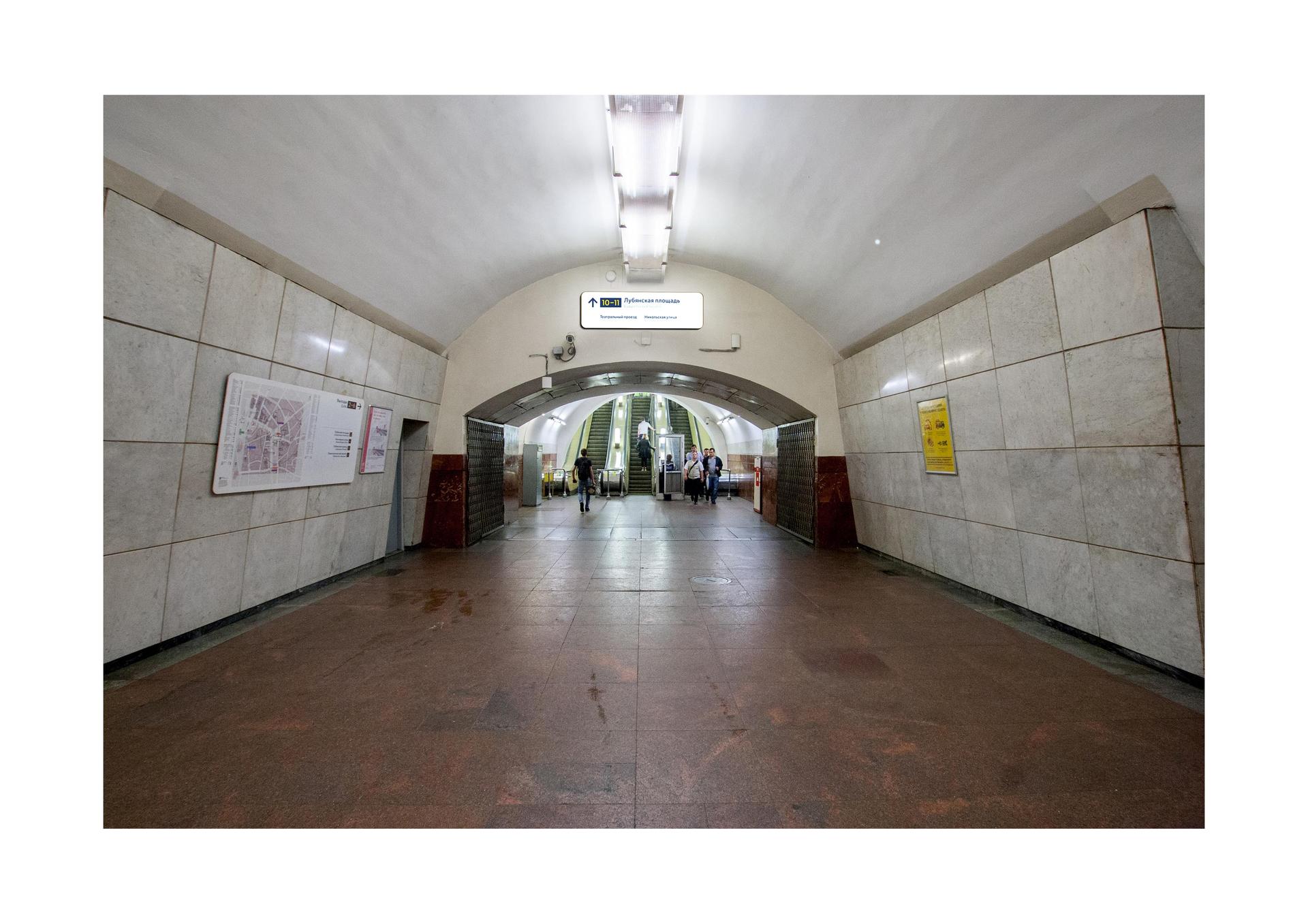
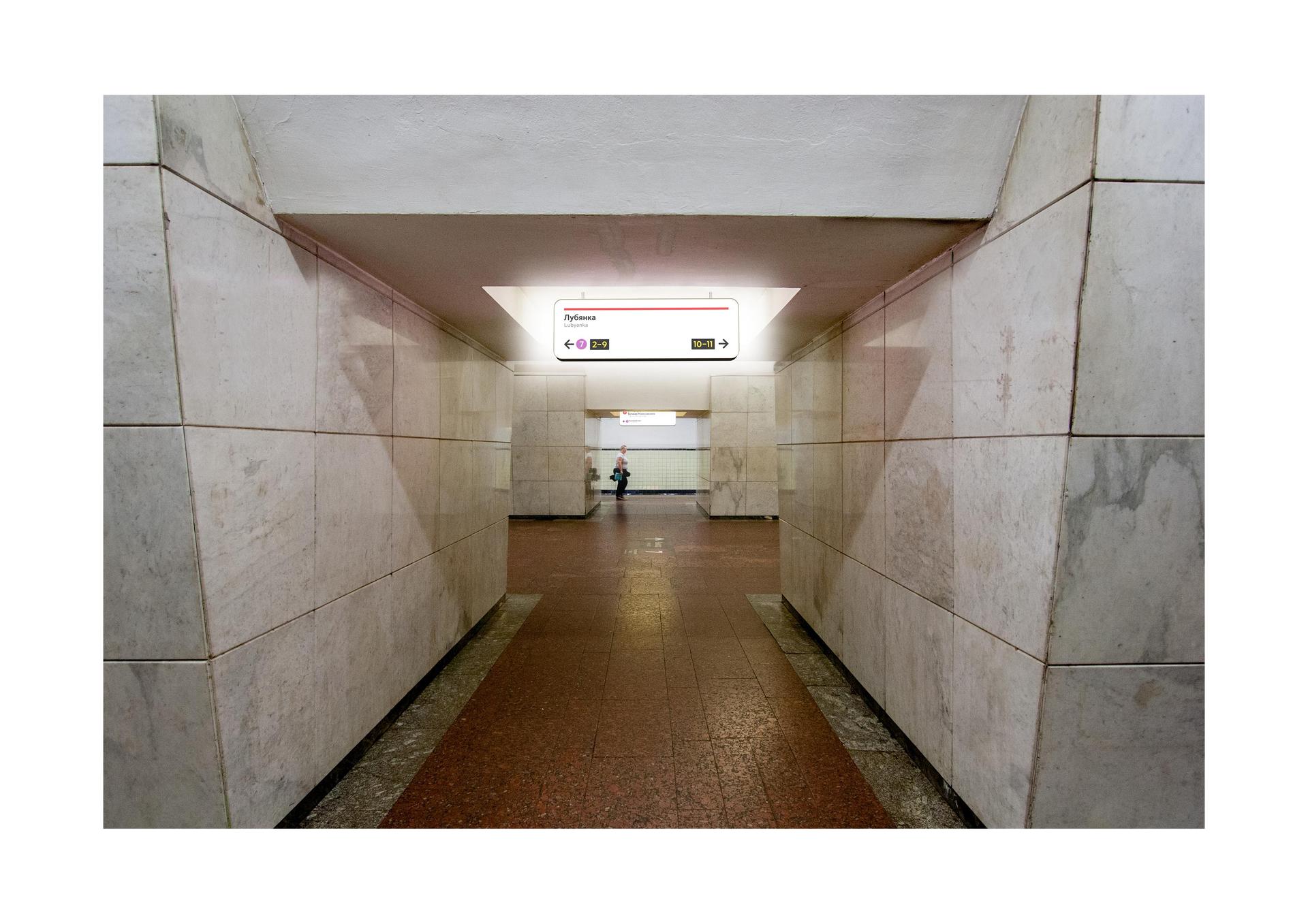

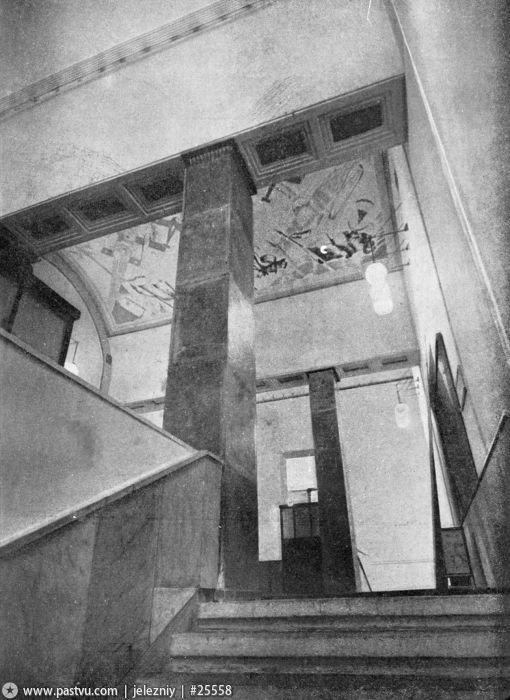
Станция метро «Лубянка» построена в первую очередь строительства московского метро в стиле авангард. Свои двери для пассажиров она распахнула 15 мая 1935 г. Станция была названа в честь видного советского деятеля Феликса Эдмундовича Дзержинского.
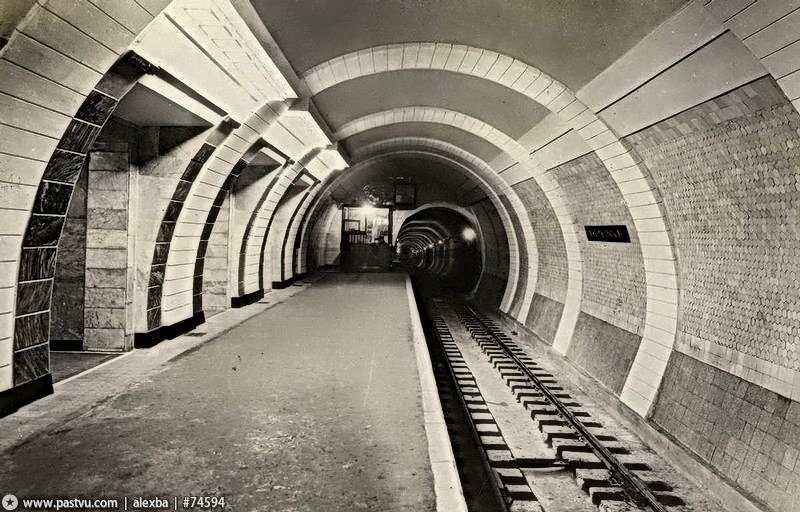
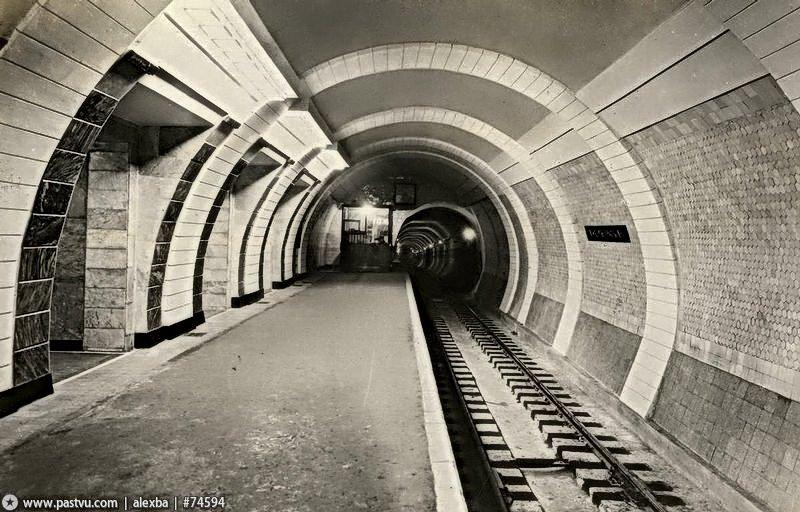
При строительстве рабочие столкнулись со сложными гидрогеологическими условиями, из-за чего пришлось менять внутреннюю конструкцию станции — она стала двухсводчатой, т.е. без среднего зала.
Проект интерьера перронного зала был разработан самобытным архитектором эпохи авангарда Николаем Ладовским, идейным лидером рационализма в архитектуре. В проекте этой станции Ладовский, единственный из всех авторов станций первой очереди, сохранил тоннельную форму перронного зала. Перед ним стояла непростая задача — оформить станцию со сложной внутренней структурой: некоторой кривизной станционных путей, криволинейностью всего сечения тоннеля, грузности и массивности опор. Ладовский не стал выпрямлять кривизну стен архитектурной декорацией. Он подчеркнул эту кривизну, продлив ритмически расположенные вдоль перрона упрощенные пилястры по всему своду, тем самым создав особую, несвойственную другим станциям динамику.
Нестандартное решение было предложено архитектором в первоначальном проекте. Он предлагал использовать цвет как средство визуальной коммуникации. Например, чтобы облегчить человеку ориентацию от входа в метро до станционного зала, Ладовский предложил метод цветовых путеводов: красных — для обозначения входа, голубых — выхода (цветовые панели выше роста человека). Но этот проект так и не был реализован.
Также автором был разработан интересный принцип освещения платформ: ярко освещалась перронная часть станции, тогда как путевой тоннель более слабо, что по задумке Н. Ладовского должно было усилить восприятие пространства.
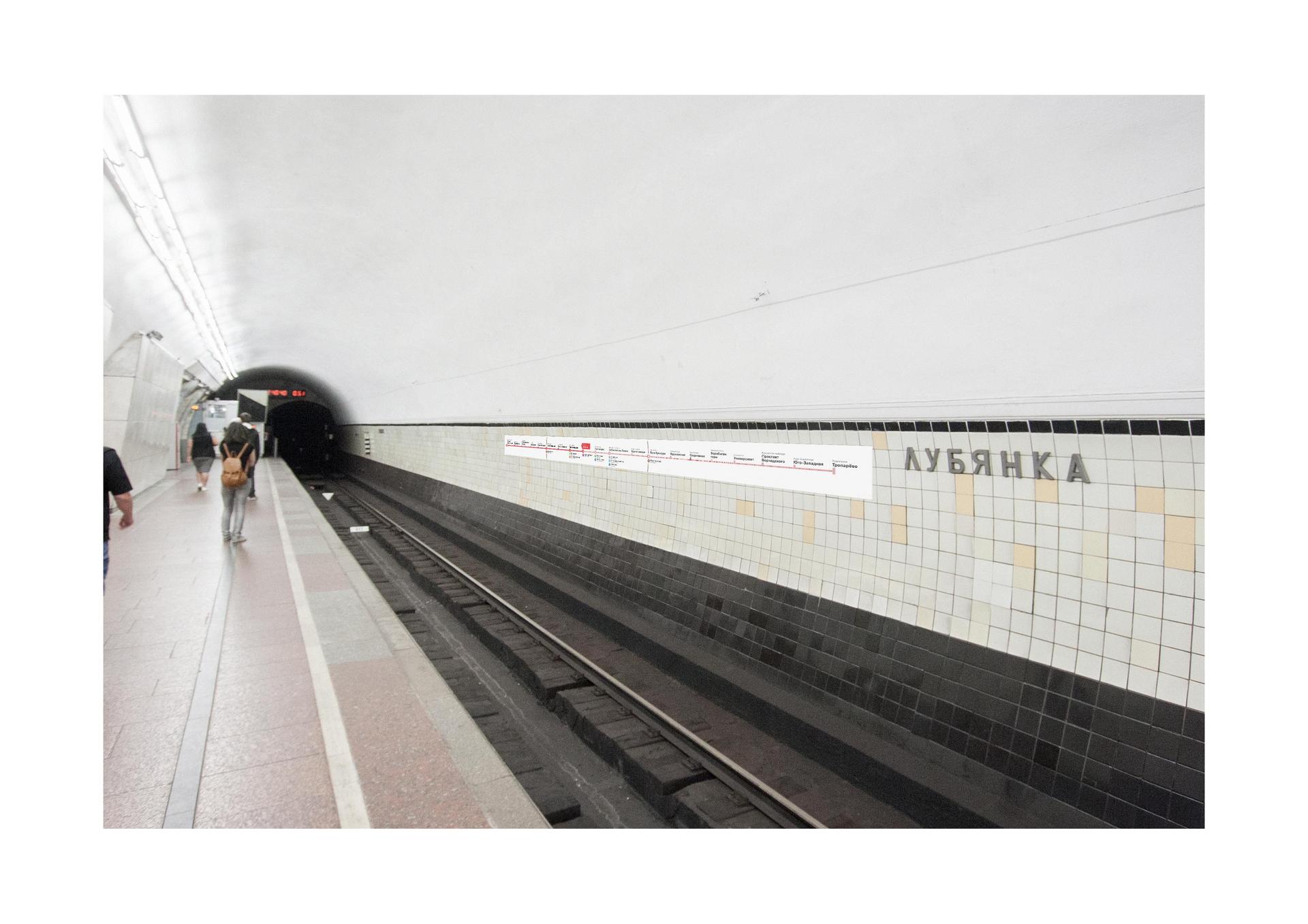
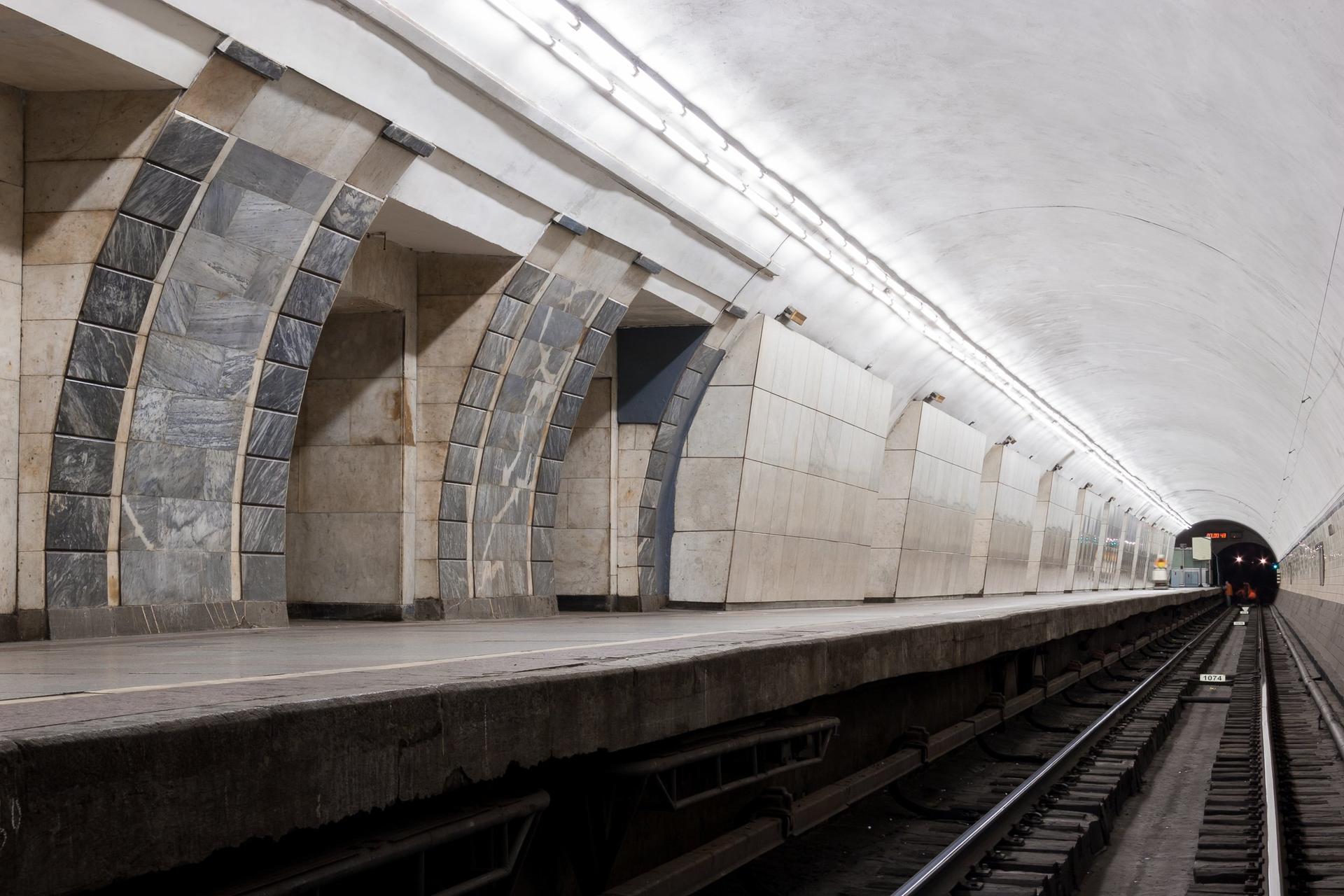
К сожалению, в 1970-е гг. «Лубянка» была реконструирована, архитектура перронного зала кардинально изменена. Она обрела средний зал, т.е. стала трехсводчатой и превратилась в типовую станцию 1970-х гг. От проекта Ладовского остались лишь небольшие фрагменты.
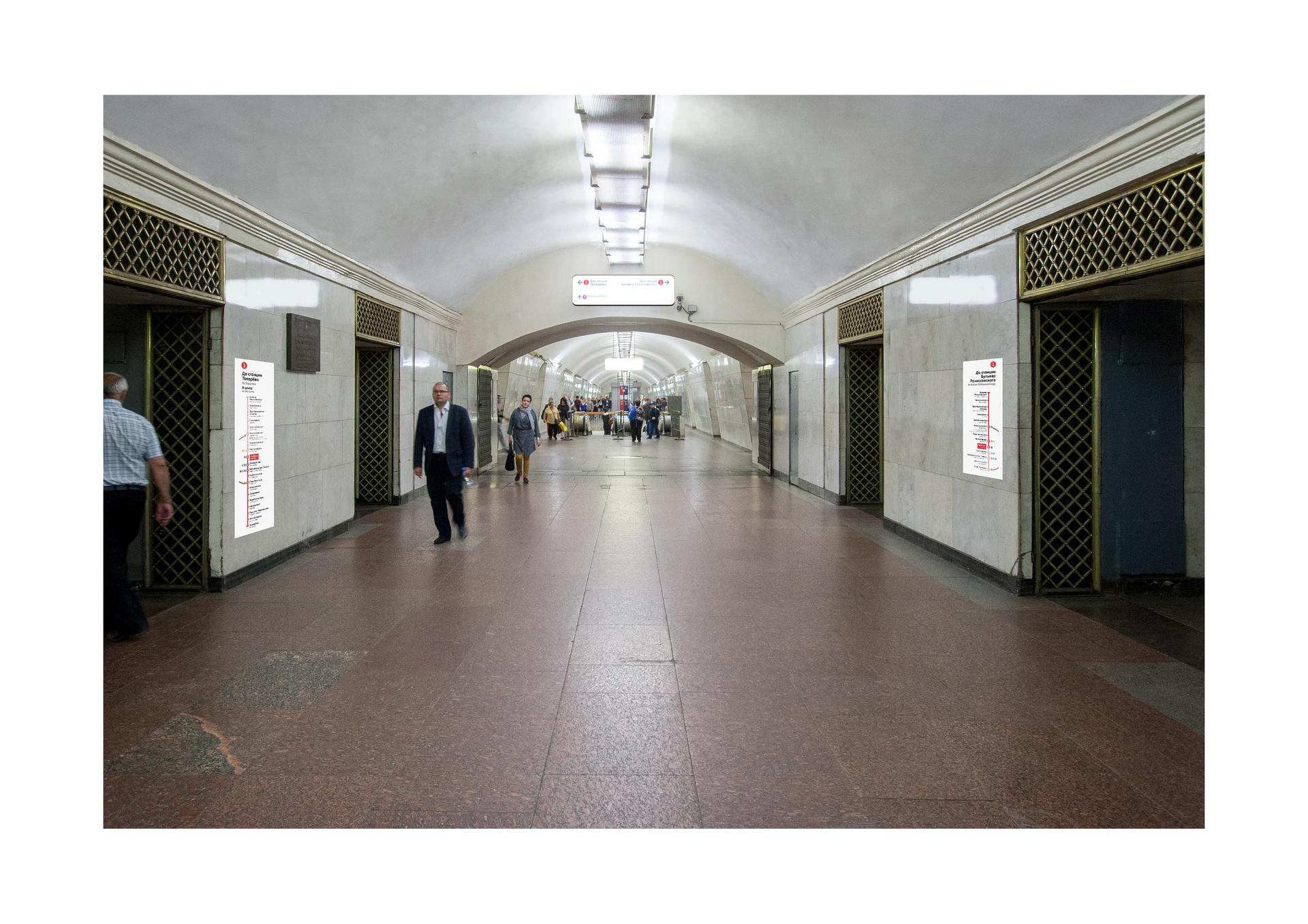
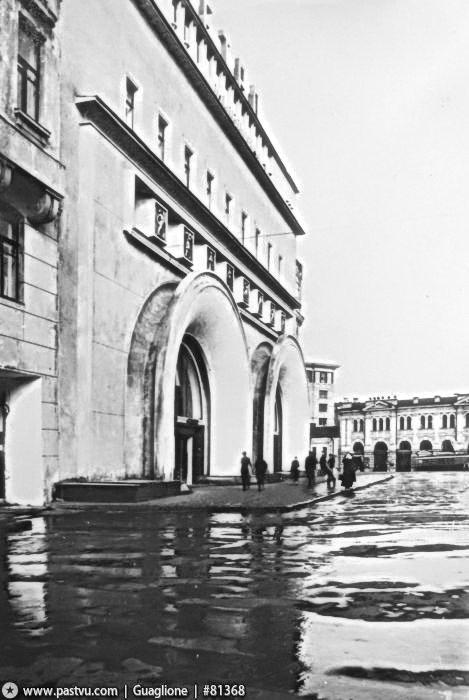
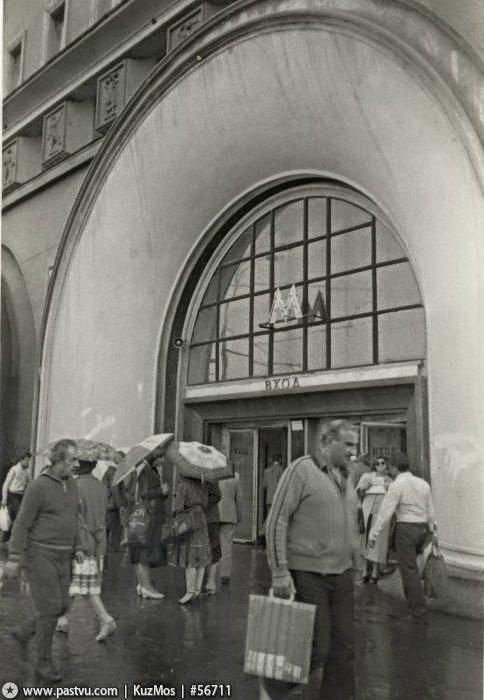
Изначально у станции был только один вестибюль — западный, открытый вместе со станцией в 1935 г. Впоследствии она обрела разветвленную систему входов и выходов по периметру всей Лубянской площади. Авторы наземного павильона — архитекторы Д.Ф. Фридман и И.И. Ловейко — сильно перестроили фасад старого здания, в которое были встроены вход и выход. Они представляют собой два огромных арочных портала, а специфическая форма предполагала подсвечивание арок отраженным светом.
Свое современное название станция получила в 1990 г. по Лубянской площади, под которой она расположена.
When construction workers confronted with complex hydrogeological conditions, because of what had to change the internal structure of the Station - it became double-vaulted, i.e. without intermediate hall.
Interior project of the platform hall was designed by Nicholas Ladovsky, the distinctive architect of the avant-garde era, ideological leader of rationalism in architecture.In the project of this station, Ladovsky, the only one of all the authors of the stations of the first stage, retained the tunnel form of the apron hall. Before him there was a difficult task - to design a station with a complex internal structure: a certain curvature of the station tracks, curvilinearness of the entire section of the tunnel, the heaviness and massiveness of the supports. Ladovsky did not straighten the curvature of the walls of architectural decoration. He stressed this curvature, extending the rhythmically located along the apron simplified pilasters throughout the arch, thereby creating a special dynamics, unusual for other stations.
Standard solution was suggested by the architect of the original draft. He proposed the use of color as a means of visual communication. For example, to facilitate orientation of the person from the entrance to the subway station hall, Ladovsky viaducts proposed a method of color: red - to indicate the entrance, blue to mark the exit ( color panels were supposed to be higher than an average person ). But this project was never implemented.
The author also developed an interesting principle for lighting platforms: the apron part of the station was brightly illuminated, while the track tunnel was weaker, which, according to N. Ladovsky's idea, should enhance the perception of space.
Unfortunately, in the 1970s "Lubyanka" was reconstructed, the architecture of the apron hall was radically changed. It found the middle room, i.e. became three-vaulted and turned into a typical station in the 1970s. From the project Ladovsky there were only small fragments.
Initially, the station had only one lobby - Western, which opened with the station in 1935. Subsequently, it acquired a ramified system of entrances and exits along the perimeter of the whole Lubyanka Square. The authors of the ground pavilion architects D.F. Fridman and I.I. Loveiko greatly rebuilt the facade of the old building, in which the entrance and exit were built. They are two huge arched portal, and a specific form presupposed the illumination of arches by reflected light.
Metro station was named “Lubyanka” after Lubyanka Square where it is located in 1990.
