Интерактивный гид по городу
С мобильным приложением бродить по городу гораздо интереснее!

The warm shopping arcade

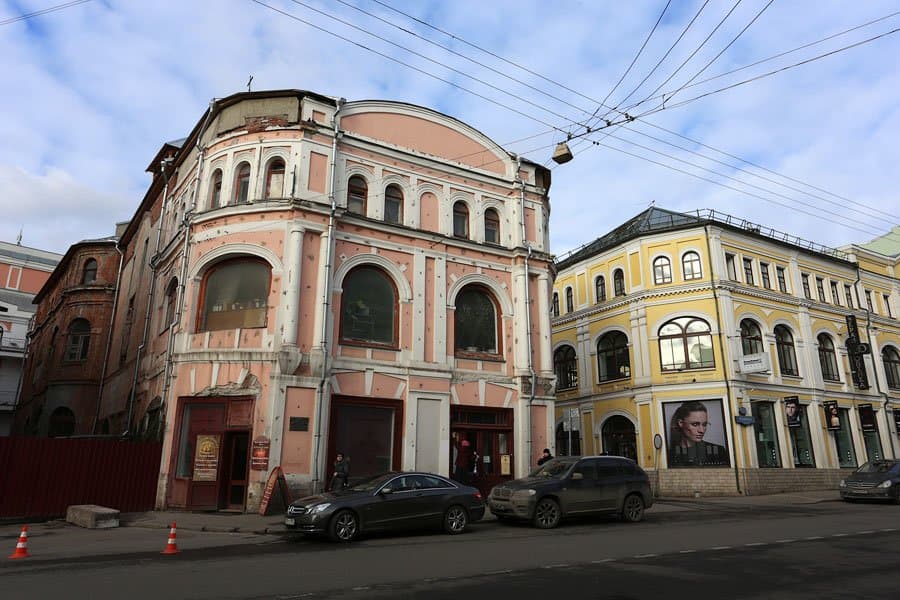
A brainchild of the architect Alexander Nikitin, the Warm Shopping Arcade once kept the memories of the Chanters’ Quarter and the Novgorod metochion in its cellars. Today, only one part of its legacy still survives: its address, Ilyinka Street, 3.

The warm shopping arcade
A brainchild of the architect Alexander Nikitin, the Warm Shopping Arcade once kept the memories of the Chanters’ Quarter and the Novgorod metochion in its cellars. Today, only one part of its legacy still survives: its address, Ilyinka Street, 3.
3.56
Вы можете воспользоваться QR-кодом, чтобы открыть эту страницу в нашем приложении
Архитектурный стиль:
Годы постройки:
1864-1869
Архитекторы:
А.С. Никитин
Эпоха:
19th century
Информация о здании

Новгородское подворье стояло на этой улице еще в далеком XVI веке. В 1519 году рядом с подворьем заложили «церковь камену» Ильи Пророка, по которой и улица была названа Ильинка. На Ильин день русские государи и патриархи шли в этот храм на богомолье. В 1676 г. церковь перешла Новгородскому подворью.

В те времена местность между Богоявленским монастырем и Новгородским подворьем занимали митрополичьи огороды, патриарх Иоаким отдал их в конце XVII в. певчим. Патриаршие певчие отстроили себе два переулка Большой и Малый Певческие, соединившие Богоявленский и Ветошный переулки, но близость торга и сама атмосфера Китай-города делали из слободы подобие маленького торжка. Здесь, так же как и по всей Ильинке «бреют, стригут, шьют, кроят, стучат молотом, варят, пекут, красят, торгуют вином и квасом». Даже в 1832 г. журнал «Телеграф» в ужасе писал «где могут улечься на ночь все жители этого грязного закоулка?» и добавлял: «Тут целый мир страстей, отношений, занятий».

Певческая слобода и Новгородское подворье пробыли на своих местах до 1865 г., пережив пожары, реконструкции и переустройства Китай-города разными архитекторами.

В 1865 г. участки покупает Товарищество «А.А.Пороховщиков и Н.П. Азанчевский» для постройки здесь торговых рядов. Проект был поручен архитектору А. С. Никитину, который возвел здесь самый настоящий город с узкими переулками и кварталами, которые оплели церковь Ильи Пророка, перестроив и включив ее в свой лабиринт.

Несколько трехэтажных корпусов имели разную форму и протяженность, однако один и тот же фасад из трех этажей арочных окон разной высоты. Посетители новых торговых рядов были приятно удивлены теплом внутренних помещений, которое сохранялось здесь благодаря паровому отоплению. Ряды так и окрестили Теплыми. Помимо этого ряды были еще и светлыми, то есть освещались, что тоже было новинкой. Аренда была выше, чем в холодном Гостином дворе, но за тепло и свет купцы были готовы платить.

К лабиринту корпусов добавлялся лабиринт чугунных галерей и переходов, которые опутывали здания почти на всем протяжении.

После революции 1917 г., когда торговать стало нечем, а жить негде, ряды превратились в лабиринт коммунального жилья и контор. В 1920 г. Ильинскую церковь закрыли, здание ее стало конторой. В 1930–х в один из корпусов, выходящих на Ильинку, вселилась контора «Метростроя». Так ряды достояли до 1996 г., когда появились планы по устройству элитного гаража. Первыми были разрушены Теплые ряды, выходящие на Ильинку (дом 3 строение 2). К 2008 г. были разрушены все строения Теплых рядов, кроме крошечных корпусов, выходящих фасадами в Богоявленский переулок, и церкви Ильи Пророка. Под обломками Теплых рядов погибла также идея создания на их месте археологического музея, в котором можно было бы увидеть мостовые Певчей слободы и части палат Новгородского подворья.

Здания новых Теплых Торговых рядов воссоздали заново, их стены не хранят остатков былых времен, они новы и чисты от истории. Под ними не сохранились мостовые слобод и подворий, ну а подземный гараж «ГУМ-парковка» вмещает на своих двух этажах несколько десятков машин.
The metochion of Novgorod existed on Ilyinka Street since the 16th century. In 1519, the stone Church of St. Elijah was founded here, and the nearby street was named Ilyinka after it (Ilya being the Russian version of this saint’s name). Russian sovereigns and patriarchs went to this church to pray on the feast day of Elijah. In 1676, the church was given to the Novgorod metochion. Back then, the land between Bogoyavlensky Monastery and the metochion of Novgorod was owned by metropolitan bishops. In the late 17th century Patriarch Joachim gave the land to chanters (‘pevchy’ in Russian). The chanters built two lanes, Bolshoy and Maly Pevchesky, connecting Bogoyavlensky and Vetoshny Lanes. The proximity of merchants and, indeed, the aura of Kitay-gorod turned the Chanters’ Quarter into a sort of a small market. Just like throughout the entire Ilyinka Street, here everyone was ‘shaving beards, cutting hair, sewing things, tailoring garments, hammering metal, cooking and baking, painting, and selling wine or kvass’, as the contemporaries described it. Even in 1832, a horrified columnist of the Telegraph magazine wrote: ‘Where do they even sleep, all the inhabitants of this dirty quarter?’ And then he added: ‘There is a whole wide world of passion, encounters, and trades here.’ The Chanters’ Quarter and the Novgorod metochion stayed here until 1865, surviving numerous fires, renovations, and reconstructions of Kitay-gorod by various architects. In 1865, the company of A.A.Porohovschikov and N.P.Azanchevsky bought this land plot to build a shopping arcade. This project was entrusted to Alexander Nikitin. The brilliant architect managed to construct a real settlement, with its narrow alleys and quarters that surrounded the Church of Elijah. The church was renovated and incorporated into the newly built maze. The several three-storey buildings all had a different shape and length, but were connected by a single facade made of three rows of arched windows of varying height. Visitors coming to see the shopping arcade were pleasantly surprised by how warm it was on the inside: the building had a central steam heating system. Thus, the mall was dubbed the Warm Shopping Arcade. And it was also filled with light to boot – the arcade had lighting installed, which was a novelty as well. The rental charges were higher than in the ever-cold Gostiny Dvor, but merchants were willing to pay for the warmth and light. The maze of buildings also included a smaller labyrinth of cast iron galleries and passages that entangled the structures along their whole length. After the revolution of 1917, when there was nothing to buy or sell and nowhere to live, the arcade was transformed into a maze of communal apartments and offices. In 1920, the Church of St. Elijah was closed and became an office too. Metrostroy, the state construction company responsible for building subways, occupied one of the buildings of the arcade facing Ilyinka in 1930.This lasted until 1996, when the city authorities decided to build a garage on the premises. The building facing Ilyinka (house number 3/2) was the first part of the Warm Shopping Arcade to be demolished. By 2008, almost all of its buildings were torn down, with only the tiny buildings facing Bogoyavlensky Lane and the Church of St. Elijah surviving. The idea to create an archeological museum that would exhibit the original paving of the Chanters’ Quarter and a part of the chambers of the Novgorod metochion, was buried under the rubble. The buildings of the Warm Shopping Arcade were eventually rebuilt, but their walls no longer keep the memories of the old days – they are new and free from the burden of history. No paving of ancient quarters was preserved under them. On the bright side, the now open GUM-Parking underground garage can fit a few dozen vehicles in its two levels.
Автор статьи: Зинаида Одолламская
Поделитесь статьей с друзьями
Интересное рядом(5)
г. Москва, пл. Революции, д. 2/3
Kuzneckij most