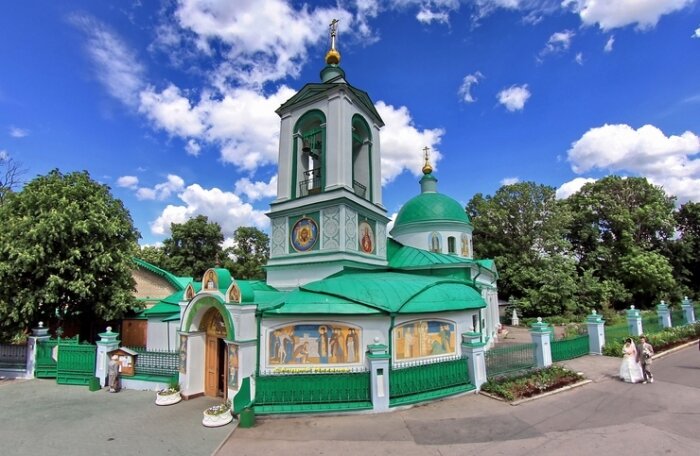
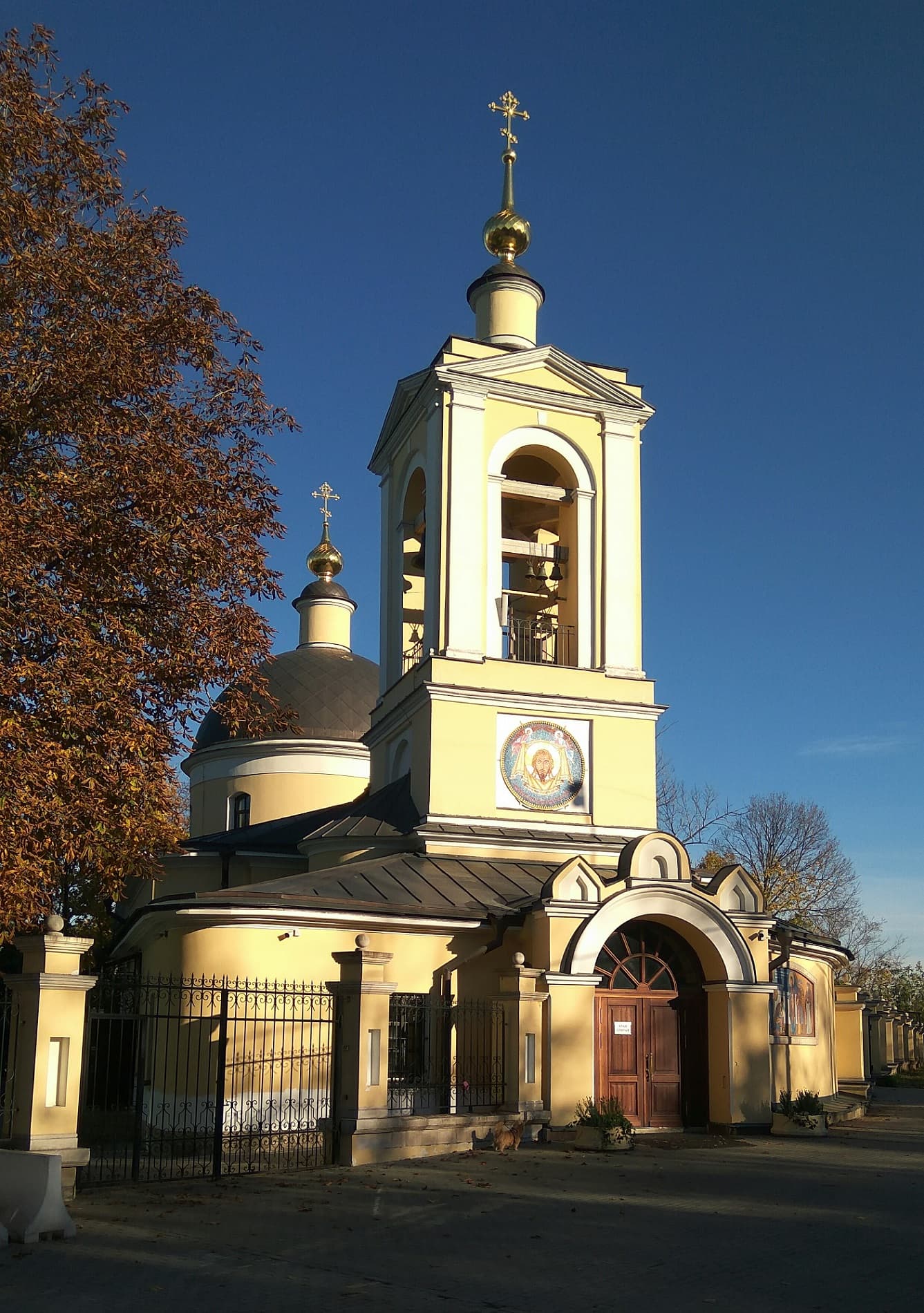
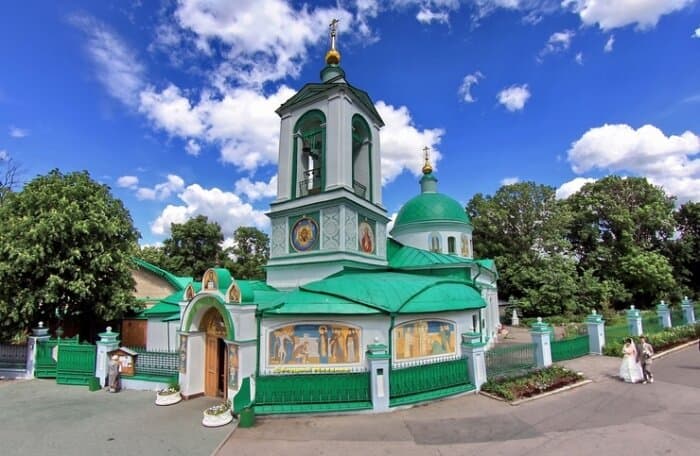
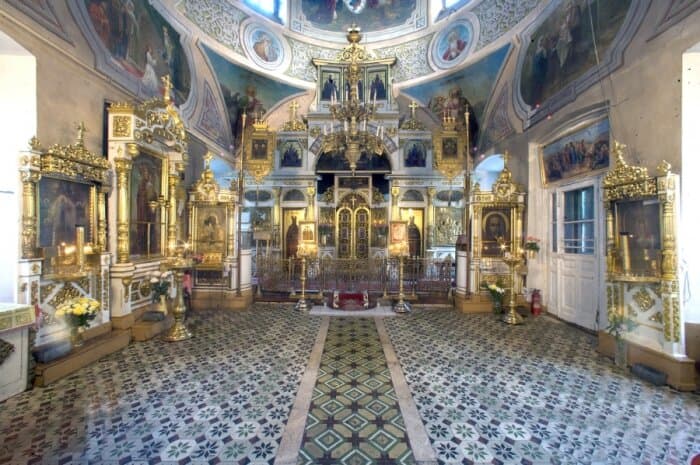

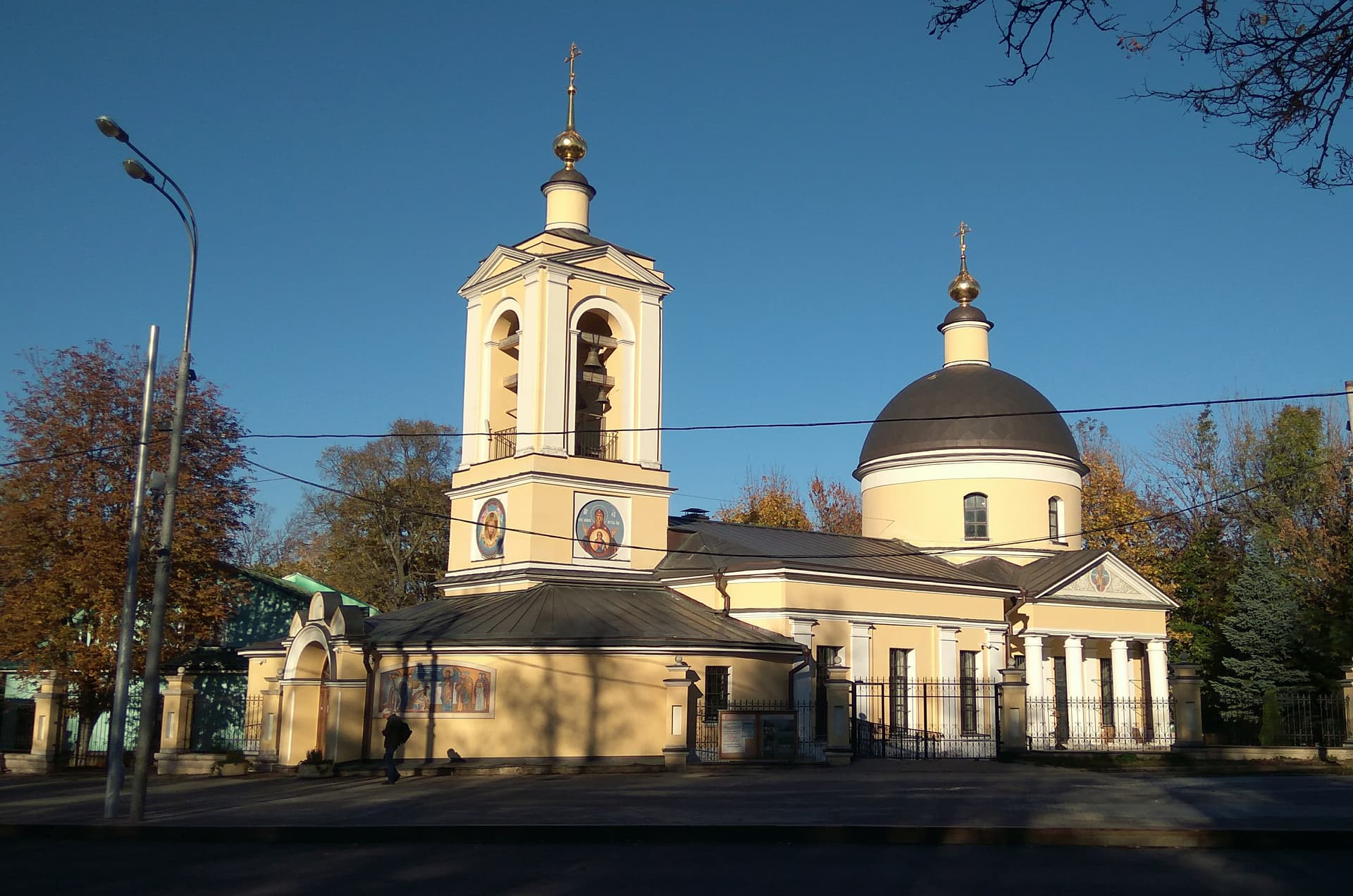


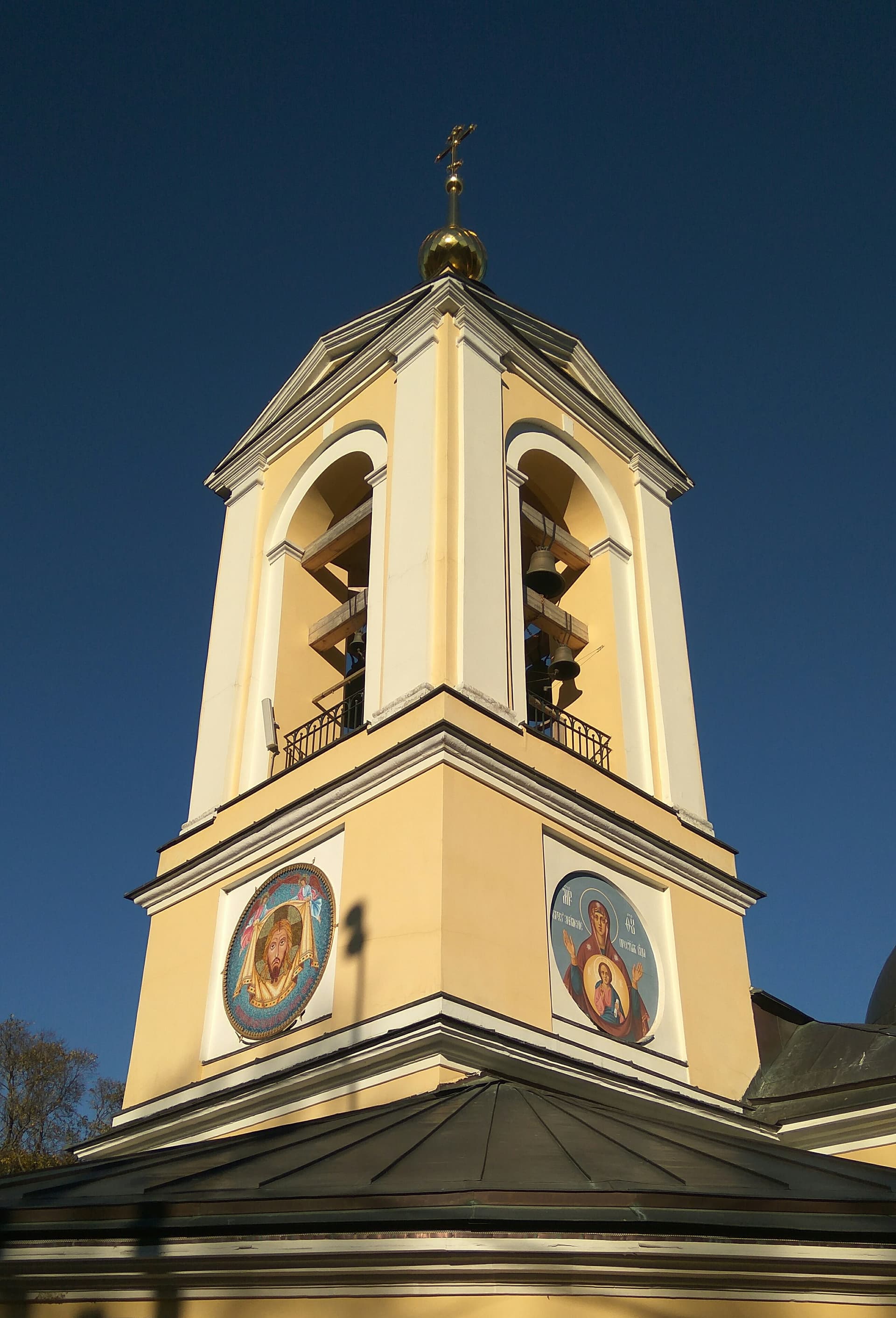

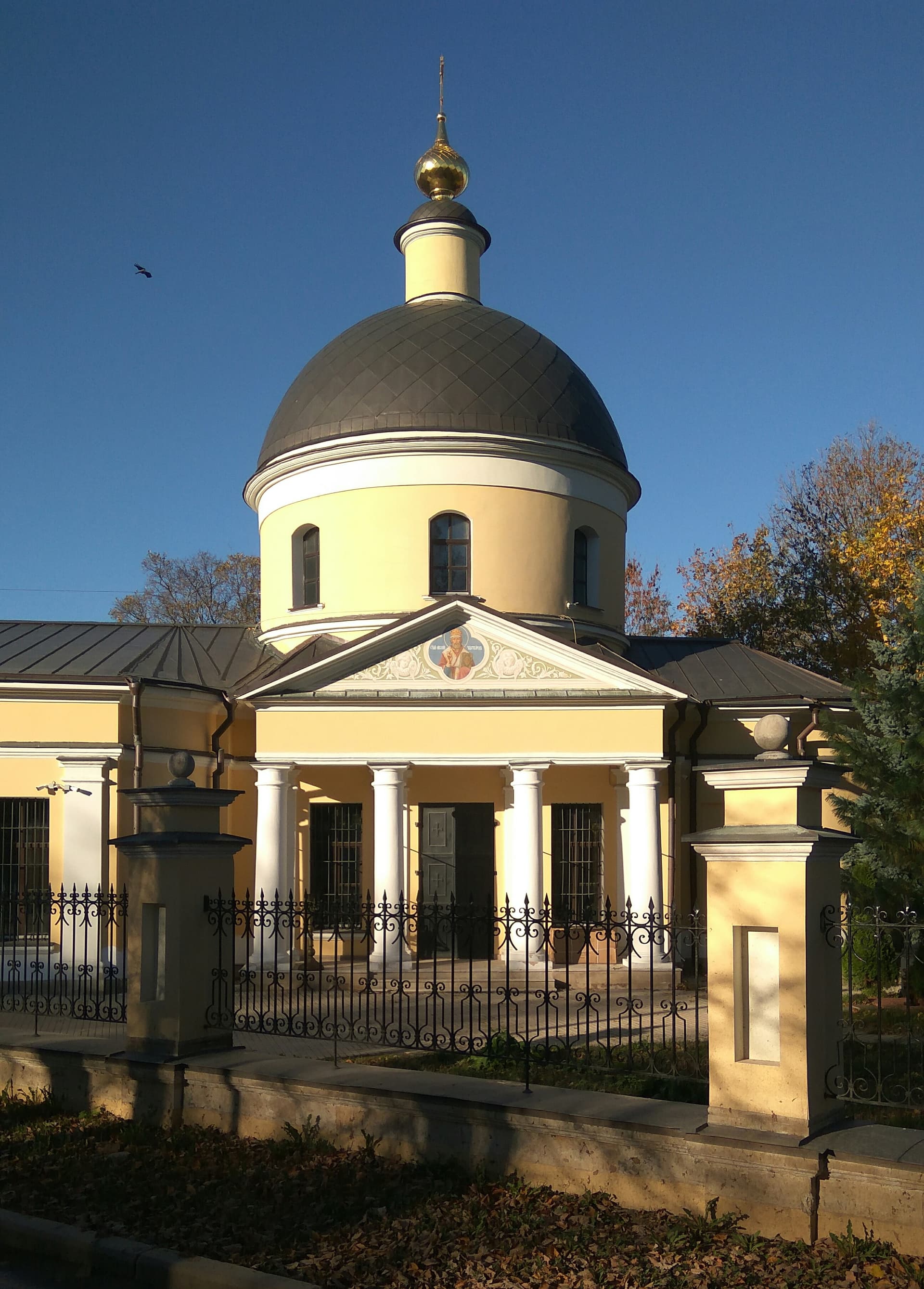


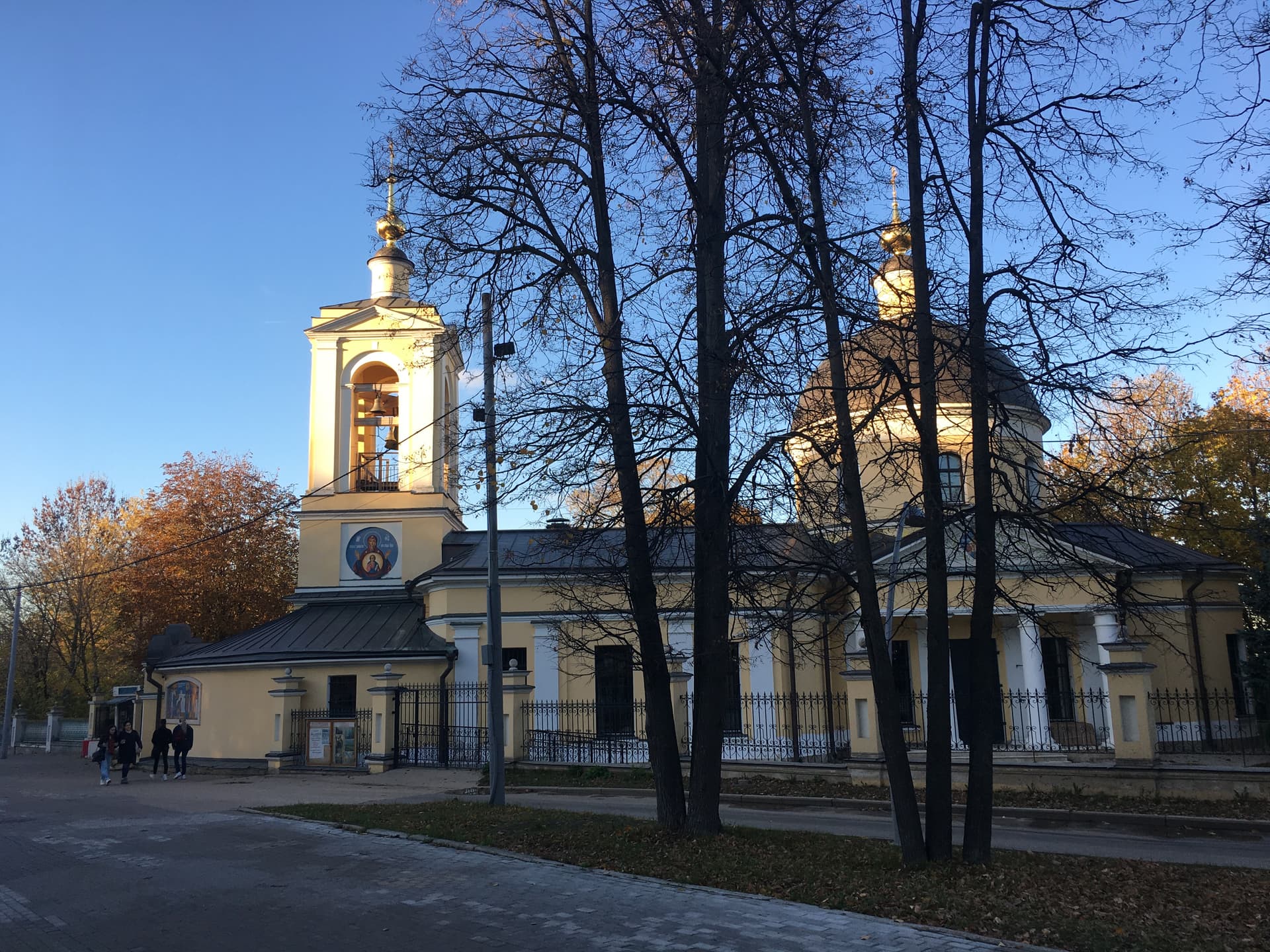

Деревянная церковь св. Троицы Живоначальной на Воробьёвых горах впервые упоминается в середине XV века в завещании великой княгини Софьи Витовтовны (жены Василия I и матери Василия II) – владелицы дворцового села Воробьёва. Вплоть до начала XIX века неподалёку существовал Воробьёвский дворец – загородная летняя резиденция московских великих князей, русских царей и императоров. Деревянный Троицкий храм много раз перестраивался и возводился заново, пока в начале XIX века не было начато строительство каменной церкви, в целом завершённое в 1811 году.
Сельская Троицкая церковь на Воробьёвых горах вошла в историю Отечественной войны 1812 года. Накануне решающего совета в Филях М.И. Кутузов был в Воробьёве и молился в местном храме.
Интересно, что соседнее село Голенищево, располагавшееся в районе современной Мосфильмовской улицы, принадлежало Митрополитам Киевским и Московским.
Святитель Московский митрополит Иона именно здесь исцелил боярина Василия Кутузова, что нашло своё отражение в одном из клейм местной иконы святого в сельской церкви (тоже освящённой во имя св. Троицы, как и в Воробьёве). Отсюда и двойное наименование фамилии Михаила Илларионовича – Голенищев-Кутузов.
Попал на Воробьёвы горы и Наполеон: по преданию, император Франции любовался отсюда видом Москвы при отступлении. При этом в дни французской оккупации Москвы Троицкая церковь в Воробьёве не пострадала, не была ограблена и не горела, её убранство осталось в целости. В 1813 – 1814 гг. были освящены приделы храма, которые не успели отделать и убрать иконами до начала войны.
Несчастье обошло стороной церковь св. Троицы на Воробьёвых горах и в ХХ веке: советская власть не тронула её. Несмотря на то, что в 1917 г. по соседству находилась одна из опорных точек большевиков, откуда вёлся артиллерийский обстрел Кремля, храм не пострадал. Не был он закрыт и в дальнейшем, в годы борьбы с религией и во время строительства рядом нового корпуса МГУ. Даже колокольный звон здесь продолжался, что в советскую эпоху было и вовсе редкостью. Сохранились редкие иконы XVII – XIX вв. Сегодня мы можем видеть храм практически таким же, каким его видел М.И. Кутузов, молясь перед отступлением из Москвы.
To the left of the observation deck at Sparrow Hills is a small church of St. Trinity. Consecrated just before the war of 1812, it played a role in the victory of Russian troops.
The wooden church of St. Trinity on the Sparrow Hills was first mentioned in the middle of the XV century in the will of the Grand Duchess Sophia Vitovtovna (wife of Basil I and mother of Basil II) - the owner of the palace of the Vorobyov village. Vorobievsky Palace, the suburban summer residence of Moscow grand dukes, Russian tsars and emperors existed until the beginning of the XIX century. Wooden Trinity Church rebuilt many times and built anew, until the beginning of the XIX century when the construction of a stone church begin. The church finished as a whole in 1811.
Countryside Trinity Church on the Vorobievi (sparrow) Hills entered the history of the Patriotic War of 1812. On the eve of the decisive council in Fili MI Kutuzov went to Vorobievo and prayed in a local church.
Interestingly, the neighboring village Golenishcheva, located where the modern Mosfilmovskaya street is, belonged to the Metropolitans of Kiev and Moscow.
St Moscow Metropolitan Jonah healed Boyar Vasily Kutuzov here, which reflected in one of the hallmarks of the local holy icon in the village church (also consecrated in the name of St. Trinity, as in Vorobievo). Hence, the double name of Mikhail Illarionovich - Golenishtchev-Kutuzov is from here.
Napoleon got on the Sparrow Hills too: according to legend, French Emperor admired the view of Moscow from here during the retreat. In the days of the French occupation of Moscow Trinity Church in Vorobieco did not suffer, was not robbed and burned, its decoration left intact. Altars of the temple, which did not have time to finish and place the icons before the war, were consecrated in 1813 - 1814 r.
Misfortune spared Trinity Church on the Sparrow Hills in the twentieth century as well: the Soviet government did not touch it. Despite the fact that in 1917 the neighborhood was one of the reference points of the Bolsheviks, shelling the Kremlin was conducted from here, the temple was not injured. He was not closed in the future, during the struggle with religion and during the construction of new housing near MSU. Even the sound of bells continued to be heard during the Soviet era, which was at all uncommon. Rare icons of the XVII - XIX centuries are preserved. Today we can see the temple almost the same as MI Kutuzov saw it, praying before the retreat from Moscow.