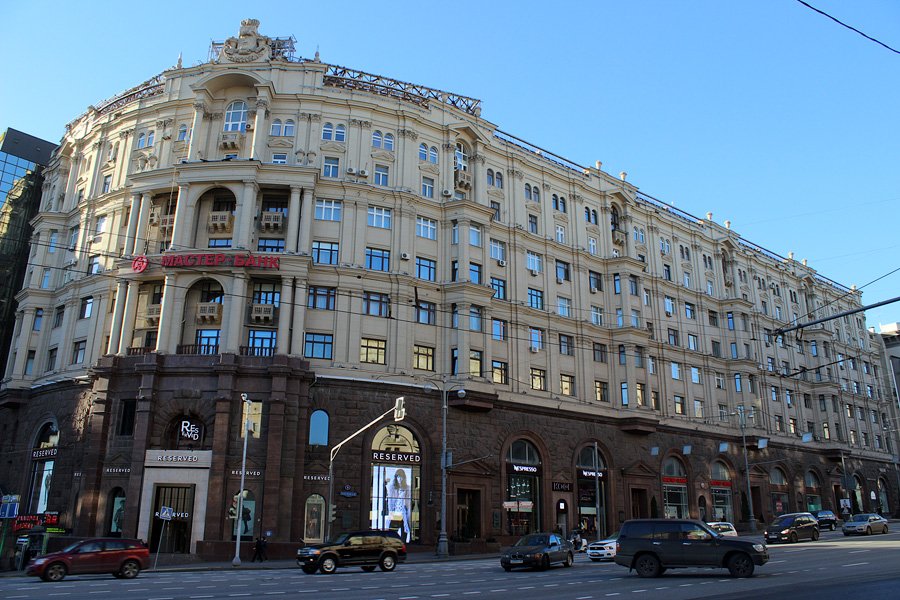

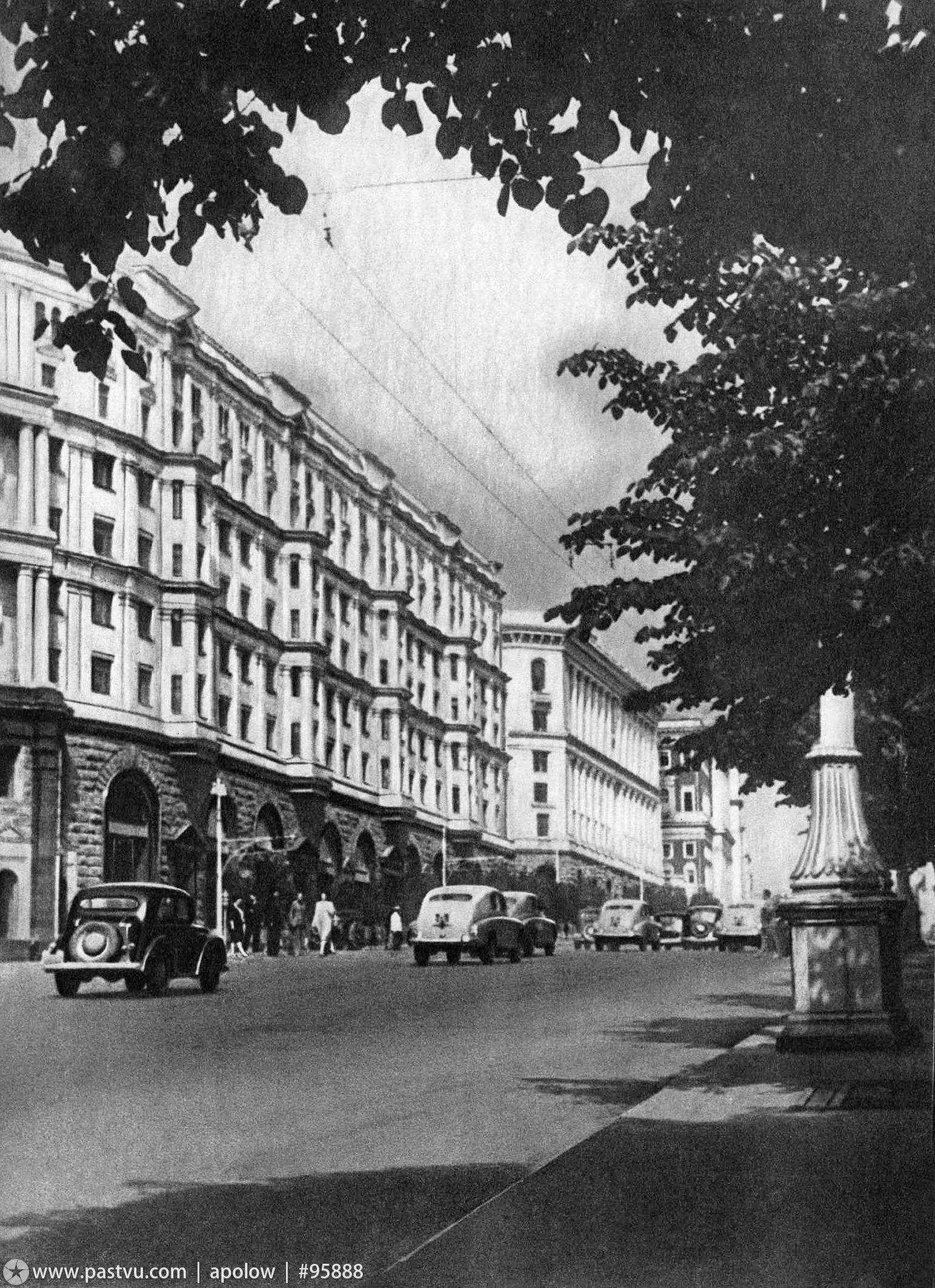
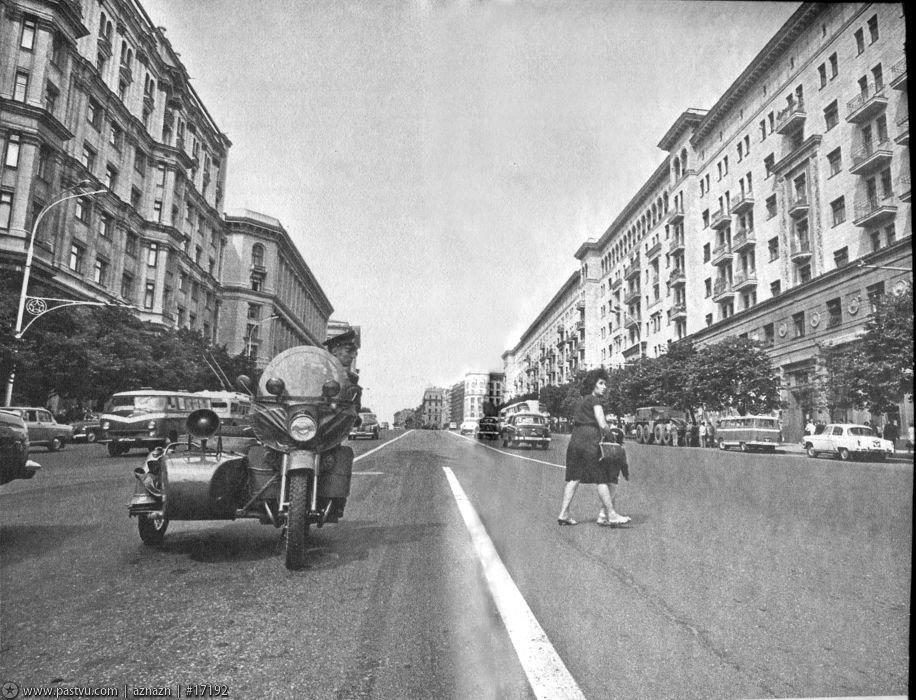
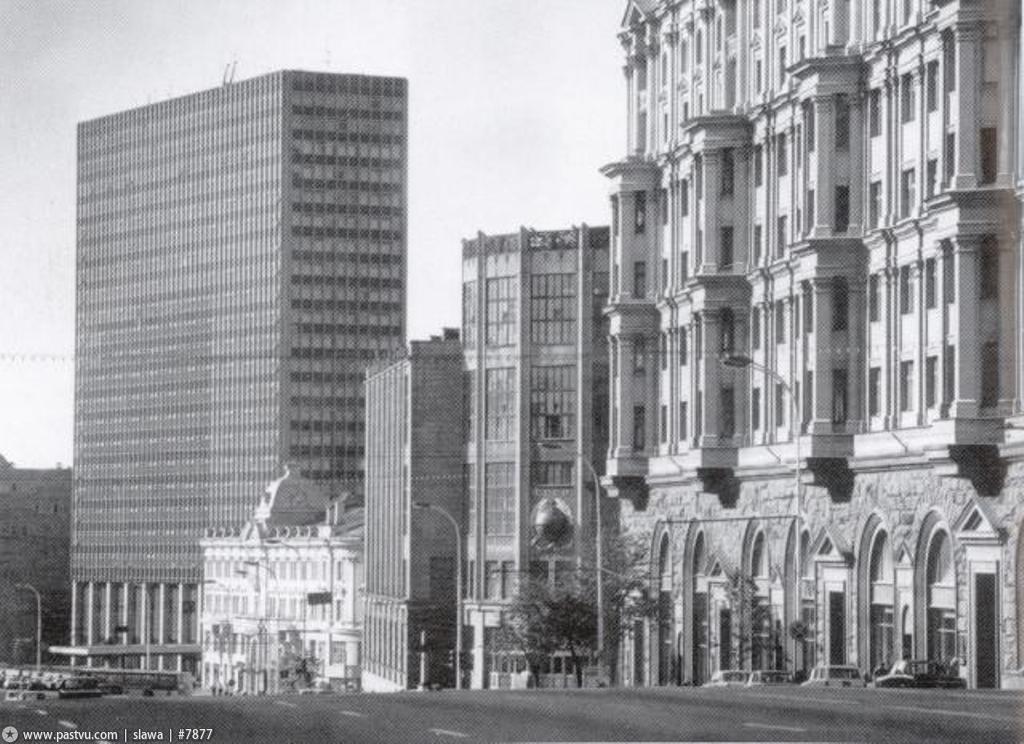
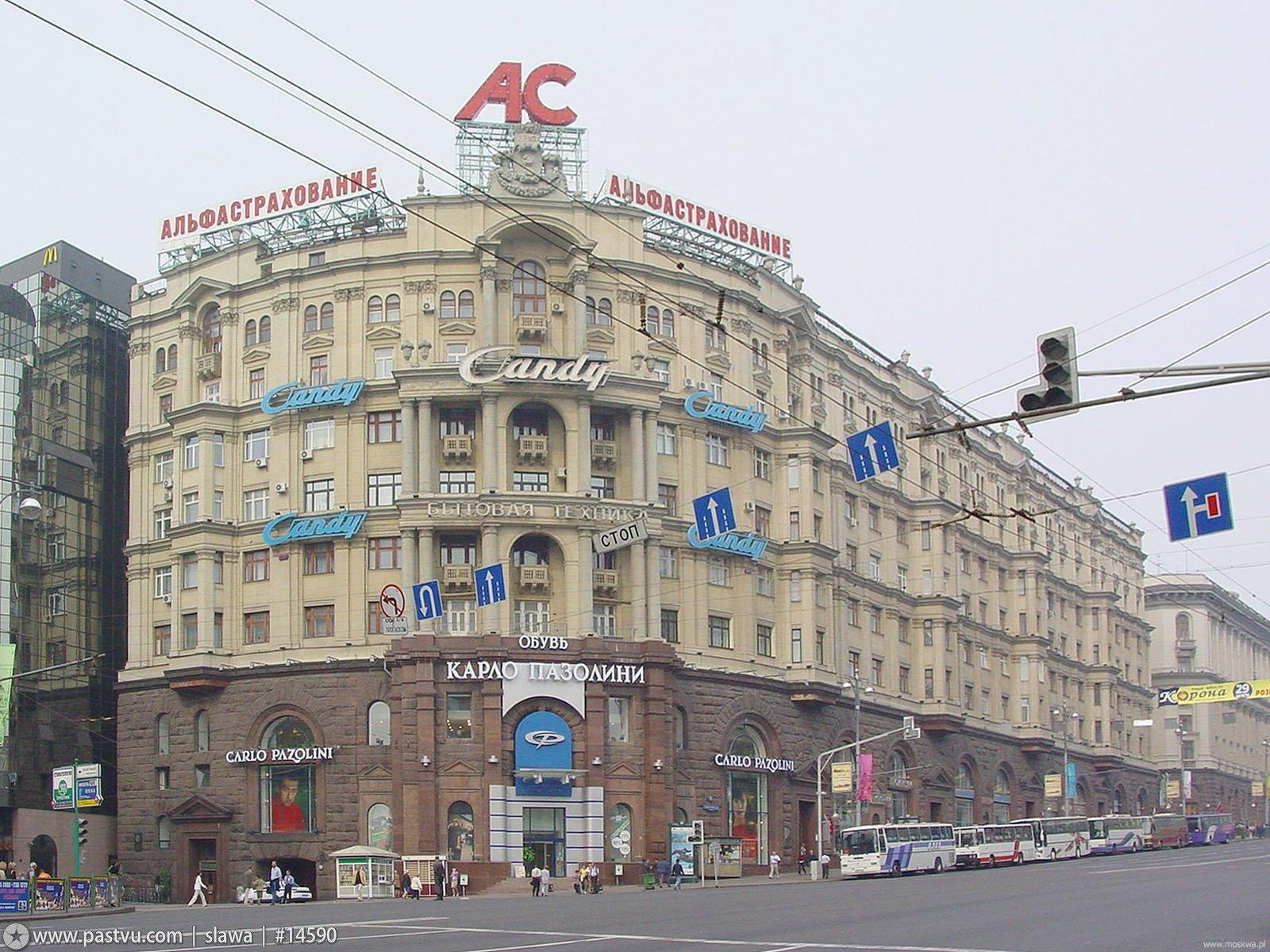
Это один из самых помпезных жилых домов на Тверской улице. Располагаясь между Газетным и Брюсовым переулками, он формирует линию застройки квартала вдоль Тверской улицы.
Строительство дома, заложенного еще в 1941 году, в военное время было законсервировано, а участок обнесен забором. Но уже к 1949 году постройка была завершена.
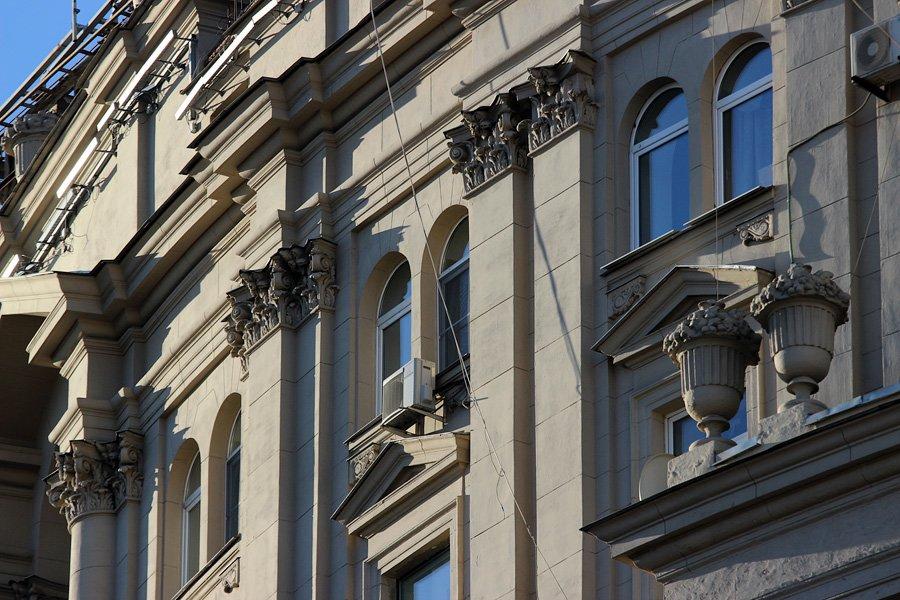
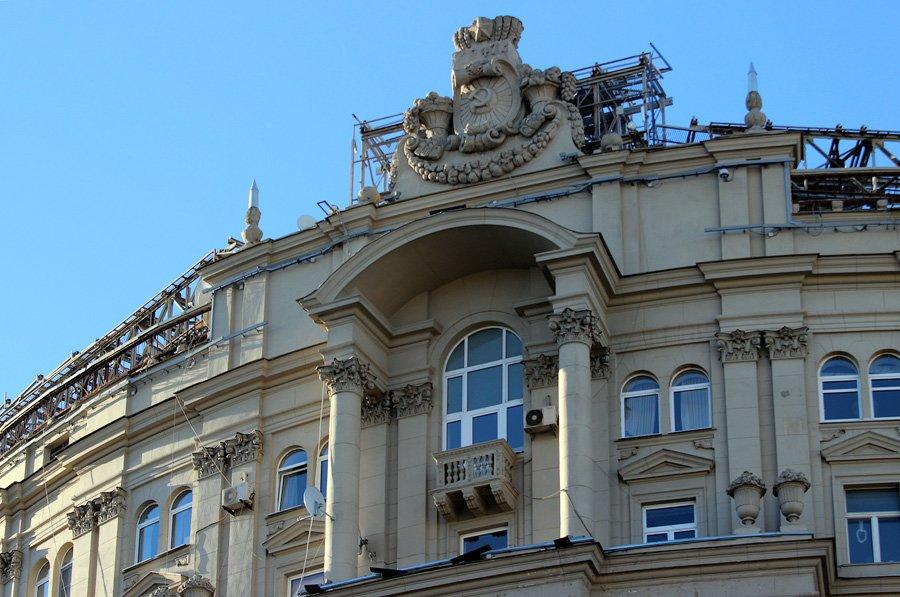
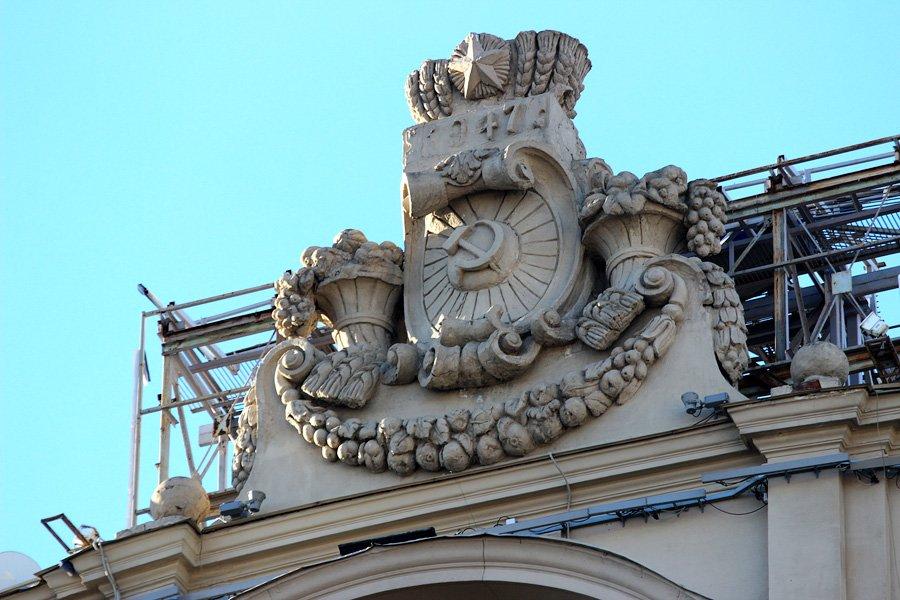
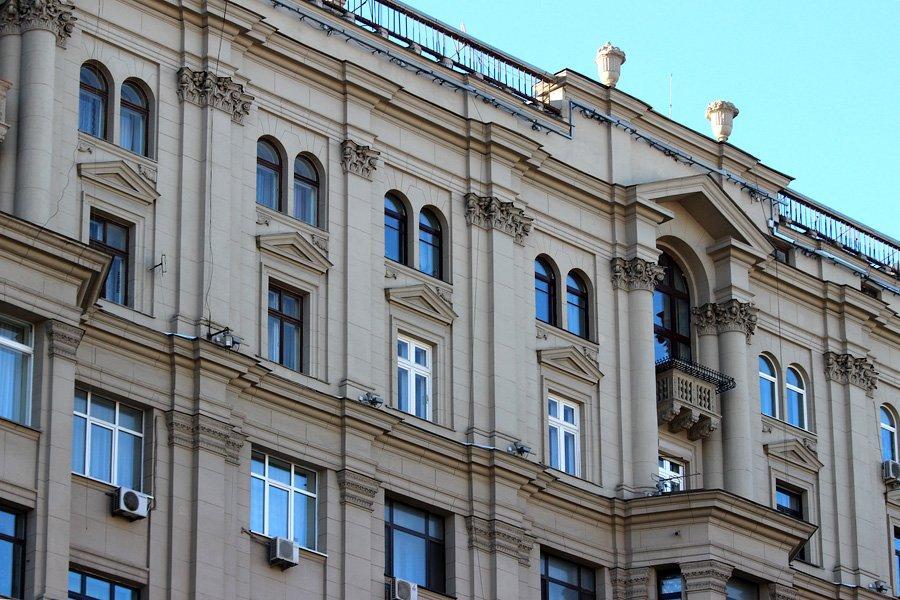
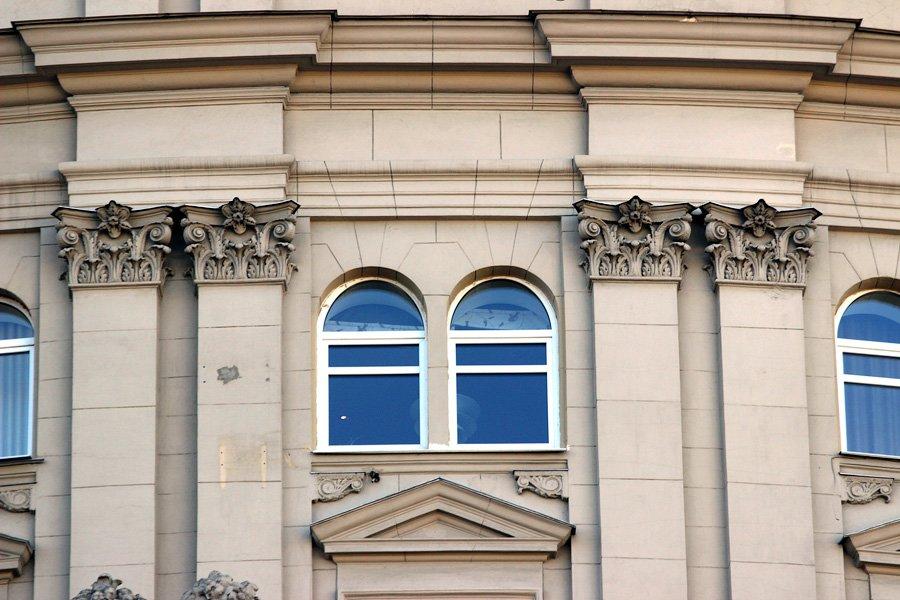
Этот массивный жилой дом возведен по проекту архитектора А.Ф. Жукова в стиле, характерном для архитектуры сталинского периода. Место пересечения улицы Тверской и Брюсова переулка акцентировано проездной аркой высотой в три этажа. Угол Тверской и Газетного переулка выделен сложной ордерной композицией. Она формируется целой системой глубоких лоджий с прямоугольными и арочными проемами и завершается аттиком с изображением герба СССР. Здание интересно тем, что имеет не обычное трехъярусное членение, а четырехъярусное. Пластичность фасада достигается выступами трехгранных эркеров. Накладная декоративность фасада особенно хорошо видна в Никитском переулке, где декор внезапно обрывается, обнажая кирпичную кладку.
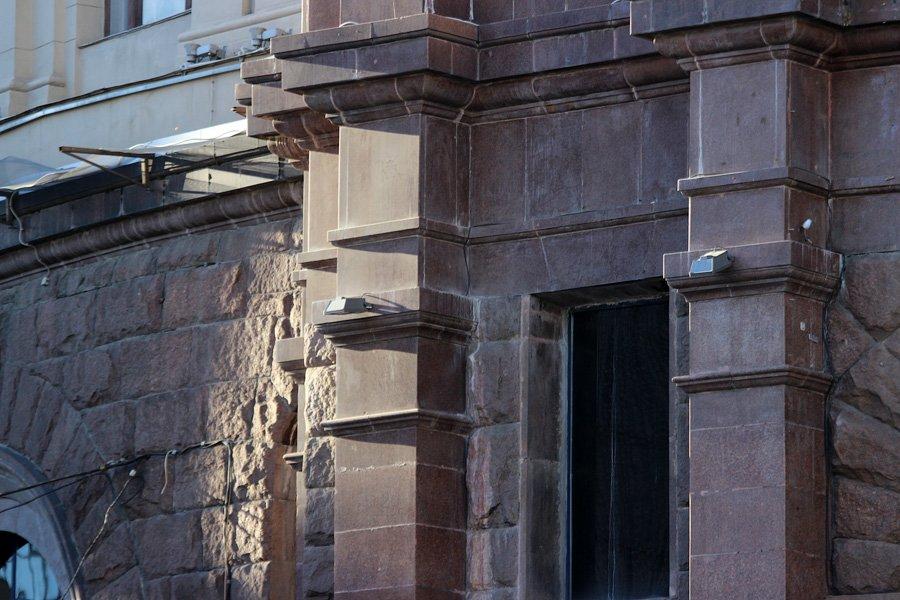
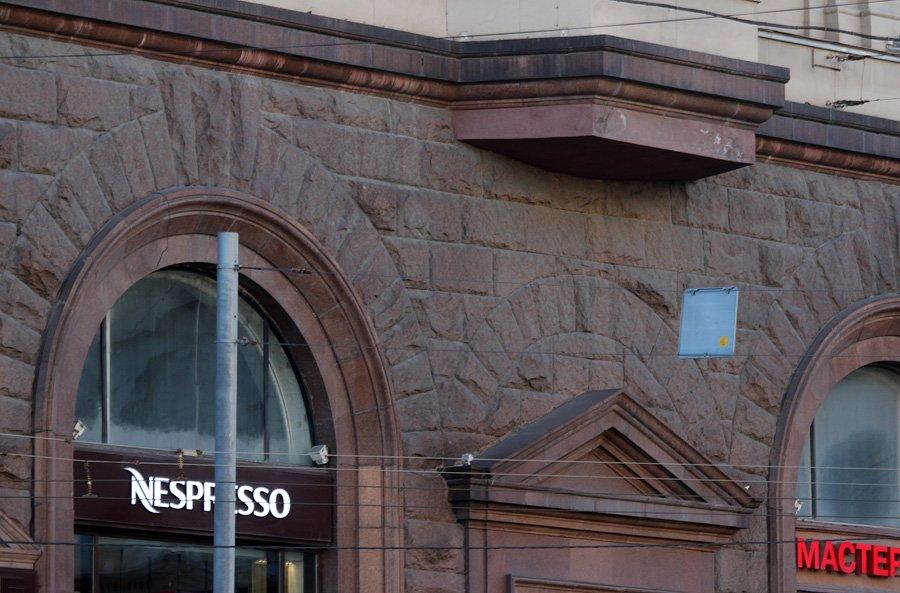
Темно-красный цокольный этаж здания облицован гранитом. Существует предание, согласно которому это именно тот гранит, который в 1941 году везли в обозе своих войск немцы, чтобы воздвигнуть из него победный монумент в честь взятия столицы. Однако этому не суждено было воплотиться! И гранит стал украшением столицы государства, сокрушившего немецкий фашизм.
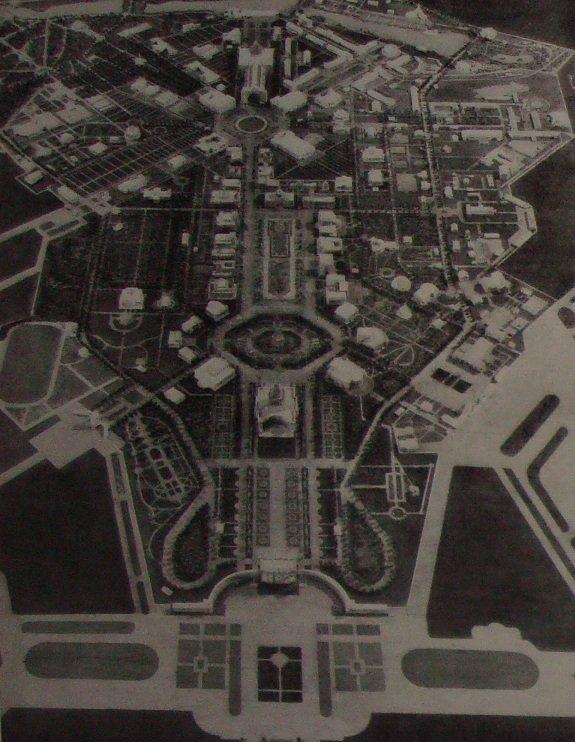
К сожалению, архитектор Жуков мало известен даже специалистам. Его имя чаще всего упоминается в связи именно с этим солидным жилым домом на Тверской. И почти никто не знает, что долгие годы А. Ф. Жуков руководил созданием прекрасного архитектурно-паркового ансамбля ВСХВ-ВДНХ.
За чрезмерную помпезность здания Жукова вскоре начали сильно критиковать. Отчасти упреки были справедливы: ведь на массивную декорацию фасада – особенно на угловую часть – потратили треть всех средств, отведенных на строительство! Зато дом стал достойным своего ответственного местоположения – на главной улице города и страны.
Мемориальные доски на фасадах дома свидетельствуют о том, что в его квартирах проживали министр культуры СССР Е.А. Фурцева, ученый-химик Н.Д. Зелинский, архитектор А. В. Власов, хоровой дирижер А. В. Свешников и другие выдающиеся советские ученые, видные государственные и военные деятели.
В настоящее время здание имеет статус исторически ценного градоформирующего объекта.
Construction of the house had been laid in 1941 and was suspended during the War. The area was enclosed by a fence for a long time. But the building was completed by 1949.
This massive apartment house was built by the architect A.F. Zhukov in a style typical of the architecture of the Stalin period. The intersection of Tverskaya Street and Bryusova Lane is accented by a three-storey thoroughfare. The corner of Tverskaya and Gazetny Pereulok is marked by a complicated order composition. It is formed by a whole system of deep loggias with rectangular and arched openings and ends with an attic with the image of the USSR coat of arms. The building is interesting because it has not the usual three-tiered division, but four-tiered. The plasticity of the facade is achieved by the protrusions of trihedral bay windows. The overhead decorativeness of the facade is especially well seen in Nikitsky Lane, where the decor suddenly breaks, exposing the brickwork.
Dark red ground floor of the building is faced with granite. There is a saga about this granite. They say that it was carried in the baggage of German troops to erect a monument of the victory to commemorate the capture of the capital in 1941. But it was not destined to become true! And the granite was used for the decoration of the state capital, which ousted German fascism.
Unfortunately, the architect Zhukov is almost unknown even to specialists. His name is often mentioned in connection with this prosperous residential house on Tverskaya. And almost no one knows that for many years, A.F. Zhukov led the creation of the beautiful architectural ensemble VSHV – ENEA (Exhibition of achievements of the national economy of the USSR/Russia).
Zhukov’s building was soon criticized severely for excessive pomposity. Partly accusations were true: after a massive facade decoration (especially on a corner piece) the third of funds allocated for the construction have been spent! But the house become worthy of its important location - on the main street of the city and the country.
Minister of Culture of the USSR E.A. Furtseva ,chemist N.D. Zelinsky, architect A.V. Vlasov, choral conductor A.V. Sveshnikov and other prominent Soviet scientists, prominent statesmen and military leaders lived in the building and there are plaques on the facades commemorating these facts.
Currently the building is a historically valuable city-forming object.