Интерактивный гид по городу
С мобильным приложением бродить по городу гораздо интереснее!

Golitsyn’s homestead

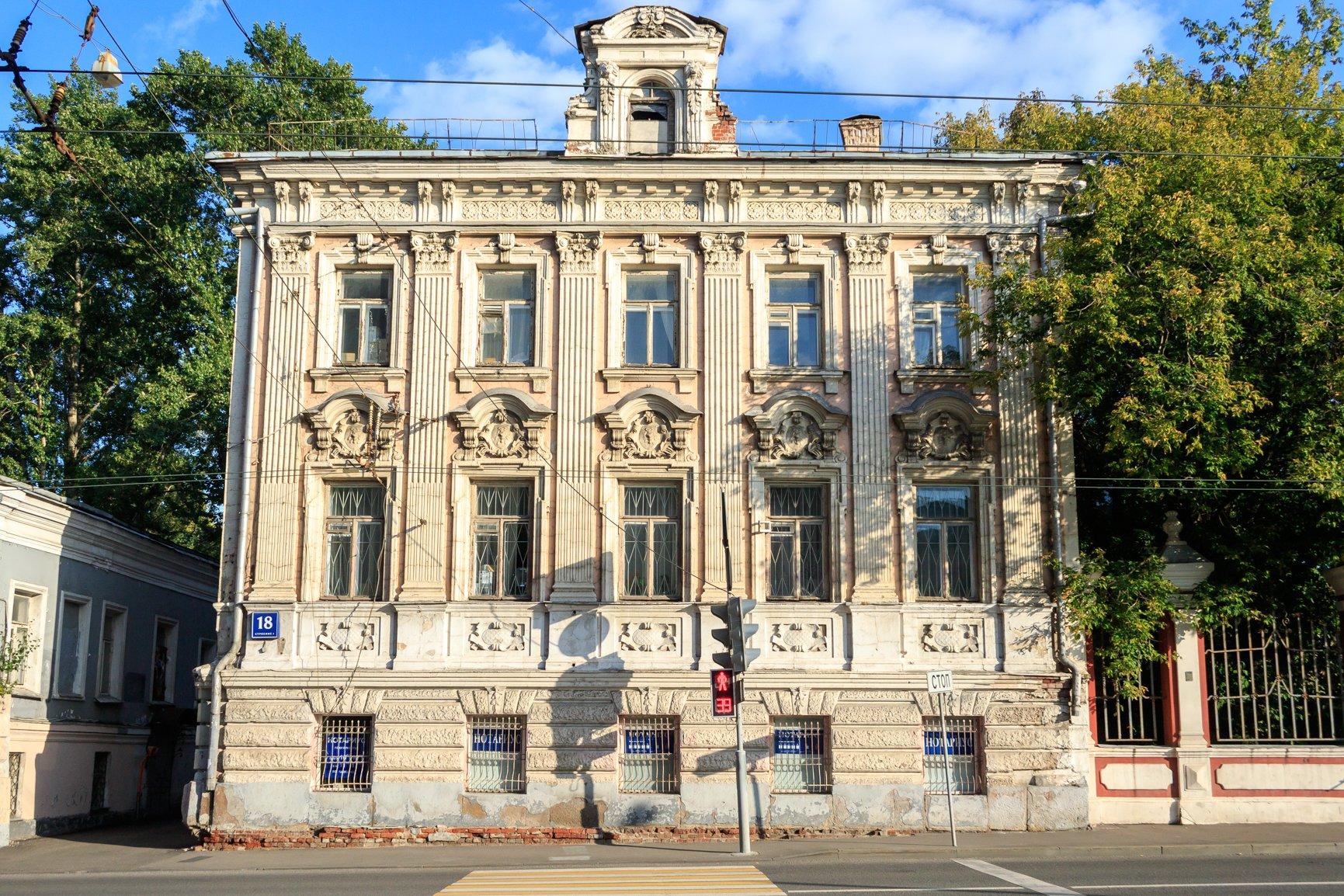
Perhaps this is the oldest civil structure outside the Earthen city: a 16th century masonry was found inside. At the end of the eighteenth century, the Chambers moved to Prince M. P. Golitsyn.

Golitsyn’s homestead
Kurskaya, Chkalovskaya, Krasnye vorota
Perhaps this is the oldest civil structure outside the Earthen city: a 16th century masonry was found inside. At the end of the eighteenth century, the Chambers moved to Prince M. P. Golitsyn.
5.00
Вы можете воспользоваться QR-кодом, чтобы открыть эту страницу в нашем приложении
Архитектурный стиль:
Эпоха:
17th century, 18th century
Информация о здании


По нечётной стороне Старой Басманной улицы располагается целый ряд домов под № 15. Ближайший к Садовому кольцу - корпус № 2 - доходный дом в стиле модерн персидского подданного Аджи-Мамед Усейн Ага Аминезарба, построенный по проекту архитектора В. В. Шауба в 1902 году в стиле голландских домов с деталями в стиле модерн. Увы, в последующие годы здание утратило часть архитектурного оформления фасадов.


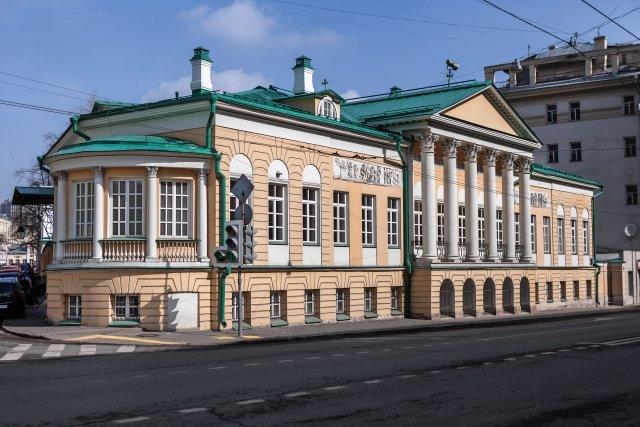
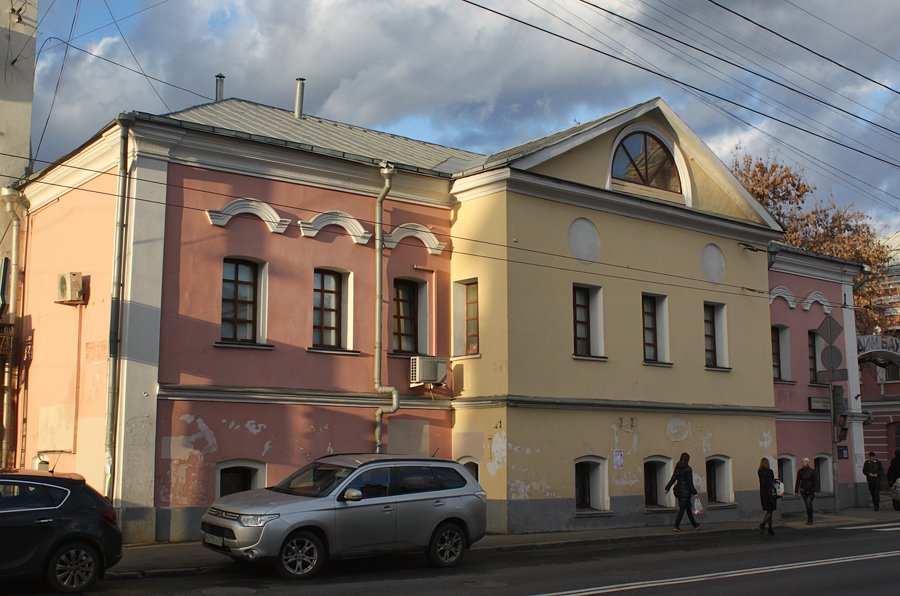
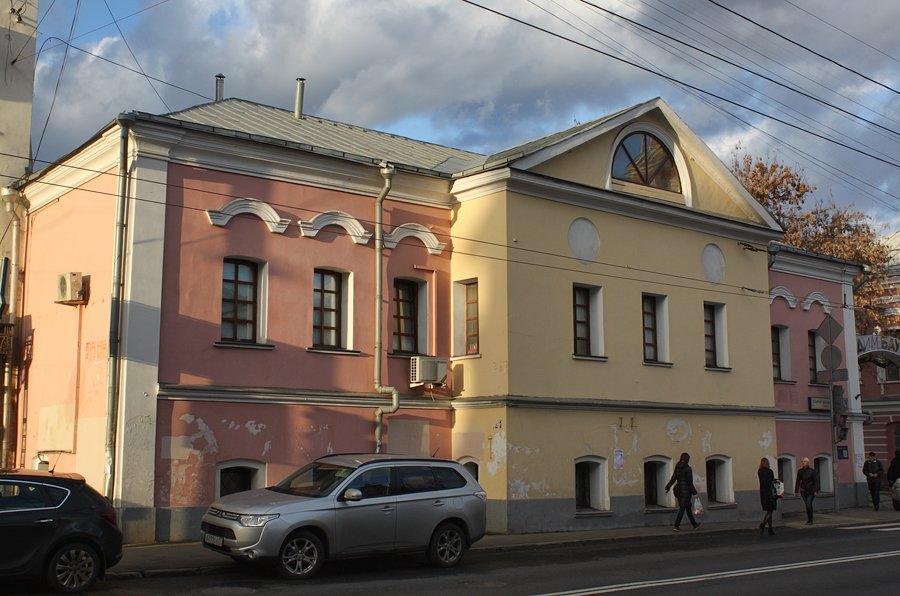
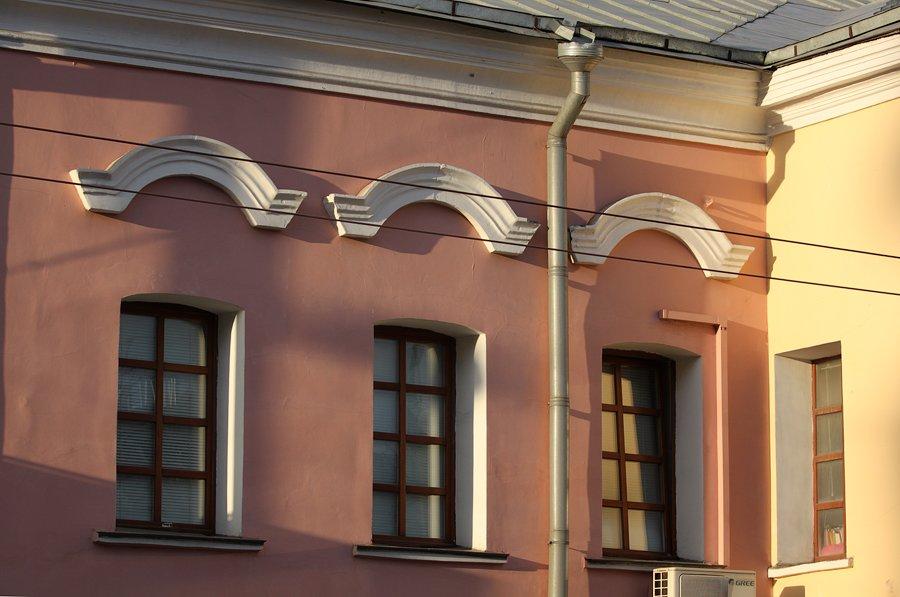
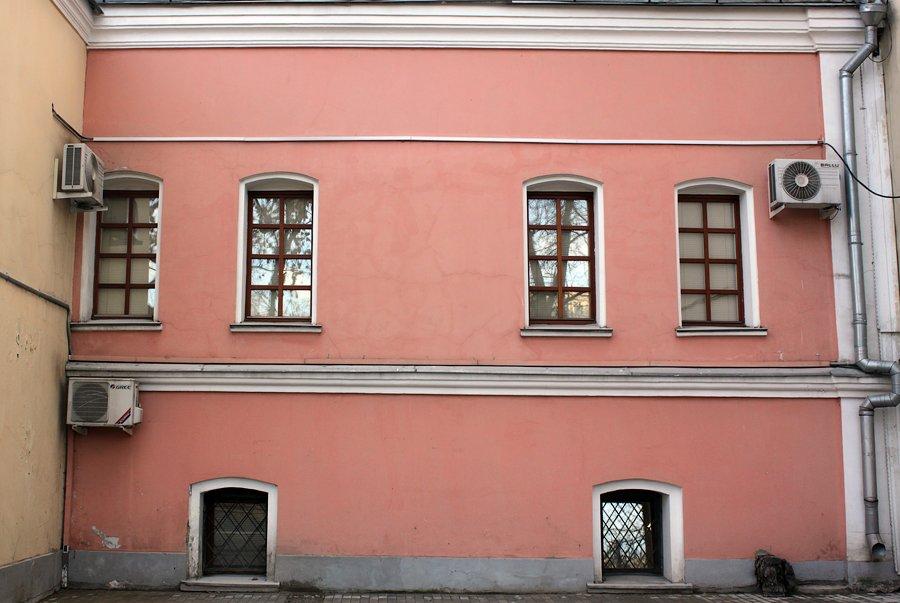
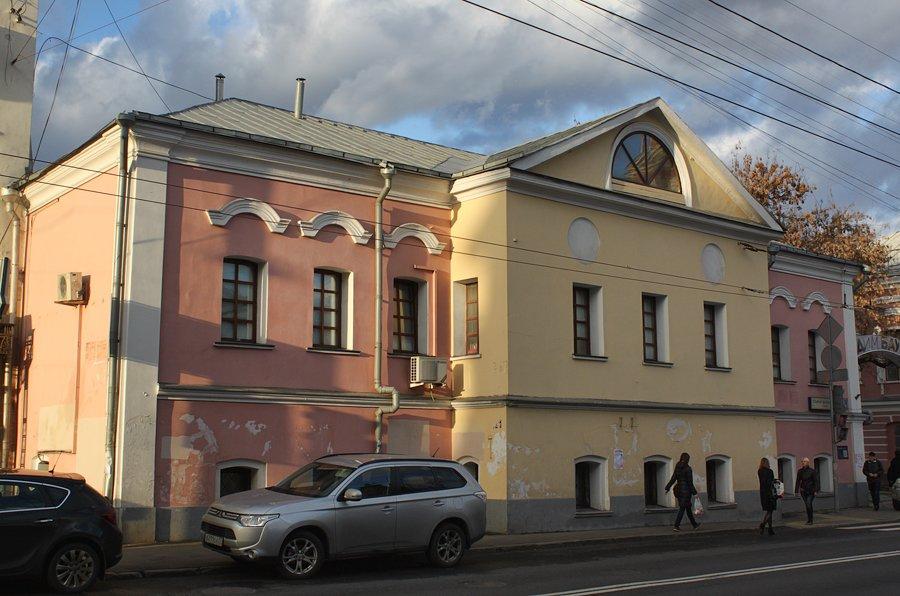
Крайне интересен соседний с ним особняк, выступающей далеко за «красную линию» улицы. Порой этот дом называют путевым дворцом Великого князя Московского Василия III и, в частности, такой точки зрения придерживается автор реставрационного проекта голицынской усадьбы Александр Фёдоров. Но никаких документальных подтверждений тому до сих пор не обнаружено. А поэтому считать эти старинные палаты великокняжеским дворцом явно преждевременно. Тем не менее это, возможно, самое древнее гражданское строение за границами Земляного города. Внутри была обнаружена белокаменная кладка XVI века, на первом и втором этажах полностью сохранились своды. До так называемой реставрации, а на самом деле обычного ремонта начала 2000-х годов фасад дома украшали поздние эклектичные наличники, заменённые гипсовыми «загогулинами». Ещё пару лет назад дом был раскрашен во все цвета радуги: красный, розовый, лимонный, жёлтый, белый. Буйство красок якобы подчёркивало разновремённость частей здания. Сейчас цветовая палитра фасадов стала несколько скупее. Внутри «евроремонт». Доступа в здание, к сожалению, нет.


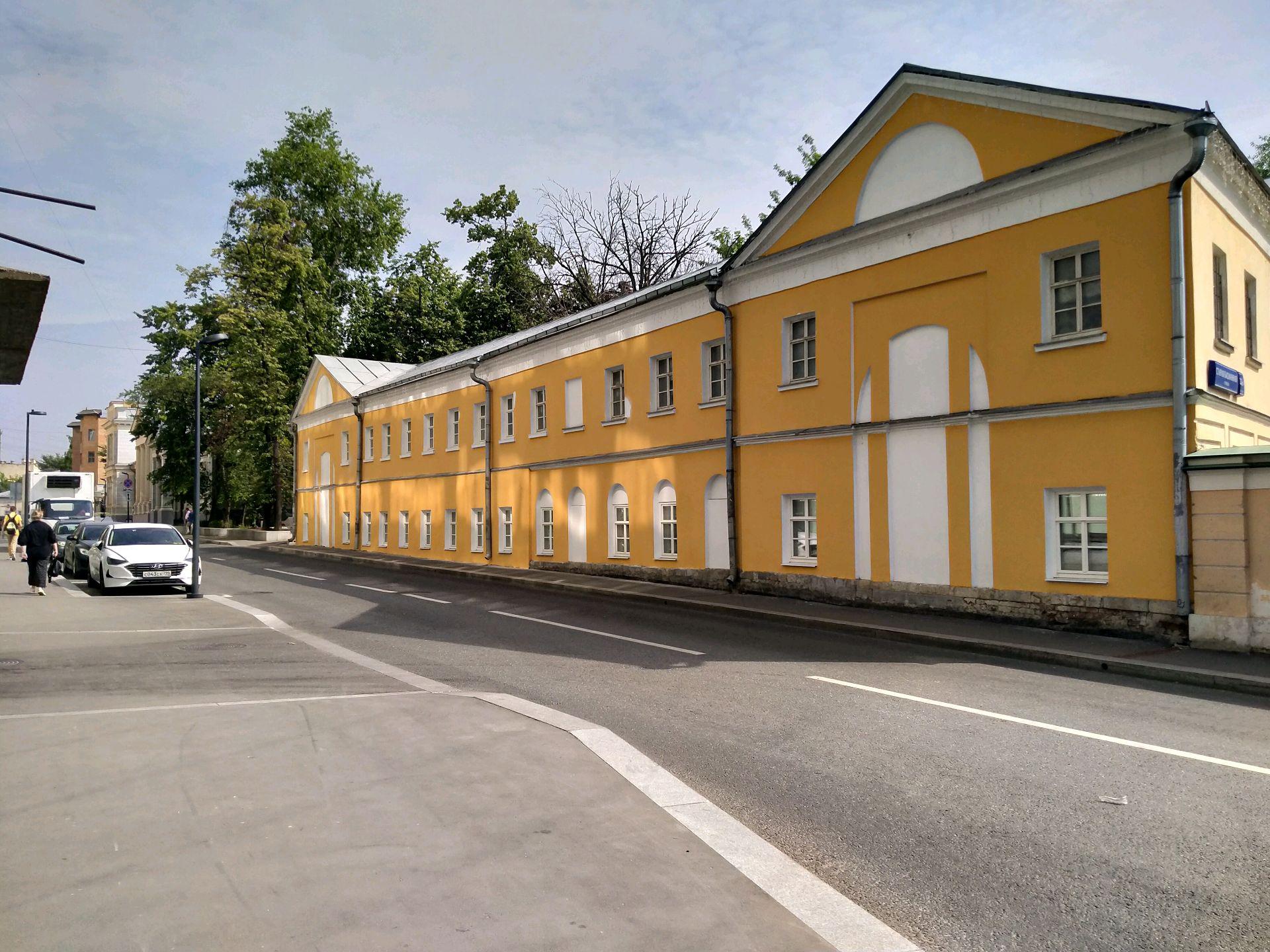
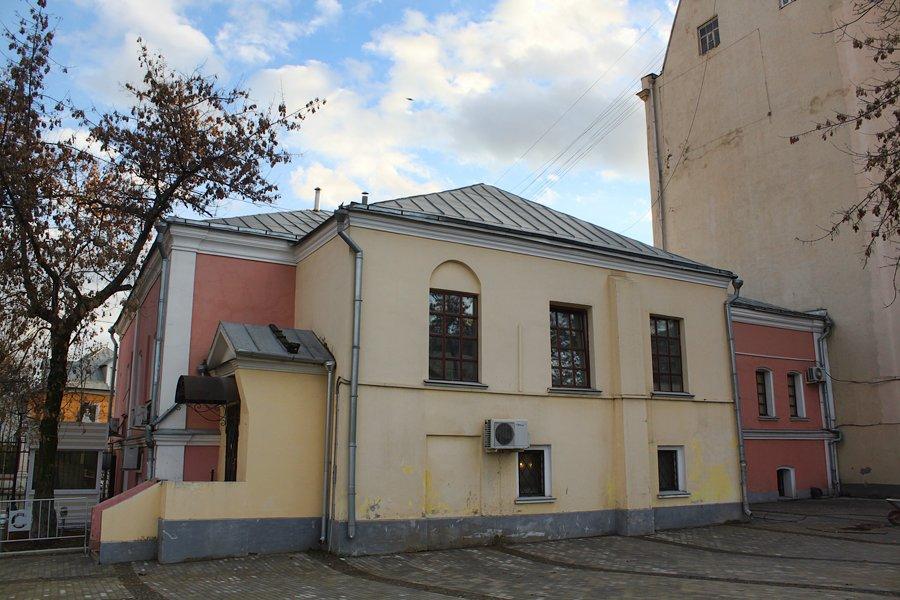
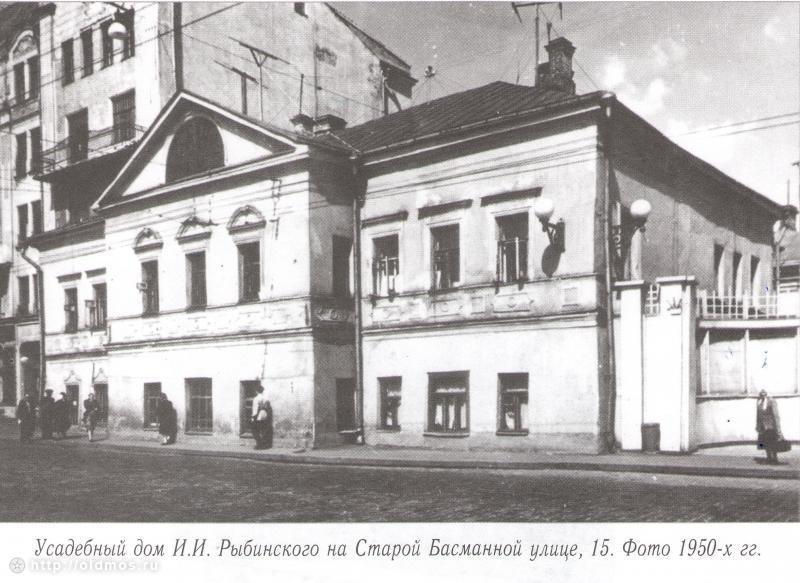
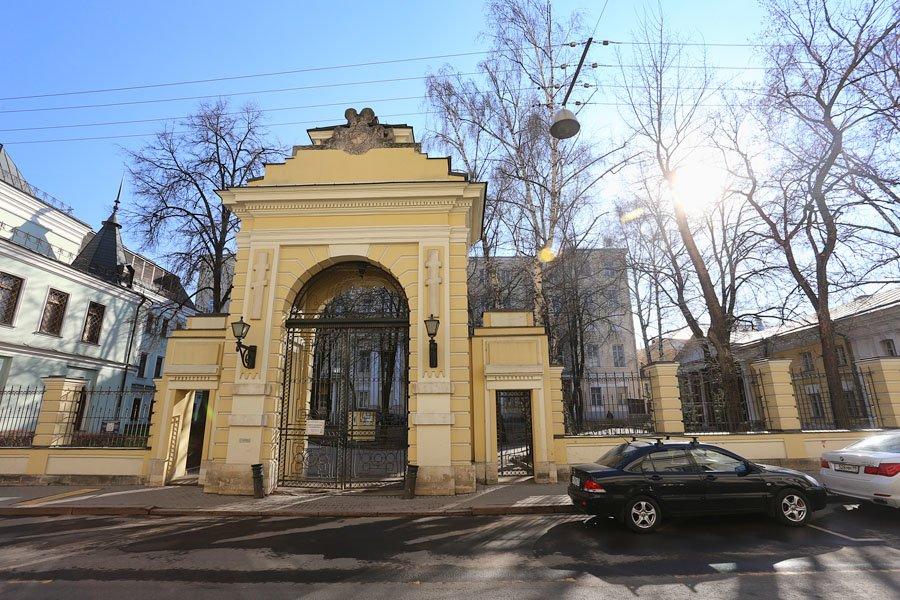
В середине XVIII века эти палаты принадлежали купцу И. И. Рыбинскому, а в конце столетия перешли к князю М. П. Голицыну, который объединил их с соседним владением княгини Е. О. Долгоруковой. Соседний дом тёмно-красного цвета, поставленный по линии улицы, изначально построен в середине XVIII века. В 1780 году старое здание надстраивается вторым этажом. Позже к нему со стороны двора был пристроен двухэтажный флигель с вогнутым фасадом. После Голицына усадьбой владел купец-старообрядец Н. Ф. Кочегаров, а потом купцы Рожновы, которые в 1909 году продали её Учётно-ссудному банку Персии. Между двумя строениями вход в сад имени Н. Баумана.


В старину сад принадлежал Голицыным и был ими открыт для свободного посещения публики. В 1920 году площадь сада увеличилась за счёт соседних усадебных садов, главным образом, золотопромышленника Н. Д. Стахеева. Тогда же он и получил имя Баумана.


В советское время это было излюбленное место среди любителей шахмат. Здесь, равно как и в саду «Эрмитаж» на Каретном Ряду, находился один из лучших в Москве клубов, где можно было играть блицы. Сейчас блицев уже не играют, но зато действует летняя эстрада - одна из немногих сохранившихся в Москве. И даже читальня.


Недавно сад привели в порядок, отреставрированы постройки, дорожки выложили плиткой. Любимое место прогулок мам с колясками и старушек из соседних домов.
On the odd side of Old Basmannaya street there is a number of houses under No. 15. The closest to the Garden Ring is building No. 2 - an apartment house in the modern style of the Persian subject Aji-Mamed Usain Aga Aminezarba, built according to the project of architect V.V. Shaub in 1902 in style of Dutch houses with details in the Art Nouveau style. In the following years the building lost some of the architectural design of the facades. Extremely interesting is the neighboring mansion, which extends far beyond the "red line" of the street. Sometimes this house is called the traveling palace of the Grand Duke of Moscow Vasily III, and in particular, this view is held by the author of the restoration project of the Golitsyn estate, Alexander Fyodorov. But no documentary evidence to this has yet been found. And therefore, it is obviously premature to consider these ancient chambers as a Grand Prince's palace. Nevertheless, this is probably the most ancient civil building outside the Earthen city. Inside a white stone masonry of the XVI century was found, on the first and second floors the vaults were completely preserved . Before the so-called restoration, but in fact the usual repairs of the early 2000s, the facade of the house was decorated with late eclectic platbands, replaced with gypsum "squiggles." A couple of years ago, the house was painted in all colors of the rainbow: red, pink, lemon, yellow, white. The riot of colors allegedly emphasized the excessiveness of the parts of the building. Now the color palette of the facades has become somewhat less. Inside there is "renovation". There is no access to the building. In the middle of the XVIII century, it belonged to a merchant Chamber I.I. Rybinsky, and at the end of the century transferred to Prince M.P. Golitsyn, who combined it with the neighboring possession of Princess E.O. Dolgorukova. The neighboring house is dark red in color, delivered through the streets, originally built in the middle of the XVIII century. In 1780 the second floor was built. Later, a two-story wing with a concave facade was attached to it from the side of the courtyard. After Golitsyn, the estate was owned by the merchant-old-believer N.F. Kochegarov, and then by the merchants Rozhnovs, who in 1909 sold it to the Accounting and Loan bank of Persia. The entrance to the garden named after N. Bauman is between the two buildings In the old days the garden belonged to Golitsyn and was open to them for free visits to the public. In 1920, the garden area increased due to the neighboring estate gardens, mainly gold miner N.D. Stakheyev. Then it received the name of Bauman. In Soviet times, it was a popular place among chess fans. Here, as well as in the "Hermitage" garden on Karetny Ryad, was one of the best clubs in Moscow, where they could play blitz. Blitz is now no longer played, but summer stage operates - one of the few remaining in Moscow. And even reading room is here. Recently, the garden was put in order, the buildings were restored, the paths were laid out with tiles. It is a favorite place for walks moms with strollers and old women from neighboring houses.
Автор статьи: Алексей Дедушкин
Отзывы
(1)