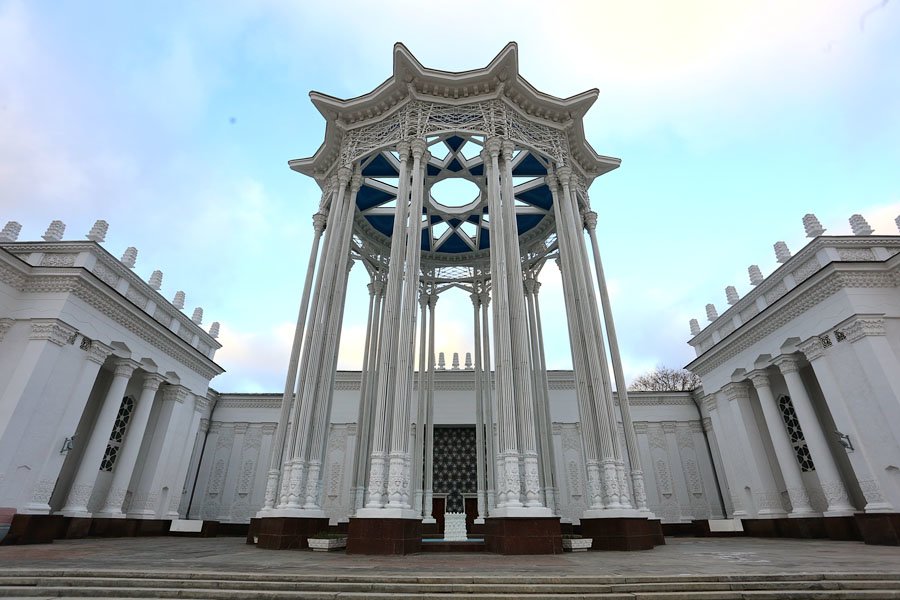
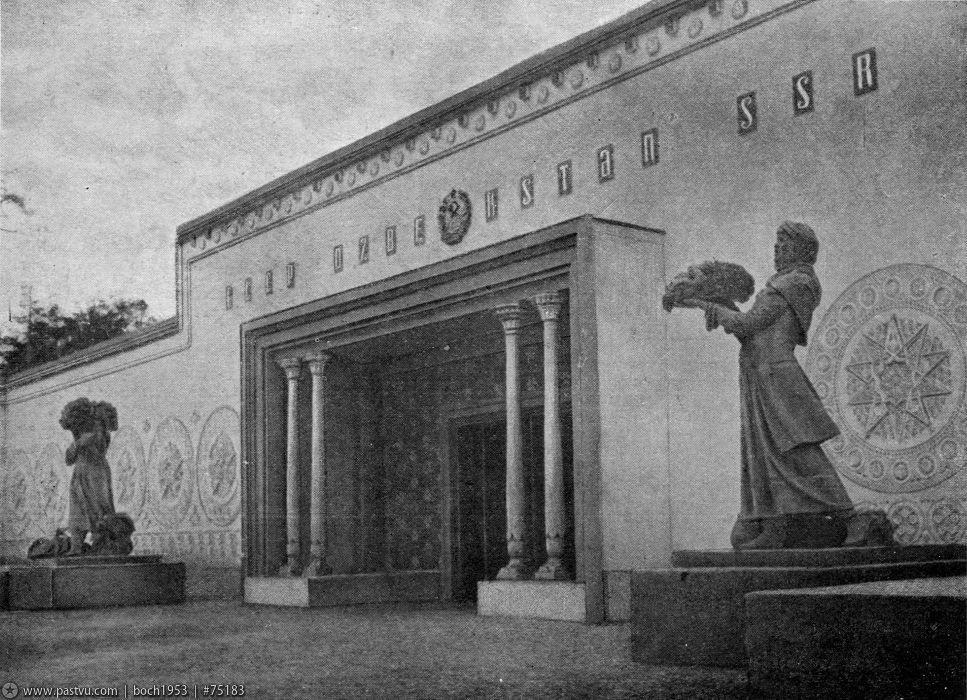
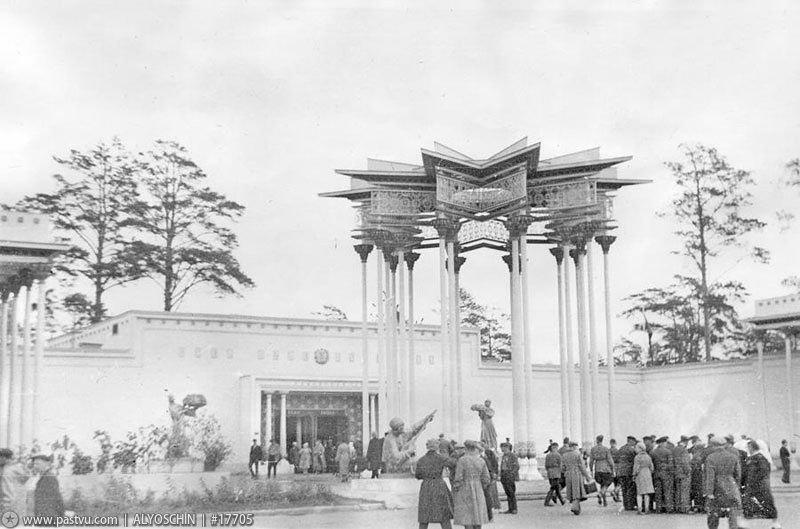
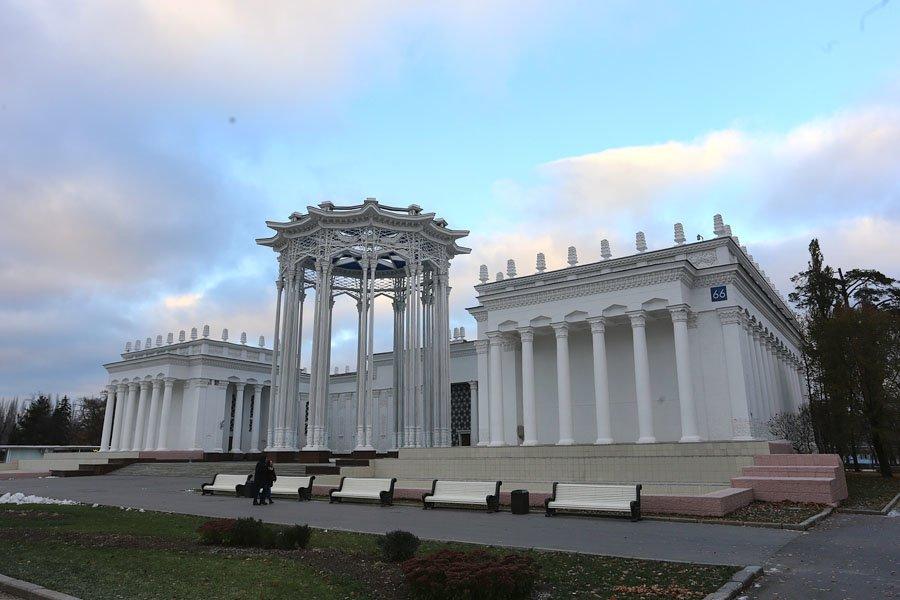
Построен в 1939 г. как павильон «Узбекская ССР» по проекту архитектора С.Н. Полупанова. В том, первоначальном варианте, в центре была легкая беседка-солнце с фонтаном, а сам павильон выделялся простотой форм.
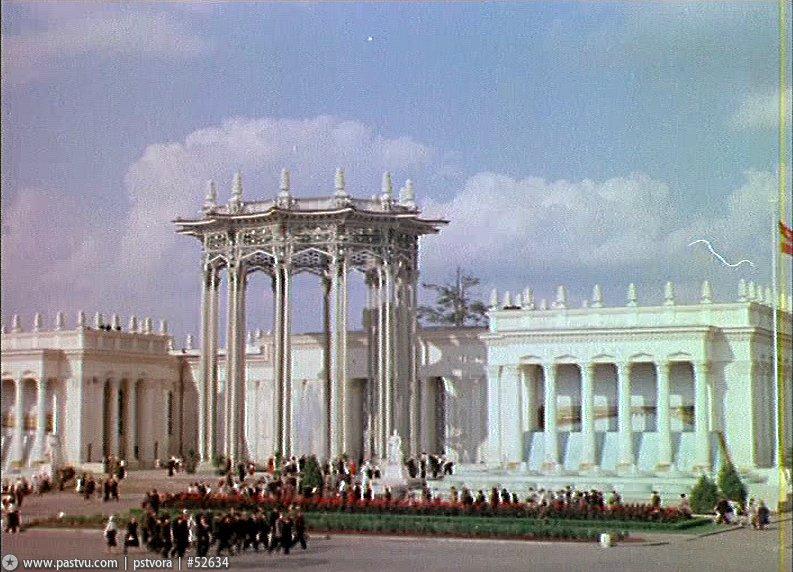
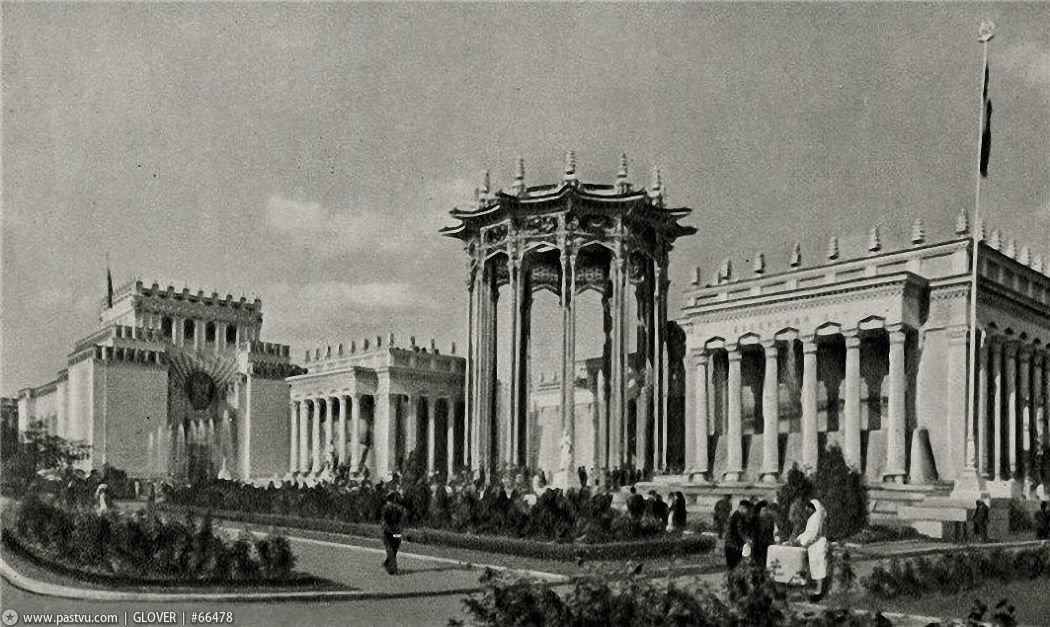
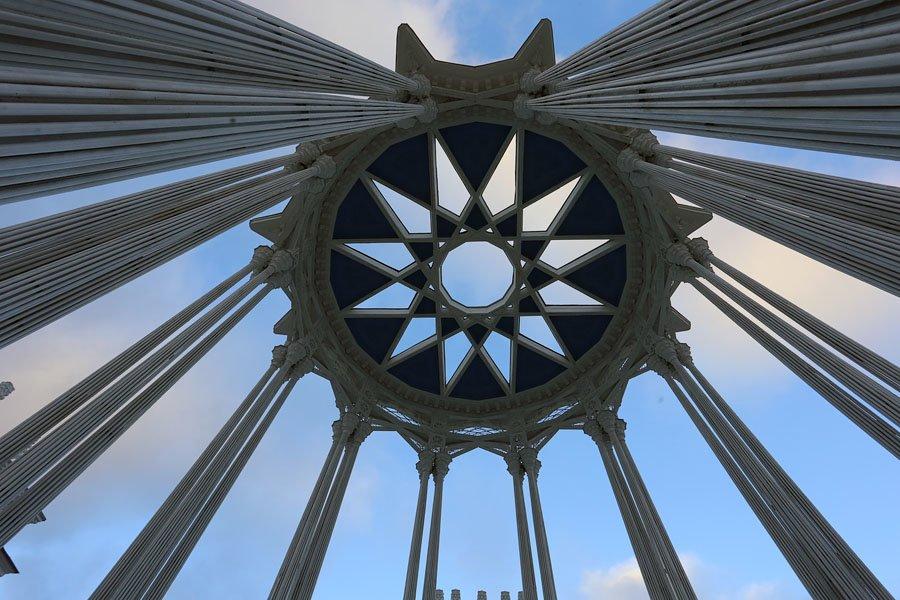
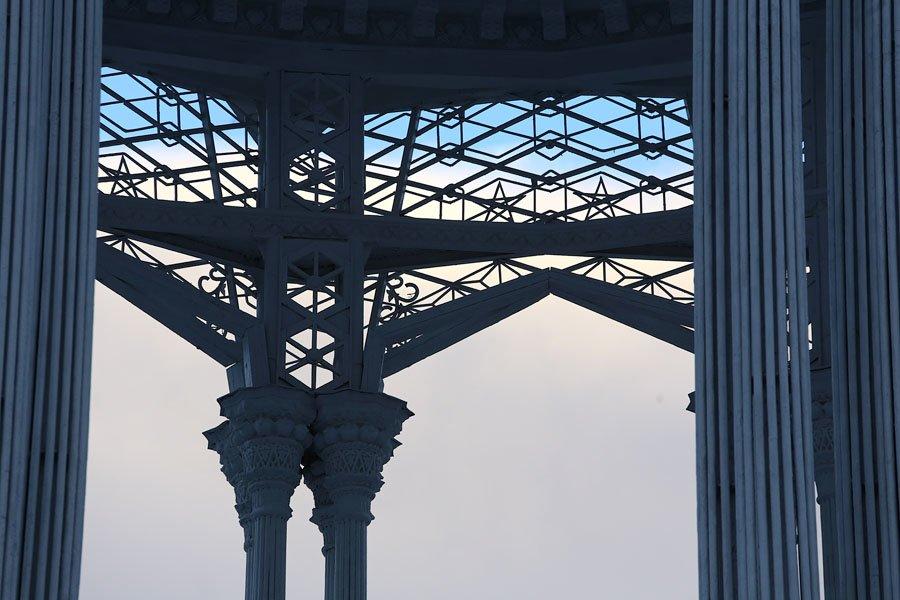
В 1954 г. павильон реконструировали и над недействующим уже фонтаном была возведена новая ажурная беседка. Идея «вечного солнца» и «оздоровляющей воды», характерная для многих построек позднего сталинского периода, появилась и здесь. Архитектор С.Н. Полупанов сумел сохранить облик своего первого сооружения и создал редкое по красоте и изяществу здание.
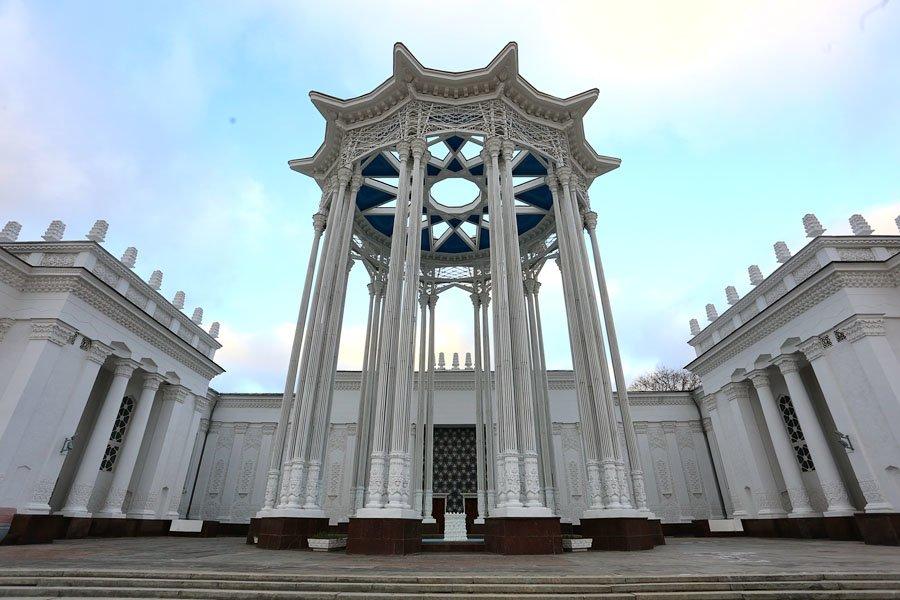
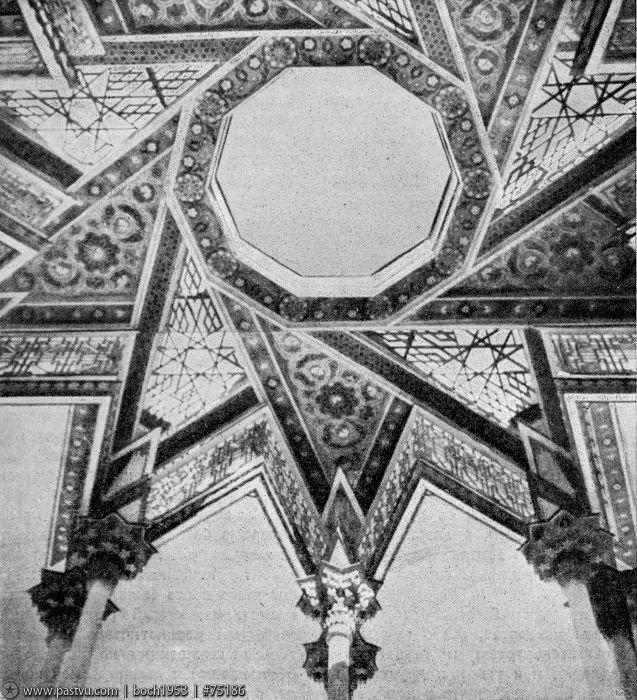
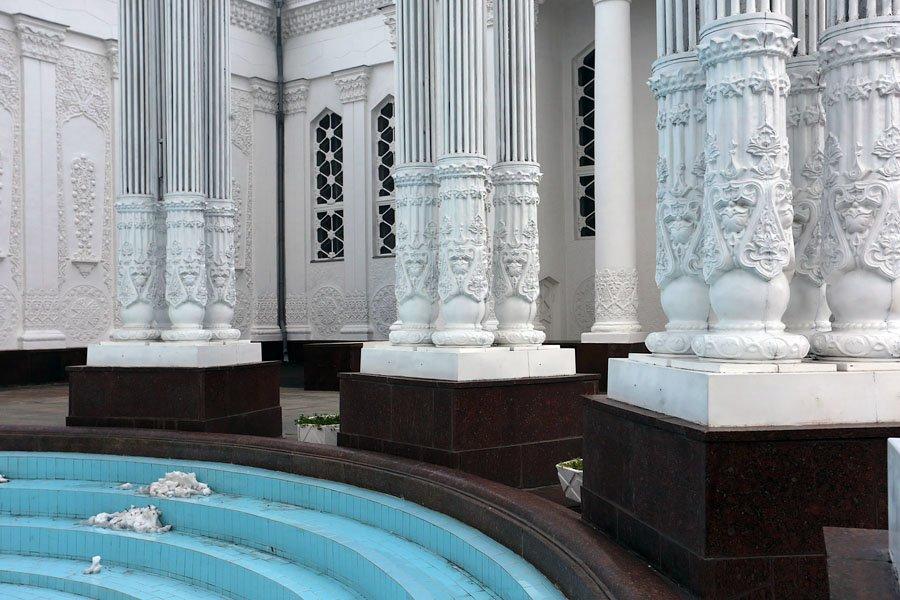
В оформлении павильона обильно использованы национальные мотивы Узбекистана. Классические крылья, обнесенные колоннами, адресуют нас к древнему храму, но при этом богато украшенному азиатскими мотивами. Затейливый узор деревянных дверей, майоликовое оформление входа, витражи, растительный орнамент с изображением кустов и коробочек хлопка, украшающий карнизы, капители колонн и кровлю ротонды, созданные мастерами Узбекистана, несут знаки и энергетику старинной культуры этой республики.
После перехода выставки на отраслевой принцип экспозиции здесь разместился павильон «Культура».
Together with the ideas of "eternal sunshine" and "health-enhancing water" national motives of Uzbekistan abundantly used in the architecture of the pavilion.
The pavilion built in 1939 as the "Uzbek SSR" pavilion by architect SN Polupanova. In fact, an easy-sun gazebo with a fountain was in the center in original version of the pavilion, and the pavilion stood out by its simple forms.
In 1954, the pavilion was reconstructed and new openwork gazebo erected above the already nonfunctioning fountain. The idea of "eternal sunshine" and "health-enhancing water", typical of many buildings of the late Stalinist period, appeared here. Architect SN Polupanov managed to preserve the appearance of its first buildings and designed a rare beauty and elegance building.
National motives of Uzbekistan abundantly used in the design of the pavilion. Classic wings, enclosed by columns, addresses us to the ancient temple, but ornate by Asian motifs. Intricate pattern of wooden doors, majolica decoration entrance, stained glass, floral ornament with a picture of the bushes and cotton bolls, decorating cornices, capitals of the columns and the roof of the rotunda, created by the masters of Uzbekistan, are signs and power of ancient culture of this country.
After the transition of the exhibition to industry principle of exposure "Culture" pavilion located here.