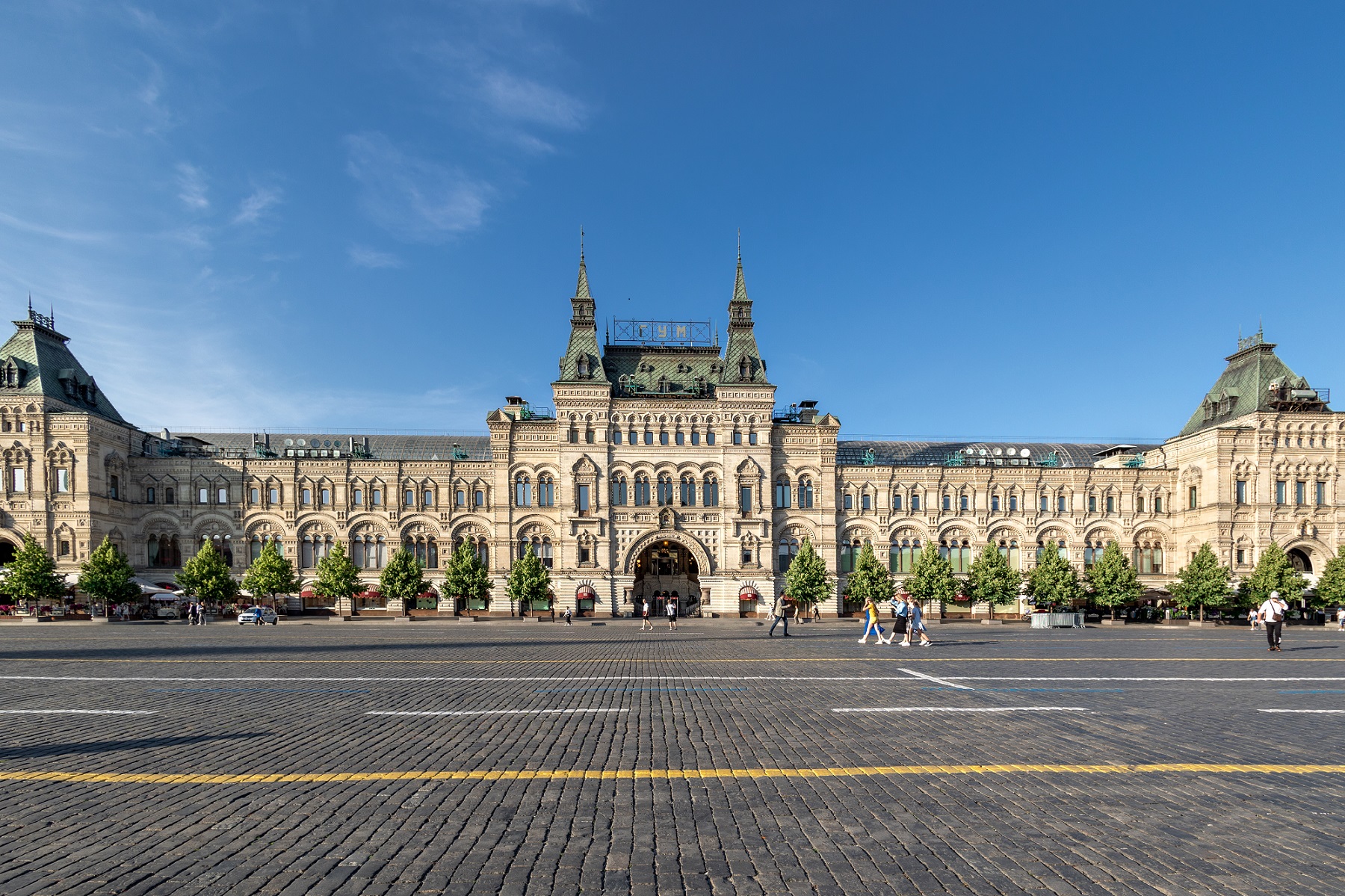
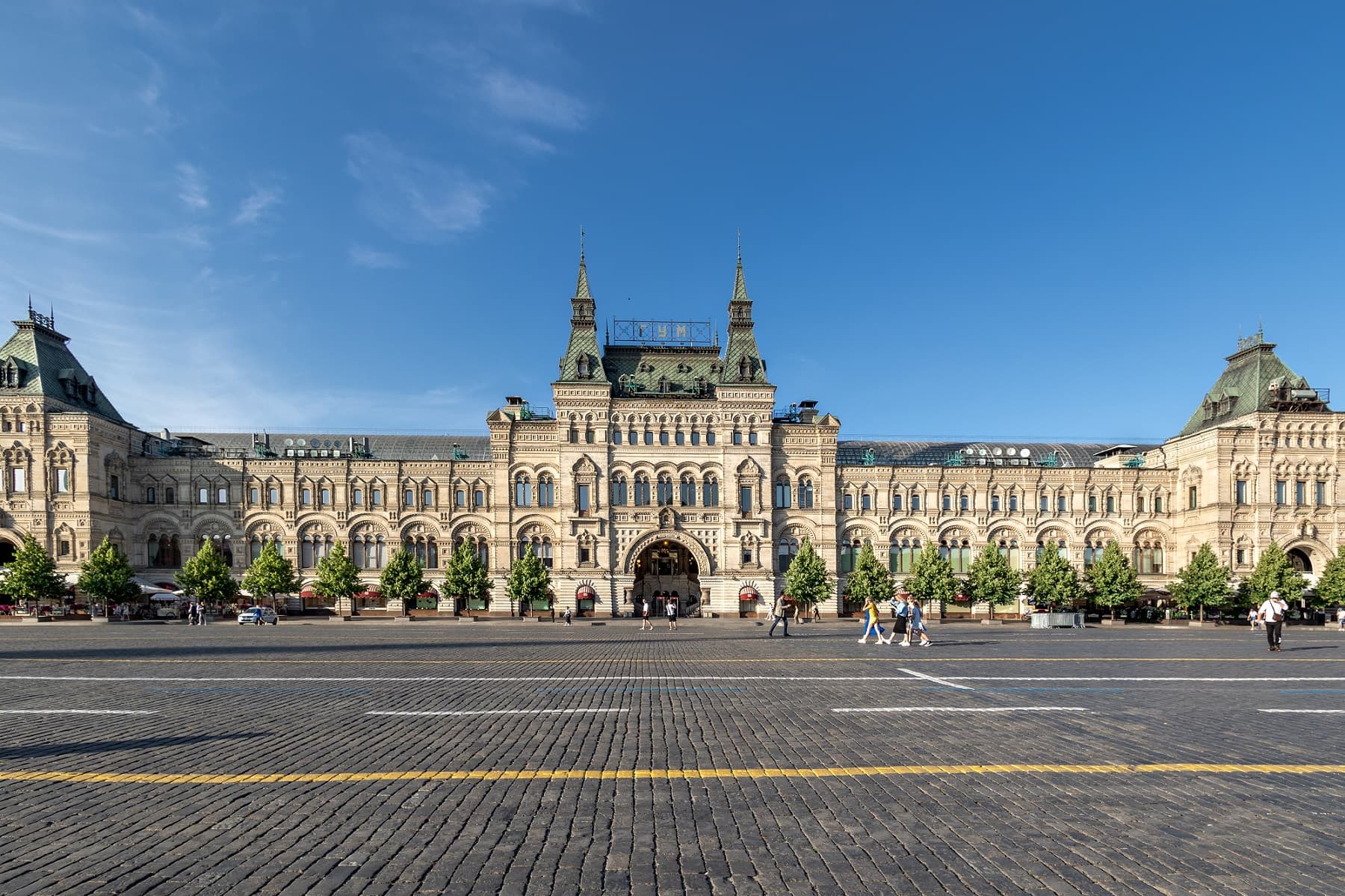
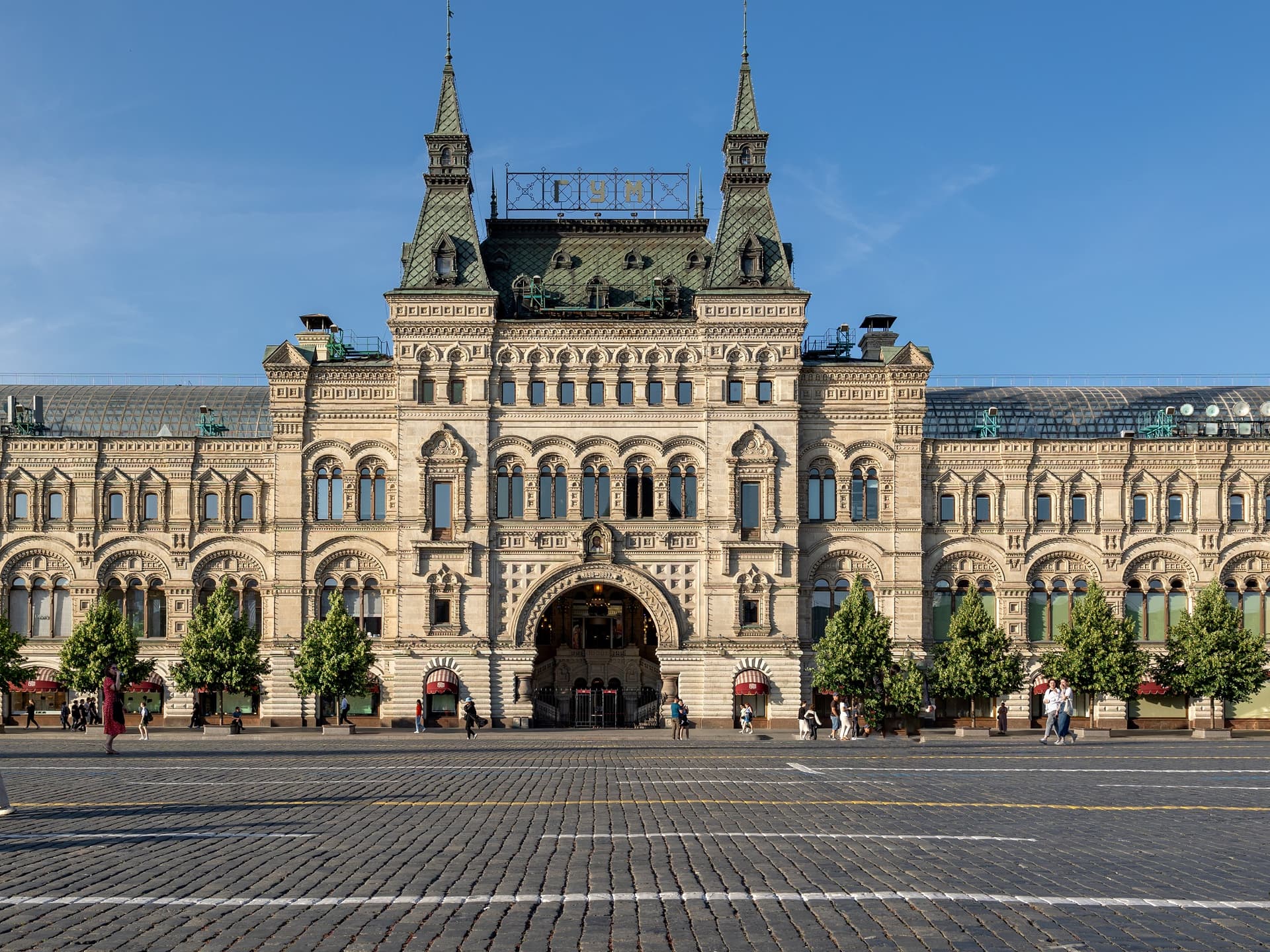
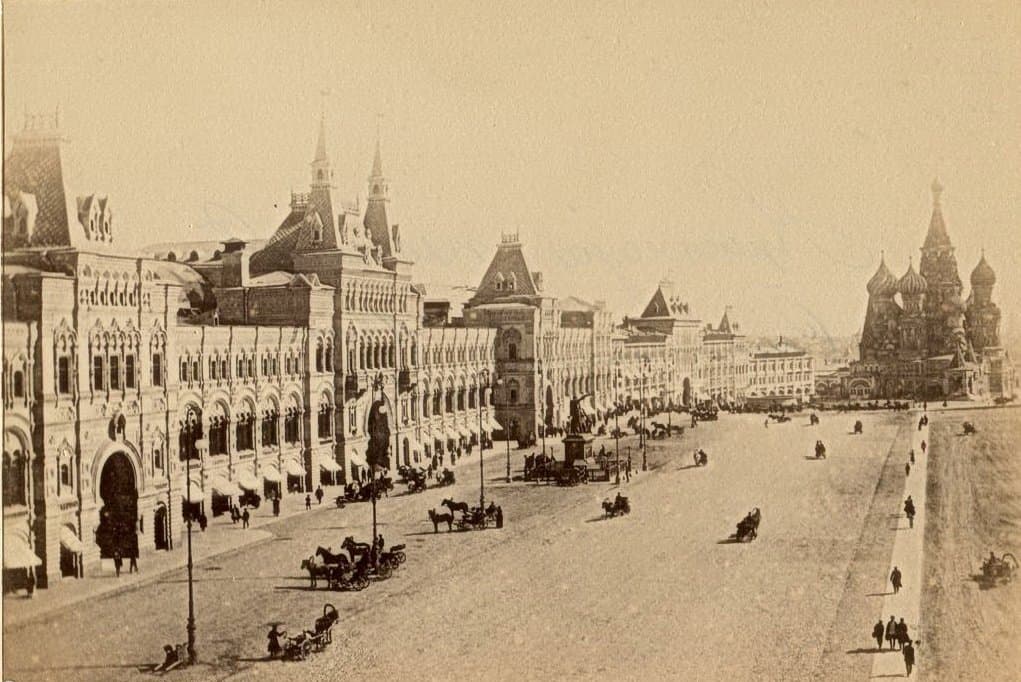
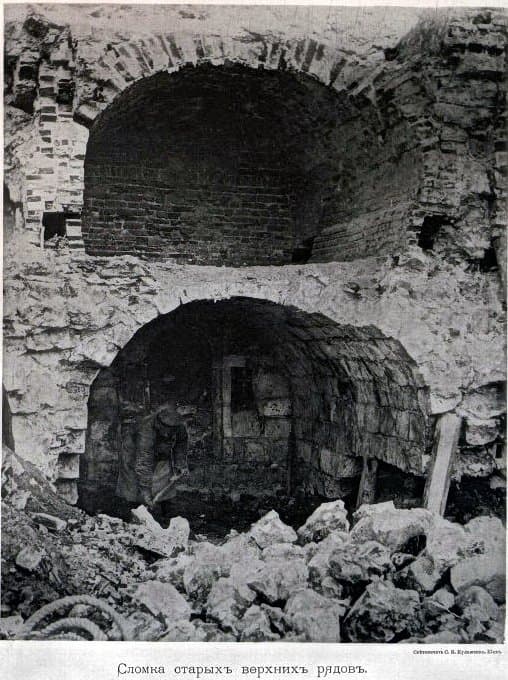
Торговля на территории современного ГУМа ведется с XV в. Историческое название комплекса — Верхние торговые ряды. Изначально Никольская, Ильинка и Варварка делили всю торговлю напротив Кремля на Верхние, Средние и Нижние ряды. Каждый блок внутри делился на ряды, по характеру товаров: Колокольный, Кафтанный и пр. В XV–XVI вв. торговля шла в деревянных лавках, при Борисе Годунове в 1596–1598 гг. появились и каменные постройки, но, несмотря на частые пожары, замена дерева камнем шла очень медленно. В 1780-х гг. передняя часть Верхних рядов со стороны Красной площади получила второй этаж и арочный фасад с десятиколонным портиком. Проект полной перестройки комплекса был разработан Джакомо Кваренги, но до конца так и не реализован.
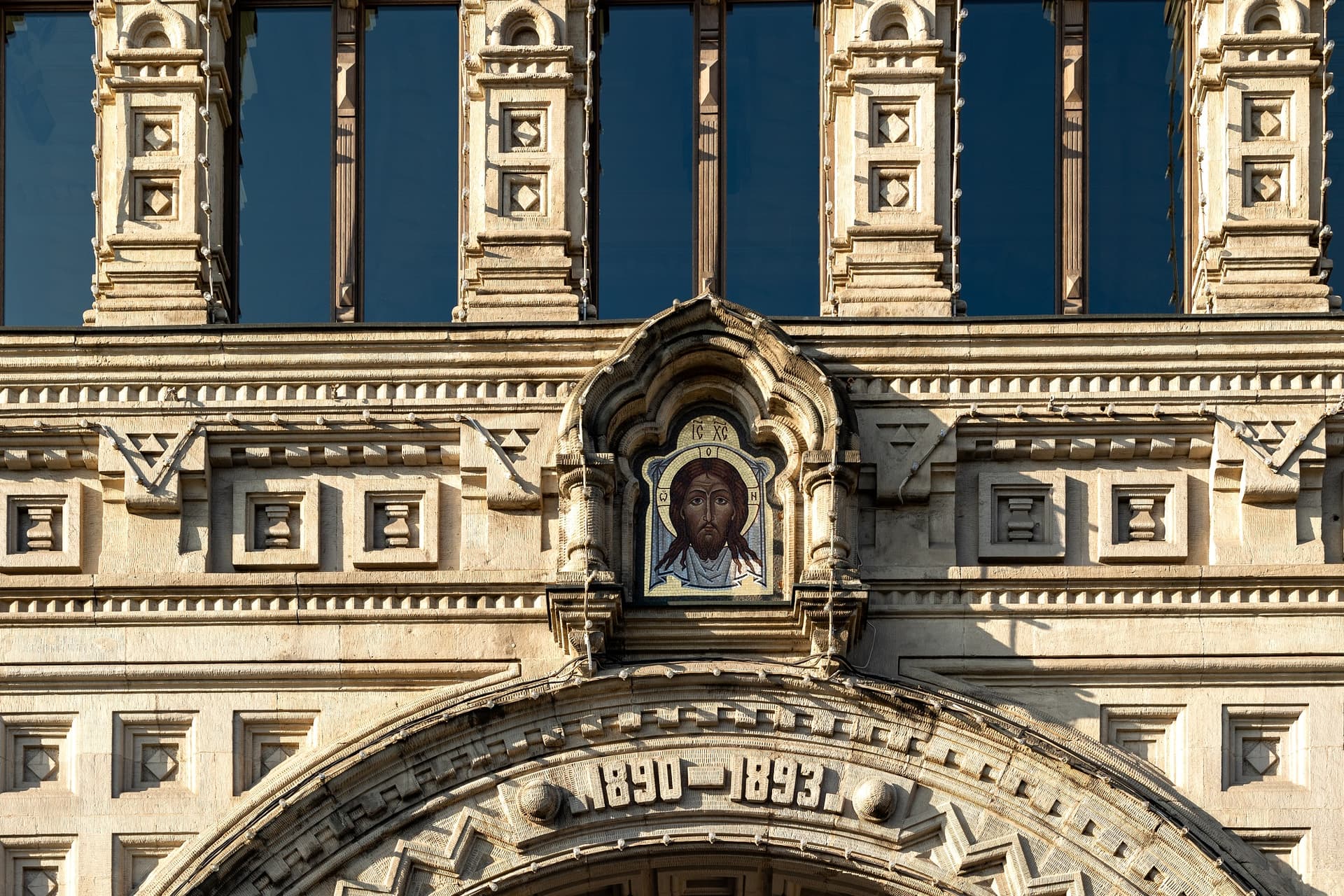
Пожаром 1812 г. ряды были полностью выжжены, но уже к 1815 г. по проекту О.И. Бове построен новый комплекс, вновь классицистический: с портиком и куполом. Боковые части в форме буквы «Г», выходившие на Никольскую и Варварку, получили народное прозвание «глаголи». Здание украсили барельефы в виде женских фигур, несущих лавровые венки, а на главном портике со стороны площади разместился герб Москвы. Всего было 32 каменных корпуса. Но и этот комплекс обветшал: переходы, заваленные товаром, превратились в узкие трущобы, помещения плохо освещались и — во избежание пожаров — не отапливались. В 1887 г. комплекс был закрыт, прямо на Красной площади были поставлены временные лавки из 14 железных корпусов. Специально созданное «Акционерное общество Верхних торговых рядов на Красной площади в Москве» провело конкурс, в котором победил проект А.Н. Померанцева. Работы велись в 1890–1893 гг. 2 декабря 1893 г. комплекс был торжественно открыт.
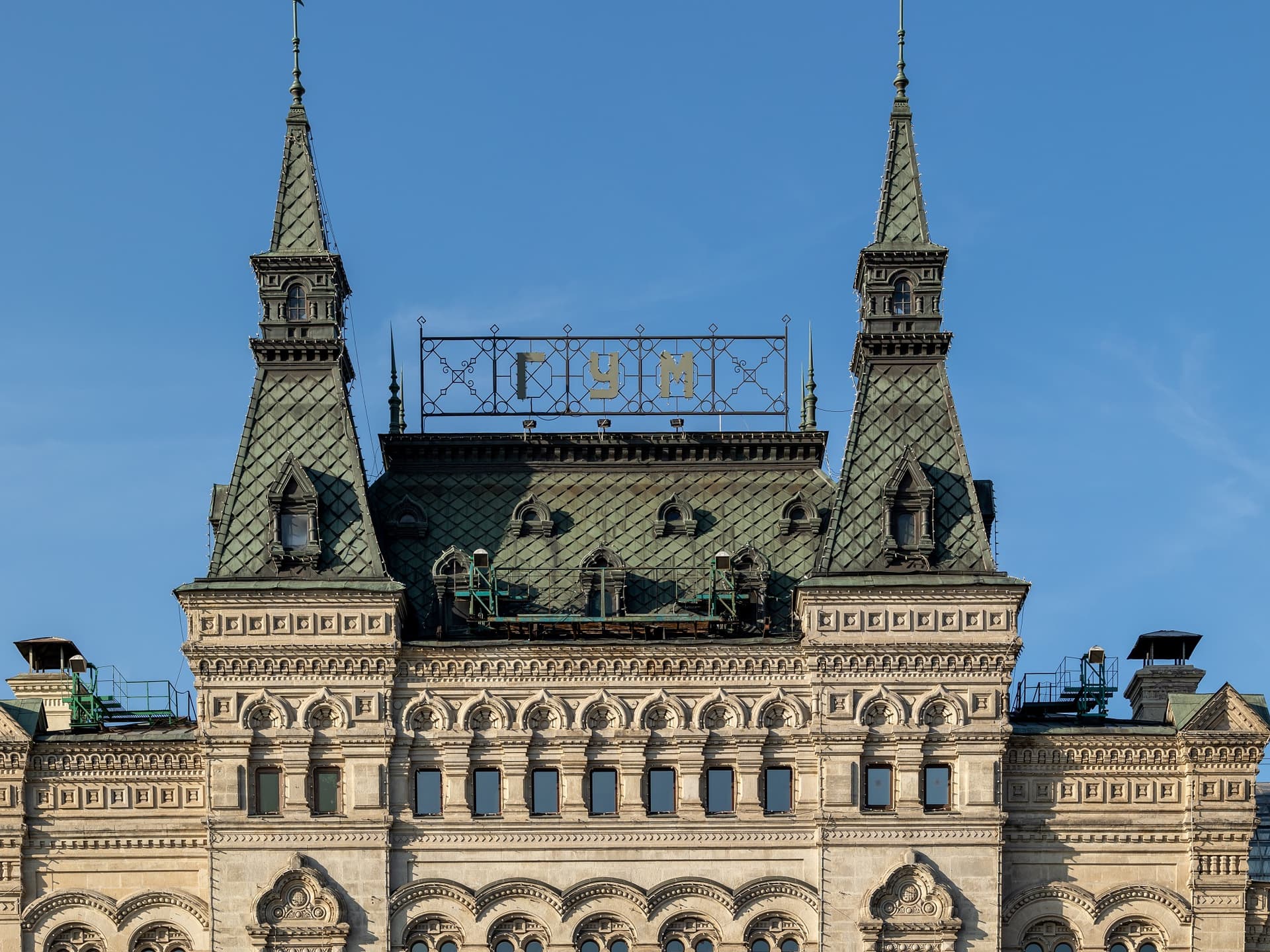
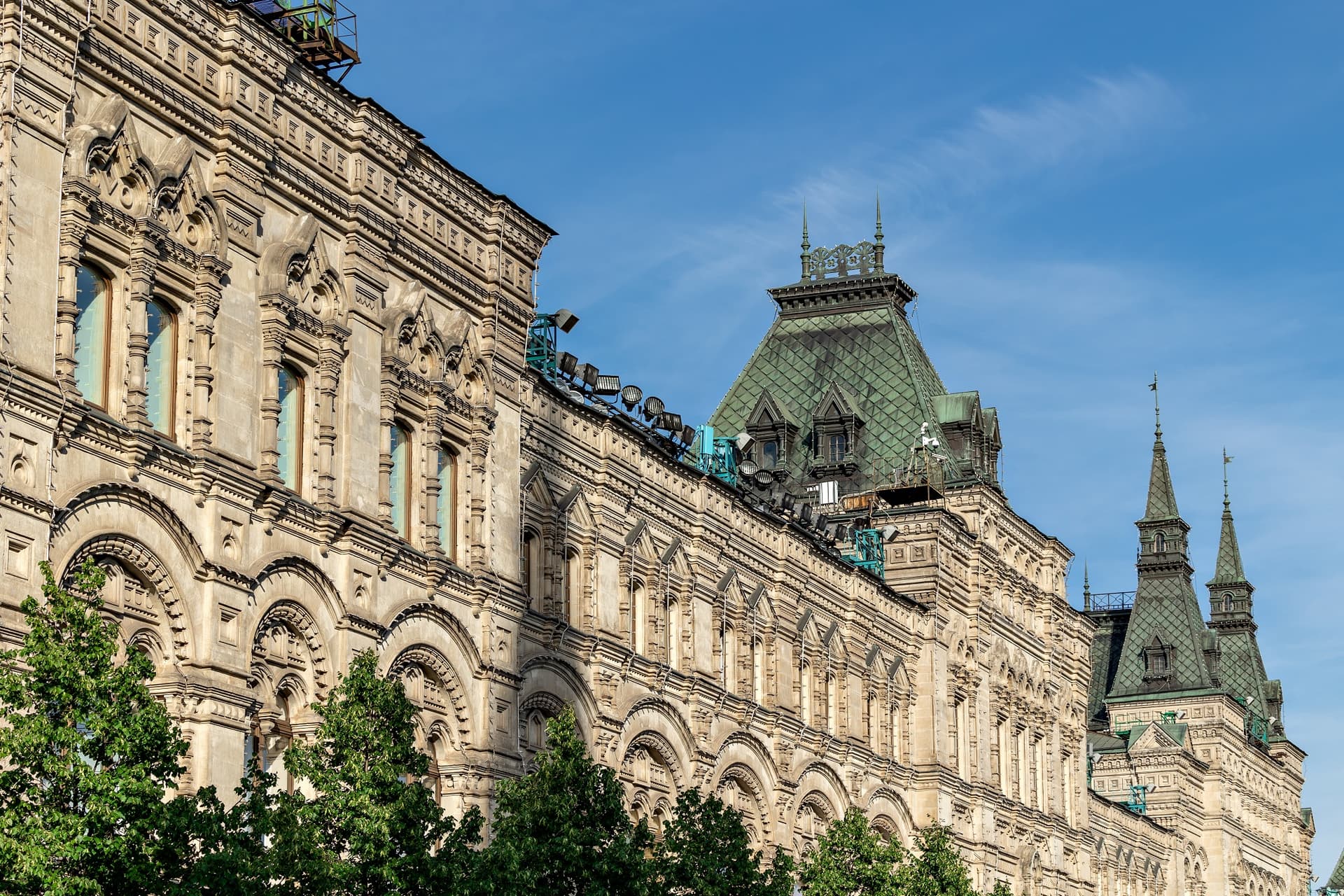
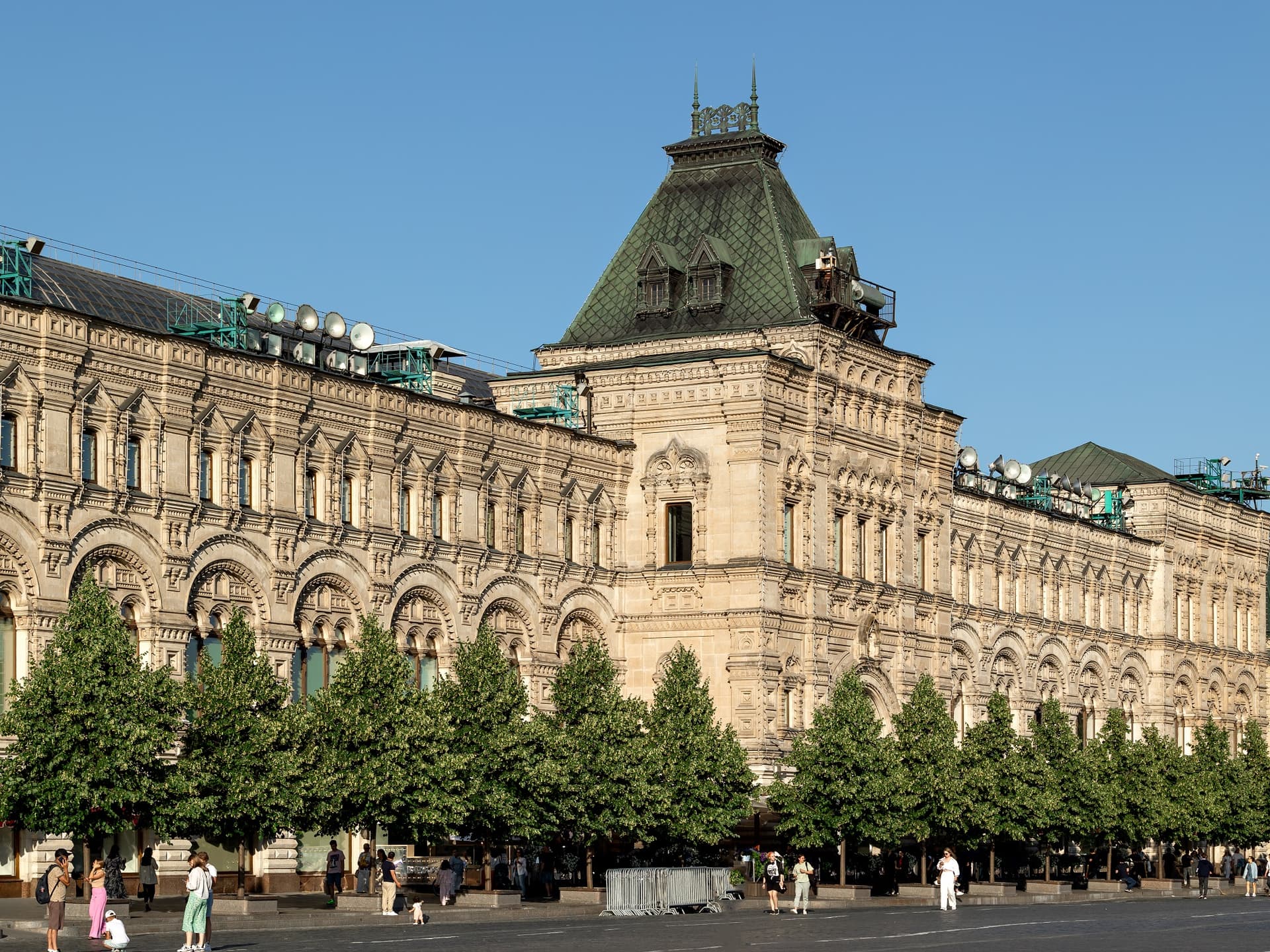
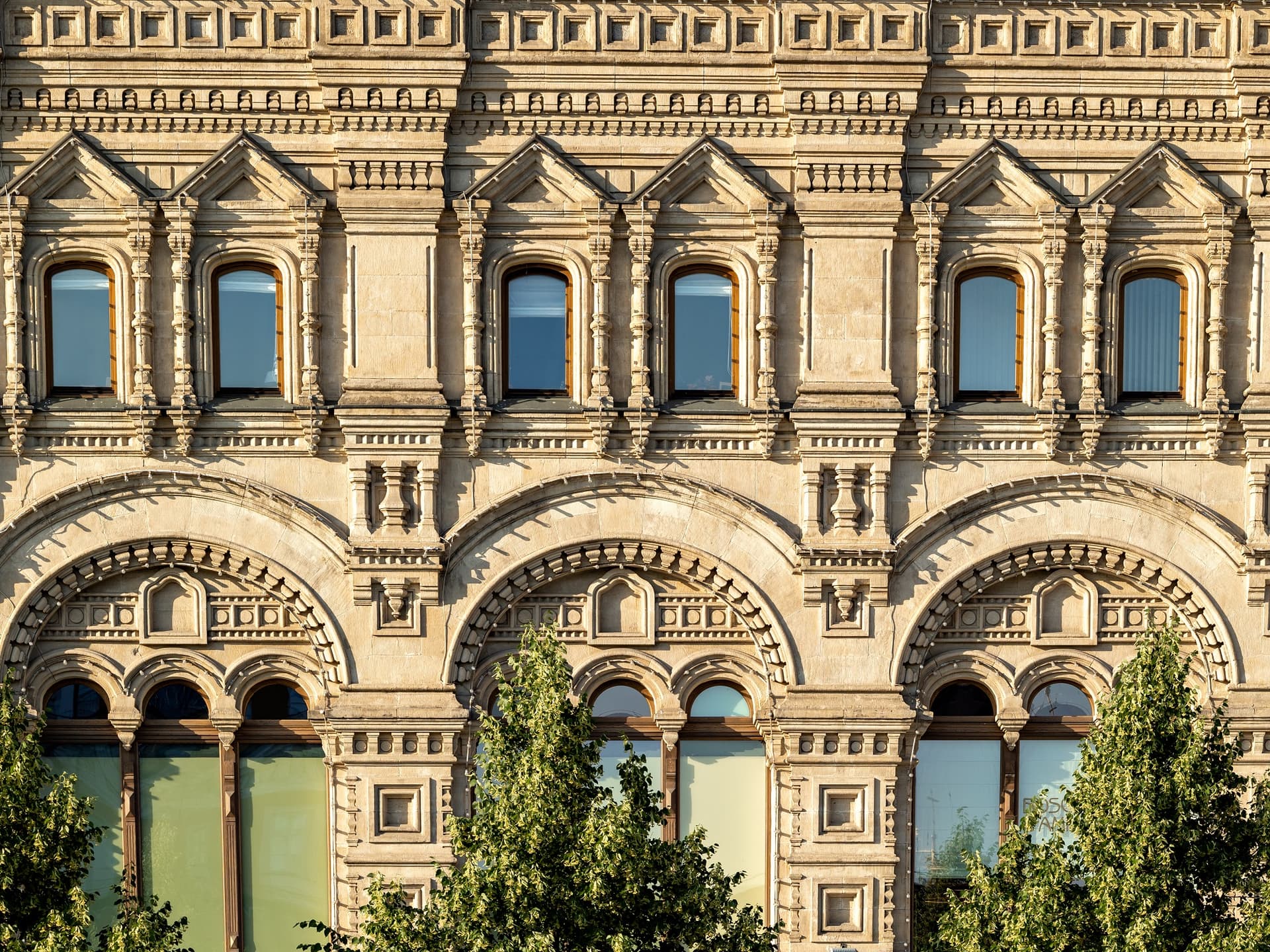
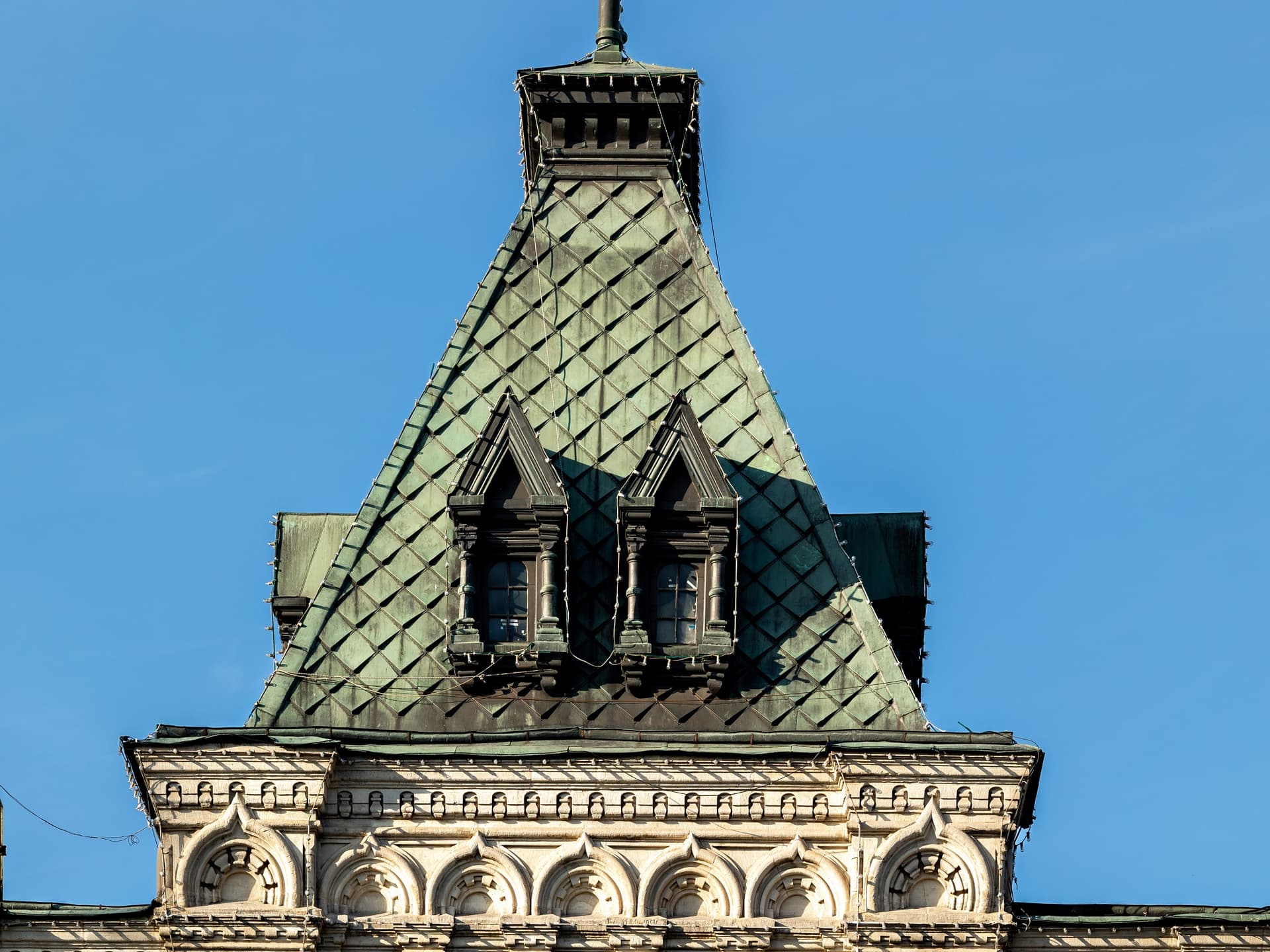
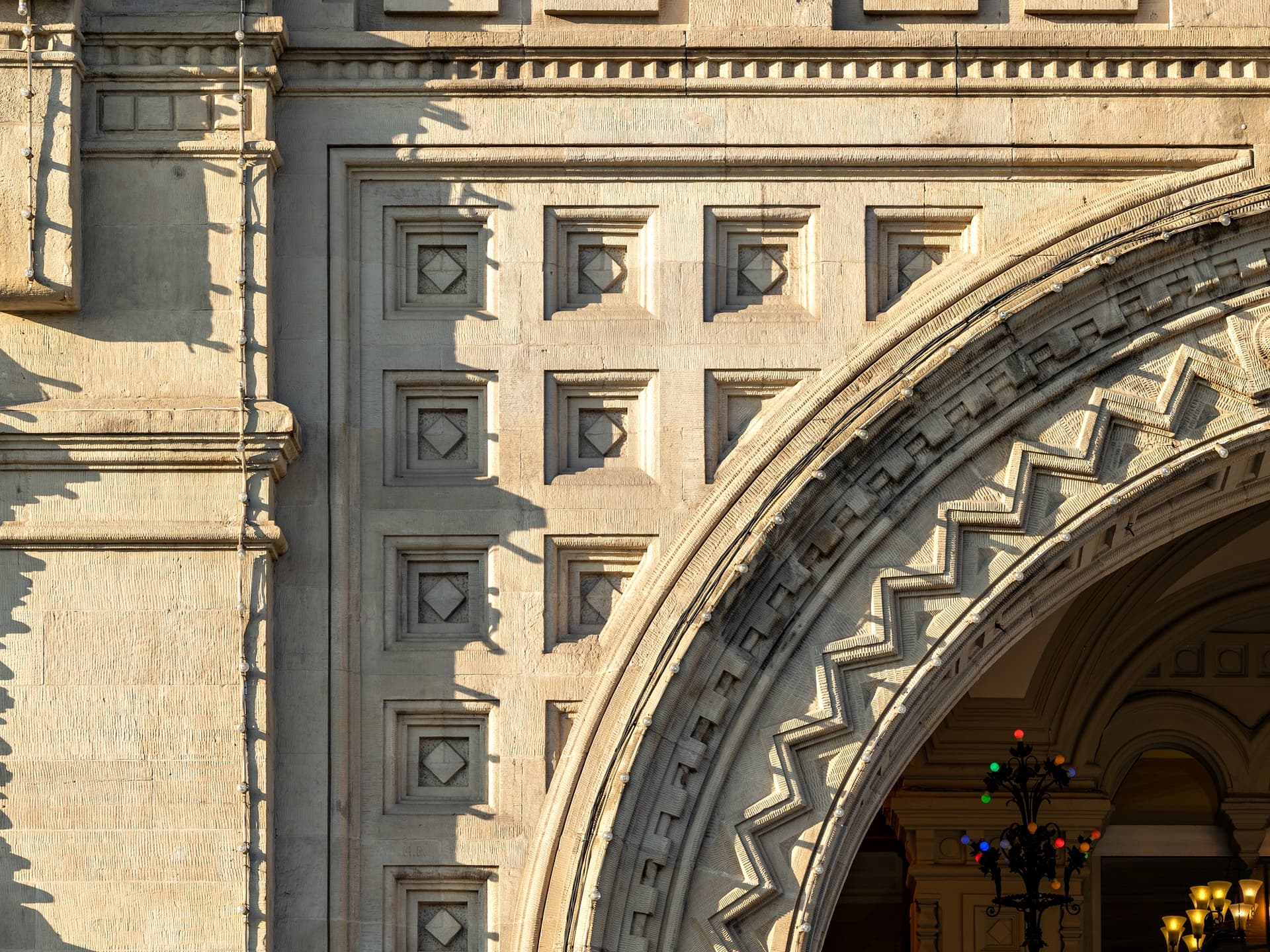
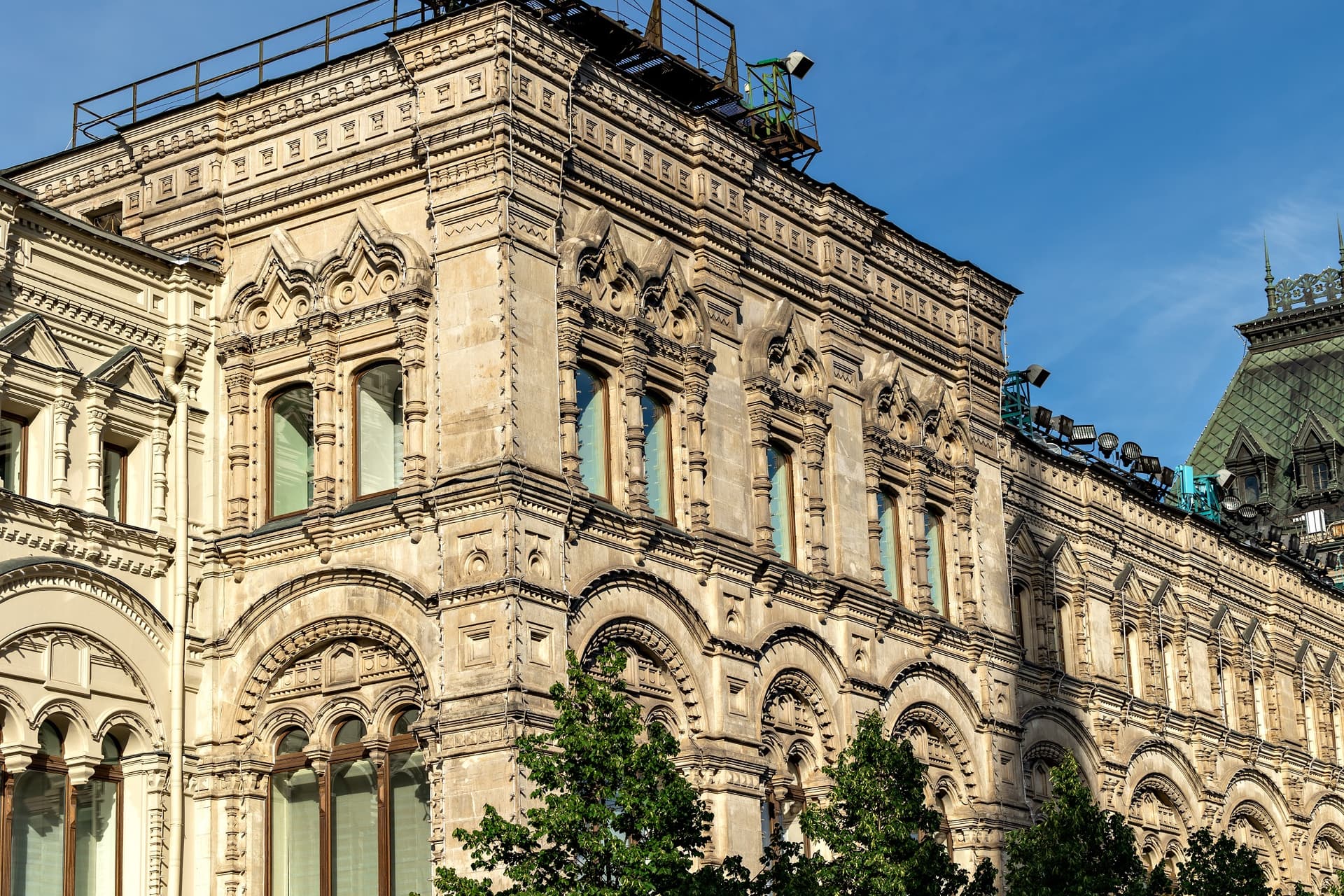
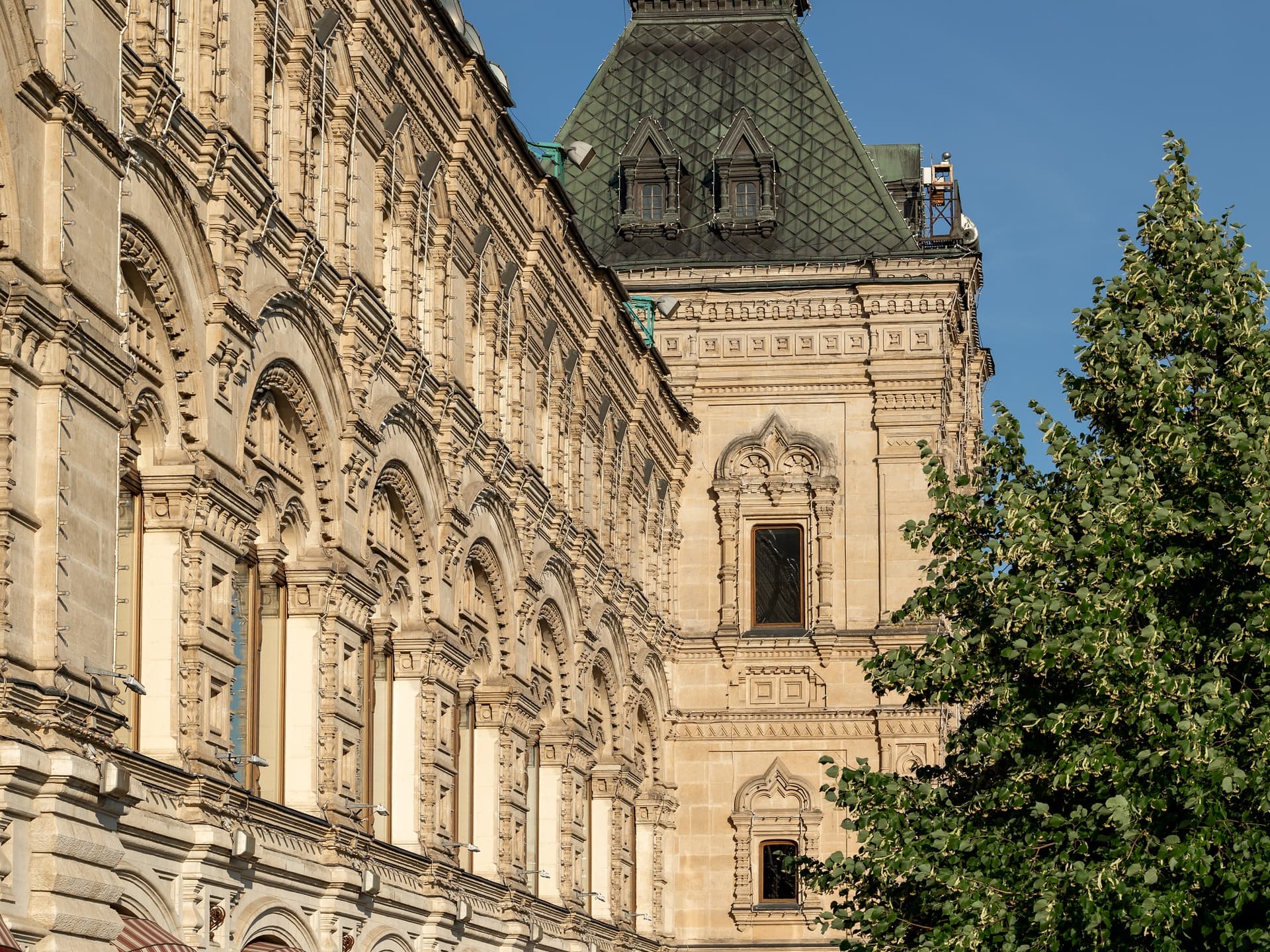
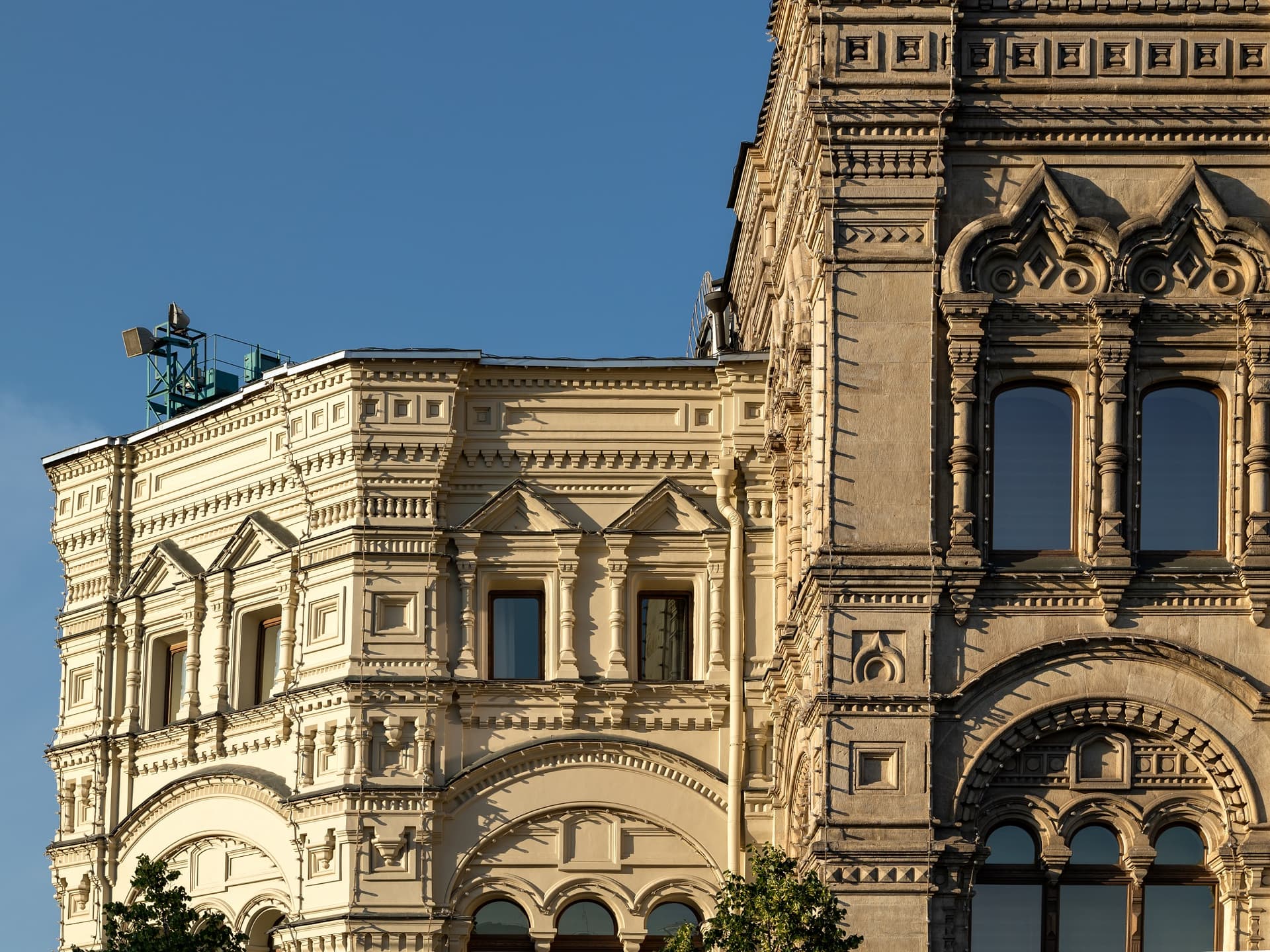
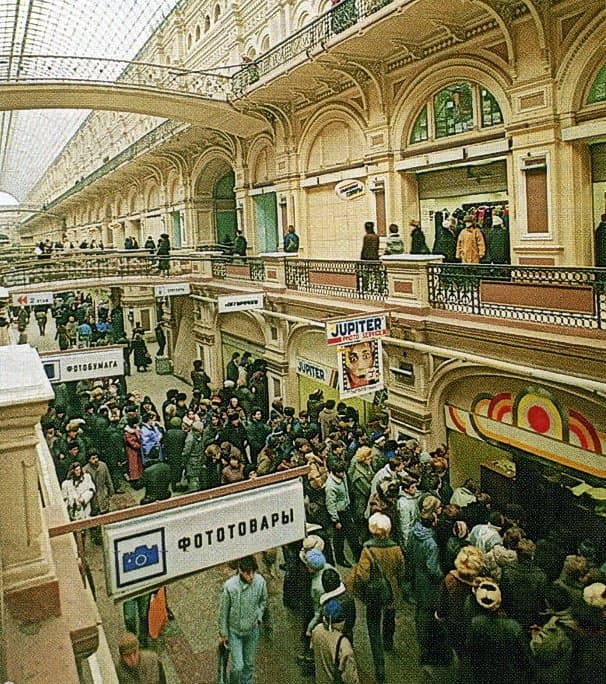
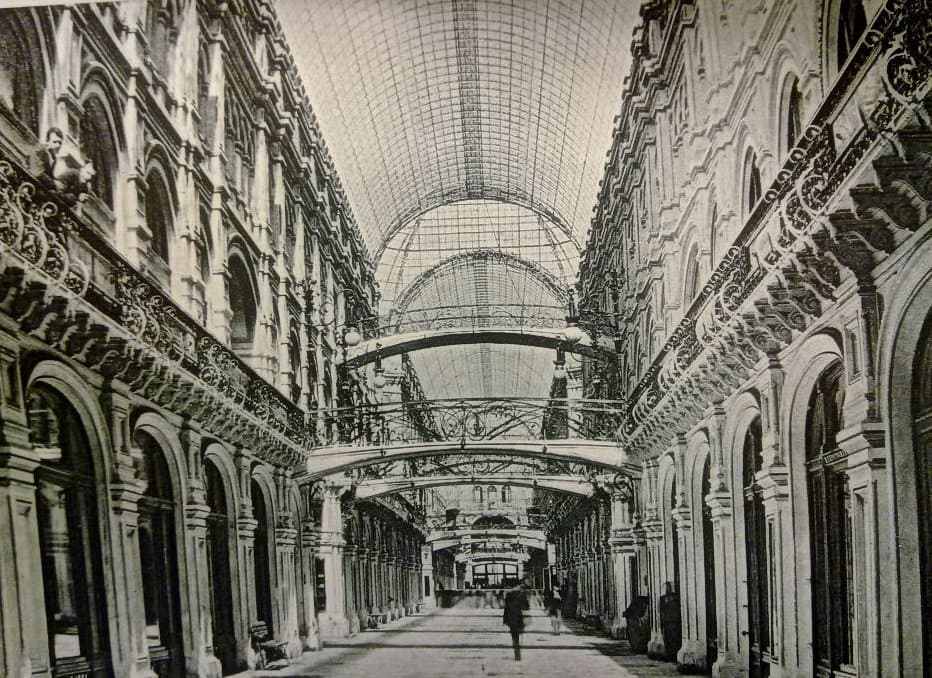
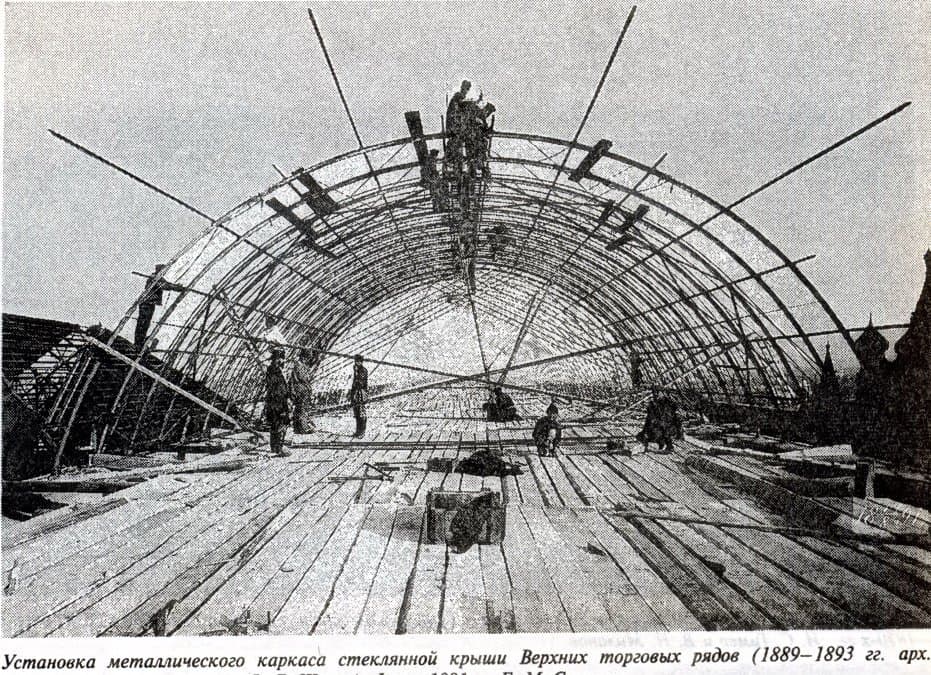
Хотя зодчий отошел от классицистического стиля в пользу псевдорусского, структура комплекса осталась прежней: линии, проходы и широкие окна витрин. Вытянутые «теремковые» крыши и шатры со шпилями над главным входом гармонируют с башнями Кремля. Благодаря инженерам В.Г. Шухову и А.Ф. Лолейту пассажи («ряды») получили крыши с остеклением. В здании была своя электростанция, освещавшая и ряды, и Красную площадь, водопровод и артезианская скважина. Всего здесь было 1200 магазинов и три зала собраний. В 1897 г. в одном из них был создан кинотеатр.
После революции тут расположились квартиры известных деятелей правительства (напр., наркома продовольствия Цюрупы) и ряд контор. В 1930-х гг. существовали проекты сноса здания и строительства многоэтажного здания Наркомата тяжелой промышленности, но затем от них отказались. Торговля вернулась в 1952–1953 гг.: ряды были отреставрированы и получили новое название — Государственный универсальный магазин (ГУМ). Ныне ГУМ не имеет государственного статуса, но устоявшееся название было сохранено. Он стал неотъемлемым символом Красной площади. Судьба Верхних рядов осталась связанной с торговлей Средние же ряды, перешедшие в ведение военных, сейчас ожидают решения о своей участи, а Нижние ряды и вовсе были утрачены.
Arcades were completely burned down during the fire of 1812, but a new complex designed by O.I. Beauvais was completed by 1815. The design was classic again: with a portico and a dome. L-shaped side parts were facing Nicholskaya and Varvarka streets got popular nickname "verbs". The building is decorated with bas-relief in the form of female figures carrying laurel wreaths, and on the main portico from the area located emblem of Moscow. There were 32 stone buildings. But this complex decayed: the transitions filled up with the goods turned into narrow slums, the premises were poorly illuminated and - in order to avoid fires - they were not heated. In 1887 the complex was closed, temporary stalls of 14 iron housings were put right on Red Square . Specially created "Upper Shopping Arcade on Red Square in Moscow joint stock company" held a design competition. A.N. Pomerantsev’s project won the competition. Work was carried out in 1890-1893. The new complex was inaugurated on December 2nd, 1893.
Although the architect departed from the classical style in favor of pseudo-Russian, the structure of the complex remained the same: lines, passageways and wide windows of shop windows. The stretched "terem" roofs and tents with spiers above the main entrance are in harmony with the towers of the Kremlin.Thanks engineers V.G. Shukhov and A.F. Loleytu arcades ("rows") received glazed roofs. The building had its own power plant provided enough electricity to lit the arcade and the Red Square, water pipes system and artesian well. In total, there were 1,200 stores and three assembly halls. The cinema was opened in one of them in 1897.
Apartments of known figures of the Bolshevik’s revolution (eg, Food Commissar Tsuryupa) and a number of offices were located here after the revolution. There were projects of demolition and construction of a multistory building of People's Commissariat of Heavy Industry in the 1930s, but then they were rejected. Trade came back in 1952-1953. Arcade was renovated and received a new name - the State Department Store (GUM). GUM does not have a “state” status now, but the established brand was retained. It became an integral symbol of the Red Square. The fate of the Upper Shopping Arcade remained connected with retail. Middle Shopping Arcade that were given to the military authorities are awaiting for a decision on their fate, and the Lower Arcade was totally lost.
