Интерактивный гид по городу
С мобильным приложением бродить по городу гораздо интереснее!

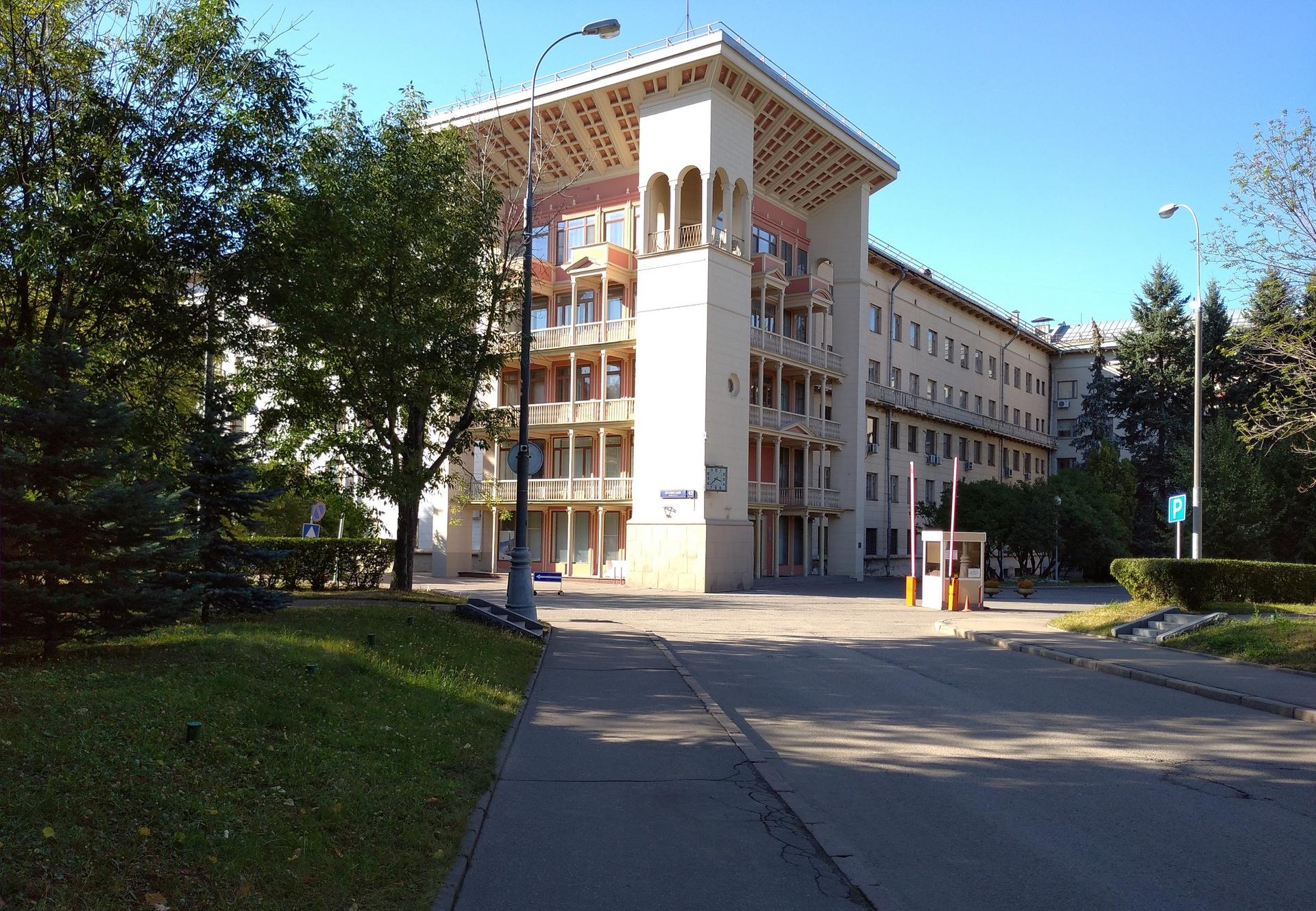
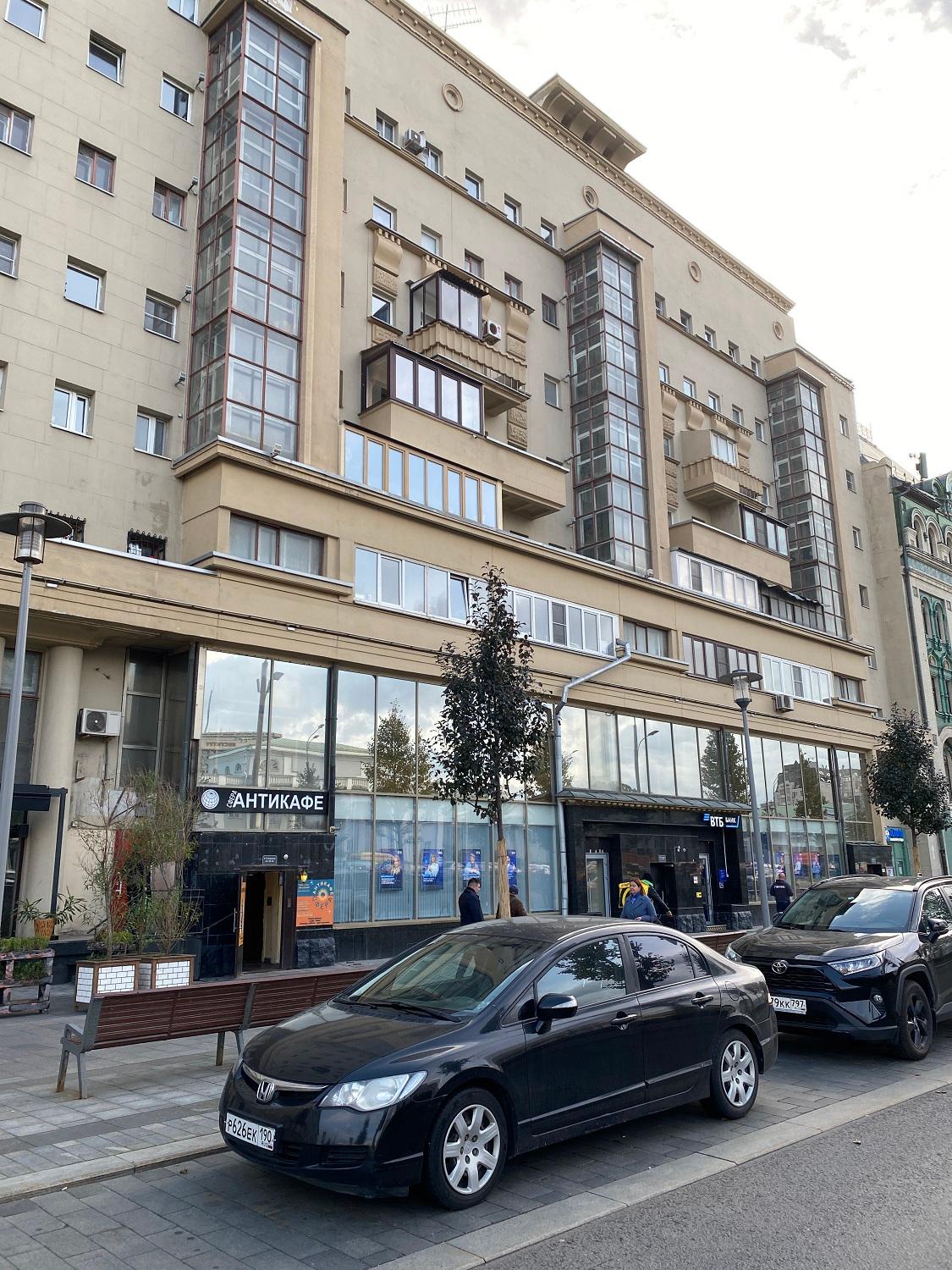
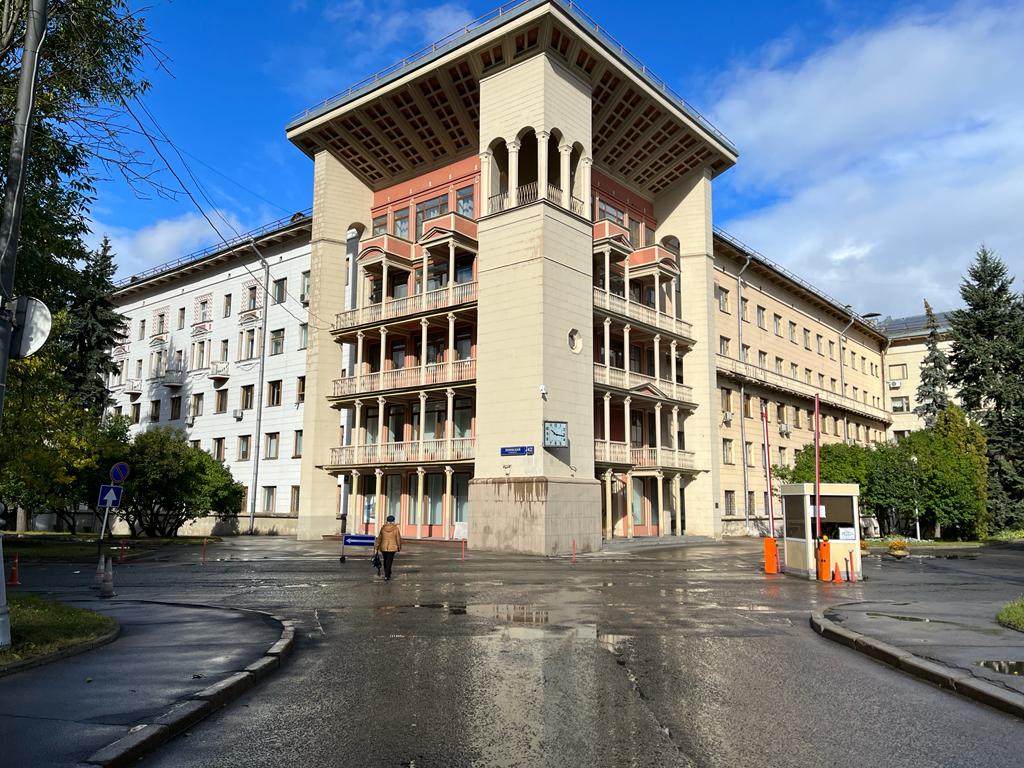
All-union central council headquarters building

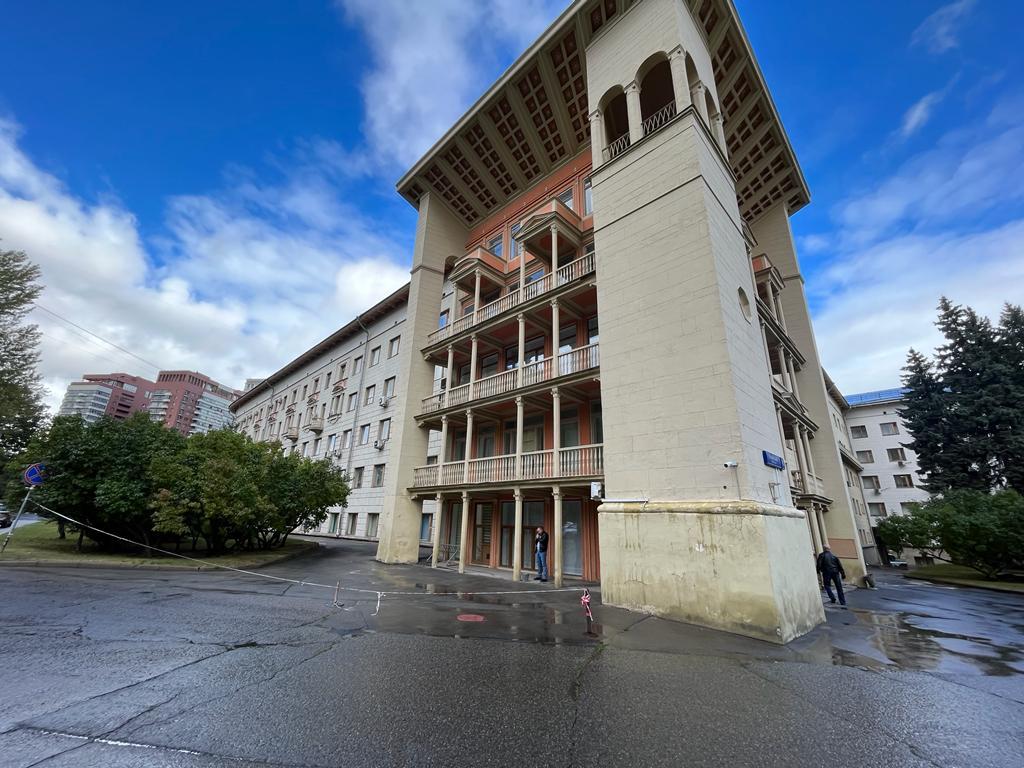
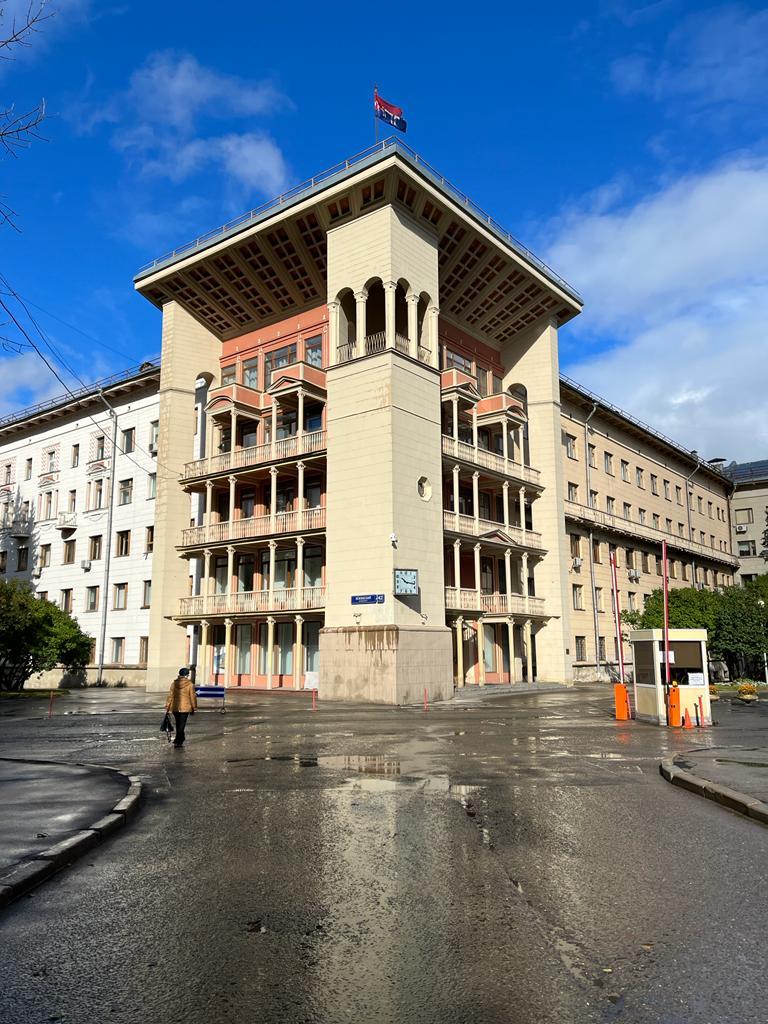
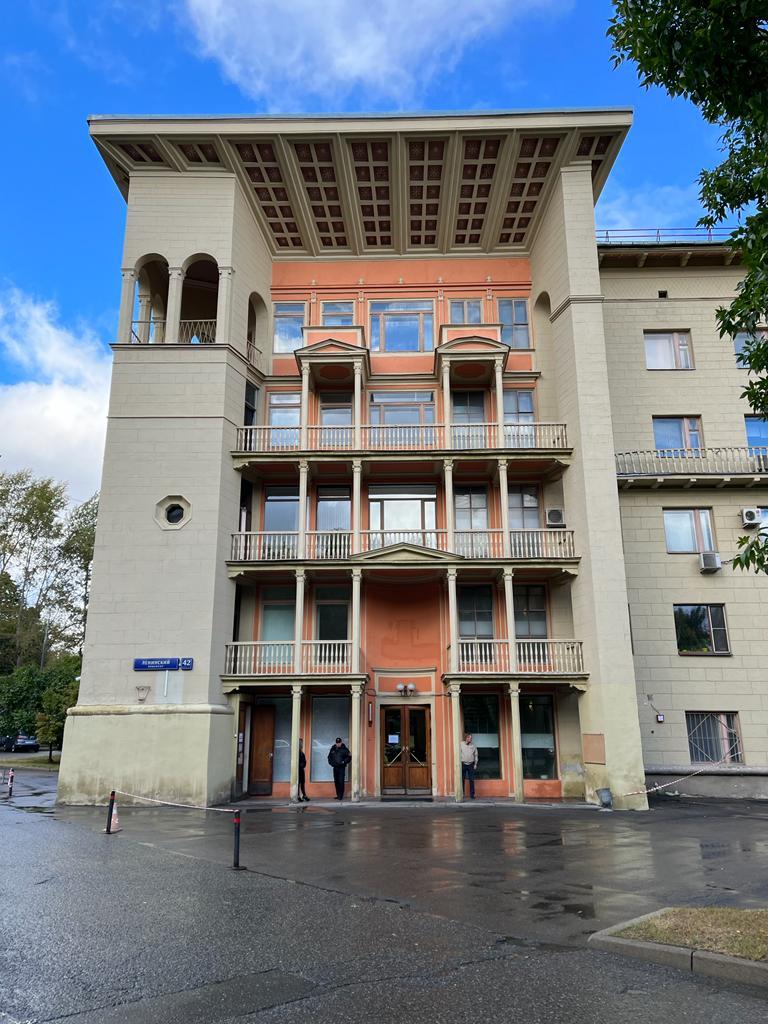
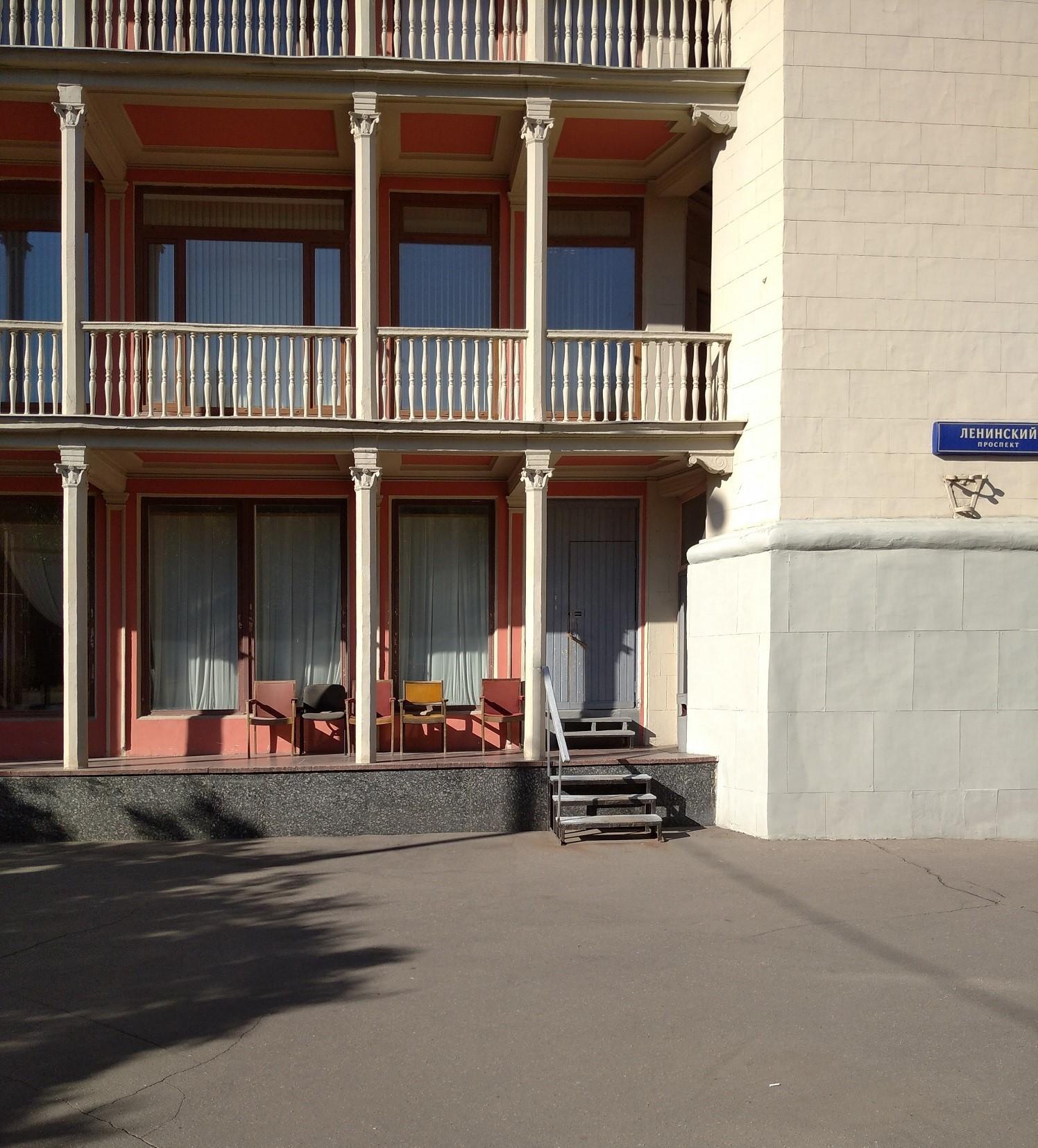
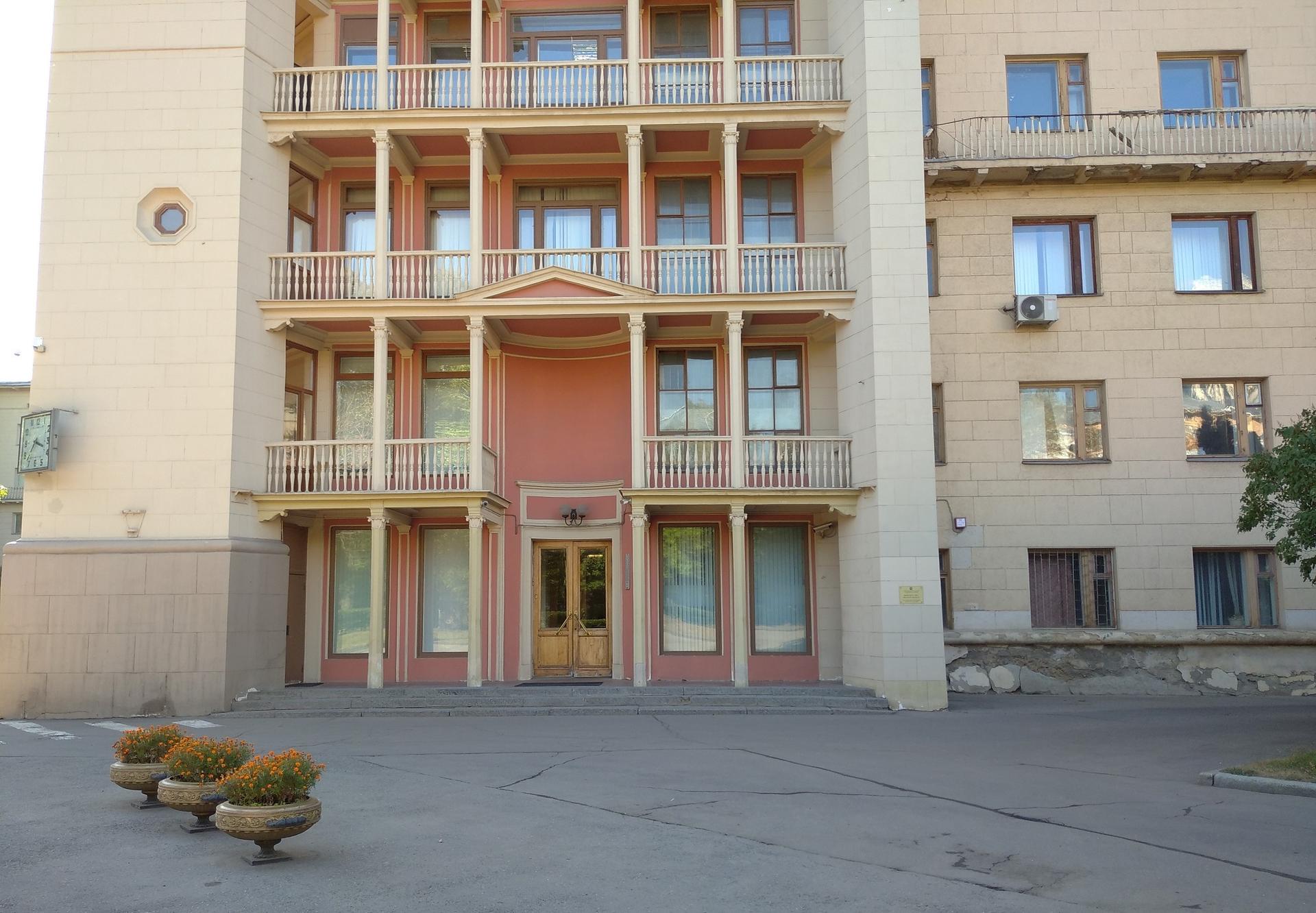
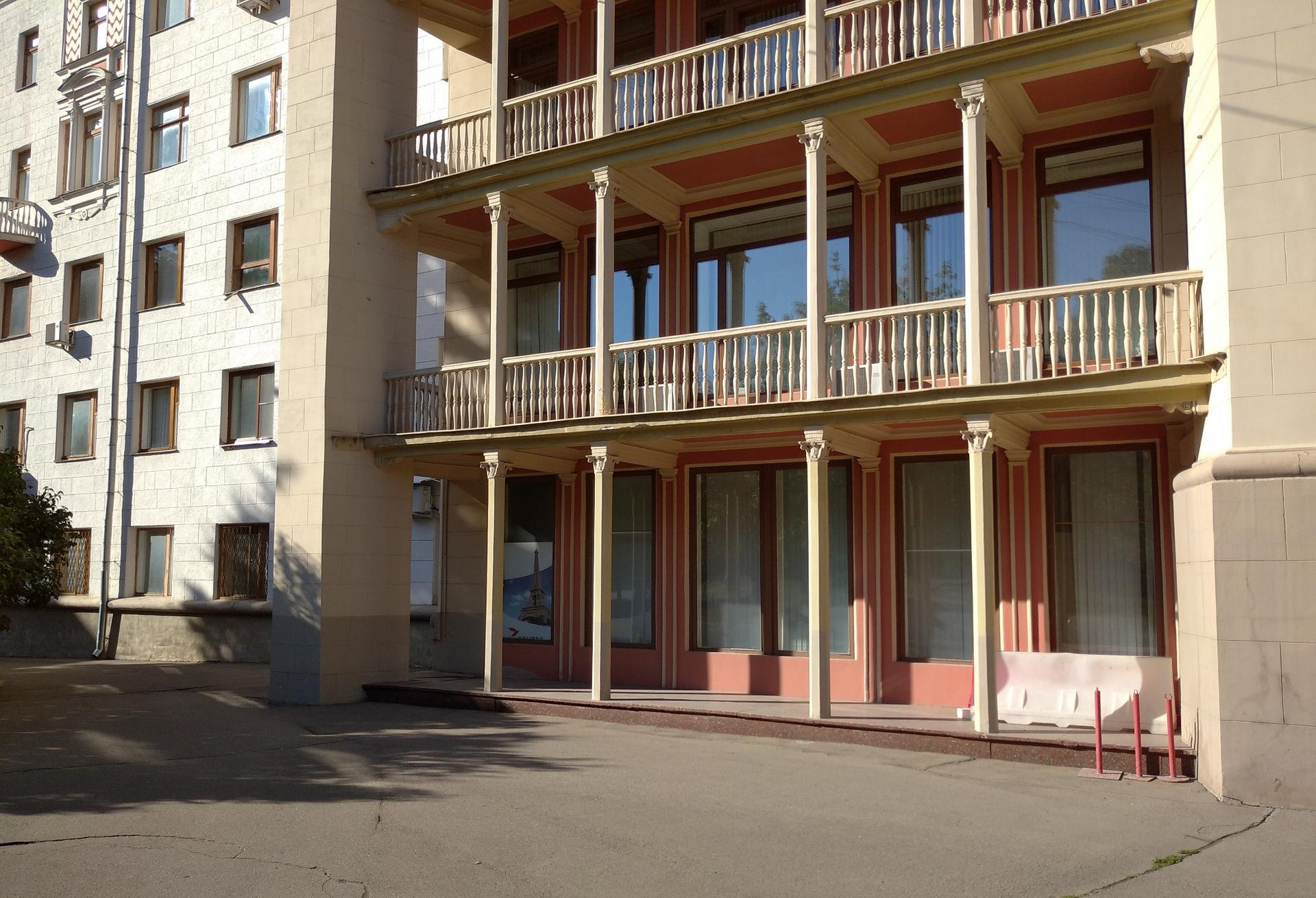
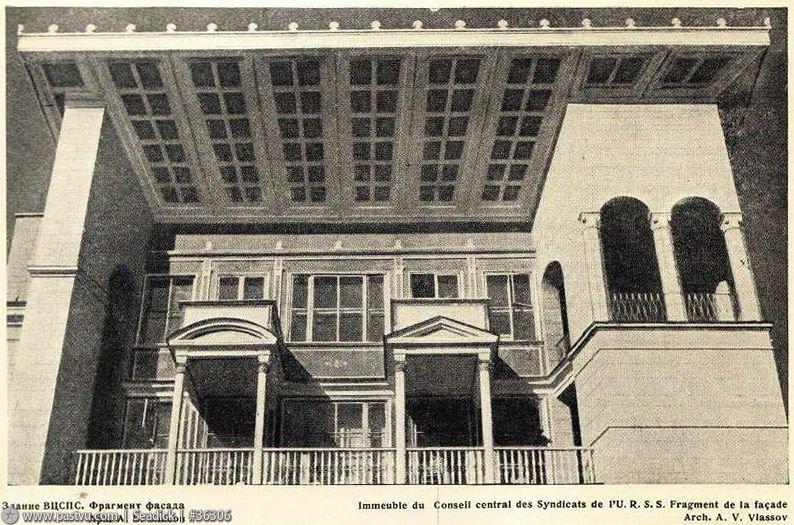
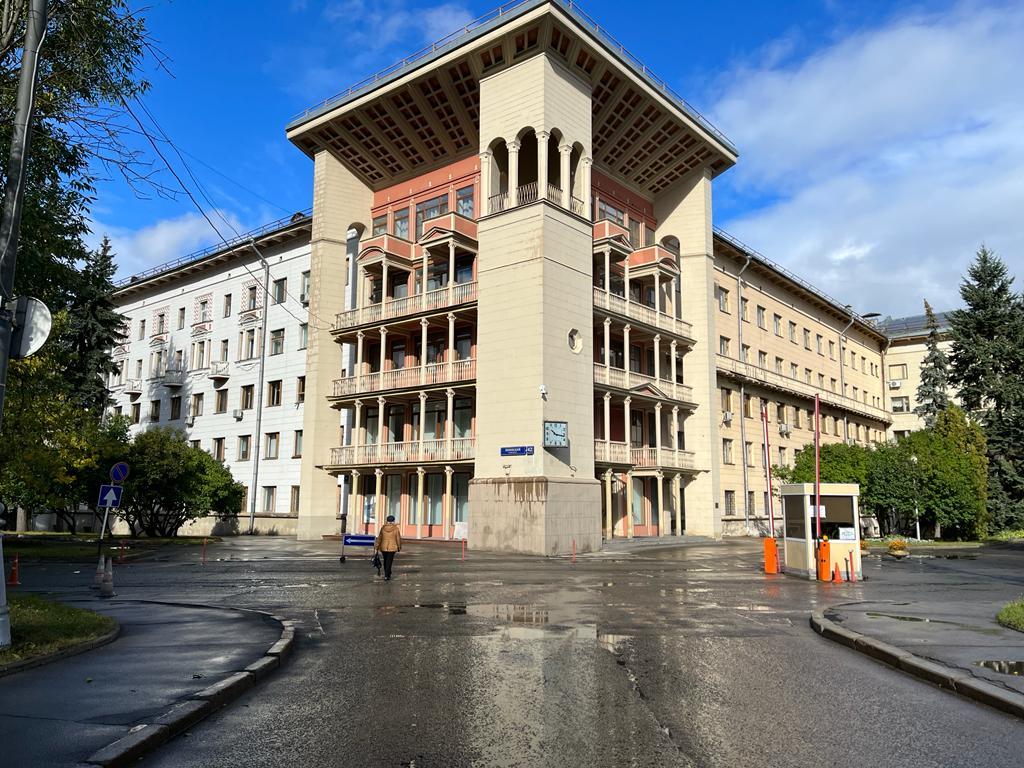
In the design of the angular parts of the facade there is a hint of Pompeian frescoes.

All-union central council headquarters building
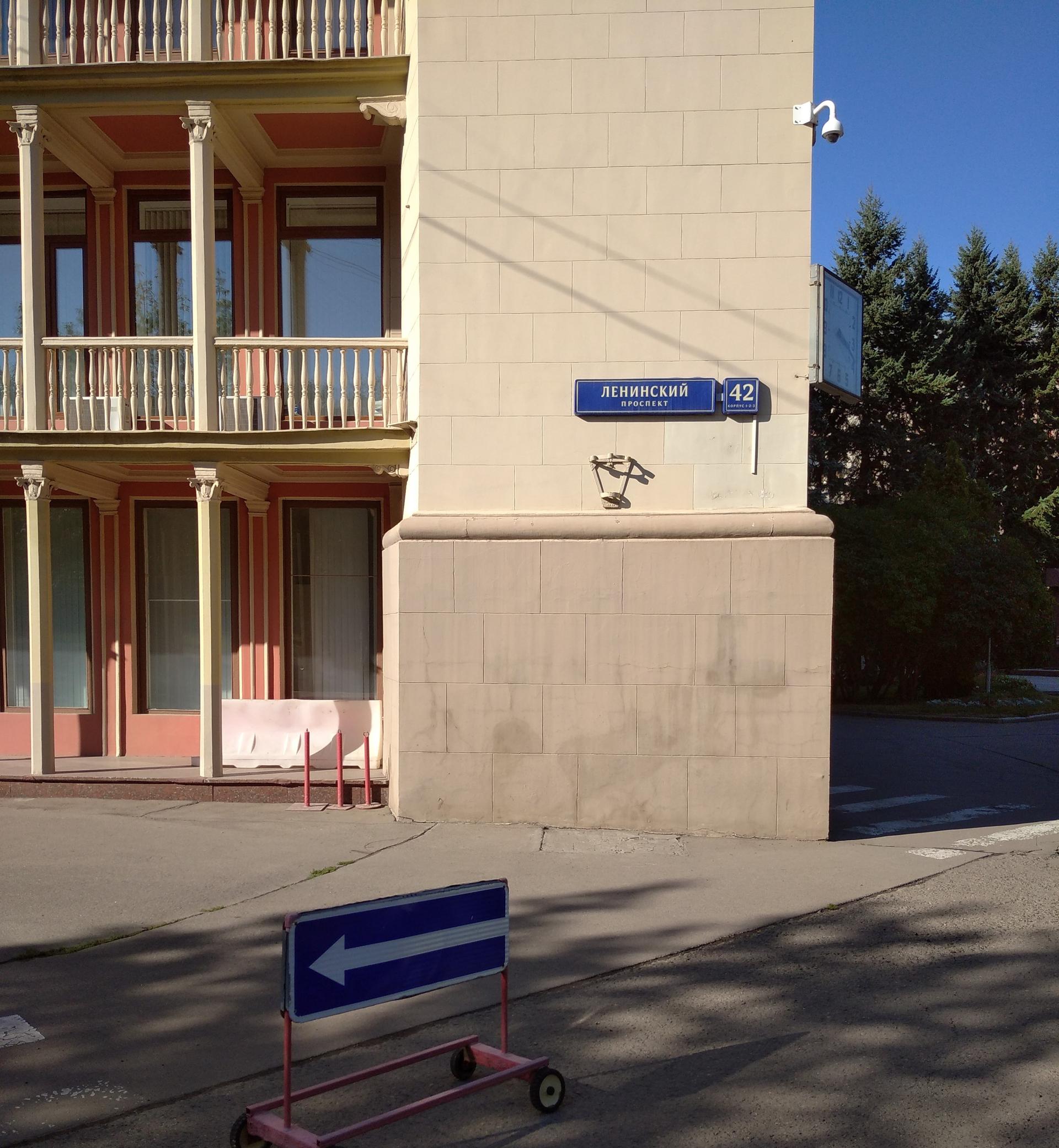
Ленинский проспект, 42 К1-5
akademicheskaya, Ploshad Gagarina, Vorobevy gory
In the design of the angular parts of the facade there is a hint of Pompeian frescoes.
3.51
Вы можете воспользоваться QR-кодом, чтобы открыть эту страницу в нашем приложении
Архитектурный стиль:
Годы постройки:
1936
Архитекторы:
А. Власов
Эпоха:
1930s
Информация о здании

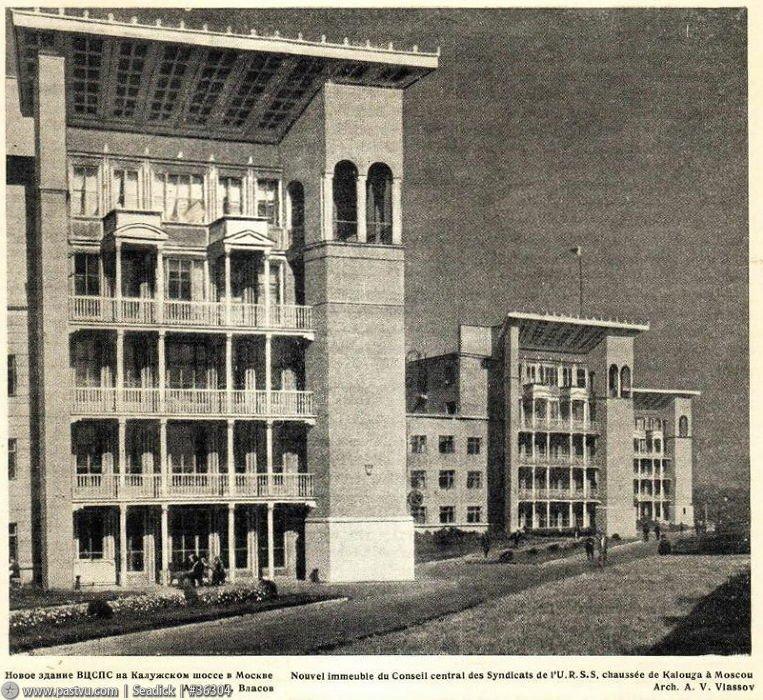
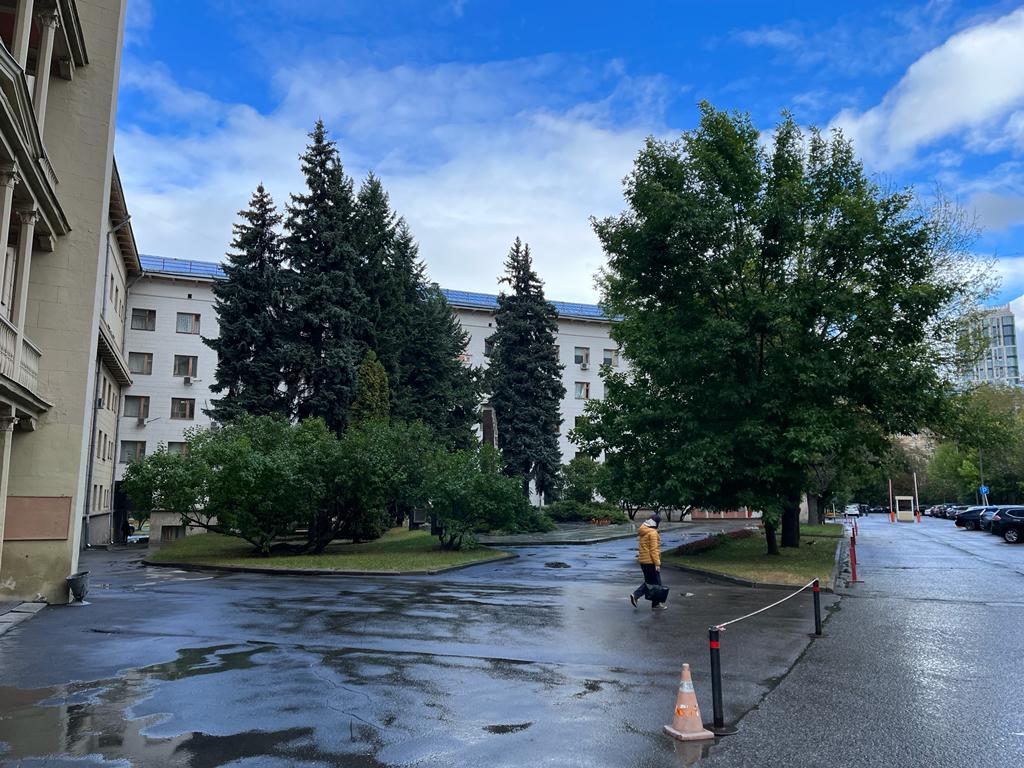
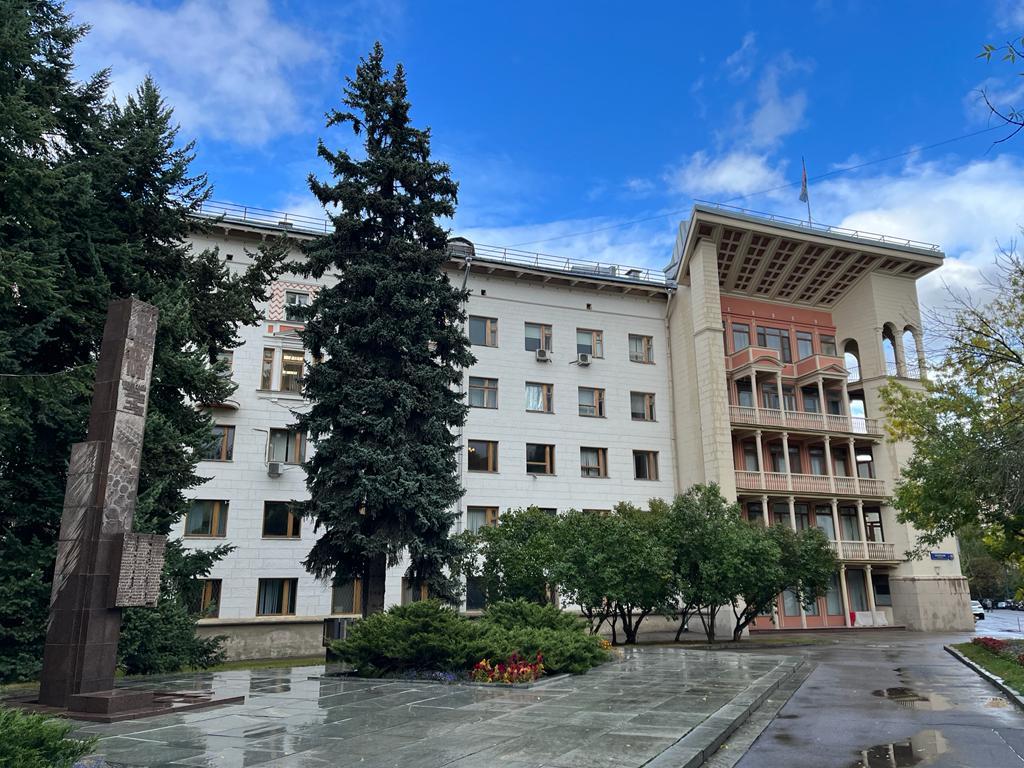
Изначально здание проектировалось для Международной ленинской школы, как часть большого учебного комплекса, в котором могли учиться студенты со всего мира, но построены были только корпуса общежитий. Далее эта своеобразная композиция из шести соединенных под прямым углом вытянутых объемов, образующий красивый зигзаг, была перестроена под нужды Всесоюзного центрального совета профессиональных союзов.

Первоначальный проект был выполнен архитектором А. В. Власовым в 1931 году в формах, типичных для архитектуры авангарда конца 1920-х годов. Потом проект многократно менялся в связи с общей эволюцией взглядов заказчиков на стилистику советского зодчества, становившегося все более монументальным. Большинство авторов проектов тех лет стали использовать упрощенный ордер, а далее — ордерные формы в духе историзма конца XIX века и неоклассики 1910-х годов.

Выполняя проект одного из самых представительных комплексов, рассчитанных на пропаганду коммунистических идей, Власов ушел в сторону декоративности, разработав более двадцати вариантов новых фасадов и перекомпоновав все элементы этого ансамбля. Реализовать Власову удалось свой измененный проект только в форме реконструкции угловых частей «зигзага», образованного корпусами общежитий. Ни большая аудитория скругленной формы, ни многие иные постройки Ленинской школы не были осуществлены.

Углы прежних общежитий получили очень своеобразную наружную отделку, напоминающую изображения иллюзорной архитектуры на помпейских фресках: в 1935 году Власов посетил Италию. Тонкие колонны, поддерживающие балдахины над балконами, проходят через четыре этажа и находятся в нишах, образованных гигантскими свесами. Заглубленные стены фасада образую гигантские лоджии, их скошенные потолки отделаны перспективными кессонами, нависающими над всем фасадом и визуально ещё больше их углубляющими. Поворот каждого углового фасада усиливает ракурсы, в которых воспринимаются все формы этой изысканной декорации.

The original building was projected for the International Lenin School, as part of a large school complex where students from all over the world can learn, but only housing dormitories were built. Further there is a peculiar composition of the six stretched volumes connected at 90 degree angle forming a beautiful zigzag, was rebuilt by the needs of the All-Union Central Council of Trade Unions. The initial project was designed by architect A.V. Vlasov in 1931 in the forms typical for an architectural avant-garde of the late 1920's. Then the project changed many times because of the general evolution of the customers’ perceptions of in the style of Soviet architecture while it was becoming more monumental as time passed by. Most of the authors of projects began to use simple order and more - order form in the spirit of the late XIX century historicism and neo classic style of 1910s during those years. While performing the design of one of the most representative architectural complexes, conceived to propagate communist ideas, Vlasov dodged to decoratively, having developed more than twenty versions of the new facades and recompose all the elements of the ensemble. Vlasov was able to implement its revised draft only in the form of reconstruction of the angular parts of the "zigzag" formed by the corps dorms. Neither a big auditorium of a rounded shape, nor many other buildings of the Lenin School were implemented. Corners of the former dormitories have a very peculiar surface finish that resembles the image of the illusory architecture in Pompeian frescoes : in 1935, Vlasov visited Italy. Thin columns supporting the canopy over the balcony, run through four floors and located in a recess formed giant overhangs. Recessed facade walls form giant balconies, their slanted perspective coffered ceilings finished hanging over the entire facade and visually even more of their profundity. Rotation of each corner facade enhances the angles, which are perceived by all forms of the exquisite scenery.
Автор статьи: Николай Васильев
Поделитесь статьей с друзьями
Интересное рядом(2)
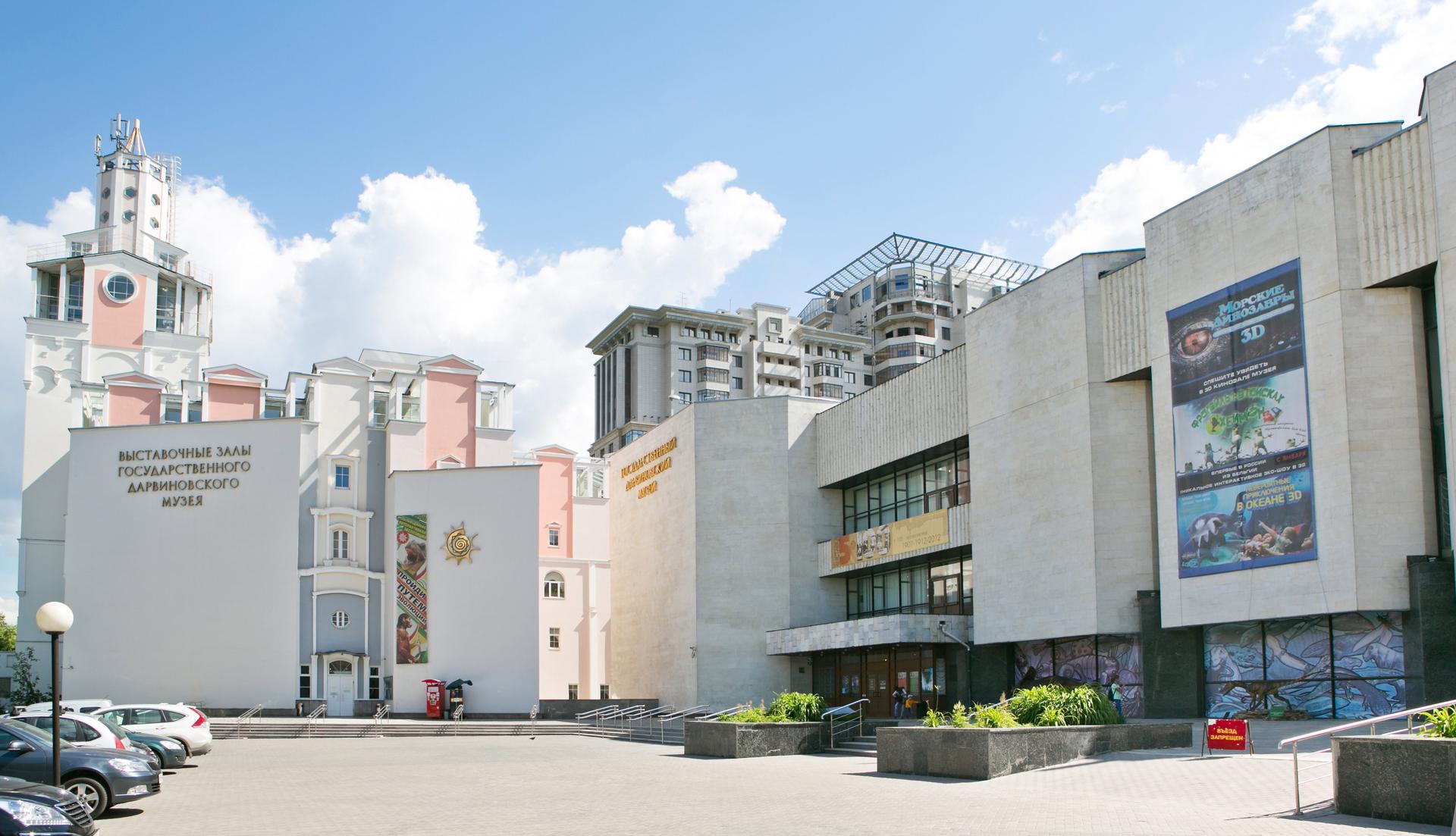
The State Darwin Museum

The State Darwin Museum was established in 1907 by Professor Alexander Kots, an excellent museum researcher, who read the lectures on the theory of evolution at the Moscow the Moscow Higher Female Courses. During that time, there was the first museum, devoted only to the theory of evolution. Now there are a lot of similar museums in the world, but the Darwin Museum still remains the only such museum in Russia and is considered to be a methodical center for all natural history museums of our country. In 1911 Alexander Kots married Nadezhda Ladygina, a MHFC student. This beautiful woman shared all efforts on the creation and maintenance of the museum with her husband.

The museum has a hard fate; only before its 87th anniversary, the museum finally moved to its own building, which had been constructed for about 20 years. The first part of the exposition was opened in 1995, and the construction of exposition in the new building was completed in 1997.

Now the State Darwin Museum has three buildings: the main building opened for visitors on September 2, 1995; the exhibition building opened on April 17, 2007, which includes the exhibit depository; and the technical building. The State Darwin Museum is one of few museums, where the regular re-exposition and construction of new interactive complexes take place, old expositions, vitrages, and labels are replaced by new ones without any closing of halls, and so on. The number of visitors exceeds 500 000; every year the museum conducts more than 2500 excursions, organizes more than 60 exhibitions.

The State Darwin Museum has a children’s animalistic art studio and a circle of young biologist. Annually, the employees of the Museum used to organize up to 10-11 mass holidays for visitors, and each of such events gathers from 3 to 7 thousand guests.

Besides traditional excursions, guests of the Darwin museum can quickly and easily receive textual, illustrative, sound and other information about the exposition’s objects which have interested them by using their smartphones. For this purpose it is enough "to read" a matrix code (to scan and recognize in the program a QR code), published on the website, information board, glass-cases of the museum or on printing products.

The Museum has created the comfortable conditions for the physically challenged people: both buildings are equipped with ramps, lifts, and elevator, there are also recreation areas.

The Darwin museum to be interesting for children who are keen on interactive activities: the little visitors can paint a picture from sand, watch the 3D - movie about sea dinosaurs, to learn its weight on other planets or to estimate it in non-standard units — in mice or bears. It is possible in the Darwin museum to stroke a hair of a real wolf and a polar bear, to listen to discordant croaking of frogs and to observe the life of insects in the insectarium.

At school students disposal – the multimedia complexes and programs: "Specially protected natural zones of the city of Moscow", "Natural reserves of Russia", multimedia informational Centre "EcoMoscow" and many others.

Interactive exposition "Pass by the path of evolution" allows young and adult visitors to get back for thousands and millions years ago and to take a look at the past times of our planet. And for those who wish to make a virtual "Travel with animals" will help the technology of augmented reality introduced in the Darwin museum: like in a science fiction film, museum glass-cases inhabitants comes out alive in order to get closer to the guests and pose for a picture with them.

In the Darwin Museum was opened the Youth Innovation Creativity Centre, where the young inventors under the leadership of engineers could develop original projects, using the latest achievements in bionics. And in September, 2014 to be opened the new interactive educational center "Discover Yourself — Discover the World" equipped with the latest technologies allowing to receive a full information about the Earth nature and provided in a very popular way.


In halls of the Darwin museum it is possible to see the unique exhibit items. Among the most interesting rarities are: 

- African elephant of the last emperor of the Russian Empire Nicholas II, 

- Jean-Dau an Indian elephant cow, 

- Spaniel of the leader of the USSR Iosif Vissarionovich Stalin,

- Lobster of the well-known astronaut Yury Alekseevich Gagarin, 

- Albino squirrel that museum founder, Alexander F. Kohts, traded on the samovar 

- A stuffed gorilla in whose stand’s were have been recently found the documents dated by the end of XIX century.
Vavilov Street, 57
akademicheskaya