Интерактивный гид по городу
С мобильным приложением бродить по городу гораздо интереснее!

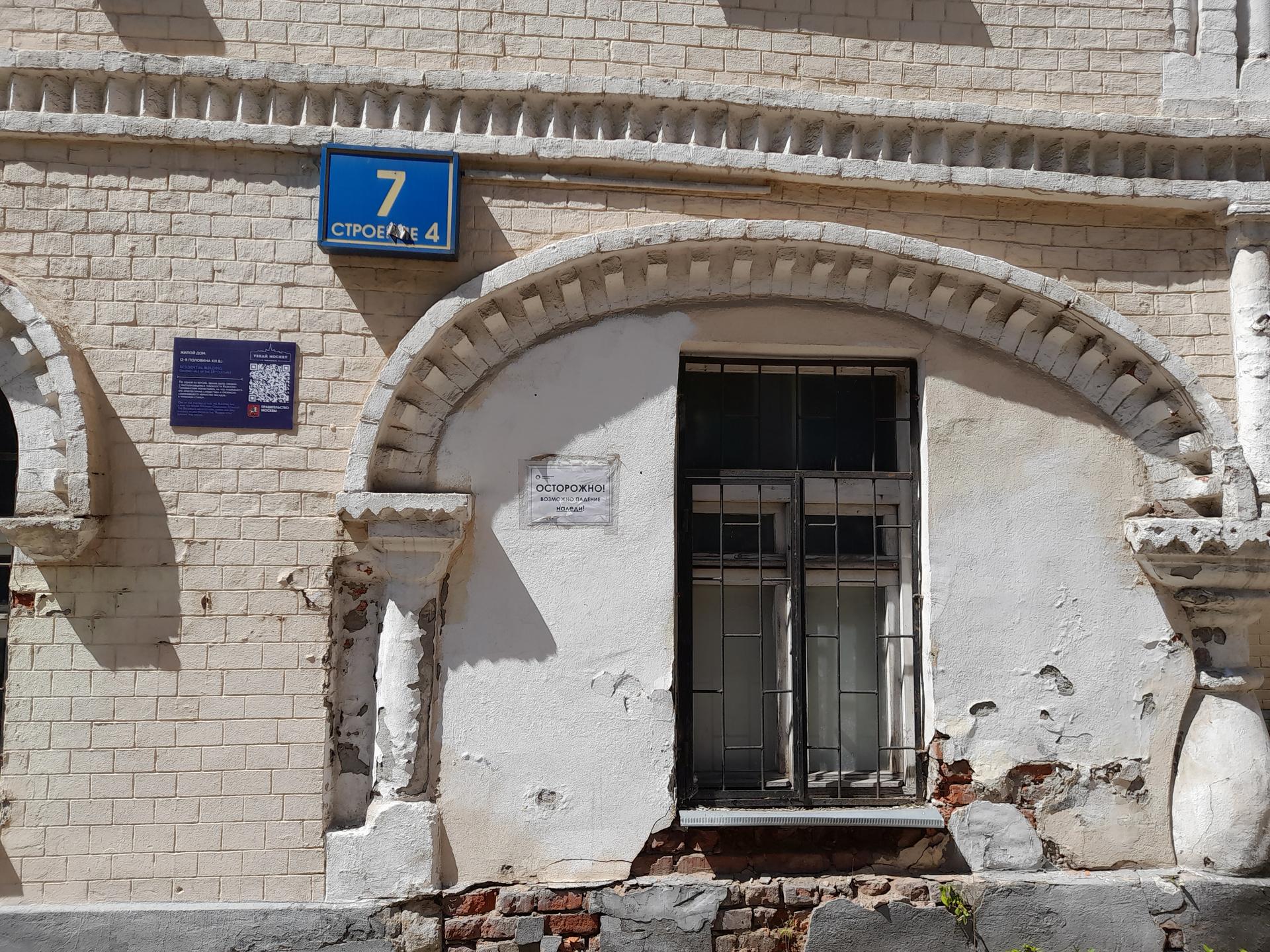
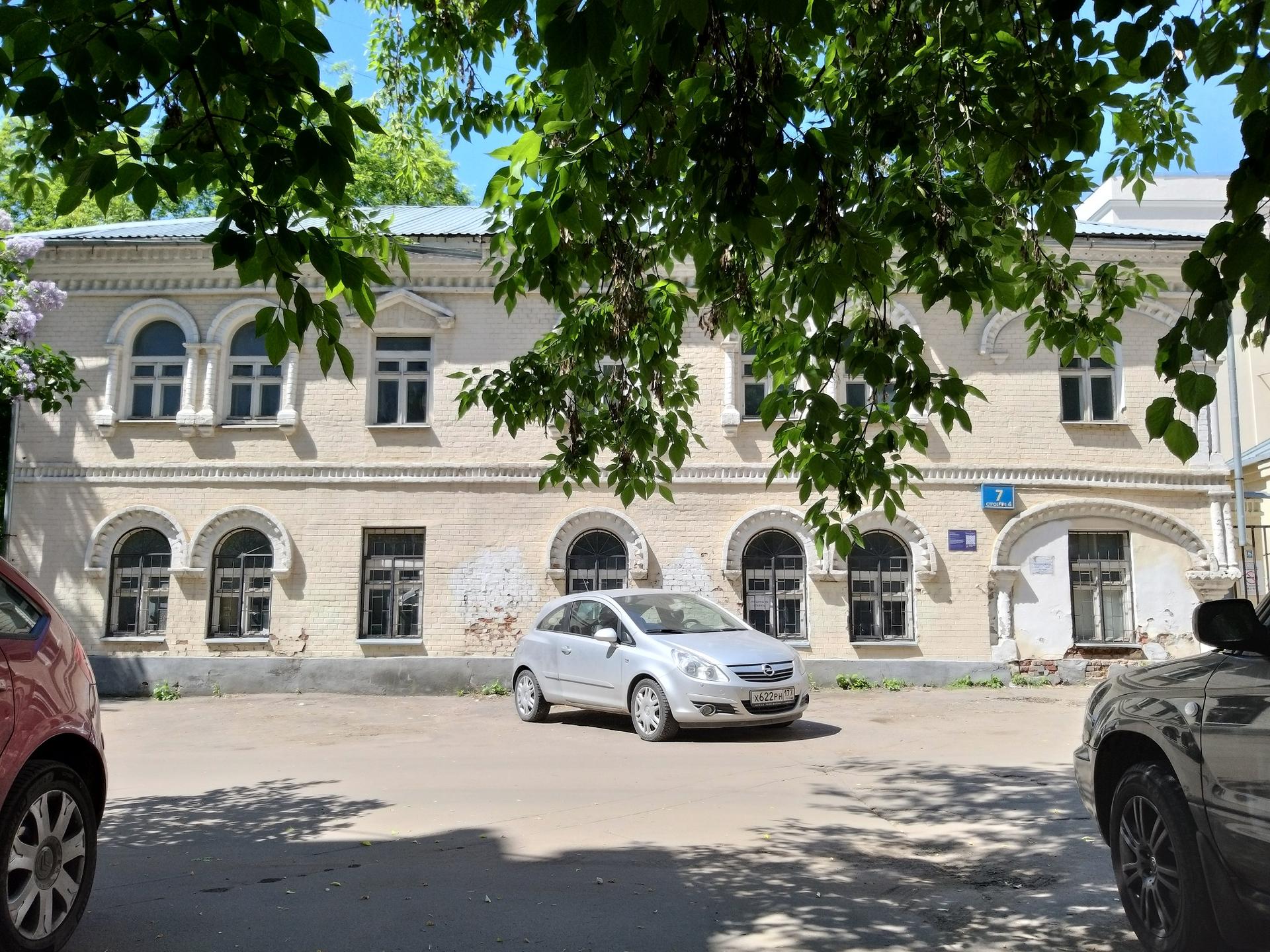
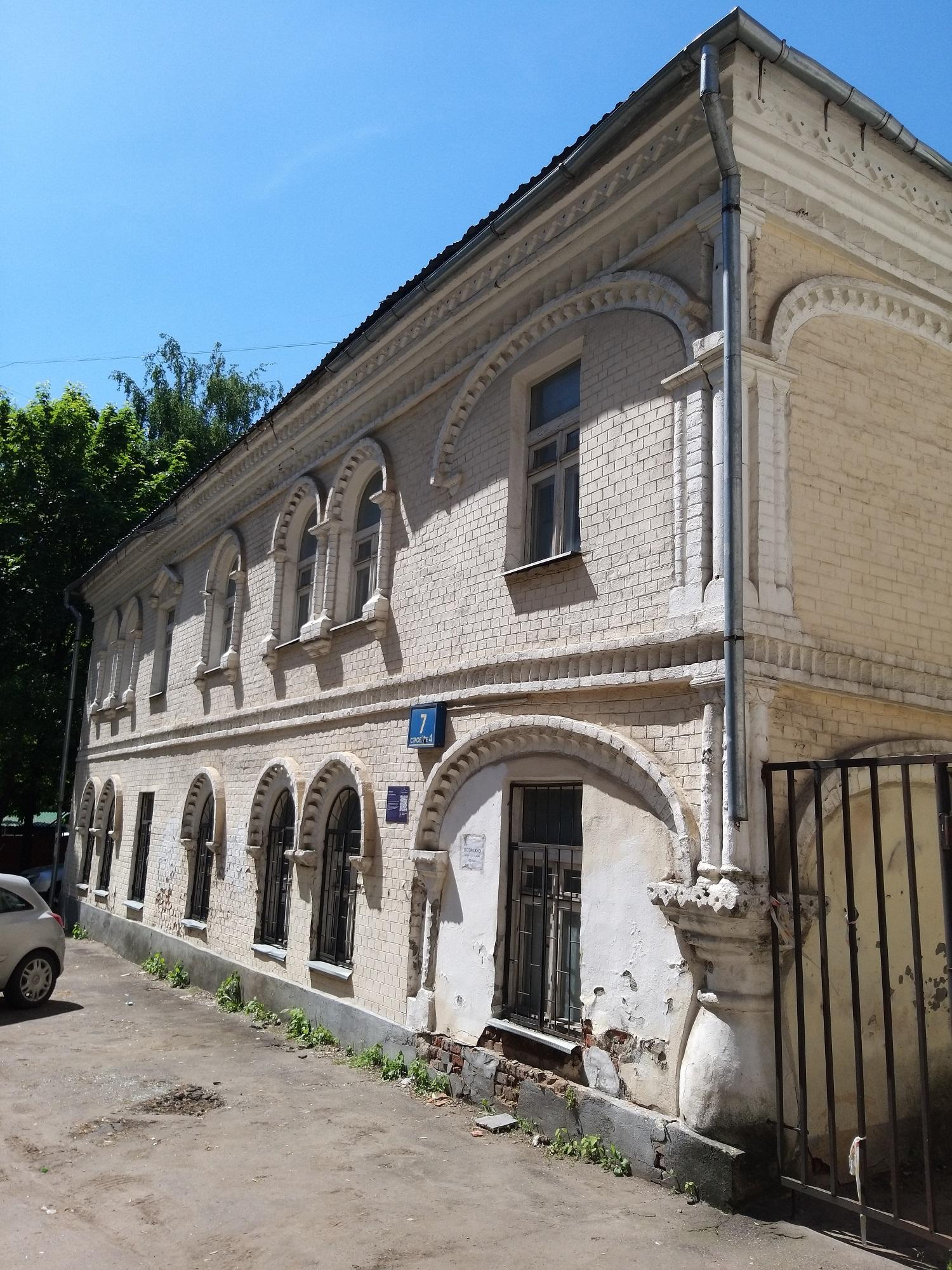
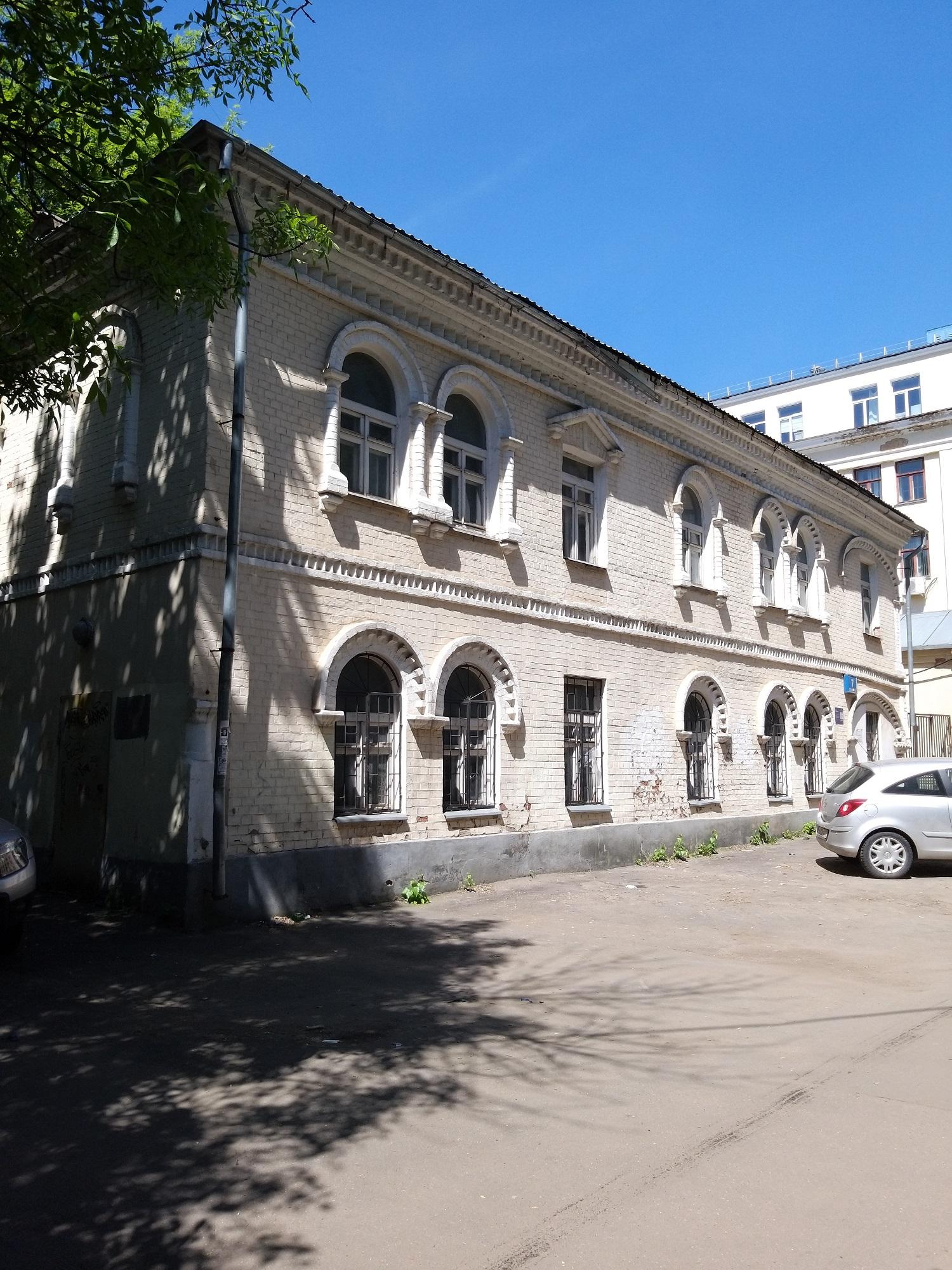
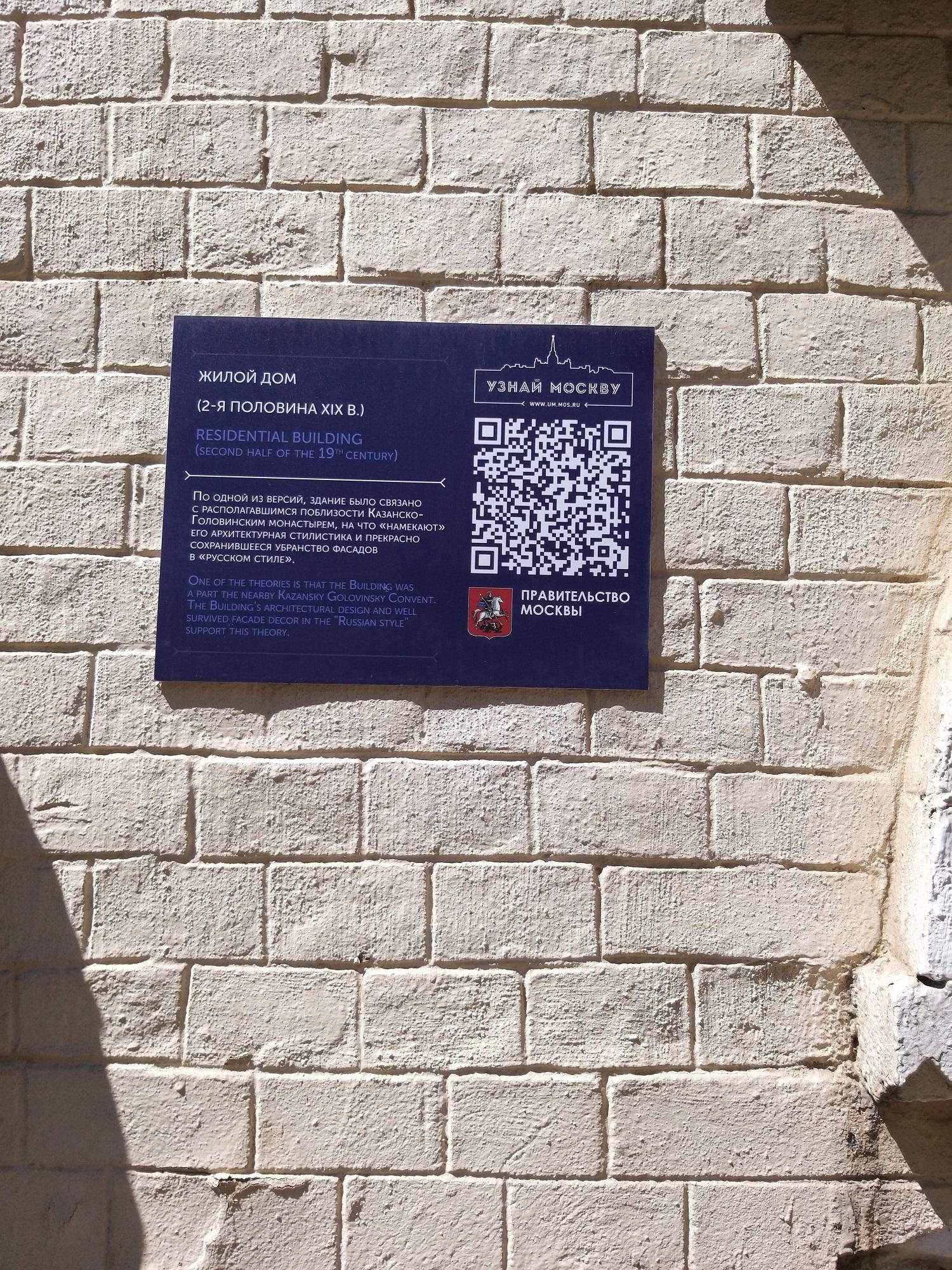
Жилой дом (2-я половина XIX в.)

One of the theories is that the Building was a part the nearby Kazansky Golovinsky Convent. The Building's architectural design and well survived facade decor in the "Russian style" support this theory.

Жилой дом (2-я половина XIX в.)
Koptevo
One of the theories is that the Building was a part the nearby Kazansky Golovinsky Convent. The Building's architectural design and well survived facade decor in the "Russian style" support this theory.
3.33
Вы можете воспользоваться QR-кодом, чтобы открыть эту страницу в нашем приложении
Архитектурный стиль:
Годы постройки:
XIX в.
Эпоха:
19th century
Информация о здании

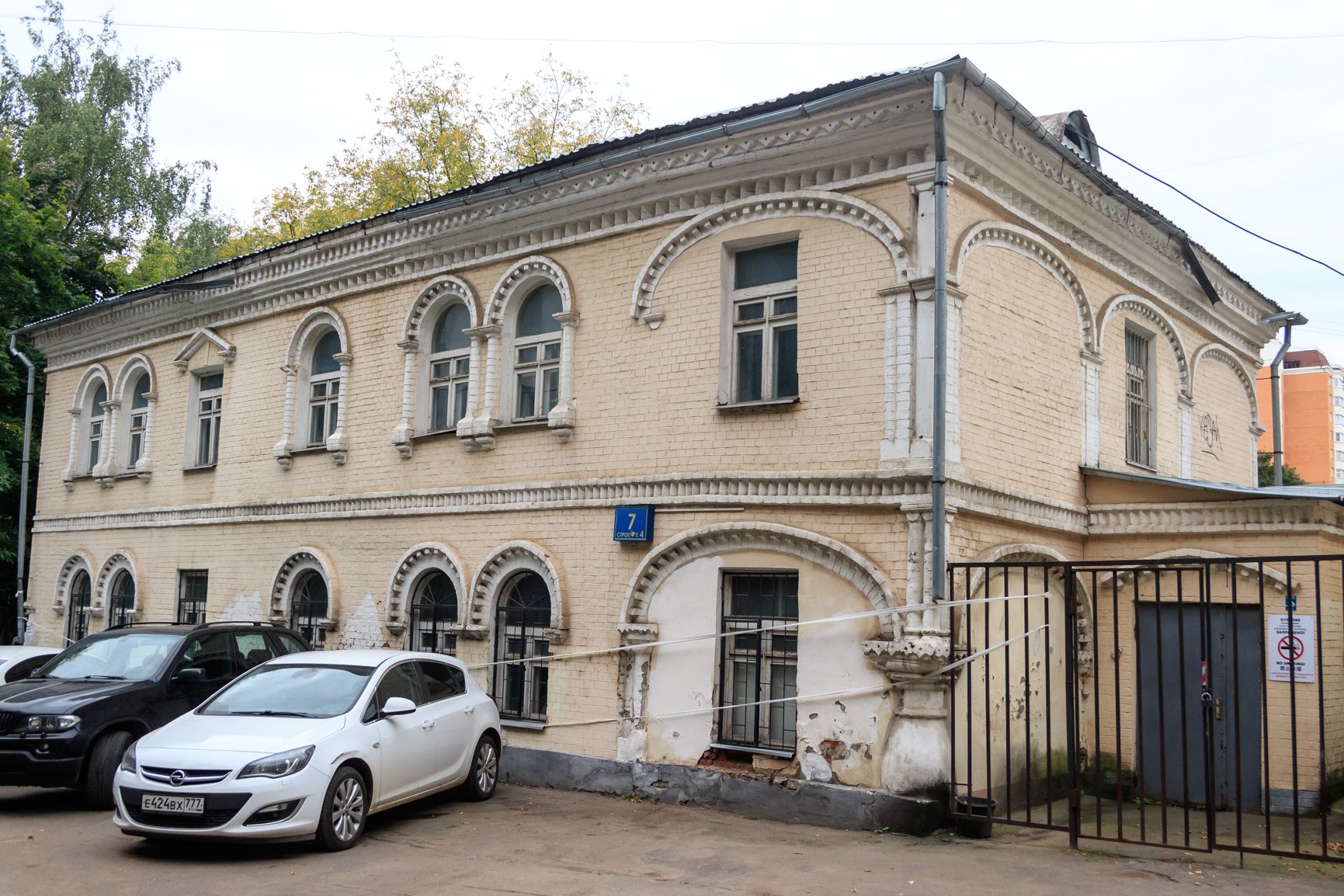
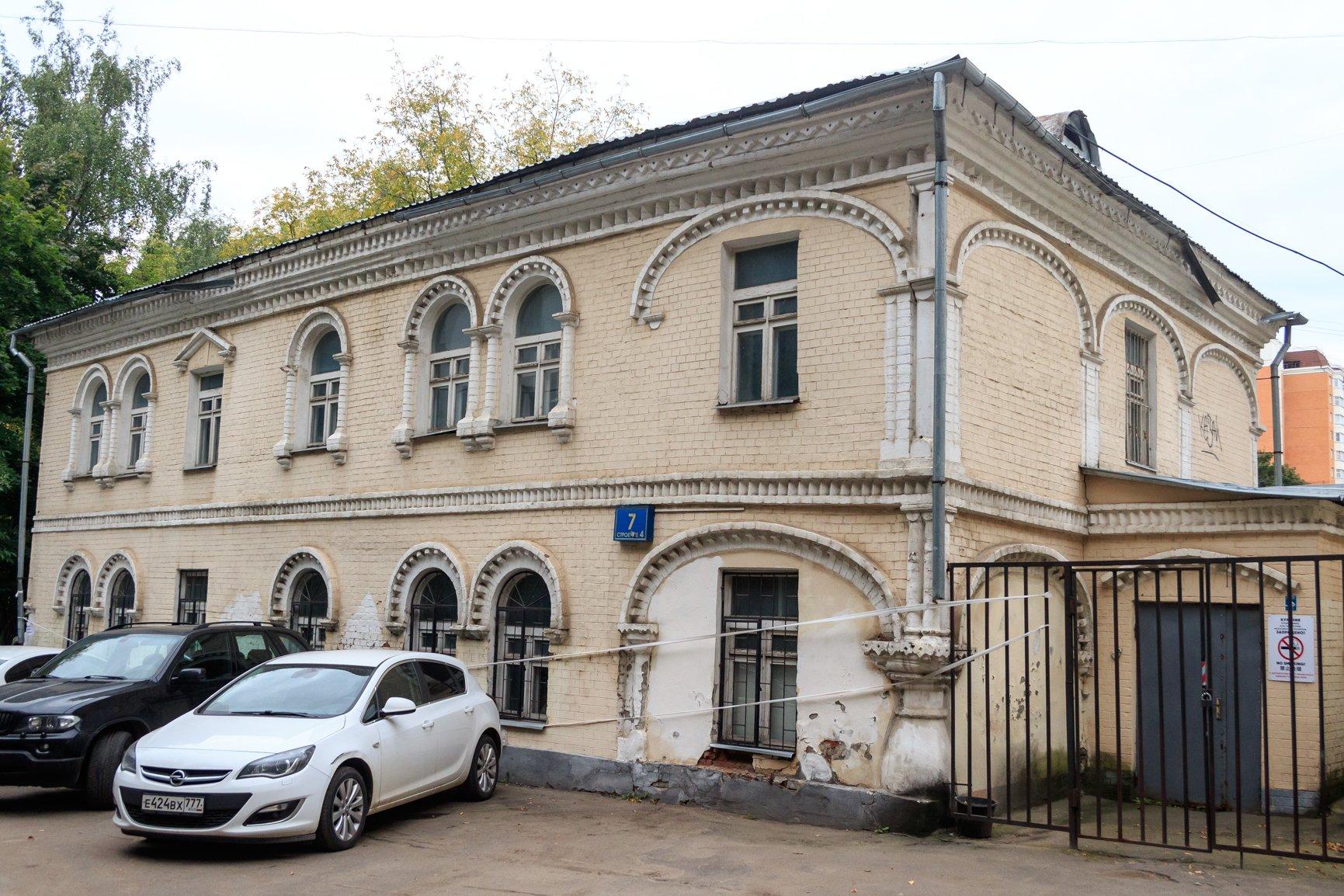
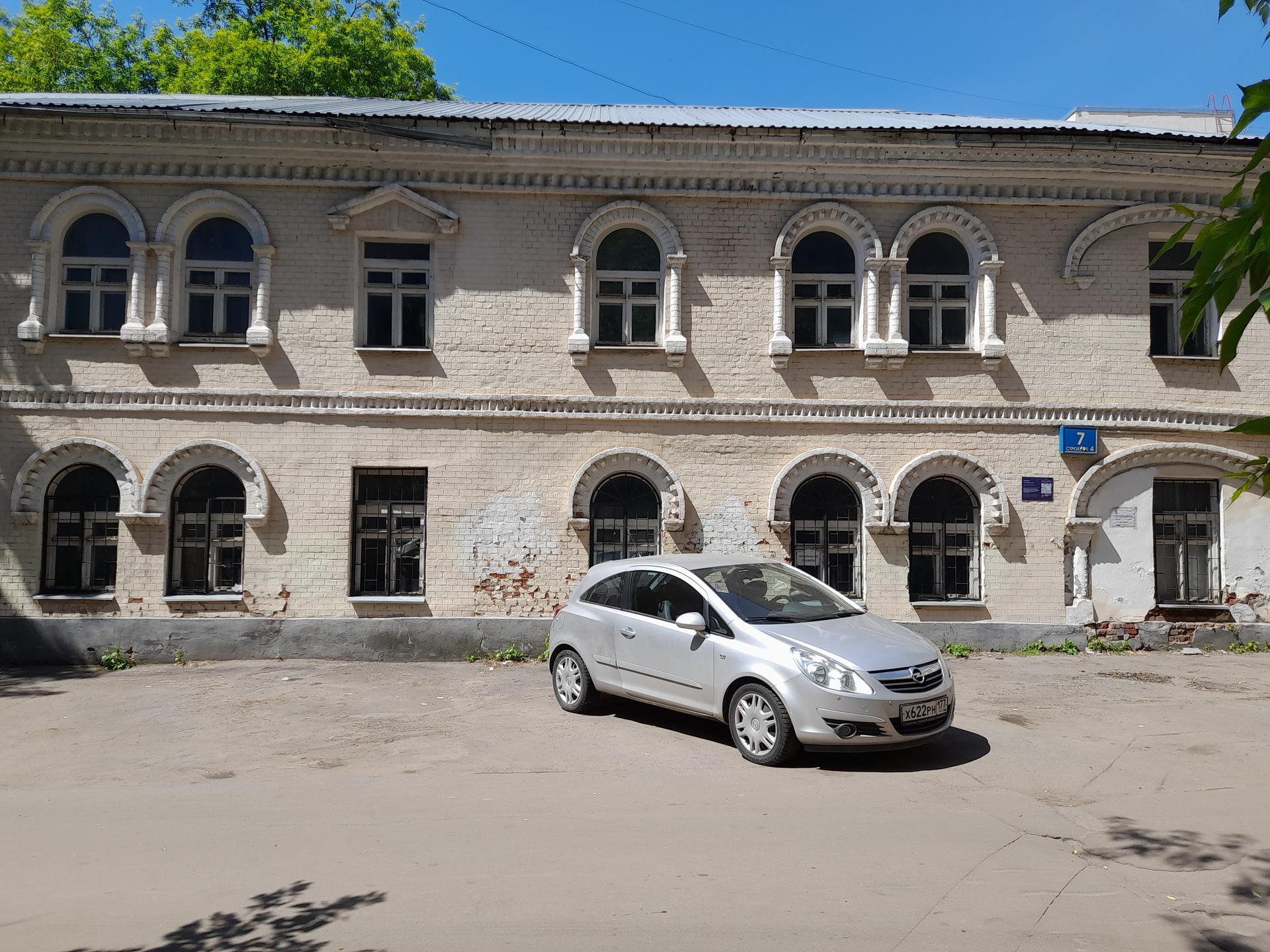
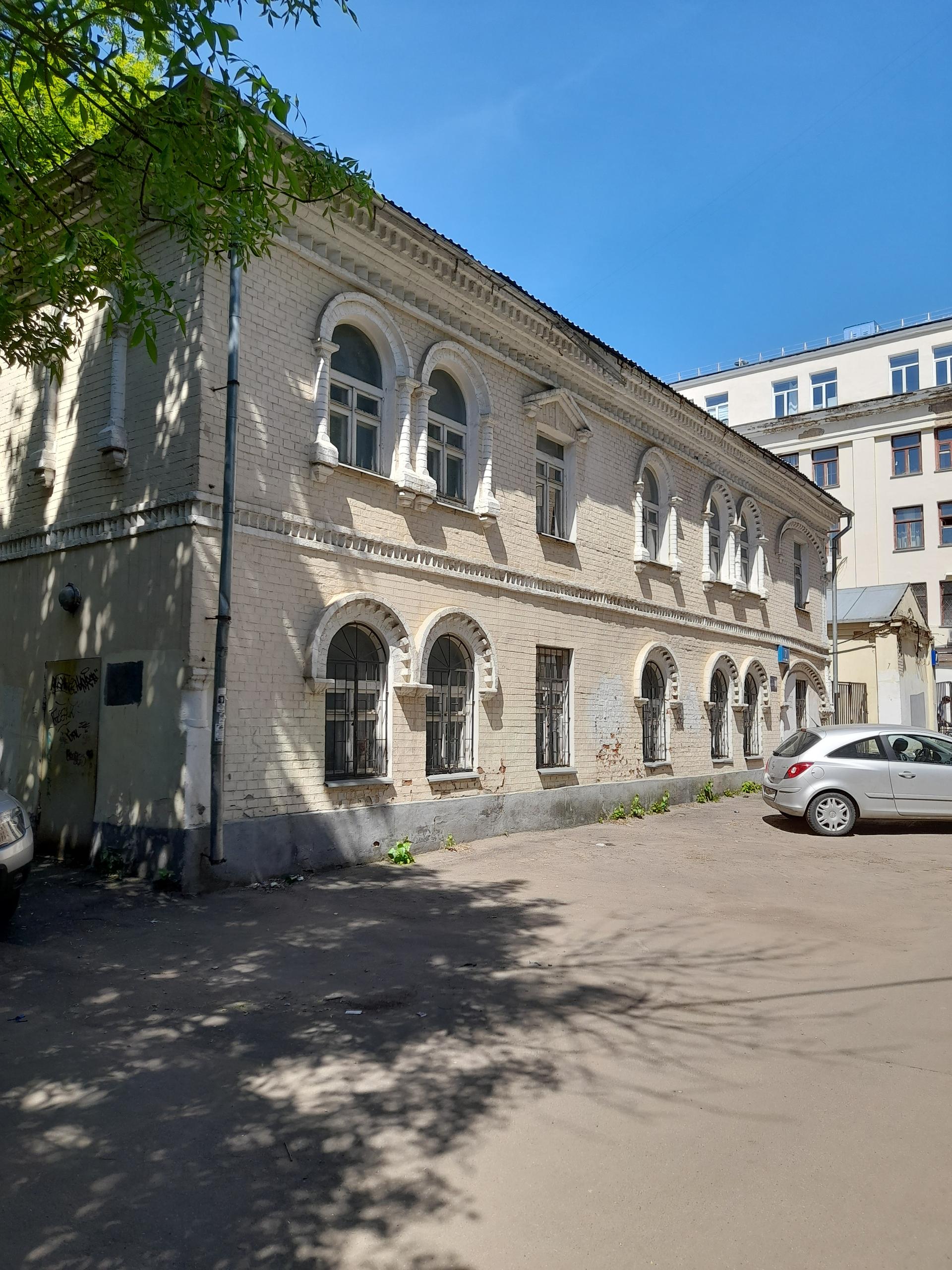
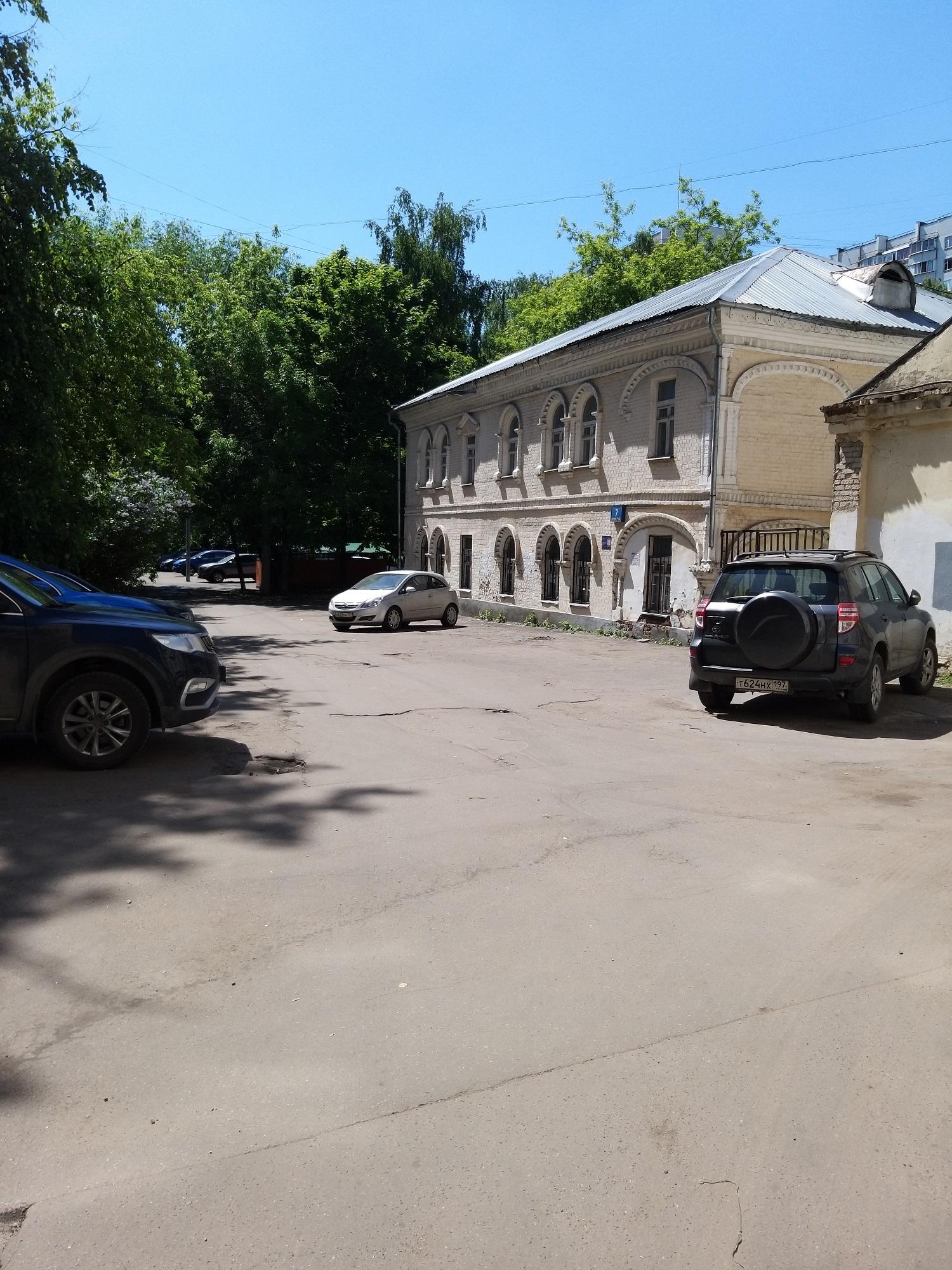
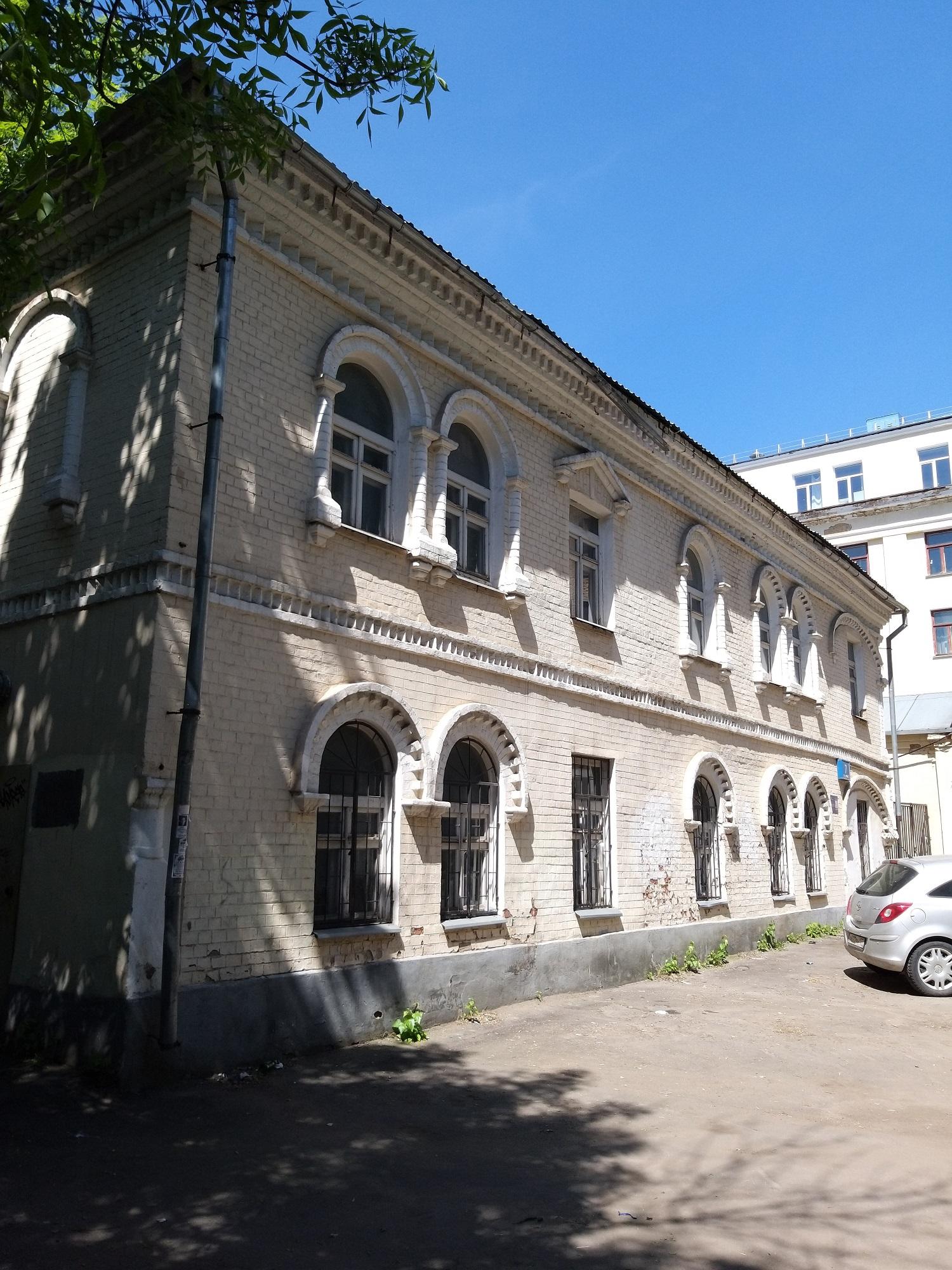
Двухэтажный дом, украшенный в «русском стиле», со всех сторон окружен постройками комплекса Высшей школы печати и медиаиндустрии Московского политехнического университета и является самым старинным зданием квартала. Он стоит на территории былого селения Петровские (Петровско-Разумовские) выселки, куда после 1861 года, в связи с созданием агрономического учебного заведения, переселили крестьян из Петровско-Разумовского. Со временем крестьянские дома и летние дачи выстроились вдоль дороги в Нижние Лихоборы, образовав начало Михалковской улицы. В этой «дачной» части села, где, кстати, в конце XIX – начале ХХ века жили поэты В.Я. Брюсов и В.В. Маяковский, и стоит интересующее нас здание. От Михалковской улицы оно теперь отделено массивным корпусом бывшего общежития Мосрыбвтуза, построенным в 1938 году (стр. 1 дома № 7, ныне принадлежит Политехническому университету).

Заказчик и автор постройки неизвестны. В списках памятников, предлагаемых для постановки на государственную охрану, здание фигурировало под названием «Богадельня, 1890 г.». Однако государственная историко-культурная экспертиза, в соответствии с которой в 2014 году здание стало выявленным объектом культурного наследия, присвоила ему наименование «Жилой дом, вторая половина XIX в.». Назначение здания исследователям документально установить не удалось, но ясно, что оно было жилым.

Местные краеведы утверждают, что в начале ХХ века оно принадлежало мещанам Красильщиковым и сдавалось в аренду под местную школу. Есть также версия, что здание было связано с располагавшимся неподалеку Казанско-Головинским монастырем, на что «намекает» его архитектурная стилистика. Впрочем, в исторических описаниях обители подтверждения этому не находится.

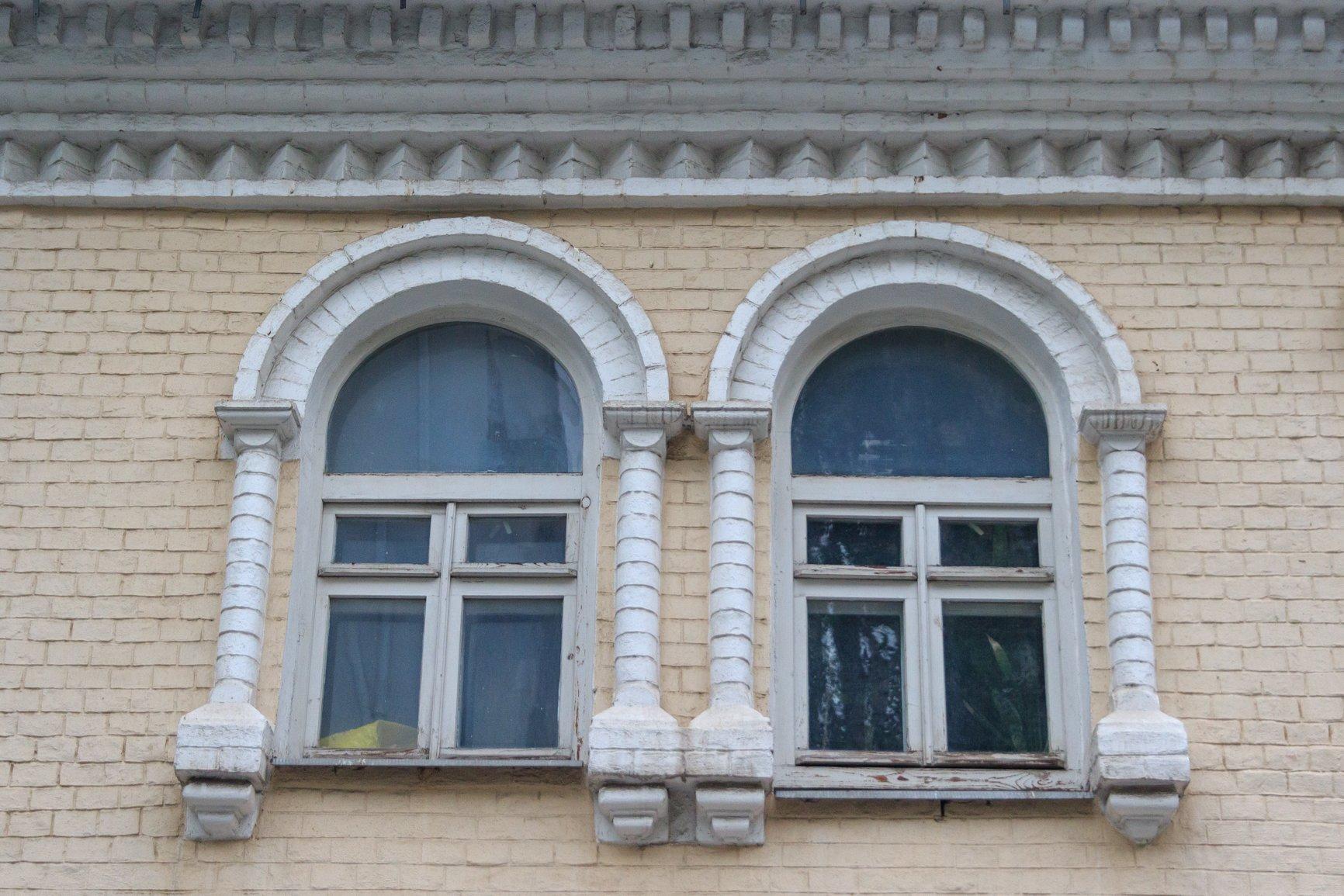
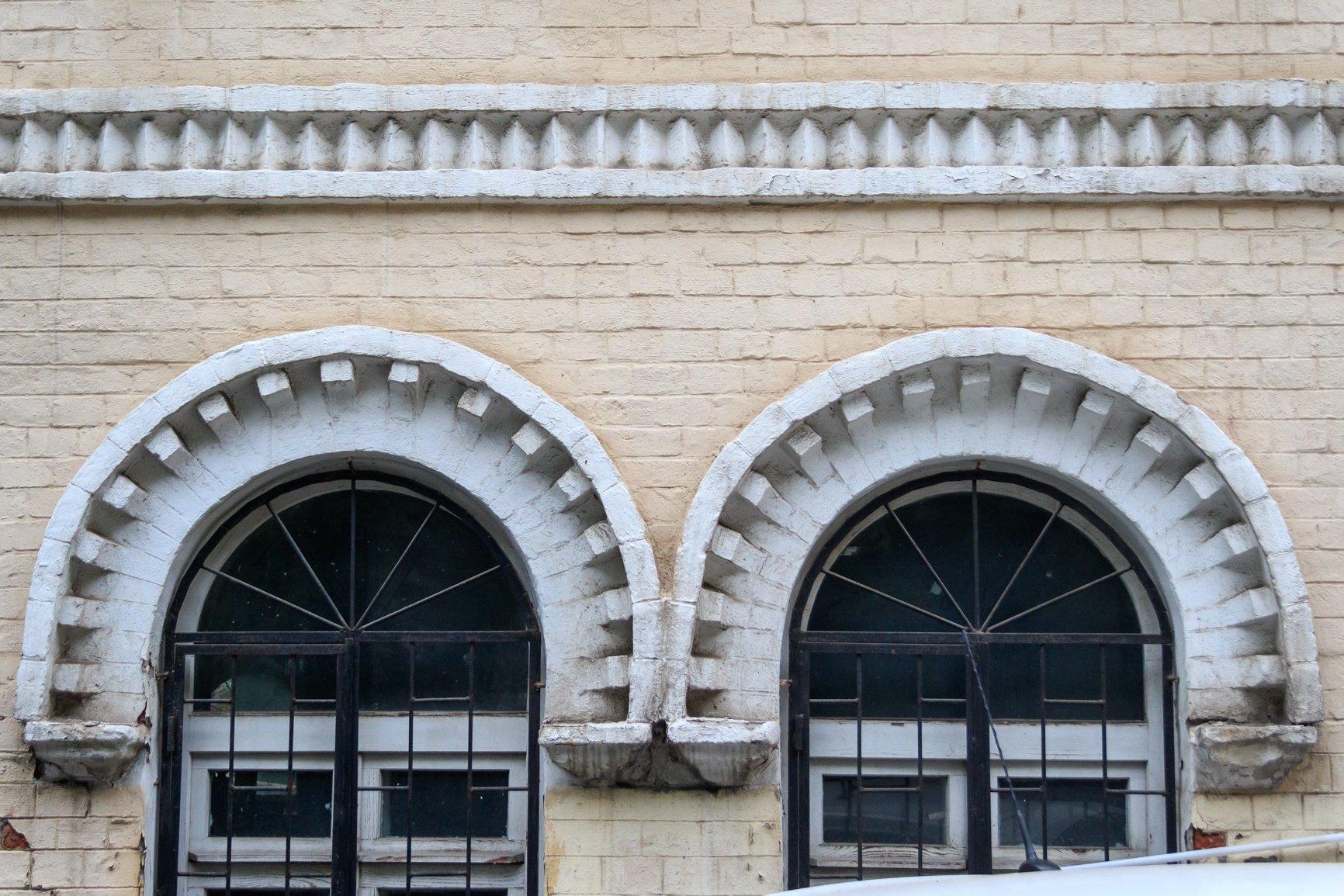
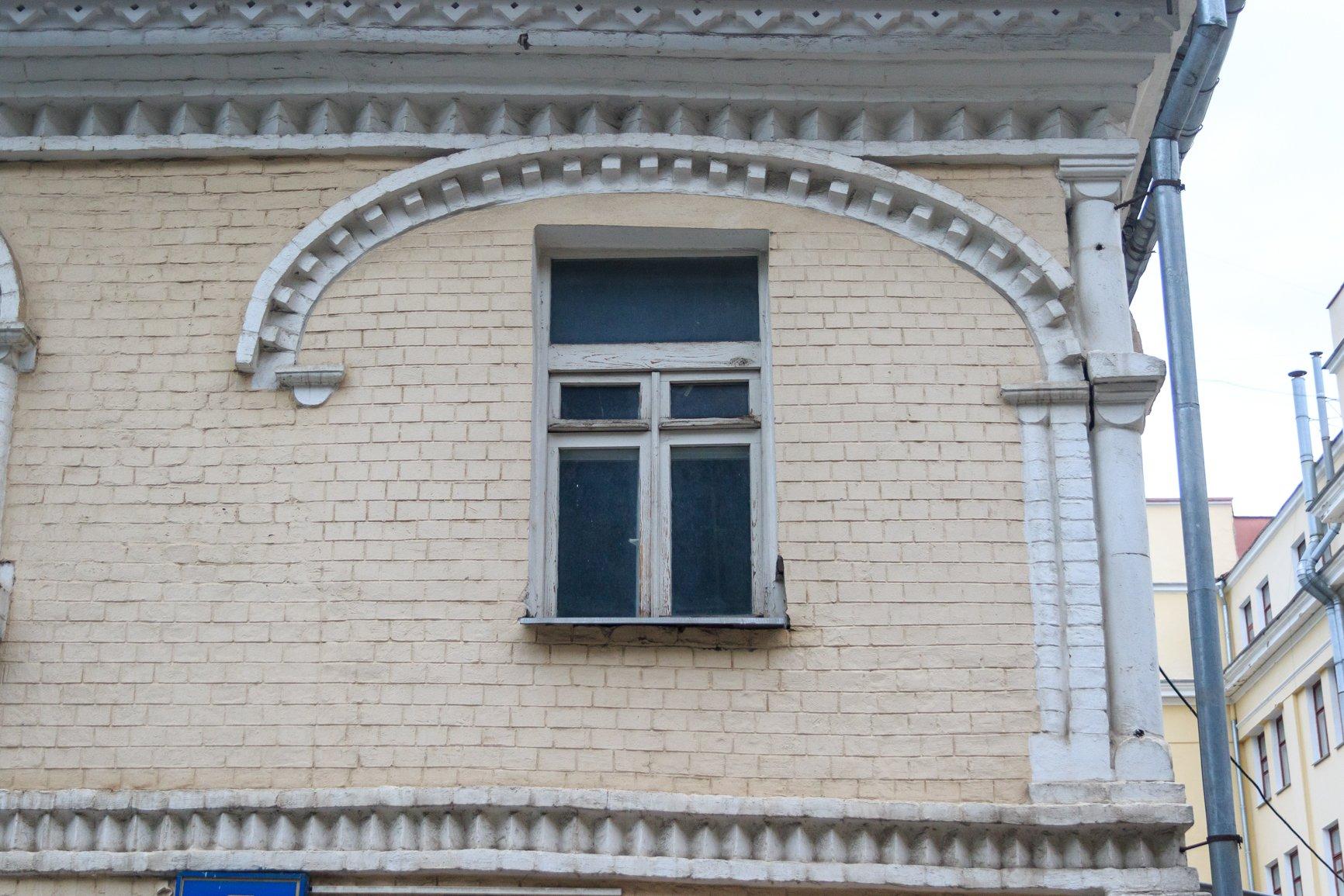
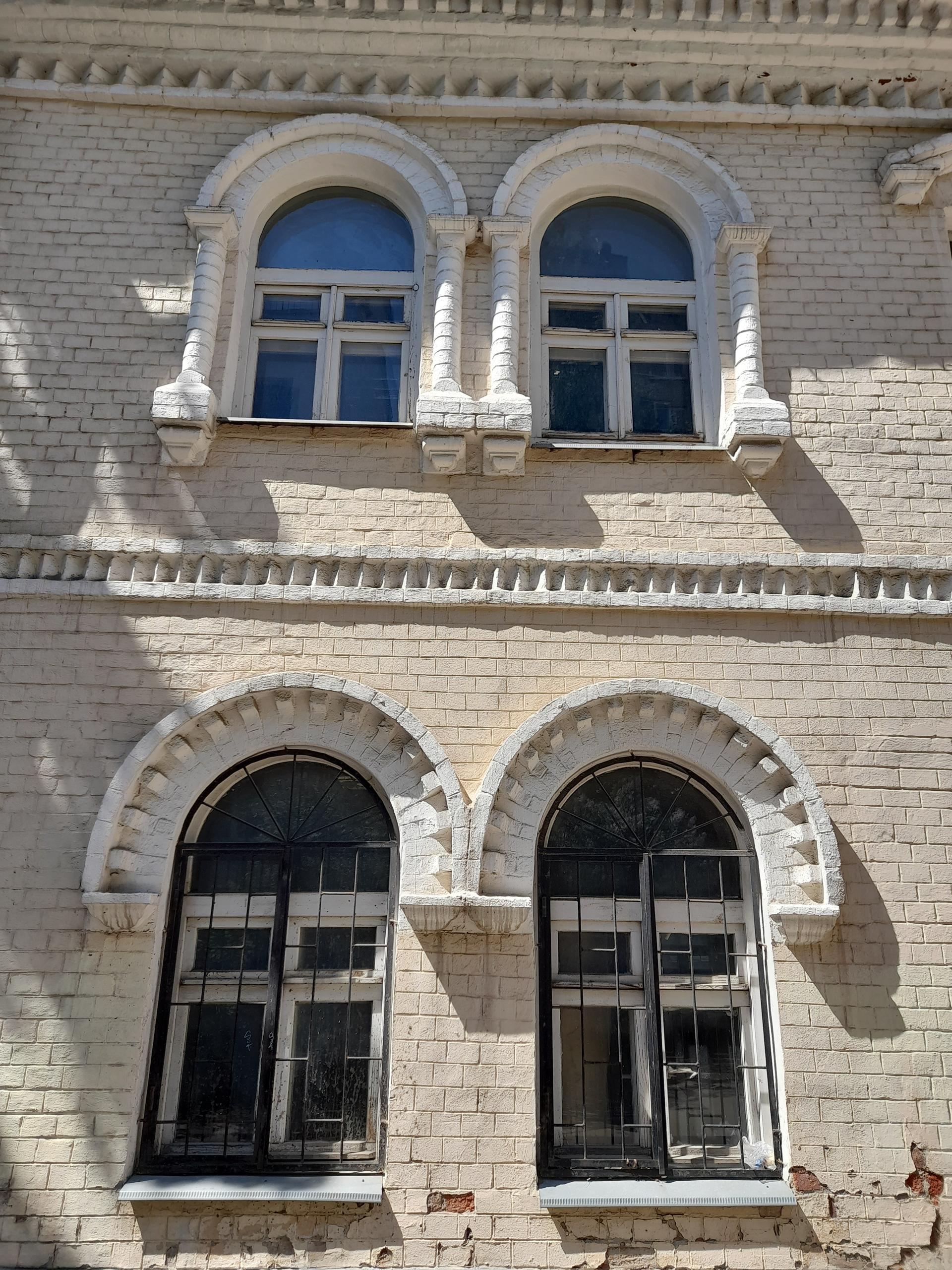
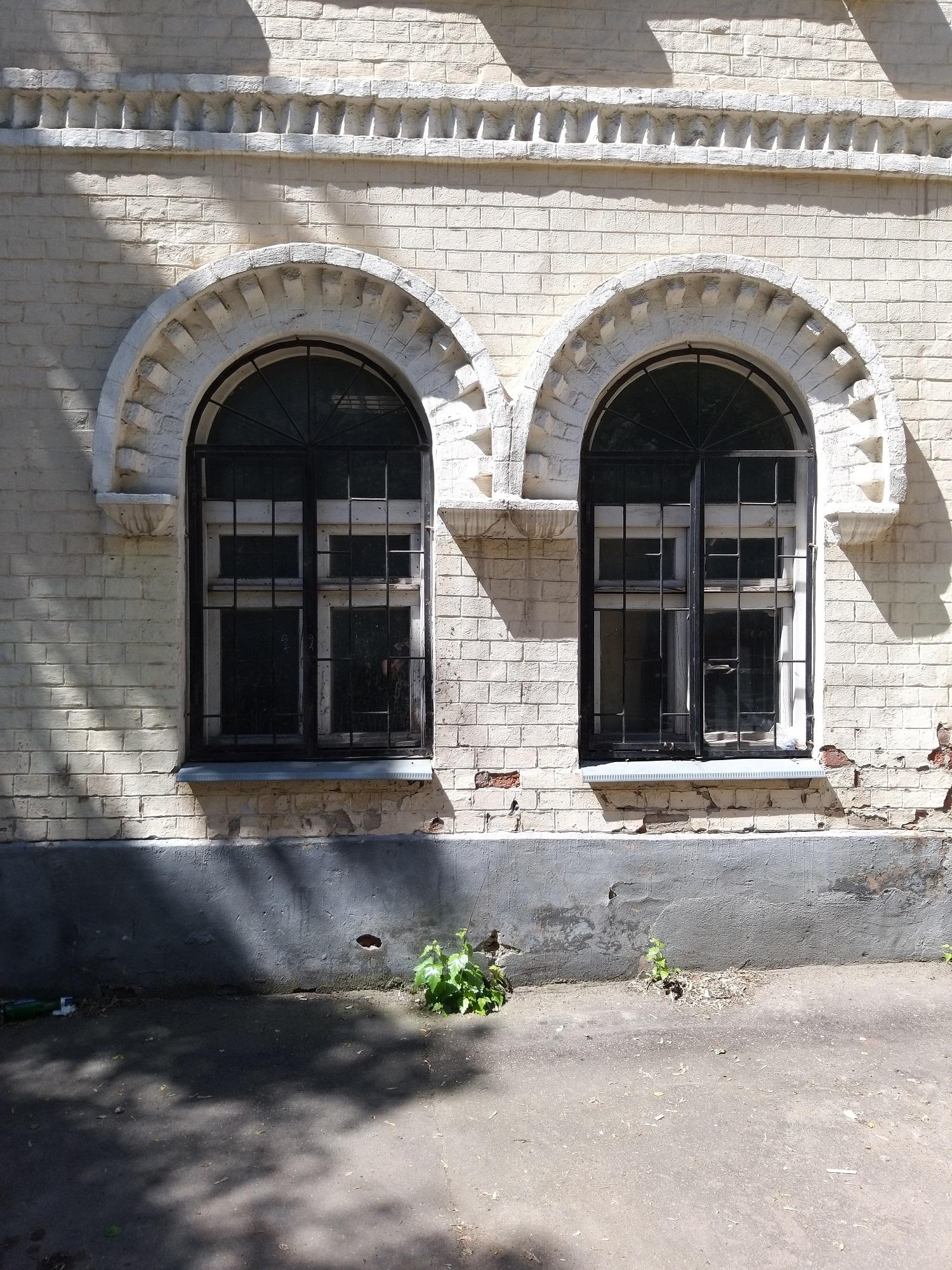
Архитектурные достоинства здания позволили включить его в список выявленных объектов культурного наследия. Объемно-пространственная структура прямоугольной в плане постройки практически не изменилась в ХХ веке. Очень хорошо сохранилось затейливое убранство фасадов, с арочными завершениями окон, поребриками и «бегунцами» на междуэтажном и венчающем карнизах, характерными «кубышками» на полуколонках. Здесь же встречаются и сандрики с замковым камнем. Арка большего радиуса в правой части главного фасада могла символизировать ворота «древнерусского подворья». Углы фасадов подчеркнуты пучками полуколонн – в подражание приемам XVII века.

Здание представляет немалую архитектурную ценность не только для своего района, где старинные дома наперечет, но и для всей Москвы.
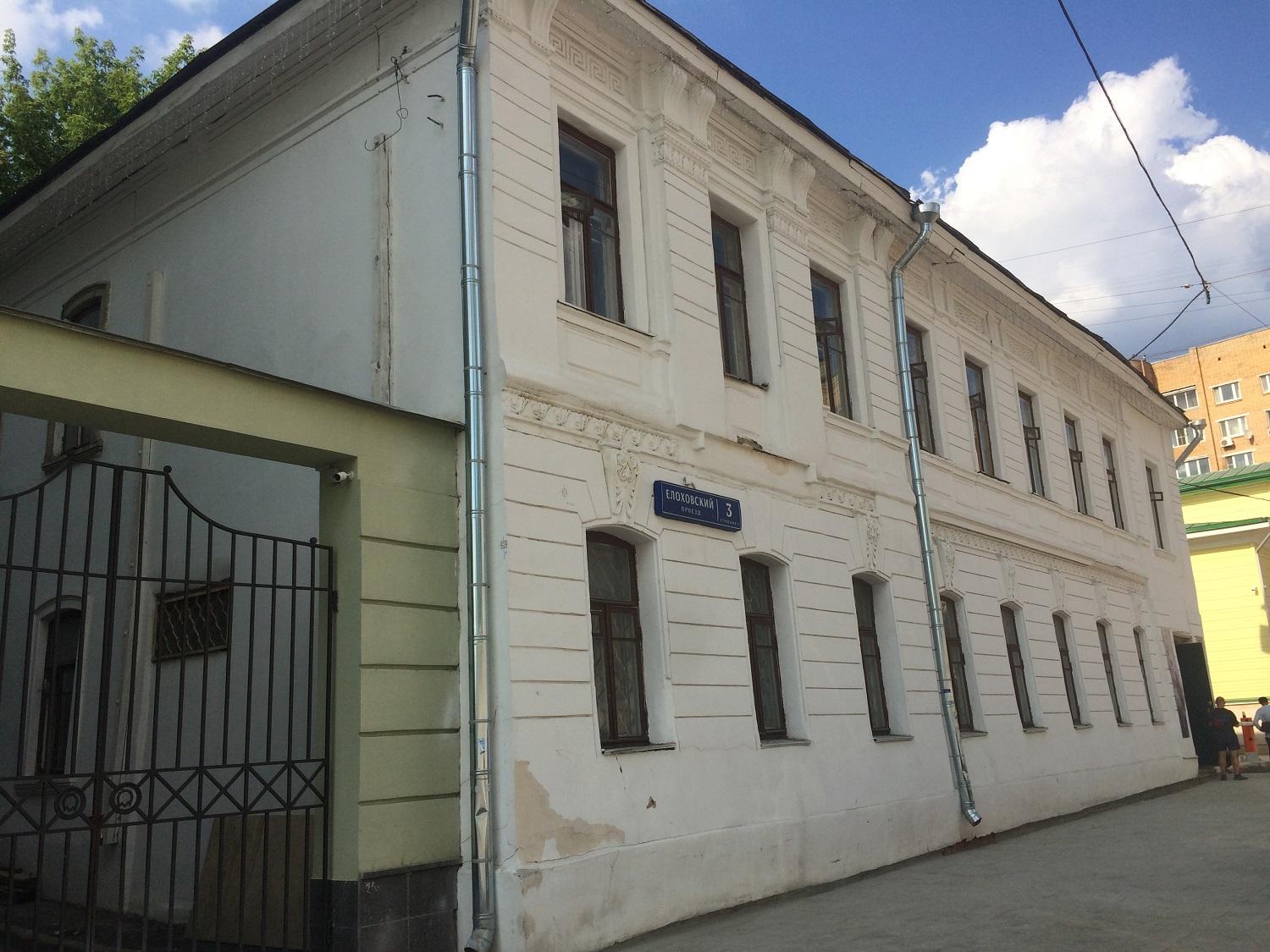
The two storey building with the "Russian" decor on all sides is surrounded by the campus of the Higher School of Printing and Media Industry, the Moscow Polytechnic University. It is the oldest building in the entire block. Once, there was the Petrovskiye Vyselki settlement here (Petrovsko Razumovskiye). It was here that farmers from the Petrovsko Razumovskoye village have been resettled followign the establishment of the Agronomy School in 1861. Over time, farmer houses and summer cottages ("dachas") have lined up the road to the Nizhniye Likhobory. Later, the road became the Mikhalkovskaya Street. In the area with "dachas" prevalence — where, at the turn of the centuries, poets V.Ya. Briusov and V.V. Mayakovsky used to spend summers — the building we describe is situated. Nowadays, it is separated from the Mikhalkovskaya Street by a massive building that once was occupied by the Mosrybvtuz campus. The building was constructed in 1938 (bldg. 1 of the number 7, today is a part of the Polytechnic University campus). There is no information of neither customer or designer of this building. The building was listed as "Almshouse, 1890" on the register of the sites recommended for the state protection. However, in 2014, the State Historical and Cultural Study has recognized it as a newly identified cultural heritage site under the name of "Residential Building, Second Half of the 19th Century". It turned to be impossible to establish the building's nature with the documented support; however, it is clear that it was a residence. Local historians claim that in the early 20th century it belonged to the Krasilshchikov petty bourgeois family and was let for a local school. There is another theory that the building was somehow related to the nearby Kazansko Golovinsky Convent; this theory is supported by the building architectural style. However, there is no evidence of it in the Convent historical annals. Architectural value of the building made it possible to enlist it in the Register of the Newly Identified Culture Heritage Sites. The building’s mass with rectangular layout have hardly changed over the 20th century. The facades’s intricate decor is very well preserved, with its arched tops of the windows, "porebriks" and "begunets" (types of masonry decor where bricks would be laid at angles forming ornamental strips and patterns) on the intermediate and final cornices as well as "kubyshkas" (an ancient Russian architecture vase shaped element) topping short semi columns. There are also pediments with keystones. The large radius arch in the right side part of the main facade might be imitating ancient Russian homestead gateway. The facade corners are emphasized with coupled semi columns imitating the 17 century architectural traditions. The building is of a great architectural value — not only for this area where old buildings are few and far between but also for Moscow as a whole. Konstantin Mikhailov
Автор статьи: Константин Михайлов
Отзывы
(1)
Поделитесь статьей с друзьями
Интересное рядом(3)
Manor Tepliy

In 1865, in an old mansion opened Academy of agricultural sciences and forestry.

ул. Тимирязевская, д. 47-49
Petrovsko-Razumovskaya, Koptevo
Коптевский б-р
Koptevo
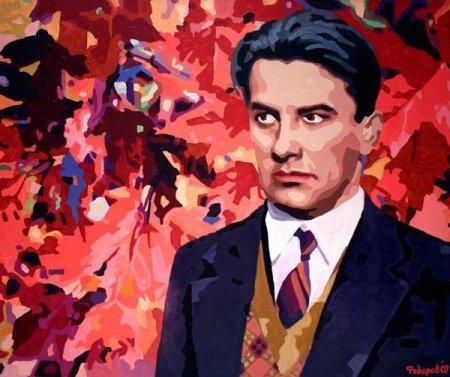
Mayakovsky V. V.
поэт