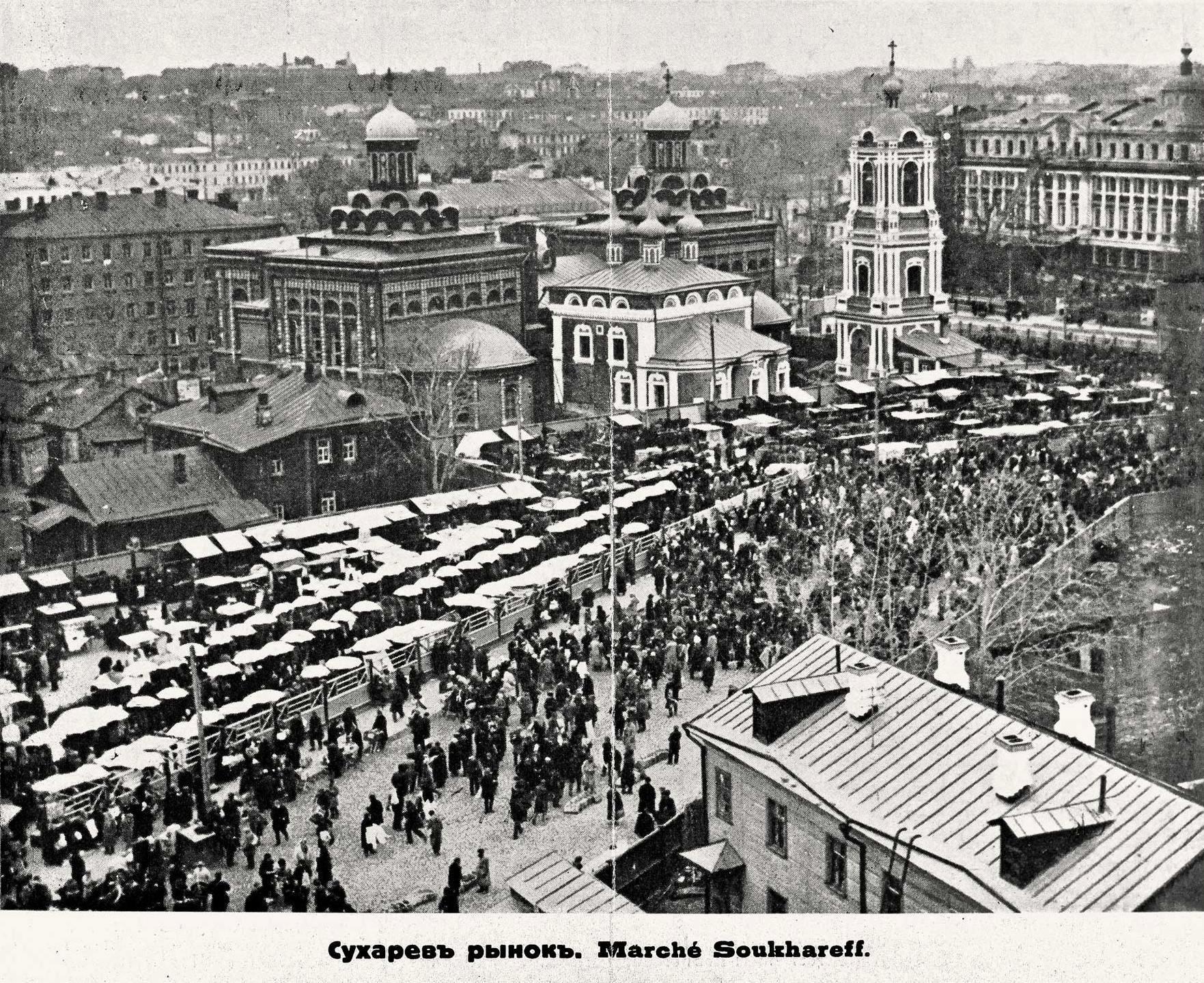
На этом участке некогда находился пятиглавый храм Николая Чудотворца в Драчах (возведён в1688 г., а в 1903 г. перестроен архитектором З. Ивановым с возведением новых приделов и трапезной на 2000 молящихся), с отдельно стоящей трехъярусной колокольней (построена в середине XVIII в.). Колокольня размещалась на углу Садовой-Сухаревской и Трубной улиц.
В 1929 году храм был закрыт, а в 1930-е храм и колокольню снесли вместе с двумя соседними домами: № 10, который принадлежал купчихе Шатровой, и № 12, принадлежавший Михаилу Юрьевичу Лахтину, известному историку русской медицины.
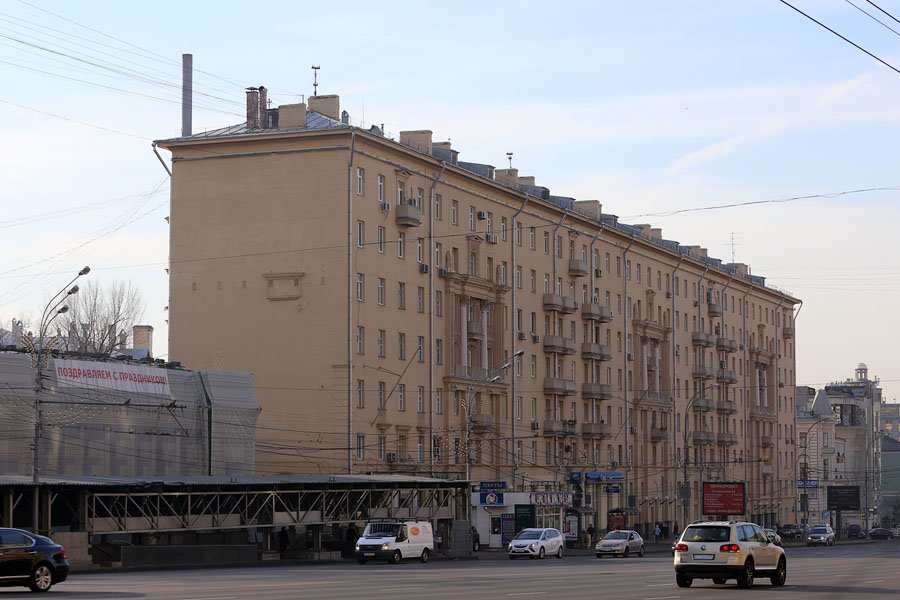
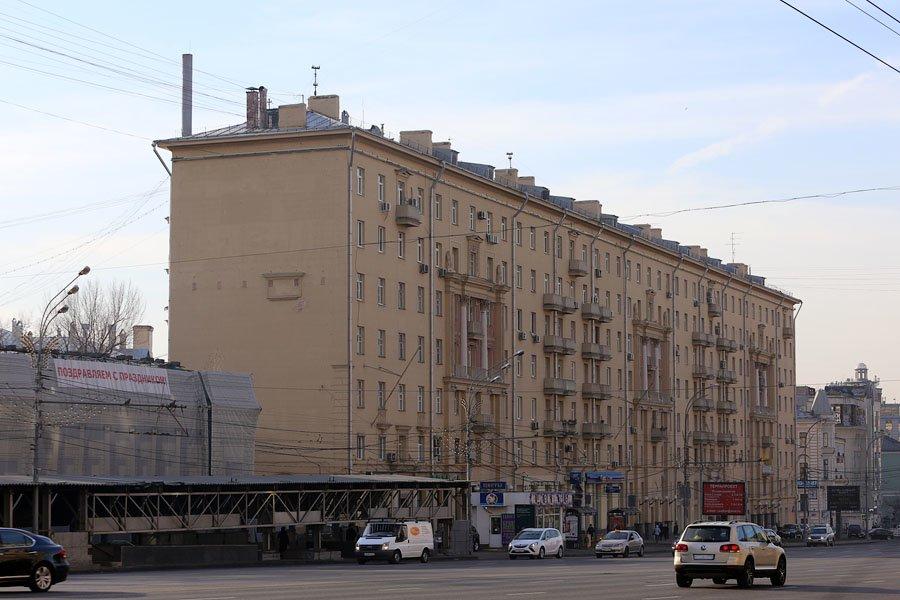
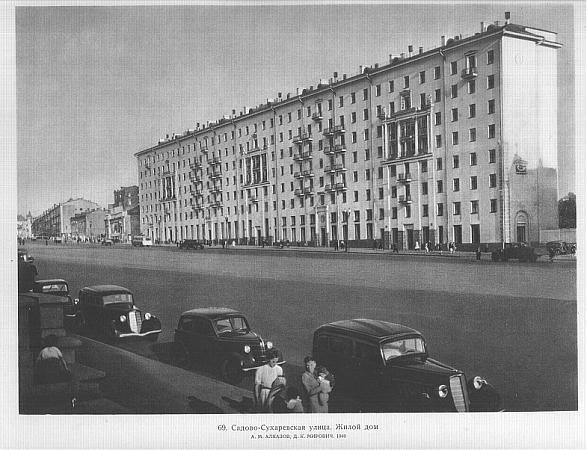
В 1940 году на месте снесенной части квартала построили многоэтажный жилой дом № 8-12 с гомеопатической аптекой и спец-ателье на первом этаже. Примечательно, что первоначальный проект дома насчитывал 5 подъездов и не предполагал сноса колокольни. В пользу этой версии говорят ширина лестничных клеток и планировка квартир.
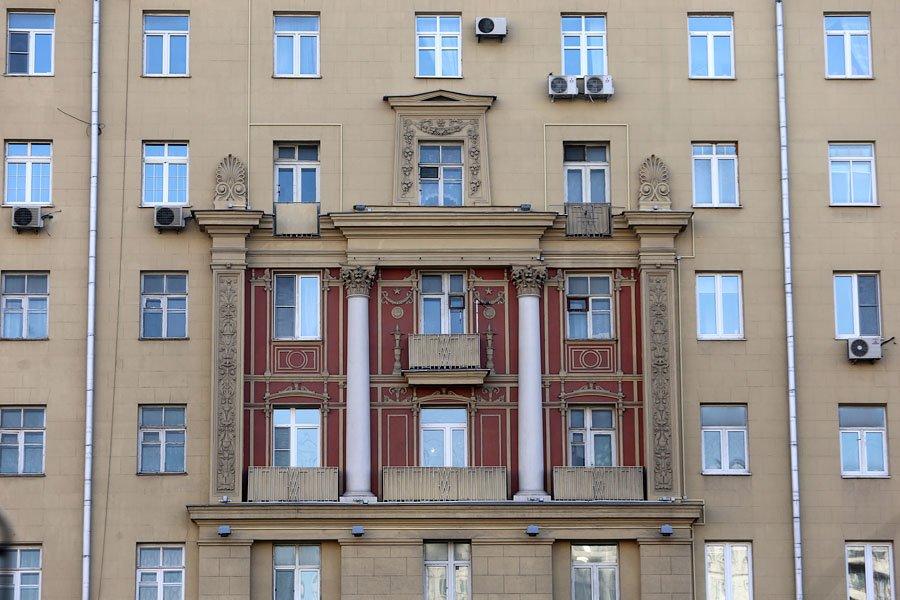
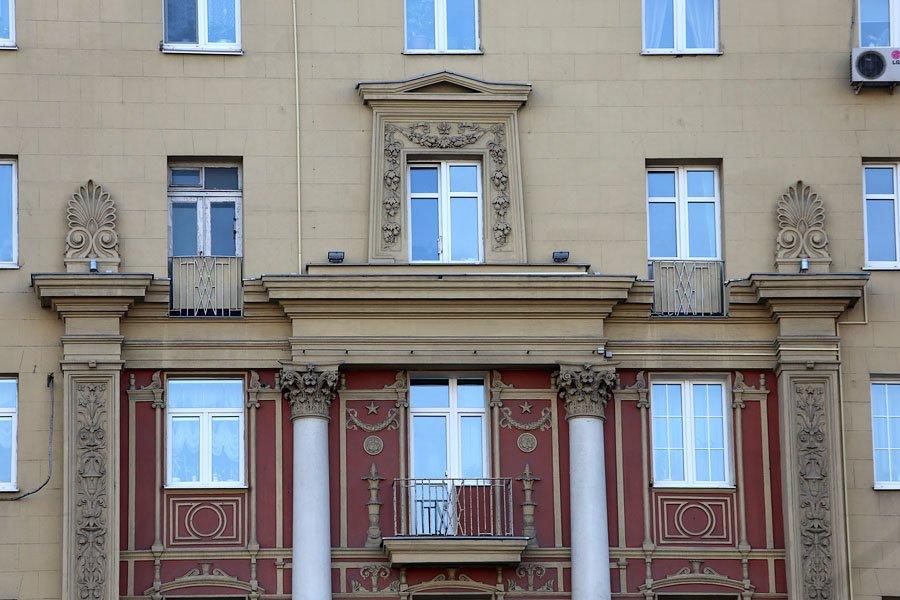
Позднее, когда было принято решение о сносе храма, проект, по-видимому, был спешно доработан, и к концу 1940 года реализован как 7-ми подъездное здание. Фасад и пластически, и по цвету акцентирован тремя «пятнами», образованными группами из шести окон. Стена, их обрамляющая, выкрашена терракотовым цветом. Кроме того, группа завершается карнизом; два центральных окна (по вертикали) фланкированы полуколоннами с коринфскими капителями.
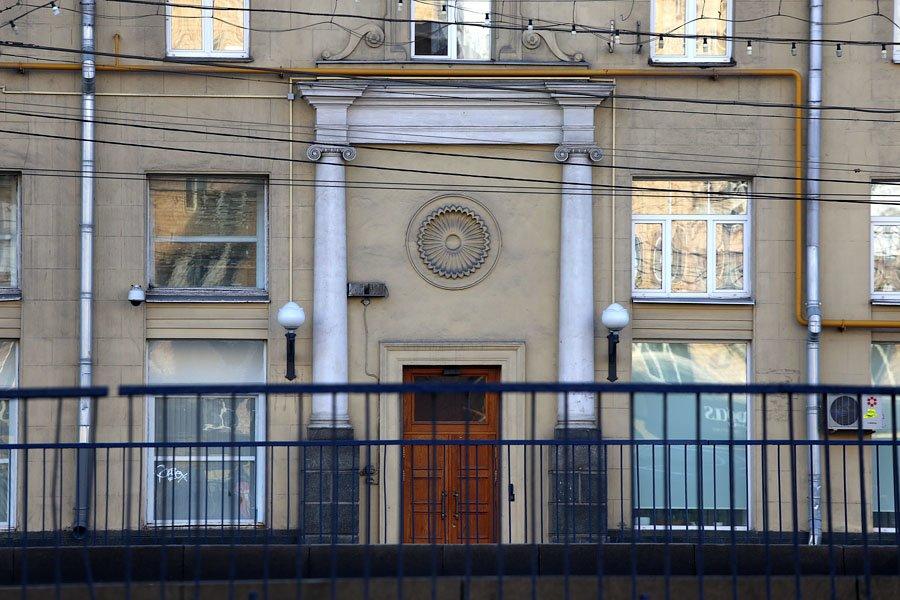
Каждая группа справа и слева отделяется от остальной стены вертикальными орнаментальными вставками, выступающими вперед. В левой части здания два портала оформлены полуколоннами с не часто встречающимися в постройках советского времени ионическими капителями, на которые опирается карниз с лепными волютами.
Примечательно, что дворовый фасад дома отделан дорическими колоннами в отличие от близстоящих зданий на Садовом кольце, имеющих весьма аскетичную отделку непарадных фасадов. Ухоженный зеленый двор с клумбами и скамейками под тенью старых деревьев, с просторной детской площадкой - местом отдыха и детей, и взрослых.
Дом в наши дни сохранил практически без изменений свой первоначальный облик. Сейчас в доме проживает уже третье поколение жильцов и несколько семей старожилов, кто еще помнит как заселялся дом в далеком 1940 году. В этом доме в разные годы жили певицы Большого театра: народная артистка СССР Вера Давыдова, заслуженная артистка РСФСР Мария Звездина.
This is a residential building in the style of "Stalin's empire" (Arch. A. Alhazov, B. Mirovich). Now here resides the third generation of residents and a few families veteran who still remembers how populated the house back in 1940.
On this site once stood five-domed church of St. Nicholas in Drach (1688, rebuilt in 1903 by architect Z.Ivanovym with the construction of new chapels and refectory, 2000 mol), with a separate three-tiered bell tower (ser. XVIII c.). The bell tower was located at the corner of Sadovaya-Sukharev and Pipe streets.
In 1929 the church was closed, and in 1930 the temple and the bell tower was demolished along with two neighboring houses: № 10, which belonged to the merchant's wife Shatrova, and number 12, owned by Mikhail Yurevich Lakhtin known Russian historian of medicine (his work "in modern Besooderzhimost village "" Russian life "published in № 6/2008 of). In 1940, on the site of the demolished part of the quarter built multi-storey residential building № 8-12 with homeopathic pharmacy and special studio on the ground floor. It is noteworthy that the original design of the house has 5 entrances and did not anticipate the demolition of the bell tower. This version is said width of stairwells and apartment layout.
Later, when it was decided to demolish the temple, the project seems to have been hastily finalized, and by the end of 1940 is implemented as a 7-driveway building. Facade and plastically, and the color is accented by three "spots" formed by a group of six windows. Wall, their framing, painted terracotta color. In addition, the Group completed the eaves; two central window (vertically) flanked by half-columns with Corinthian capitals. Each group left and right separated from the rest of the walls of the vertical ornamental inlays protruding forward. On the left side of the building two portals are decorated with semi-columns are not often found in buildings of the Soviet era Ionic capitals, which relies on the ledge with stucco volutes. It is noteworthy that the yard facade of the house is decorated with Doric columns in contrast to the nearby buildings on the Garden Ring, with a very austere facade finish for show. Landscaped green yard with flower beds and benches in the shade of old trees, with a spacious playground - a place of rest and children, and adults.
The house was built for the NKVD, and artists of the Bolshoi Theater, now living here is the third generation of residents and several families of the old-timers who still remembers how populated the house back in 1940. In this house lived in different years, the singer of the Bolshoi Theatre: People's Artist of the USSR Vera Davydova, Honored Artist of the RSFSR Maria Zvezdina; recently deceased prominent lawyer Semyon Aria, winner of the Gold Medal of FN Plevako. Customers were S.Ariya Andrei Sakharov, Roman Karmen, Peter Yakir, Rolan Bykov, Natalia Fateev, Vasily Livanov, Alexander Minkin, Boris Berezovsky and others.