Интерактивный гид по городу
С мобильным приложением бродить по городу гораздо интереснее!

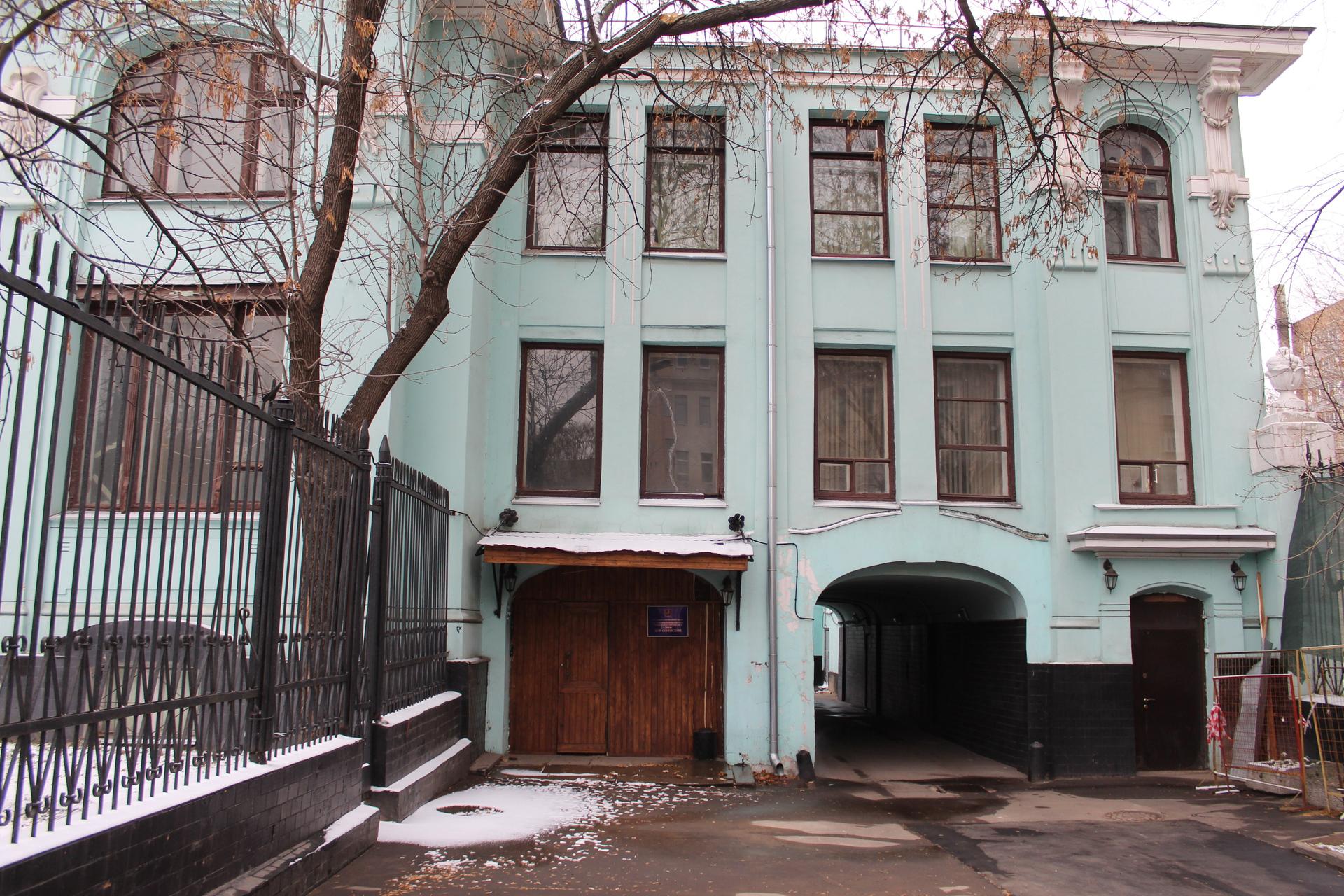
Жилой дом Е.А. Свечиной – С.Ф. Циммерман – С.П. Моргунова

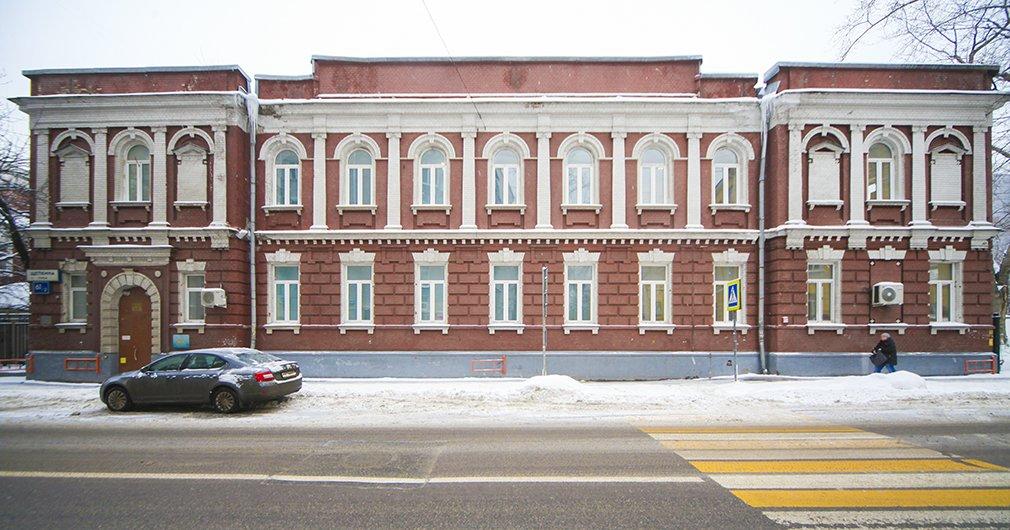
В 1902 году по проекту гражданского инженера А.С.Гребенщикова начинается кардинальная перестройка скромного ампирного дома на 1-й Мещанской улице, принадлежащего С.Ф.Циммерман, в представительный особняк в стиле модерн.

Жилой дом Е.А. Свечиной – С.Ф. Циммерман – С.П. Моргунова
Prospekt Mira, Проспект Мира (радиальная)
В 1902 году по проекту гражданского инженера А.С.Гребенщикова начинается кардинальная перестройка скромного ампирного дома на 1-й Мещанской улице, принадлежащего С.Ф.Циммерман, в представительный особняк в стиле модерн.
3.30
Вы можете воспользоваться QR-кодом, чтобы открыть эту страницу в нашем приложении
Архитектурный стиль:
Годы постройки:
XIX в., 1902
Архитекторы:
А.С. Гребенщиков
Эпоха:
19th century, 1900s
Информация о здании

В начале XIX в. Мещанская слобода продолжает активно застраиваться дворянскими усадьбами. Дом под номером 27 (ныне д. 25) на 1-й Мещанской улице между Маслениковым и Серединским переулками в 1828 г. принадлежал дворянке Е. А. Свечиной. Каменное строение находилось в глубине двора, со стороны улицы был разбит сад.

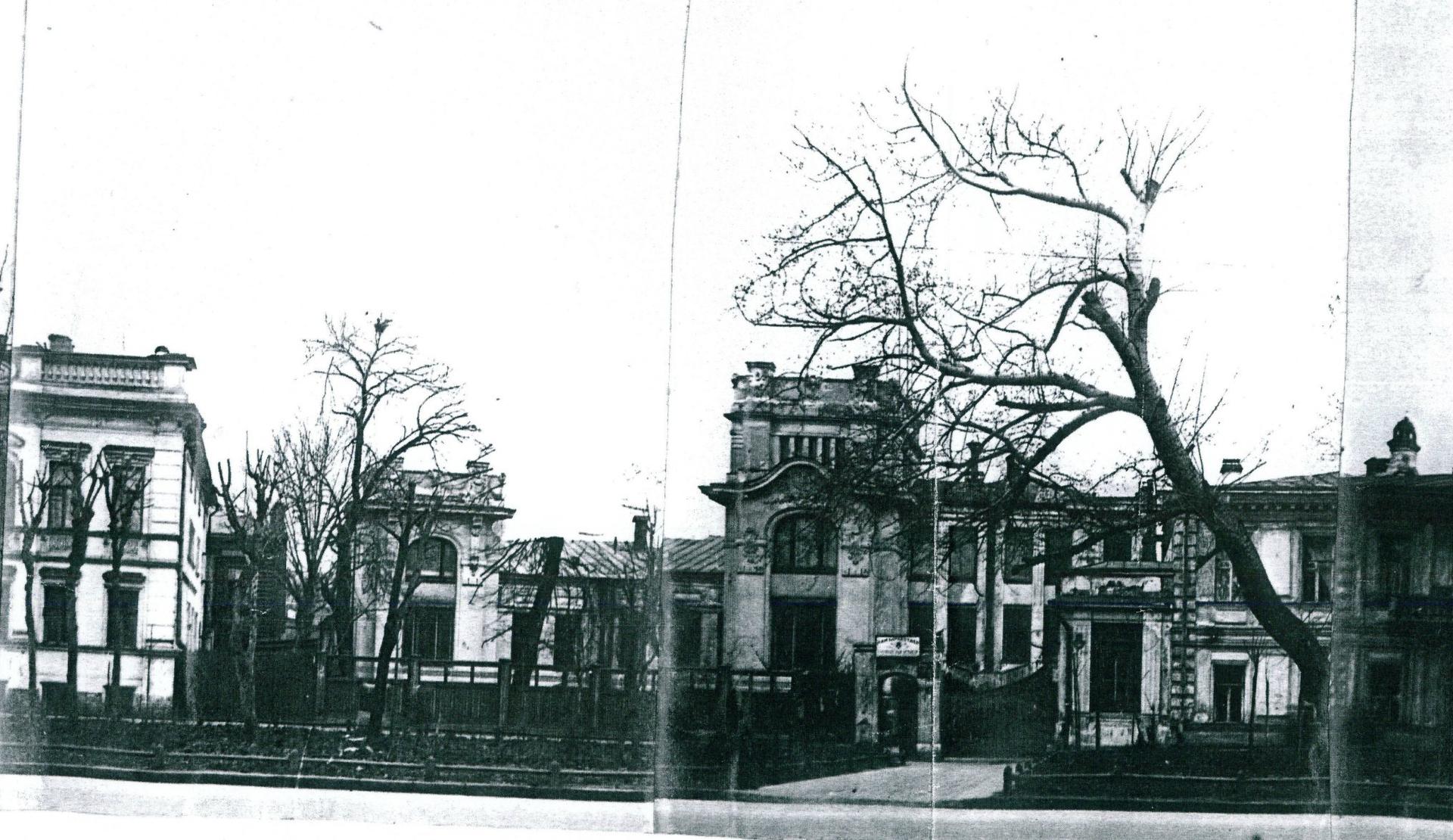
В 1870-е гг. владение переходит к представительнице купеческого сословия Софье Федоровне Циммерман. Ее супруг ‒ купец 2-й гильдии родом из Ревеля Карл Фридрих Циммерман ‒ занимался шляпным делом. К этому времени усадебный дом представлял собой двухэтажный классический особняк с мезонином в пять окон с характерным для позднего классицизма лаконичным фасадом и анфиладной планировкой. На втором этаже был устроен балкон со спуском в сад.

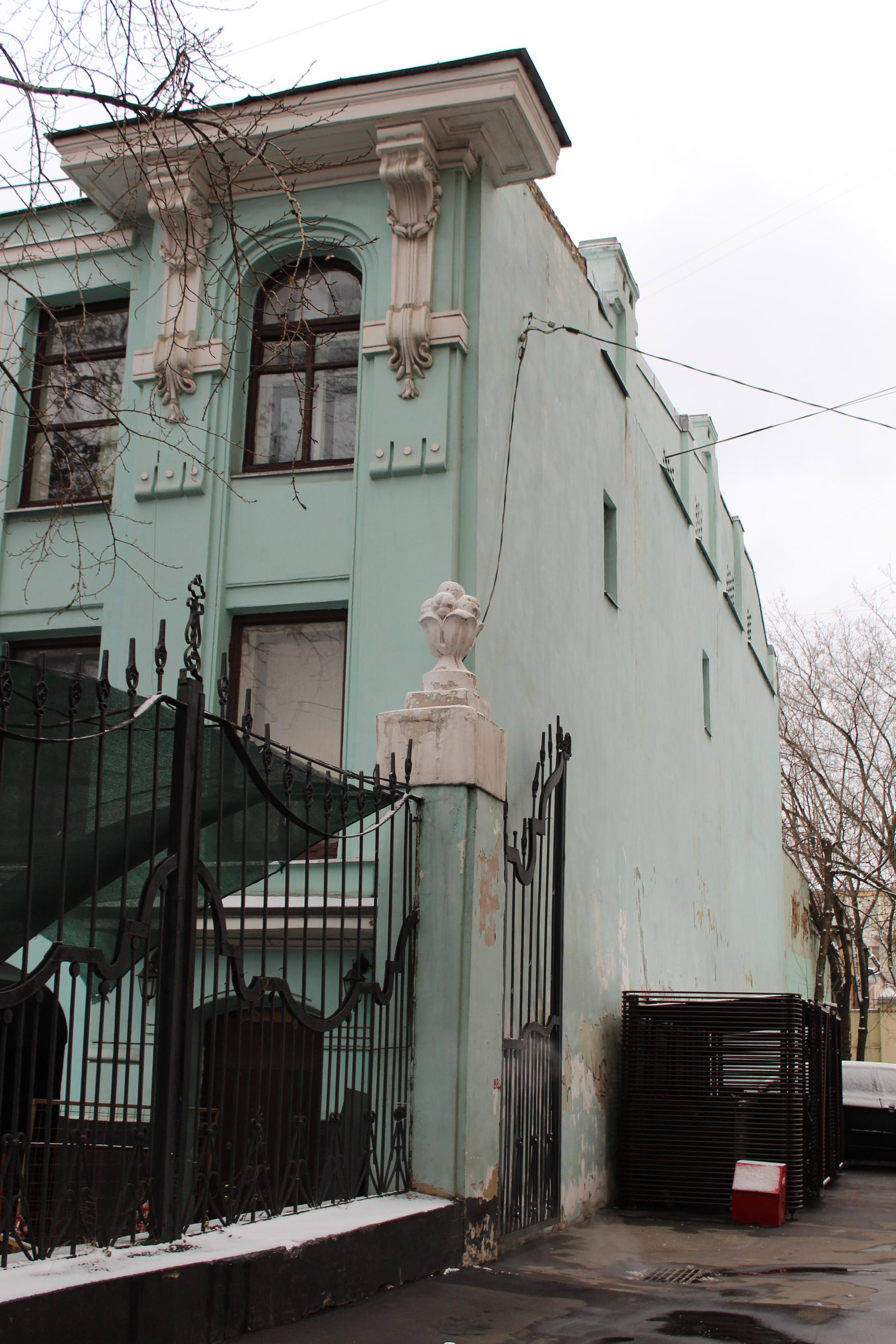
В 1902 г. по проекту гражданского инженера А. С. Гребенщикова начинается кардинальная перестройка скромного ампирного дома в представительный особняк в стиле модерн. Был разобран мезонин. Для расширения здания были снесены восточная и прилегающие к ней стены, одновременно надстроена третьим этажом южная торцевая стена. С северной стороны была сделана большая трехэтажная пристройка с проездной аркой на задний двор.

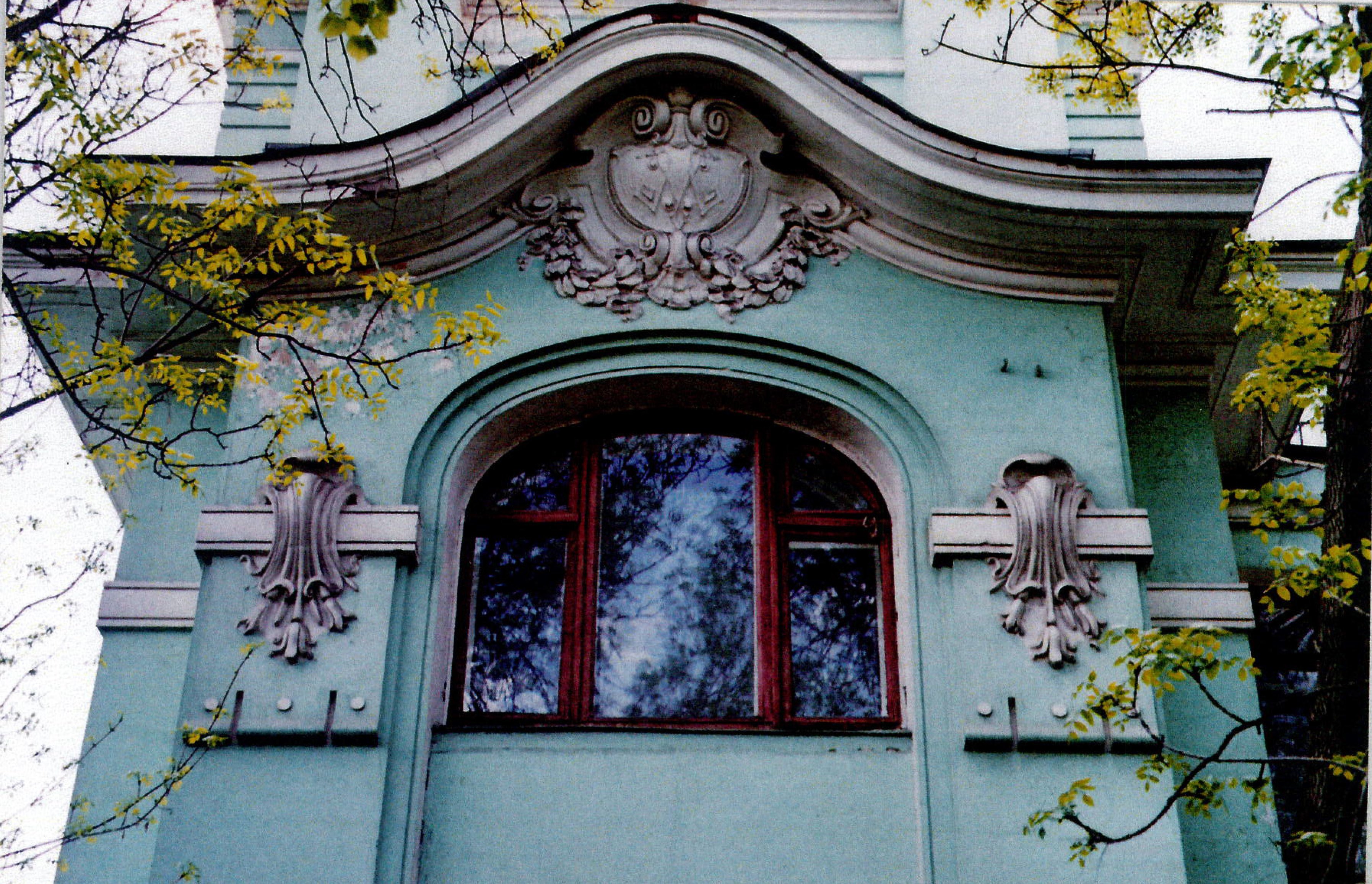
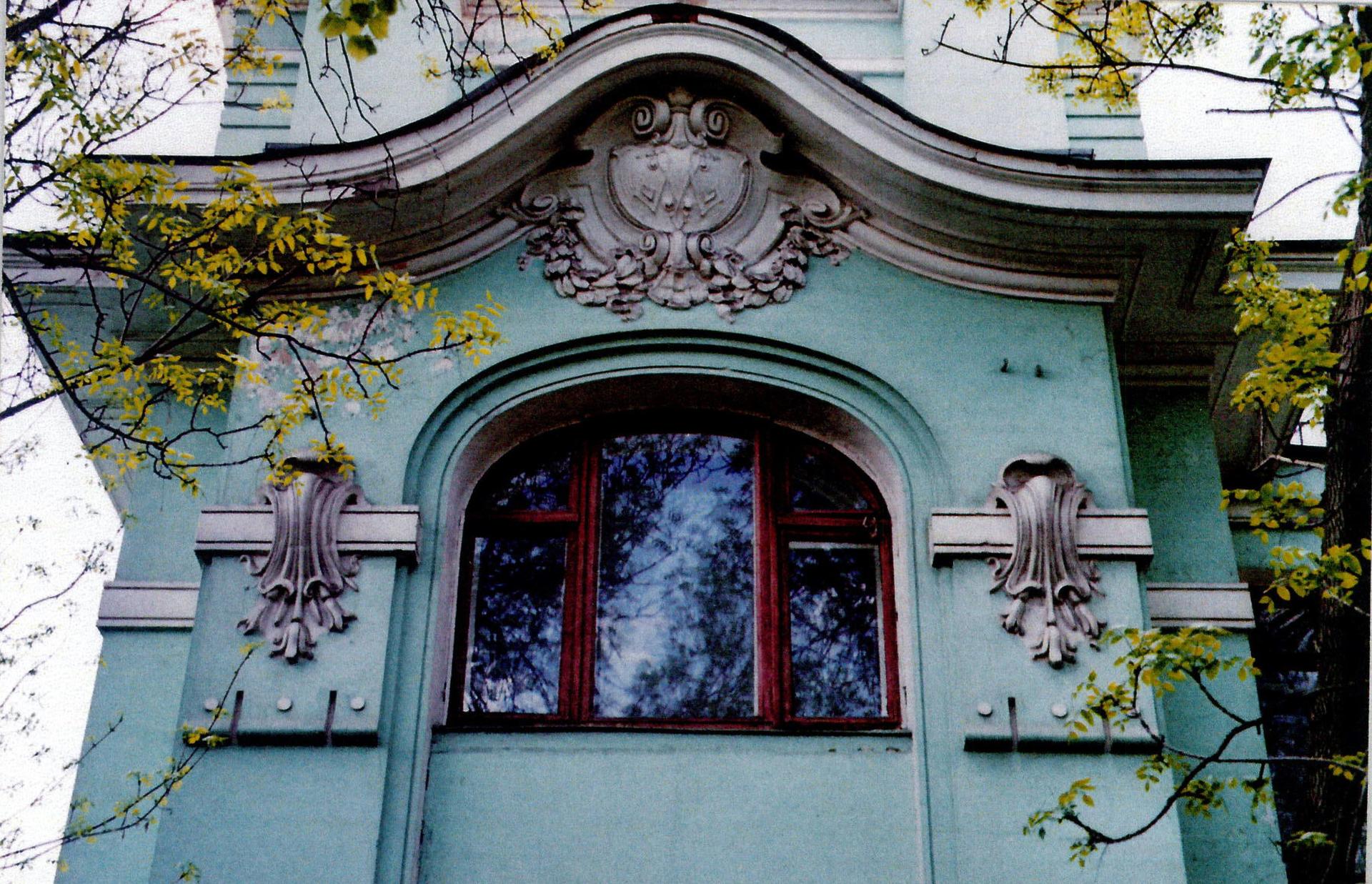
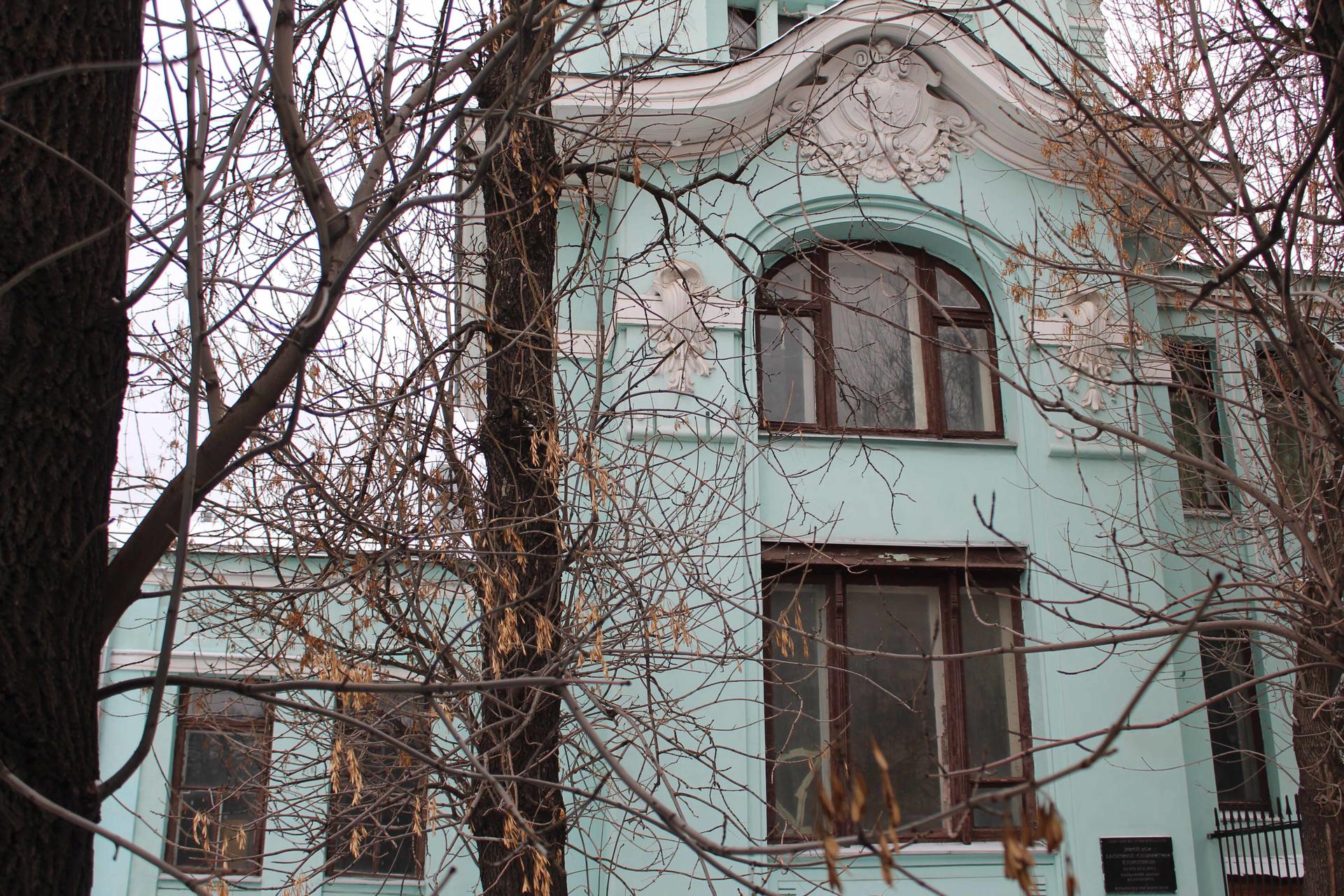
Основу асимметричной композиции уличного фасада составляли три ризалита. Центральный выступ завершался красивым криволинейным фронтоном и чердачной надстройкой с аттиком. Лепные карнизы поддерживали изящные кронштейны. Между центральным и южным ризалитами располагалась двухэтажная часть дома.

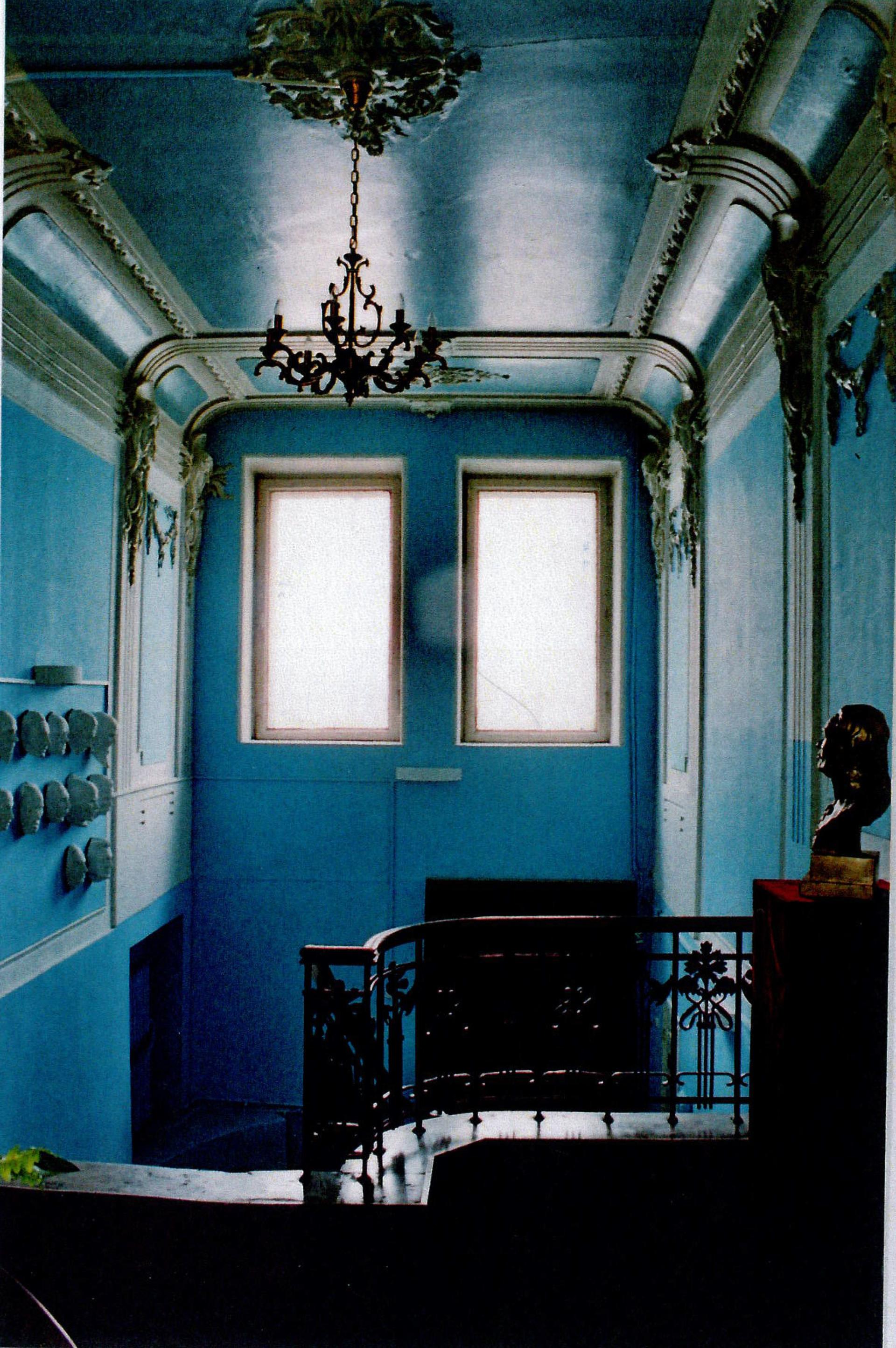
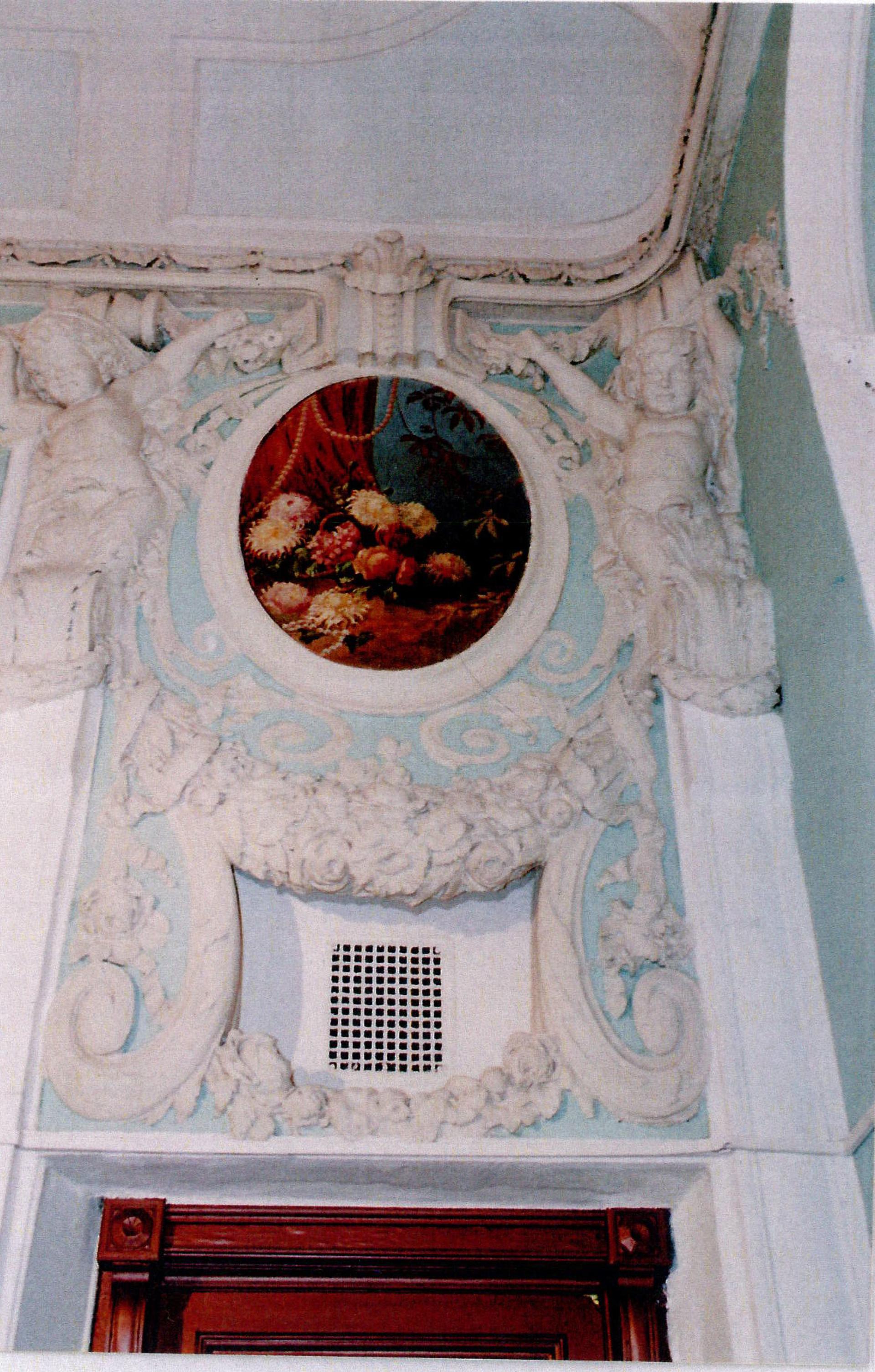
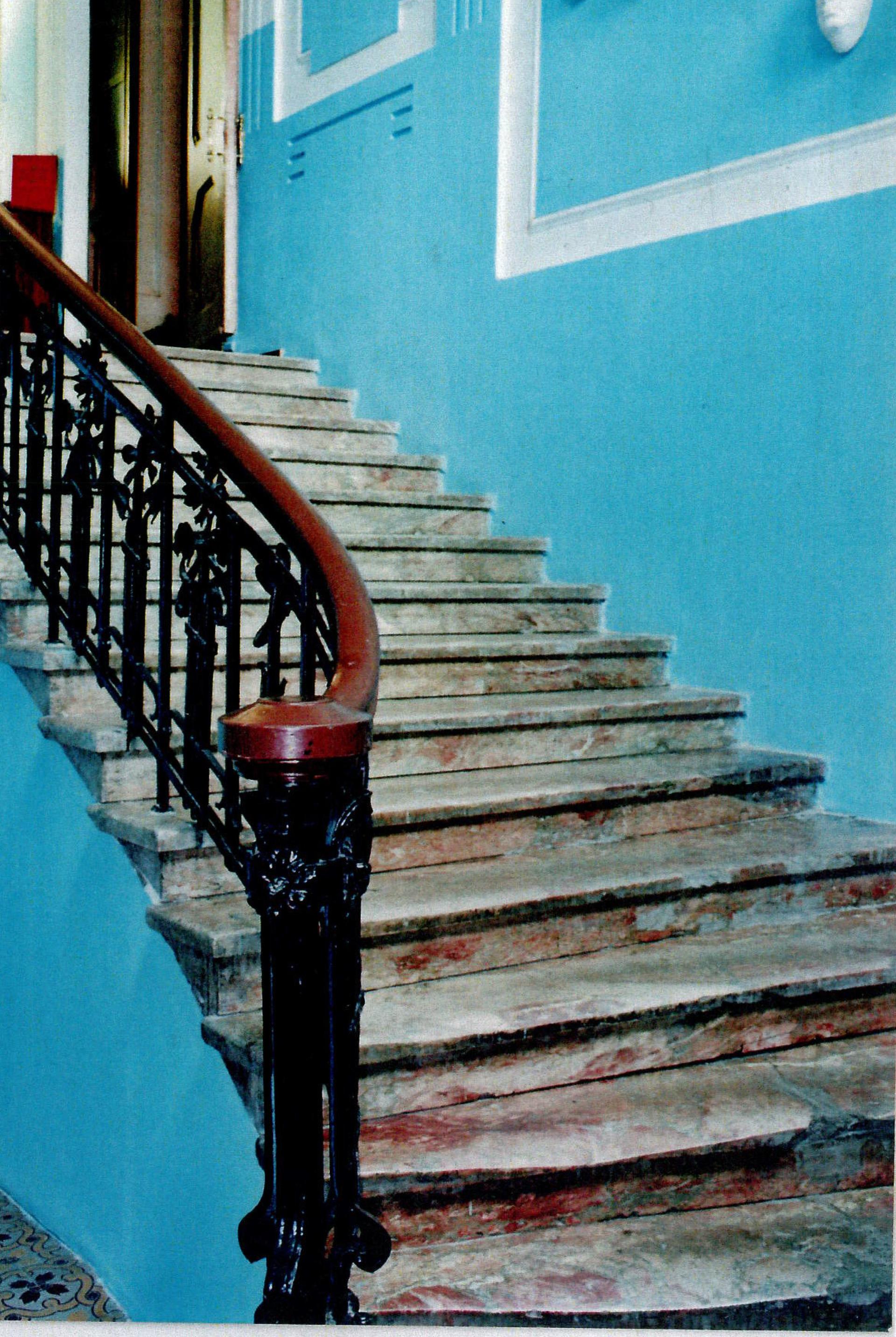
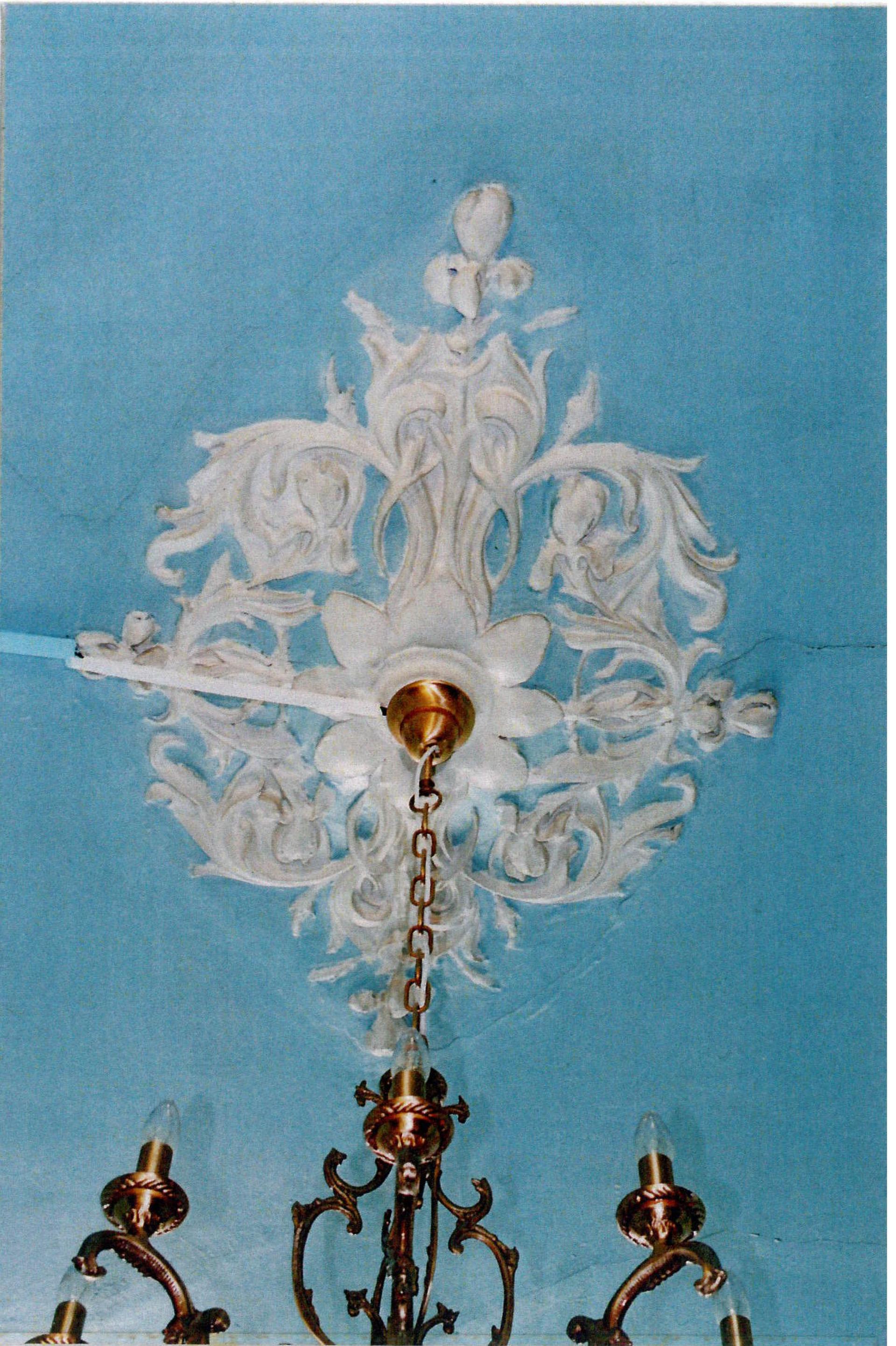
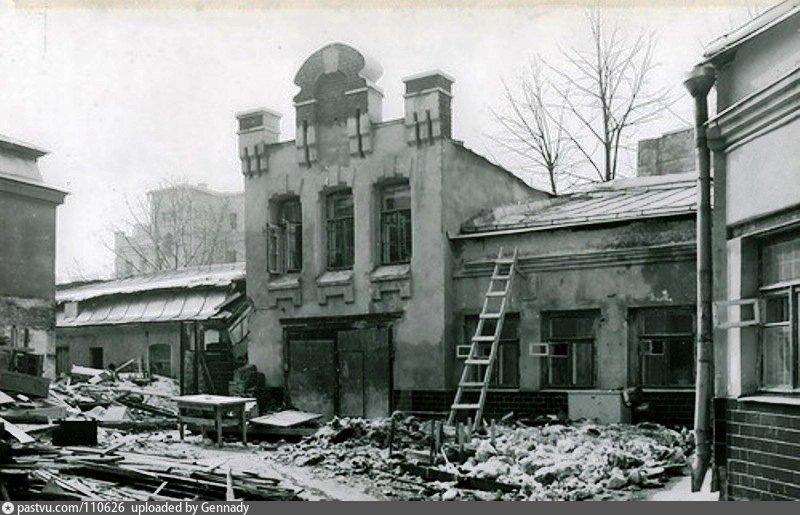
Хотя дом был оснащен водяным отоплением, в комнатах были устроены печи и камины. Парадный вестибюль с мраморной лестницей и ажурным чугунным ограждением разместили в новой южной части постройки. Кроме вестибюля на первом этаже располагались прачечная, фотографическая комната, квартира служащих владельца и кухня. Второй этаж и антресоль были заняты квартирой владельца. На третьем находились гостевые комнаты и квартиры, сдававшиеся внаем. В надворных строениях располагался склад мануфактурных товаров владельца, конюшня, гараж, погреба и сараи.

Вместе с перестройкой дома была возведена и ограда, к сожалению, впоследствии утраченная. Когда в 1904 г. работы по перестройке завершились, усадьбу продали купеческой жене Ю. М. Николаевой. В следующем году ею уже владел Герман Шмидт, а после ‒ купец Сергей Петрович Моргунов, ставший ее последним хозяином. Моргунов разместил в картуше на центральном выступе вензель «М».

В 1925 г. особняк был передан Наркомату здравоохранения для устройства в нем туберкулезного диспансера, который и располагался здесь в течение 80 лет. В 1950-е гг. в связи с расширением и застройкой проспекта Мира усадьба лишилась палисадника и ограды, была снесена окружающая историческая застройка. Некоторые элементы декоративного убранства парадных залов и вестибюля были утрачены, заменены столярные заполнения и полы.

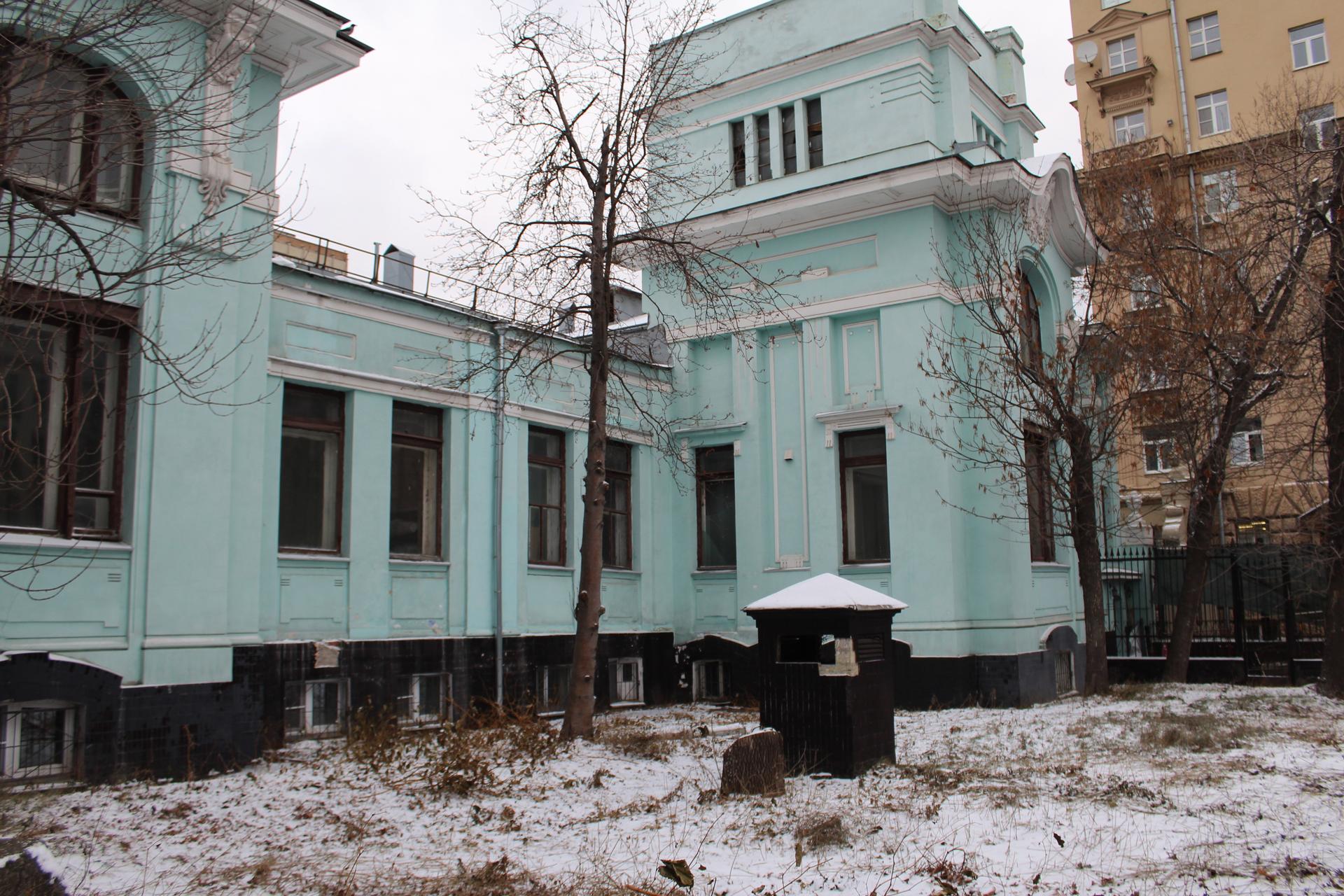
В 2000-е гг. дом занимали многочисленные арендаторы: банно-оздоровительный комплекс, медицинские учреждения, офисы и даже Музей восковых фигур. За это время прежде зеленые фасады дома были окрашены в голубой цвет. В здании периодически проводились стихийные ремонты, но полноценной реставрации не было с момента его постройки.

Сегодня дом передан в пользование учреждению культуры «Хор солистов» под руководством Михаила Турецкого.

Сейчас здание находится на реставрации. Перед началом проведения масштабных работ эксперты изучили все особенности здания, а также архивные материалы.

В начале XIX в. Мещанская слобода продолжает активно застраиваться дворянскими усадьбами. Дом под номером 27 (ныне д. 25) на 1-й Мещанской улице между Маслениковым и Серединским переулками в 1828 г. принадлежал дворянке Е. А. Свечиной. Каменное строение находилось в глубине двора, со стороны улицы был разбит сад.
В 1870-е гг. владение переходит к представительнице купеческого сословия Софье Федоровне Циммерман. Ее супруг ‒ купец 2-й гильдии родом из Ревеля Карл Фридрих Циммерман ‒ занимался шляпным делом. К этому времени усадебный дом представлял собой двухэтажный классический особняк с мезонином в пять окон с характерным для позднего классицизма лаконичным фасадом и анфиладной планировкой. На втором этаже был устроен балкон со спуском в сад.
В 1902 г. по проекту гражданского инженера А. С. Гребенщикова начинается кардинальная перестройка скромного ампирного дома в представительный особняк в стиле модерн. Был разобран мезонин. Для расширения здания были снесены восточная и прилегающие к ней стены, одновременно надстроена третьим этажом южная торцевая стена. С северной стороны была сделана большая трехэтажная пристройка с проездной аркой на задний двор.
Основу асимметричной композиции уличного фасада составляли три ризалита. Центральный выступ завершался красивым криволинейным фронтоном и чердачной надстройкой с аттиком. Лепные карнизы поддерживали изящные кронштейны. Между центральным и южным ризалитами располагалась двухэтажная часть дома.
Хотя дом был оснащен водяным отоплением, в комнатах были устроены печи и камины. Парадный вестибюль с мраморной лестницей и ажурным чугунным ограждением разместили в новой южной части постройки. Кроме вестибюля на первом этаже располагались прачечная, фотографическая комната, квартира служащих владельца и кухня. Второй этаж и антресоль были заняты квартирой владельца. На третьем находились гостевые комнаты и квартиры, сдававшиеся внаем.
В надворных строениях располагался склад мануфактурных товаров владельца, конюшня, гараж, погреба и сараи.
Вместе с перестройкой дома была возведена и ограда, к сожалению, впоследствии утраченная.
Когда в 1904 г. работы по перестройке завершились, усадьбу продали купеческой жене Ю. М. Николаевой. В следующем году ею уже владел Герман Шмидт, а после ‒ купец Сергей Петрович Моргунов, ставший ее последним хозяином. Моргунов разместил в картуше на центральном выступе вензель «М».
В 1925 г. особняк был передан Наркомату здравоохранения для устройства в нем туберкулезного диспансера, который и располагался здесь в течение 80 лет. В 1950-е гг. в связи с расширением и застройкой проспекта Мира усадьба лишилась палисадника и ограды, была снесена окружающая историческая застройка. Некоторые элементы декоративного убранства парадных залов и вестибюля были утрачены, заменены столярные заполнения и полы.
В 2000-е гг. дом занимали многочисленные арендаторы: банно-оздоровительный комплекс, медицинские учреждения, офисы и даже Музей восковых фигур. За это время прежде зеленые фасады дома были окрашены в голубой цвет. В здании периодически проводились стихийные ремонты, но полноценной реставрации не было с момента его постройки.
Сегодня дом передан в пользование учреждению культуры «Хор солистов» под руководством Михаила Турецкого.
Вскоре этот прекрасный образец московского особняка в стиле модерн ожидает реставрация. Сейчас здесь проводятся изыскательские и научно-проектные работы.
Автор статьи: Ольга Яковлева
Поделитесь статьей с друзьями
Интересное рядом(9)
Щепкина ул., д. 68 (территория школы № 235)
Prospekt Mira, Проспект Мира (радиальная), Rizhskaya
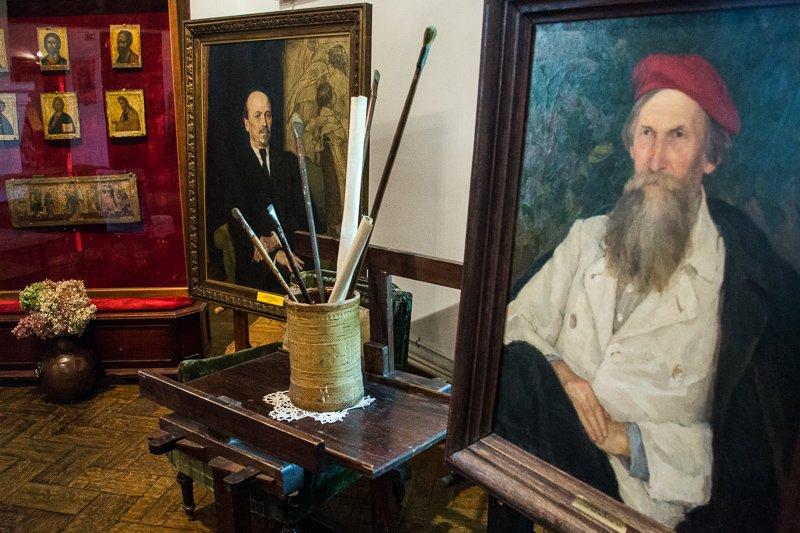
V.M. Vasnetsov House - MuseumThe house of the outstanding Russian artist V. M. Vasnetsov is located behind the Sadovoe Ring, not far from the Moscow Courtyard of the Holy Trinity St. Sergius Lavra, in a quiet, shady lane. It was built in 1894 by the artist himself in the neo-Russian style. VM Vasnetsov lived here the last 32 years of his life (1894–1926). On August 25, 1953, a museum was opened in the house, in 1954 the 3rd Trinity Lane, in which the house stands, was renamed Vasnetsov Lane.

Immediately after the death of the artist, the relatives had the idea of “to preserve everything, as it were, to arrange something like a house-museum”. Turning to the Tretyakov Gallery for help, they received consent to work together to organize a posthumous exhibition of works by V. M. Vasnetsov with the further perspective of creating a museum.

On January 27, 1927, the artist's son, Alexey Viktorovich Vasnetsov, submitted to the Gallery's Board a statement that the family was ready to accept all the obligations related to the arrangement of the exhibition. He was also approved as the ombudsman. Alexey Viktorovich was helped by his sister Tatyana Viktorovna and wife Zinaida Konstantinovna. M. V. Nesterov, P. Korin, An. M. and Vl. V. Vasnetsov and Scientific Secretary of the Tretyakov Gallery N. S. Morgunov participated in the design of the exhibition. The necessary repairs were carried out, several hundred posters with information about the exhibition were printed and posted, tickets were prepared and a catalog was published.

The exhibition opened on March 13, 1927. On the first day, about 600 people visited it. In the following days, many interested visitors and school groups came to the exhibition, there were excursions. The exhibition remained until 1933.

In the preface to the catalog it was stated that the works exhibited at the exhibition, in particular the fairy-tale cycle, were presented to the public for the first time and that in the future landscapes, sketches and sketches will be shown, “which, combined with what is shown now, should be composed by the Victor Vasnetsov Museum ". The exhibition featured 212 exhibits: painting, graphics and objects of decorative and applied arts. The exhibits were located in the living room, the former classroom and in the workshop. Fabulous epic paintings the authors of the catalog provided with short texts from the literary source.

During the Great Patriotic War, the artist's family continued to live in the house. Large paintings were rolled up, the rest of the work laid out in boxes. The house itself was not damaged, but the fence and the terrace were not preserved. In September 1946, the heirs expressed a desire to organize a museum in the house by the centenary of the birth of V. M. Vasnetsov in 1948 and negotiate with the Tretyakov Gallery about it. The exhibition of paintings by the master, which opened in May 1948 in the exhibition hall of the Union of Soviet Artists, aroused great interest among the visitors and contributed to the decision to organize the museum.
On June 29, 1950, an order was issued by the Council of Ministers of the USSR on the organization of the House Museum of V. M. Vasnetsov. The Committee on Arts at the Council of Ministers of the USSR issued an order to proceed with the organization of the museum, for which purpose it is possible to receive the house, as well as art collections and property, which the heirs of the artist donate to the state.

A month later, on July 29, 1950, the heirs signed a statement to the Committee for Arts at the Council of Ministers of the USSR on the donation of property and valuables to the state for the organization of the V.M. Vasnetsov House-Museum. On July 18, 1951, the Order of the Committee approved the “Regulations on the House-Museum of V.M. Vasnetsov”. On August 28, 1951, an act was signed by the commission of the house, works of art — painting, graphics, works of decorative and applied arts, household items and property of V. M. Vasnetsov from his heirs.

The first director of the museum (from 1951 to 1957) was the nephew of the artist Dmitry Arkadyevich Vasnetsov, a member of the First World War and the Great Patriotic War, the actor of the Musical Theater K. S. Stanislavsky and V. I. Nemirovich-Danchenko, the director of the Children's Music School. Z.K. Vasnetsova was appointed chief custodian. Together with Tatiana Viktorovna D. A. Vasnetsov was engaged in repairing the house, restoring its planning and recreating the situation that was during the life of V. M. Vasnetsov. The architecture of the house was fully preserved. The decor of the house was restored at the beginning of the twentieth century. The decoration of the dining room, living room and workshop is almost completely preserved. Also, genuine objects, which were transferred to the museum by the artist's family, were presented in all the other rooms, including exposition ones.
The part of the collection that remained in the ownership of the heirs was transferred to the museum under the will of T. V. Vasnetsova in 1959 and on the basis of its deed of gift in 1961. Thus, all collections: painting, graphics, objects of decorative and applied arts and everyday life, the personal archive and library of the artist, photography and reproduction were included in the museum collection, which was replenished with gifts from various individuals, procurement, and currently has about 25 thousands of museum items.

In 1978–80, the house was restored, the outbuildings of the outbuildings were restored, where the janitor’s, the laundry room and the coach house were located under the common roof, and the cobblestone pavement and brick path were restored in the courtyard. A firewall (brick wall) erected in the 80s of the 19th century was preserved from the east, to which in the 1970s "the Savior on the Throne" mosaic, made at the beginning of the 20th century according to the design of V.M. Vasnetsov in the Petersburg mosaic workshop, was transferred under the leadership of V. A. Frolov. On the north and west side of the house there is a garden with centuries-old oaks and elms.

At the time of its organization, the museum was under the jurisdiction of the Committee for Arts at the Council of Ministers of the USSR. The practical management of the museum was carried out by the General Directorate of Fine Arts. In 1954, the museum was transferred to the jurisdiction of the Ministry of Culture of the RSFSR, in January 1955 - under the jurisdiction of the Department of Culture of the Moscow City Council. In 1963, it was decided to join the Museum of History and Reconstruction of Moscow, and in 1986 the House Museum of V.M. Vasnetsov became part of the All-Union Museum Association "State Tretyakov Gallery" as a scientific department.
Moscow, Vasnetsov Lane, 13
Suharevskaya, Prospekt Mira
г. Москва, ул. Щепкина, д. 47 стр. 2
Suharevskaya
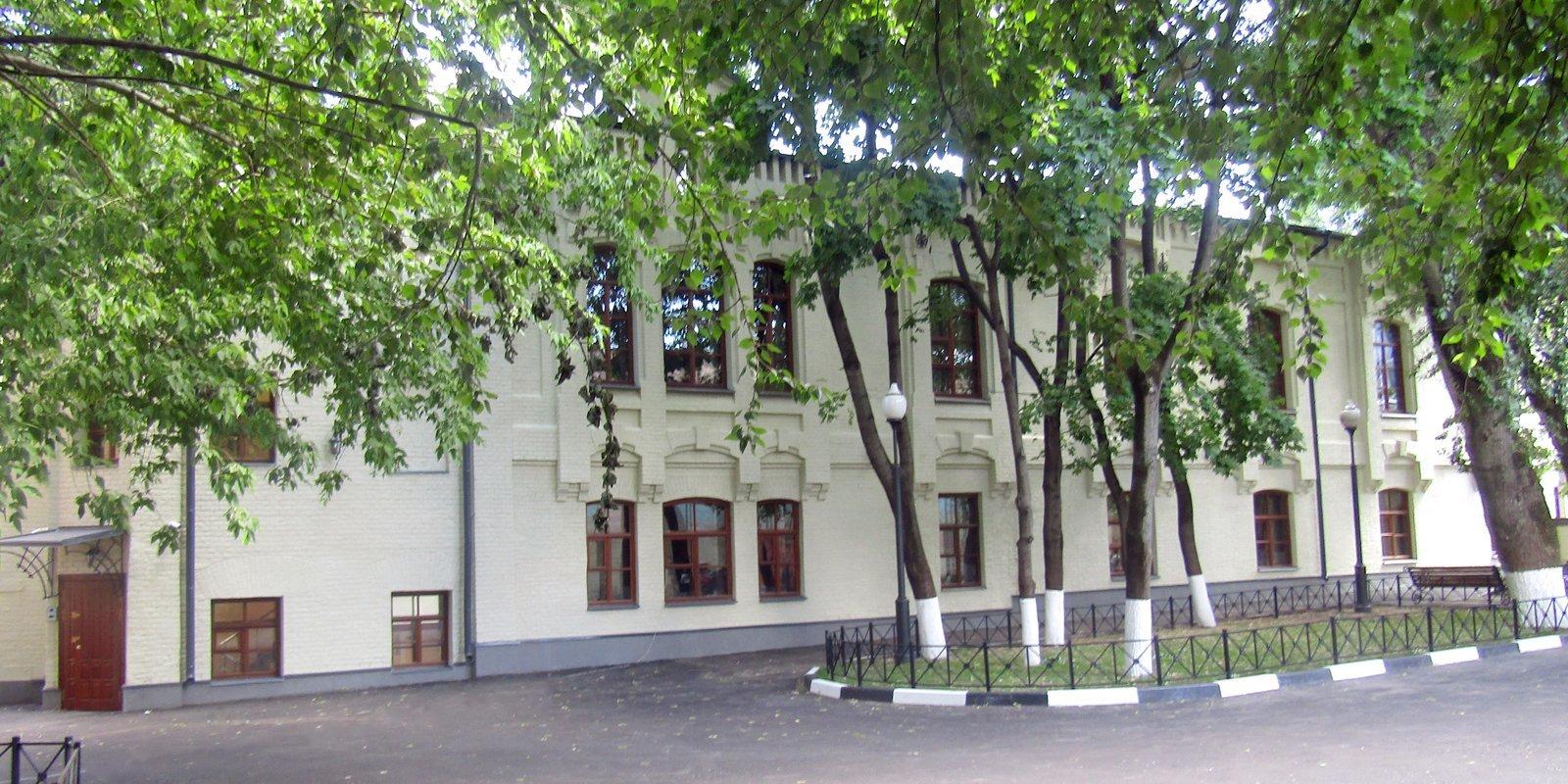
Museum "Sadovoe koltso"It is a unique modern museum that is aimed at the cultural education of Moscow residents and guests of the capital. The museum is the cultural center of one of the oldest districts of Moscow - Meshchansky, affecting various spheres of cultural and educational activities. This is the only museum in Moscow that is fully devoted to the study of the history of the development of one district, as well as being an information center for future development projects of the Meshchansky district and a consulting center on the history of the district. The museum is an exhibition complex, which hosts many exhibitions of painting, photography, objects of decorative and applied art, an exhibition-reconstruction of the historical space, a leisure center for young people and children. The museum is located in the old Moscow mansion on the territory of one of the most ancient districts of Moscow - Meshchansky. The mansion is entered in the register of architectural monuments and is a typical example of residential buildings of the Moscow classicism of the XVIII century. At the heart of the building is the foundation of the residential chambers of the XVII century. The real name of the author of the mansion is unknown. I.E. Grabar assumed that the creator of the house was N.N. Legrand, who worked in Moscow in the years 1773-1791. The mansion burned during a fire at the period of the occupation of Moscow by French troops, but was restored. In this era, the house belonged to Prince Dmitry Ivanovich Lobanov-Rostovsky (1758-1838), the infantry general, participant in the war of 1812. In the 1820s, Major P.V. Gruschetsky, a relative of the famous Decembrists MP Bestuzhev-Ryumin and Muraviev-Apostolov brothers, became owner of the mansion. Grushchetsky himself was not a member of a secret society, but maintained close friendly relations with the Decembrists. For some time the widow of the Decembrist M. Fonvizina Natalia Dmitrievna lived in this house. According to contemporaries, she served as a prototype for Tatyana Larina. Subsequently, the house repeatedly changed its owners, among them the collegiate assessor Shamardin, merchant I.M. Zaitsevsky. The last known owner of the merchant environment was the first guild merchant Liya Aronovna Gurevich. After the 1917 revolution, two families lived in the mansion: the military doctor Khorava and the engineer-engineer Pyatyshev, who moved to Moscow from Petrograd in 1918. In the 20s, during the period of consolidation, communal apartments were formed in the house, which existed here until the end of the 1960s. In the 70s a scientific restoration of the mansion was carried out under the guidance of architect K.O. Zurina, during which the authentic elements of the facade decor were restored: lion macaroons and a carved balcony. After the restoration to the 100th anniversary of V.I. Lenin, the Museum of Labor and Military Glory of the Dzerzhinsky District was opened in the house. The old house on the 1st Meshchanskaya was not chosen by chance, according to legend, in 1894 in the basement of this house the son of a merchant of the first guild Alexander Alekseevich Ganshin published the work of V.I. Lenin "What are the friends of the people and why they are fighting against the Social Democrats." As such, the museum existed until 1998. The new society has set quite different tasks for the museum. A new scientific concept of the museum was developed, where the Meshchansky district itself became the main subject of study: historical facts and legends of residents, streets, houses, parks and squares. On the eve of the third millennium celebration, a new exhibition was opened in the museum.
Moscow, Prospect Mira, 14
Suharevskaya, Prospekt Mira, Проспект Мира (радиальная)