Интерактивный гид по городу
С мобильным приложением бродить по городу гораздо интереснее!

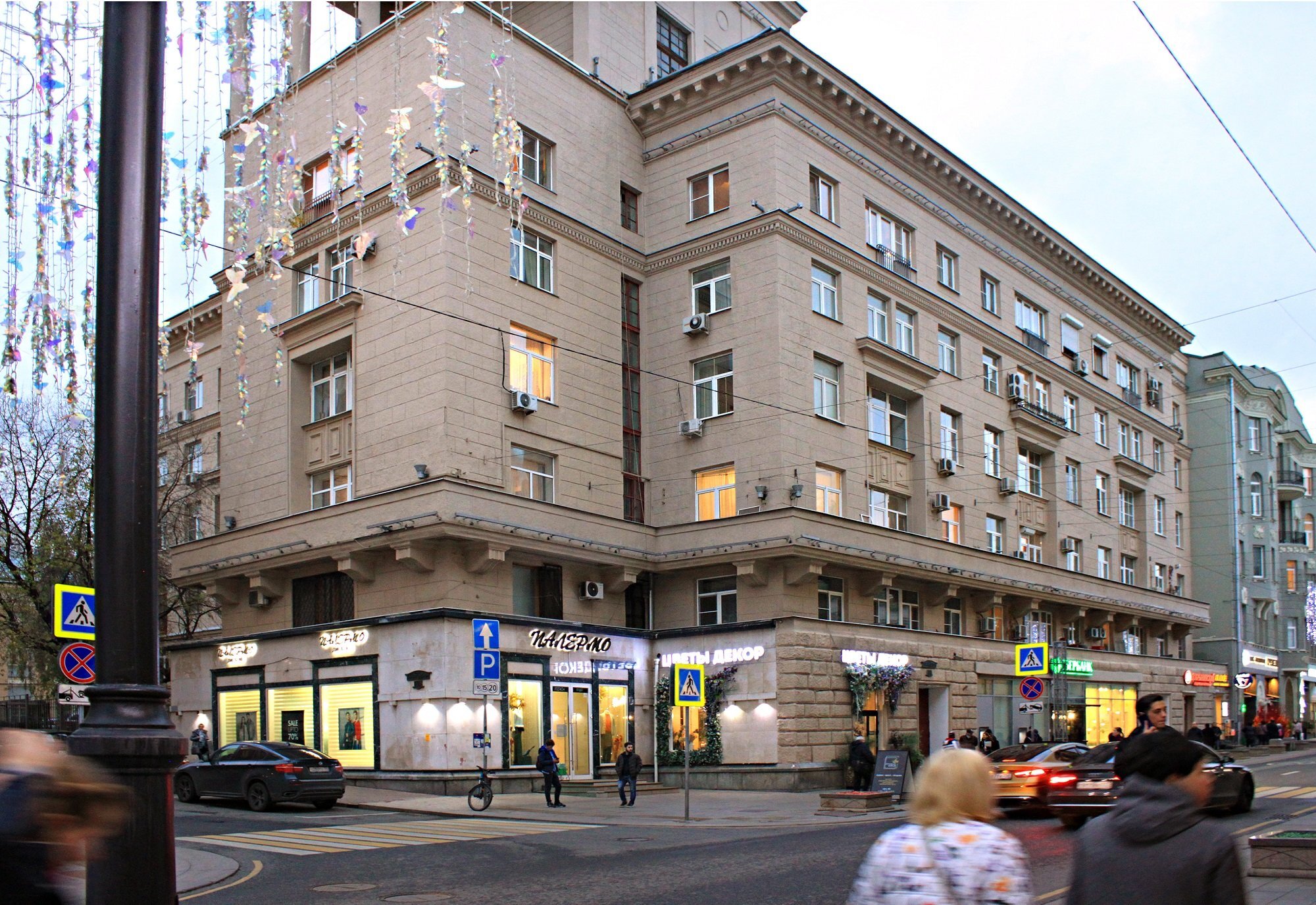
People's commissariat of the light industry apartment building

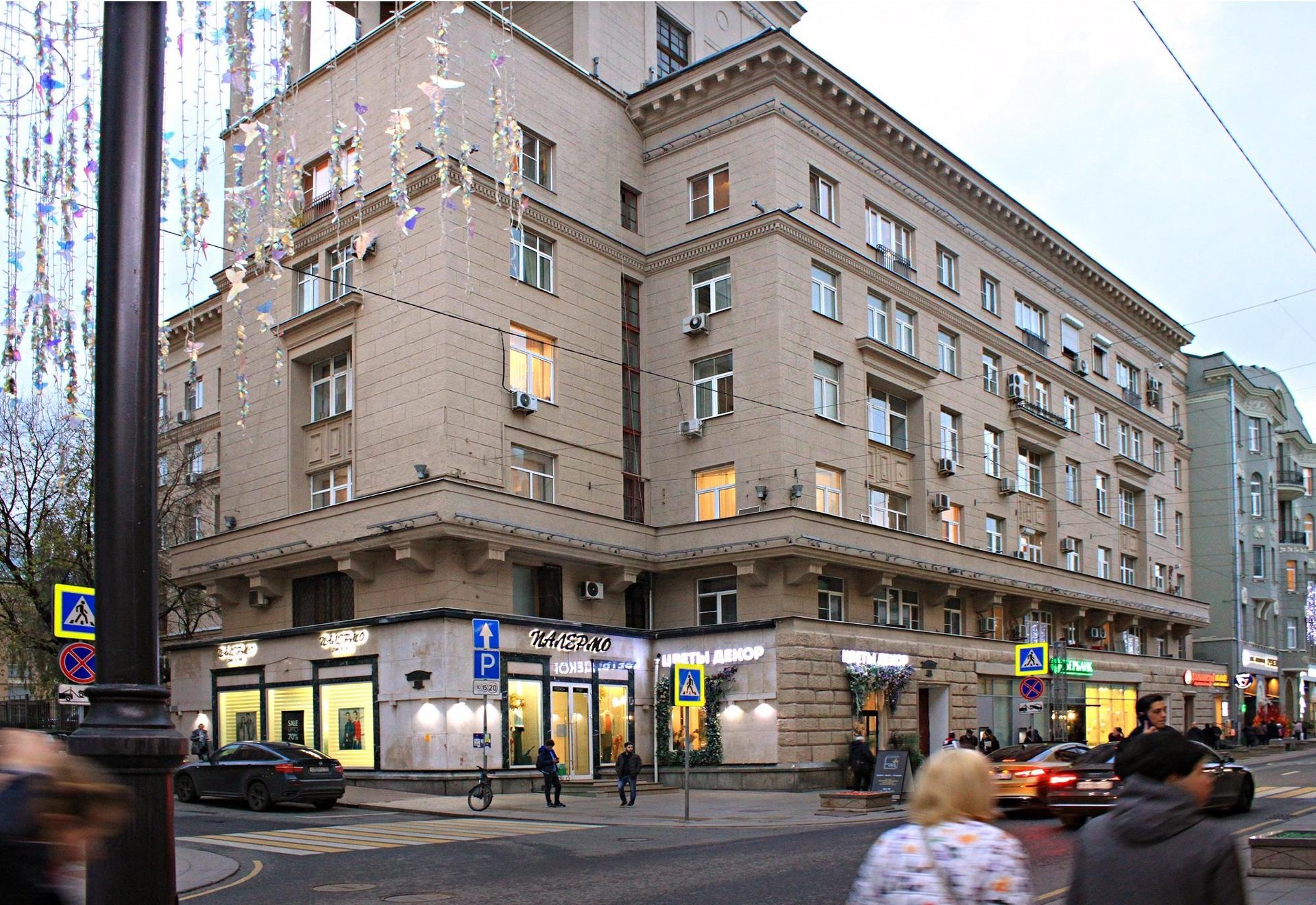
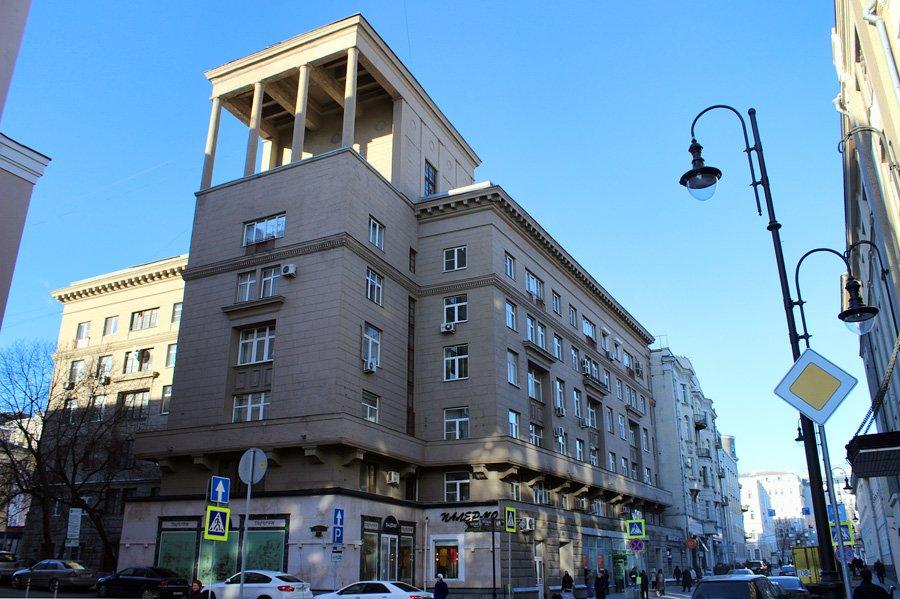
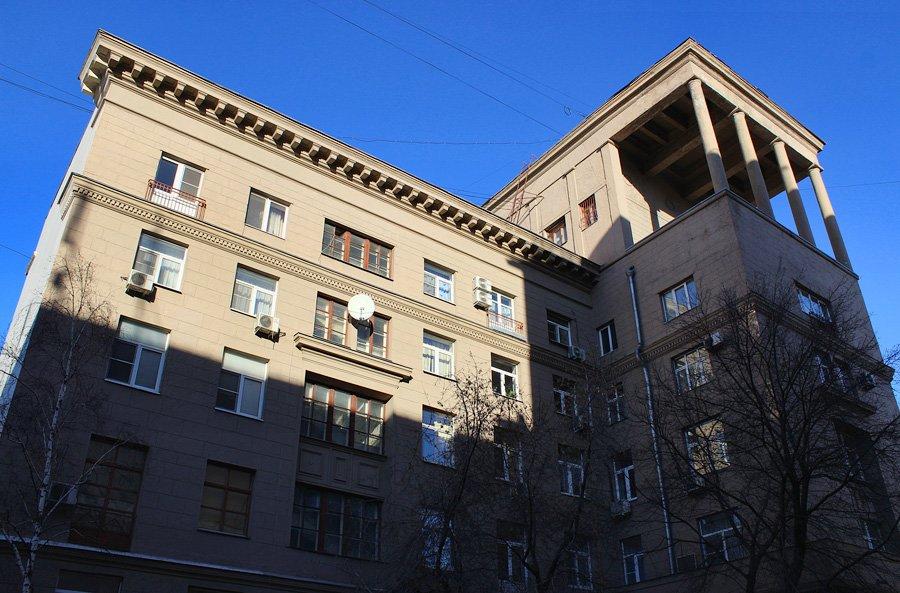
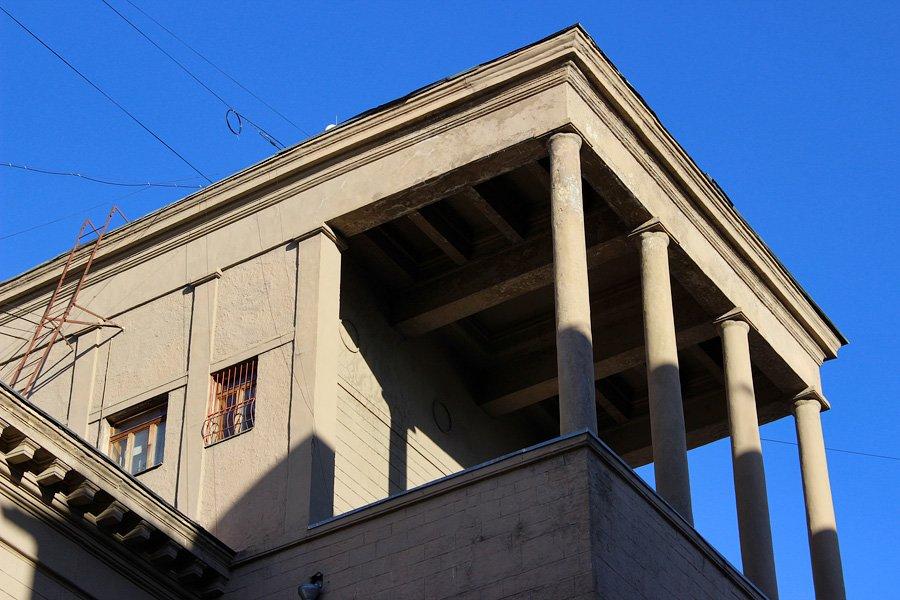
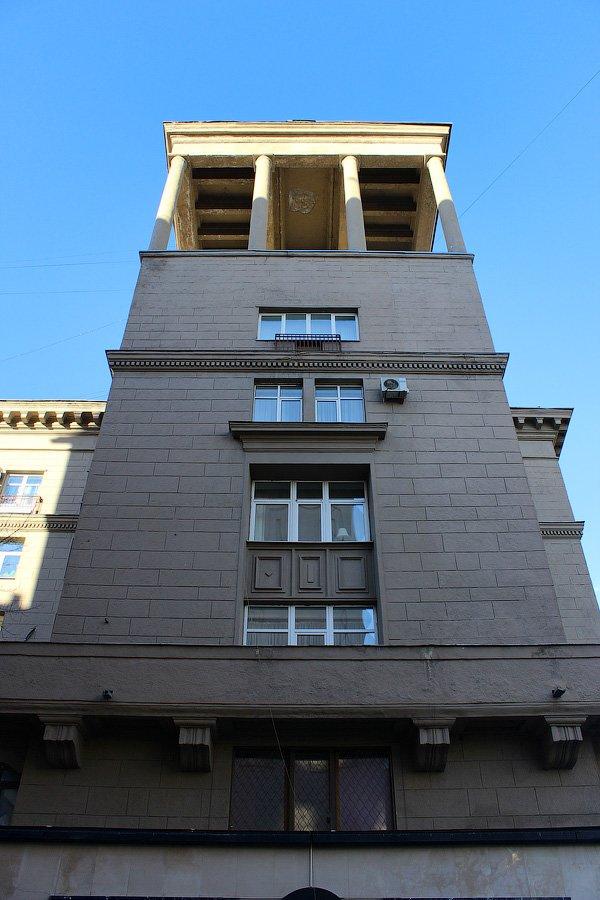
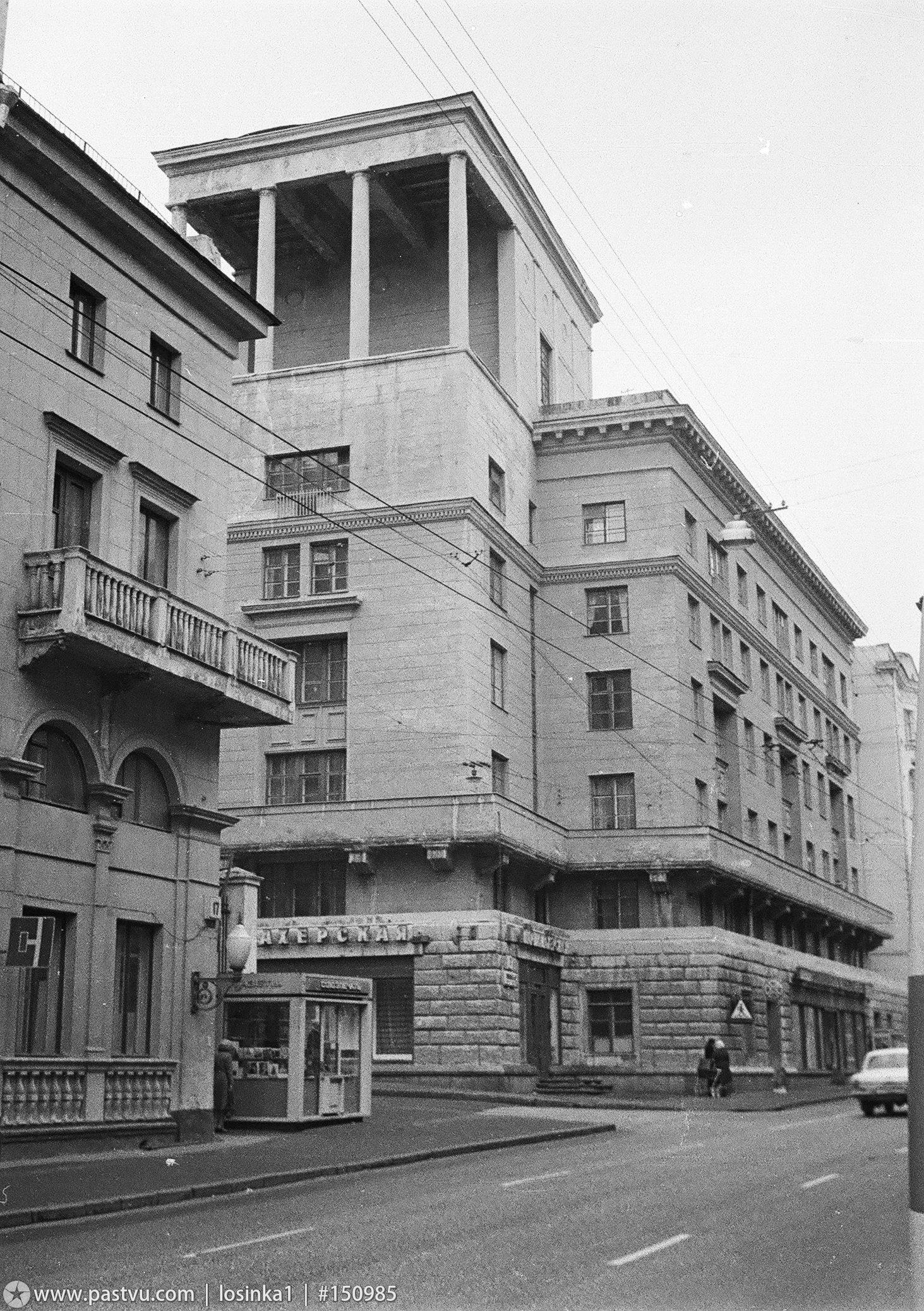
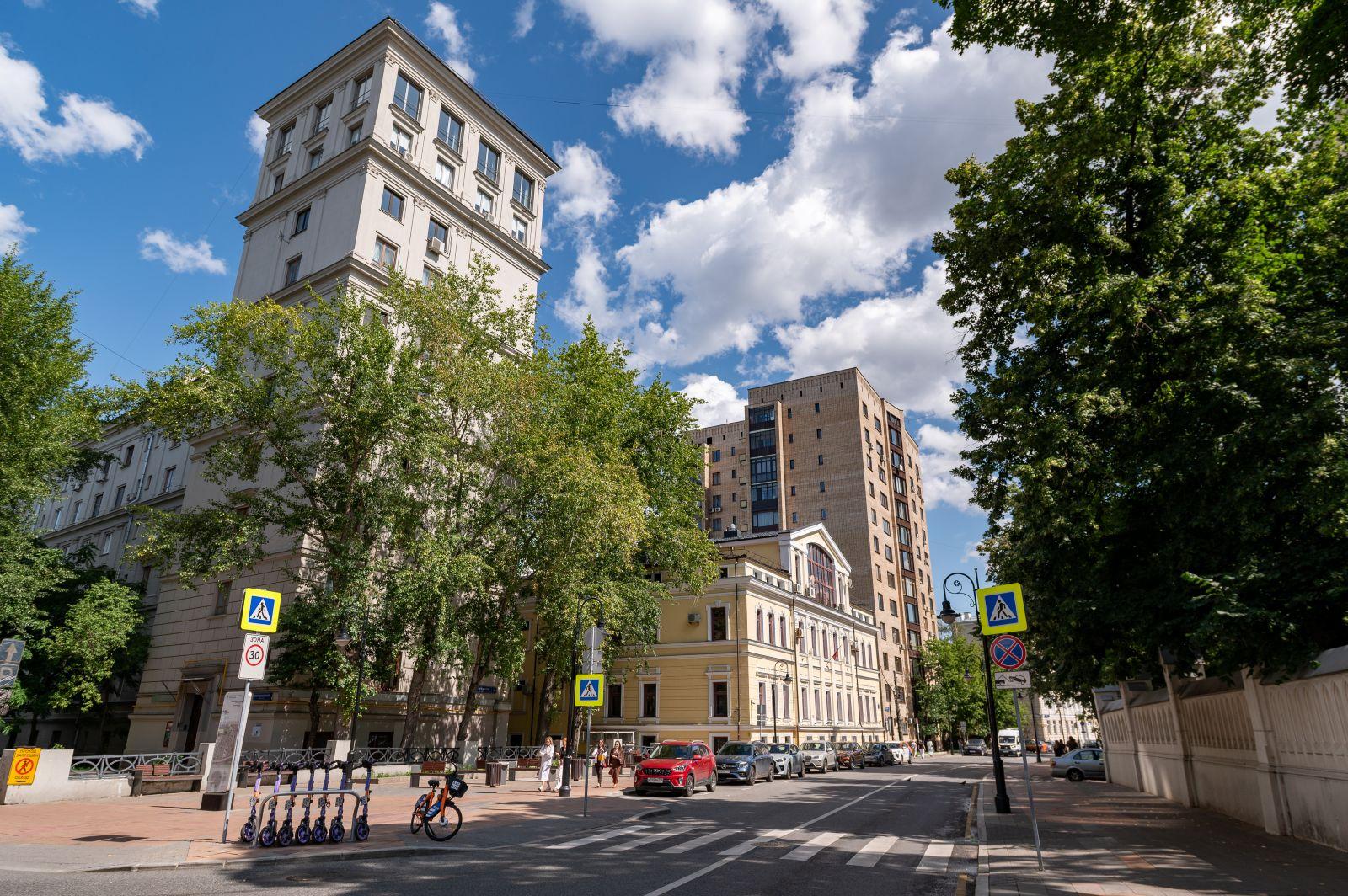
Massive six-story building with a high corner tower, topped with a huge balcony with a colonnade grew at the corner of Bolshaya Dmitrovka and Kozitsky alley in 1936.

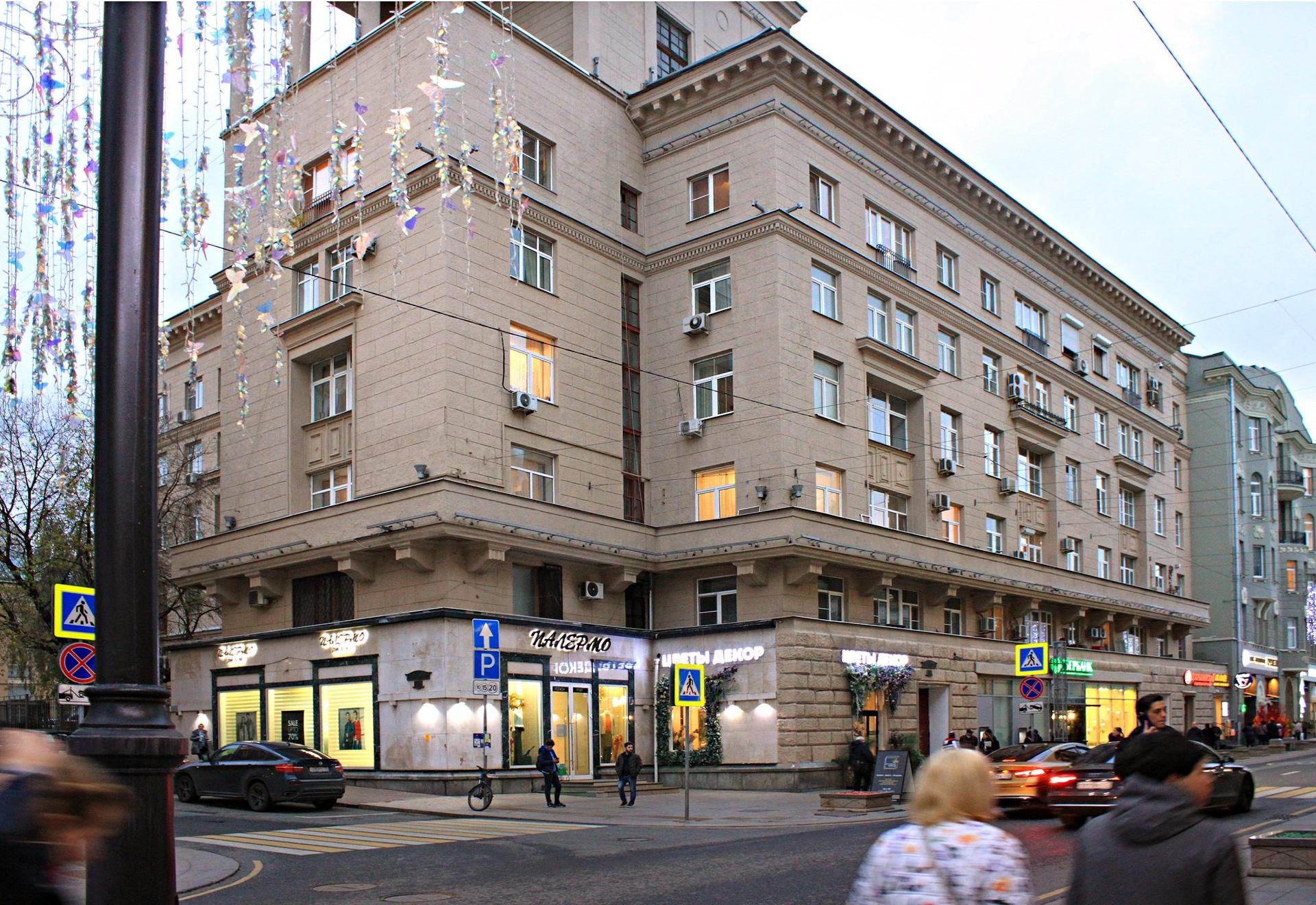
People's commissariat of the light industry apartment building
Pushkinskaya, Tverskaya, Chekhovskaya
Massive six-story building with a high corner tower, topped with a huge balcony with a colonnade grew at the corner of Bolshaya Dmitrovka and Kozitsky alley in 1936.
3.25
Вы можете воспользоваться QR-кодом, чтобы открыть эту страницу в нашем приложении
Архитектурный стиль:
, ,
Годы постройки:
1935-1936
Архитекторы:
В. Владимиров, Г.И. Луцкий
Эпоха:
1930s
Информация о здании

До 1934 года здесь стояла церковь Сергия Радонежского. Старинный пятиглавый храм с нарядными наличниками и небольшой колокольней был известен с 1625 года, и долгое время переулок, отходящий от храма, назывался Сергиевым.

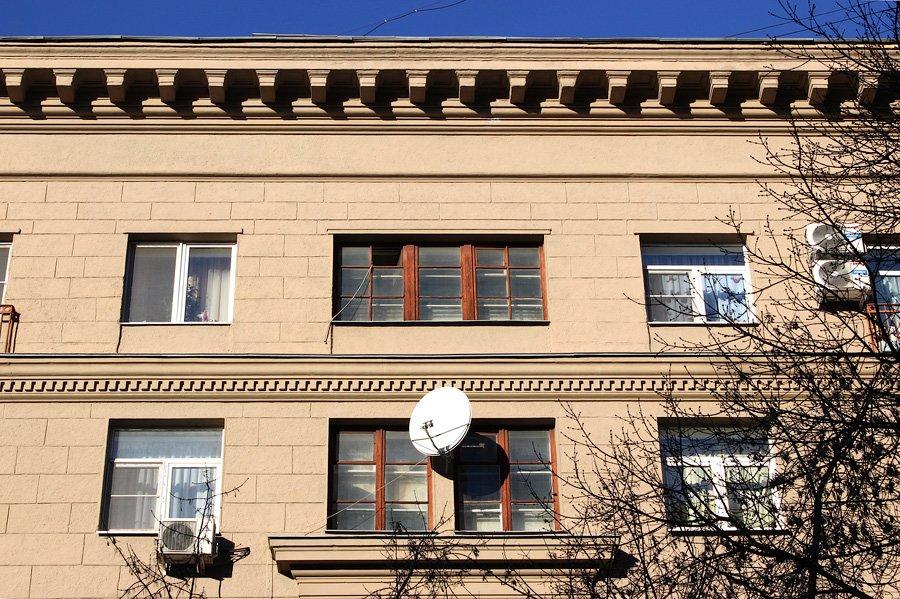
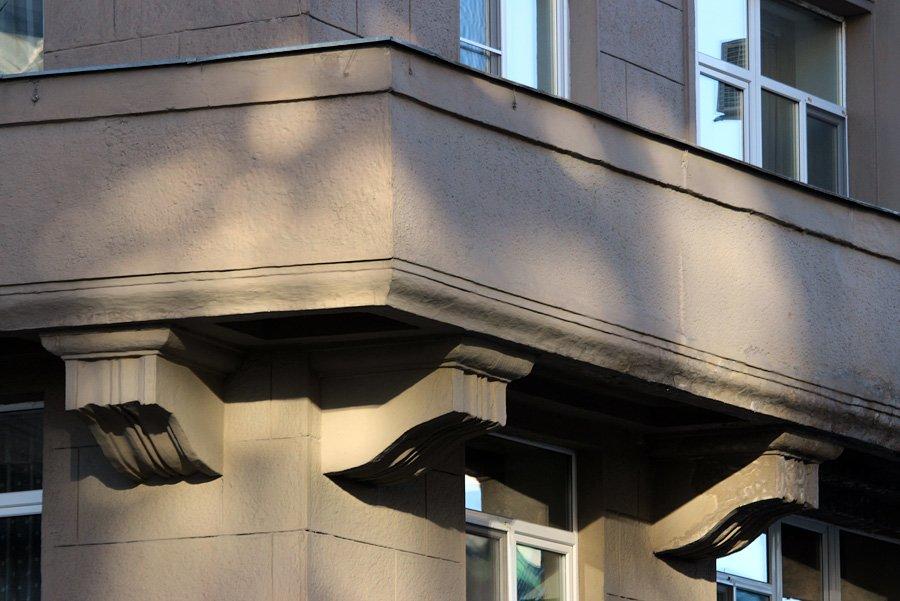
Угловой дом построен по проекту архитекторов В.Н. Владимирова и Г.И. Луцкого, сотрудников мастерской Наркомата тяжелой промышленности под руководством П. А. Голосова. Здание сочетает в себе стили неоклассики и лаконичного конструктивизма. Тяжелый рустованный первый этаж отделен от гладких стен верхних этажей глухим балконом, растянутым по всей длине здания. Первый этаж башни в советские годы занимала парикмахерская.

Дом построен для работников Наркомлегпрома (народного комиссариата легкой промышленности), но среди москвичей получил название «Дом работников милиции», которые тут и проживали.

Обращает на себя внимание то, что здание стоит не по красной линии Козицкого переулка. Дело в том, что оно построено с учетом будущей реконструкции Москвы. По композиции Дом Наркомлегпрома перекликается с Домом артистов МХАТа в Глинищевском переулке 5/7, построенным по проекту тех же авторов. Однако по сравнению с ним здание в Козицком переулке выглядит незаконченным.

Задача архитекторов состояла в том, чтобы найти новые решения в строительстве масштабных и монументальных жилых домов, соответствующих требованию нового советского общества. Однако дом в Козицком переулке нельзя назвать удачной попыткой. Первые жильцы были «не удовлетворены ни планировкой, ни качеством отделочных работ, ни оборудованием квартир». Обо всем этом писали московские газеты 1930-х.

Сейчас здание потеряло часть рустованной поверхности первого этажа, однако продолжает оставаться интересным памятником архитектуры 1930-х, сочетающим элементы конструктивизма и сталинского ампира.
Prior to 1934 there was a church of St. Sergius of Radonezh. Converted five-domed temple with ornate trims and a small bell tower has been known since 1625 and the lane extending from the temple was called Sergiev for a long time. Corner house was designed by the architects V. Vladimirov and GI Lutsky, the employees of People's Commissariat of Heavy Industry under the management of A. Golosov. The building combines neoclassical and concise constructivism styles. Heavy rusticated ground floor was separated from smooth walls of upper floors with deaf balcony, stretched through the entire length of the building. The first floor of the tower was occupied by a hairdresser during Soviet years. The house was built for employees of the People's Commissariat of Light Industry, but among the Muscovites it was called "House of the police officers" who lived there as well. Noteworthy is that the building was not constructed along the red line of Kozitsky alley. It was built considering a future reconstruction of Moscow. The People's Commissariat House composition echoes the House of Artists in Moscow Art Theater at 5/7Glinishevsky Lane, designed by the same authors. However, the building on Kozitsky Lane looks unfinished in comparison with the “Cups house”. The task of the architects was to find new solutions in the construction of large-scale and monumental residential buildings to meet the requirements of the new Soviet society. However the house on Kozitsky alley could not be called a successful try. The first residents were "unsatisfied with apartments’ layouts, the quality of finishing works and equipment or flats." All this was written, Moscow newspapers of the 1930s. Now the building has lost some of the surface of the rusticated ground floor, but continues to be an interesting architectural monument of the 1930s, combining elements of constructivism and the Stalin Empire style.
Автор статьи: Зинаида Одолламская
Рекомендации
10
46 м.
3.9 км
Поделитесь статьей с друзьями