Интерактивный гид по городу
С мобильным приложением бродить по городу гораздо интереснее!

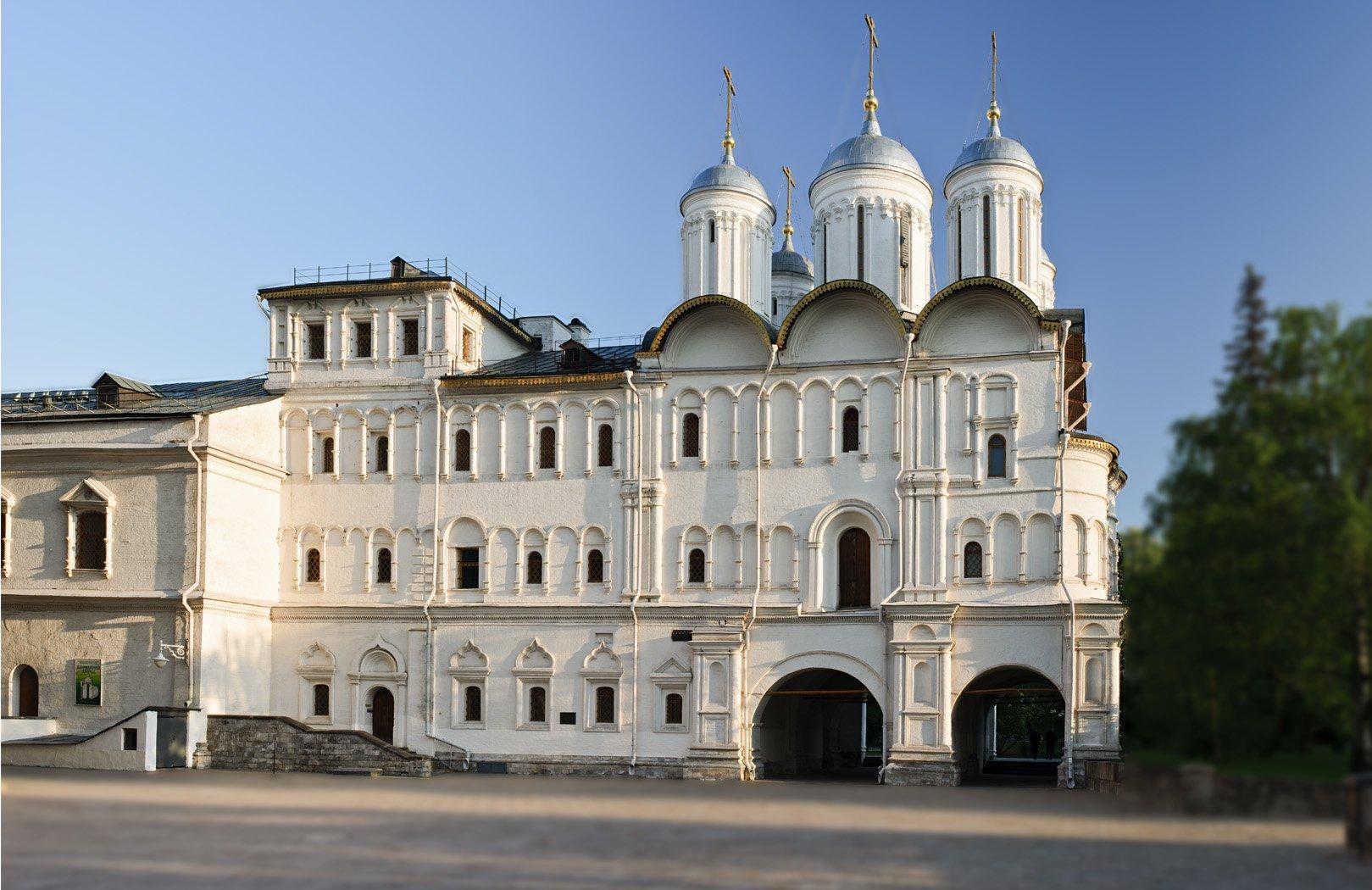
Patriarch's Palace

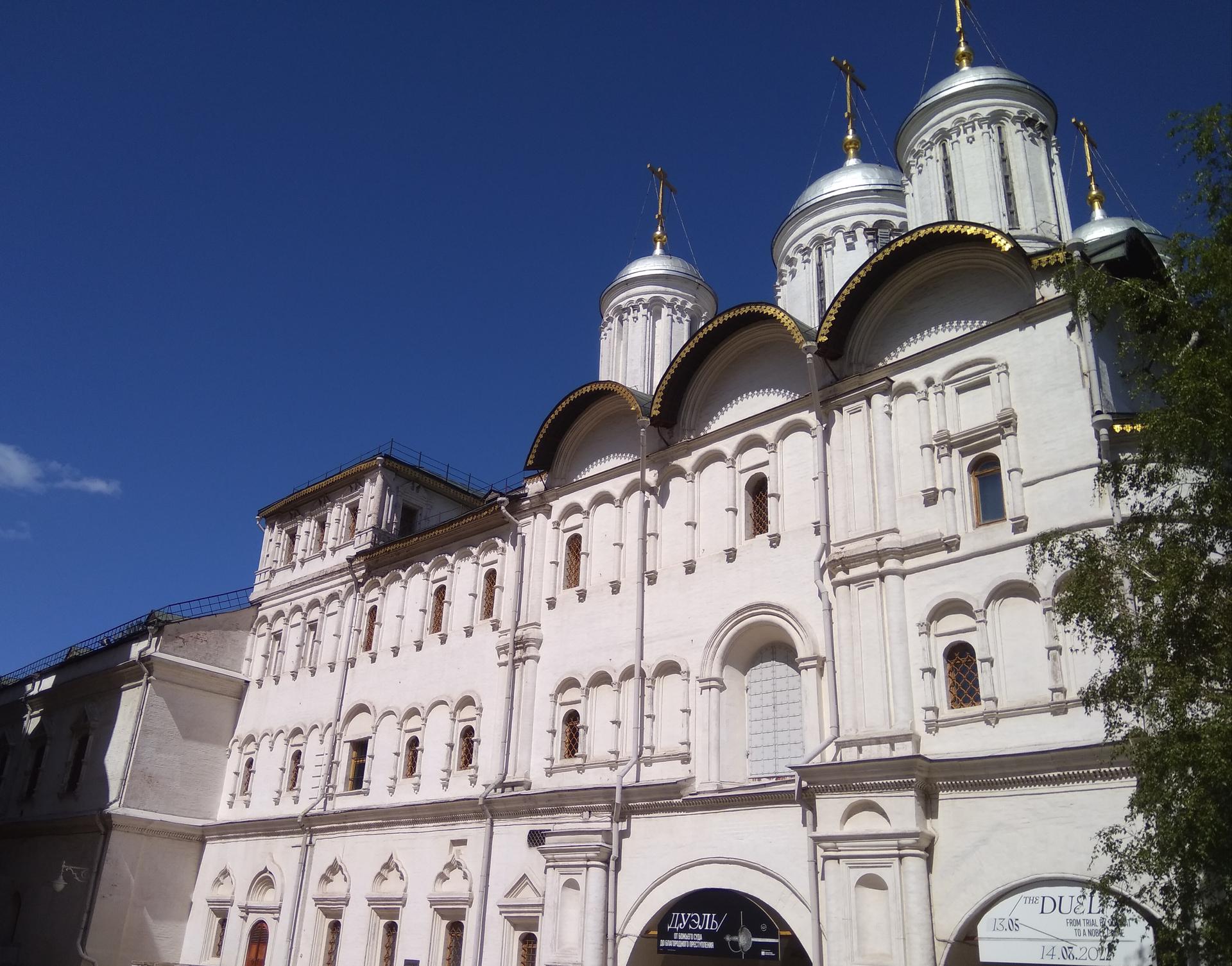
According to the chronicle data, in the first half of the 14th century, Metropolitan Peter received from the Grand Duke of Moscow Ivan Kalita a place north of the Assumption Cathedral for his court in the Kremlin. In 1450, Metropolitan Jonah erected at this place a stone church of the Disposition of the Robe of the Holy Virgin and the first stone chamber in the Kremlin. During the Moscow fire in 1473, the court burned out, and Metropolitan Gerontius had to rebuild it. In the years 1484–85, the Pskov masters erected for him a new Church of the Deposition of the Robe of the Holy Virgin, which is preserved today. All subsequent metropolitans, and from the end of the XVI century the patriarchs, settled their possessions in the Kremlin, erected wooden and stone structures. During the Polish-Lithuanian intervention and fire in 1626, the Patriarchal court burned. Patriarch Filaret restored the Cross and Dining Chamber, cut down wooden cells and churches. In 1643, a new phase of construction work began, associated with the name of Patriarch Joseph. Under the same roof were erected Cross, Gold, Cell and State Chamber, as well as a number of outbuildings. One of the builders of the Terem Palace supervised the work of Antipas Konstantinov. Subsequent patriarchs in one degree or another also finished building, decorating and rebuilding the palace. In 1721, after the abolition of the patriarchate and the establishment of the Holy Synod, its Moscow office was located in the building of the chambers. This led to significant changes in the layout, decoration of the chambers and their appearance. In 1918, the Patriarchal Chambers, as the rarest architectural monument of the 17th century, were transferred to the museum. A lengthy process of their scientific restoration began, and the building basically returned to its original appearance. In 1967, the first permanent exhibition was opened on the second floor of the Patriarchal Chambers. In 1980–1985 regular major research and restoration works were carried out, the result of which was the modern museum exposition. In 2010, the museum exposition was somewhat modified. In the course of repair work in 2013, painting sites of the 17th century were uncovered on the walls of the parasols and enforcement chambers.

Patriarch's Palace
Patriarch's Palace
Moscow, Kremlin Street
Borovickaya, Biblioteka Lenina
According to the chronicle data, in the first half of the 14th century, Metropolitan Peter received from the Grand Duke of Moscow Ivan Kalita a place north of the Assumption Cathedral for his court in the Kremlin. In 1450, Metropolitan Jonah erected at this place a stone church of the Disposition of the Robe of the Holy Virgin and the first stone chamber in the Kremlin. During the Moscow fire in 1473, the court burned out, and Metropolitan Gerontius had to rebuild it. In the years 1484–85, the Pskov masters erected for him a new Church of the Deposition of the Robe of the Holy Virgin, which is preserved today. All subsequent metropolitans, and from the end of the XVI century the patriarchs, settled their possessions in the Kremlin, erected wooden and stone structures. During the Polish-Lithuanian intervention and fire in 1626, the Patriarchal court burned. Patriarch Filaret restored the Cross and Dining Chamber, cut down wooden cells and churches. In 1643, a new phase of construction work began, associated with the name of Patriarch Joseph. Under the same roof were erected Cross, Gold, Cell and State Chamber, as well as a number of outbuildings. One of the builders of the Terem Palace supervised the work of Antipas Konstantinov. Subsequent patriarchs in one degree or another also finished building, decorating and rebuilding the palace. In 1721, after the abolition of the patriarchate and the establishment of the Holy Synod, its Moscow office was located in the building of the chambers. This led to significant changes in the layout, decoration of the chambers and their appearance. In 1918, the Patriarchal Chambers, as the rarest architectural monument of the 17th century, were transferred to the museum. A lengthy process of their scientific restoration began, and the building basically returned to its original appearance. In 1967, the first permanent exhibition was opened on the second floor of the Patriarchal Chambers. In 1980–1985 regular major research and restoration works were carried out, the result of which was the modern museum exposition. In 2010, the museum exposition was somewhat modified. In the course of repair work in 2013, painting sites of the 17th century were uncovered on the walls of the parasols and enforcement chambers.
4.50
Вы можете воспользоваться QR-кодом, чтобы открыть эту страницу в нашем приложении
Monday - Saturday: 10:00 - 17:00
Социальные сети
Информация о музее

По летописным данным, в первой половине XIV века митрополит Петр получил от великого князя московского Ивана Калиты для своего двора в Кремле место севернее Успенского собора.

В 1450 году митрополит Иона возвел на этом месте каменную церковь Ризположения и первую каменную палату в Кремле. Во время московского пожара 1473 года двор выгорел, и митрополиту Геронтию пришлось отстраивать его заново. В 1484–1485 годах псковские мастера возвели для него новую церковь Ризположения, которая сохраняется и сегодня. Все последующие митрополиты, а с конца XVI века патриархи, обустраивали свои владения в Кремле, возводили деревянные и каменные сооружения.

Во время польско-литовской интервенции и пожара 1626 года Патриарший двор горел. Патриарх Филарет восстановил Крестовую и Столовую палаты, срубил деревянные кельи и церкви.

В 1643 году начался новый этап строительных работ, связанный с именем патриарха Иосифа. Под одной кровлей были возведены Крестовая, Золотая, Келейная и Казенная палаты, а также ряд подсобных помещений. Руководил работами Антипа Константинов, один из строителей Теремного дворца.

Следующий этап в жизни патриаршего двора в Кремле связан с именем патриарха Никона. Осенью 1652 начался разбор старых палат, церкви Соловецких чудотворцев и строений на бывшем дворе Бориса Годунова, полученного Никоном в дар от царя Алексея Михайловича. К концу 1655 года были выстроены новые палаты и церковь, но еще три года, вплоть до оставления Никоном Кафедры в июле 1658 года, шла отделка помещений. Первый этаж дворца использовался для хозяйственных нужд и размещения приказов, на втором располагались парадные залы и домовая церковь, на третьем – личные покои патриарха.

Последующие патриархи в той или иной степени также достраивали, украшали и перестраивали дворец.

В 1721 году после упразднения патриаршества и учреждения Святейшего Синода в здании палат расположилась его Московская контора. Это повлекло за собой значительные изменения в планировке, убранстве палат и их внешнем облике.

В 1918 году Патриаршие палаты как редчайший памятник архитектуры XVII века были переданы музею. Начался длительный процесс их научной реставрации и зданию в основных чертах был возвращен изначальный облик. В 1967 году на втором этаже Патриарших палат была открыта первая постоянная экспозиция.

В 1980–1985 годах были проведены очередные крупные научно-реставрационные работы, результатом которых и стала современная экспозиция музея.

В 2010 годы экспозиция музея была несколько видоизменена. В ходе ремонтных работ в 2013 году раскрыты участки живописи XVII века на стенах парадных сеней и приказных палат.
Отзывы
(2)
Поделитесь статьей с друзьями
Интересное рядом(2)
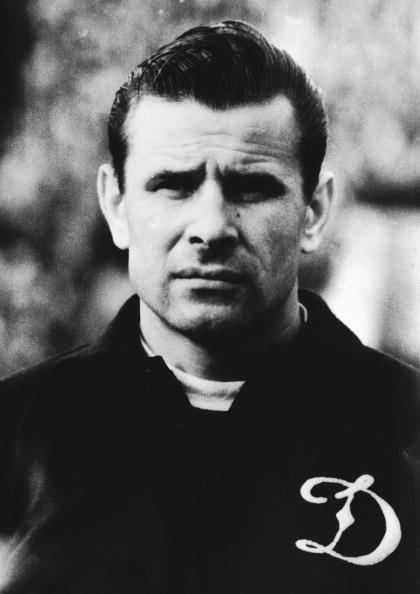
Yashin Lev
Soviet football goalkeeper