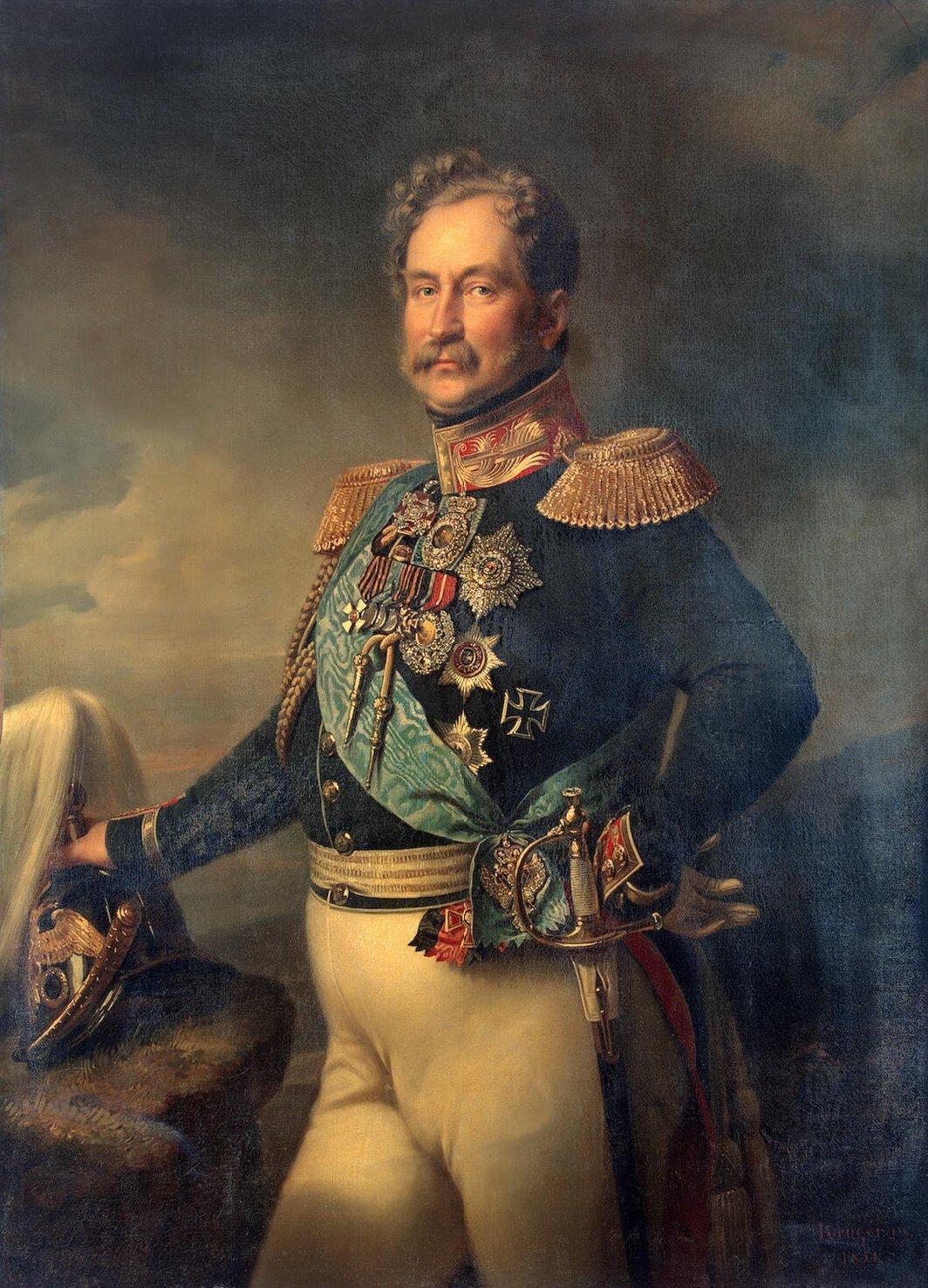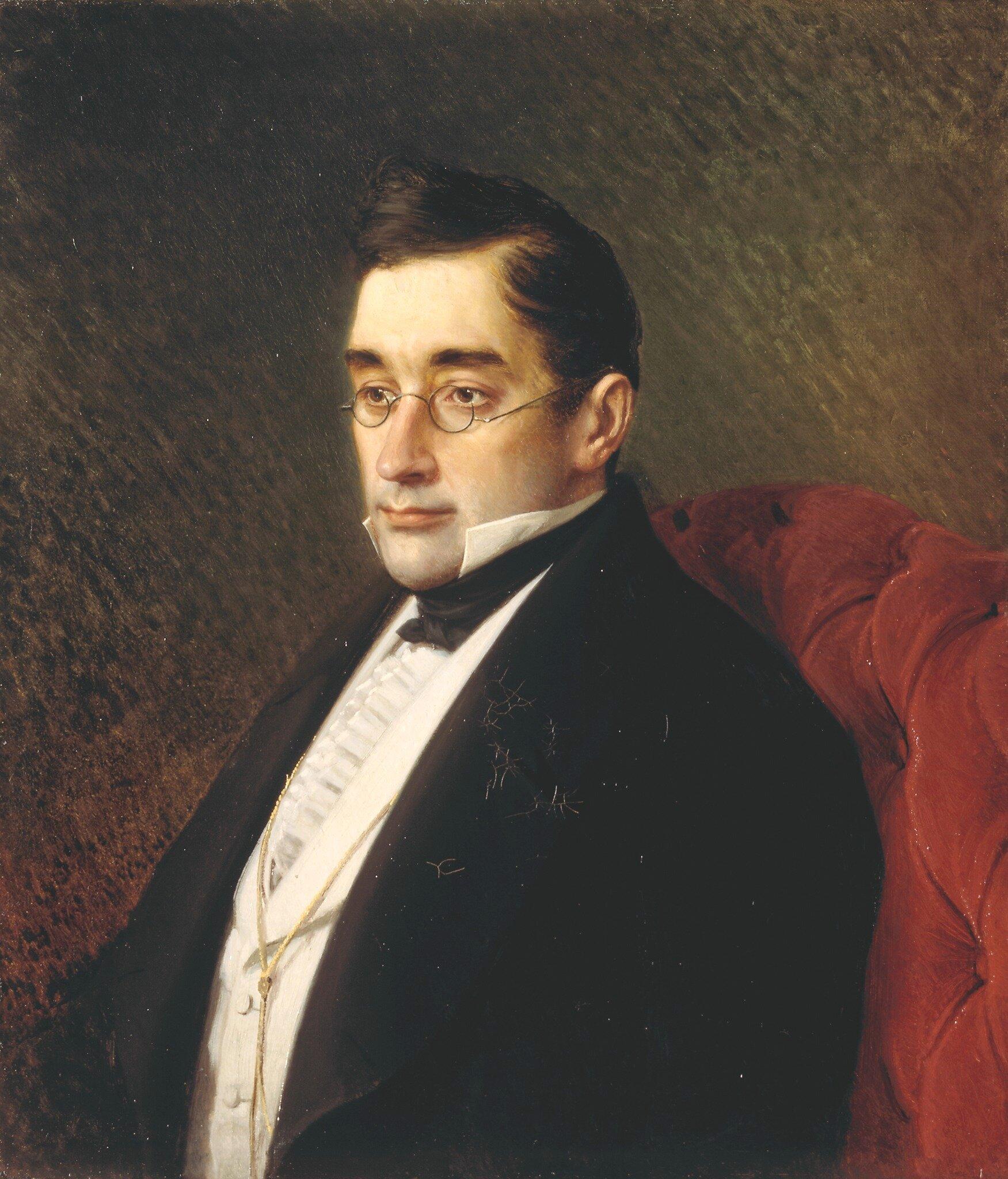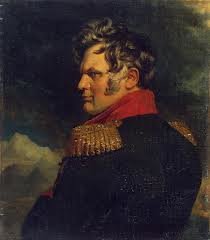

Алексей Петрович Ермолов (24 мая 1777, Москва – 11 апреля 1861, Москва) - русский военачальник и государственный деятель. Герой войны 1812 года. Генерал от инфантерии (1818). Генерал от артиллерии (1837). Главнокомандующий во время Кавказской войны.
Будущий военачальник родился в старинной, но небогатой дворянской семье Орловской губернии. Он был зачислен в военную службу еще в младенчестве, получал домашнее образование и обучался в Московском университетском пансионе, а в 10 лет уже имел звание унтер-офицера лейб-гвардии Преображенского полка.
В возрасте 14ти лет Алексей Петрович в чине поручика поступил на должность старшего адъютанта при генерал-прокуроре Петербурга, но был переведен по собственному настоянию в действующую армию, где познакомился с артиллерией. Боевое крещение и первую награду - орден Св. Георгия 4-й степени - молодой офицер получил в 1794 году при подавлении Польского восстания. За заслуги в Персидском походе (1796) он был удостоен ордена Св. Владимира 4-й степени с бантом и звания подполковника.
В 1798 по обвинению в участии в заговоре против Императора Павла I Ермолов был арестован, заключен в Алексеевский равелин Петропавловской крепости, а через пару месяцев выслан в свое поместье на неопределенный срок, пока Александр I в 1801г. не даровал свободу всем осужденным по данному делу.
За доблесть и успехи в войнах коалиций с Францией 1805—1807 годов Ермолов был удостоен орденов Св. Анны II степени и Св. Владимира III степени. Но отношения его с большинством вышестоящих чинов оставались весьма натянутые, из-за независимого характера и едкого остроумия Алексея Петровича. Известен его ответ графу Аракчееву на неудовлетворение последнего состоянием лошадей роты Ермолова: «Жаль, Ваше сиятельство, что в артиллерии репутация офицеров зависит от скотов».
Важнейший период биографии Ермолова – Отечественная война 1812 г. Именно тогда в полной мере проявился его талант полководца.
В Бородинской битве Ермолов отбил у неприятеля батарею Раевского, по мнению свидетелей "Сим подвигом Ермолов спас всю армию". При преследовании французов Алексей Петрович сыграл решающую роль, разгромив корпуса Даву и Нея, за что получил звание генерал-лейтенанта. После перехода русской армии через Неман генерал Ермолов возглавил артиллерию союзных армий.
В 1817 г. генерал Ермолов назначен управляющим Грузии, Астраханской и Кавказской губерний, чрезвычайным послом в Персии и командиром отдельного кавказского корпуса. Он подавил беспокойства, возникшие в Имеретии, Гурии, Мингрелии, и присоединил к русским владениям Абхазию, ханства Карабахское и Ширванское. Однако в 1827 году Николай I отправил Ермолова в отставку, подозревая его в связях с движением декабристов.
В 1831 г. Ермолов приехал в Москву, где был чрезвычайно популярен во всех слоях общества. В 1837 году в связи с празднованием 25-летия Бородинской битвы Ермолову дали звание генерала от артиллерии, а в феврале 1855 года москвичи избрали полководца начальником ополчения своей губернии, разумеется, лишь номинально, из-за преклонного возраста генерала.
Alexei Petrovich Yermolov (May 24, 1777, Moscow - April 11, 1861, Moscow) - Russian military leader and statesman. The hero of the War of 1812. General of Infantry (1818). General of Artillery (1837). Commander in chief during the Caucasian War.
The future commander was born in the ancient but impoverished noble family Orel province. He was enlisted in the military service is still in its infancy, was educated at home and studied at the Moscow university hostel, and in 10 years has held the rank of non-commissioned officer of the Life Guards Regiment.
At the age of 14ti years Alexei Petrovich in the rank of lieutenant went to the post of senior adjutant-general prosecutor of St. Petersburg, but was transferred at his own insistence, in the army, where he met with artillery. Baptism of fire and the first award - the Order of St. George 4th degree - the young officer was in 1794, during the suppression of the Polish uprising. For services in the Persian campaign (1796), he was awarded the Order of St. Vladimir 4-th degree with a bow and a rank of lieutenant colonel.
In 1798, on charges of involvement in a plot against the Emperor Paul I Yermolov was arrested and imprisoned in the Alexis Ravelin Peter and Paul Fortress, and two months later exiled to his estate for an indefinite period, until Alexander I in 1801. not granted freedom to all convicted in the case.
For valor and success in the war coalition with France's 1805-1807 Yermolov was awarded the Order of St. Anna II degree and St. Vladimir III degree. But his relationship with the majority of superiors remained very tense, due to the independent nature and sarcastic wit of Alexei Petrovich. Known his response to dissatisfied with the state of Ermolov’s horses Count Arakcheev: "It’s a pity Your Excellency that the artillery officers reputation depends on cattle."
The most important period of the Ermolov’s biography - Patriotic War of 1812. It was then his when his commander talent fully opened up.
In the Battle of Borodino Ermolov repulsed Rajewski battery from the enemy, according to witnesses, " Ermolov saved the whole army by this feat." In pursuit of the French Alexei Petrovich played a crucial role, defeating Davout and Ney, for which he received the rank of lieutenant general. After the transition of the Russian army over the Neman General Yermolov led the artillery of the allied armies.
In 1817 General Yermolov appointed Managing Georgia, Astrakhan and Caucasian provinces, ambassador extraordinary in Persia and commander of a separate Caucasian Corps. He suppressed the anxiety arising in Imereti, Guria, Samegrelo and joined the Russian possessions Abkhazia, Khanate of Karabakh and Shirvan. However, in 1827, Nicholas I sent Ermolova down, suspecting him of having links with the movement of the Decembrists.
In 1831 Yermolov arrived in Moscow, where he was extremely popular in all parts of society. In 1837, on the occasion of the 25th anniversary of the Borodino Battle Ermolov given the rank of general of artillery, and in February 1855 Muscovites elected chief of the militia commander of the province, of course, only nominally, due to the elderly general.
AP Yermolov died in Moscow on 85th year of his life. And although he bequeathed to bury him "as easy as possible," Muscovites saw off his hero for two days, and residents of Eagle on arrival body home staged a grand memorial service. General buried with full honors by the church wall at Trinity Cemetery, next to the grave of his father.