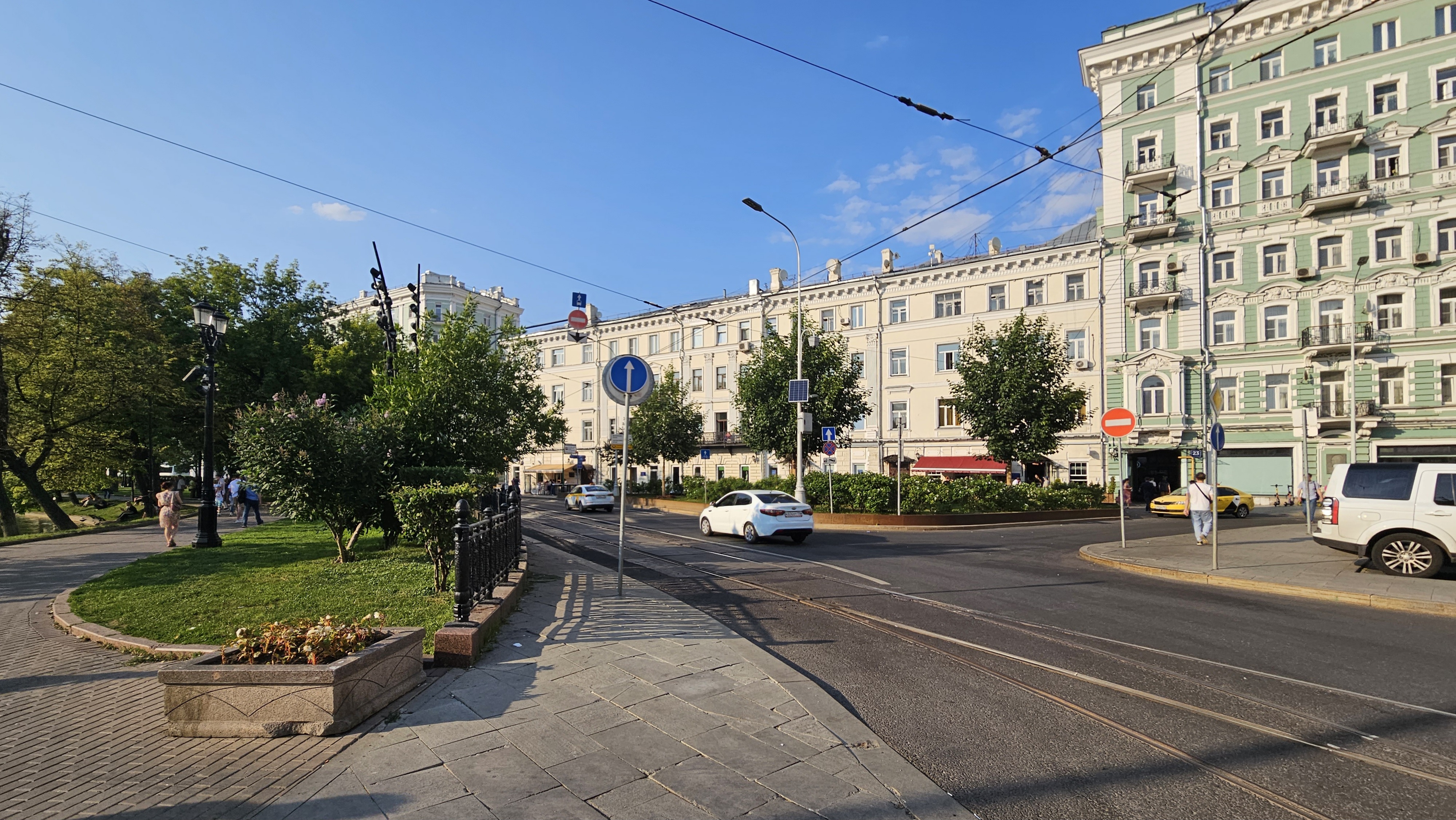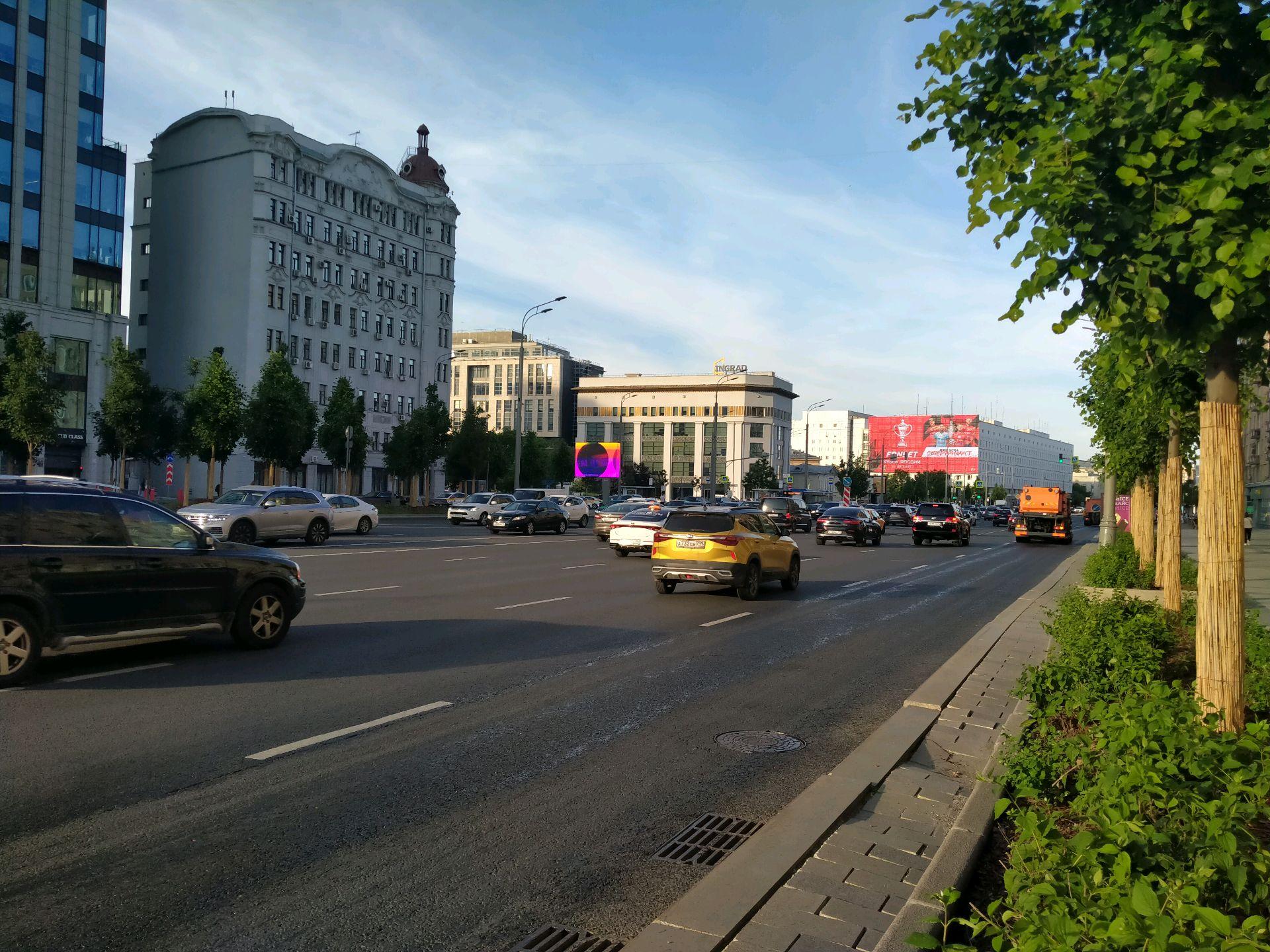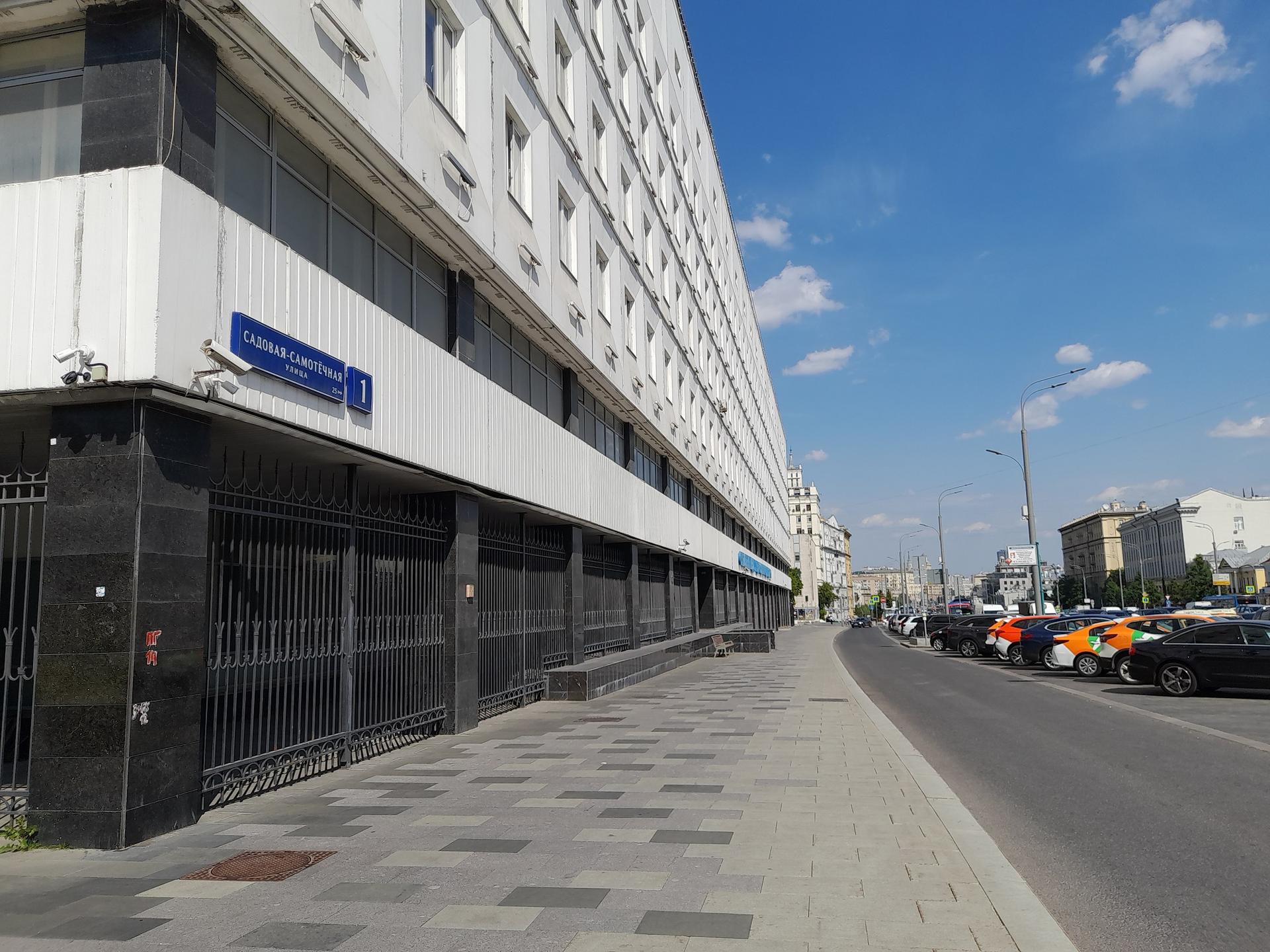
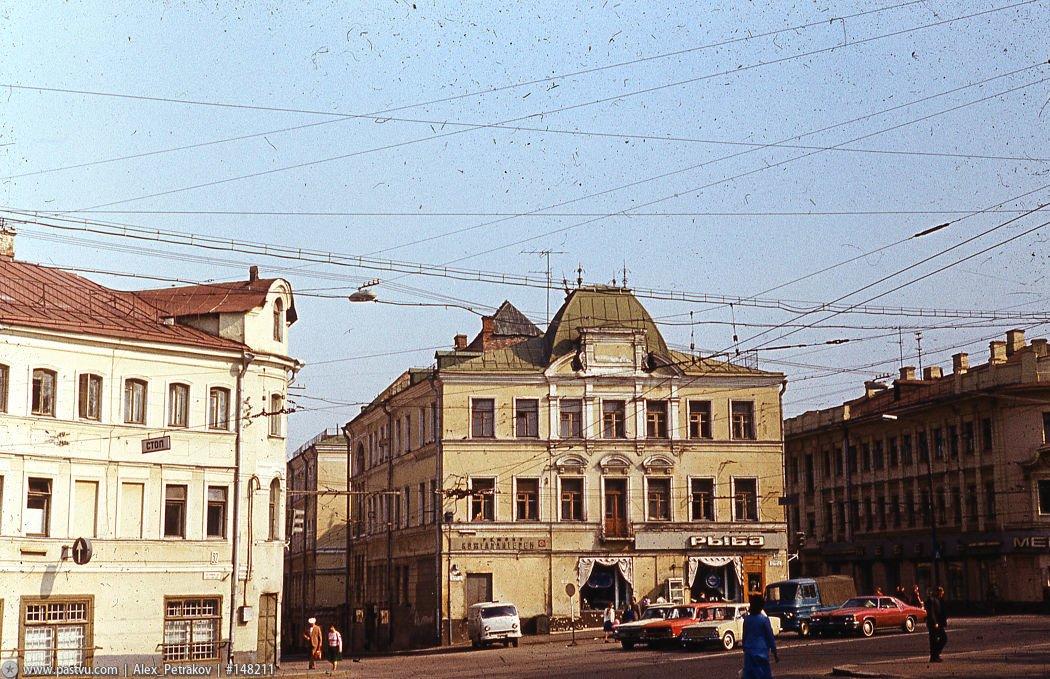
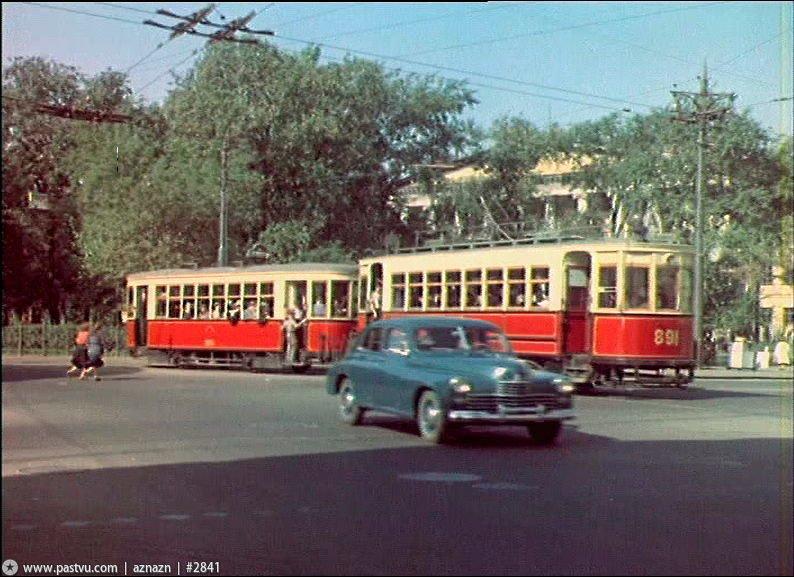
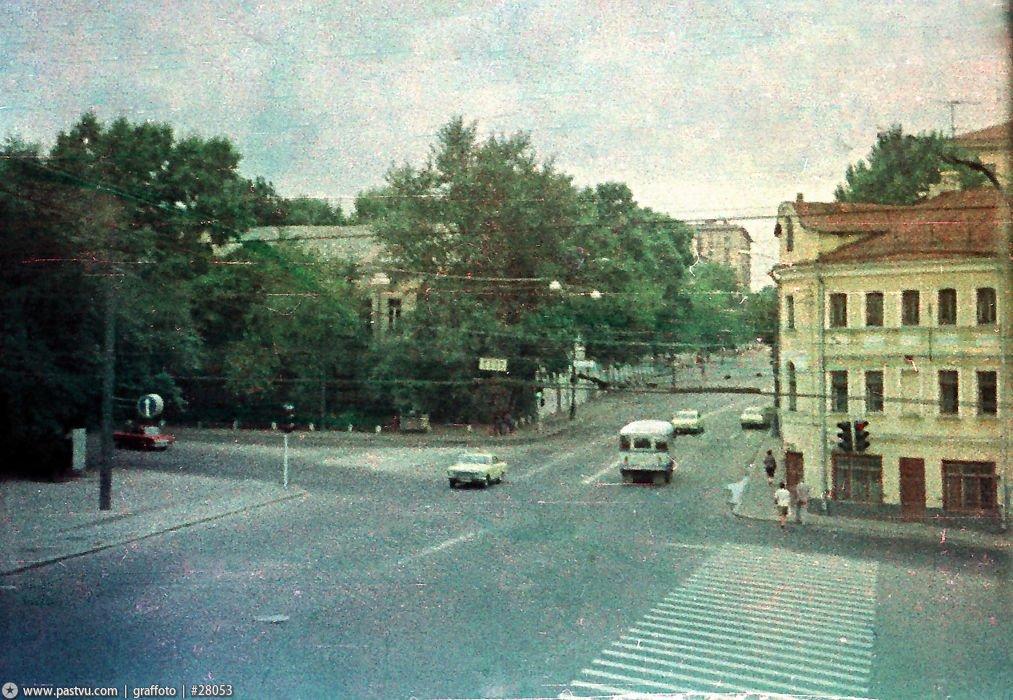
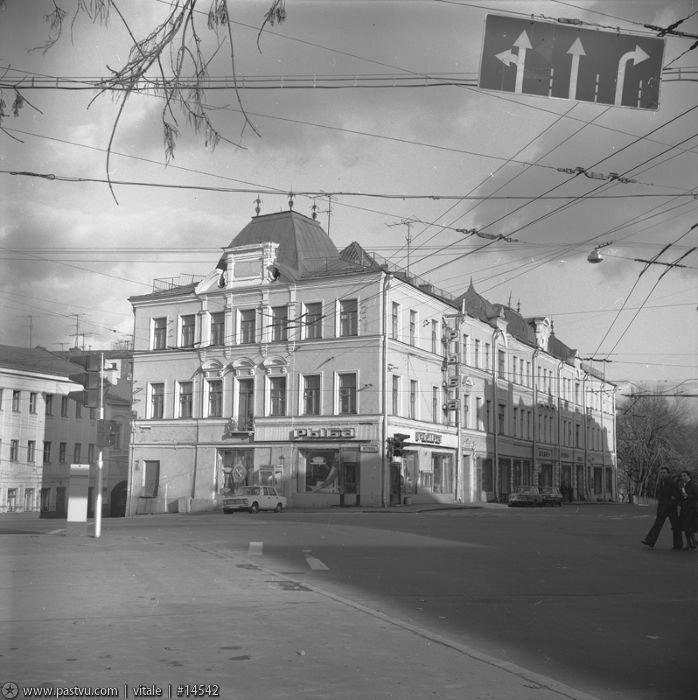
Площадь Петровские ворота хранит в своём названии память о воротах в башне стены Белого города, возведённой в конце XVI столетия знаменитым русским зодчим Фёдором Конём. За последующие двести лет крепость обветшала и была разобрана по указу императрицы Екатерины II.
Обширное владение за Петровскими воротами ещё с начала XVIII века принадлежало князьям Гагариным. Между гагаринским двором и стеной была устроена обширная Сенная площадь. Название говорит само за себя –здесь вёлся сенной торг.
После сноса белгородской стены на её месте велено было устроить бульвары с деревьями и цветниками. По южной границе Сенной площади такой бульвар, получивший название Страстного, и разбили. В то время - самый узкий из всех московских, всего на два ряда деревьев.
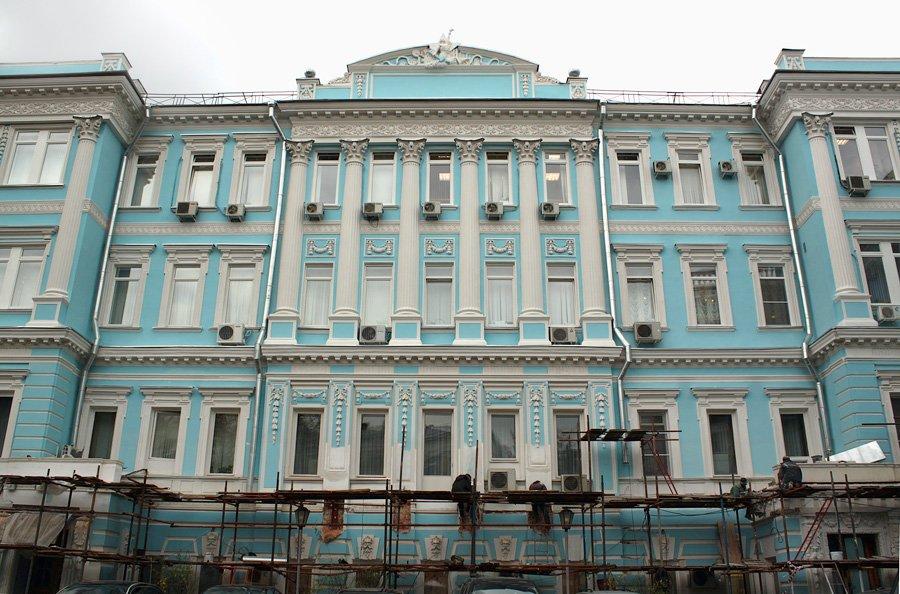
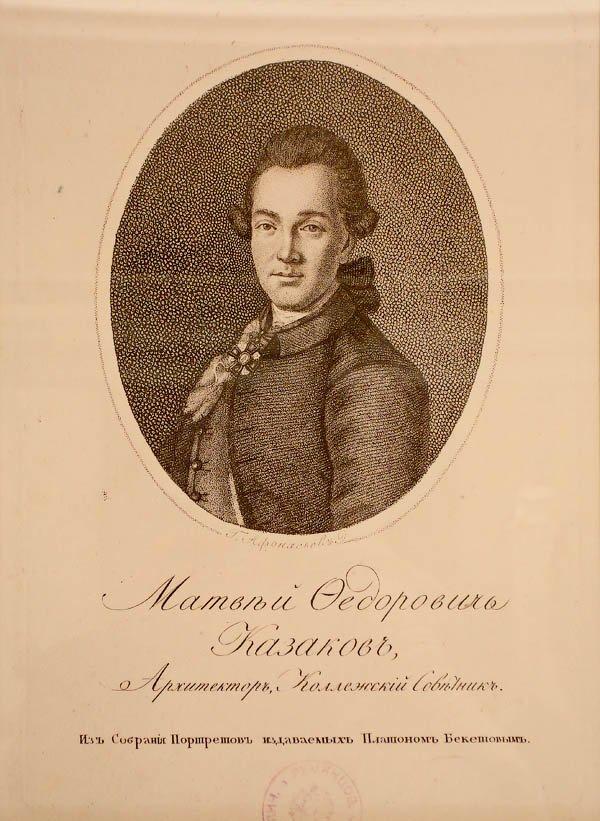
Князь Сергей Васильевич Гагарин в конце 1780-х годов перестроил старинные палаты, стоявшие на его участке. Проект строительства величественного дворца выполнил знаменитый московский зодчий Матвей Фёдорович Казаков. А в XIX веке в гагаринском дворце открылась Новоекатерининская больница, до недавних пор – городская клиническая больница № 24.
Бывший дворец Гагариных и сейчас является главным украшением площади Петровских ворот.
Сенной же площади не стало ещё в середине XIX века. С. П. Нарышкина, владелица большого дома возле Страстного монастыря, в 1860-е годы купила землю, на которой располагалась Сенная площадь, и устроила здесь сад. Сад, получивший название Нарышкинского сквера, она подарила городу. Позже сквер вошёл в состав Страстного бульвара.
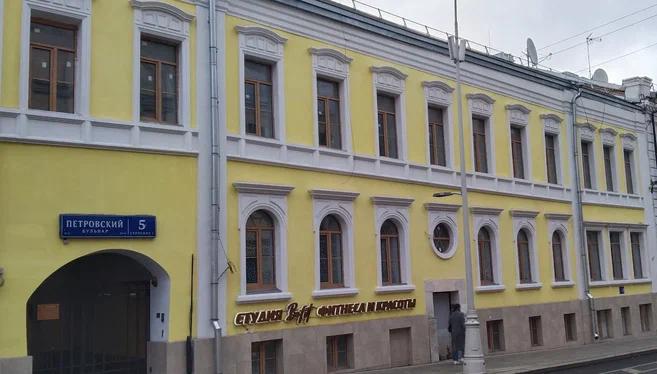
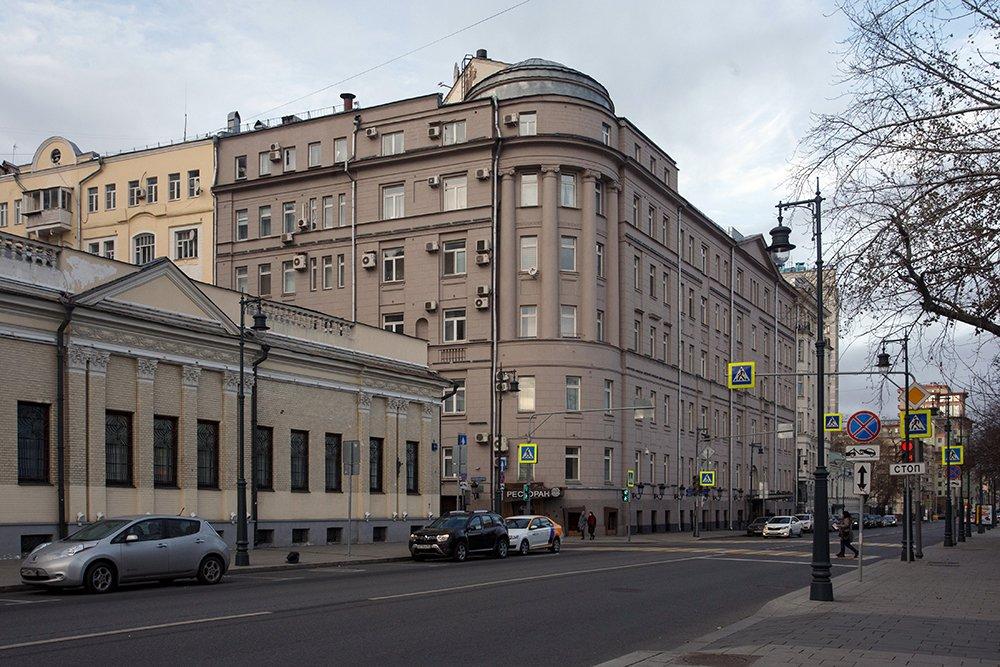
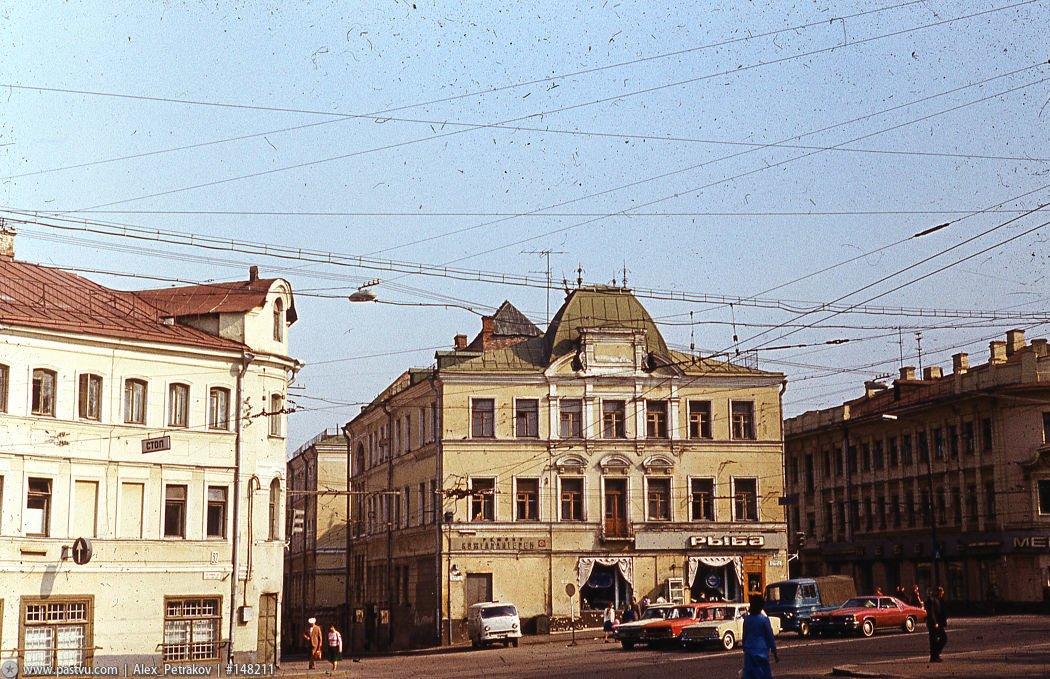
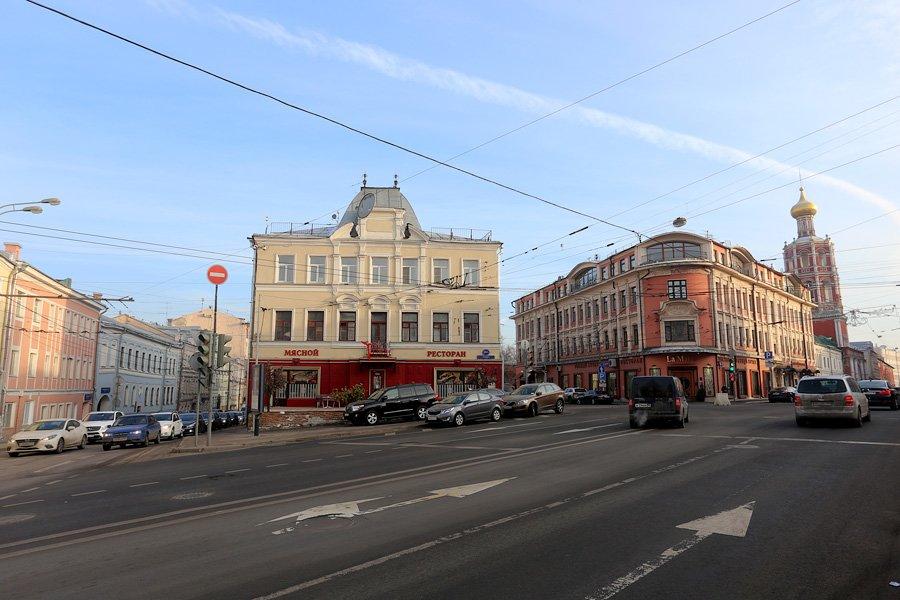
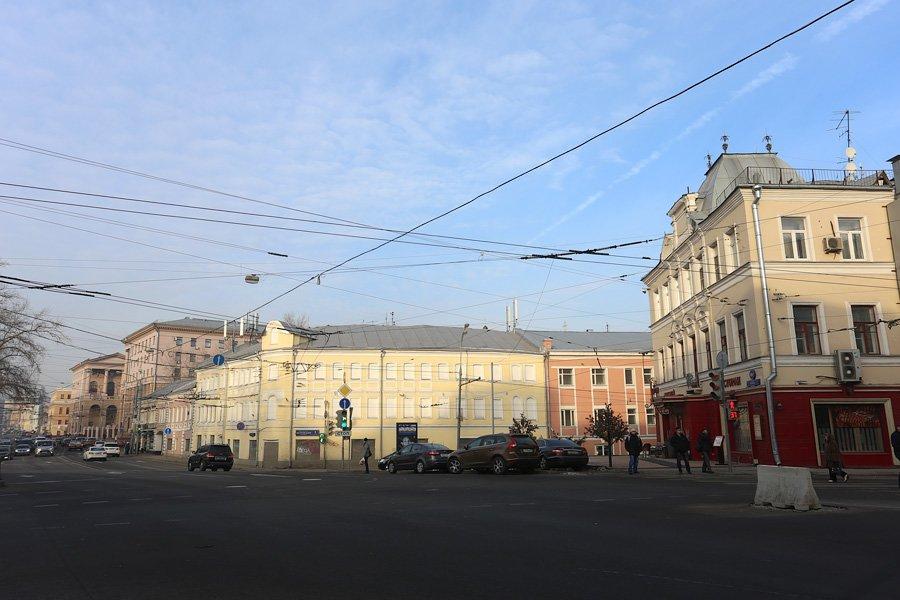
На другой стороне площади Петровских ворот, в начале Петровского бульвара сохранилась одна из так называемых «стасовских гостиниц» (ул. Петровка, дом № 30). В соответствии с указом императора Павла I у всех бывших ворот Белого города в самом начале XIX столетия были возведены двухэтажные гостиницы, скорее всего, по проекту петербургского архитектора В. П. Стасова (отсюда и их устоявшееся название). Позже этот дом перешёл к известным московским купцам Трындиным. Здание несколько раз перестраивалось, в частности, в 1874 году по проекту архитектора М. К. Геппенера, а в 1900 году - А. Е. Вебера, и было надстроено дополнительным третьим этажом.
В советские годы в доме были коммунальные квартиры, часть из которых сохранилась и до наших дней. В остальных помещениях сейчас различные конторы и рестораны.
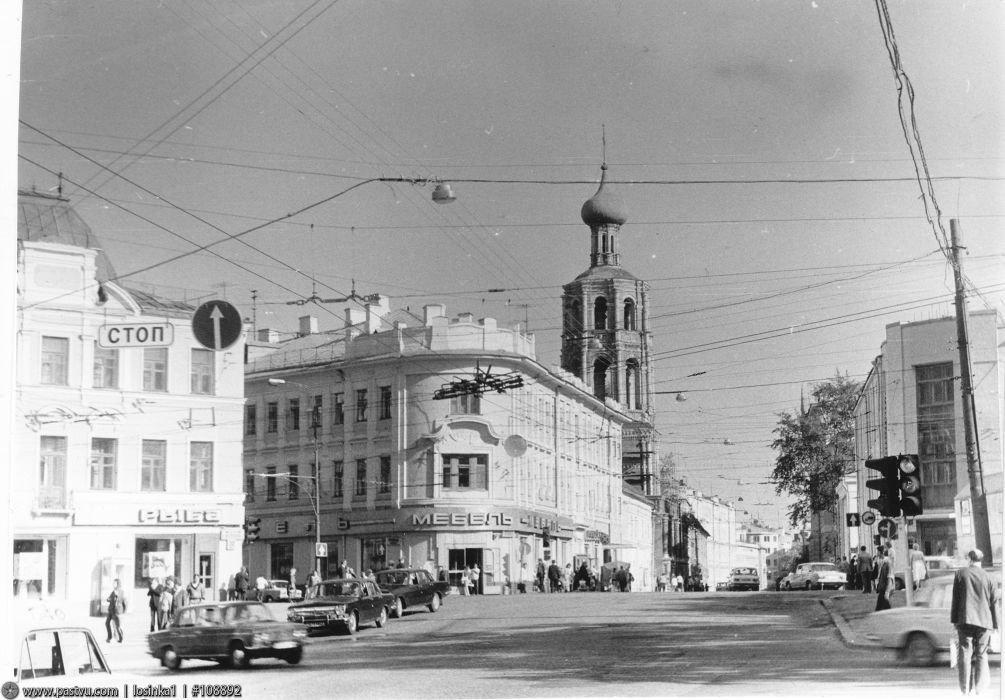
С площади Петровских ворот открывается прекрасный вид на Высоко-Петровский монастырь – одну из старейших московских обителей.
Оба угловых дома по Петровке, выходящих на площадь, до революции принадлежали Высоко-Петровскому монастырю. Дом № 28/2 – очень неплохой образец модерна начала ХХ века – был построен в 1901 году по проекту архитектора И. И. Бони. В наши дни он надстроен дополнительным этажом, надо отдать должное - сделано это было достаточно аккуратно. В советское время на первом этаже размещался хорошо известный в Москве магазин «Мебель». Дом на противоположном углу улицы (Петровка, дом № 27) перестраивался в самом конце 1920-х годов по проекту архитектора И. А. Фомина для Электромеханического института. Здесь с 1919 по 1929 год жил Константин Степанович Мельников – один из лидеров авангарда в архитектуре. В 1947 году в здание въехал Московский авиационно-технический институт им. Циолковского. Чуть дальше по Петровке, напротив Высоко-Петровского монастыря, сохранился великолепный памятник архитектуры – дворец, принадлежавший уральскому заводчику М. П. Губину, возведённый в 1799 году по проекту знаменитого Матвея Фёдоровича Казакова (Петровка, дом № 27).
Peter's Gate square stores in its name the memory of the gate in the walls of the White Tower of the city erected in the late XVI century the famous Russian architect Fyodor Kon. Over the next two hundred years castle dilapidated and was demolished by order of Empress Catherine II. Extensive ownership of Peter's Gate from the beginning of the XVIII century belonged to Prince Gagarin. Between Gagarin yard and the wall was constructed a vast Sennaya (Hay) square. The name speaks for itself - hay traiding conducted here. After the demolition of White City walls, it was ordered to arrange boulevards in its place with trees and flowerbeds. Strastnoy (Passion) boulevard ran along the southern border of Hay market Square, the narrowest of all Moscow boulevards at that time. It had only two rows of trees. Prince Sergey Gagarin rebuilt old Chamber on his plot in the late 1780s. The project to build a majestic palace fulfilled the famous Moscow architect Matvey Kazakov. Novoekaterininskaya Hospital [http://um.mos.ru/houses/novoekaterininskaya_bolnitsa/] opened in Gagarin Palace in the XIX century. Until recently, it was City Clinical Hospital № 24. Former Gagarin palace is the main feature of Petrovskie Gate Square even now. Haymarket square seesed to exist in the middle of the XIX century. SP Naryshkina, the owner of a large house near Strastnoy monastery bought the land on where the Hay square located in the 1860s and arranged garden here. Naryshkina gave the garden to the city and it was named Naryshkinsky park. The park later became part of the Strastnoy Boulevard. On the other side of Peter's Gate square, at the beginning of the Petrovsky Boulevard remained one of the so-called "Stasov’s Hotels" (30 Petrovka street). Two-storey hotels built at all former gates of the White City by the decree of Emperor Paul I in the beginning of the XIX century, most likely, designed by architect Stasov from St. Petersburg (hence their established name- Stasov’s hotels). Later, the house passed to the famous Moscow merchant Tryndinym. The building rebuilt several times, particularly in 1874 by architect MK Geppenera, and in 1900 - AE Weber, was overbuilt and an additional third floor. In Soviet times, the house were communal apartments, some of which have survived to the present day. In the rest of the premises now different offices and restaurants. There is a beautiful views of the High-Petrovsky monastery [http://um.mos.ru/houses/vysoko_petrovskiy_monastyr/], one of the oldest monasteries in Moscow from Petrovsky Gate Square. Both angular house along Petrovka entering the square, before the revolution belonged Vysokopetrovsky Monastery. House № 28/2 - a very good example of the early twentieth century Art Nouveau built in 1901 by architect I. Boni. These days, it was built on an additional floor and it was done quite carefully - we must pay tribute. A well-known store "Furniture" occupied the first floor of the building in Soviet times. The house on the opposite corner of the street (27 Petrovka street) rebuilt in the late 1920s by the architect IA Fomin for Electromechanical Institute [http://um.mos.ru/houses/dom_elektromekhanicheskogo_instituta/]. Here, from 1919 to 1929 lived Konstantin Melnikov [http://um.mos.ru/personalities/2091/] - one of the leaders of the avant-garde architecture. In 1947, the building entered the Moscow Aviation Technical Institute named after Tsiolkovsky. Magnificent architectural monument preserved a little further on Petrovka, across the street from Vysokopetrovsky Monastery. This is the palace that belonged to the Ural breeder MP Gubin, erected in 1799 by the famous Matvey Fedorovich Kazakov [http://um.mos.ru/personalities/ 2173 /] (Petrovka, house number 27 [http://um.mos.ru/houses/dom_m_p_gubina/]). Visotsky’s monument designed by sculptor GD Raspopov erected on Strastnoy Boulevard by Petrovskie Gates on July 25, 1995, the day of the 15th anniversary of the death. Location for the monument was chosen on purpose. Recall the line of Vladimir Semenovich: "They will not put a monument in a park somewhere by Petrovskie Gate." Fortunately, a great actor and poet was wrong.