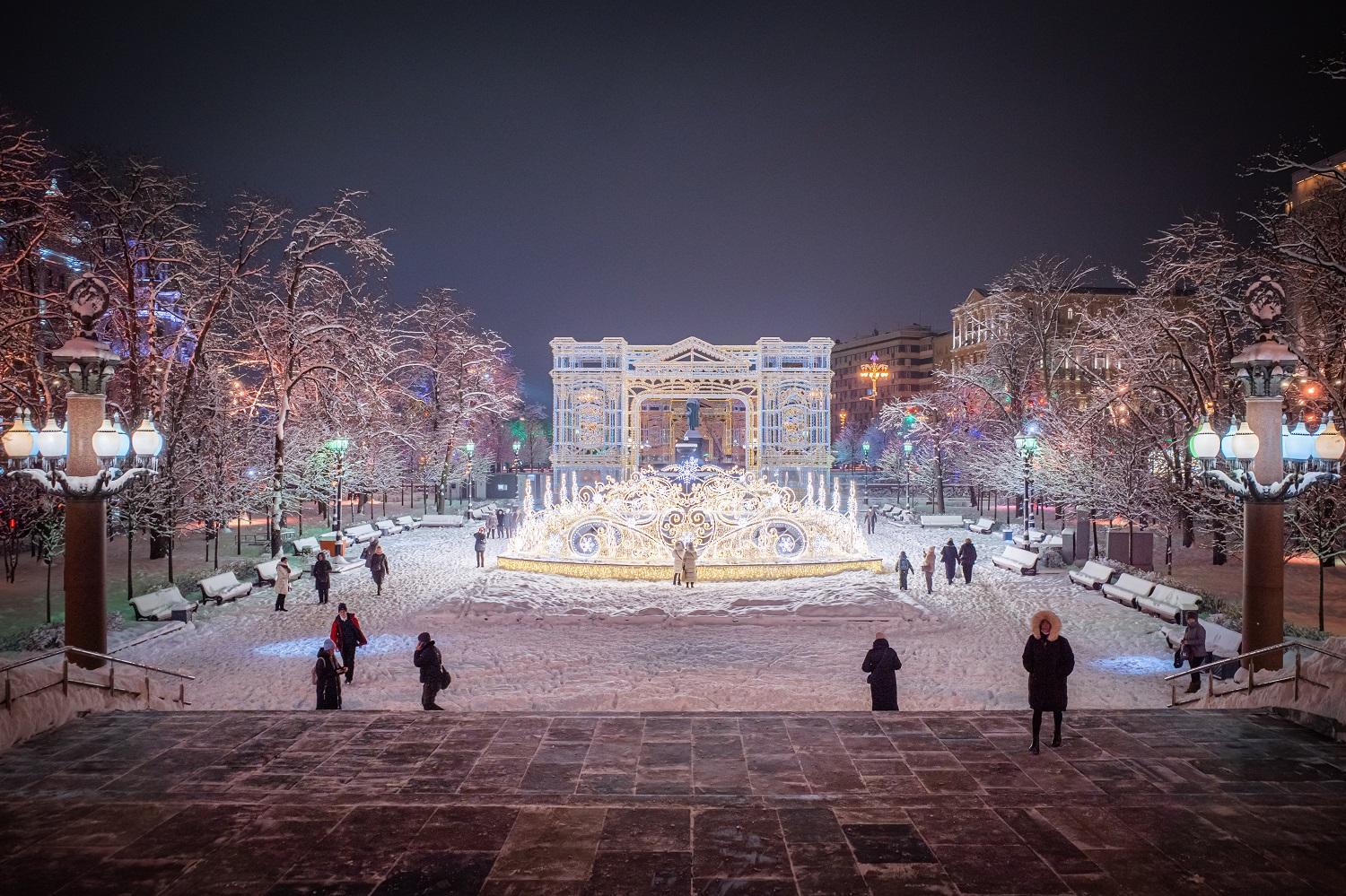
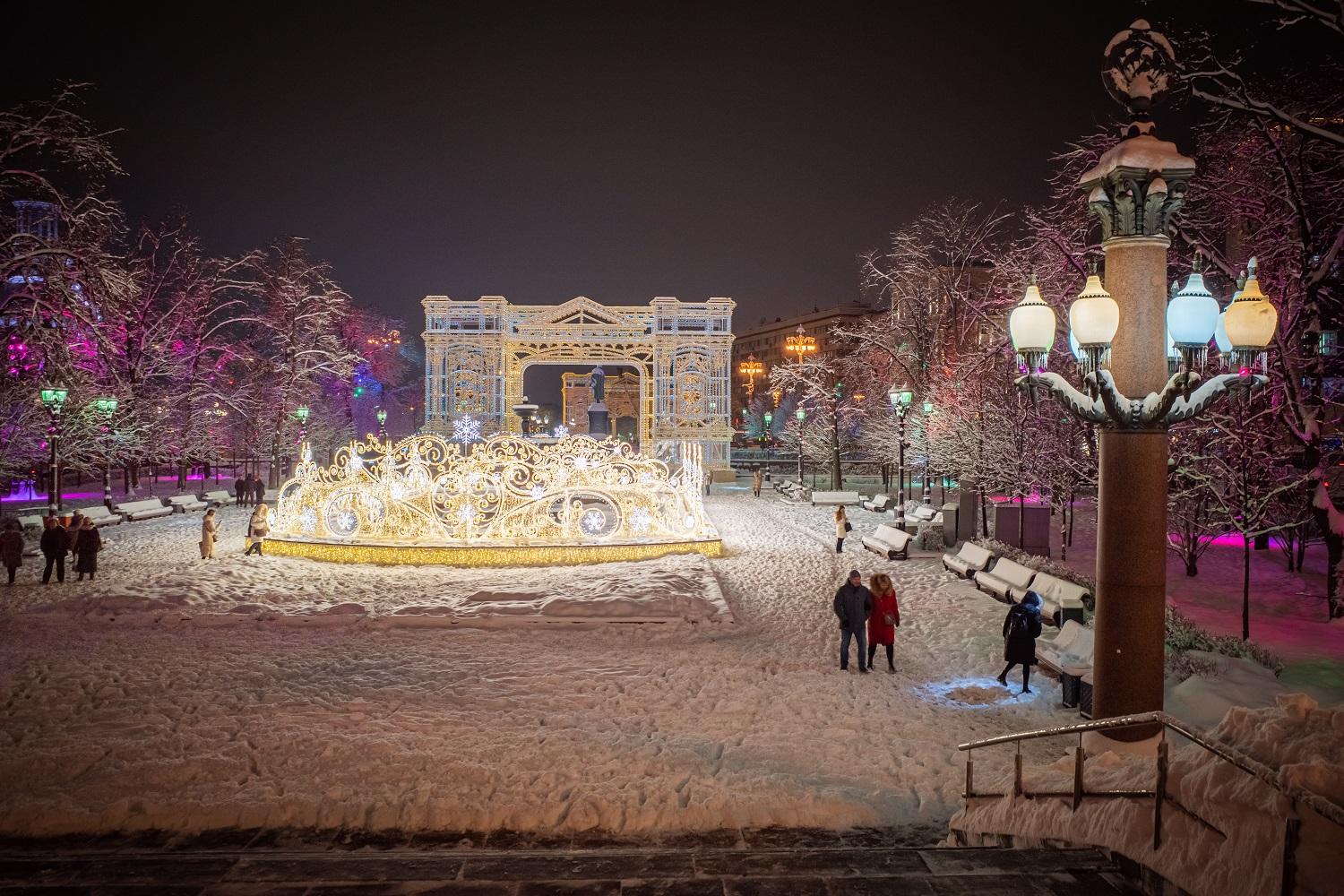
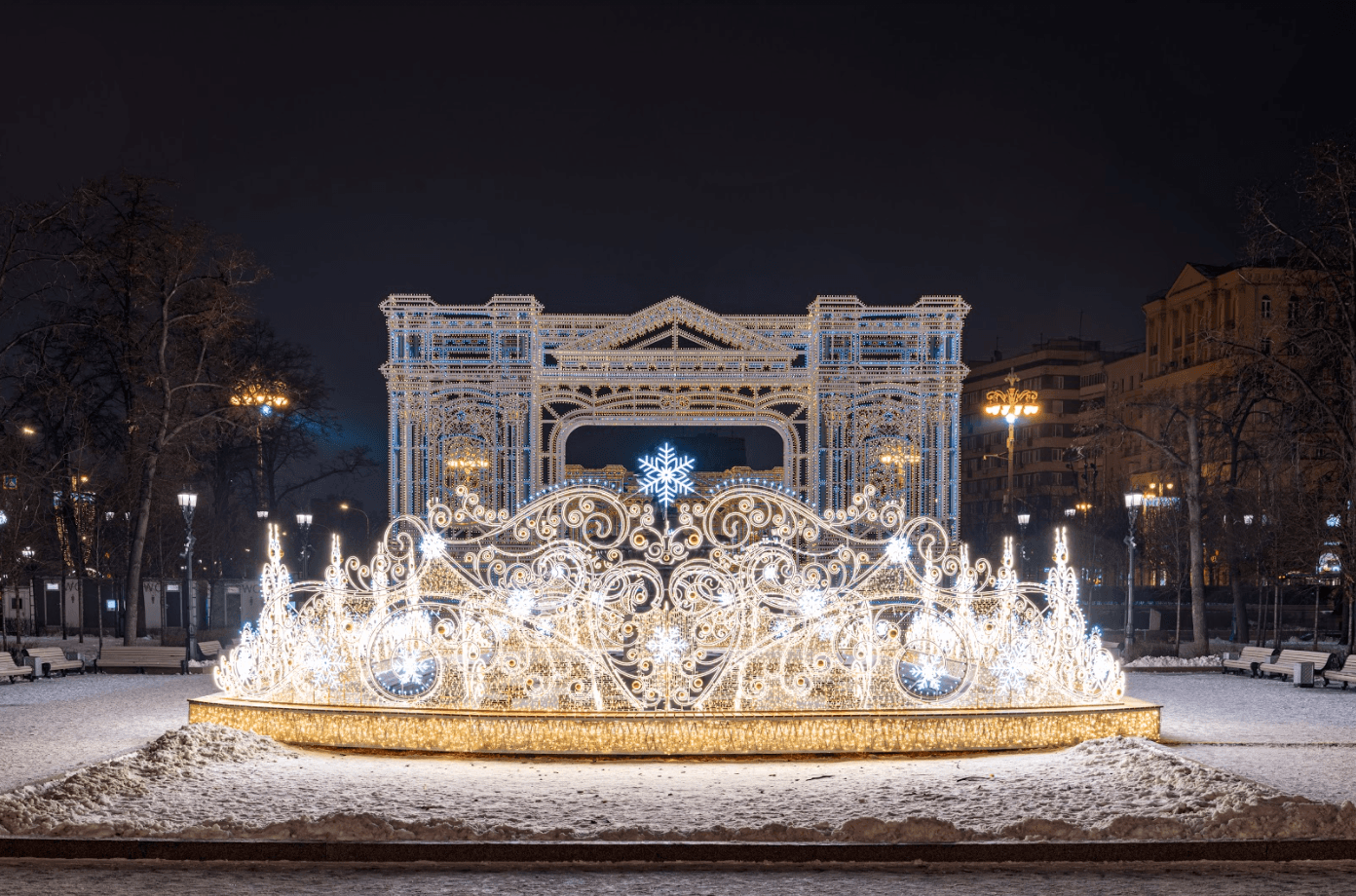
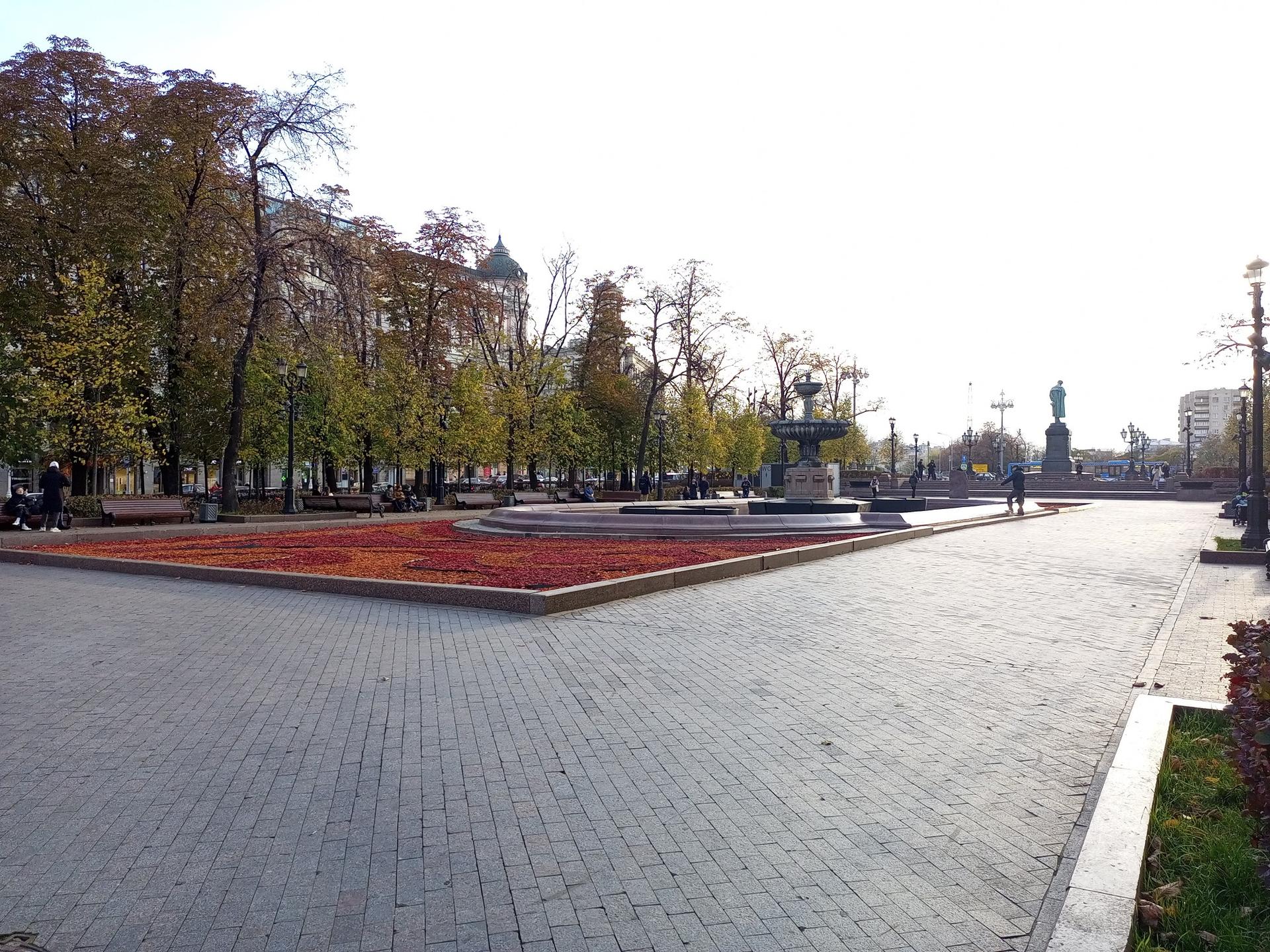
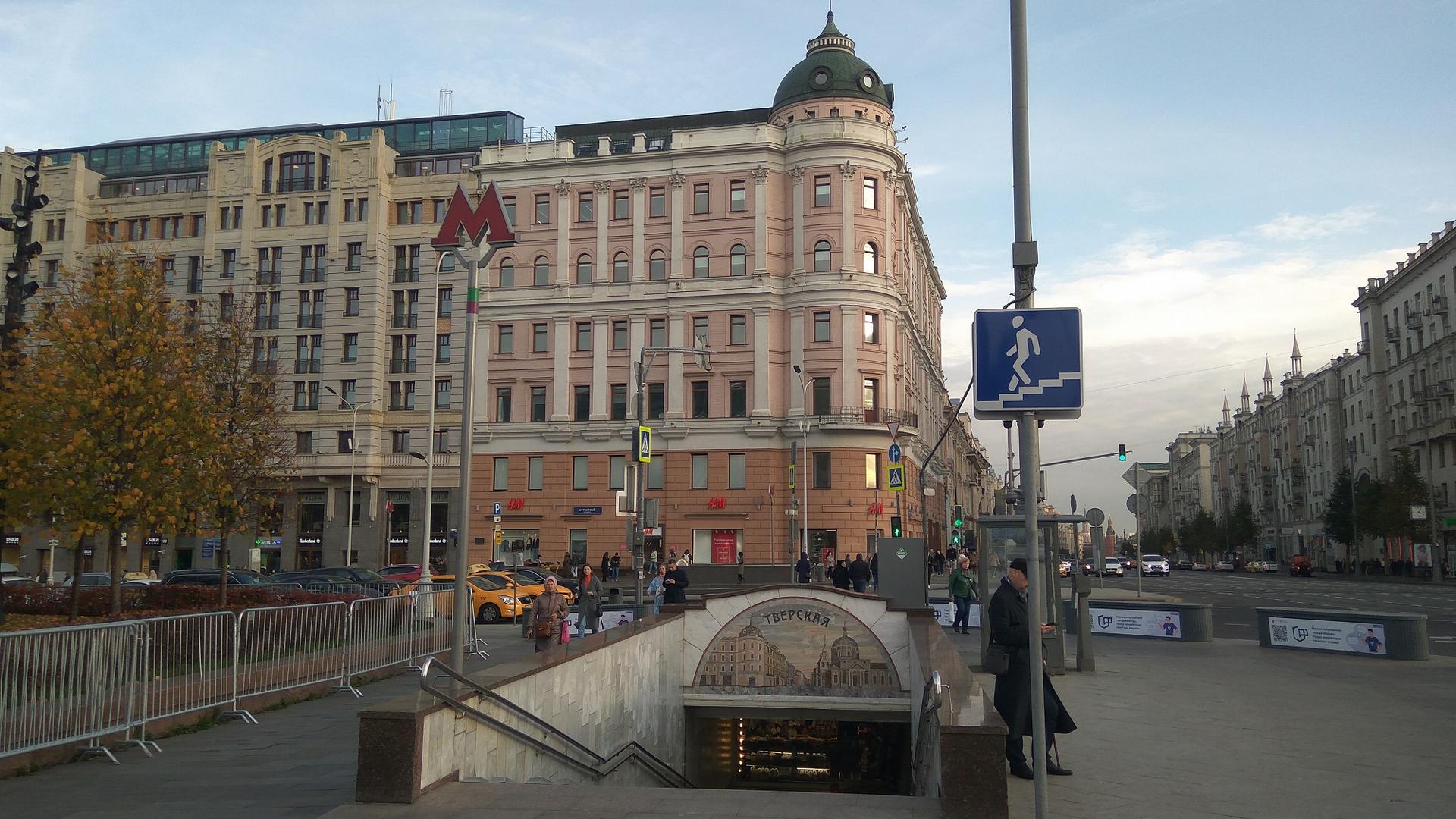
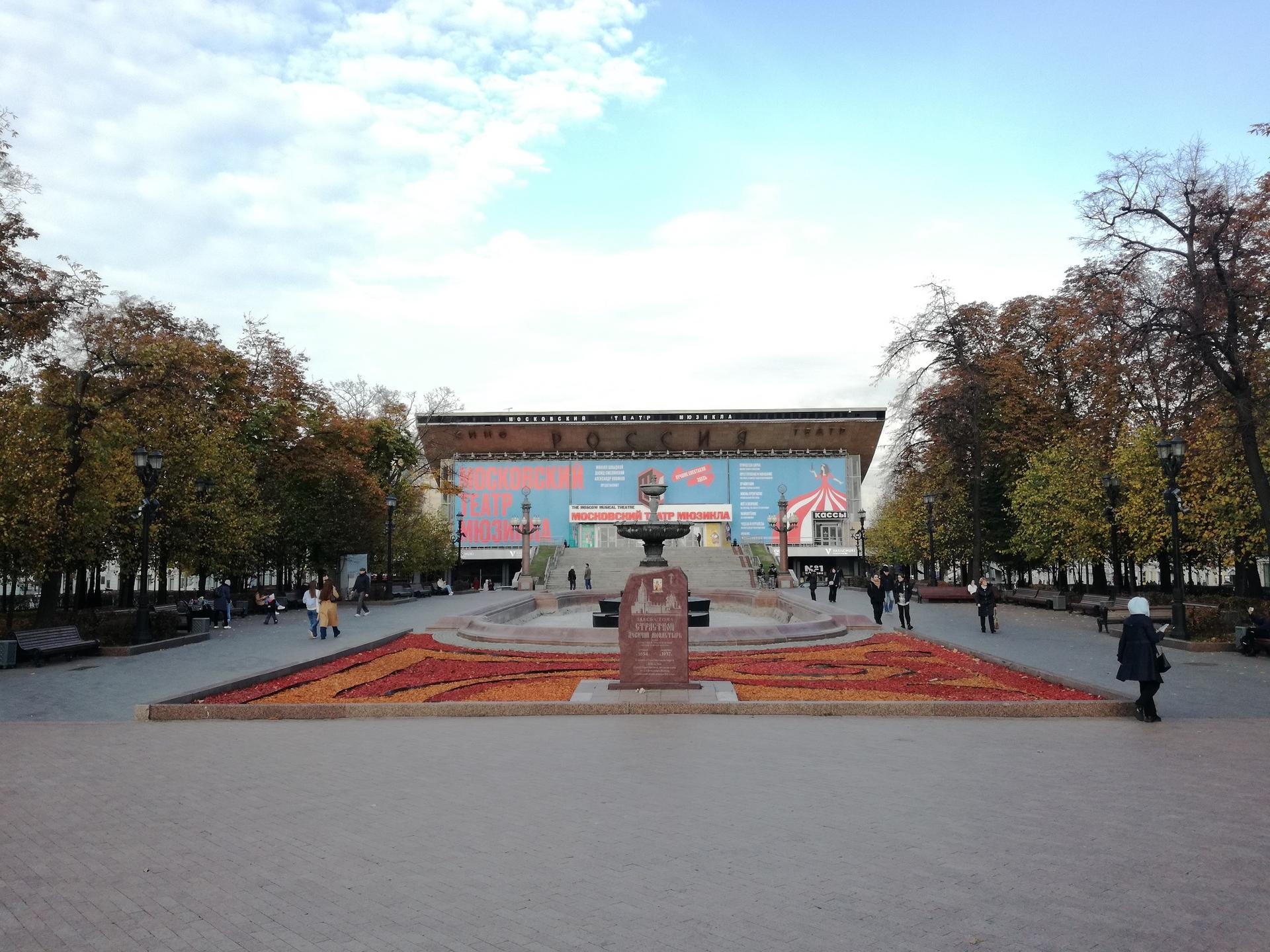
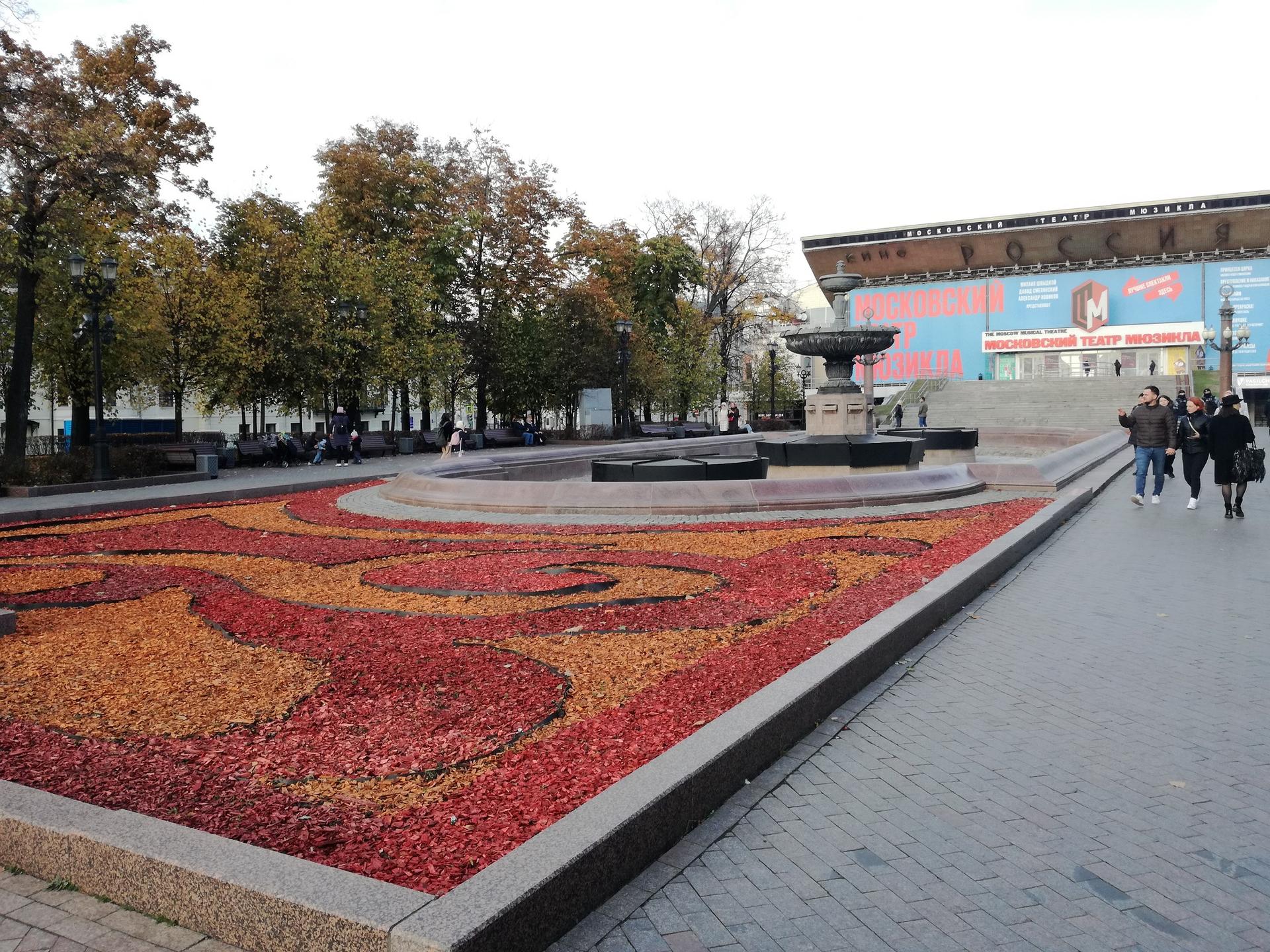
Пушкинская площадь – один из безусловных символов Москвы. Несмотря на то, что главной площадью столицы считается по праву знаменитая Красная, однако ее образ слишком официален, а Пушкинская – самая живая из городских площадей, истинное сердце Москвы.
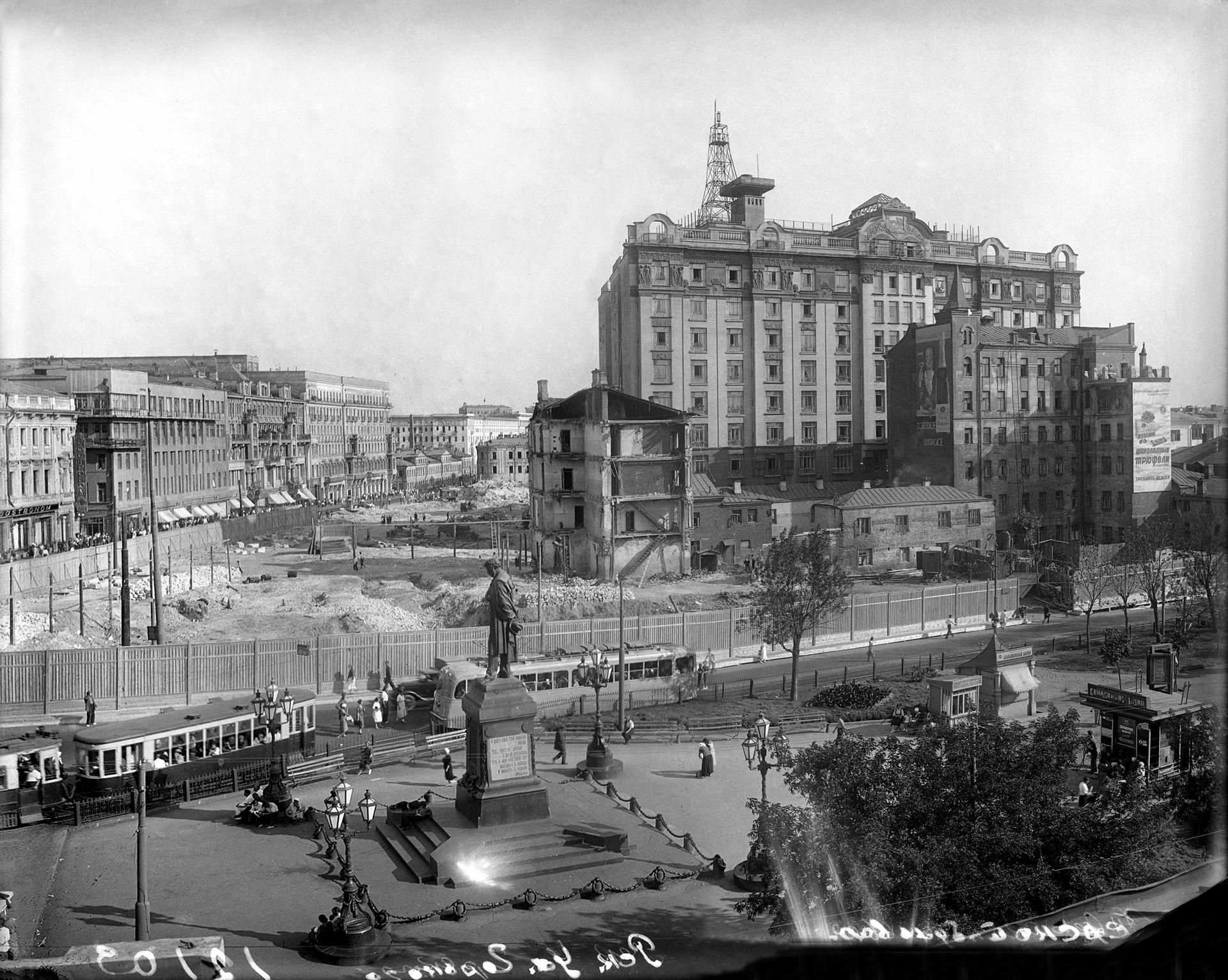
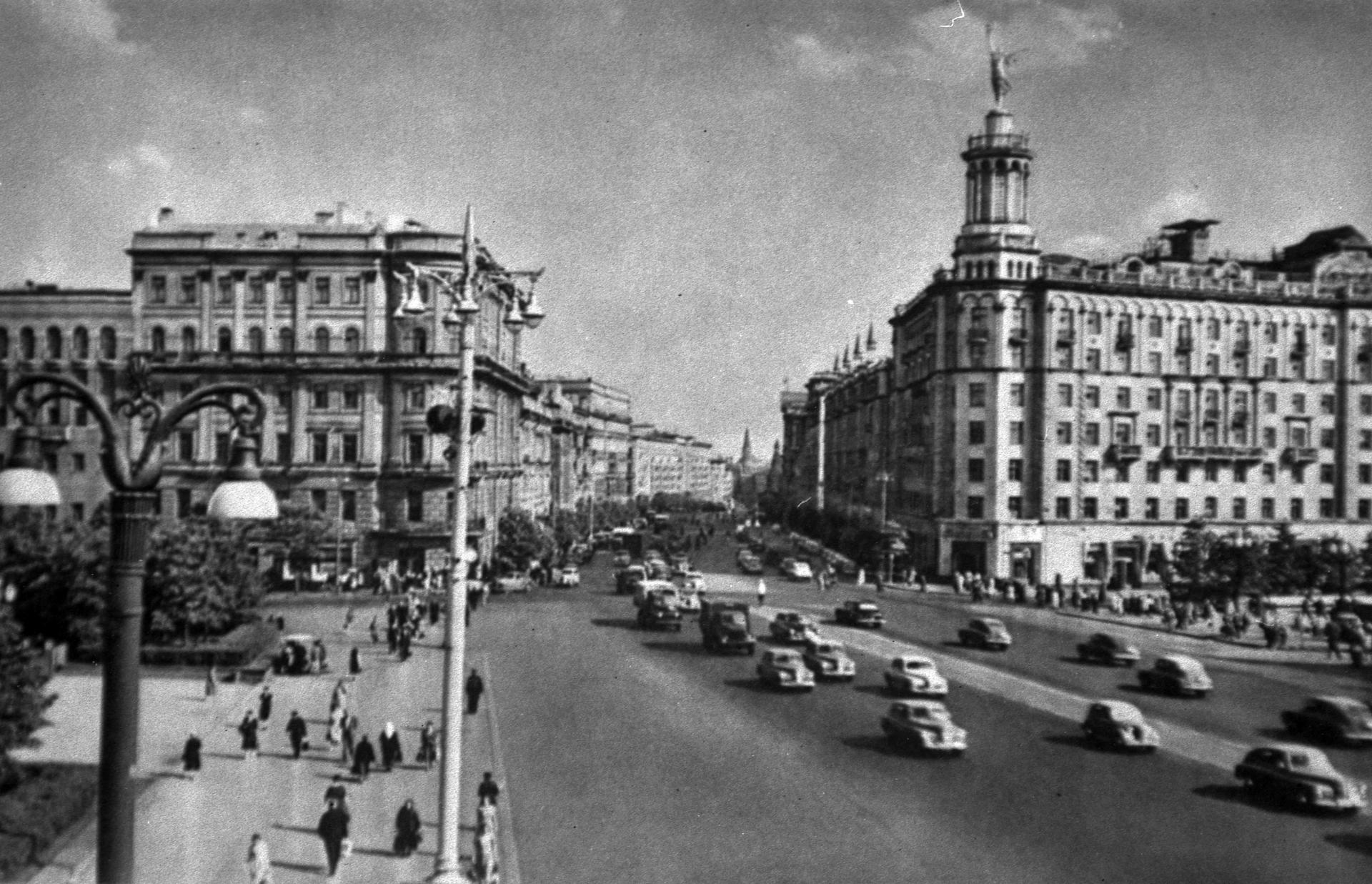
Расплывчатые габариты (скорее, пространство, чем площадь) Пушкинская приобрела недавно, лет 40 назад. В советские годы она превратилась, по сути, в проезжую часть Тверской магистрали в окружении двух скверов, визуально почти не связанных друг с другом. Конечный отрезок Тверского бульвара также слился с Новопушкинским сквером, утратив свою четкость и самостоятельность.
До середины XVII столетия никакой площади здесь не было, а был просто плацдарм перед воротами Белого города. В 1641 году на этом месте москвичи встречали чудотворную икону Страстной Богоматери, принесенную из Нижнего Новгорода. Через пять лет, в память об этом событии, под крепостной стеной был возведен стройный пятиглавый собор (именно собор, один из девяти, существовавших в Москве в то время), окруженный двухъярусной арочной галереей. В нем и пребывала Страстная икона, одна из почитаемых святынь Дома Романовых.
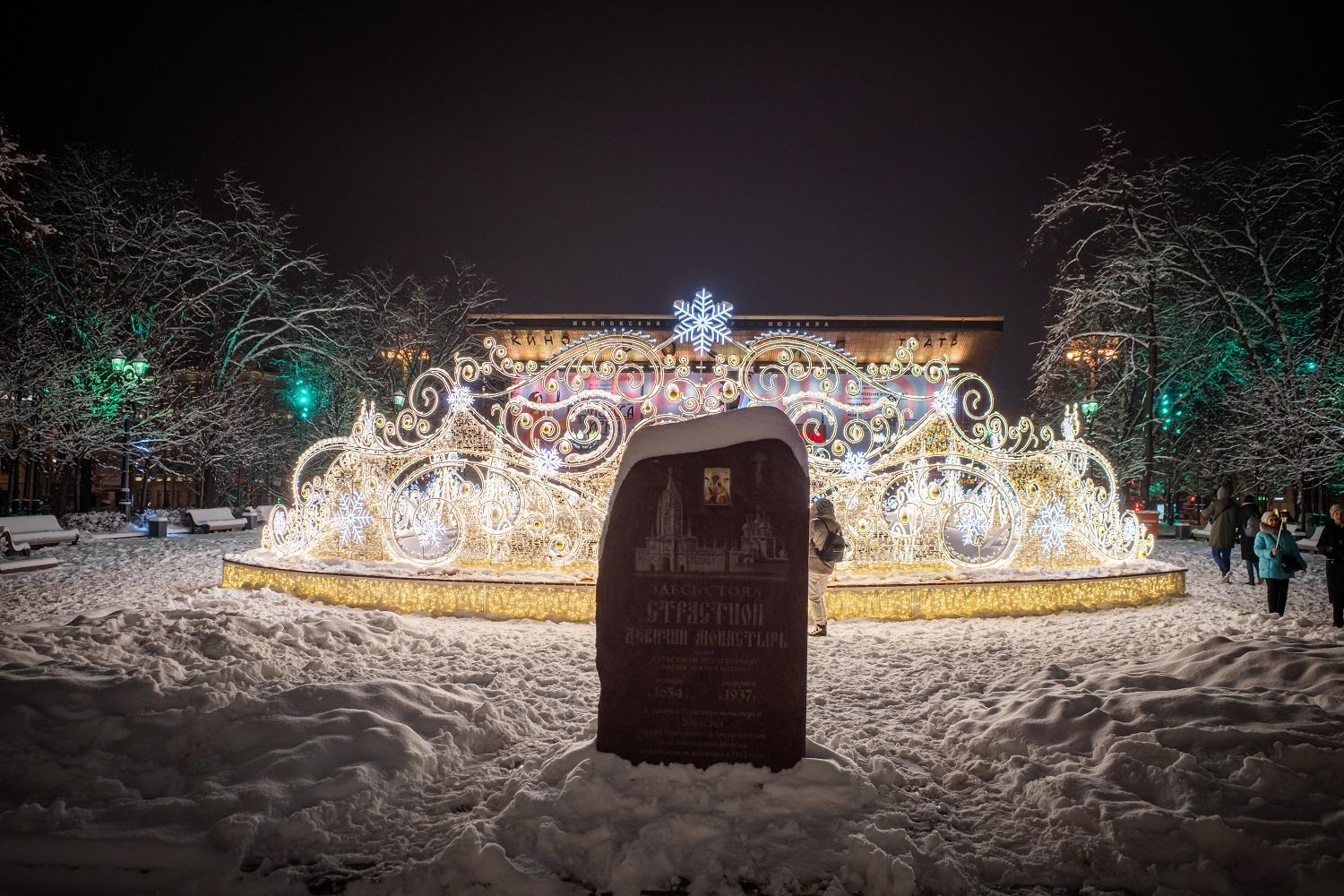
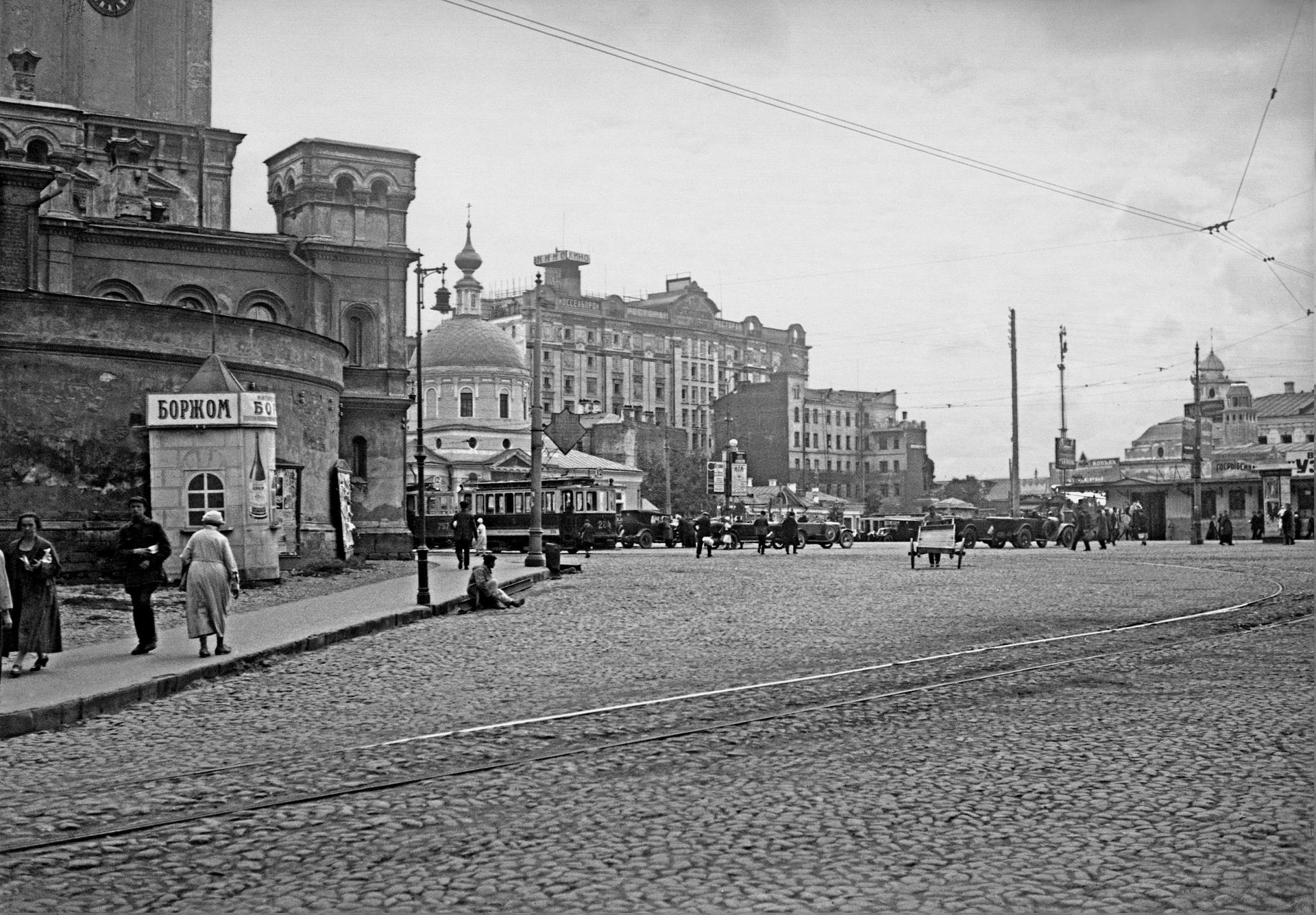
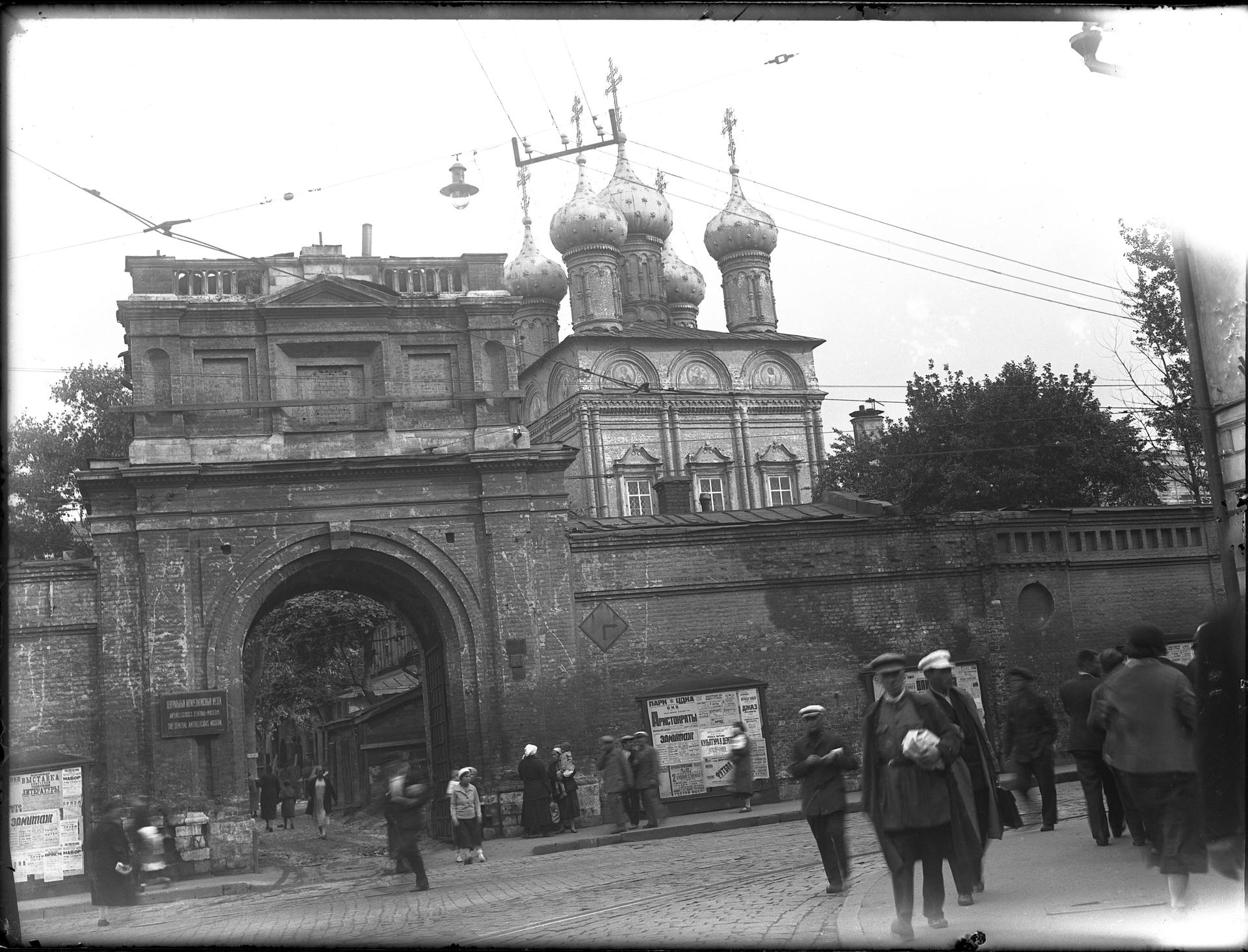
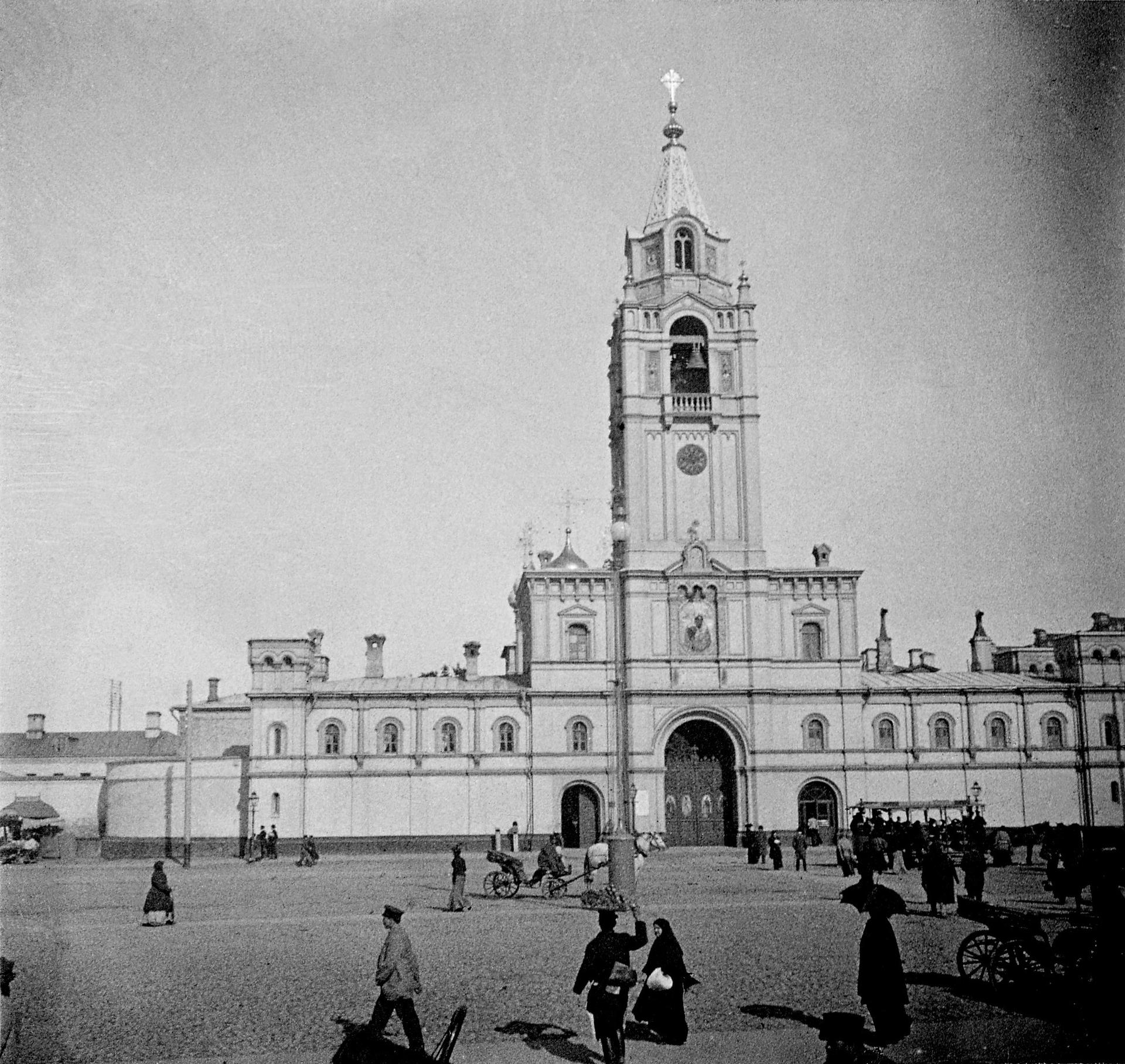
Чуть позже, в 1654 году, при соборе возник монастырь. Это был очень живописный, необычный комплекс – монастырь с пятиглавым собором и надвратной церковью-колокольней (1692 г.), вплотную примыкающий к трехшатровой проездной башне Белого города. В ансамбль площади входила и построенная к 1652 году многоверхая церковь Рождества Богородицы в Путинках, стоящая чуть поодаль, но прекрасно просматривающаяся от городских ворот.
В 1720 году ворота снесли, монастырь стал доминантной точкой площади, получившей название Страстная. В 1796 году появился Тверской бульвар, ориентированный точно на монастырскую колокольню. Западная сторона площади тогда же была застроена кварталом жилых двухэтажных зданий с целым рядом замкнутых внутренних дворов - один из немногих реализованных фрагментов екатерининского генплана регулярного переустройства города.
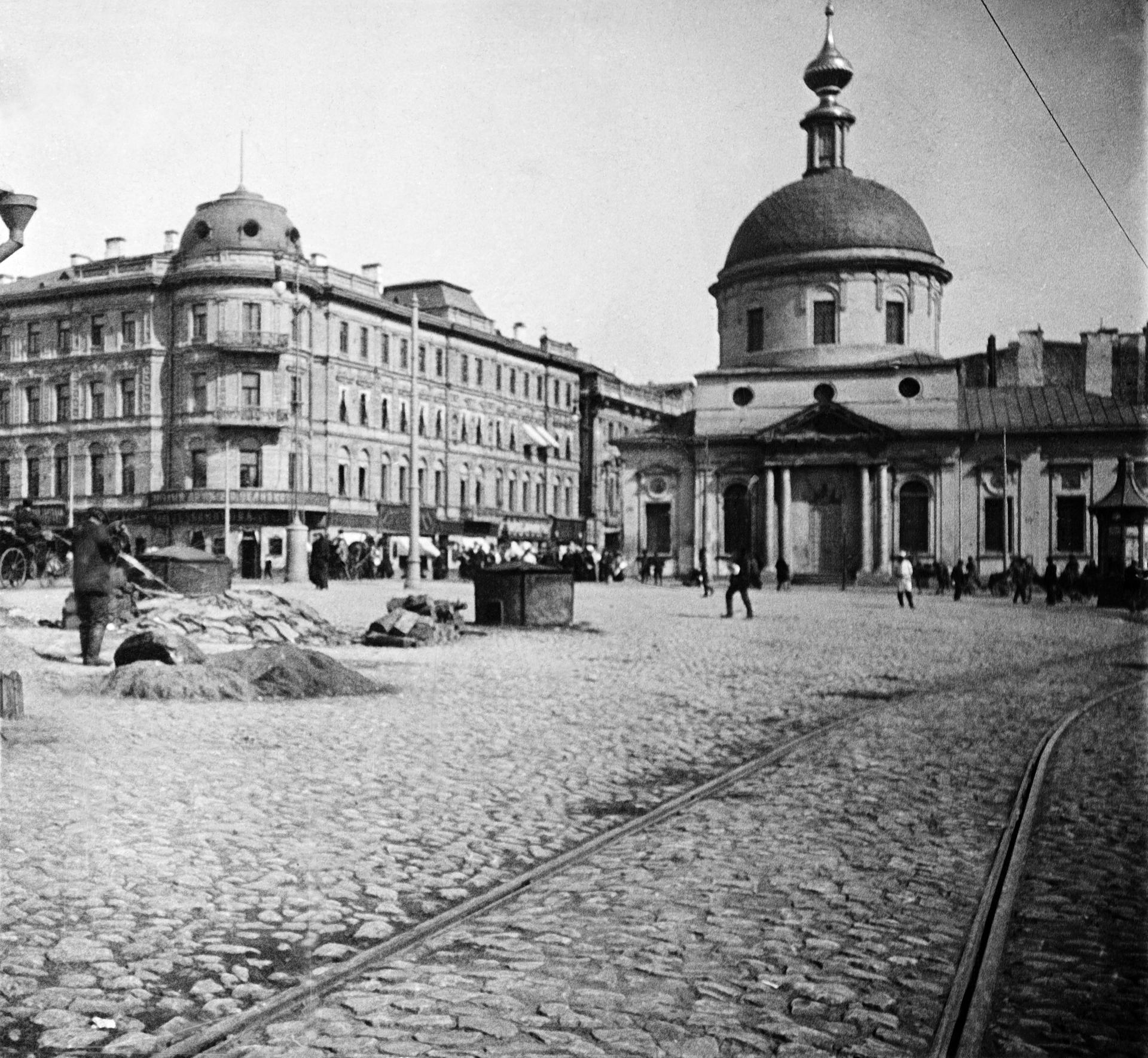
Другой угол бульвара и Тверской улицы оформила представительная ротонда церкви Дмитрия Солунского. Она возникла из древнего, тогда еще загородного, Киево-Печерского подворья. Трудно поверить, но под асфальтом обычной дворовой автостоянки, скрывается освидетельствованное археологами кладбище, где москвичи хоронили своих близких еще во времена князя Донского. Построенная, очевидно, в 1640-х, трехшатровая церковь была снесена в 1791 году и заменена ротондой - еще одно свидетельство постепенного превращения «проезда подле стены Белого города» в главный московский бульвар.
Современники рассказывали, что в начале XIX века у Дмитрия Солунского «съезд знатных богомольцев бывал иногда так велик, что кареты стояли вдоль всего бульвара». А вот колокольня при новой церкви осталась прежняя, самая необычная из шатровых колоколен не только Москвы, но и, пожалуй, всей России. В плане она была не квадратной, а прямоугольной формы – нечто среднее между колокольней и звонницей, характерной для более ранних времен.
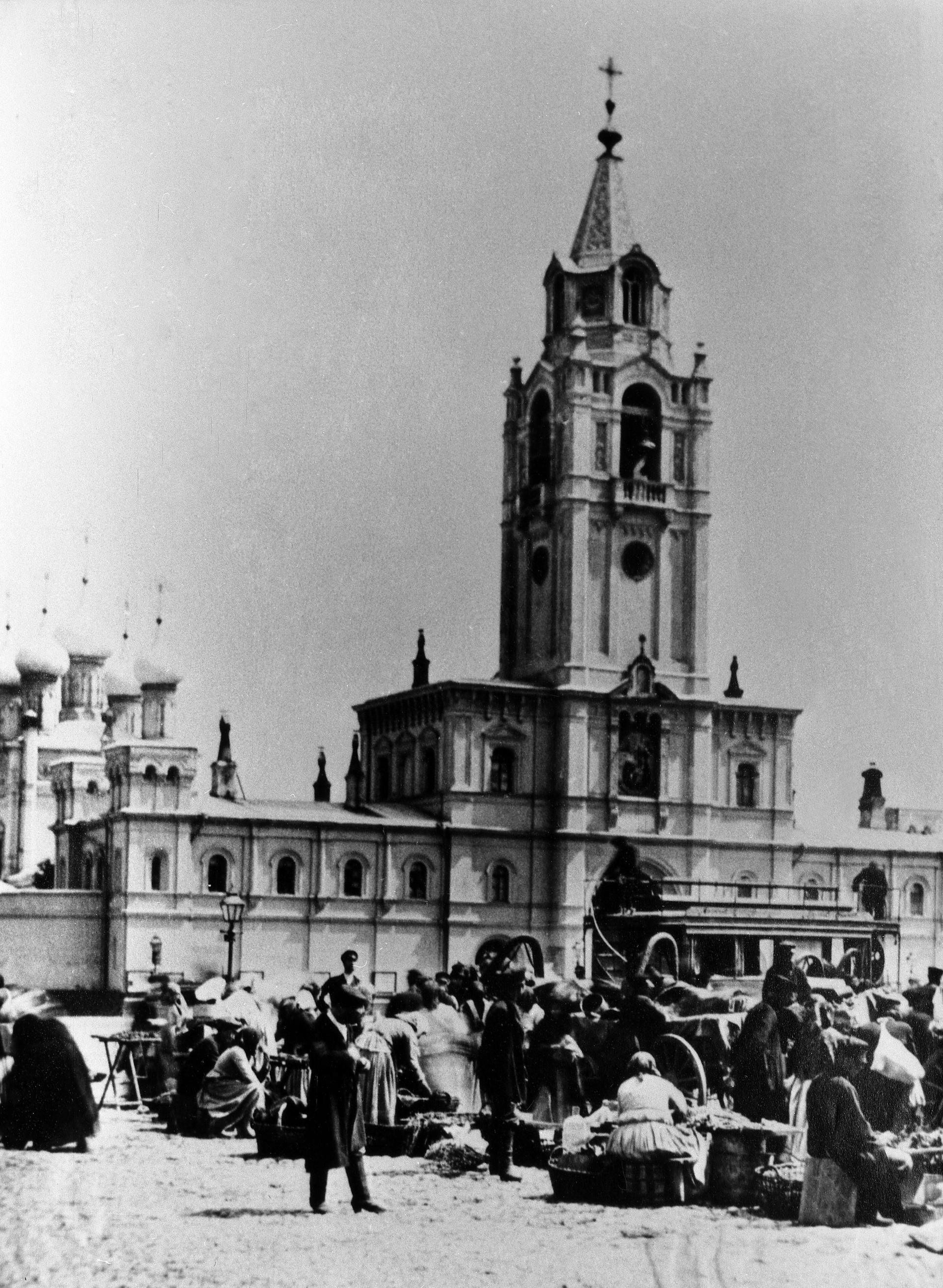
Изменения претерпевал и облик Страстного монастыря. К 1855 году архитектор М. Д. Быковский заменил старую монастырскую колокольню новой. Она была встроена в двухэтажный корпус, окончательно оформивший восточную сторону площади.
В 1875 году Страстной монастырь посетил Король Шведский и Норвежский Оскар II. Он любовался Москвой с высокой монастырской колокольни и впоследствии сказал: «Вид изумительный: почти все иностранцы желают видеть эту дивную панораму».
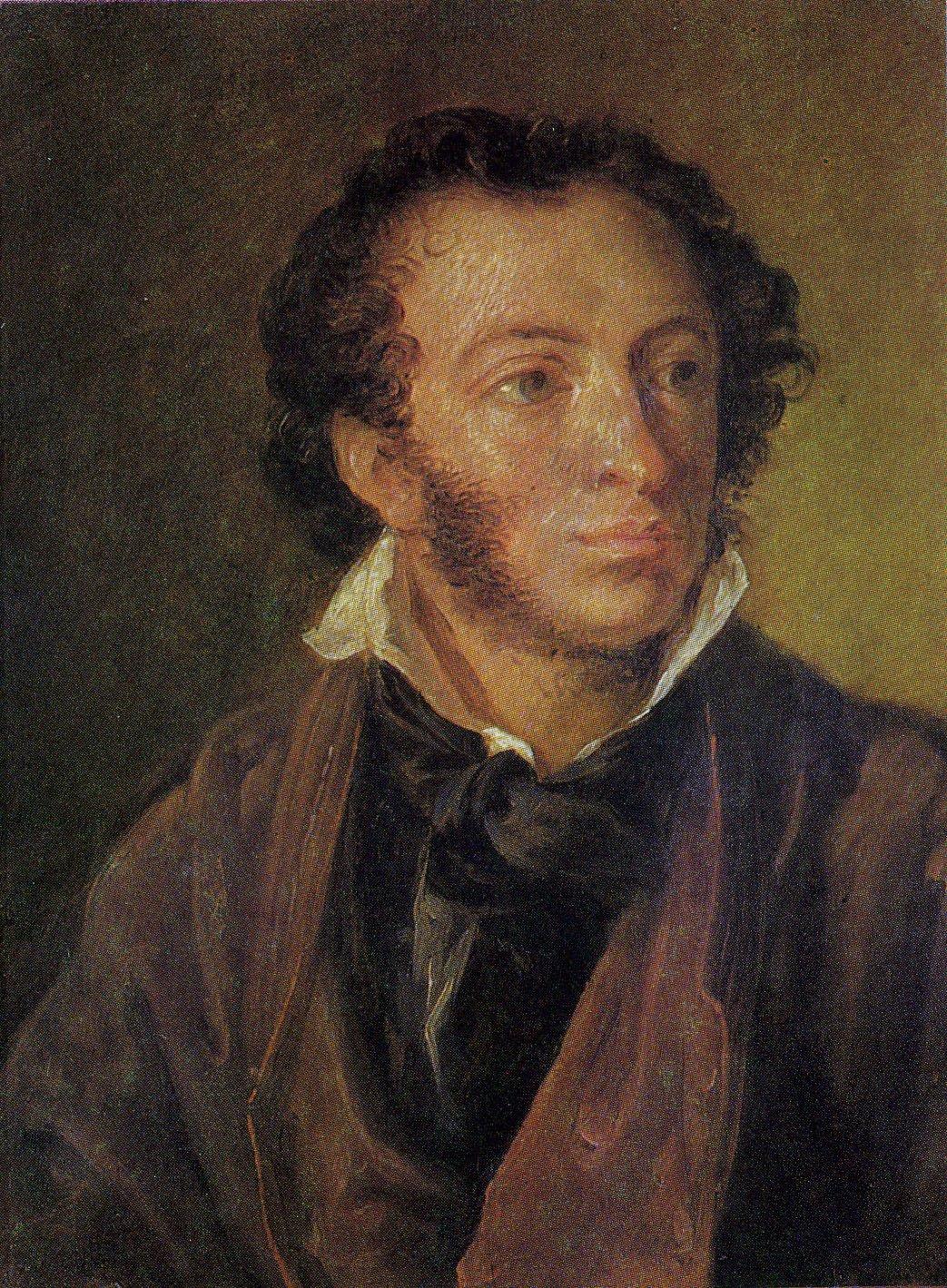
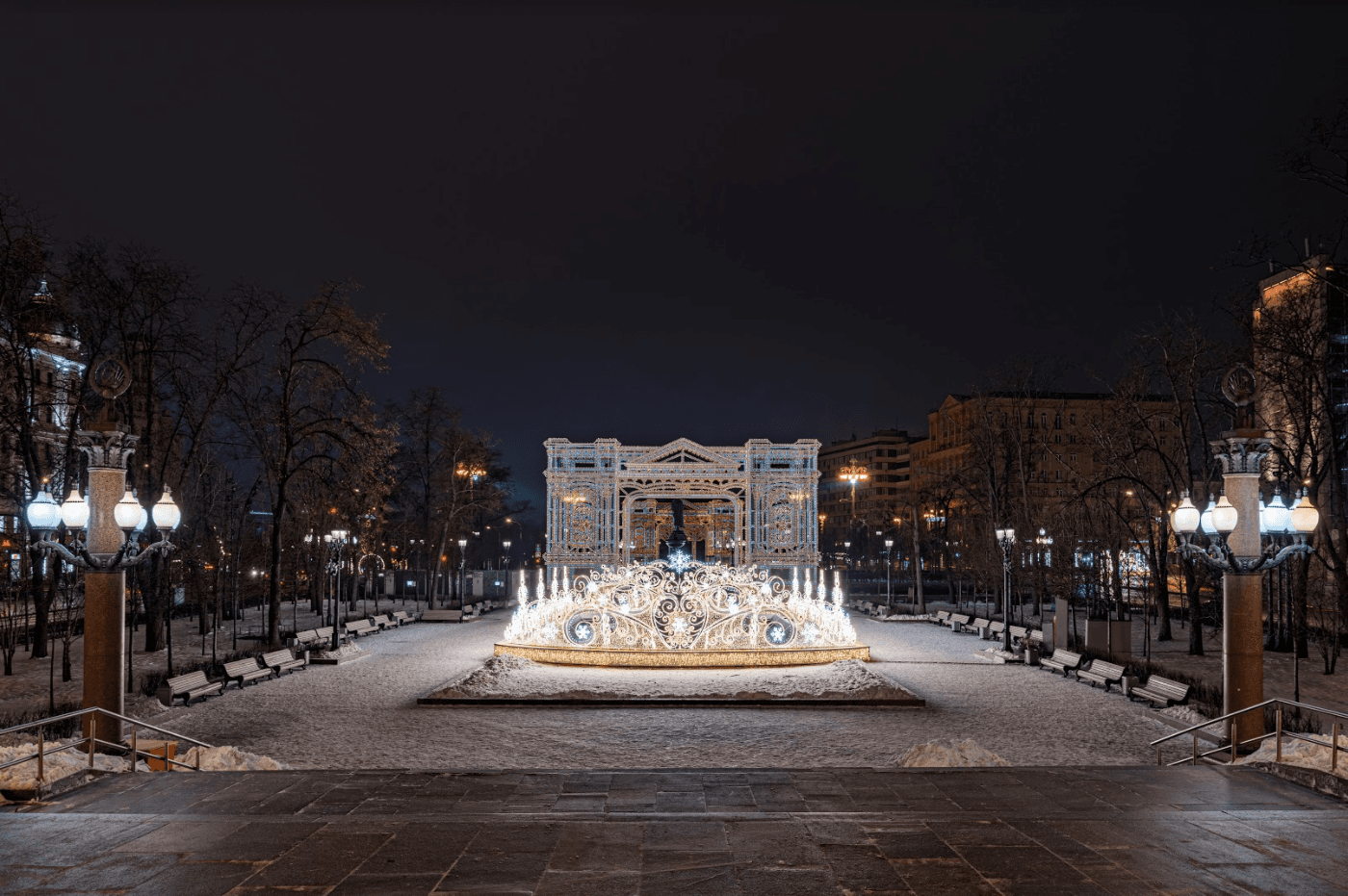
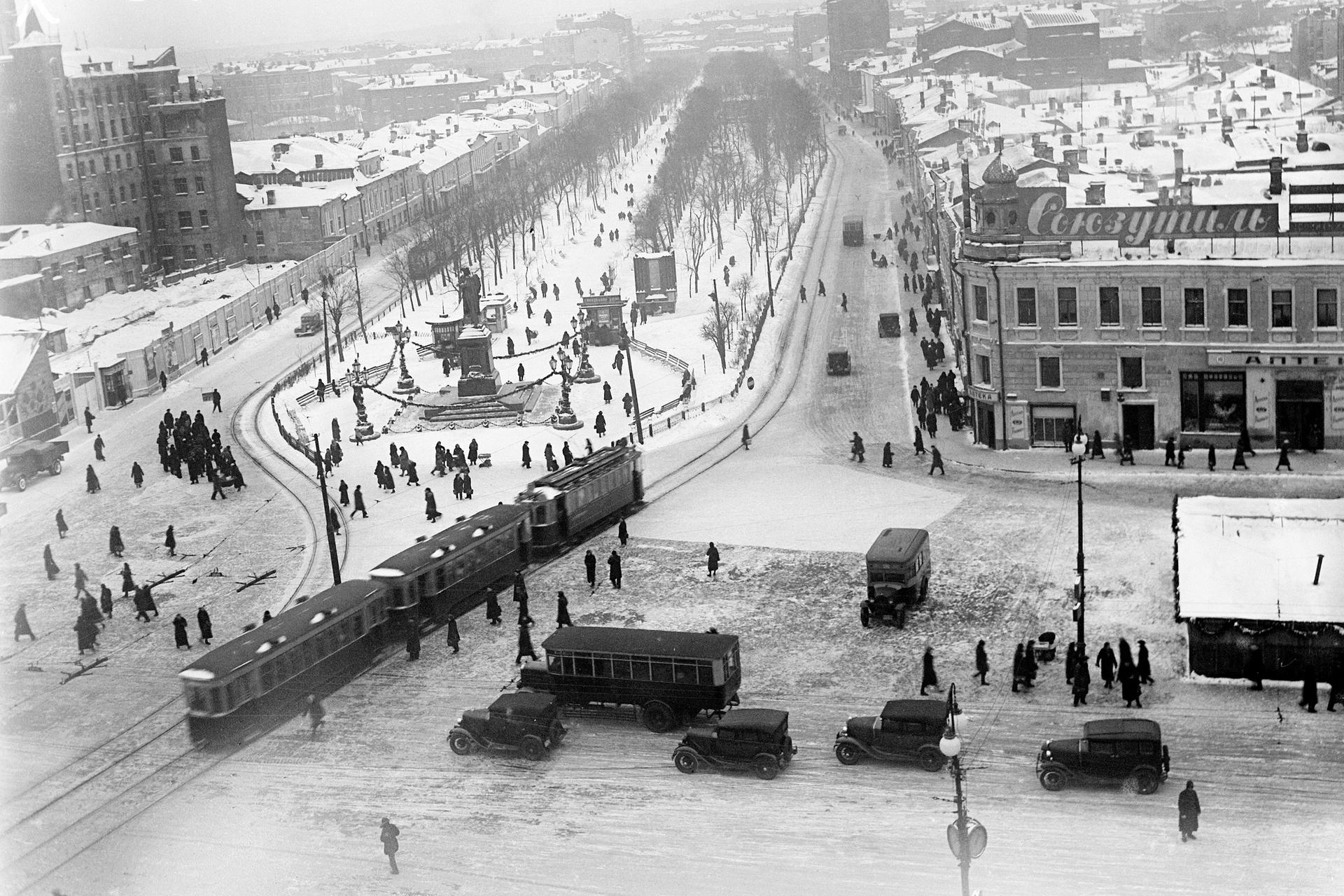
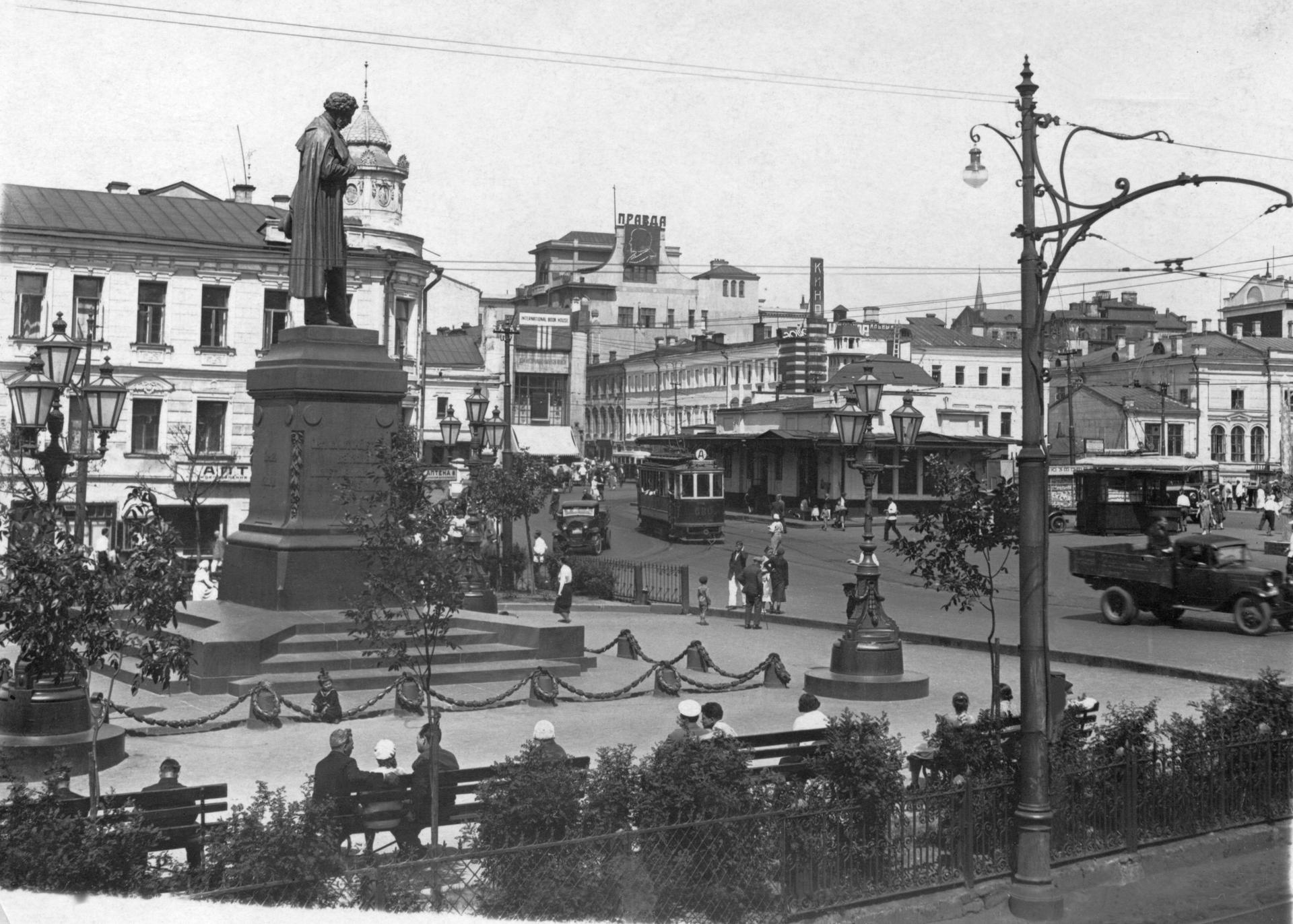
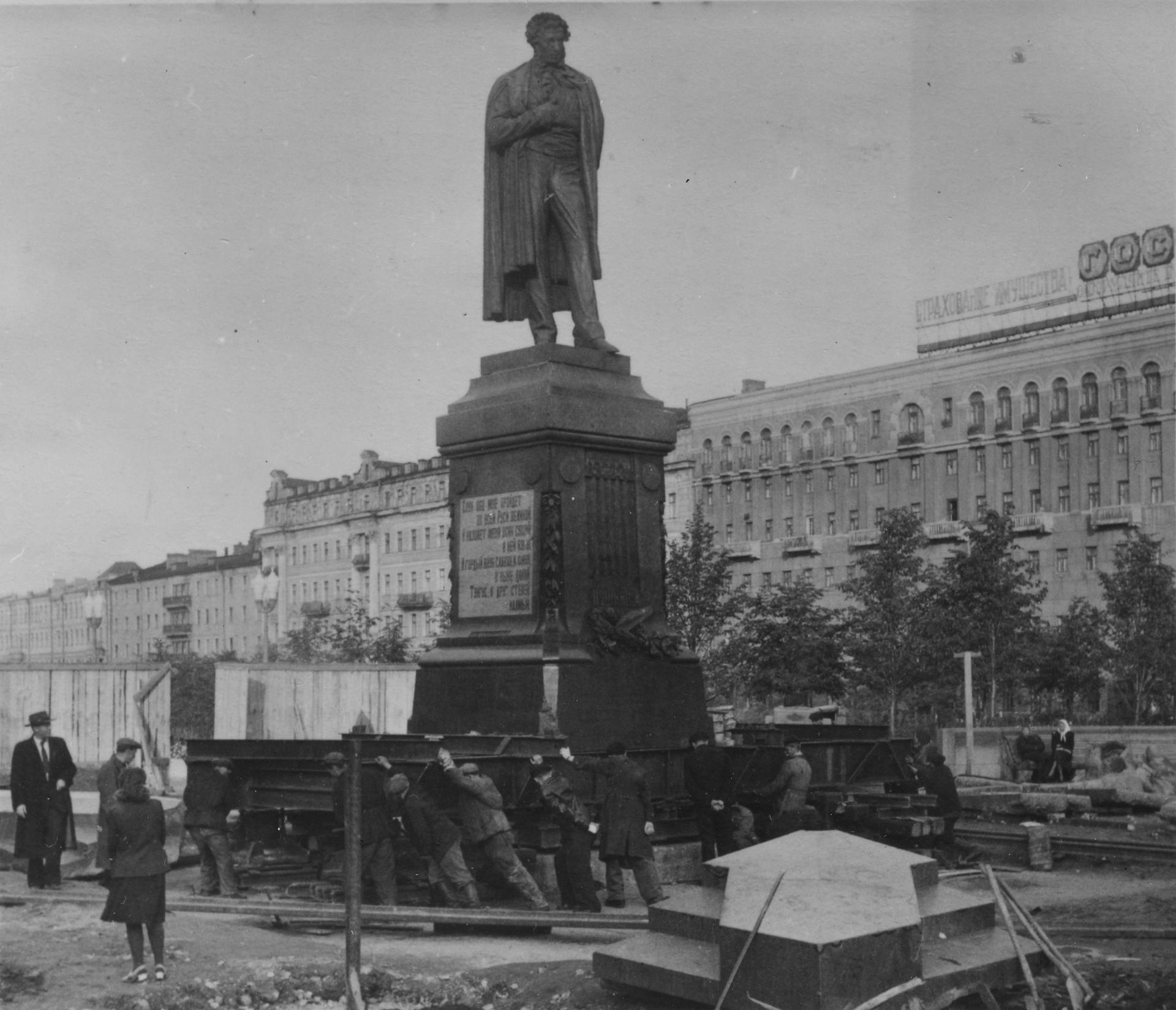
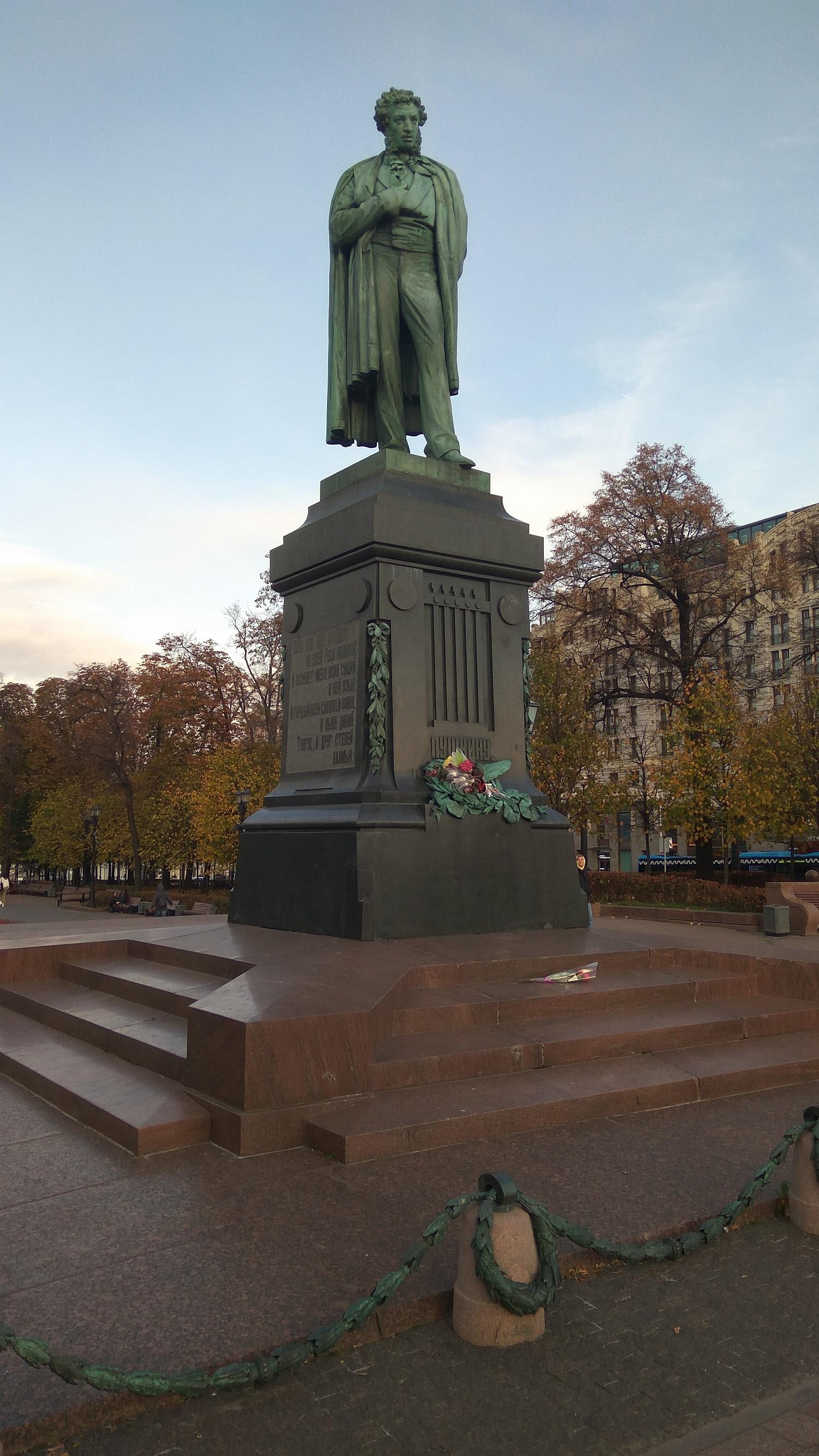
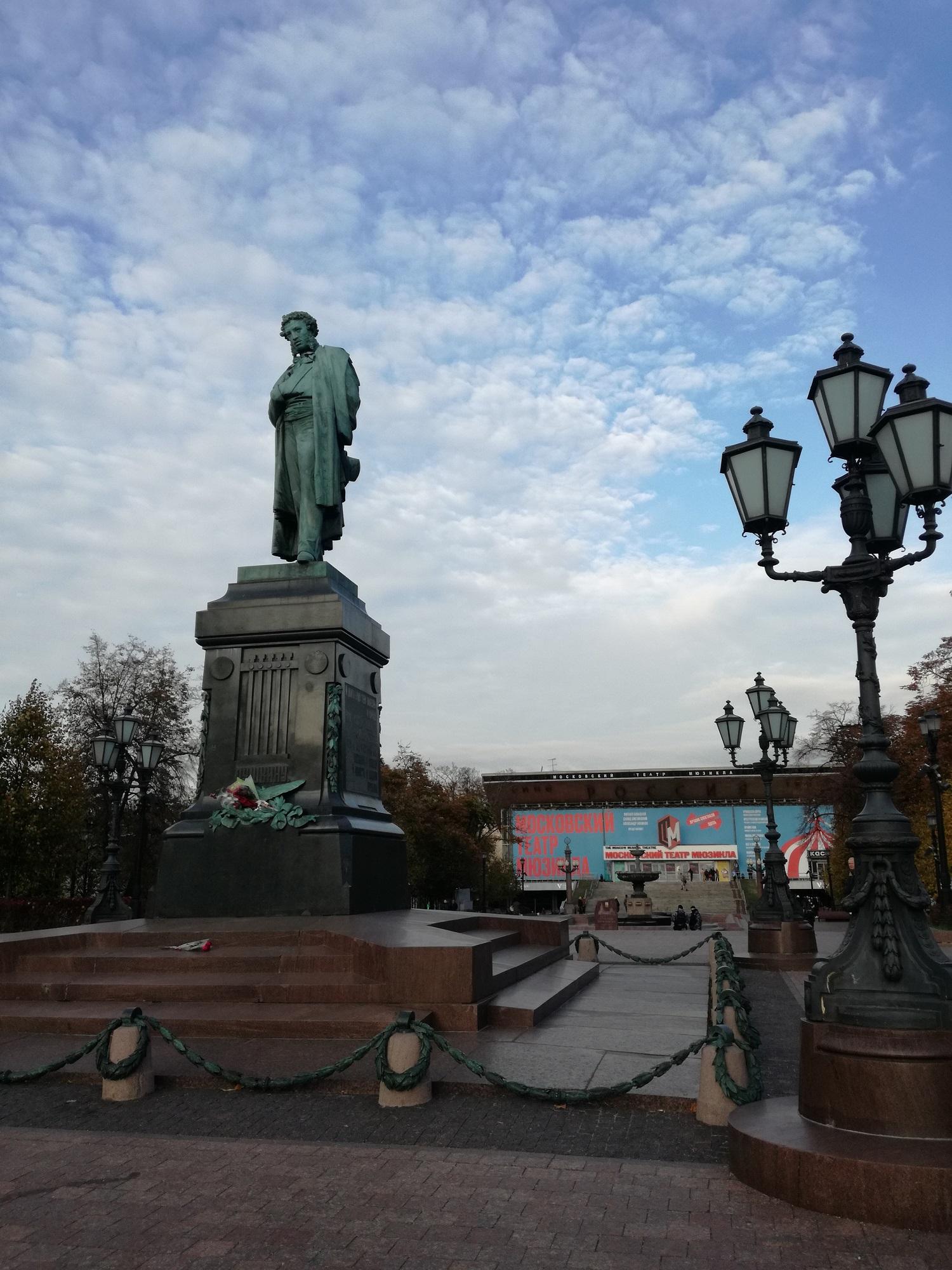
Последним штрихом в этом архитектурном ансамбле стал памятник А.С. Пушкину, торжественно открытый в 1880-м году в устье Тверского бульвара. Его размещение на площади было символичным: поэт как бы выходил со своего любимого бульвара и задумчиво склонял голову перед монастырскими куполами…
С приходом советской власти площадь снова подверглась решительным изменениям. Колокольня закрытого Страстного монастыря на много лет превратилась в главную агит-площадку столицы, а с конца 1920-х годов все настойчивее стали звучать призывы к сносу монастырских построек.
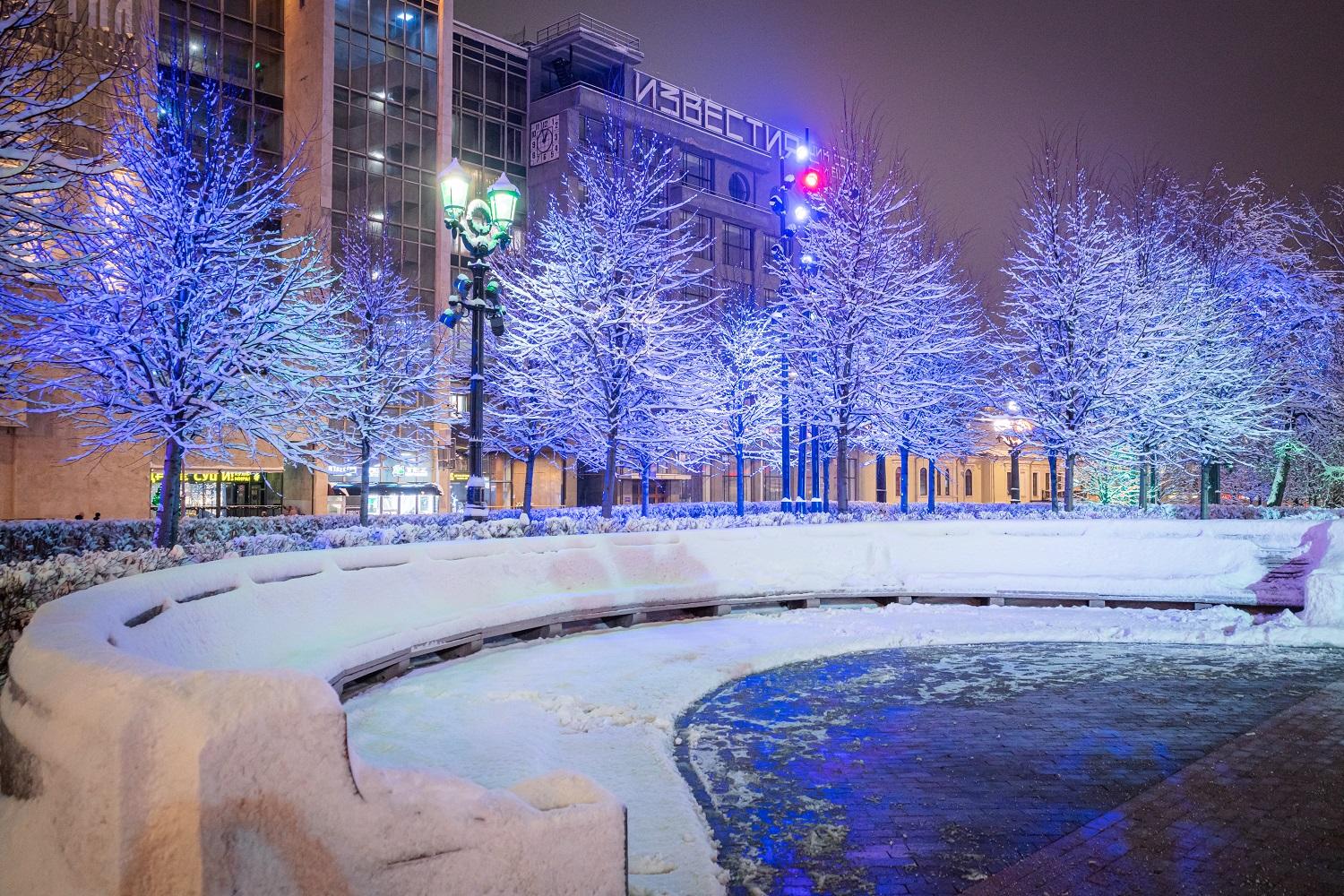
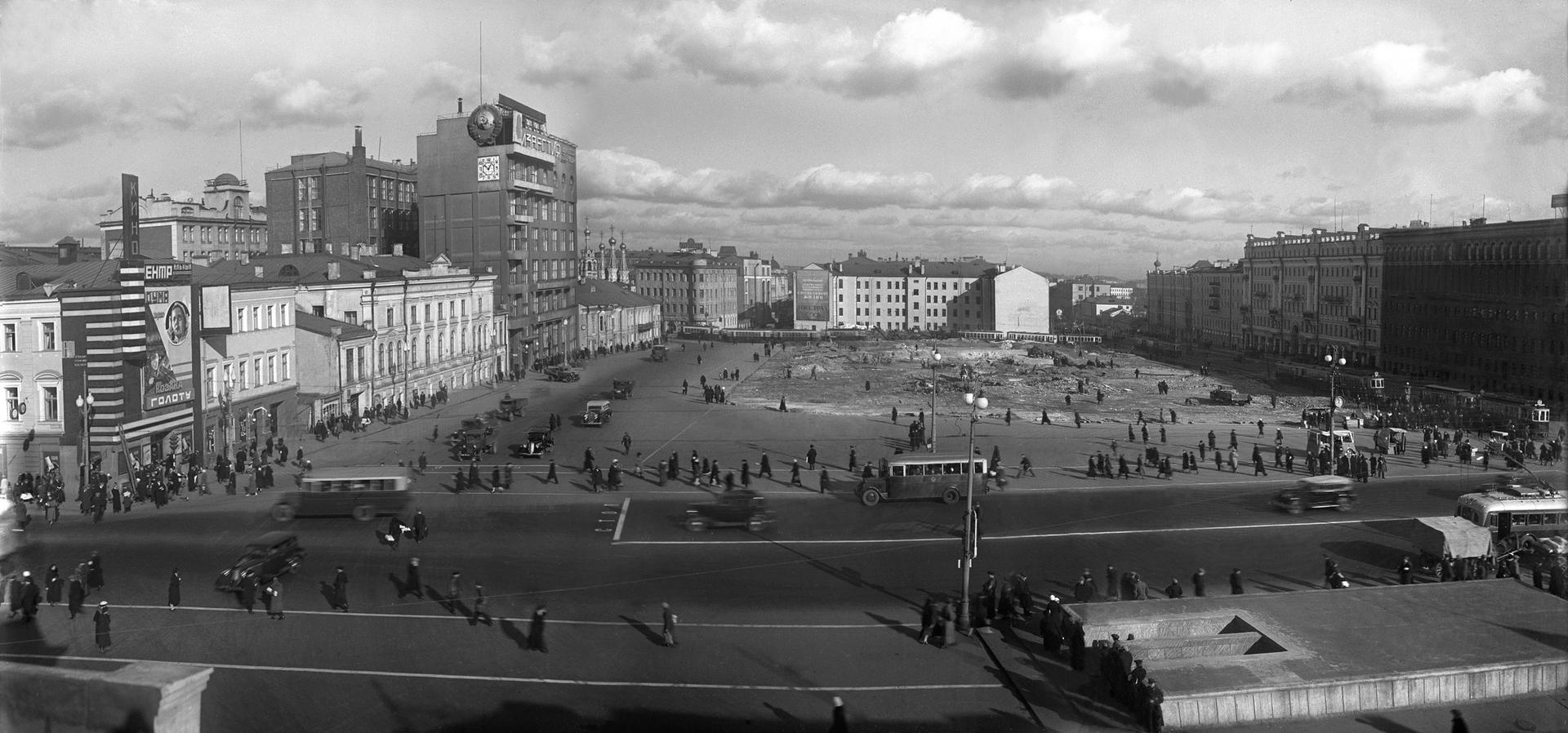
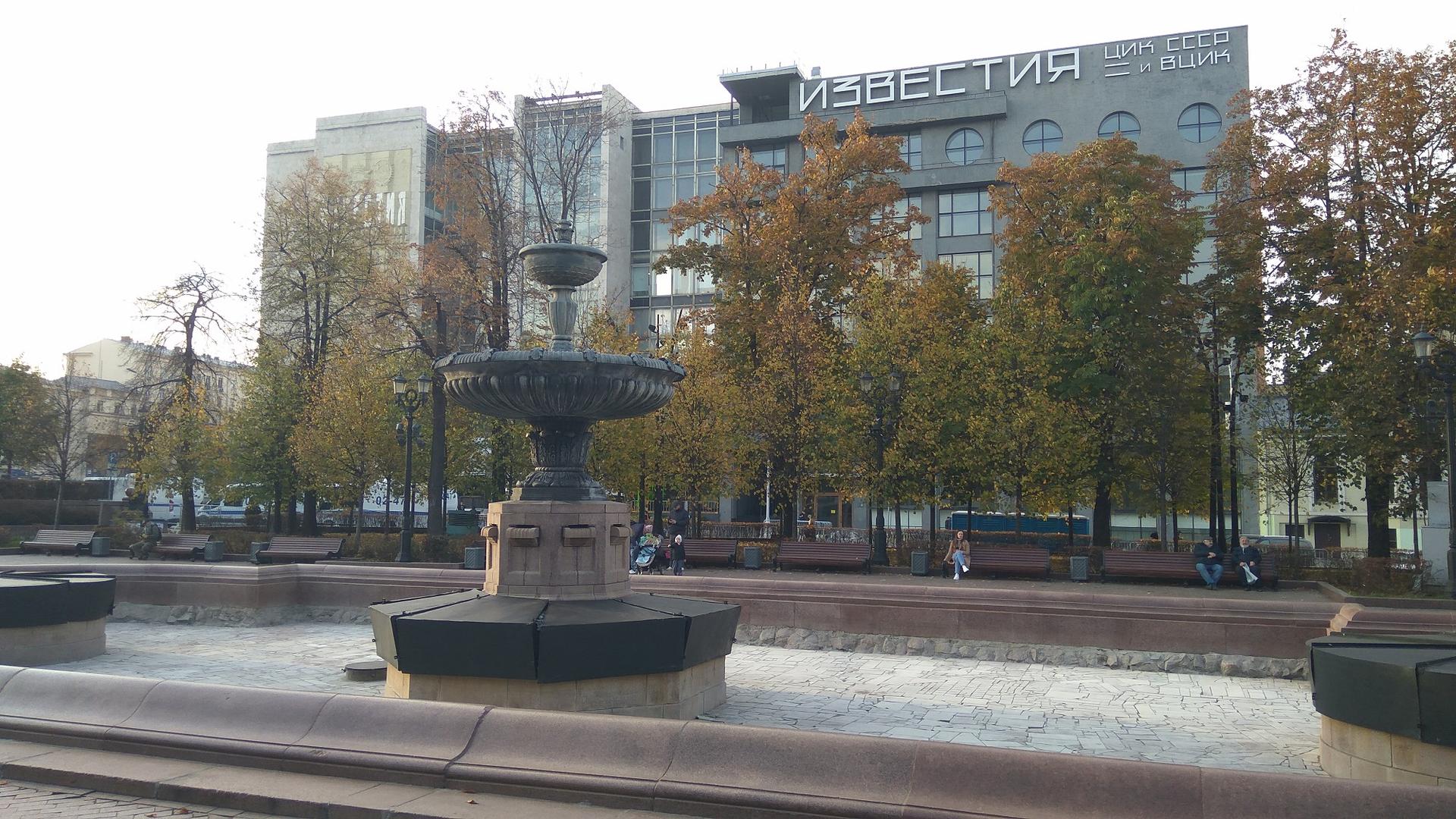
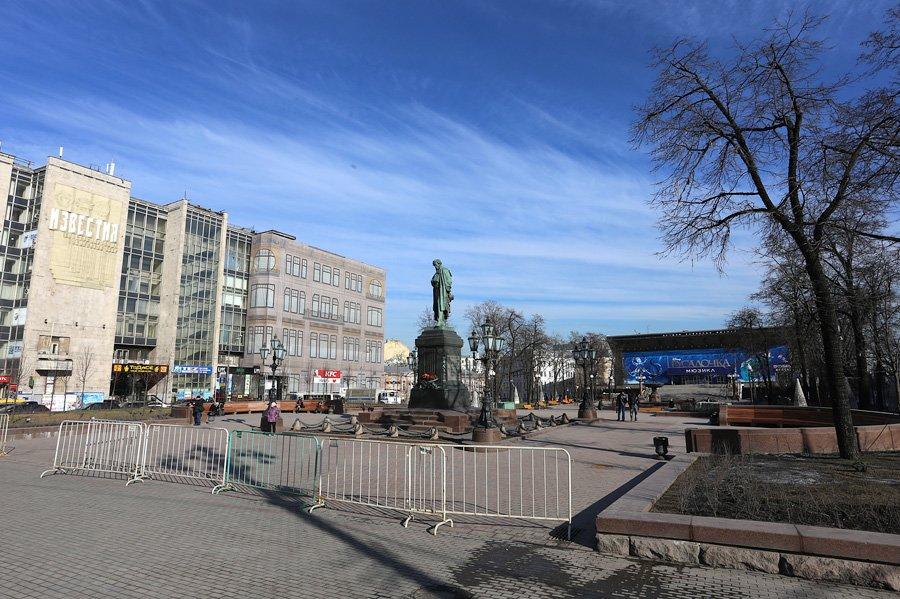
Конструктивистское здание газеты «Известия», построенное в середине 1920-х архитектором Бахриным, стало первой ласточкой грядущей реконструкции площади. Тогда же, в конце 1920-х, советские зодчие начали серьезно задумываться о переустройстве центральной площади, чей облик был слишком «старомосковским», никак неподходящим столице атеистического государства. Были предложены варианты полного сноса всех строений, перепланировки, превращения бульваров в асфальтовую магистраль, строительства на углу улицы Горького двадцатиэтажной башни телеграфного агентства ТАСС.
В начале 1934 года была снесена церковь Дмитрия Солунского. Постройки упраздненного в 1928 году Страстного монастыря были переданы Союзу безбожников СССР под размещение экспозиции Центрального атеистического музея.
В 1931 году Страстная площадь была переименована в Пушкинскую. В 1937 году «Мосразбор» полностью стер с лица земли монастырь, приурочив «трудовое достижение» к 100-летней годовщине гибели Пушкина.
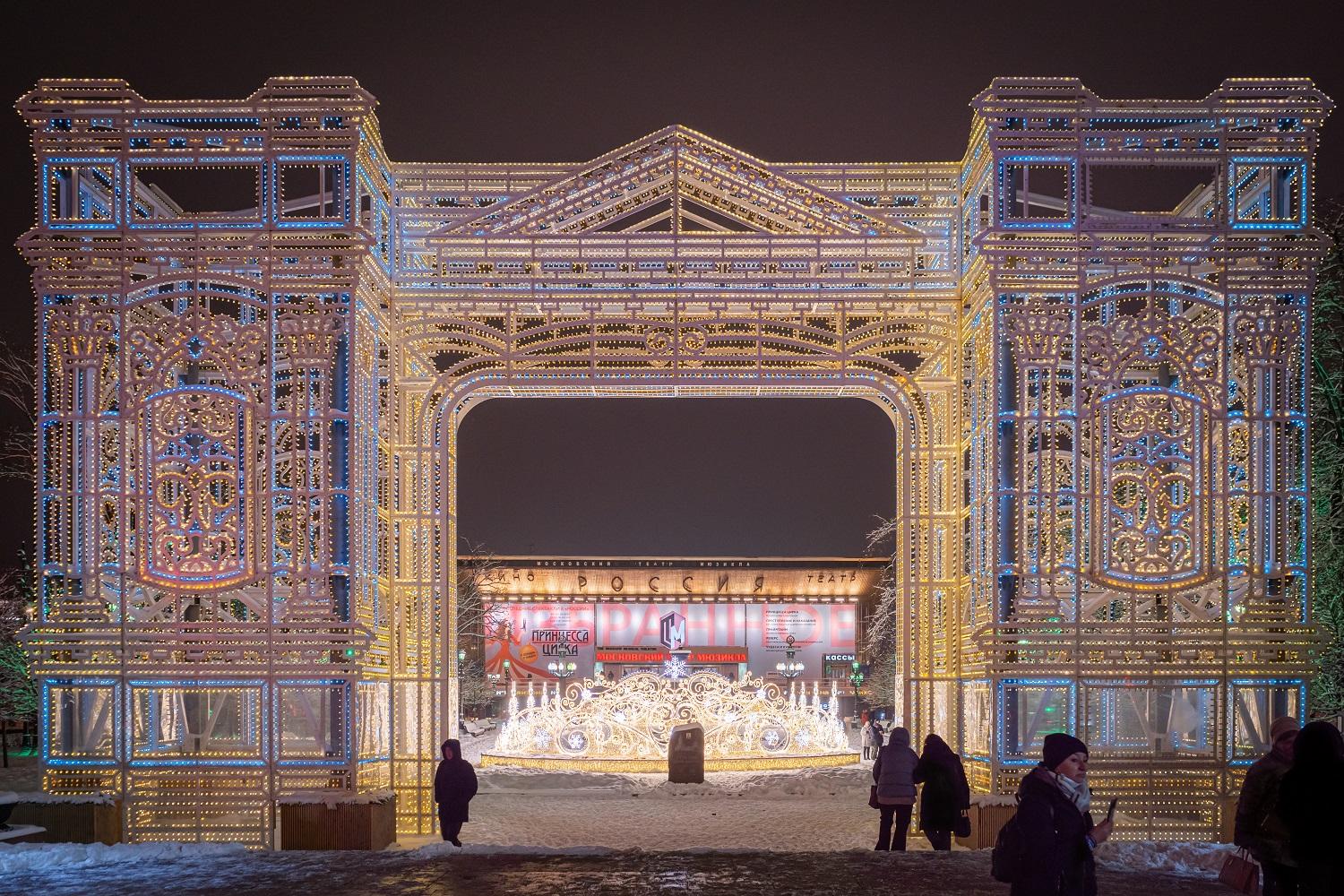
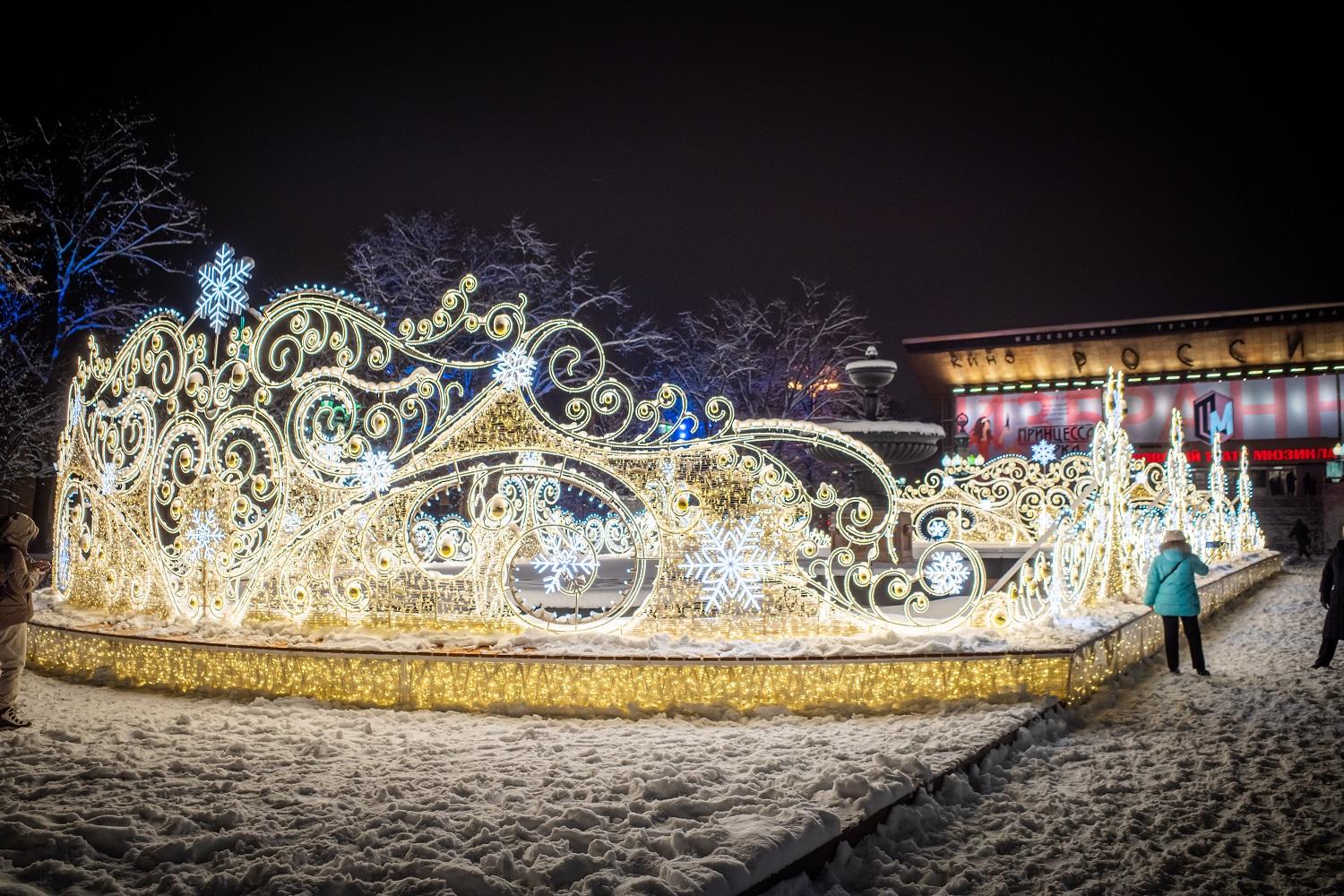
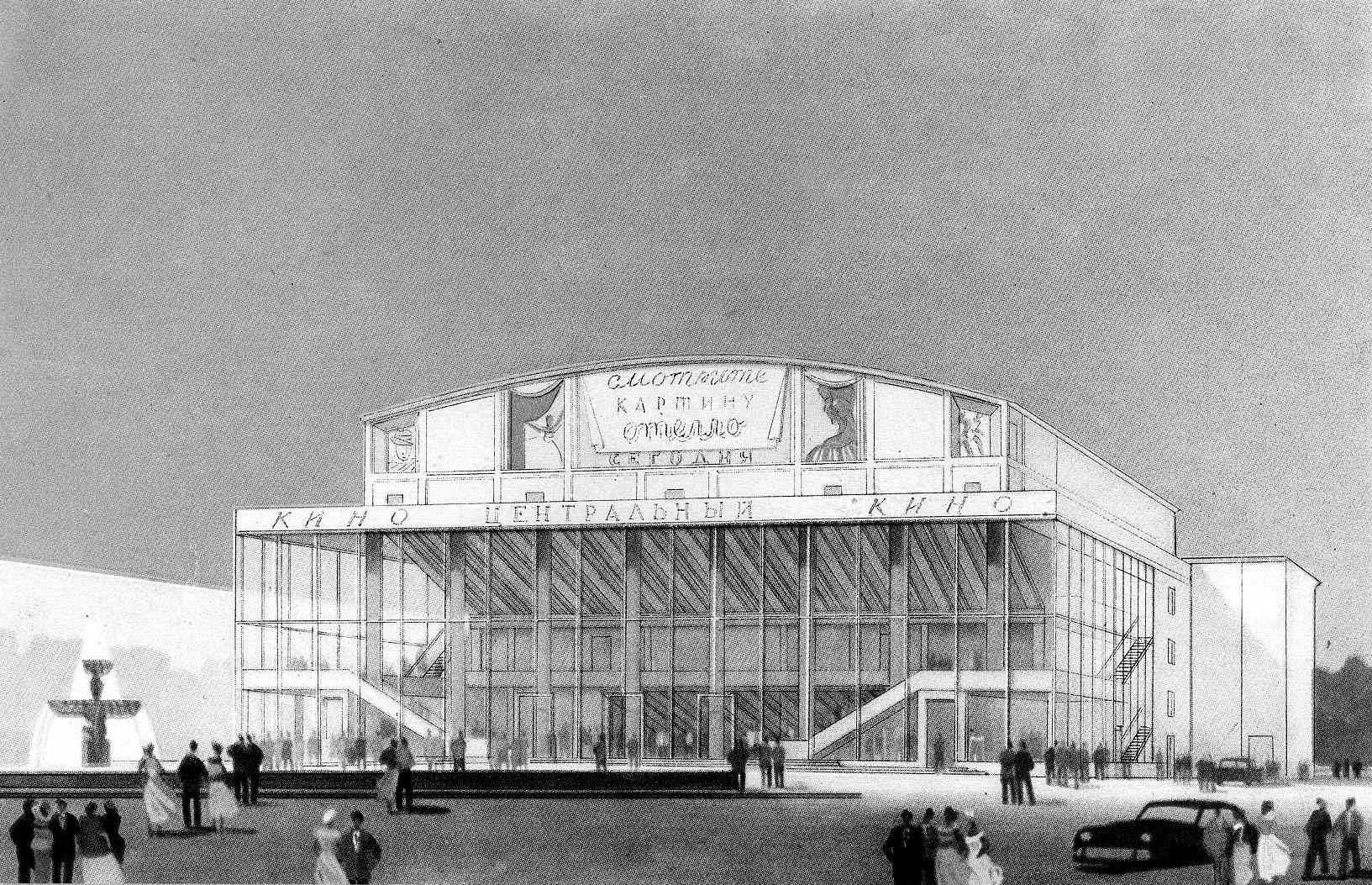
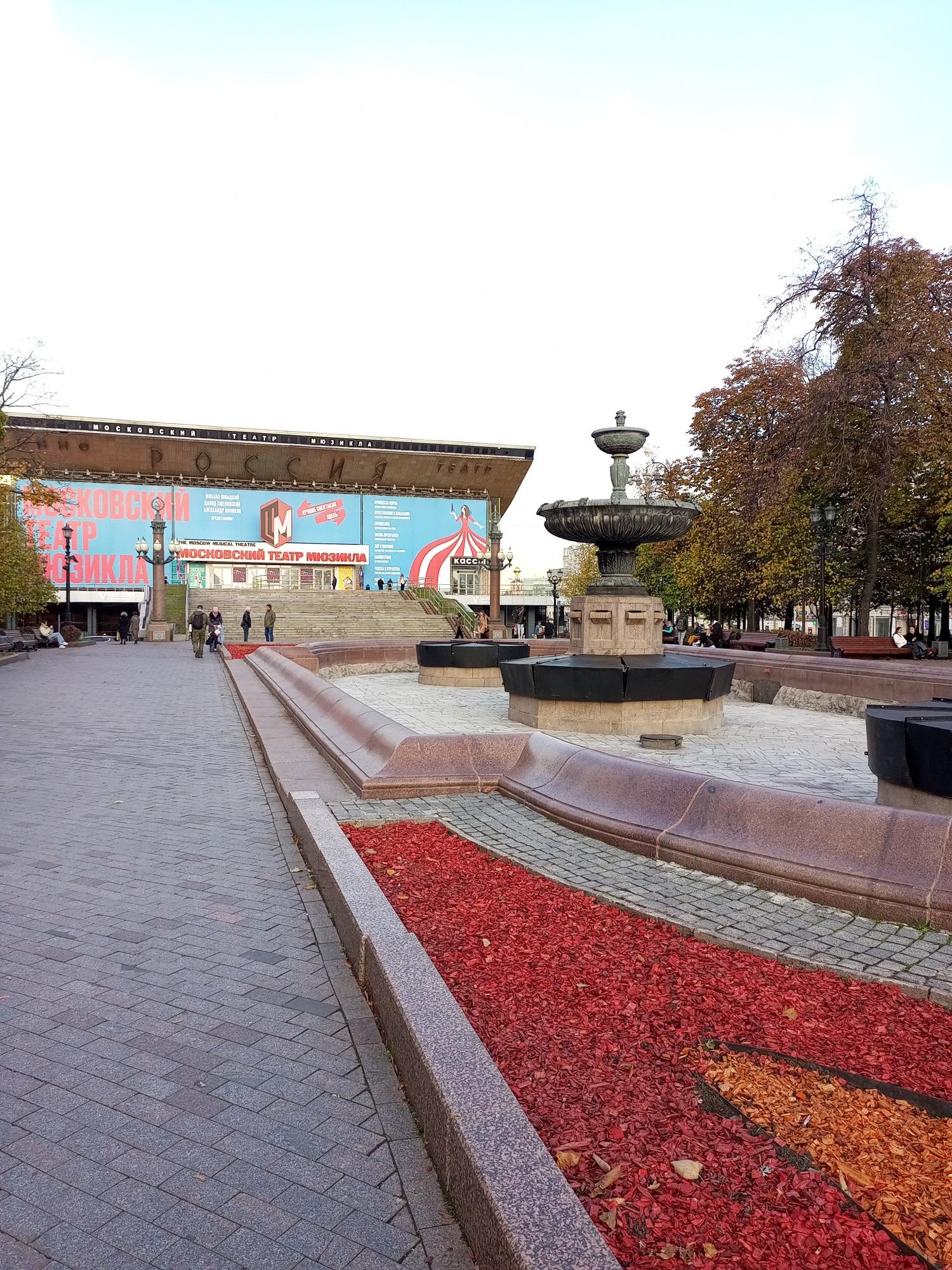
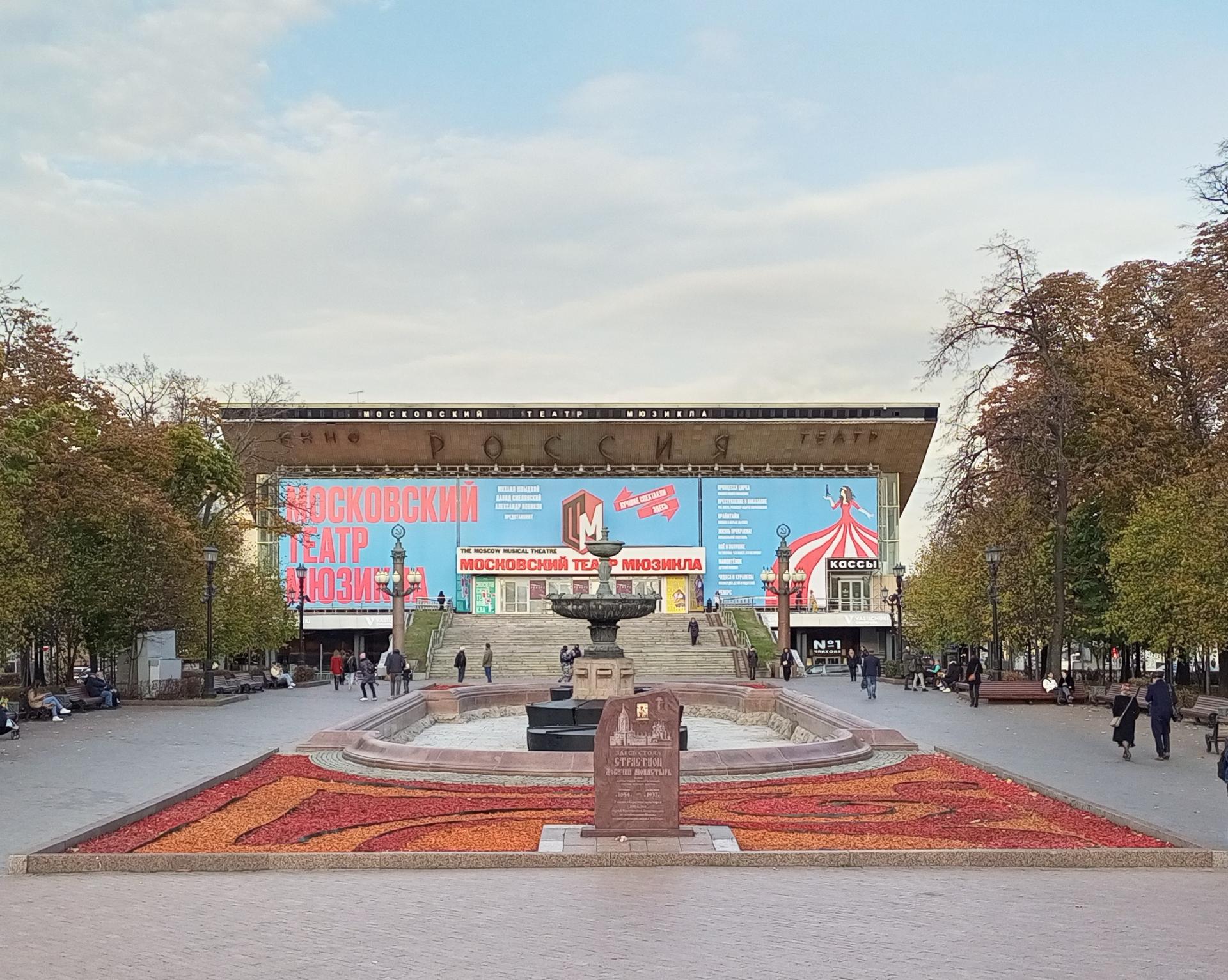
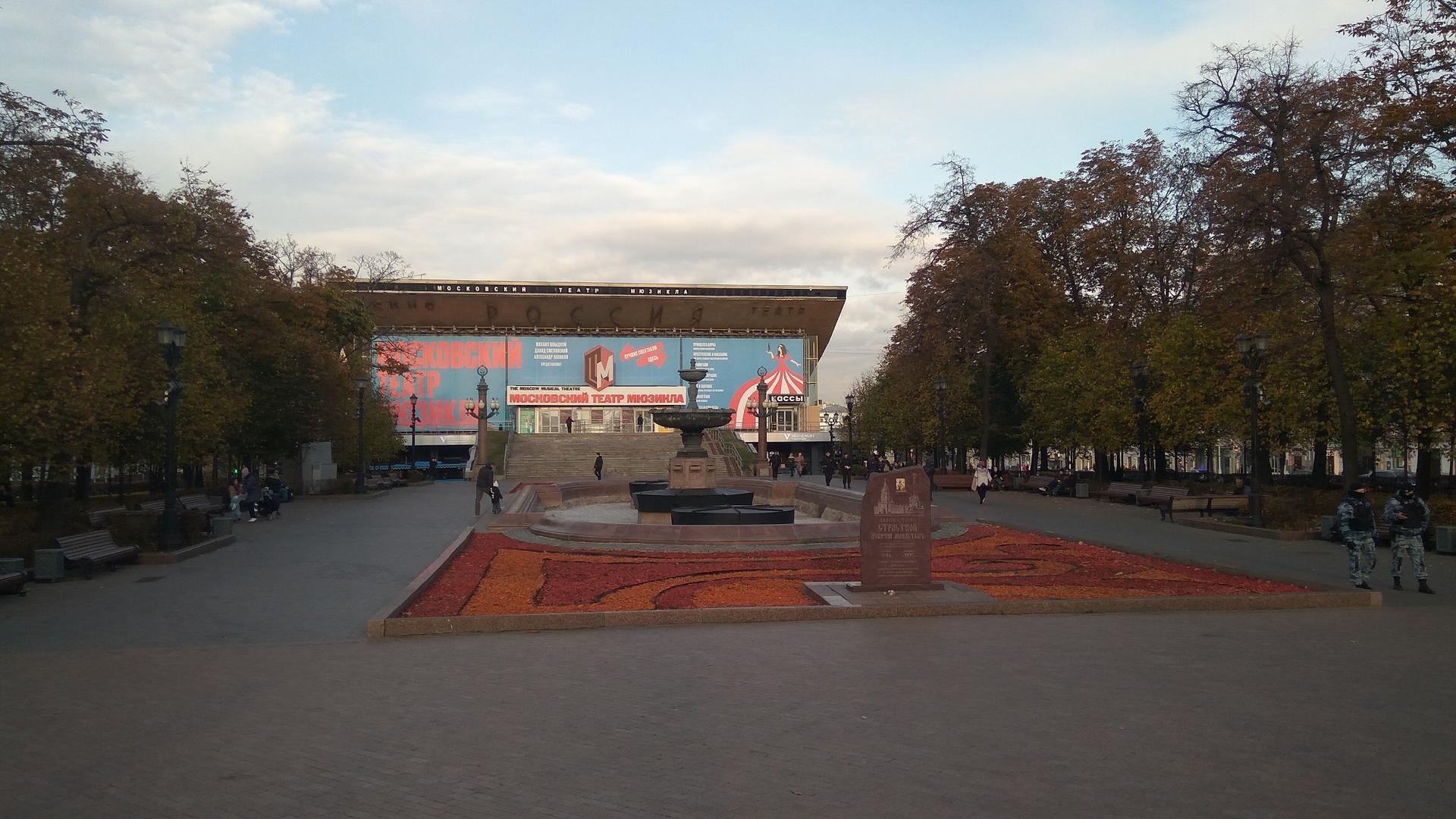
Памятник поэту в 1950 году был перенесен на место бывшей надвратной церкви Страстного монастыря. В 1961 году за его спиной появилось здание всемирно известного кинотеатра «Россия».
Despite the fact that the main square of the capital is considered rightfully famous red, but her image is too official, and Pushkin - the most live in urban areas, the true heart of Moscow. Pushkin Square - one of the absolute symbols of Moscow. Despite the fact that the main square of the capital is considered rightfully famous red, but her image is too official, and Pushkin - the most live in urban areas, the true heart of Moscow. Vague dimensions (rather space than square) Pushkin acquired recently, 40 years ago. In Soviet times, it has become, in fact, in the roadway Tver highway flanked by two squares, visually almost unrelated to each other. The final section of the Boulevard also merged with Novopushkinsky park, lost its clarity and independence. Until the middle of XVII century, no area was not here, but was simply a foothold before the gates of the White City. In 1641, on this site Muscovites met the miraculous icon of the Holy Mother of God, brought from Nizhny Novgorod. Five years later, in memory of this event, a fortified wall was erected slender five-domed Cathedral (Cathedral is one of the nine existing in Moscow at the time), surrounded by a two-tiered arched gallery. There it remained Holy icon, one of the holiest sites of the Romanov dynasty. A little later, in 1654, when the cathedral a monastery. It was a very beautiful, unusual complex - the monastery with five-domed cathedral and the gate church-bell tower (1692), directly adjacent to the three-tent travel tower of the White City. The ensemble was included and was built in 1652. mnogoverhaya Church of Nativity in Putinki standing a little way off, but perfectly viewed from the city gates. In 1720, the gate was demolished, and the monastery remained. In 1796 appeared the Tver Boulevard, focused precisely on the monastery bell tower. The west side of the square was built at the same time the residential two-storey buildings with a number of closed courtyards - one of the few fragments of Catherine's master plan implemented regular reconstruction of the city. Another corner of the boulevard and Tverskaya Street issued a representative rotunda church Demetrios. It originated from the ancient, then a country, Kiev-Pechersk monastery. Hard to believe, but under normal asphalt yard parking lots, hiding certified by the authorized archaeologists cemetery where Muscovites buried their loved ones during the time of Prince Don. Built, apparently in 1640, three-tent church was demolished in 1791 and replaced by a rotunda - further evidence of the gradual transformation of "directions near the walls of the White City" in Moscow's main boulevard. Contemporaries were told that at the beginning of the XIX century in Demetrios' Congress noble pilgrims are sometimes so great that the coach stood along the boulevard. " But when the new church bell tower has remained the same, the most unusual of the bell tent, not only in Moscow but also, perhaps, the whole of Russia. In terms of it was not square, and rectangular shapes - a cross between a bell tower and belfry, characteristic of earlier times. By 1855 the architect MD Bykovsky replaced the old monastery bell tower of the new. It was built in the two-storey building, finalize the eastern side of the square. In 1875, the Holy Monastery visited the Swedish and Norwegian King Oscar P. He admired Moscow with high bell tower of the monastery and later said, "Kind of amazing that almost all foreigners want to see this marvelous panorama." The final touch in this finished, it held an architectural ensemble became the Pushkin monument, inaugurated in 1880 at the mouth of the Boulevard. His performance was symbolic: the poet as to go with your favorite Boulevard and thoughtfully bow to the monastery domes ... But the new times. In 1928, the poet Vladimir Mayakovsky made a proposal to demolish the Holy Monastery, pointing out the obvious inappropriateness of the neighborhood, "boring Pushkin. Cast iron murmur. Boulevard good dudes idle. Pushkin requires cultural society, and he slipped the Holy Monastery. From Pushkin to "Izvestia" two hundred paces. As time he used the company was, but Pushkin is almost never see "Izvestia", the writer hinder the devil's dome. " Constructivist building of the newspaper "Izvestia", built in the mid-1920s by architect Bahrinym was the first sign of the coming reconstruction of the area, in 1931 renamed Pushkin. Then, in the late 1920s, the Soviet architects began to think seriously about the reconstruction of the central square, whose appearance was too "old Moscow" does unsuitable capital atheist state. Options were complete demolition of all buildings, redevelopment, conversion boulevards in asphalt highway construction at the corner of Gorky twenty-story tower Tass news agency. But first, of course, should get rid of the "devil's domes." In early 1934, the church was demolished Demetrios. Built in 1928, abolished the monastery were transferred to the godless Soviet Union under the Placing exposure Central atheistic museum. In 1931, the Holy area was renamed Pushkin. In 1937 Mayakovsky put the question about "domes" was finally resolved - Trust "Mosrazbor" completely wiped out the monastery, in conjunction with "labor achievements" to the 100th anniversary of Pushkin's death. Monument to the poet in 1950 was moved to the site of the former church gate. In 1961, behind him there was a building of the world famous cinema "Russia". Classic Quarter, on the west side of the square, was demolished in the mid-1970s. Another irreparable loss of those years standing to the left of the monastery "house Famusov", which were often Pushkin and Griboyedov. It was a three-story mansion built no later than the middle of the XVIII century and belonged to the famous old Rimsky-Korsakov, their daughter was in love with Alexander Pushkin (and her sister Catherine - Alexander Alyabyev). It is said about it in the seventh chapter of "Eugene Onegin": "In the night a lot of stars charming, beautiful women much on Moscow. But brighter than all friends celestial moon in the blue air ... "Well," home Famusov "old mansion called because here Sofya Alexandrovna, cousin Griboyedov, wife of one of Rimsky-Korsakov, a prototype of Sophia Famusov. Memorial House, standing just a few hundred meters from the monument to Pushkin, was demolished in 1968, despite the loud protests of the public. For the construction of a new housing edition of "Izvestia".



_by_shakko_01.jpg&w=1920&q=75)