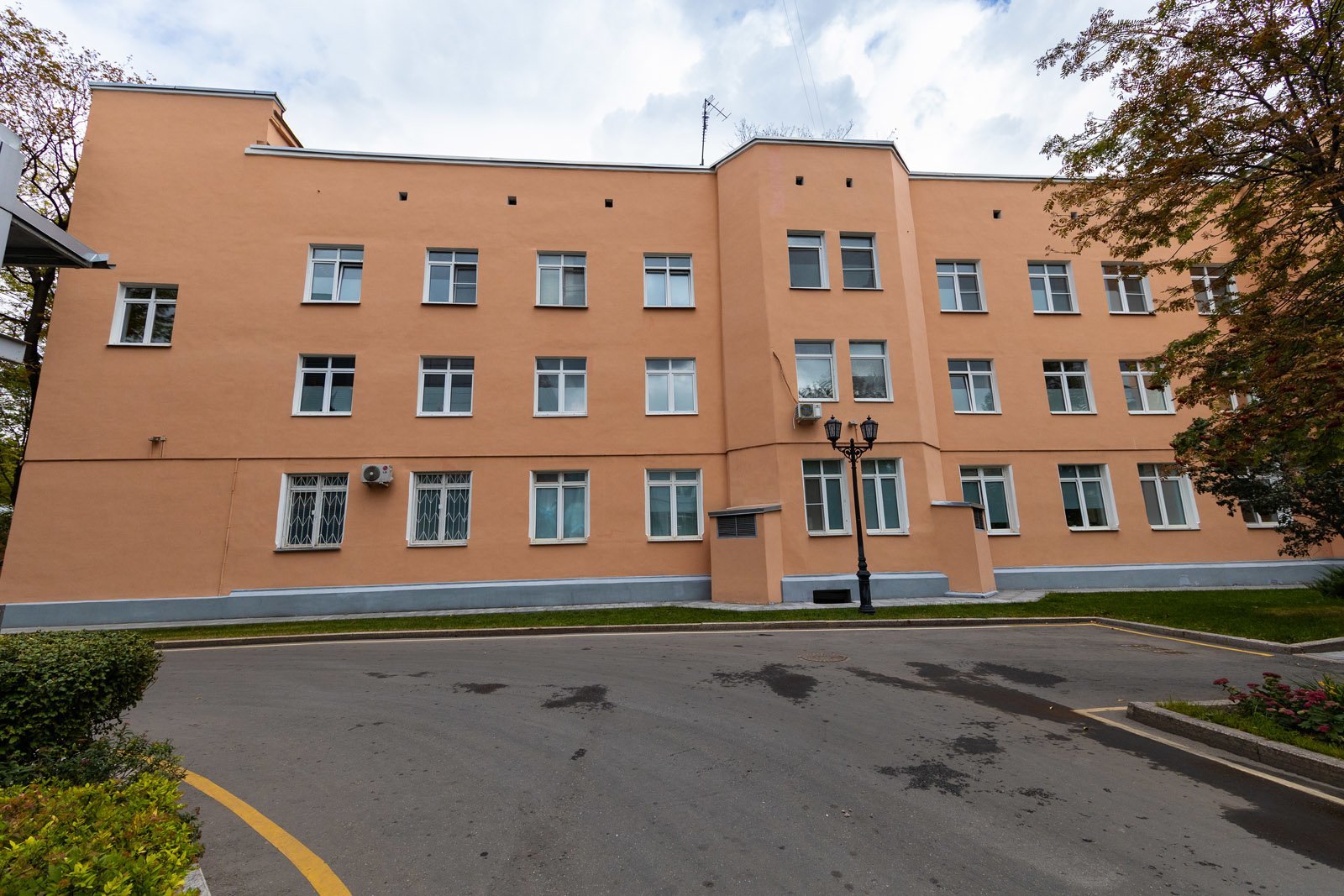
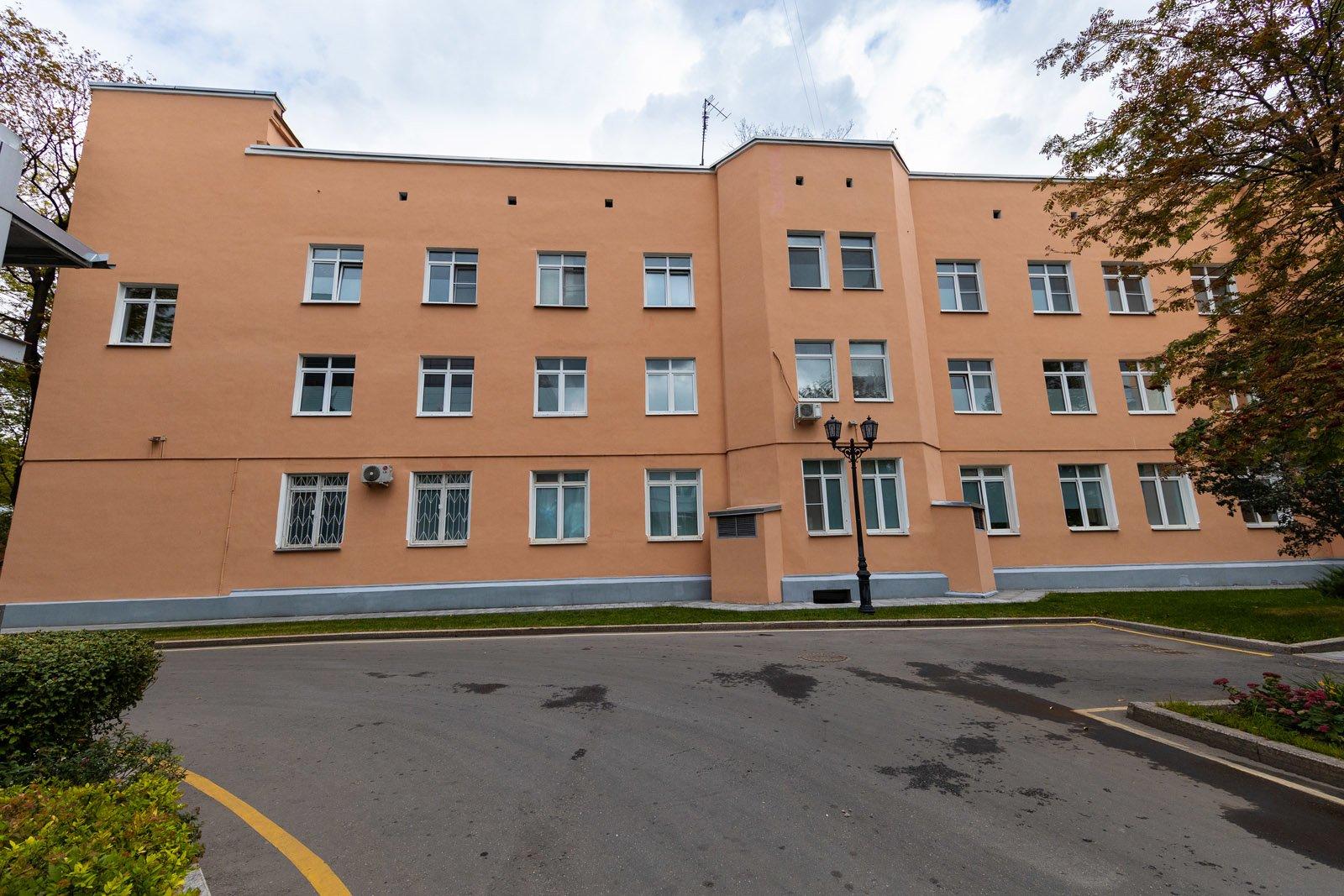
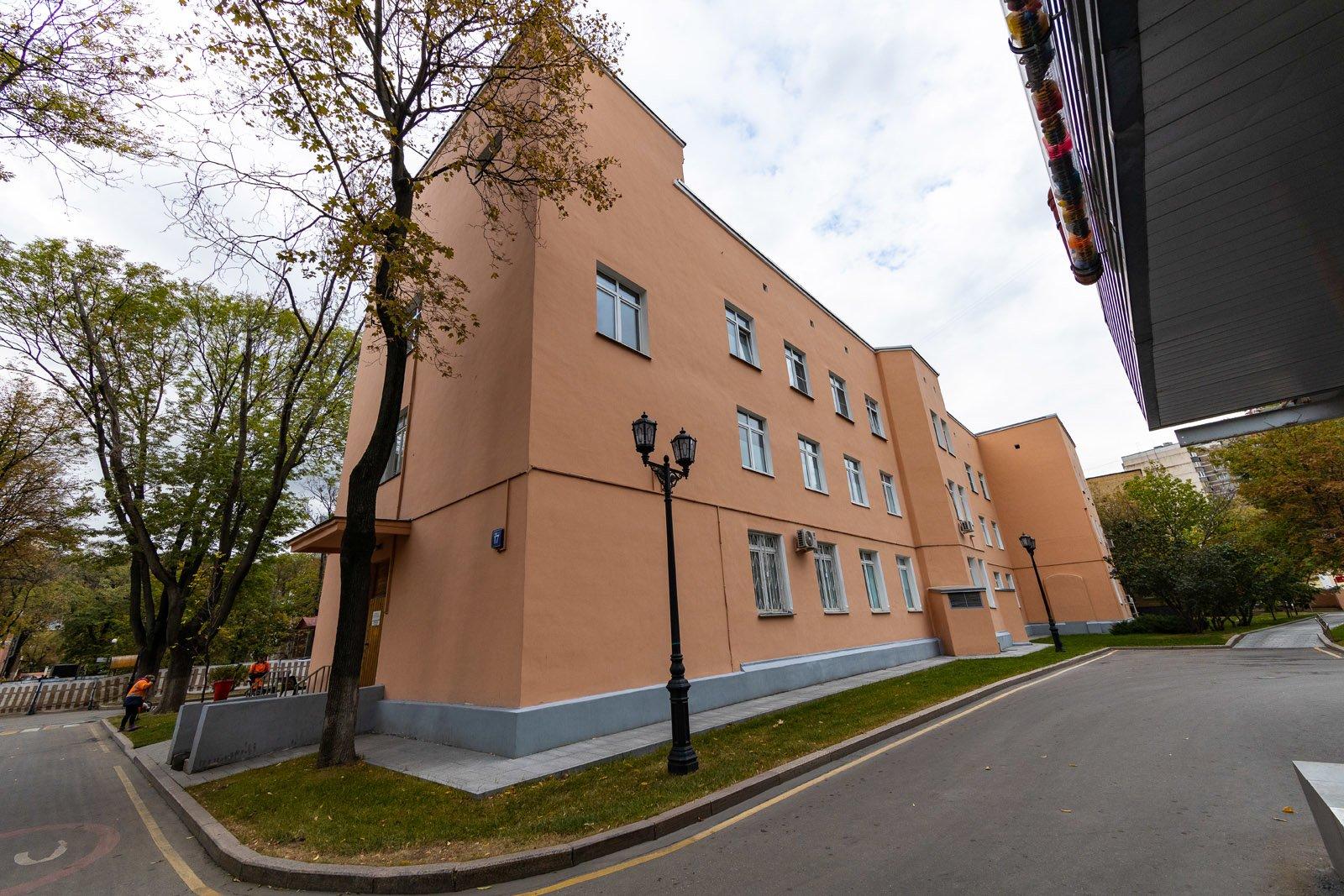
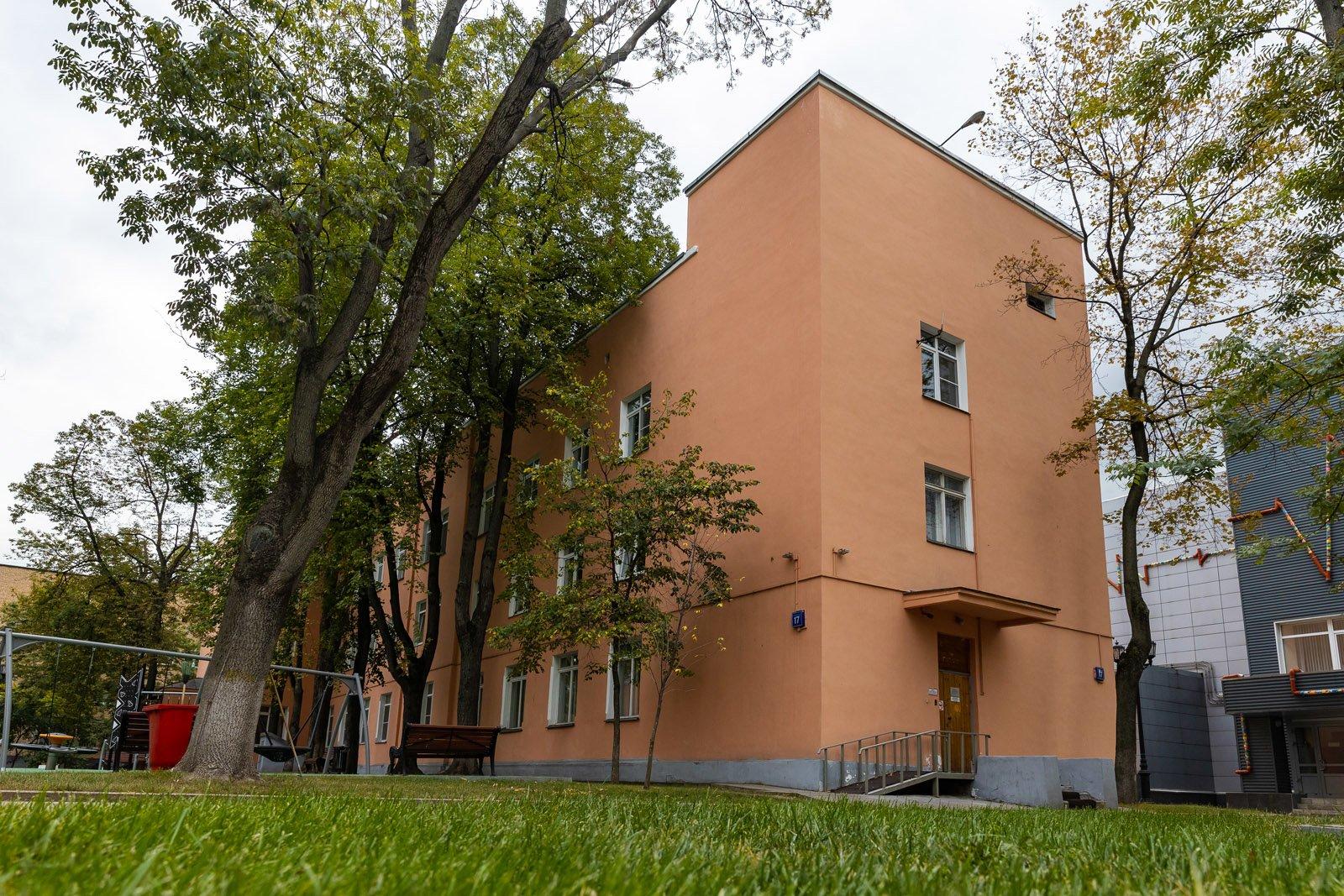
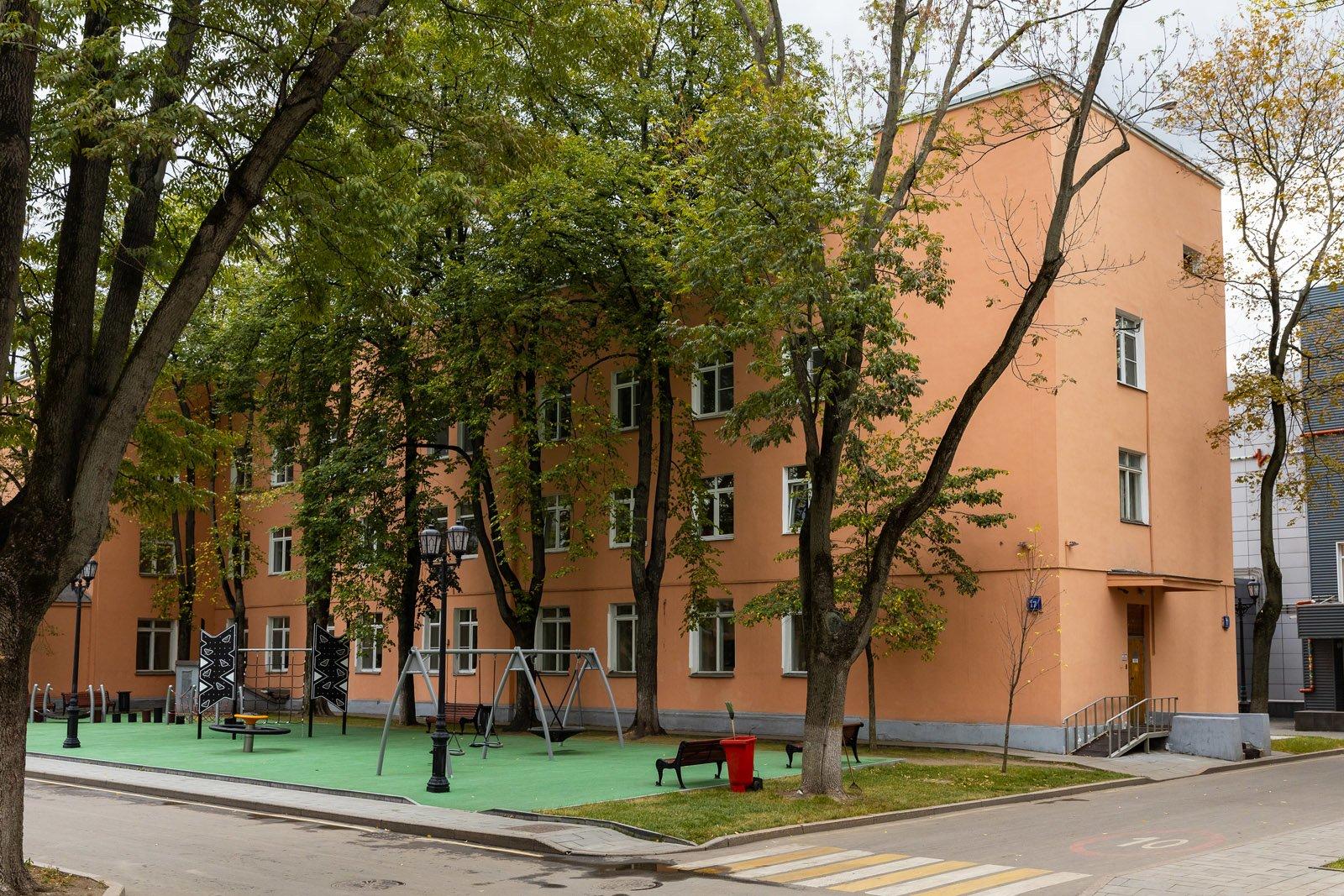
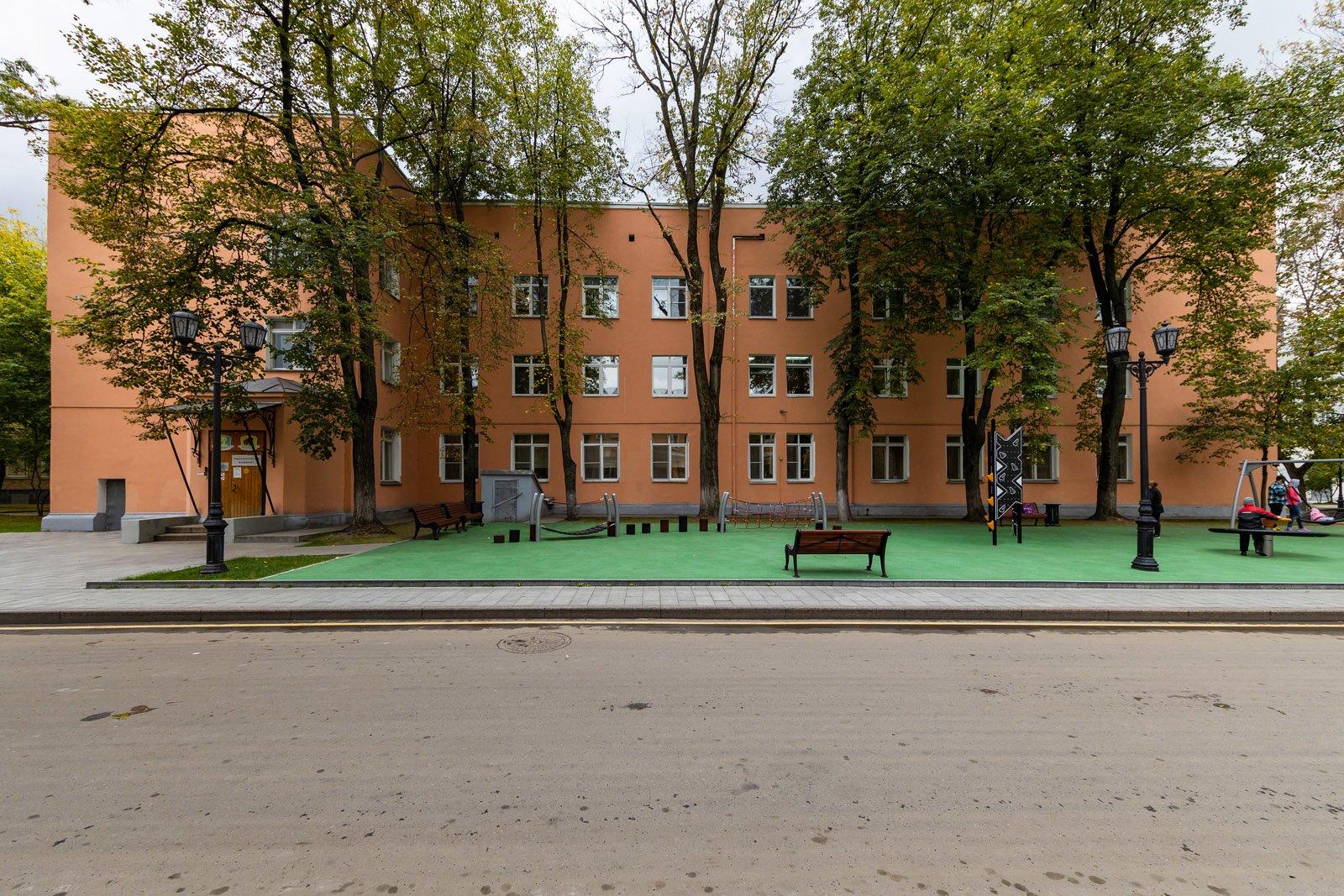
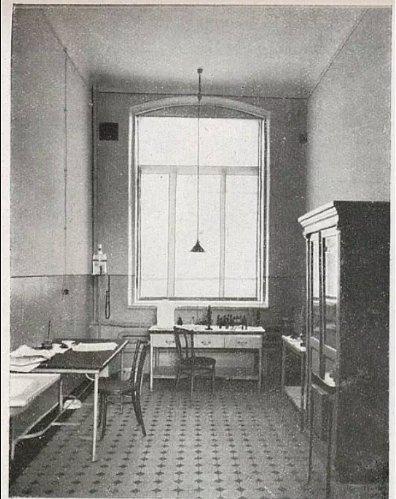
«Острозаразный» корпус (современный № 17) Морозовской детской больницы – одно из наиболее пострадавших от перестроек советского времени зданий этого архитектурного ансамбля.
Корпус, построенный в первые годы ХХ века в стиле модерн по проекту архитектора И.А.Иванова-Шица, расположен в левом ряду больничных построек, вместе со зданиями Скарлатинного, Дифтеритного, Смешанного отделений и больничной часовни (не сохранилась).
Отделение, открытое в 1904 году, было рассчитано на 18 кроватей. Как и прочие корпуса Морозовской детской больницы, здание было обеспечено электричеством, централизованным пароводяным отоплением, вентиляцией. Полы в помещениях для больных были выполнены из дубового паркета, высота потолков в больничных палатах достигала 3,5 м.
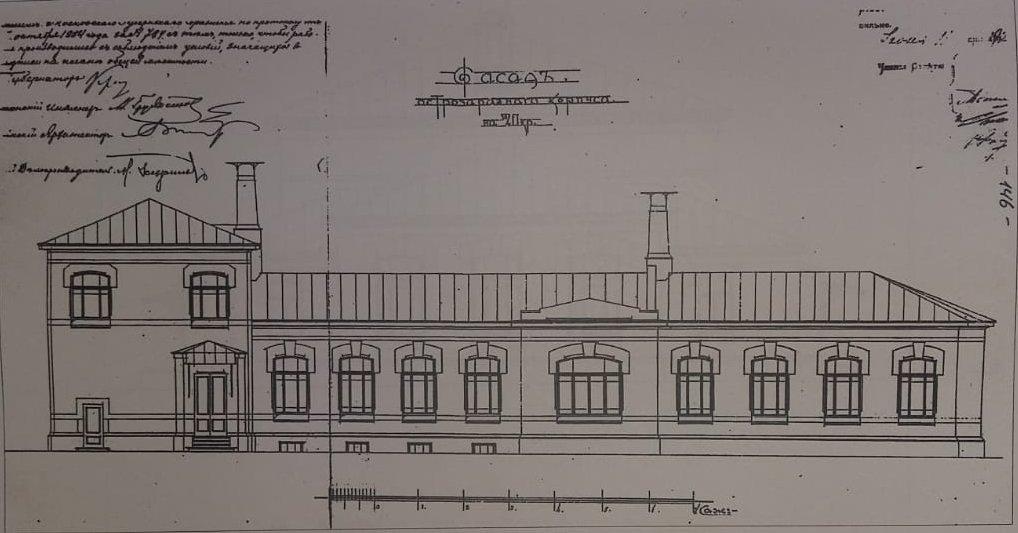
Небольшое здание имело в левой части два этажа, но основная часть его была одноэтажной. Помещения второго этажа предназначались для больничного персонала. В двухэтажной части были устроены два входа в корпус – основной (с небольшим тамбуром) и дополнительный. Одноэтажная часть здания была симметричной. Центр ее был выделен ризалитом с широким окном и небольшим аттиком, напоминавшим неоклассический фронтон. Справа и слева от ризалита располагались по четыре вертикальных оконных проема. Стены корпуса не были оштукатурены, так что белокаменные детали фасадного убранства выделялись на фоне краснокирпичных фасадных плоскостей. Здание было поставлено на невысокий цокольный этаж. Композицию дополняли две эффектные дымовые трубы.
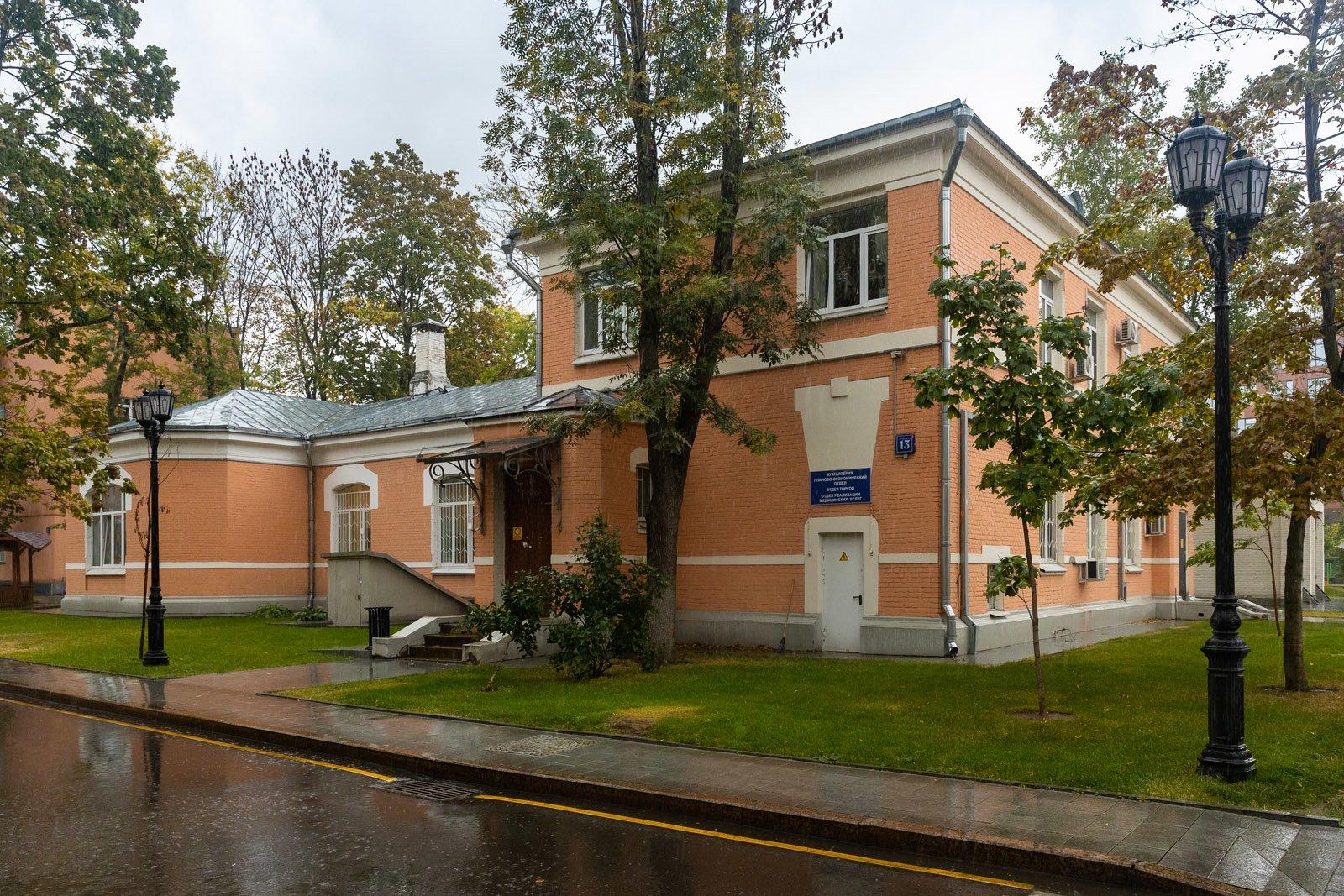
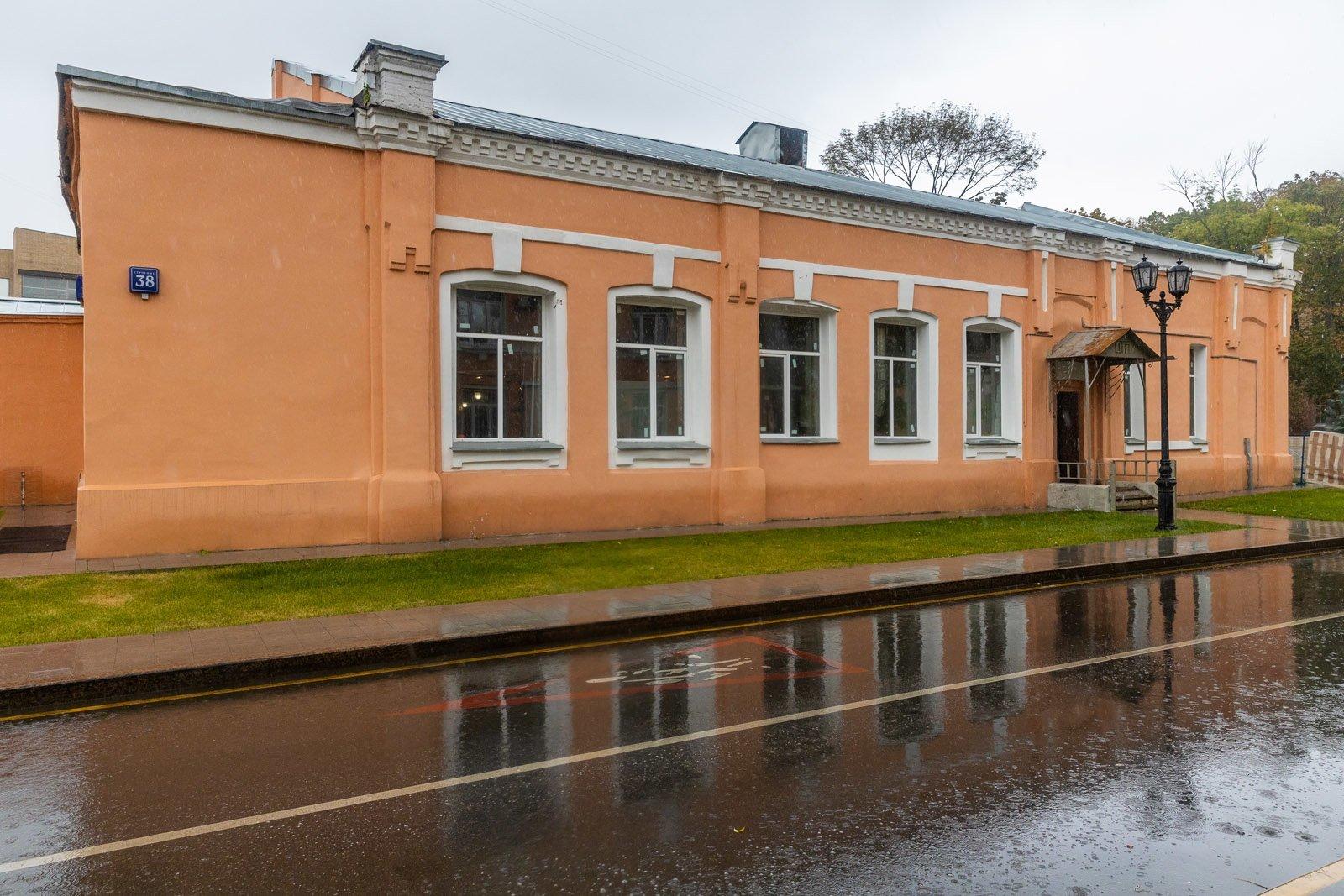
В 1975 году корпус 2-го Острозаразного отделения Морозовской детской больницы был надстроен до 3 этажей. Перекрытия в здании при этом были заменены на железобетонные. Оригинальный декор фасадов был утрачен. Перестройка привела к резкому искажению архитектурно-пространственной композиции и внешнего облика старинного корпуса. Однако он сохраняет историко-культурную ценность как элемент планировочной структуры и композиции архитектурного ансамбля Детской больницы имени В.Е.Морозова. Сохранились и отдельные элементы здания, запечатленные на чертежах начала ХХ века, хранящихся в архиве Департамента культурного наследия города Москвы. Например, цел тамбур главного входа со ступеньками крыльца в некогда двухэтажной части здания бывшего Острозаразного корпуса. Корпус ныне используется под административно-хозяйственные помещения.
The building constructed in the early 1900s to the Art Nouveau design by architect I.A.Ivanov Schitz is one in the left side row of buildings, along with the Scarlet Fever, the Diphtheria, and the Mixed Diseases Departments as well as the Hospital chapel (not survived).
The Department was opened in 1904 and had the 18 bed capacity. Like the rest of the Morozovskaya Children's Hospital buildings, this one was equipped with electricity, centralized steam water heating and ventilation. The wards had oakwood parquet and were up to 3.5 m high.
The building's left side part was two storeyed but the rest of it had a single storey. Rooms in the first floor were intended for the medical personnel. The two storeyed part had two entrances: the main (with a small wind porch) and the auxiliary. The single storeyed part was symmetrical. Its center was accentuated with an avant corps with a wide window and a small attic that looked like a neoclassical pediment. On either side of the avant corps there were four vertical windows. The outer walls were not plastered so that the whitewashed elements of the facade decor stood out against the red brickwork of the facade surfaces. The building was resting on a low semi basement. The composition was complete with two impressive chimneys.
In 1975, the building of the 2nd Highly Contagious Disease Department of the Morozovskaya Children's Hospital was built up with two additional storeys. At the same time, the ceilings were replaced with the reinforced concrete ones. The facades' original decor was lost. Reconstruction significantly distorted the architectural plan and appearance of the old building. However, it is valuable for its being an element of the original planning structure and layout of the V.E.Morozov Children's Hospital ensemble. Certain elements of the building have survived as they appear on the 1990s drawings kept in the archive of the Moscow Cultural Heritage Department. So, the main entrance wind lobby with porch steps has survived in the once two storey part of the Highly Contagious Disease Department building. Nowadays, the building has administrative and service functions.
Konstantin Mikhailov


.jpg&w=1920&q=75)