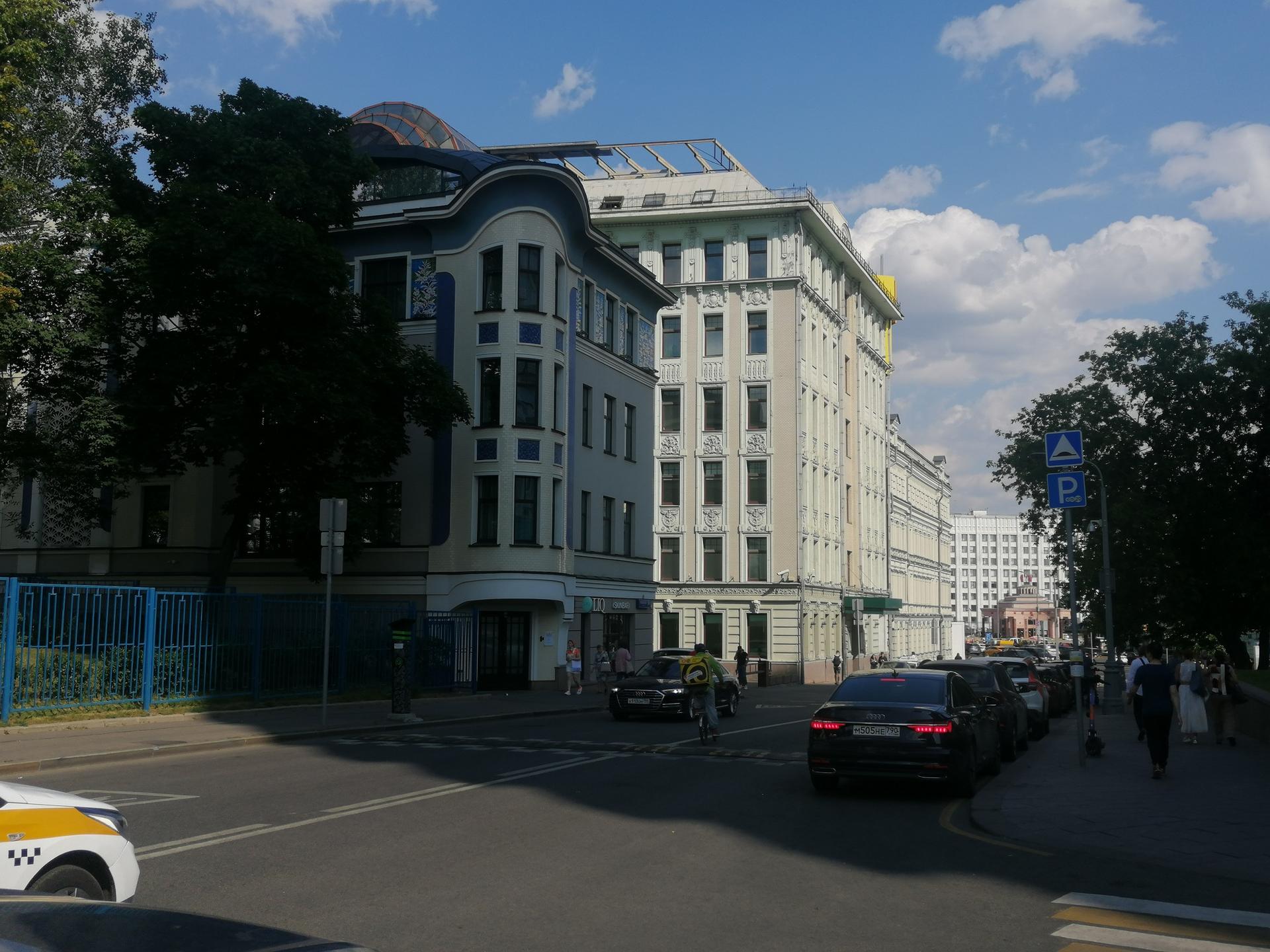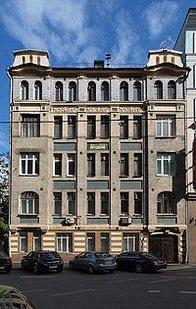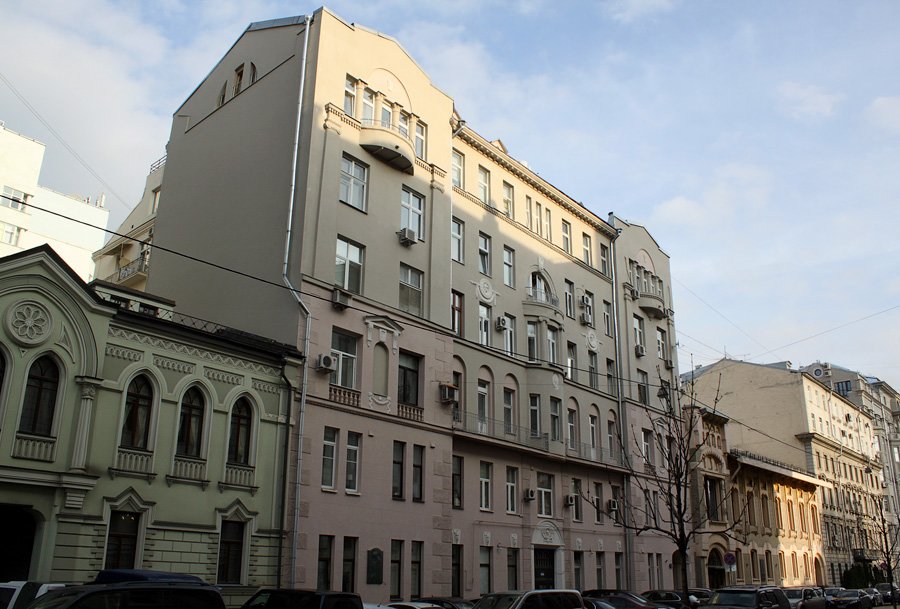
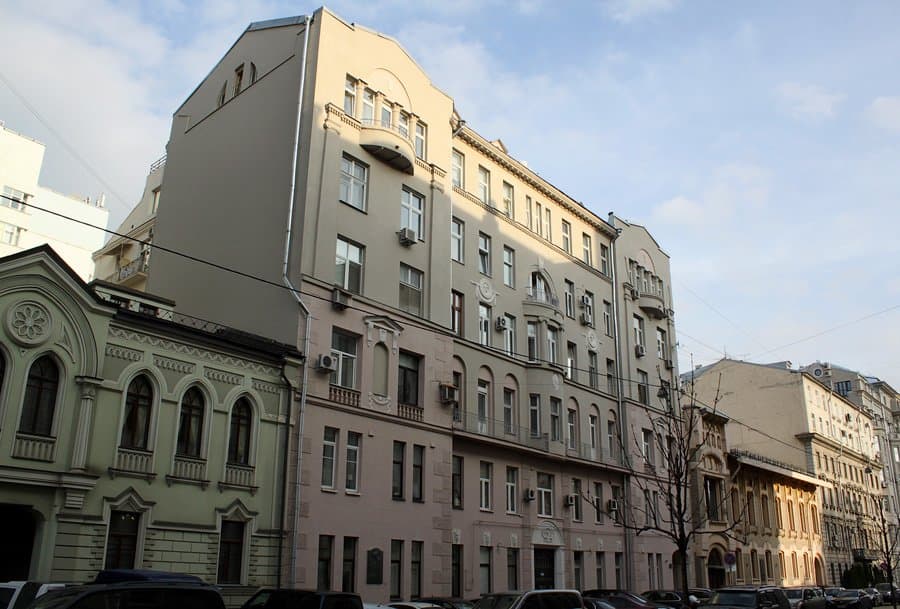
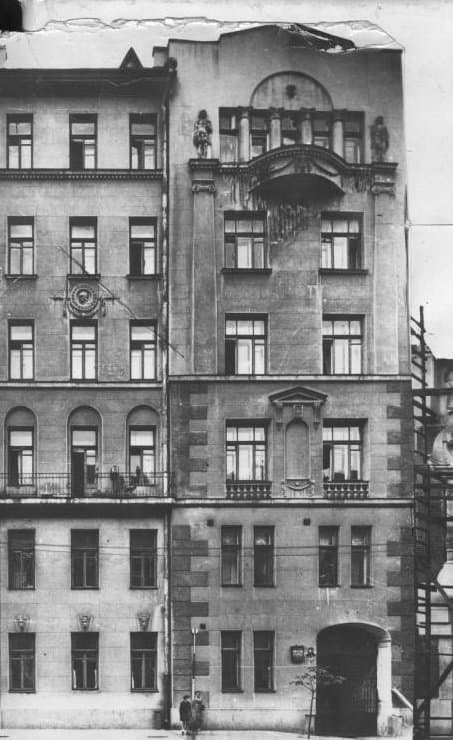
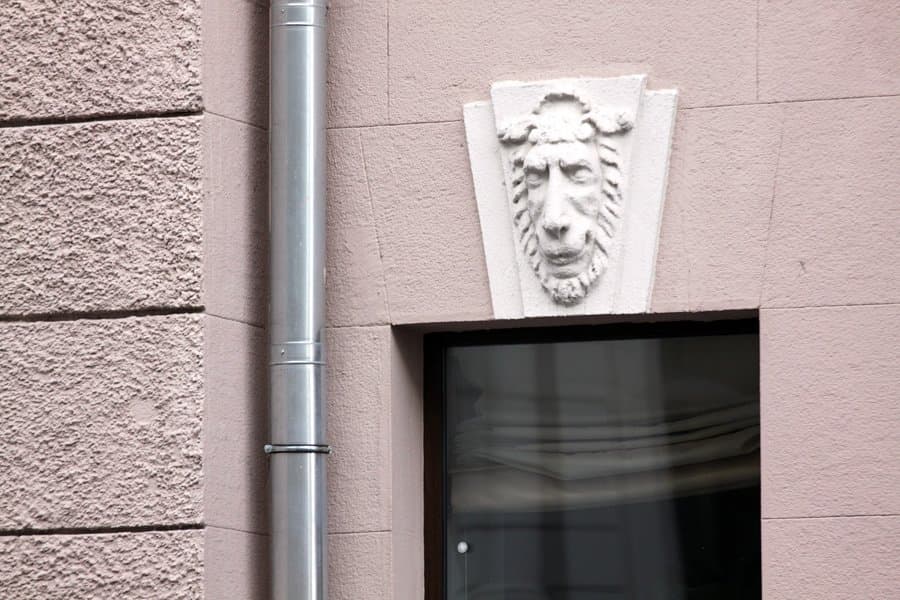
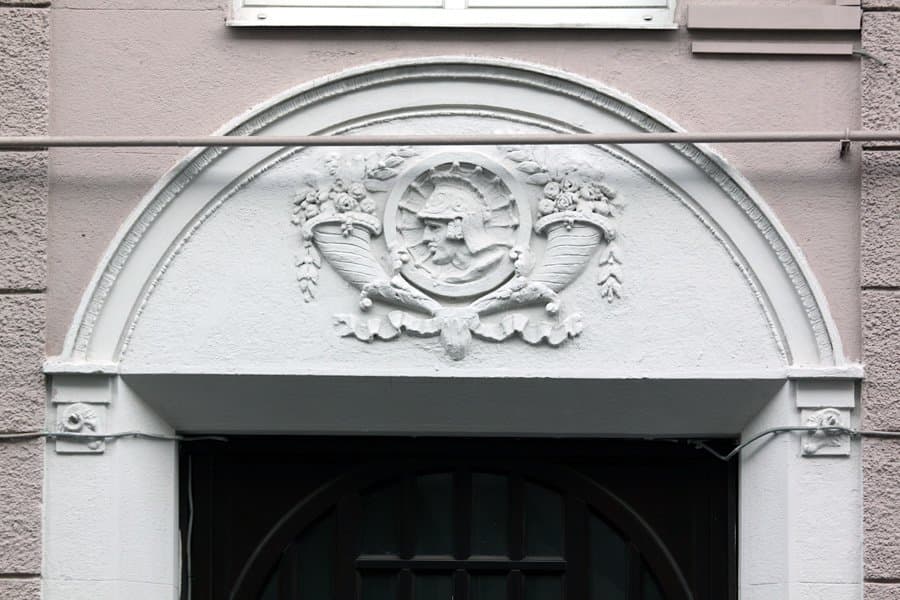
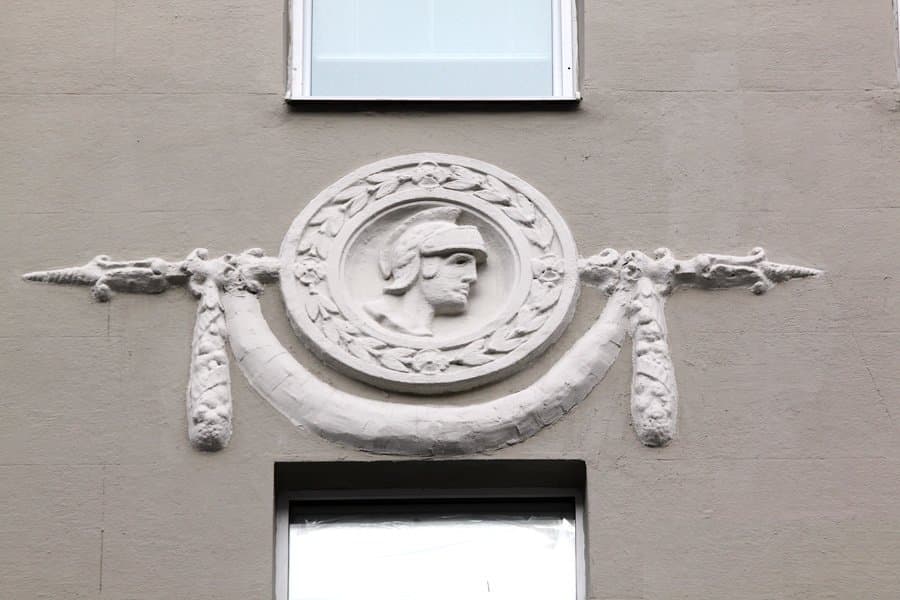
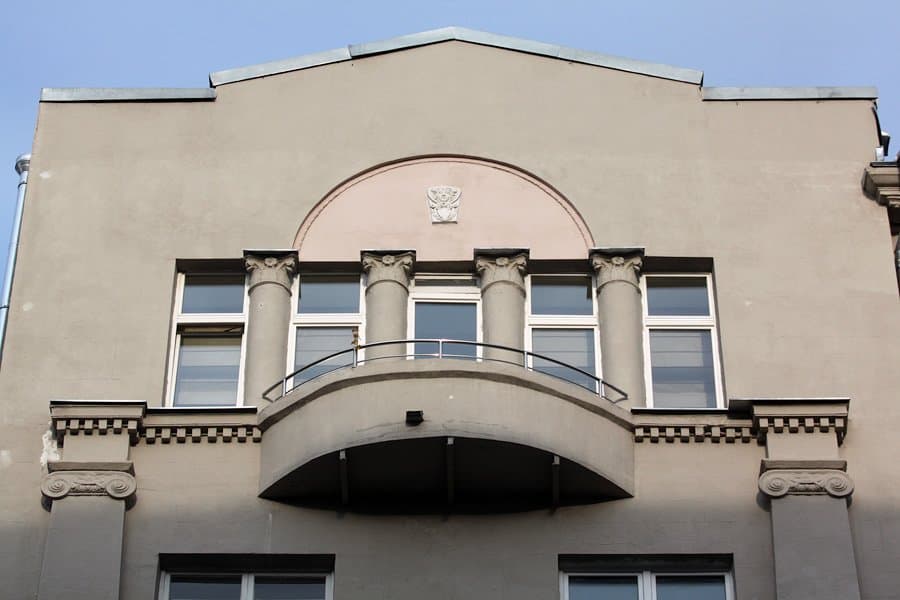
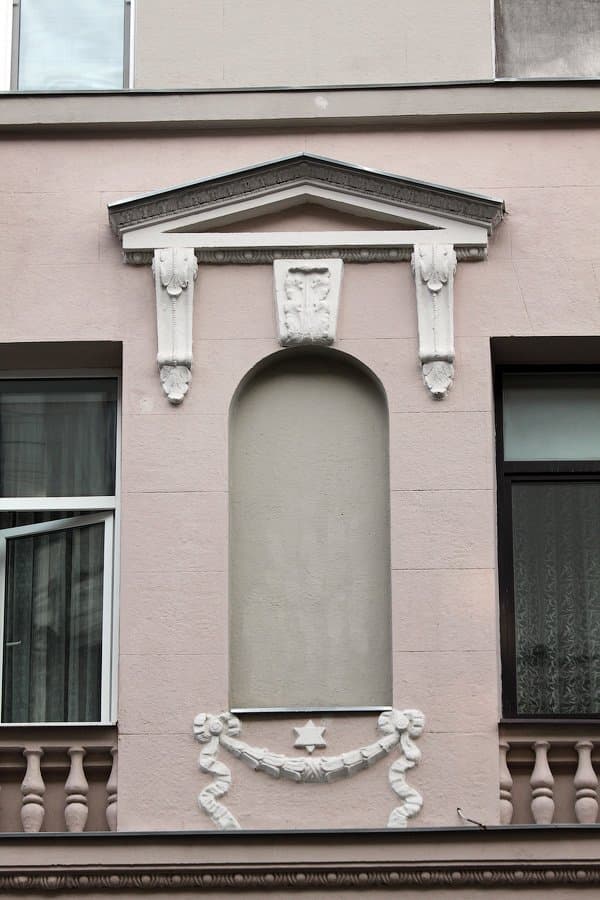
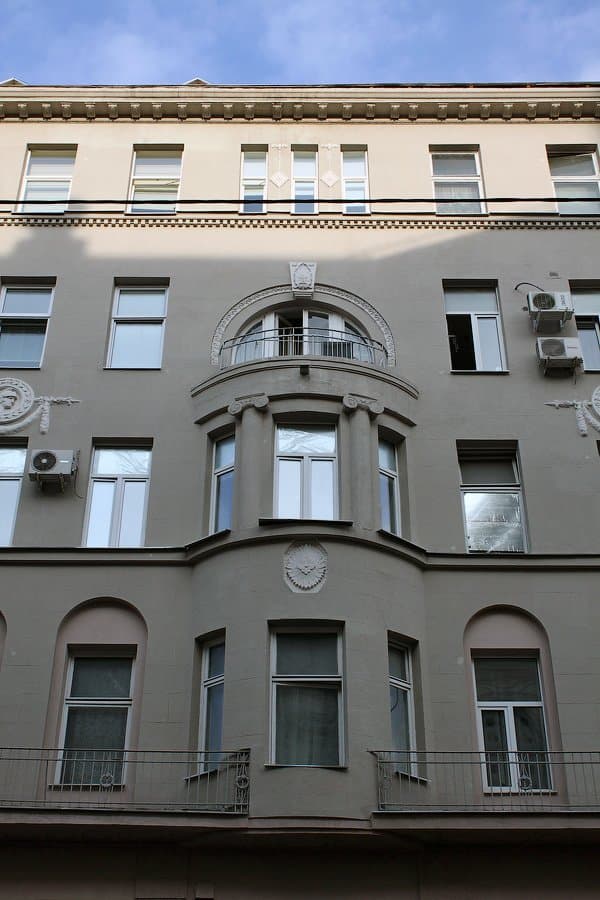
Этот доходный дом на Поварской улице построен в 1914 году архитектором О.Г. Пиотровичем для московского домовладельца Ивана Степановича Баскакова. Массивное шестиэтажное здание решено в неоклассическом стиле. Серый фасад и немногочисленные детали лепного декора, стилизованные под московский классицизм, создают основательный вид солидного доходного дома. Два боковых ризалита украшены полукруглыми балконами на последнем этаже поддерживаемые розетками. В центре двухэтажный эркер опирается на легкий балкон, идущий вдоль второго этажа центра фасада. Главный вход оформлен полукруглым эркером портала.
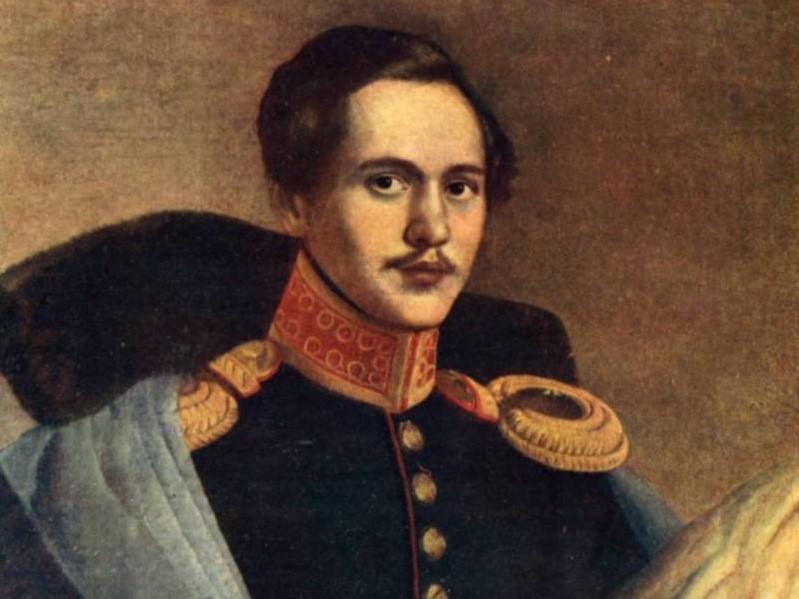
В XIX веке здесь стоял деревянный дом вдовы майора Е.Я. Костомаровой, который в зимнем сезоне 1829-1830 года снимала бабушка М.Ю. Лермонтова Е.А. Арсеньева. В это время М.Ю. Лермонтов учился в университетском благородном пансионе и готовился поступить в Московский университет, куда выпускников пансиона принимали без экзаменов. К этому периоду относятся ранние произведения Лермонтова – «Демон» и стихотворение «Монолог», предвещающее «Думу». Весной 1830 года благородный пансион был преобразован в гимназию, и Лермонтов оставил его. Отсюда он уезжает с бабушкой на лето в Середниково. А возвращается уже в другой снятый дом на Малой Молчановке.
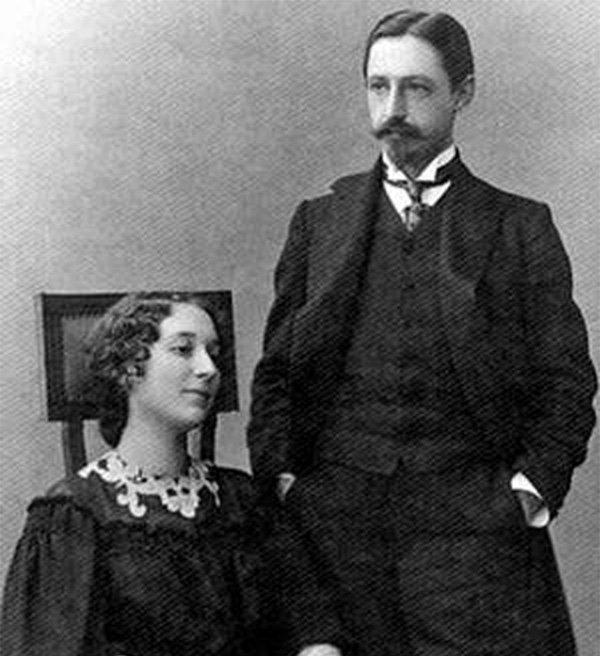
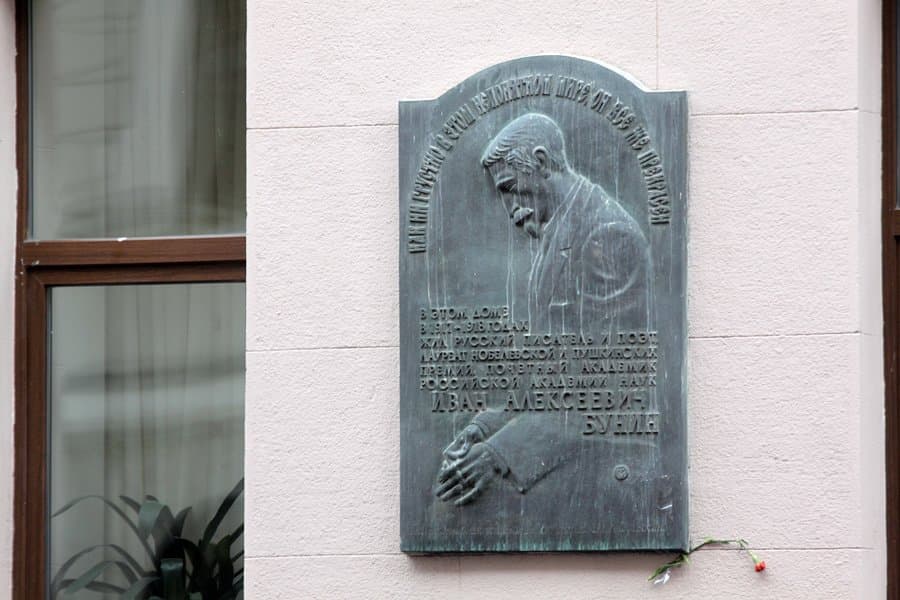
Существующий дом – последний адрес писателя Ивана Бунина до эмиграции. На первом этаже, в квартире №2, жили родители его жены Веры Николаевны Муромцевой. Бунины приехали сюда 26 октября 1917 года, и прожили в этой квартире самые тревожные дни революции в Москве. 21 мая 1918 года чета Буниных уехала отсюда в Одессу, а потом в эмиграцию через Константинополь в Париж. Позже по дневниковым записям Иван Бунин напишет книгу «Окаянные дни» о том, что творилось в Москве в эти страшные дни. «Великолепные дома возле нас (на Поварской) реквизируются один за одним. Из них вывозят и вывозят куда-то мебель, ковры, картины, цветы, растения - нынче весь день стояла на возу возле подъезда большая пальма, вся мокрая от дождя и снега, глубоко несчастная. И все привозят, внедряют в эти дома, долженствующие быть какими-то "правительственными" учреждениями, мебель новую, конторскую... Неужели так уверены в своем долгом и прочном существовании?»
В 1993 году на стене дома установлена мемориальная доска, исполненная скульптором Г.И. Правоторовым и художником-архитектором С.И. Смирновым.
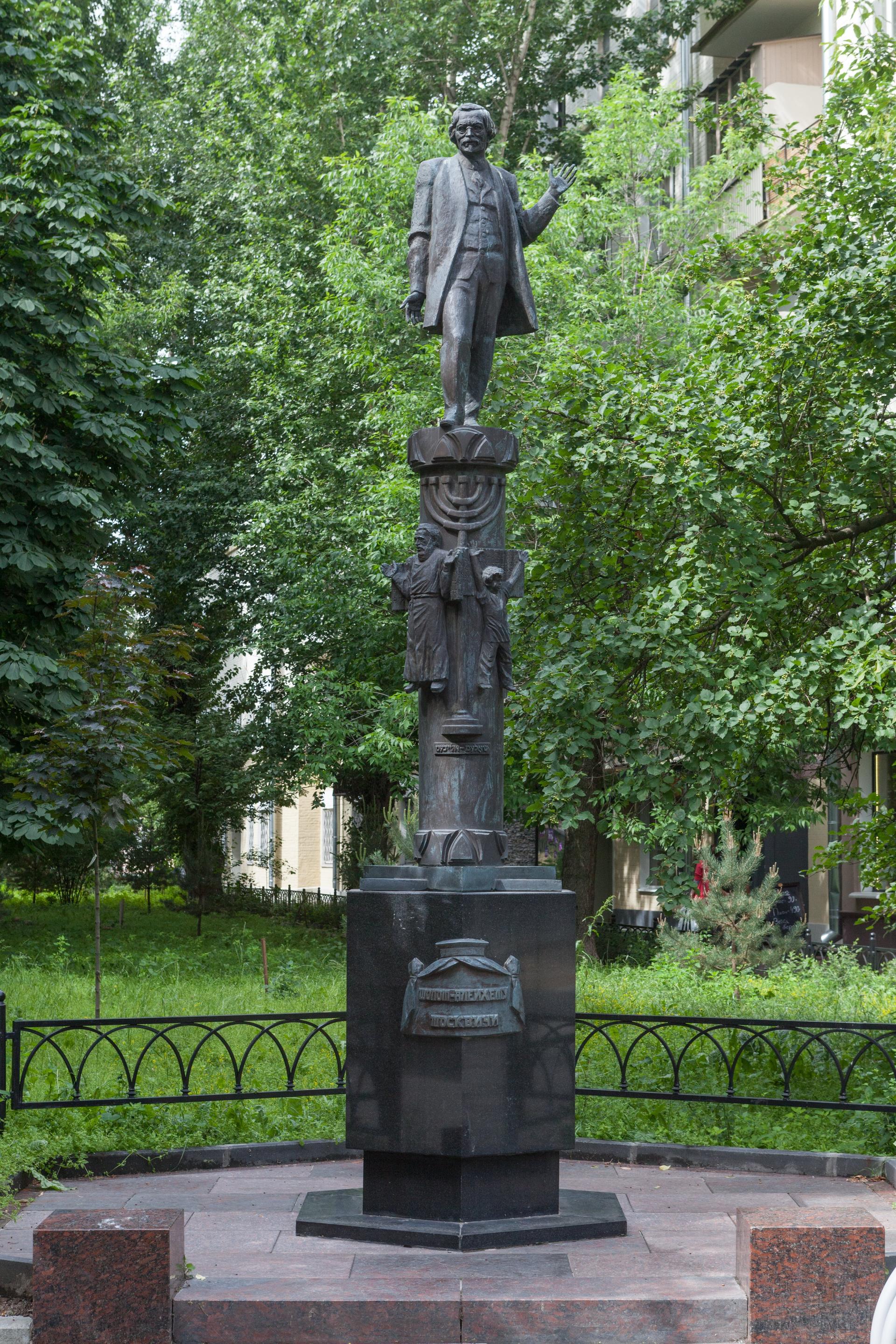
В 2007 году в сквере наискосок от дома был установлен памятник И.Бунину скульптора Бурганова.
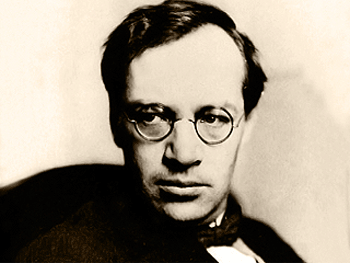
В 1920-е годы в доме жил писатель Борис Пильняк, осужденный в 1938 году и приговоренный к смертной казни по сфабрикованному обвинению в шпионаже в пользу Японии. С 1938 по 1975 год его книги не издавались в Советском Союзе, несмотря на то, что уже в 1956 году Борис Андреевич был посмертно реабилитирован. Интересно, что про себя Пильняк писал: «Я вышел из Белого и Бунина, многие многое делают лучше меня, и я считаю себя вправе брать это лучшее или такое, что я могу сделать лучше».
In the XIX century there was a wooden house of the widow of Major E.Y. Kostomarov that in the winter season of 1829-1830 was rented by the grandmother of M.U. Lermontov. At this time M.Y. Lermontov studied at boarding school and prepared to enroll to the Moscow University, where Pension’s graduates were accepted without examination. This was the period when Lermontov wrote his early works "Demon" and the poem "Monologue" foreshadowing "Duma". In the spring of 1830 the noble guest house was converted into a gymnasium and Lermontov left it. From there he went with his grandmother for the summer to Serednikovo. And he was back to the other house rented on Malaya Molchanovka.
Existing house is the last address of the writer Ivan Bunin before his emigration. On the ground floor, the apartment 2, parents of his wife Vera Nikolaevna Muromtseva lived. Bunin came here on October 26, 1917 and lived in the apartment for the most anxious days of the revolution in Moscow. On May 21, 1918 the Bunins couple left to Odessa, and then emigrated via Constantinople to Paris. Later Ivan Bunin wrote the book "Cursed Days" based on his diaries about what happened in Moscow in those terrible days. "Beautiful house near us (at Povarskaya) requisitioned one by one. Out of them they take out and take out furniture, carpets, paintings, flowers, plants. Today the big palm stood on the cart near the entrance, all wet from rain and snow, deeply unhappy. And everyone brings, introduces into these houses, which must be some "governmental" institutions, new furniture, office ... Are they so sure of their long and lasting existence? "
In 1993 on the wall of the house there is a memorial plaque, executed by the sculptor GI. Pravotov and architect-architect S.I. Smirnov.
In 2007, a monument to Ivan Bunin, sculptor Burganov, was erected in an alleyway from the house.
The writer Boris Pilnyak, convicted in 1938 and sentenced to death on trumped-up charge of espionage in favor of Japan, lived in the house in the 1920s. His books were not published in the Soviet Union from 1938 to 1975, despite the fact that already in 1956 Boris Andreevich was posthumously rehabilitated. Interestingly, Pilniak wrote about himself: "I came out of the Bely and Bunin, many do it much better than I do, and I feel justified in taking it better or is that I can do better."



.jpg&w=1920&q=75)