Интерактивный гид по городу
С мобильным приложением бродить по городу гораздо интереснее!

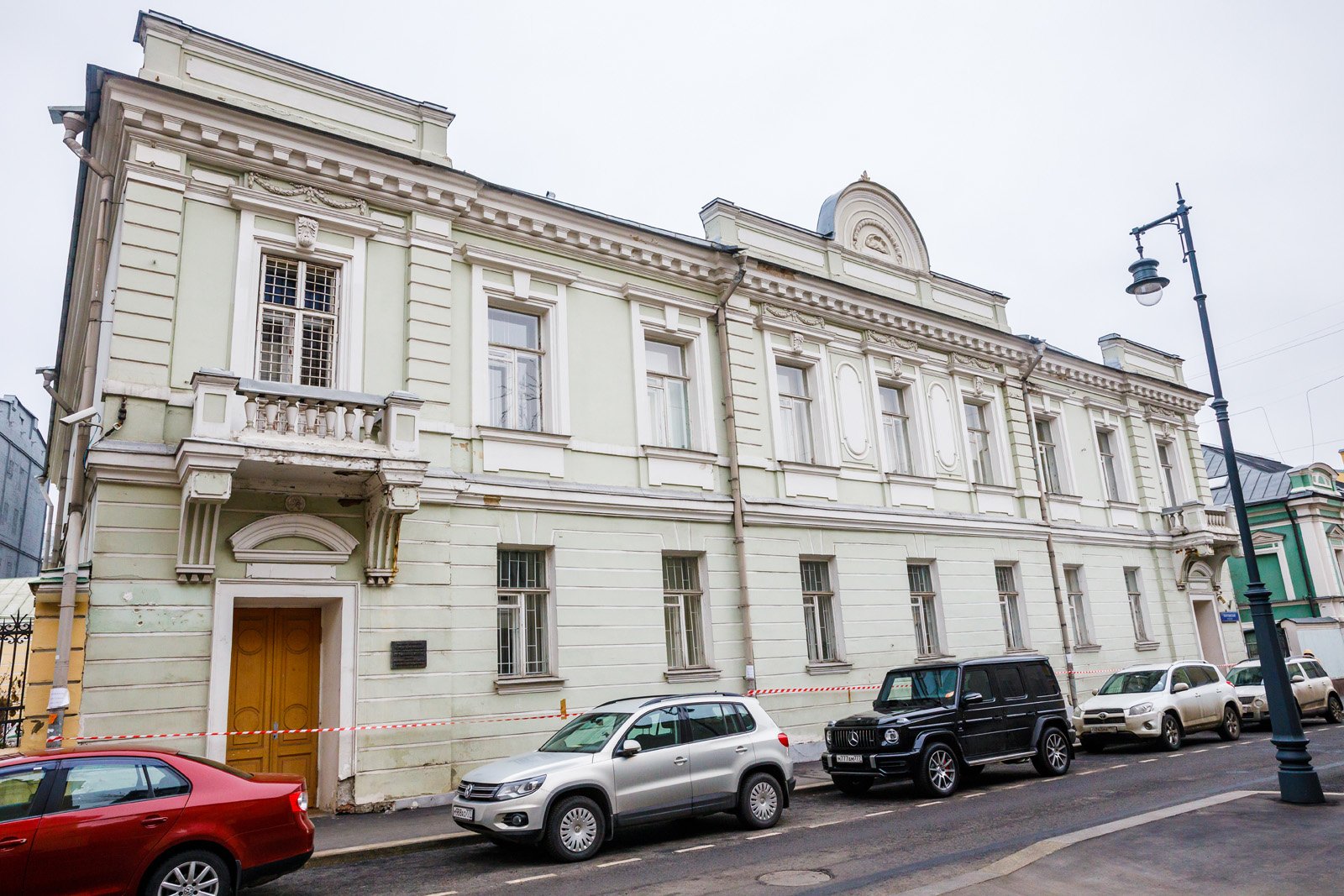
Outbuilding of the Lopukhins – Stanitskaya Estate

Nowadays, the outbuilding looks as it did after the 1894 alterations. However, inside it, there is an older mass dating back to late 18th–early 19th centuries.

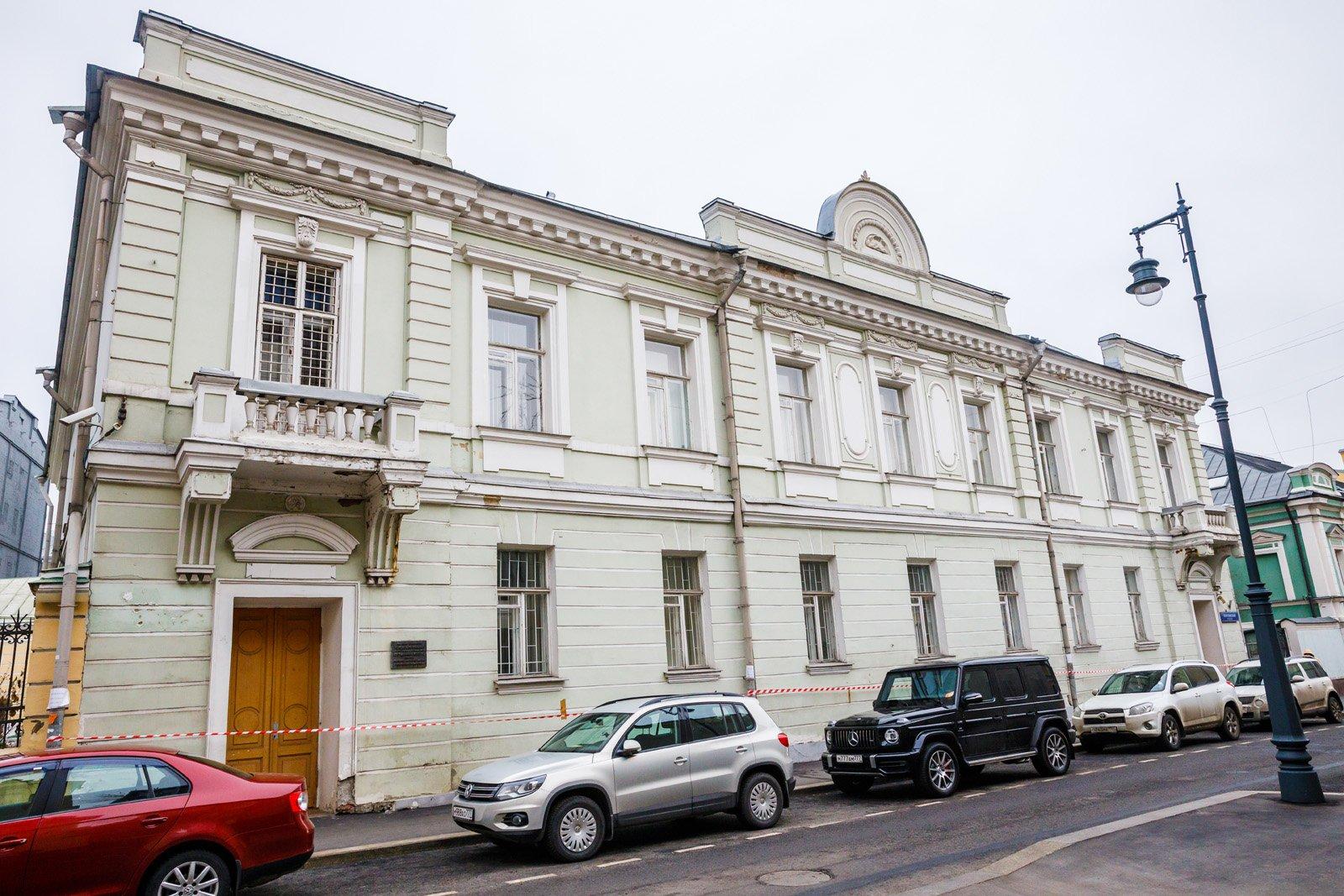
Outbuilding of the Lopukhins – Stanitskaya Estate
Nowadays, the outbuilding looks as it did after the 1894 alterations. However, inside it, there is an older mass dating back to late 18th–early 19th centuries.
Вы можете воспользоваться QR-кодом, чтобы открыть эту страницу в нашем приложении
Архитектурный стиль:
Годы постройки:
1817-1822, 1894
Архитекторы:
А.Г. Григорьев
Эпоха:
19th century
Информация о здании

Двухэтажный флигель по Лопухинскому переулку является неотъемлемой частью усадьбы Лопухиных – Станицкой, построенной в 1817-1822 гг. архитектором А.Г. Григорьевым и считающейся одним из эталонных и сохранных образцов ампирной жилой застройки в Москве. К слову, Лопухинский переулок получил свое название как раз по имени этой усадьбы – одной из наиболее состоятельных и благополучных, что в нем находились.

В 1894 году владение приобрела жена надворного советника Екатерина Ивановна Станицкая. Тогда же она – среди прочих изменений – перестроила каменный двухэтажный флигель по переулку для сдачи квартир внаем. Автором проекта был академик архитектуры Сергей Устинович Соловьев.

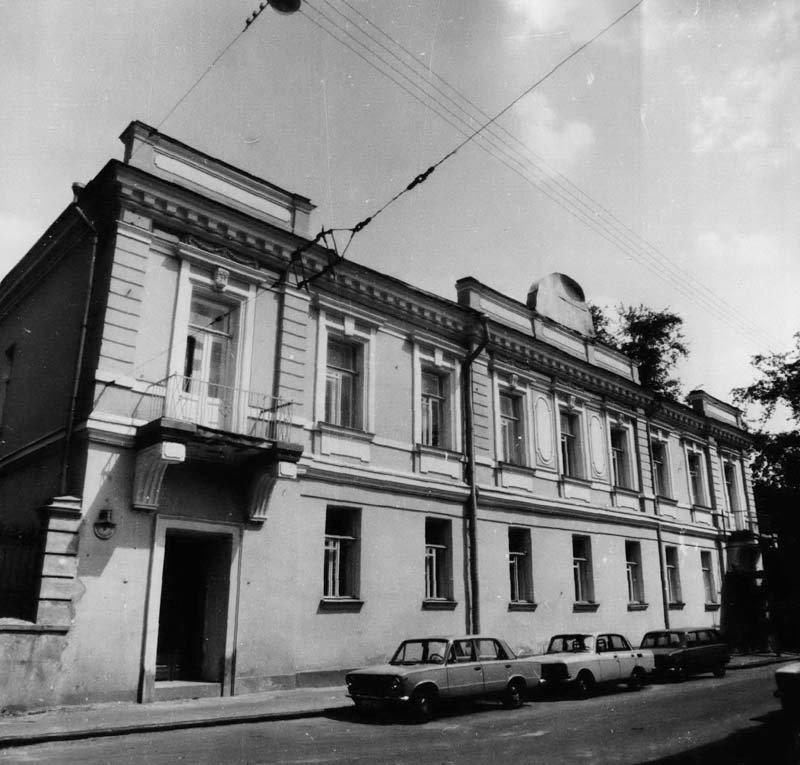
В 1911 году Е.И.Станицкая продала свое владение потомственному почетному гражданину Ф.В.Челнокову. В 1917 году усадьба перешла жене личного почетного гражданина Августе Петровне Генч-Оглуевой. До 1970-х годов во флигеле были квартиры. А в 1978-1980 годах он был приспособлен под фондохранилище музея Льва Толстого, который с 1920 года занимал главный дом усадьбы Лопухиных – Станицкой.

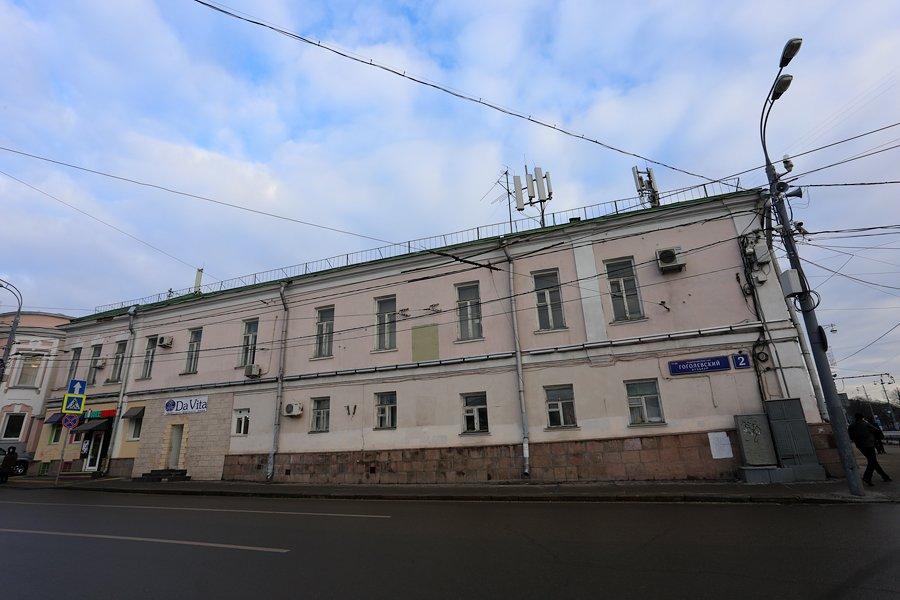
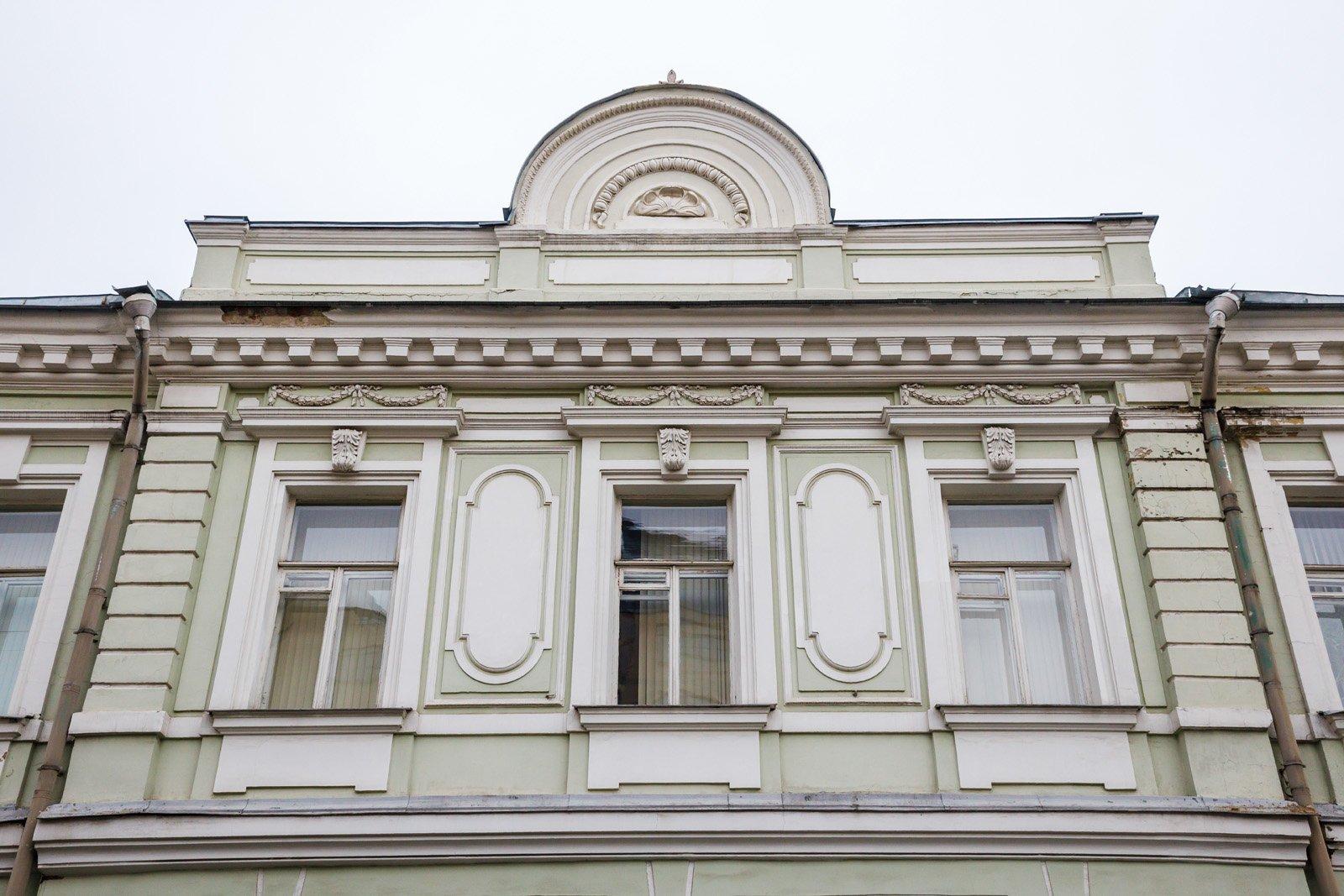
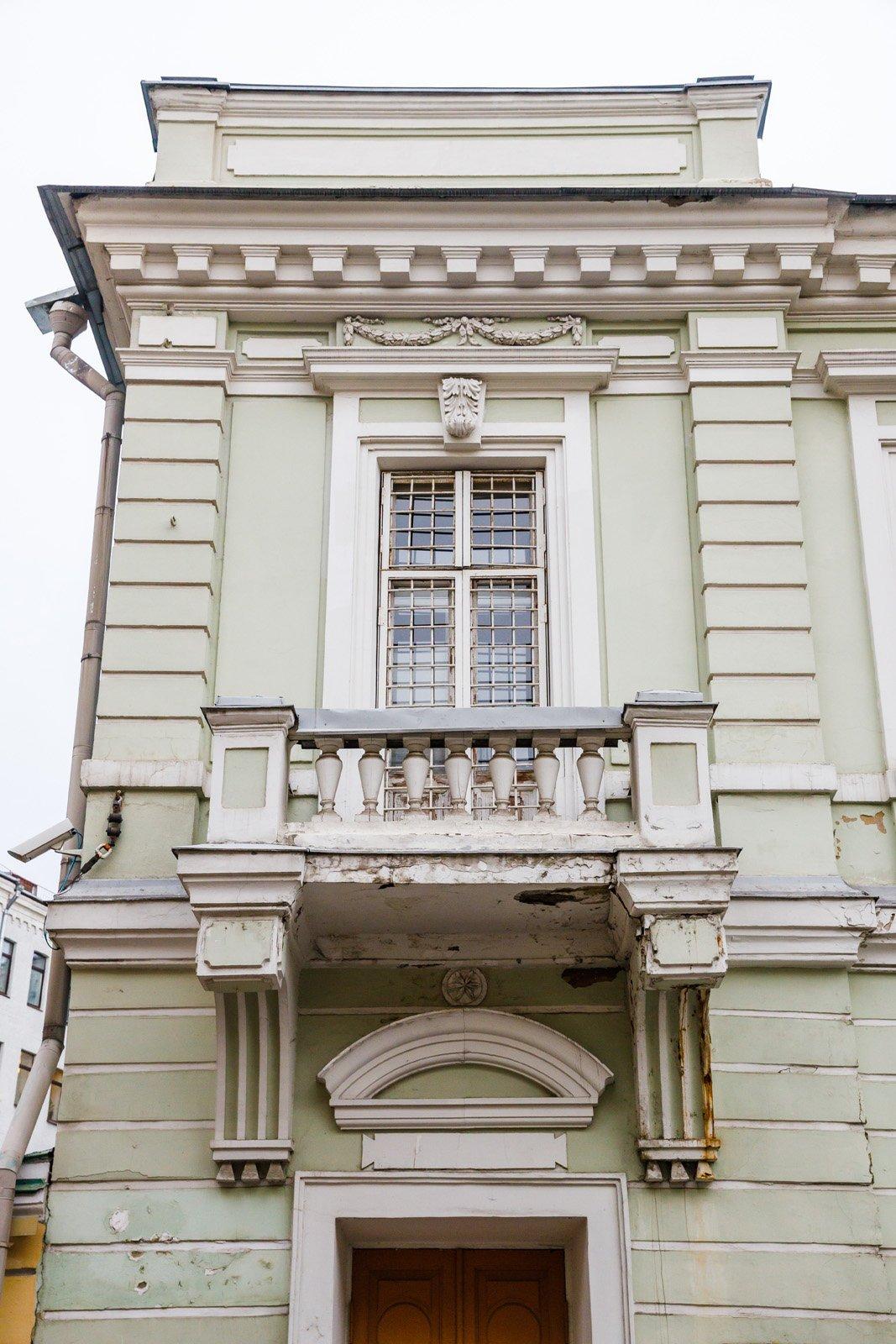
Сейчас мы видим флигель таким, каким он стал после переделок 1894 года. Но внутри скрыт объем конца XVIII – начала XIX веков. Здание П-образное в плане, имеющее пять входов. Композиция главного фасада по Лопухинскому переулку симметрична, в девять оконных осей. Центральная часть украшена фигурным аттиком, фланги – прямоугольными аттиками и балконами на массивных кронштейнах. По всему зданию идет профилированная междуэтажная тяга. Окна и балконные двери второго этажа имеют декоративные наличники, украшенные стилизованными замковыми камнями, которые соединены с прямыми профилированными сандриками. Под всеми окнами – плоские фартуки, а между окнами центрального ризалита – профилированные филенки с полуциркульными завершениями. Венчает главный фасад раскрепованный карниз с сухариками.

Дворовый и боковые фасады – более скромные. Они имеют крупные арочные окна лестничной клетки и холла. Остальные окна – прямоугольные и оформлены подоконными профилями. Окна первого этажа частично были заложены, когда флигель приспосабливали под фондохранилище.

Внутри здания – коридорная система. В подвале, вестибюле, холле 1 этажа сохранились цилиндрический и крестовый своды. В вестибюле – печь конца XIX века. Сохраняются две лестницы: каменная парадная и железобетонная на металлических оштукатуренных косоурах.

В интерьерах 1 и 2 этажей сохранились однопольные и двупольные деревянные двери с филенками.

The two-storey outbuilding along the Lopukhinsky Lane is an integral part of the Lopukhins–Stanitskaya estate that was constructed in 1817–1822 to architect A.G.Grigoryev's design and is considered one of the best-preserved examples of typical Moscow Empire-style residential building. By the way, the Lopukhinsky Lane was named exactly after the estate — one of the most wealthy and prosperous of all those in the lane.

In 1894, the property was bought by Yekaterina Stanitskaya, wife of a court councilor. About the same time she had — among other alterations — the stone two-storey outbuilding along the lane reconstructed to adapt it for letting out apartments in it. The reconstruction was designed by Academician of Architecture Sergey Ustinovich Solovyov.

In 1911, E.I.Stanitskaya sold her property to F.V.Chelnokov, hereditary honorary citizen. In 1917, the estate went to Augusta Petrovna Gench-Ogluyeva, wife of a personal honorary citizen. Up to 1970s, there were apartments in the building. In 1978–1980, it was adapted for the Leo Tolstoy Museum depositary; since 1920, the Museum occupied the main house of the Lopukhin–Stanitskaya estate.

Nowadays, the outbuilding looks as it did after the 1894 alterations. However, inside it, there is an older mass dating back to late 18th–early 19th centuries. The building's layout is U shaped, with five entrances. The main facade along the Lopukhinksy lane is symmetrical with nine window axes. Its central part is topped with a rectangle-cum-semicircle attic while the side parts — with rectangular attics and balconies supported by massive consoles. Along the entire length of the building the profiled string cornice runs. Windows and balcony doors in the first floor have decorative shouldered surrounds merged with straight profiled pediments and decorated with imitation keystones. All windows have flat panels below them while between the windows of the central avantcorps, there are embossed raised panels with semicircular tops. The facade is topped with a protruding cornice with dentils.

The side facade and the one facing the courtyard look more modest. There are large arched windows of the stairwell and the hall. The rest of the windows are rectangular, decorated with window sills. Some of the ground floor windows were mured up when the outbuilding was being adapted for the museum depository.

The interior layout has the corridor-type arrangement. In the basement, the lobby and in the ground-floor hall, there are barrel and intersecting vaults. There is a late 19th century stove in the lobby. Two staircases have survived: the main one made of stone and another of reinforced concrete, supported by plastered metal strings.

In the ground and first floor interiors, single- and double-leaf doors with raised panels have survived.

Evgenia Tvardovskaya
Автор статьи: Евгения Твардовская
Поделитесь статьей с друзьями
Интересное рядом(9)
Лосев Алексей Федорович
философ и религиозный мыслитель
Соймоновский проезд
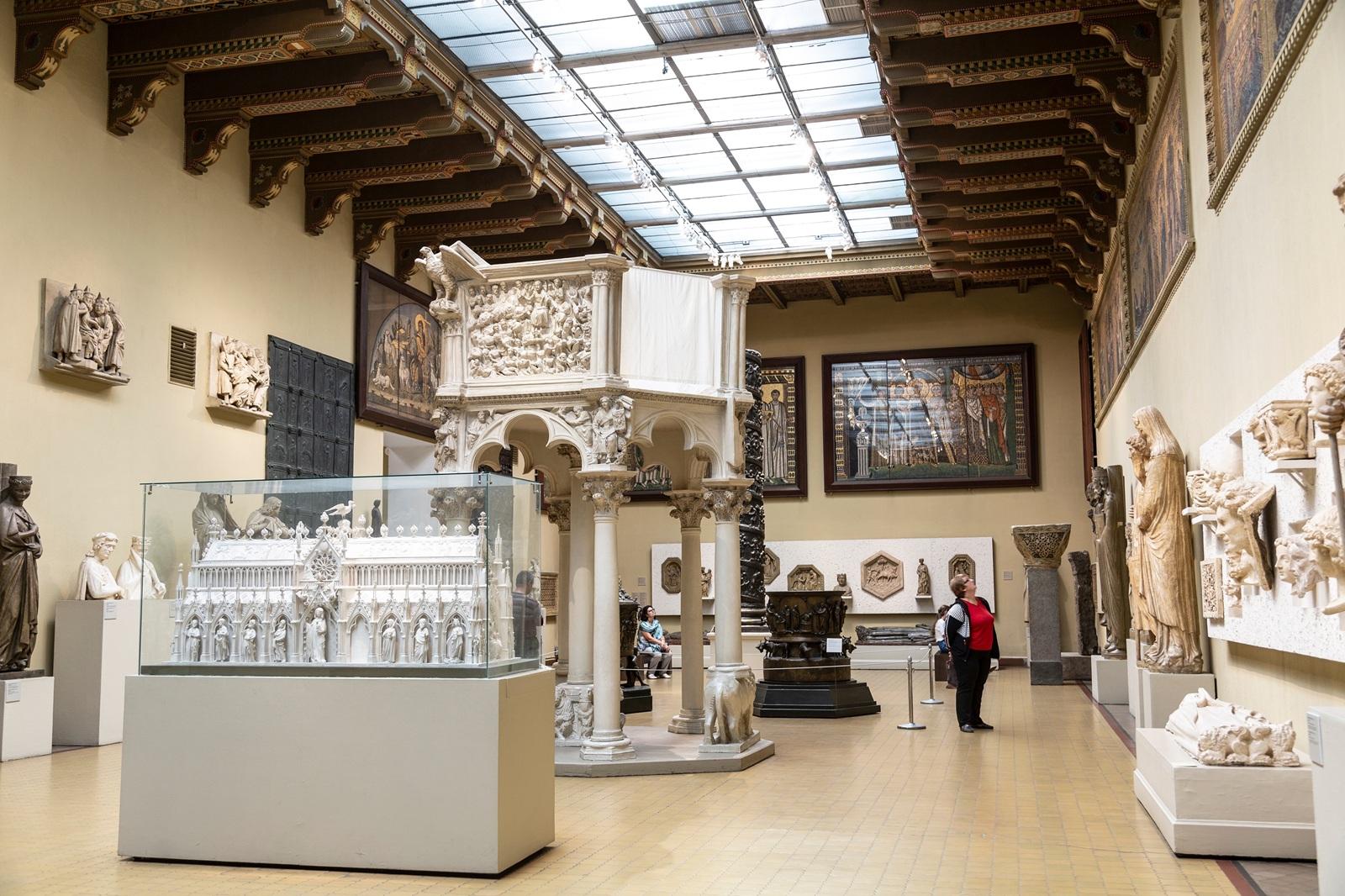
Gallery of 19th and 20th century European and American ArtThe Gallery of 19th and 20th century European and American Art is the new department of the Pushkin State Museum of Fine Arts — opened its doors to the public in August 2006. A collection of works of masters of the XIX – XX centuries is deployed in twenty-six halls of the Gallery. Entire halls are devoted to individual trends of European art or the work of one artist. The German school of painting of the beginning of the 19th century, represented by the works of K. D. Friedrich and the Nazarene artists, is on display in a specially designated room. Chamber halls allow the public to see well-known paintings by E. Delacroix and J.A. D. Ingres. Spanish school is the work of F. Goya. Participants in the Paris Salon received a separate room: J. Jerome, P. Delaroche, and E. L. Isabe. The works of French landscape painters C. Corot and the artists of the Barbizon school T. Rousseau, J. Dupre, V. Diaz de la Peña, S. Daubigny seem to be specially designed for the interiors of the Gallery. Cloths G. Courbet, J.F. Millet, O. Domier complement the panorama of the art of French realism. The pride of the Gallery is the painting of French impressionists, post-impressionists and masters of the beginning of the 20th century: C. Monet, O. Renoir, A. Sisley, C. Pissarro, E. Degas, P. Cezanne, P. Gauguin, V. van Gogh, A. de Toulouse-Lautrec, members of the Nabi group, A. Matisse, P. Picasso, A. Derain, A. Russo. In the new exhibition you can see the work of representatives of other European schools, as well as works of American art. Paintings by A. Funi, C. Hofer, F. Casorati, X. Grundig, F. Behringer and R. Kent are shown along with the paintings by V. Kandinsky, M. Chagall and J. de Chirico. Also the works of the largest sculptors of Europe - A. Bari, O. Rodin, A. Majol, E. Burdel, O. Tzadkina and X. Arpa are presented in the gallery.
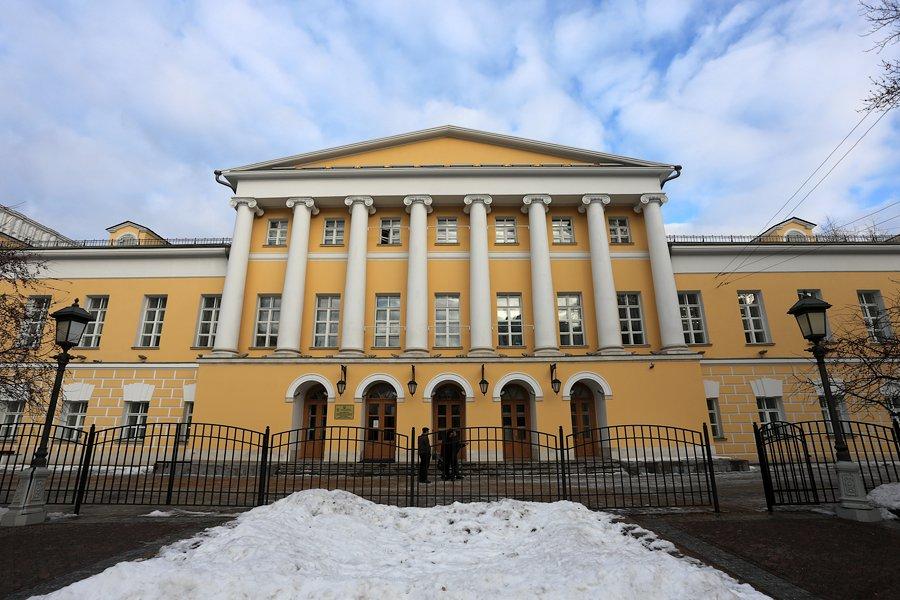
The Golitsyn Family ManorDuring the three centuries of its history, the Golitsyn Family Manor in Volkhonka repeatedly changed appearance. The author of the original project was the famous Petersburg architect Savva Chevakinsky. In 1774, the manor was rebuilt and became the central part of the Prechistensky Palace, built according to the design of Matvey Kazakov for Catherine II. The walls of this house have seen many famous people. A.S. Pushkin appeared on luxurious balls more than once. Alexander Sergeevich was even going to get married with Natalia Goncharova in the home church of Prince Golitsyn, but the wedding ceremony was arranged in the Church of the Ascension of the Lord at the Nikitsky Gate. Alexander Nikolaevich Ostrovsky settled in the main house in 1877. Here he finished the play “The Last Sacrifice,” wrote “Dowryless,” “Heart is not a Stone,” “Talents and Fans.” In 1885, Ivan Sergeevich Aksakov, one of the leaders of the Slavophile movement, occupied the neighboring apartment. In 1865, a free museum was opened consisting of family collections in the five halls of the main house of the Golitsyn manor. The museum had three sections: Western European painting, sculpture and decorative and applied art, ancient monuments, library. Works by Bruegel, van Dyck, Veronese, Canaletto, Caravaggio, Perugino, Poussin, and Rembrandt were presented in the picturesque meeting of the owners of the house. A year later, due to financial difficulties, the collection of the museum was sold to the Hermitage. After the revolution, in the late 1920s, the main house of the estate became the Communist Academy; it was built on two floors, as a result of which the pediment was lost. The imposing gates, crowned with the Golitsyn princely coat of arms, are the only things that have survived in their original form. After completion of the reconstruction, the Impressionist and Post-Impressionist Art Gallery opens in the former building of the Golitsyn estate. Works by outstanding masters of the second half of the 19th and early 20th centuries will be exhibited in this Art Gallery: Manet, Monet, Renoir, Degas, Pissarro, Cezanne, Gauguin, van Gogh, Matisse and Fauves, Picasso and Cubists, originating from the collections of the famous pre-revolutionary Moscow collectors S. I. Shchukin and I. A. Morozov.
Moscow, Volkhonka Street, 14