Информация о здании
Коревое отделение Морозовской детской больницы располагается в центральном ряду больничных корпусов-павильонов, за Амбулаторным корпусом и Отделением для сомнительных больных. Далее этот ряд продолжало Острозаразное отделение.
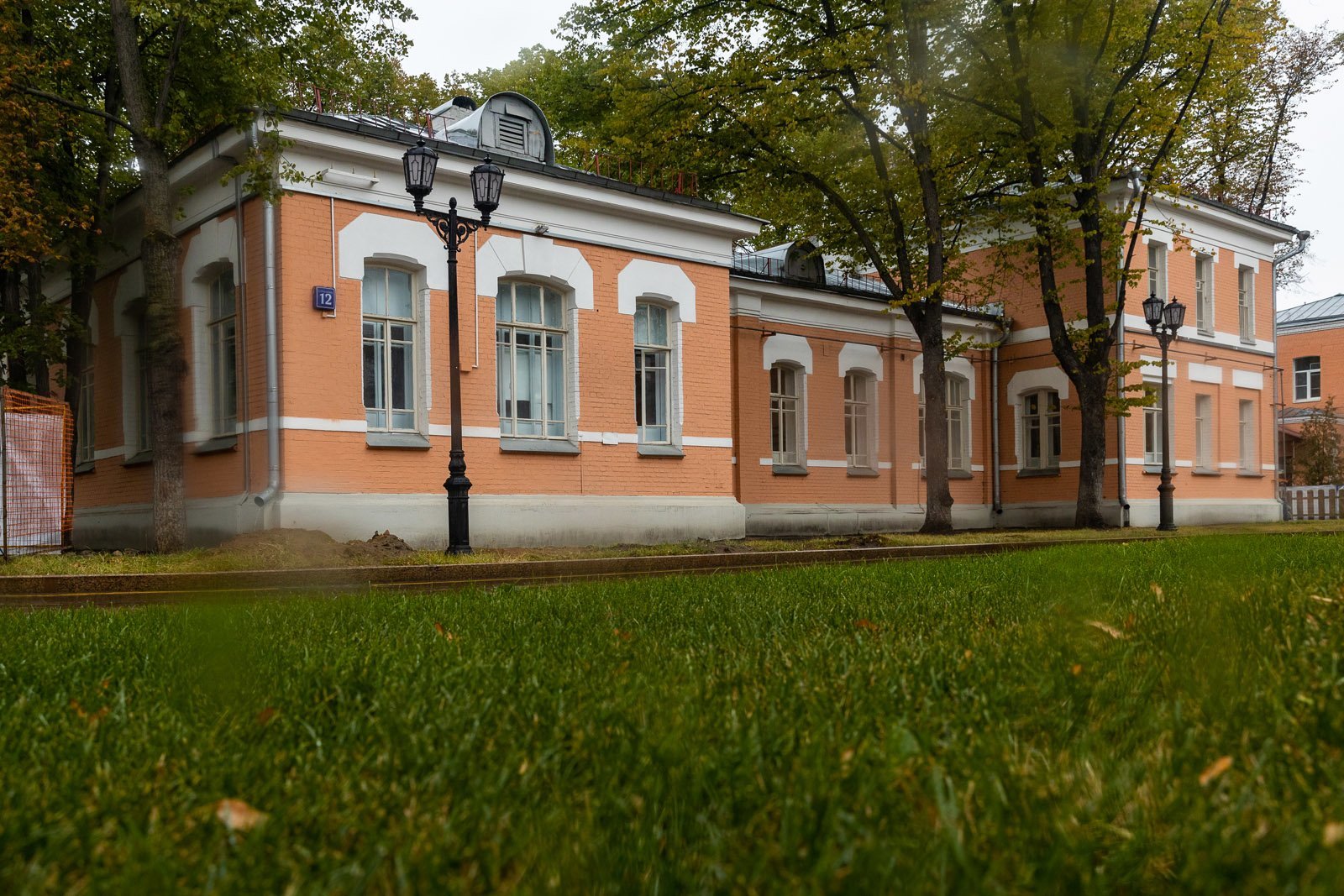
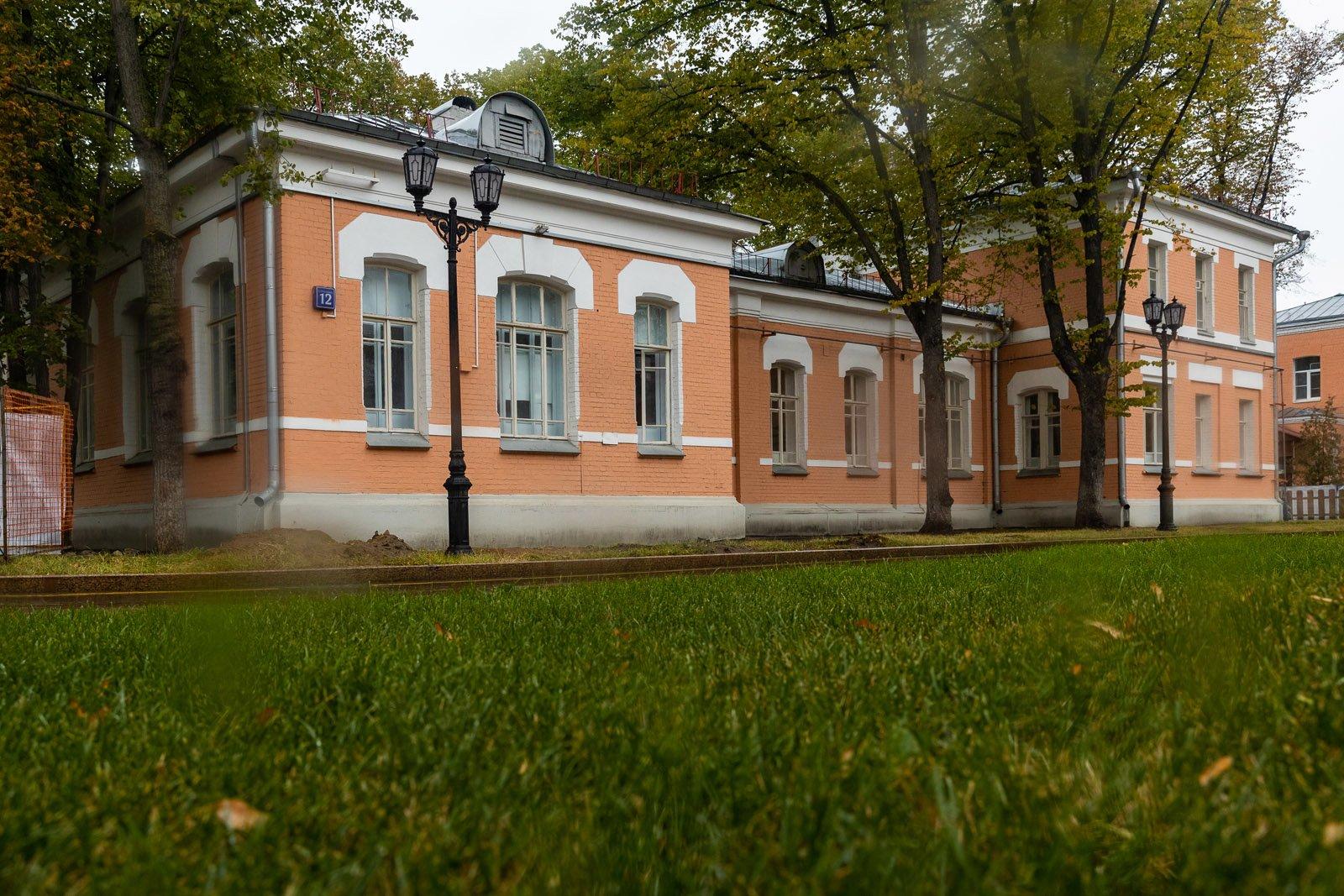
Корпус Коревого отделения был построен в 1903–1904 годах по проекту архитектора И.А.Иванова-Шица в стиле модерн. Как и прочие больничные корпуса, он был возведен из красного кирпича, фасады отделаны белокаменными деталями.
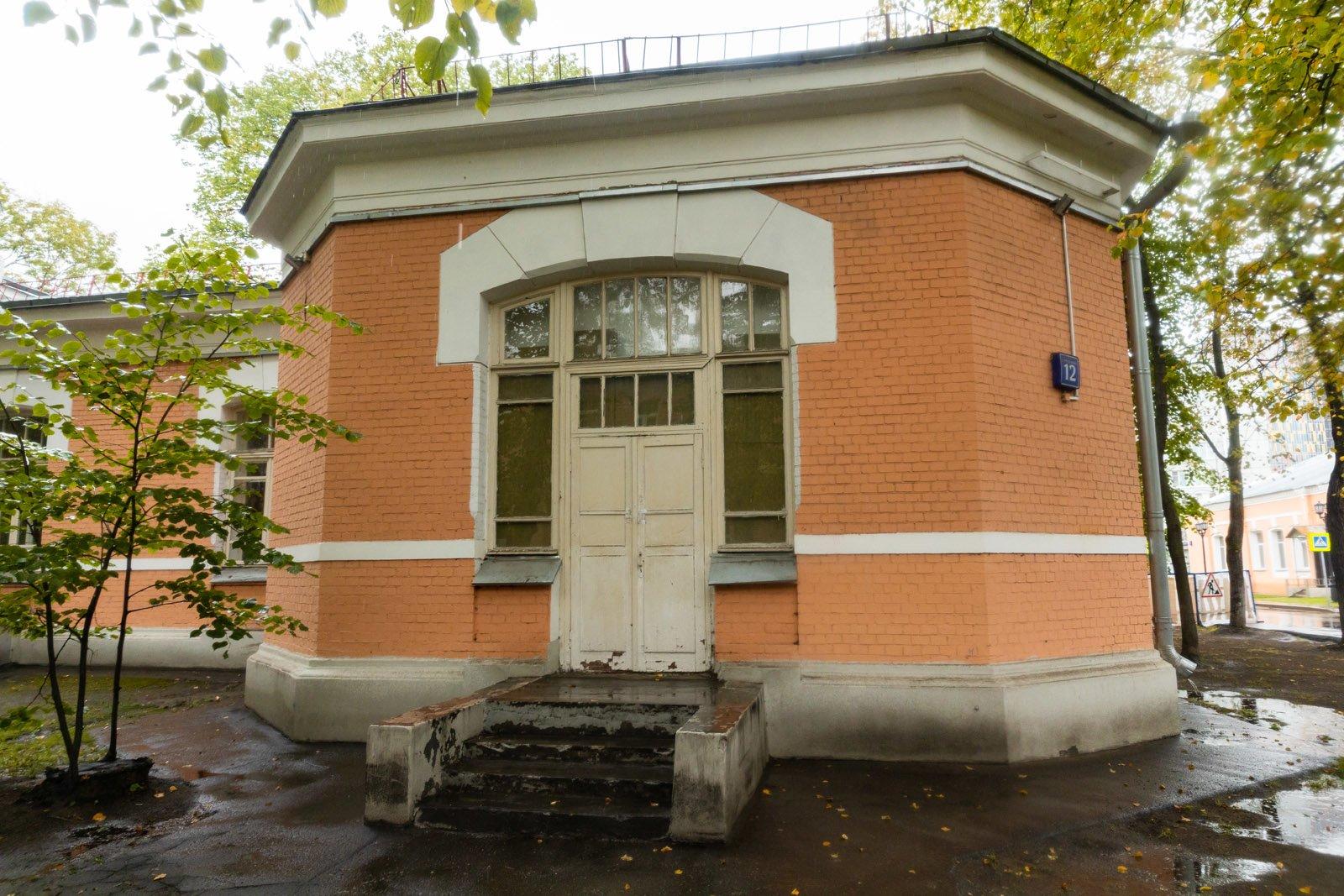
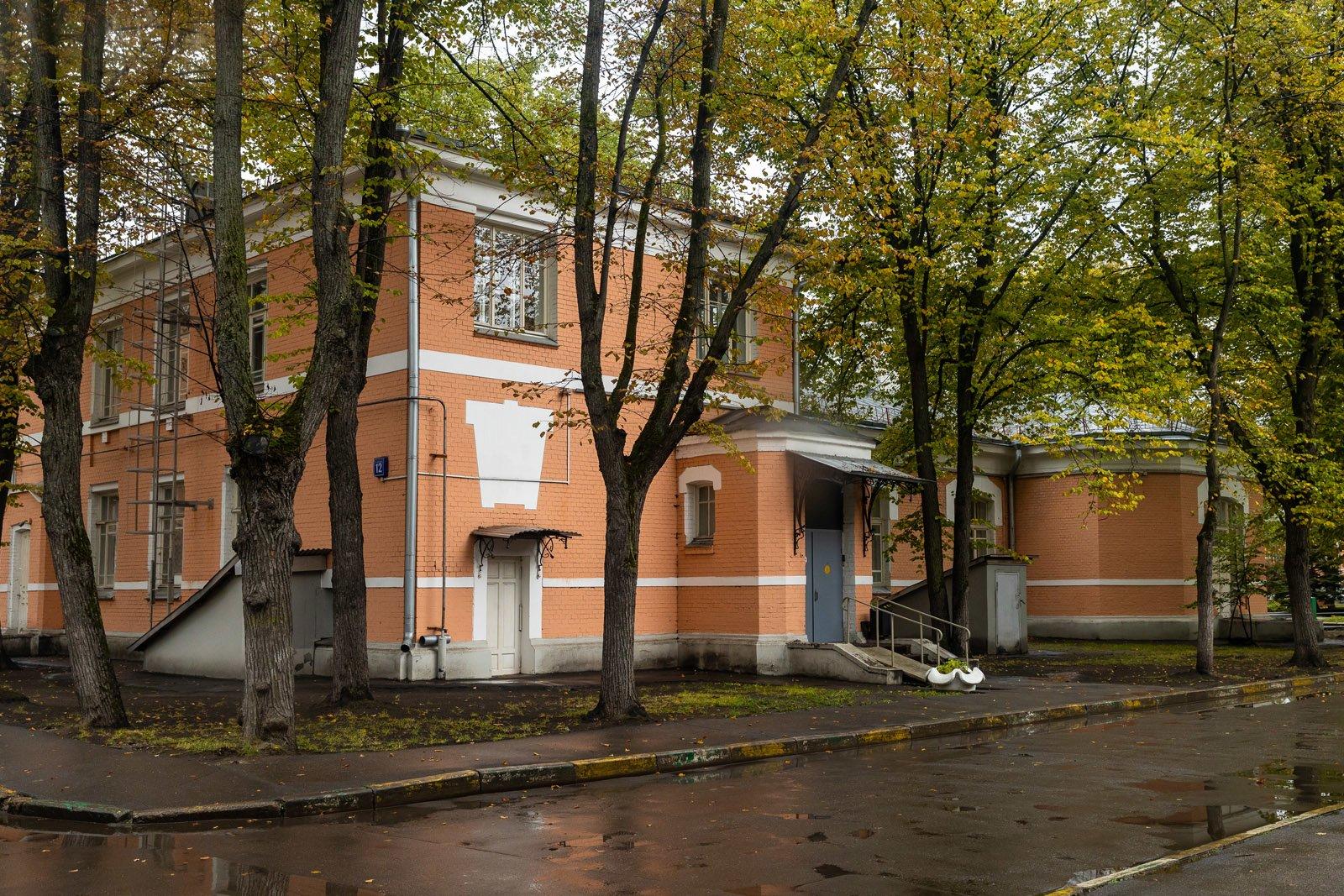
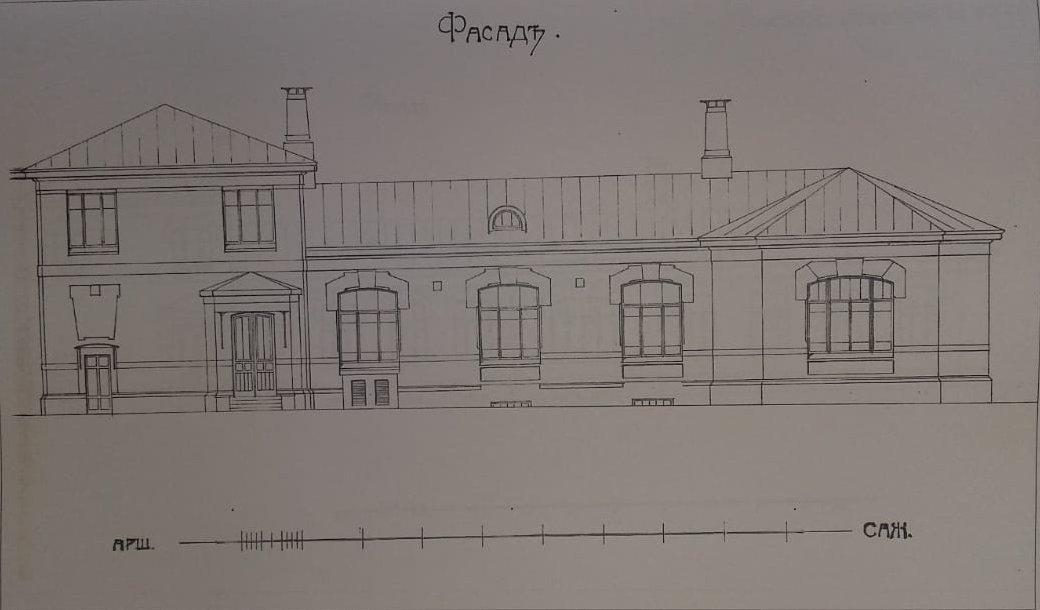
Небольшое асимметричное здание имело двухэтажную левую часть (второй этаж предназначался для больничного персонала). В правой части фасада, отмеченной большим широким окном, имелся ризалит со скошенными углами. Объемно-пространственная композиция здания имеет много общего с рядом других корпусов Морозовской детской больницы – двумя Острозаразными отделениями, а также Дифтеритным корпусом. Фасад практически полностью повторяет (в зеркальном отражении) фасад одного из Острозаразных отделений (современный корпус № 13).
В левой части фасада Коревого отделения были устроены входы в здание – парадный, имевший небольшой входной тамбур, и вспомогательный. Центр фасада украшают окна большого размера, прекрасно освещавшие внутренние помещения. На противоположном фасаде интересен ризалит в левой части здания, с четким рядом трех узких вертикальных окон. Здание Коревого отделения было поставлено на невысокий цокольный этаж. Завершали его две высокие дымовые трубы.
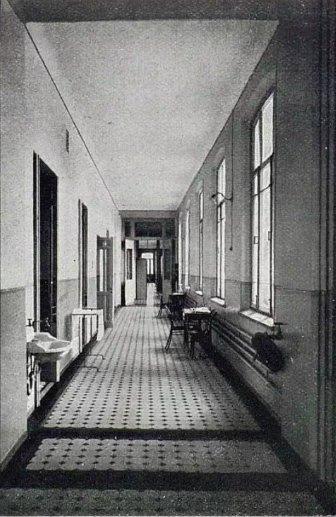
Коревое отделение, рассчитанное на 22 кровати, было открыто в 1905 году. Как и в других корпусах Морозовской детской больницы, все помещения для больных имели покрытие пола из дубового паркета и окрашенные масляной и клеевой красками стены. Высота помещений была от 3,5 до 4,5 метров. Корпус Коревого отделения был оборудован центральным пароводяным отоплением и имел электрическое освещение.
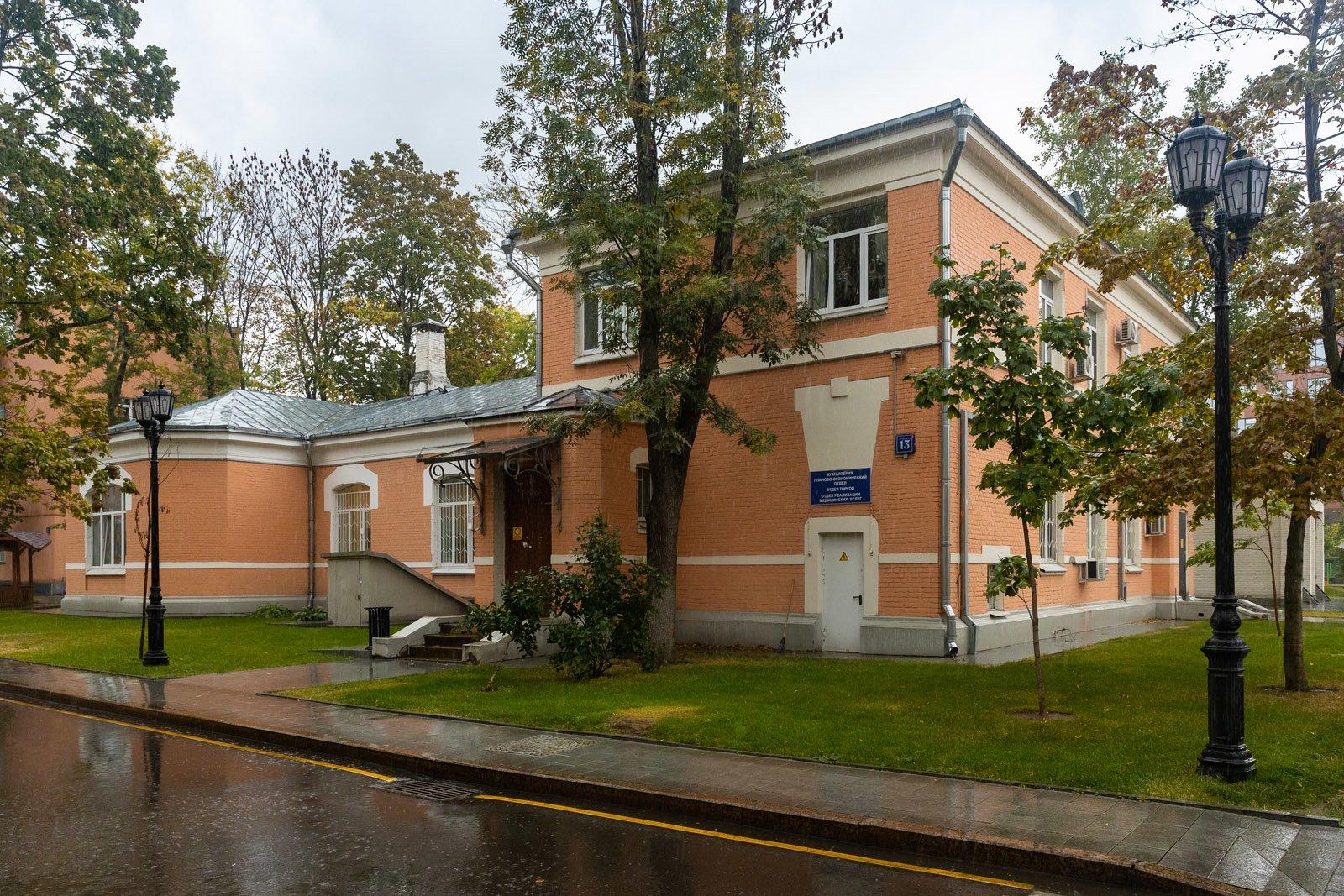
Здание не было надстроено в советское время и хорошо сохранило как объемно-пространственную композицию, так и декорацию главного и заднего фасадов. Белокаменные наличники окон контрастно выделяются на фоне краснокирпичных стен. Сохранилась расширяющаяся кверху белокаменная доска над входом в левой части главного фасада. Огромное окно в ризалите в правой части фасада в советские годы стало частью входного проема, что не изменило общего восприятия памятника архитектуры начала ХХ столетия.
Константин Михайлов
Автор статьи
Корпус Коревого отделения был построен в 1903–1904 годах по проекту архитектора И.А.Иванова-Шица в стиле модерн. Как и прочие больничные корпуса, он был возведен из красного кирпича, фасады отделаны белокаменными деталями.
Небольшое асимметричное здание имело двухэтажную левую часть (второй этаж предназначался для больничного персонала). В правой части фасада, отмеченной большим широким окном, имелся ризалит со скошенными углами. Объемно-пространственная композиция здания имеет много общего с рядом других корпусов Морозовской детской больницы – двумя Острозаразными отделениями, а также Дифтеритным корпусом. Фасад практически полностью повторяет (в зеркальном отражении) фасад одного из Острозаразных отделений (современный корпус № 13).
В левой части фасада Коревого отделения были устроены входы в здание – парадный, имевший небольшой входной тамбур, и вспомогательный. Центр фасада украшают окна большого размера, прекрасно освещавшие внутренние помещения. На противоположном фасаде интересен ризалит в левой части здания, с четким рядом трех узких вертикальных окон. Здание Коревого отделения было поставлено на невысокий цокольный этаж. Завершали его две высокие дымовые трубы.
Коревое отделение, рассчитанное на 22 кровати, было открыто в 1905 году. Как и в других корпусах Морозовской детской больницы, все помещения для больных имели покрытие пола из дубового паркета и окрашенные масляной и клеевой красками стены. Высота помещений была от 3,5 до 4,5 метров. Корпус Коревого отделения был оборудован центральным пароводяным отоплением и имел электрическое освещение.
Здание не было надстроено в советское время и хорошо сохранило как объемно-пространственную композицию, так и декорацию главного и заднего фасадов. Белокаменные наличники окон контрастно выделяются на фоне краснокирпичных стен. Сохранилась расширяющаяся кверху белокаменная доска над входом в левой части главного фасада. Огромное окно в ризалите в правой части фасада в советские годы стало частью входного проема, что не изменило общего восприятия памятника архитектуры начала ХХ столетия.
Константин Михайлов
Автор статьи
The Measles Department is located in the central row of the Morozovskaya Hospital buildings, behind the Outpatient and Ambiguous Diagnoses Departments. Further down the row, there is the Highly Contagious Disease Department.
The Measles Department building was constructed in 1903–1904 to the Art Nouveau design by architect I.A.Ivanov Schitz. Like other Hospital's buildings it was made of red brick and decorated with whitewashed elements.
The small asymmetrical building had two storeys in its left side part (the first floor was intended for the medical personnel). The right side part of the facade with a large window was accentuated with a chamfered angled avant corps. This building's mass and layout have a lot in common with other buildings of the Morozovskaya Hospital compound: two Highly Contagious Disease Departments and the Diphtheria Department. Its facade almost mirrors the facade of one of the Highly Contagious Disease Departments (now building No. 13).
There were two entrances at the left end of the Measles Department's facade: the main with a small wind porch and the auxiliary. The middle part of the facade has large windows ensuring the interior rooms are well lit. The left part of the opposite side facade has an unusual avant corps with a row of three narrow vertical windows. The Measles Department building is resting on a low semi basement. It is topped with two tall chimneys.
The Measles Department with the 22 bed capacity was opened in 1905. Like other buildings of the Morozovskaya Hospital, all the rooms for patients had oakwood parquet floors and walls painted with oil and distemper paint. The rooms were 3.5 to 4.5 m high. The Measles Department had centralized steam water heating and electricity.
The building was not extended in the Soviet times and has preserved its mass and layout as well as the decor of the main and the back facades. Whitewashed lintels of the windows stand out against the red brick walls. The whitewashed, widening upwards panel above the left side entrance at the main facade has survived. In the Soviet times, the huge window in the right side avant corps was merged with an entry door which did not affect much the overall appearance of the architectural monument of the early 20th century.
Konstantin Mikhailov
The Measles Department building was constructed in 1903–1904 to the Art Nouveau design by architect I.A.Ivanov Schitz. Like other Hospital's buildings it was made of red brick and decorated with whitewashed elements.
The small asymmetrical building had two storeys in its left side part (the first floor was intended for the medical personnel). The right side part of the facade with a large window was accentuated with a chamfered angled avant corps. This building's mass and layout have a lot in common with other buildings of the Morozovskaya Hospital compound: two Highly Contagious Disease Departments and the Diphtheria Department. Its facade almost mirrors the facade of one of the Highly Contagious Disease Departments (now building No. 13).
There were two entrances at the left end of the Measles Department's facade: the main with a small wind porch and the auxiliary. The middle part of the facade has large windows ensuring the interior rooms are well lit. The left part of the opposite side facade has an unusual avant corps with a row of three narrow vertical windows. The Measles Department building is resting on a low semi basement. It is topped with two tall chimneys.
The Measles Department with the 22 bed capacity was opened in 1905. Like other buildings of the Morozovskaya Hospital, all the rooms for patients had oakwood parquet floors and walls painted with oil and distemper paint. The rooms were 3.5 to 4.5 m high. The Measles Department had centralized steam water heating and electricity.
The building was not extended in the Soviet times and has preserved its mass and layout as well as the decor of the main and the back facades. Whitewashed lintels of the windows stand out against the red brick walls. The whitewashed, widening upwards panel above the left side entrance at the main facade has survived. In the Soviet times, the huge window in the right side avant corps was merged with an entry door which did not affect much the overall appearance of the architectural monument of the early 20th century.
Konstantin Mikhailov




.jpg&w=1920&q=75)
