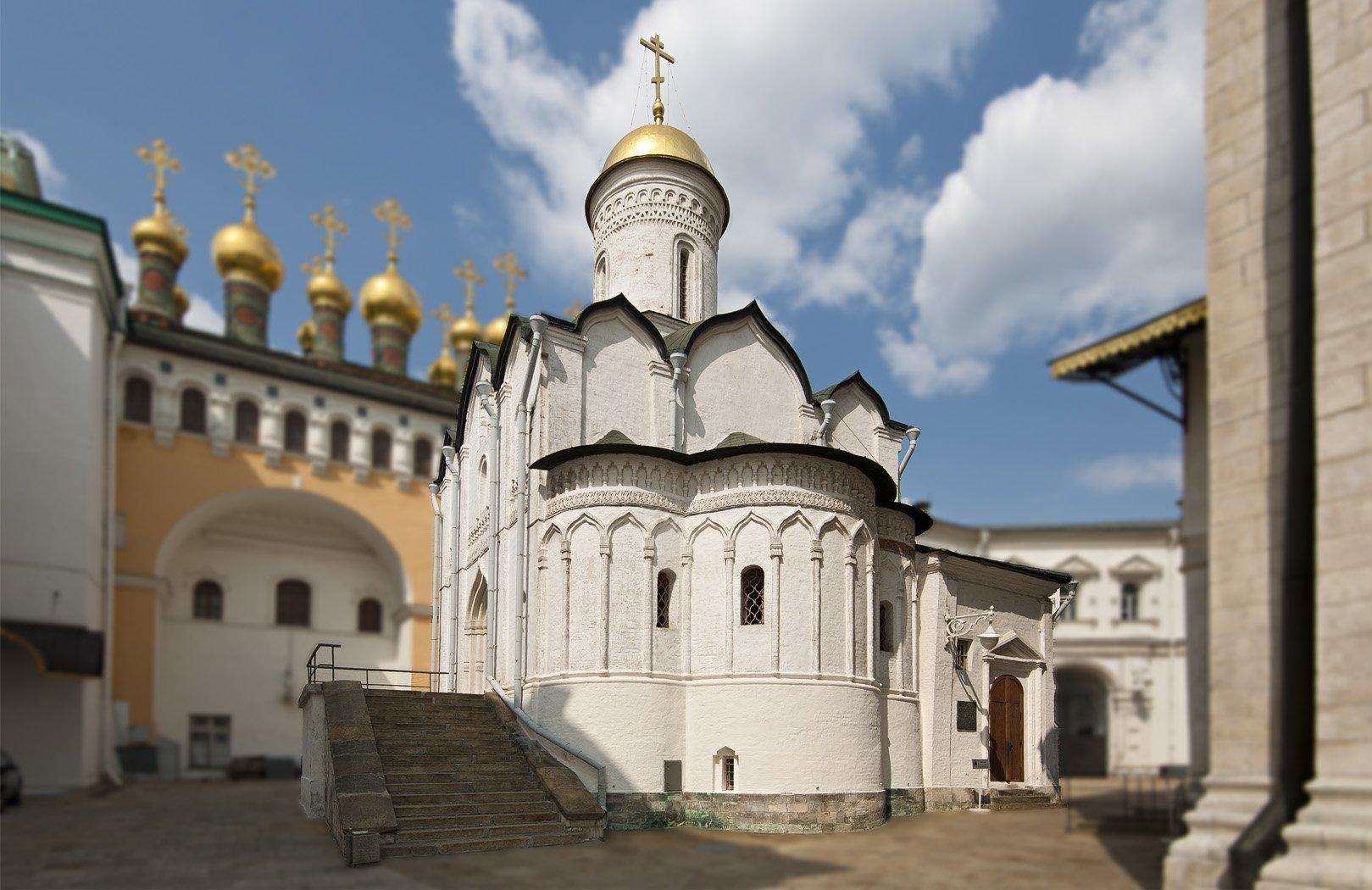
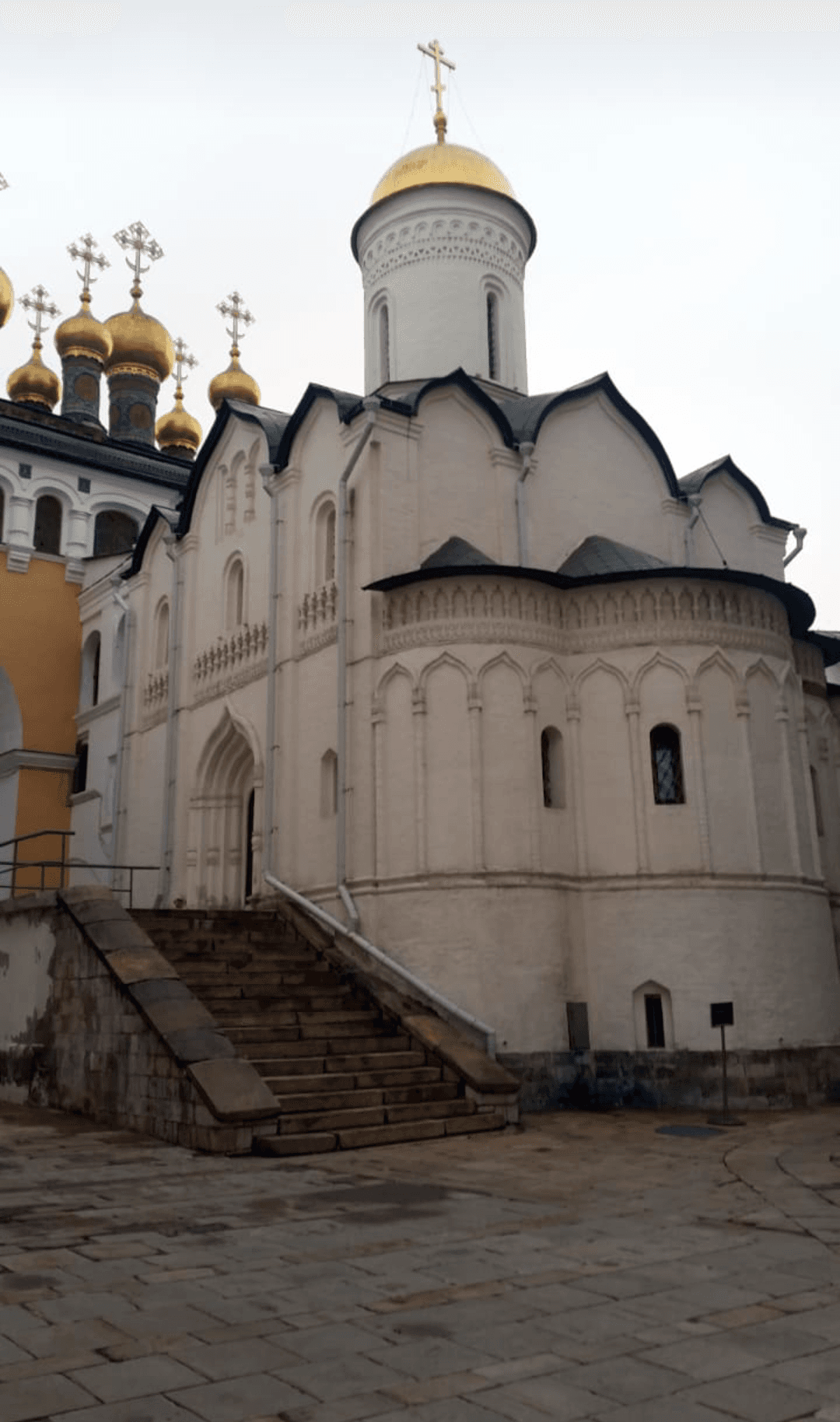
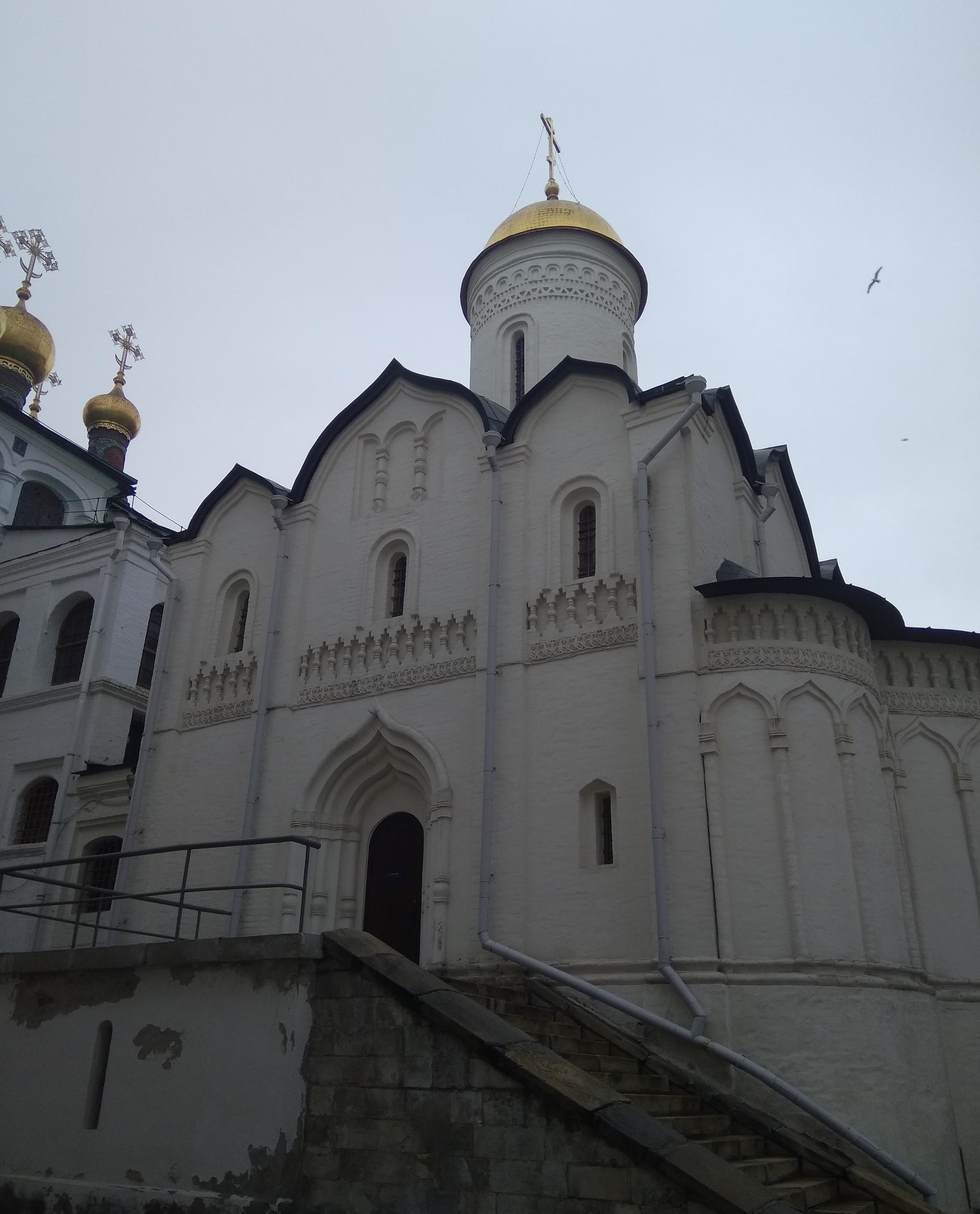
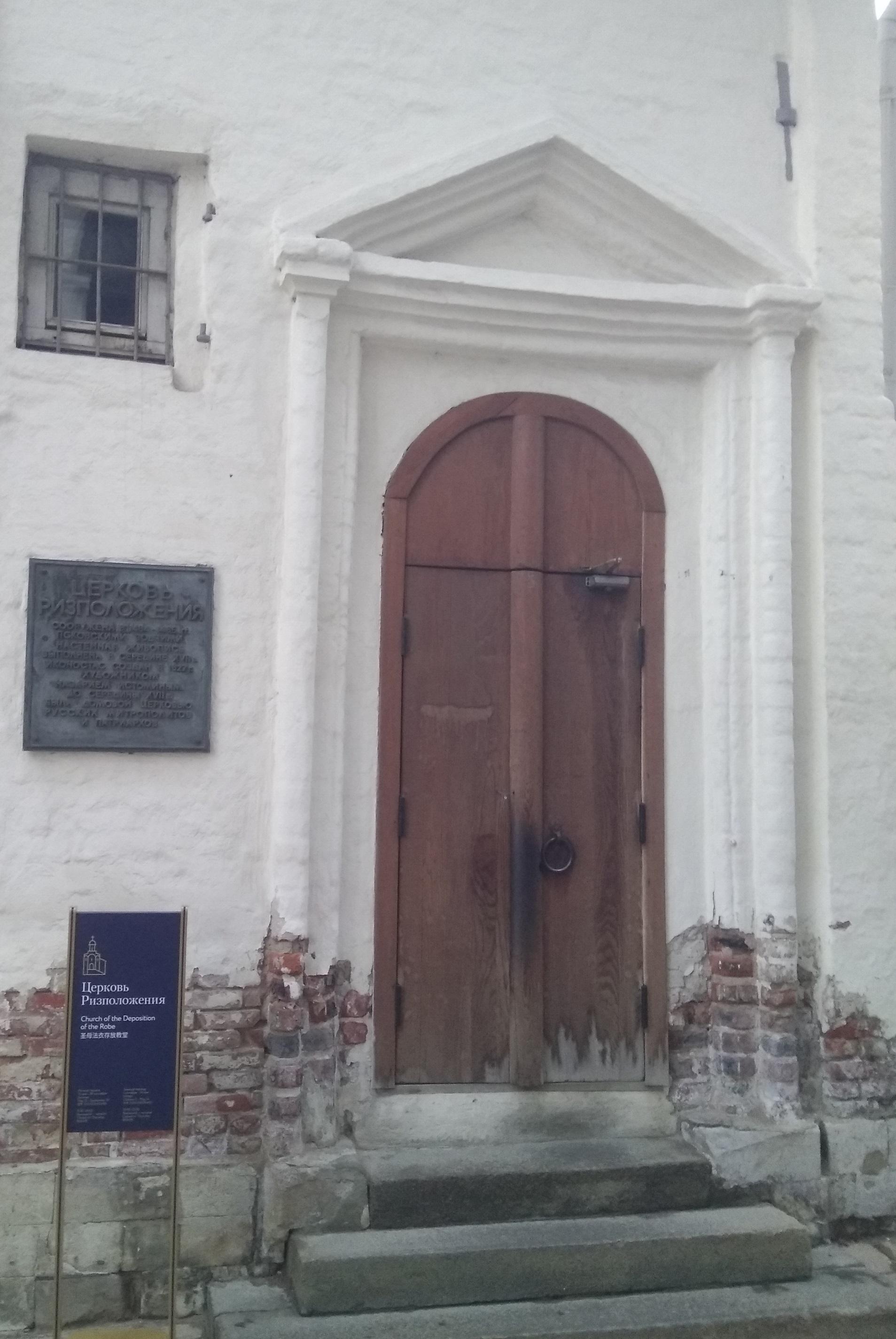
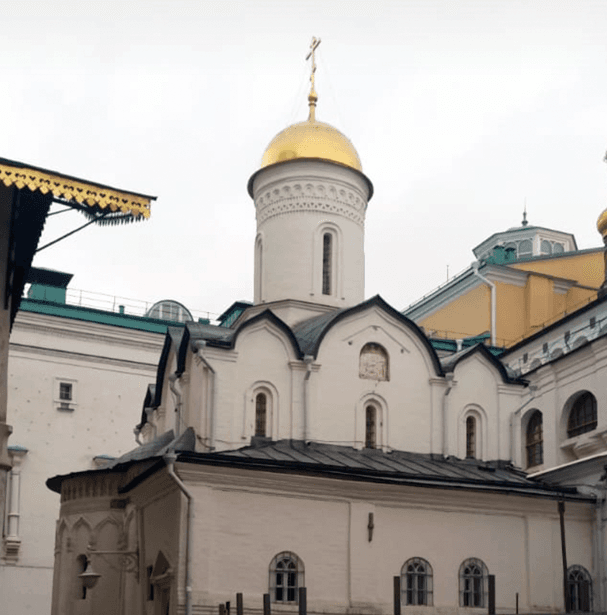
Основанный в XV столетии храм был назван в честь праздника Положения ризы Пресвятой Богородицы. В течение несколько веков он входил в комплекс митрополичьего двора и служил домовым храмом митрополитов и патриархов русских.
Иконостас и настенная живопись небольшого уютного храма составляют единый художественный ансамбль. На галерее храма размещена постоянная выставка русской деревянной скульптуры. Памятников этого вида искусства сохранилось немного, и каждый из них представляет большой интерес и ценность.
Текст и фотографии представлены историко-культурным музеем-заповедником «Московский Кремль»
The Church of Laying Our Lady's Holy Robe (or the Church of the Deposition of the Robe) was built in 1484-1485 by Pskov's stone-layers. The name of the church is derived from the Byzantine church festival dating from the Vth century AD. According to the legend, the festival was set up in commemoration of transferring of Virgin Mary's Holy Robe from Palestine to Constantinople. Up to the mid XVII century it served as a home church of Metropolitans and later Moscow Patriarchs. In 1655 in the time of Patriarch Nikon, the church became the part of the Great Prince's Palace.
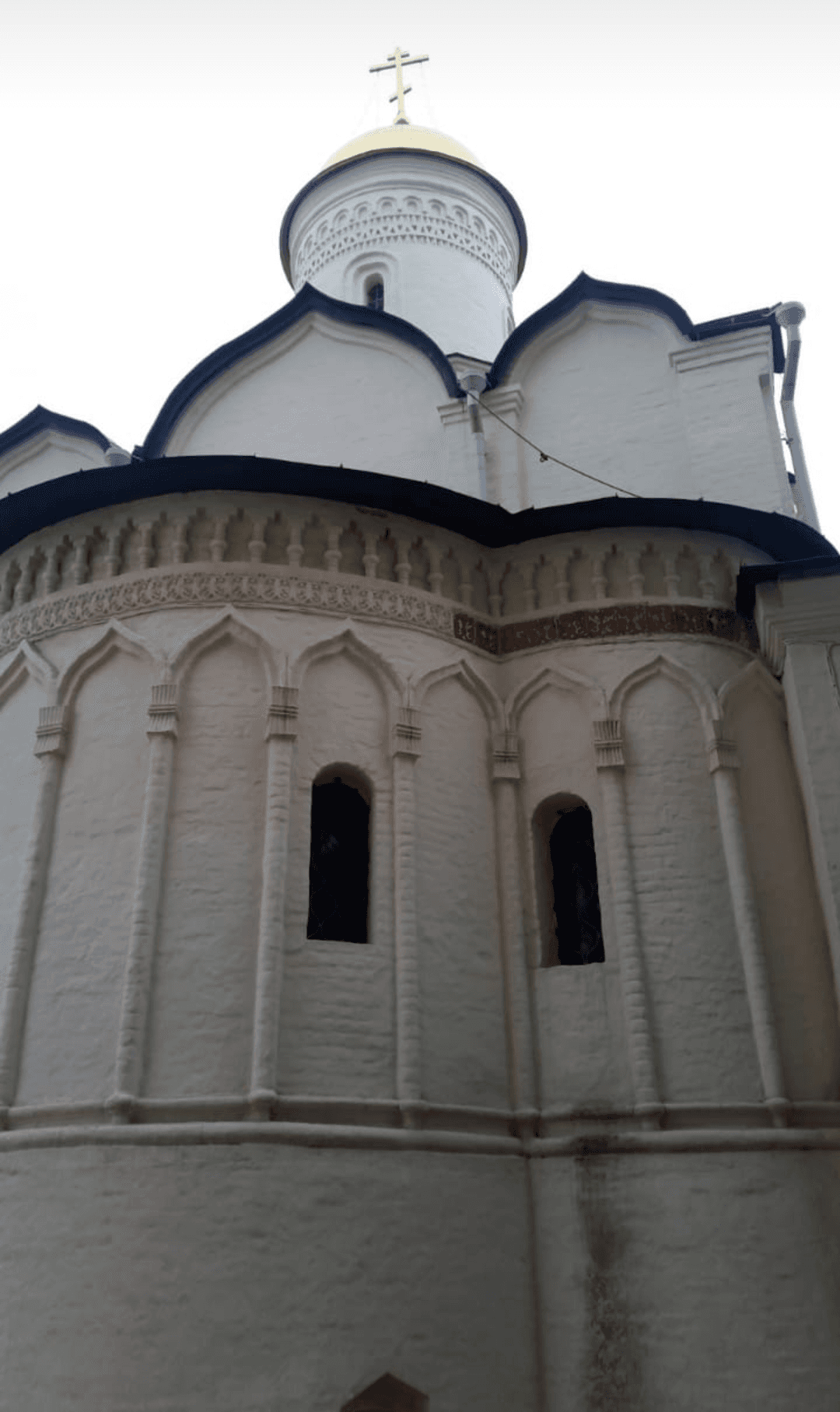
Architectural style and decor of the church are restrained but yet very delicate. The small one-domed brick church with three apses stands on a high basement. The main cube space's top is crowned with zakomaras. The walls are finished by four square pillars. The church's three facades are adorned with a frieze of terracotta balusters and ornamental plates. The apses are also zoned with such an ornamental frieze.
In the second half of the XVI century, the northern and western white-stone church's portals were replaced by brick ones, just like the portals of the Pokrovskiy Cathedral.
The Church's main icon (to the right of the King's gate) represents the ceremonial laying of the holy on the altar throne of the Court Emperor's Cathedral.
The four-tiered iconostasis of 1627 has been preserved almost intact. The major part of its icons were painted by tsar's icon-painter Nazary Istomin Savin. The iconostasis and murals are form the unique artistic ensemble. The scenes of the murals illustrate the life history of Virgin Mary and the solemn chant in honour of Our Lady — Acathistus. On the pillars, Russian Metropolitans and Moscow Princes are depicted. The interior is adorned with ancient items of cathedrals' decoration — the candelarium and so called «lean candles».