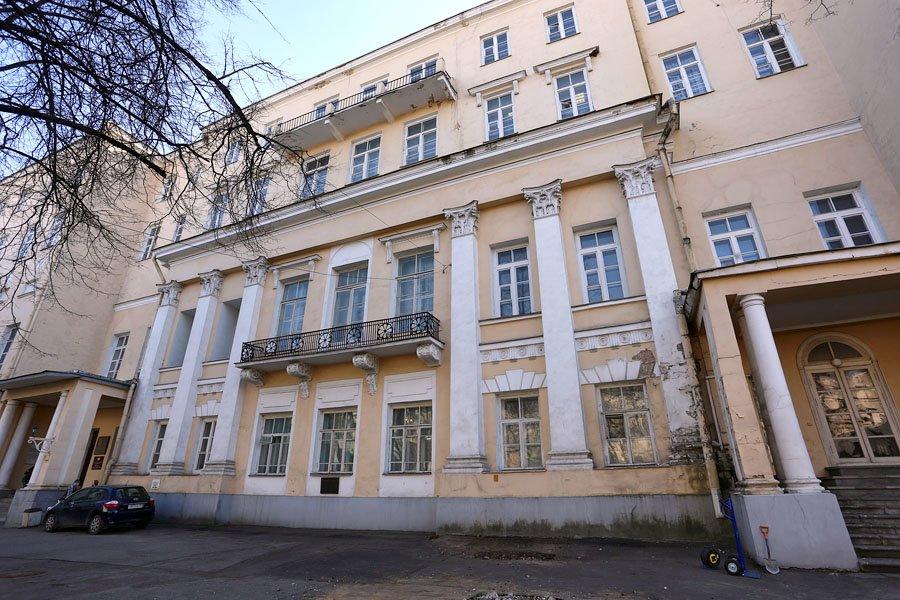
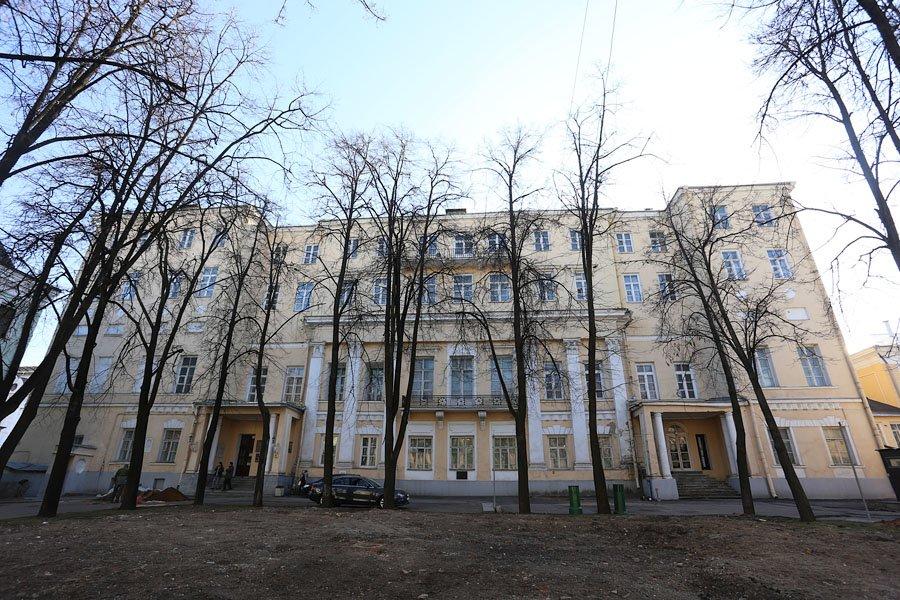
Старинная усадьба на Волхонке, с XVIII века принадлежавшая князьям Голицыным — свидетель многих культурных и исторических событий Первопрестольной. Её ансамбль состоит из главного дома, дворового флигеля и въездных ворот. Дом, построенный на переломе от барокко к классицизму, был возведен по проекту русского архитектора, работавшего по большей части в Санкт-Петербурге, Саввы Чевакинского, автора военно-морского собора в Санкт-Петербурге. Впоследствии здание неоднократно перестраивалось. Внушительные ворота, увенчанные княжеским гербом Голицыных — единственное, что дошло до наших дней в своём первоначальном виде.
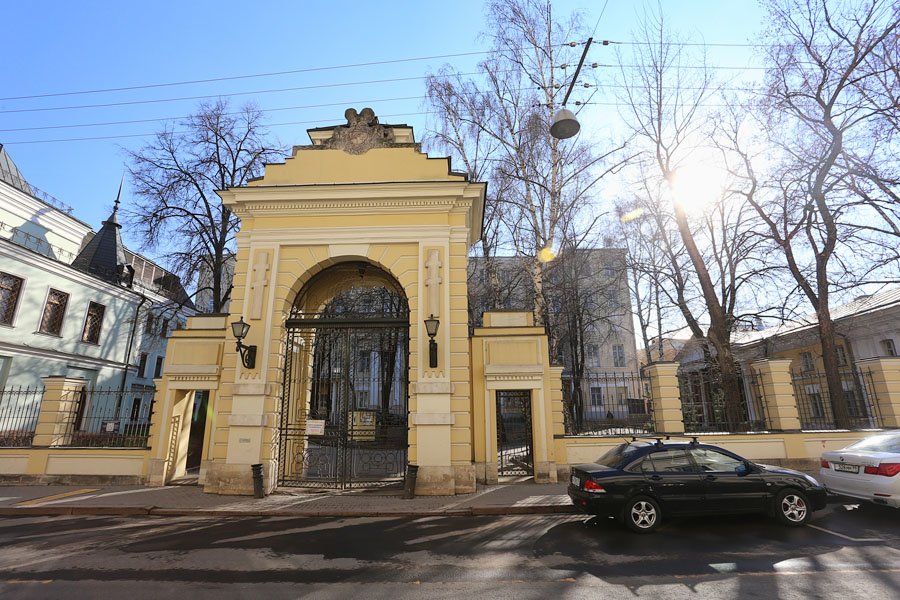
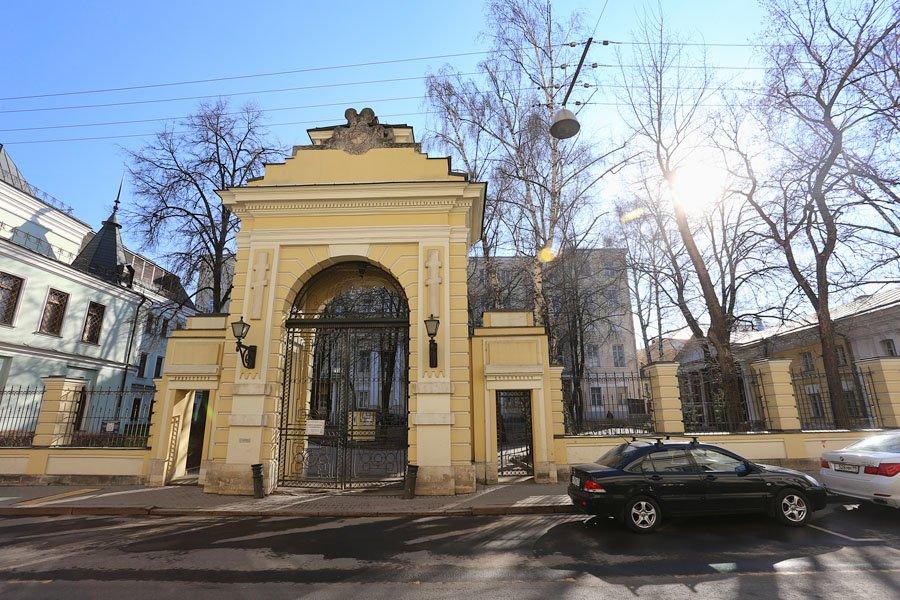
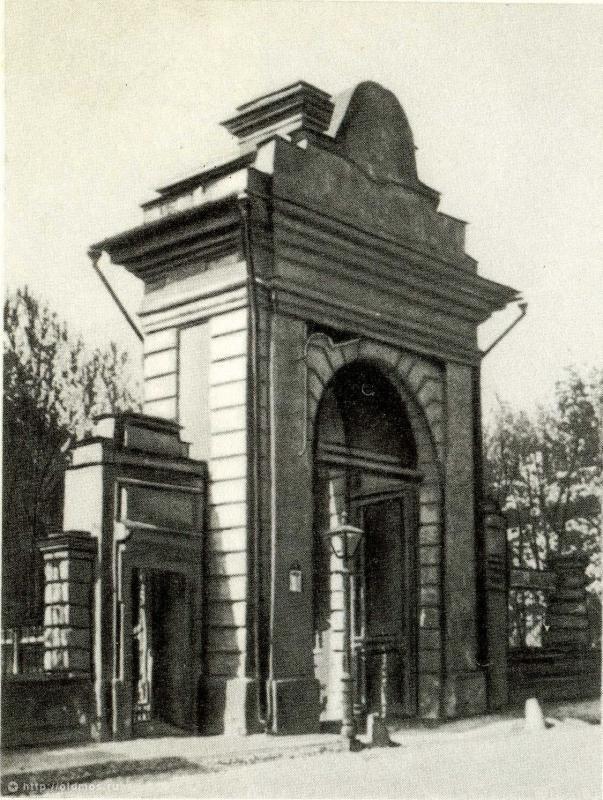
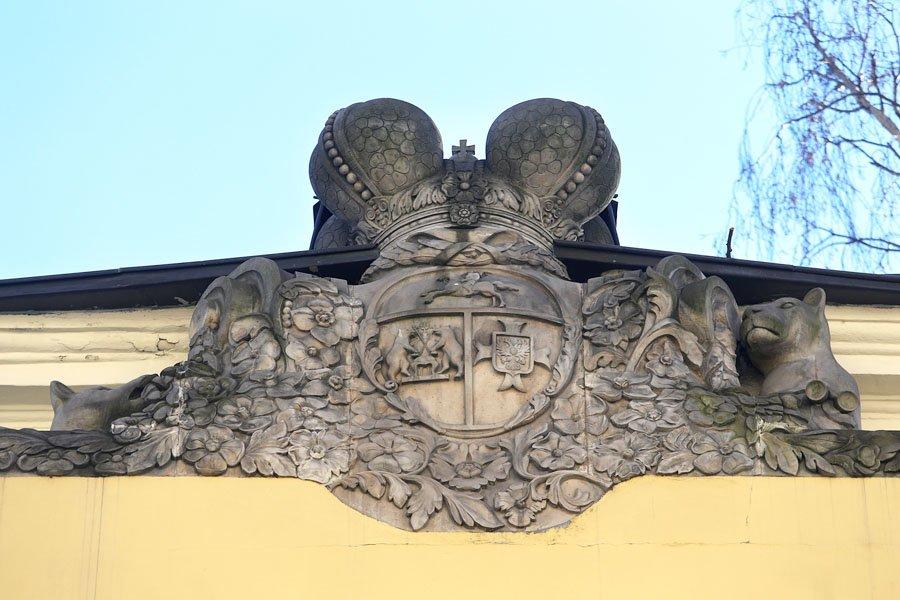
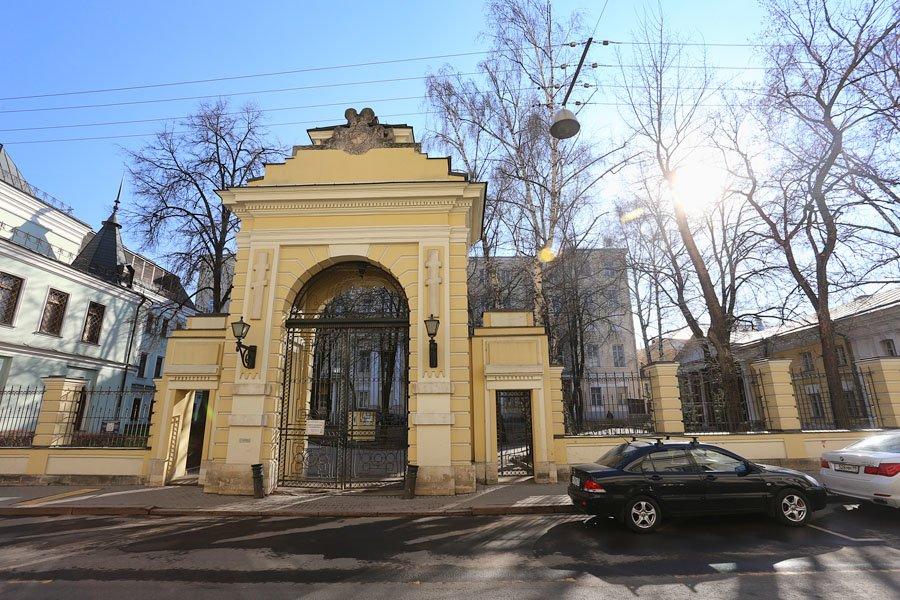
Купил владение М. М. Голицын (младший), президент Адмиралтейств-коллегии. (Этим, вероятно, и обусловлена связь между заказчиком усадьбы и Саввой Чевачинским, активно сотрудничавшим с Адмиралтейским ведомством.) Ко времени покупки участка на нем стоял большой сенной шалаш, построенный на месте каменных палат, показанных еще на так называемом «Петровом чертеже» конца XVI века. Шалаш этот снесли, а при строительстве дома Голицына, возможно, была использована часть стен древних палат. В нетронутом виде до наших дней дошли ворота. Два их пилона, соединенные плавной аркой, обработаны рустованными лопатками и завершены многоступенчатым аттиком, где помещался каменный герб князей Голицыных. С двух сторон к ним примыкают каменные калитки с таким же, как у ворот, ступенчатым завершением. Ворота, как и фасад главного дома, обращены в переулок.
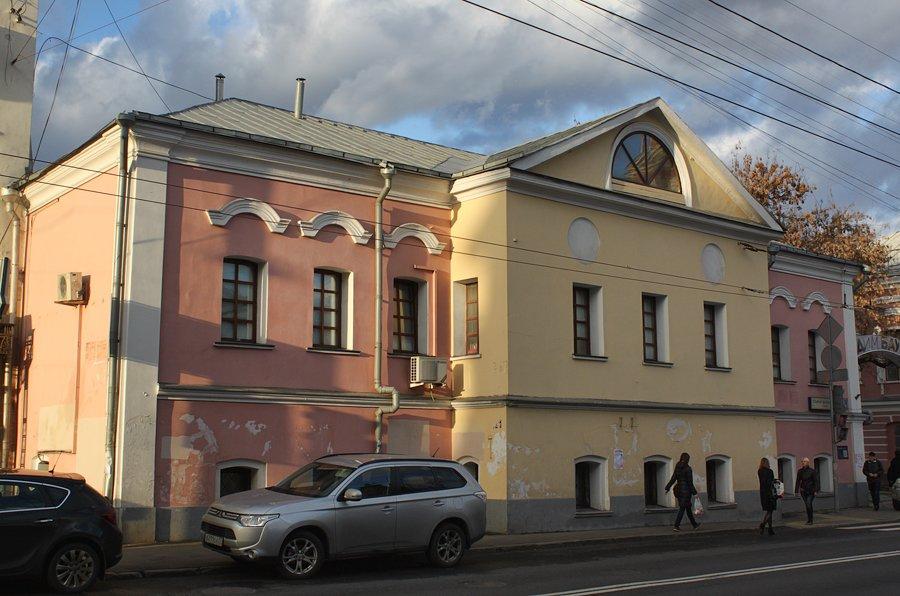
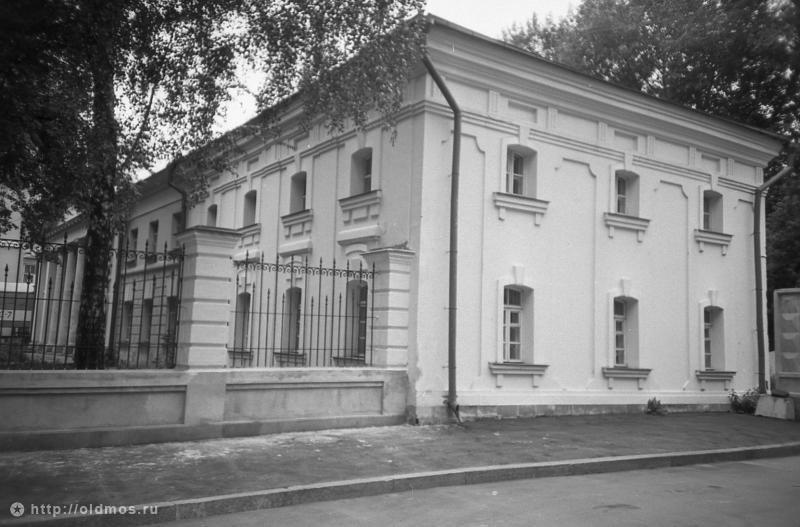
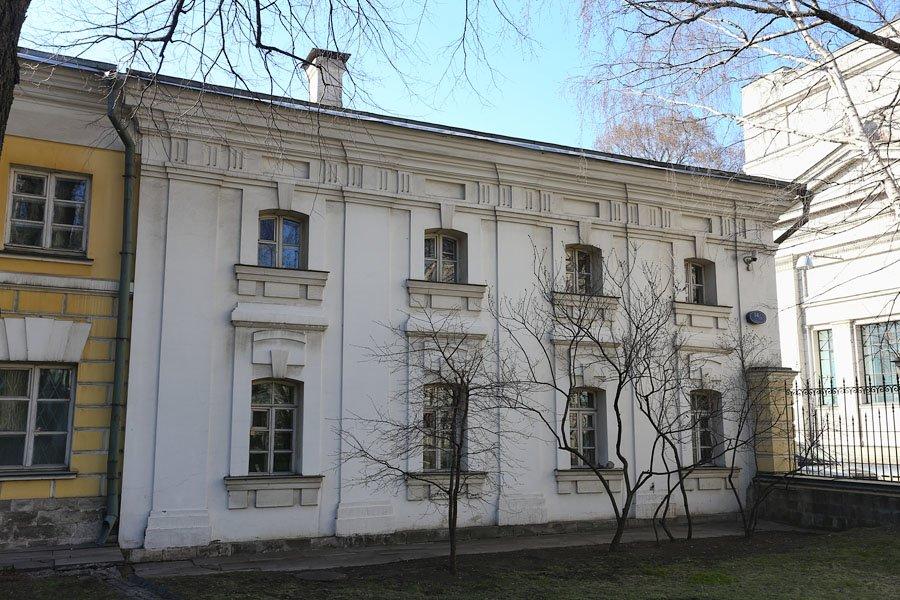
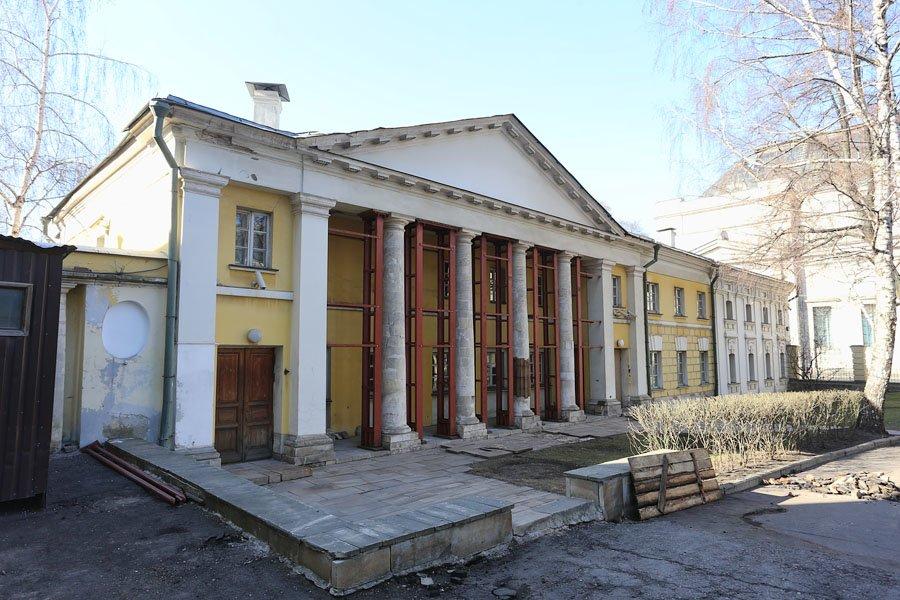
Усадьба была обращена в переулок, куда и сейчас выходят массивные ворота. План усадьбы был характерен для первой половины XVIII века: в глубине ее находился дом, отделенный от красной линии парадным двором — курдонером с цветником в середине, по обеим сторонам дома стояли флигеля. Вся усадьба окружалась забором. Сначала забор был глухим, каменным, только в конце XIX века его оставшуюся часть заменили кованой решеткой между рустованными столбами. Первый этаж правого флигеля сохранил на торцевом фасаде, выходящем в переулок, декоративную барочную обработку в виде филенок, в которые и помещены окна. Фасад же, обращенный к главному дому, в 70-х годах XVIII века полностью переделан М. Ф. Казаковым. От левого флигеля осталась лишь небольшая двухэтажная часть, и то сильно перестроенная во второй половине XIX века.
Главный же дом в середине XVIII столетия представлял собой двухэтажный массивный объем с ризалитами, равно-денными как с главного, так и с дворового фасада, по-видимому, с одинаково декорированными сложной формы наличниками окон и, возможно, филенками. Но в таком виде дом прожил недолго — примерно лет 13.После смерти владельца усадьба перешла к его сыну, тоже Михаилу Голицыну. С этим владельцам связано пребывание в доме императрицы Екатерины II.
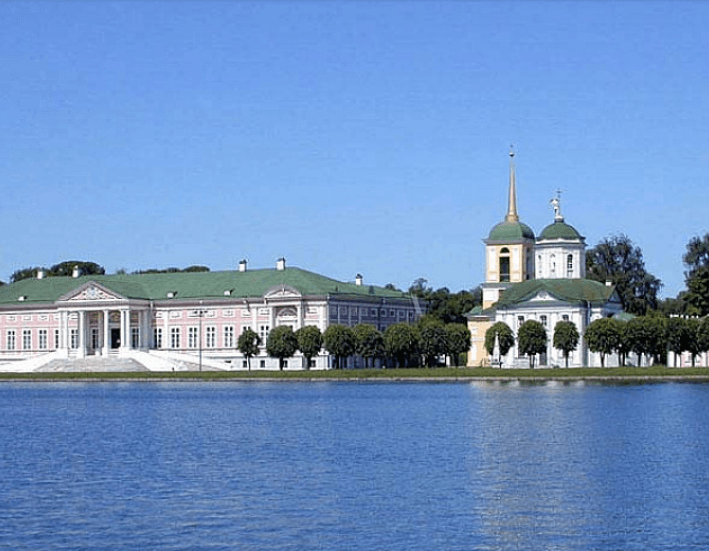
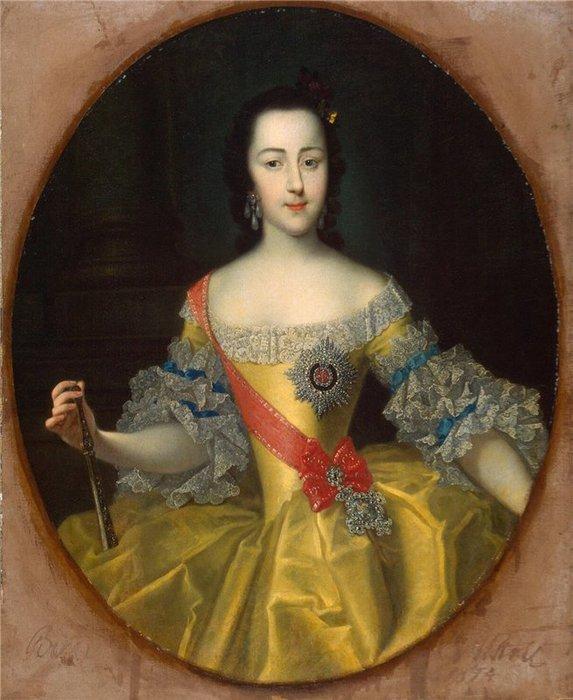
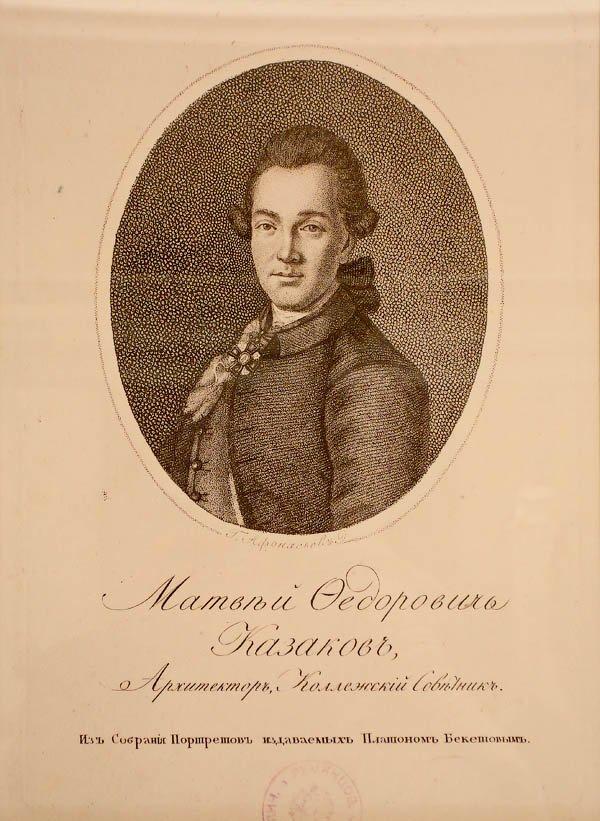
Заключив Кючук-Кайнарджийский мир с Турцией, Екатерина II собиралась на торжественные празднества в Москву. Помня о бытовых неудобствах Кремля и у не желая останавливаться в нем, 6 августа 1774 года она обратилась в письме к М. М. Голицыну с вопросом: «…нету ли дома каменного или деревянного в городе, в котором бы я уместилась и к двору принадлежности можно было бы располагать около дома… или же… не можно ли где ни на есть построить на скорую руку деревянное (строение)». Естественно, М. М. Голицын предложил свой дом. Тогда же под руководством Матвея Казакова был сделан проект Пречистенского дворца, в который вошел дом Голицына, дом Долгорукова (№ 16) и обширная деревянная часть на месте нынешней автозаправки. Входящие в состав дворца дома были соединены переходами, а позади главного дома появился деревянный корпус с тронным и бальным залами, гостиная и церковь. Екатерина II пробыла в усадьбе почти год.
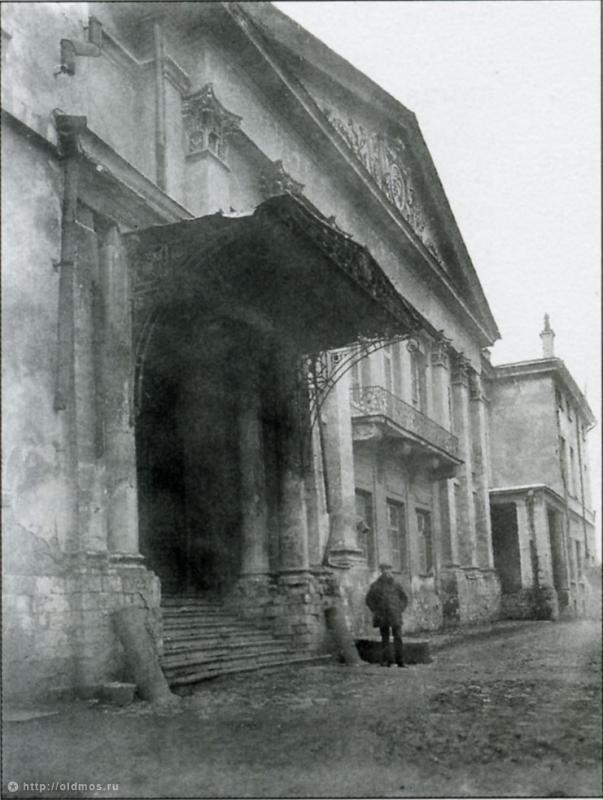
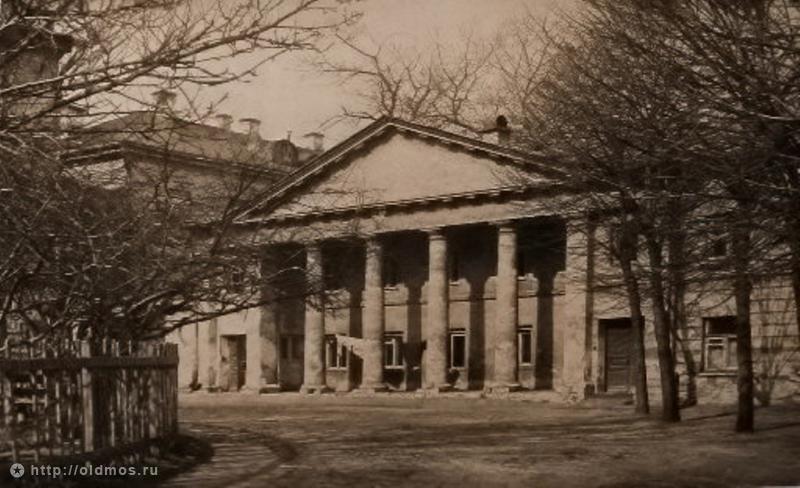
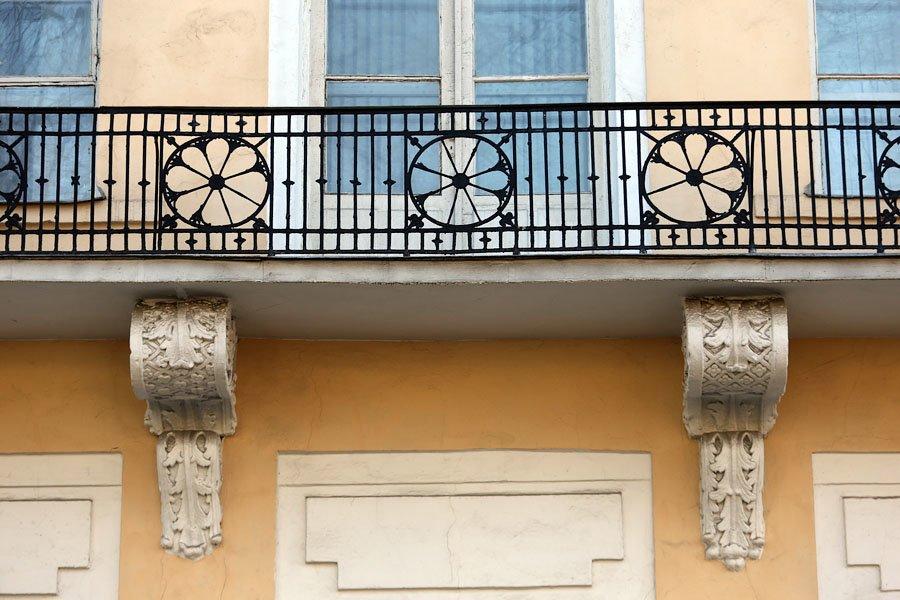
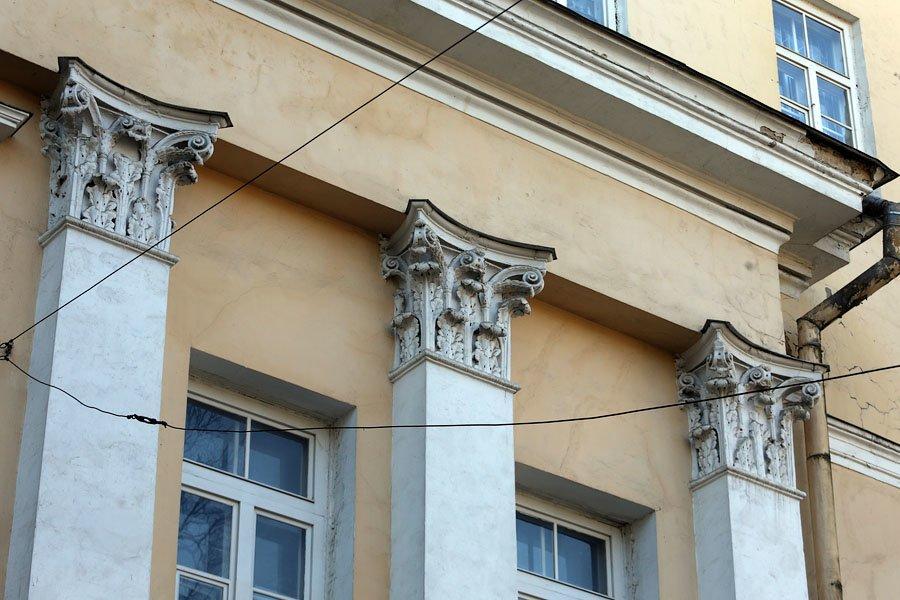
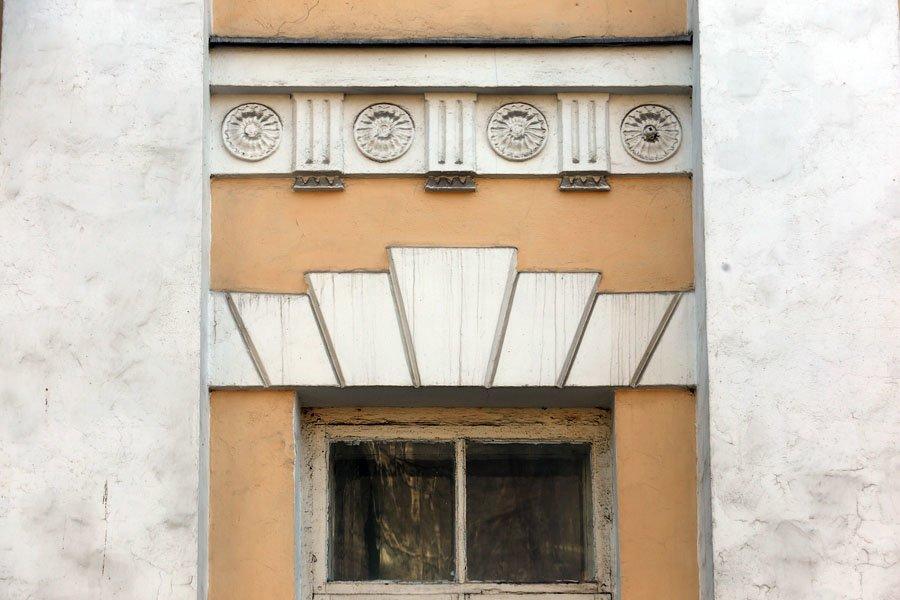
Что касается дома 14, то Казаков сохранил весь объем дома Голицына, расширив только в сторону Волхонки левый дворовый ризалит, и устроил в верхних этажах обоих ризалитов антресоли (окна их видны и сейчас). Представитель эпохи классицизма, М. Ф. Казаков наделил фасад дома его непременными чертами: в центре был выделен шестипилястровый портик торжественного коринфского ордера, завершенный плоским гладким фронтоном. В средней части портика ритм пилястр прерван: три высоких окна с полуциркульной аркой над средним окном второго, парадного, этажа и нарядные филенки над окнами первого этажа объединил широкий балкон. Его изящные парапеты с вписанными в круги цветками и сейчас украшают главный, восточный фасад дома. Более скромный балкон симметрично расположен на дворовом, западном фасаде. Таким образом была достигнута особая выразительность в архитектуре особняка. А оставшиеся от барочной постройки ризалиты оживляли объем дома, создавали богатую игру света и тени на фасаде.
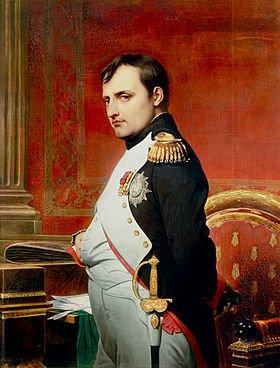
В 1812 году усадьба стала свидетелем войны с Наполеоном. Тогда здесь разместился штаб наполеоновского генерала Армана Луи де Коленкура, который до начала войны служил послом Франции в России. Он был лично знаком с Голицыным, а во время пожара именно благодаря его усилиям и усилиям слуг Голицына, оставшихся в доме, усадьбу и соседние здания удалось спасти от огня.
Стены дома повидали многих именитых людей. На роскошных балах, устраиваемых в усадьбе Голицыных, в своё время не раз появлялся и А. С. Пушкин. Поначалу он даже собирался обвенчаться с Натальей Гончаровой в домовой церкви князя Голицына, однако в итоге обряд венчания был устроен в приходской церкви невесты у Никитских ворот.
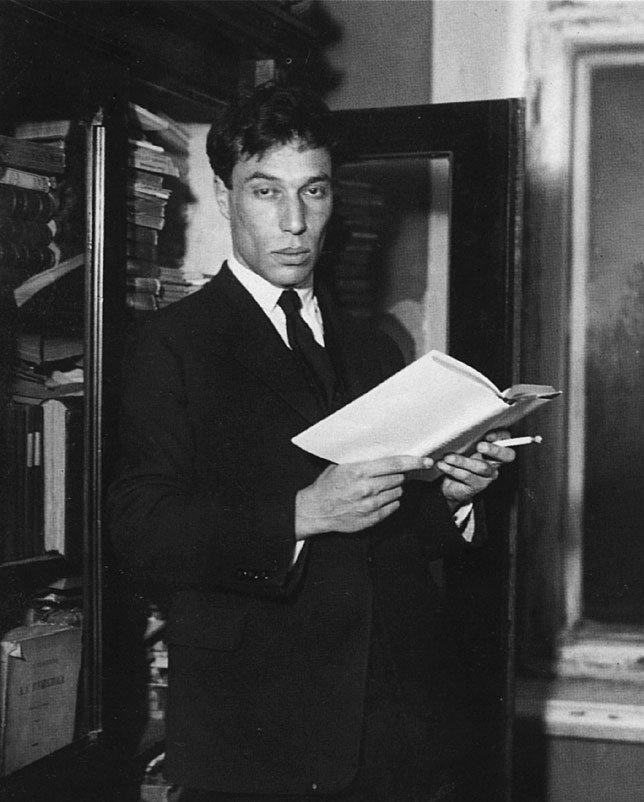
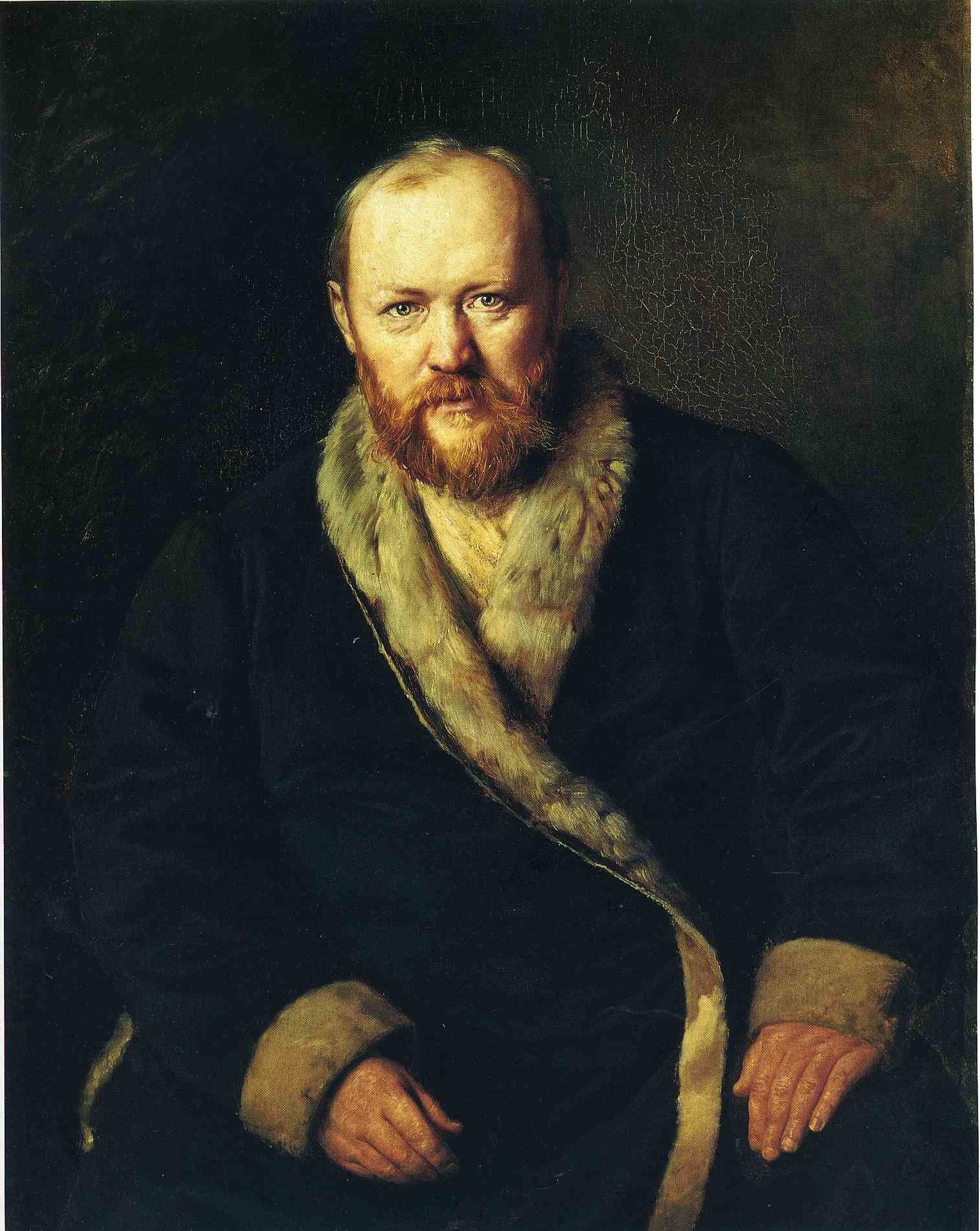
В конце XIX века левый флигель был переоборудован под меблированные комнаты и сдавался квартирантам, получив название «Княжий двор». Здесь жили А. Н. Островский, яркие представители ведущих социально-философских движений того времени — западничества и славянофильства — Б. Н. Чичерин и. С. Аксаков, подолгу останавливались в «Княжьем дворе» также В. И. Суриков, А. Н. Скрябин и. Е. Репин, а в 20-х годах XX века в одной из квартир поселился Б. Л. Пастернак.
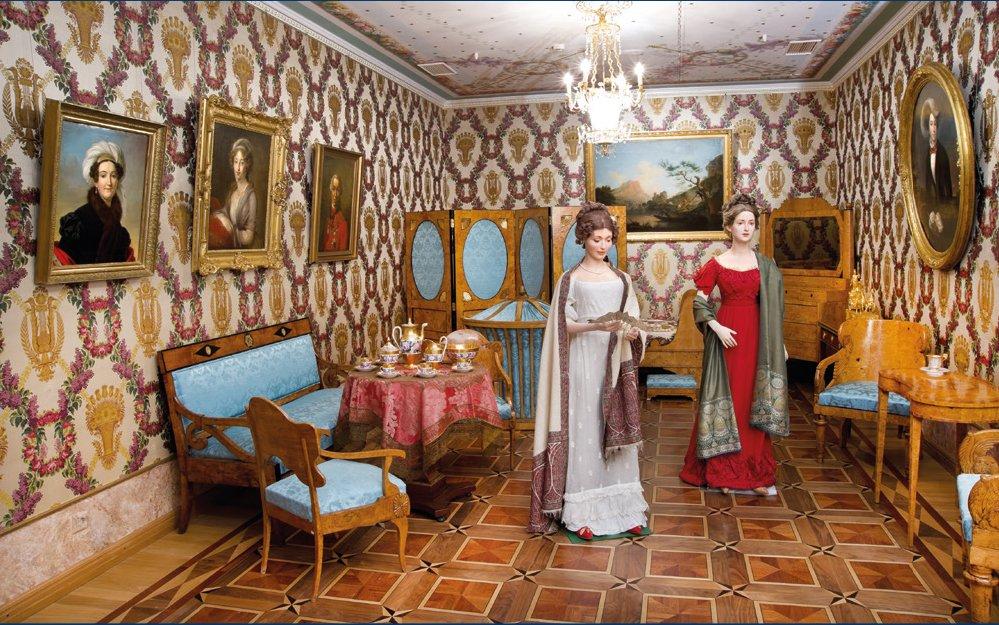
Голицыны из поколения в поколение собирали западную живопись, и часть знаменитого когда-то музея Голицынской больницы вошла в домашнее собрание князя Сергей Михайловича, которое затем пополнилось его племянником, дипломатом Михаилом Александровичем. Тогда в пяти парадных залах дома разместился бесплатный музей, где выставлялись редчайшие картины и книги. Однако вскоре новым владельцем дворца стал Сергей Михайлович (второй), который продал всю художественную часть коллекции петербургскому Эрмитажу.
Перейдя в ведение ГМИИ им. Пушкина в коне XX века, здание было реконструировано, сегодня здесь располагается выставочный корпус Галереи искусств стран Европы и Азии XIX — XX веков.
Old homestead on Volkhonka, belonged to Prince Golitsyn since the XVIII century witness the many cultural and historical events of the First-Throned City of Moscow. Its ensemble consists of a main house, yard wings and entrance gates. The house, built at the turn of the baroque to classicism, erected by the draft of Russian architect Sava Chevakinsky, worked mostly in St. Petersburg, and rebuilt by Matvei Kazakov.
Old homestead on Volkhonka, belonged to Prince Golitsyn since the XVIII century witness the many cultural and historical events of the First-Throned City of Moscow. Its ensemble consists of a main house, yard wings and entrance gates. The house, built at the turn of the baroque to classicism, erected by the draft of Russian architect Sava Chevakinsky, worked mostly in St. Petersburg. Subsequently, the building reconstructed several times. Imposing gates, crowned by coat of arms of the prince Golitsyn is the only thing that came to our days in its original form.
M. Golitsyn (Jr.), President of the Admiralty Board bought the property. (This probably is due and the relationship between the customer and the manor and Savva Chevachinsky. He cooperated actively with the Admiralty Office.) Large hay hut built on the site of the stone chambers, exposed on the so-called "Petrov drawing" at the end of the XVI century, was on the site by the time of purchase. This hut was demolished, ancient walls of the chambers may have been used in the construction of the Golitsyn’s house. gate survived till our times intact. Two of the pylon connected by the smooth arch processed rusticated blades and completed multistage attic, with the stone coat of arms of Prince Golitsyn. Small stone gates adjacent to the large gate on both sides have the same step completion as on the main gate. Gates and facade of the main house facing the alley.
The estate was turned towards an alley, where and are now entering a massive gate. The plan of the estate was typical for the first half of the XVIII century: in the depths of her house was separated from the red line of the front yard - kurdoner with flower bed in the middle, on both sides of the house were wings. The entire manor surrounded by a fence. First fence was deaf, stone, only in the end of XIX century it was replaced with the rest of the wrought-iron grille between the rusticated columns. The first floor of the right wing at the end kept the facade overlooking the alley, decorative Baroque treatment in the form of panels, where window and placed. Facade facing the main house completely redone MF Kazakov in the 70s’ of the XVIII century. Only a small part of the two-story left from the wing also thoroughly rebuilt in the second half of the XIX century.
The main house was a two-storey massive volume with risalits well-as-degenerate to the point, and from the courtyard façades, apparently, with equally complex shapes decorated window frames, and possibly panels in the middle of the XVIII century. The house lived as it is for a short time- about years 13. After the owner's death the estate passed to his son, also Mikhail Golitsyn. Empress Catherine II stayed in the house at that time.
Having concluded the Treaty of Kucuk Kaynardzhiysky peace with Turkey, Catherine II was going to Moscow for the solemn celebration. Bearing in mind the inconveniences of the Kremlin and not wanting to dwell in it, she addressed a letter to M. Golitsyn on August 6, 1774 with the question: "... if there is stone or wooden house in the city where I can stay? gone in to the yard and accessories could be placed around the house ... or not ... where can we build on is in a hurry wood (building)." Naturally, M.M. Golitsyn offered his house. At the same time project of Pretchistensky palace under the direction of Matvey Kazakov was prepared. It included Golitsyn’s house, Dolgorukov’s house (16) and extensive wooden part on the site of the present gas stations. Buildings included in the palace were connected by transitions, a wooden case with a throne and a ballroom halls, living room and a church were behind the main house. Catherine II stayed at the estate for almost a year.
As for the house 14, Kozakov kept the entire volume of the Golitsyn’s house, extending only left corner rizal towards Volkhonka, and arranged mezzanine (windows they can be seen today)in the upper floors of both rizals in the facade. The representative of the Classical period, MF Kazakov gave the facade of its indispensable features in the center was isolated six-pilaster grand Corinthian portico, completed with a smooth flat pediment. In the middle of the portico of pilasters rhythm interrupted: three tall windows with semicircular arch above the middle window of the second, front, floor and trim panels over the windows of the first floor together a wide balcony. His graceful parapets inscribed in a circle with flowers and now adorn the main, eastern facade of the house. More modest balcony symmetrically located on the yard, the western facade. Thus was achieved particular expression in the architecture of the mansion. The rest of the baroque buildings corbels enlivened volume of the house, creating a rich play of light and shadow on the facade.
In 1812, the estate has witnessed the war with Napoleon. Headquarters of Napoleon's generals Armand Louis de Caulaincourt, served as the Ambassador of France in Russia before the war, located here. He was personally acquainted with Golitsyn, and during the fire thanks to his efforts and those of the servants of Golitsyn, the house remain, the estate and neighboring buildings were saved from the fire.
The walls of the house have seen many famous people. Pushkin showed up at luxury balls, arranged in the Golitsyn’s estate. At first, he was even going to get married with Natalia Goncharova in the chapel of Prince Golitsyn, but in the end wedding ceremony organized in the parish church of the bride at Nikitsky Gate.
At the end of the XIX century left wing was converted to the rooming house and rented out to lodgers, called the "Princely Court". AN Ostrovsky and bright representatives of the leading social and philosophical movements of the time - Westernism and Slavophiles – BN Tchitcherin and S. Aksakov lived here. Vasily Surikov, Scriabin and. Repin stayed in "Princely Court" for a long time. Pasternak settled in one of the apartments in the 20-ies of XX century.
Golitsyns collected Western painting from generation to generation. A part of the famous Golitsyn Hospital museum entered the home collection of Prince Sergei Mikhailovich. It supplemented by his nephew - diplomat Mikhail Alexandrovich. Free museum where exhibited paintings and rare books located then in five staterooms of the house. Soon, however, the new owner of the palace was Sergei Mikhailovich (second), which sold the entire artistic collection of the St. Petersburg's Hermitage.
The building transferred to the jurisdiction of the Pushkin Museum in the XX century. The building was renovated and now here is the exhibition building of the Art Gallery of European and Asian art of the XIX - XX centuries.