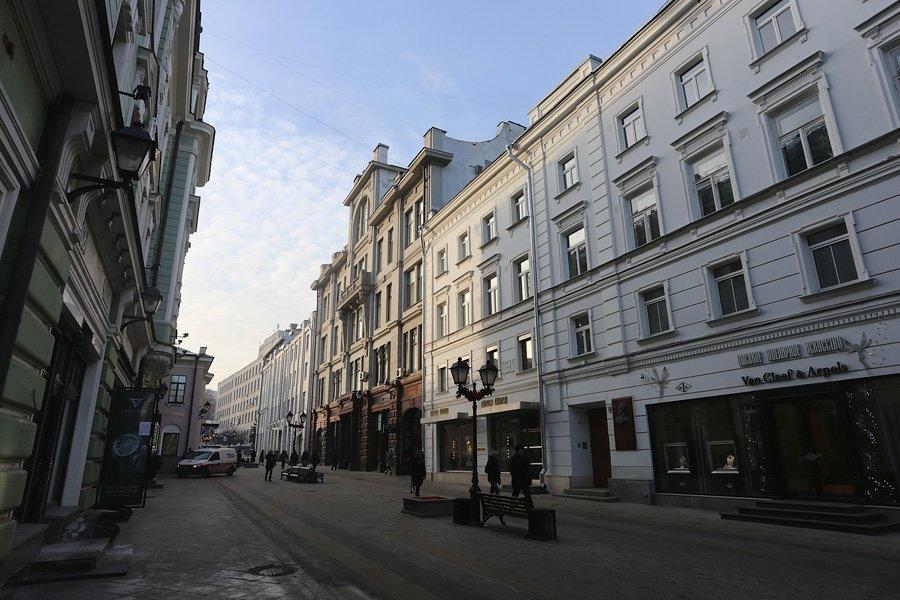
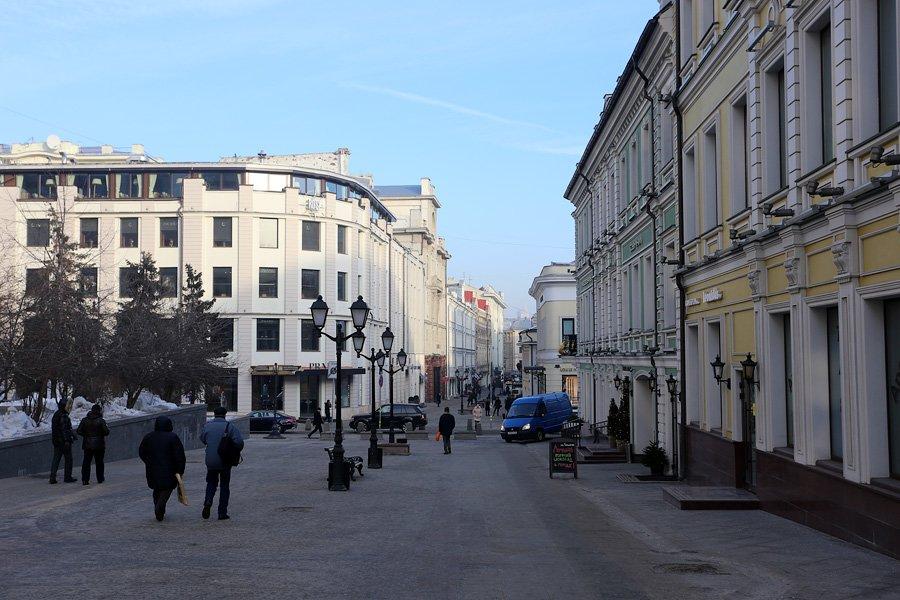
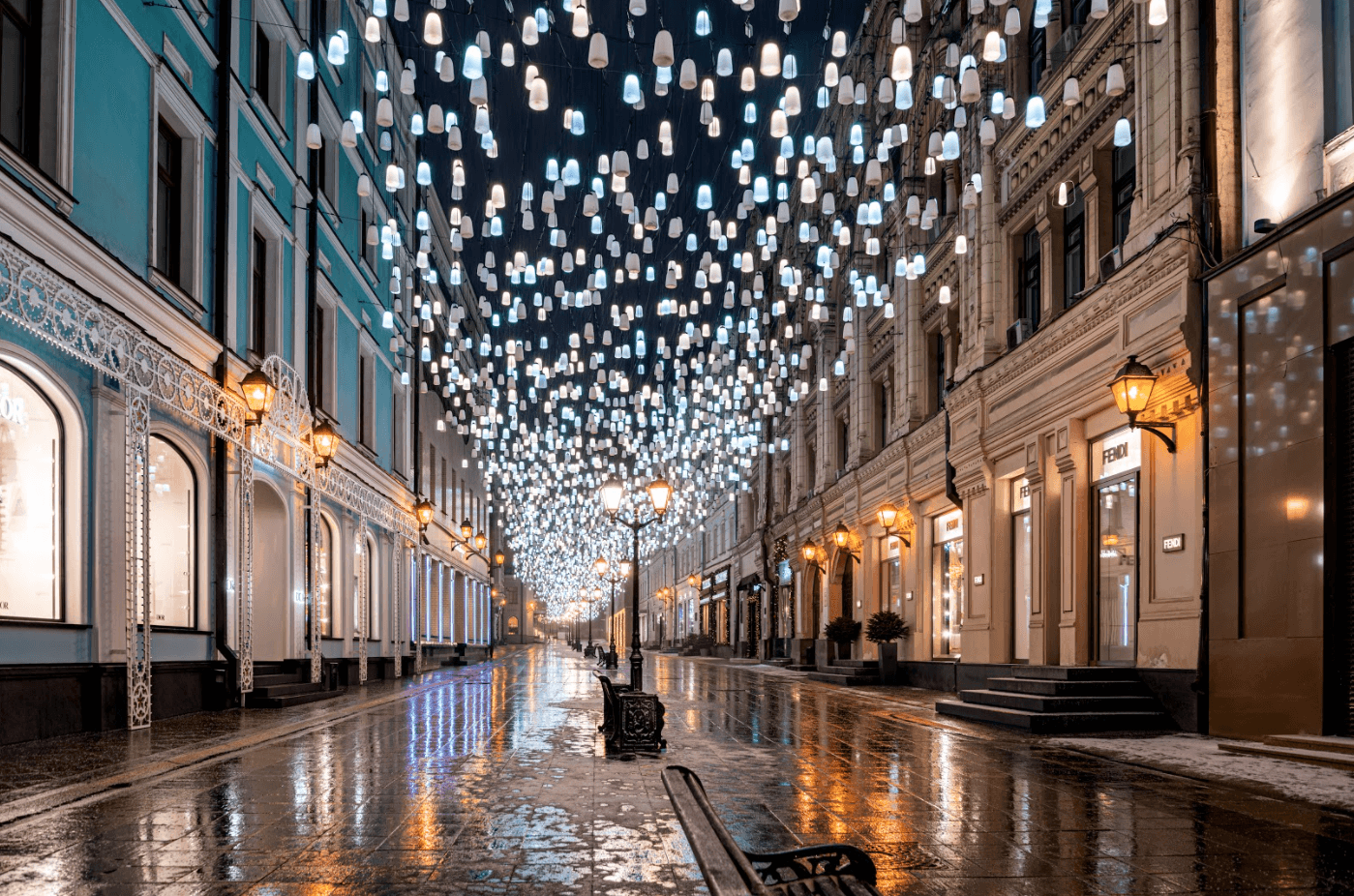
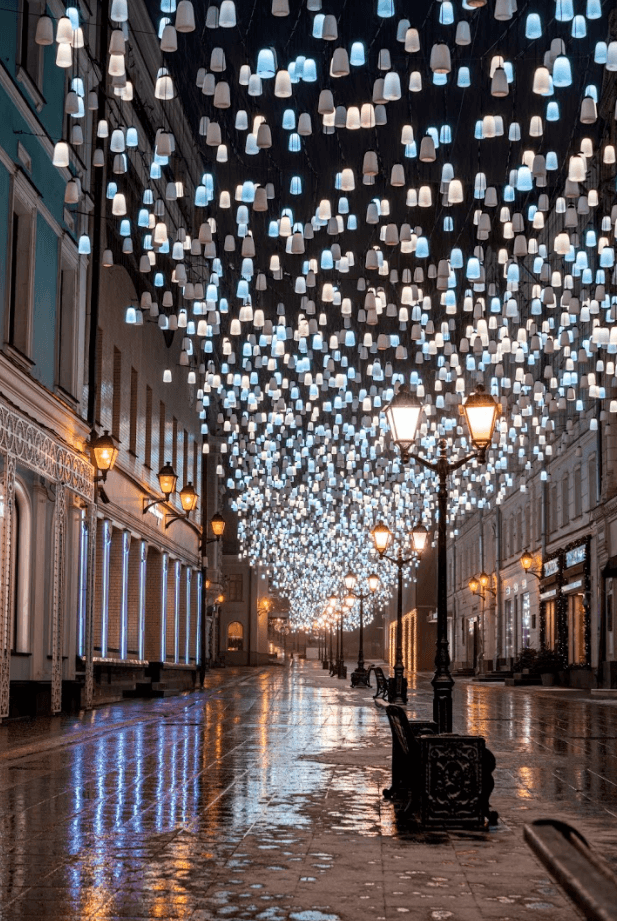
В старину между Большой Дмитровкой и Петровкой располагалась Рождественская улица, получившая своё название по храму Рождества Пресвятой Богородицы в Столешниках. Церковь эта располагалась на углу с Петровкой и известна с 1620 года. В 1657 году был выстроен каменный пятиглавый храм с шатровой колокольней, который с учётом последующих перестроек сохранился до начала ХХ века. Увы, в 1927 году церковь была совершенно бессмысленно уничтожена, а на её месте устроили площадку, главным образом, использовавшуюся в качестве автомобильной стоянки. В 1997 году на этом месте была установлена памятная Рождественская часовня.
В XVIII столетии здраво рассудив, что две Рождественские улицы, расположенные совсем рядом одна от другой, вносят путаницу в московскую топонимику, вспомнили о старинной слободе столешников, располагавшейся как раз возле Петровки. Столешники – ткачи, изготавливавшие скатерти для царского двора. И улица с «понижением статуса» была переименована в Столешников переулок.
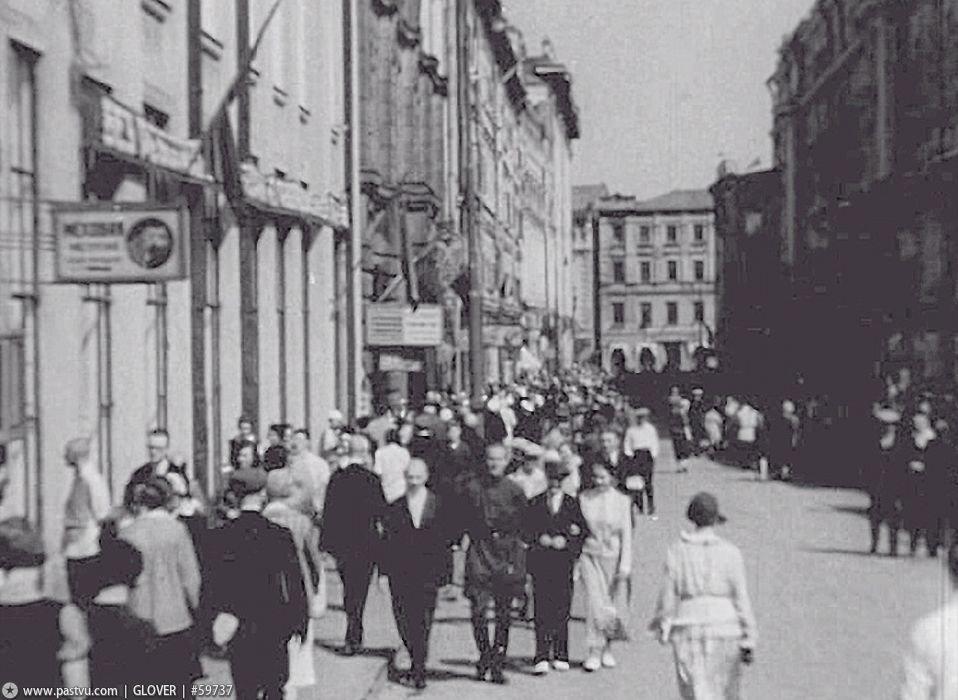
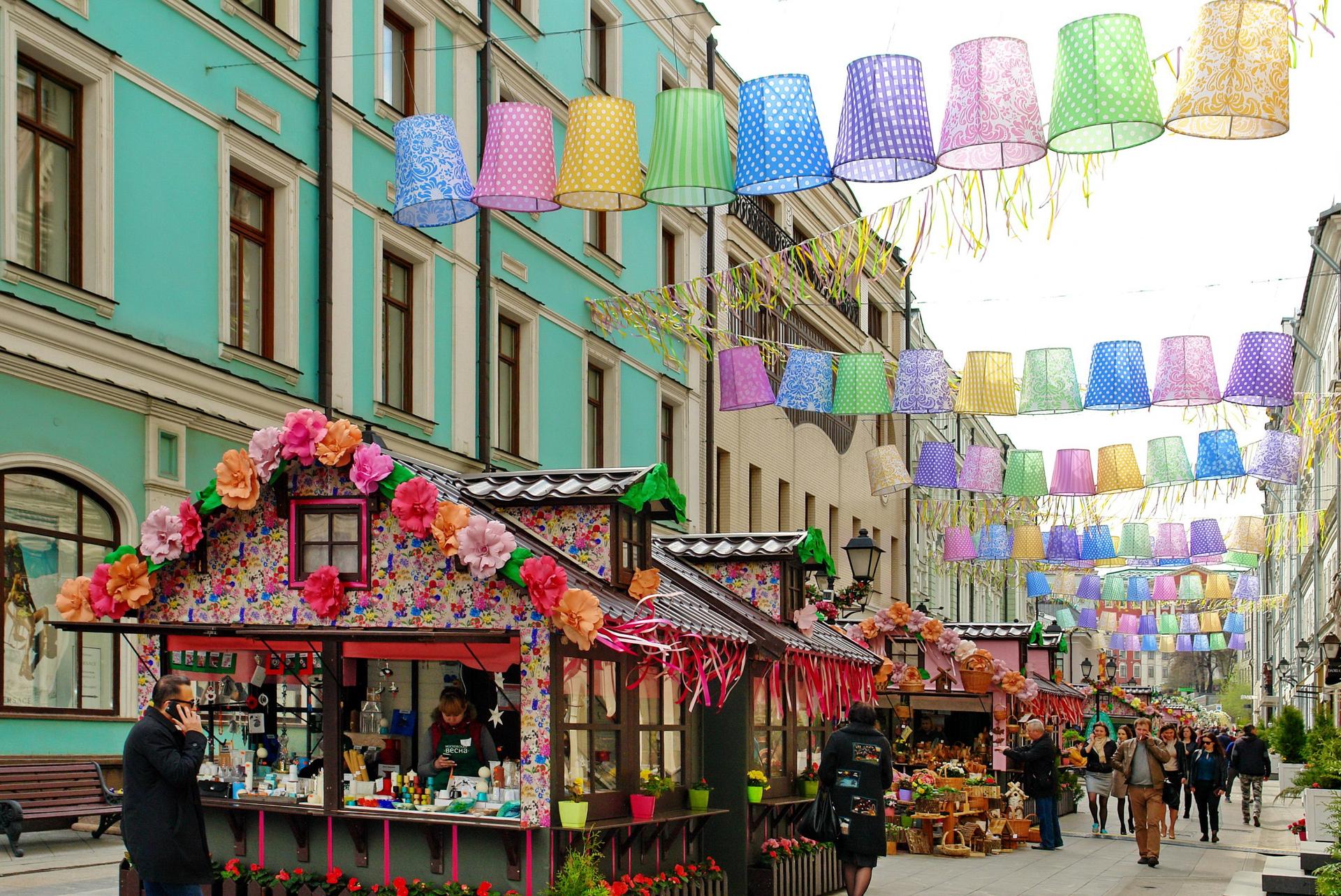
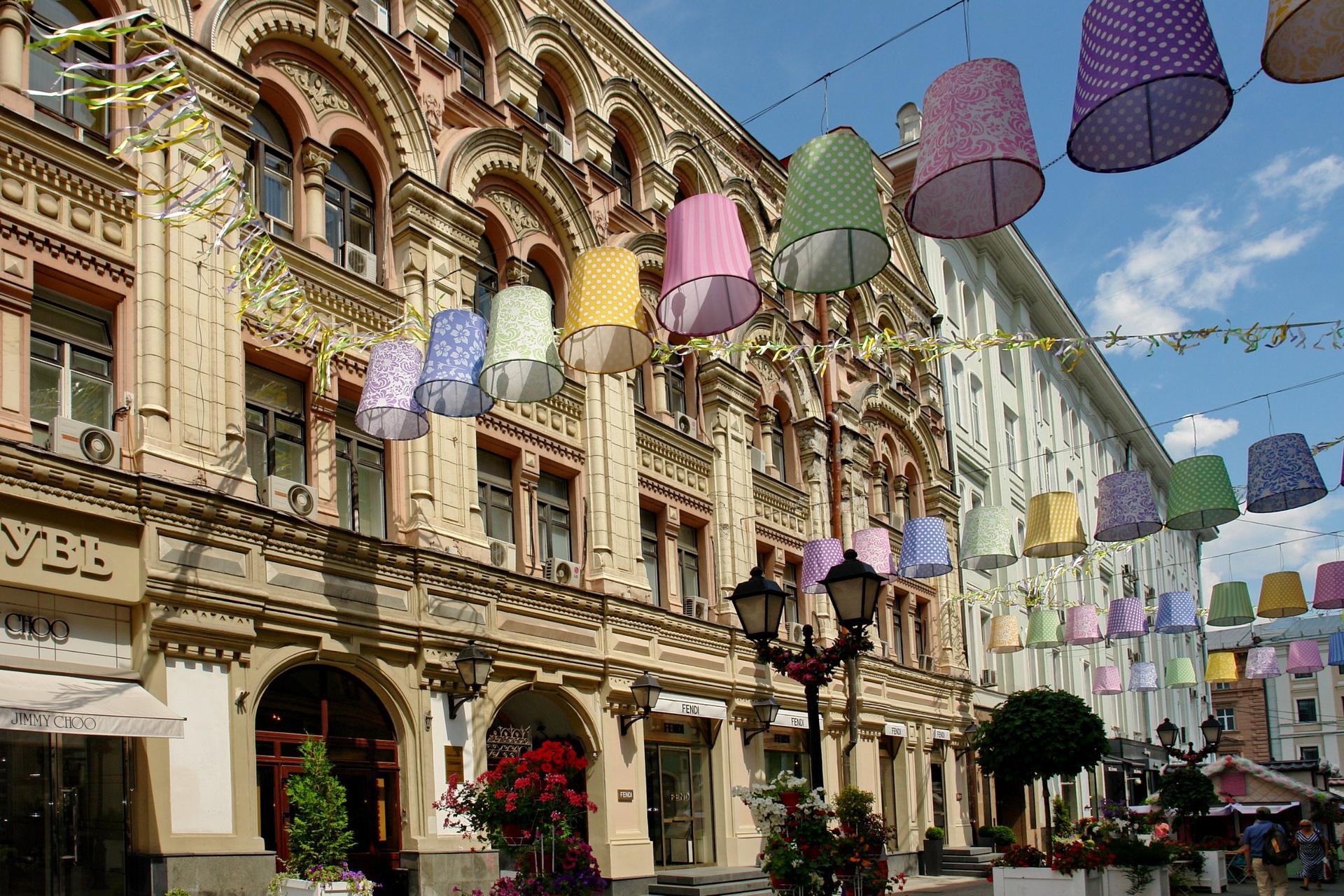
Это всегда была одна из основных московских торговых улиц.
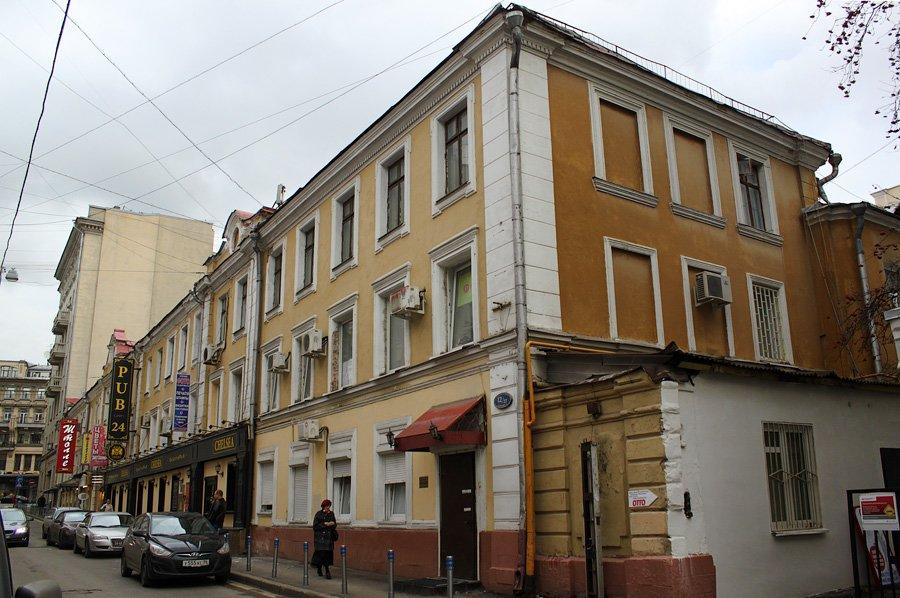
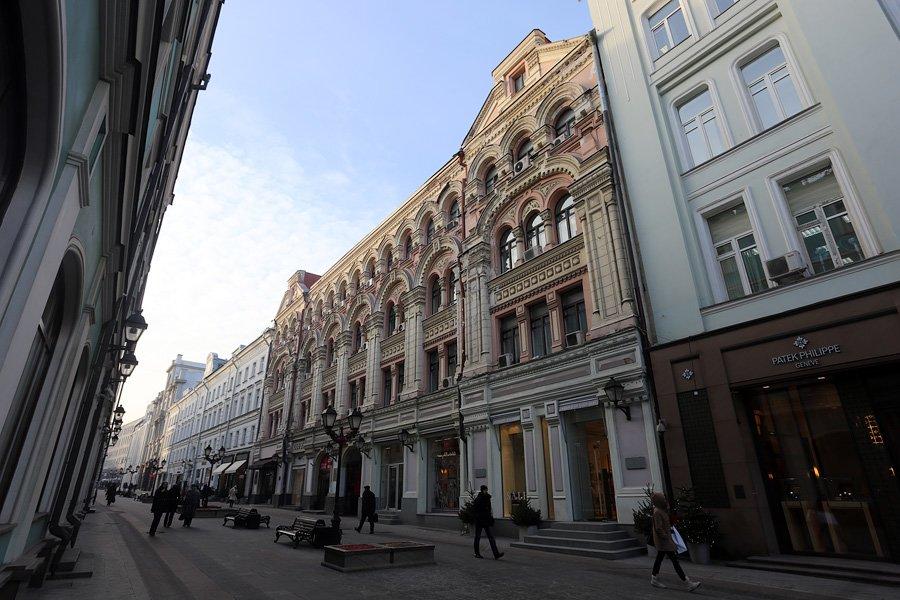
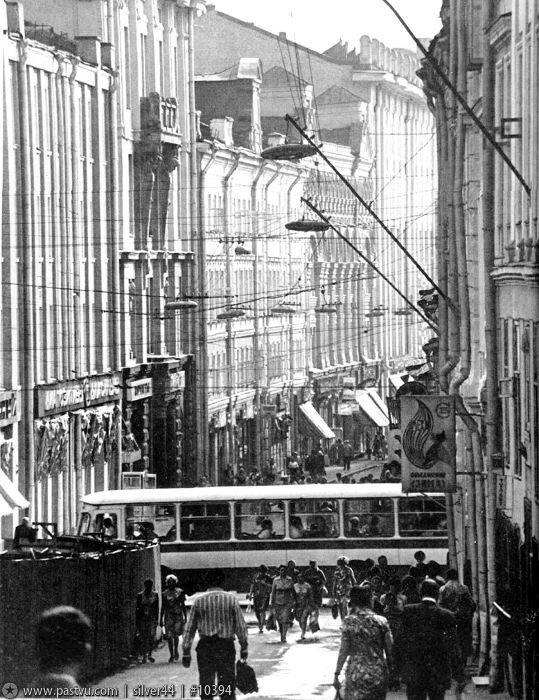
В начале XIX века Столешников переулок был застроен по большей части небольшими деревянными домами с магазинами и лавками в первых этажах. В пожар 1812 года улица выгорела и заново застраивалась уже, хотя по-прежнему, небольшими, но уже каменными домами. Все многоэтажные здания появились здесь только во второй половине XIX – начале ХХ столетий.
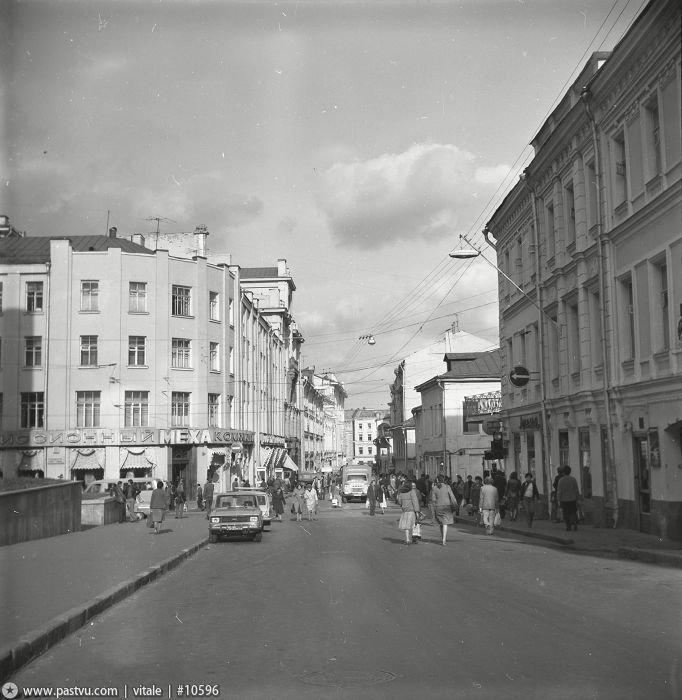
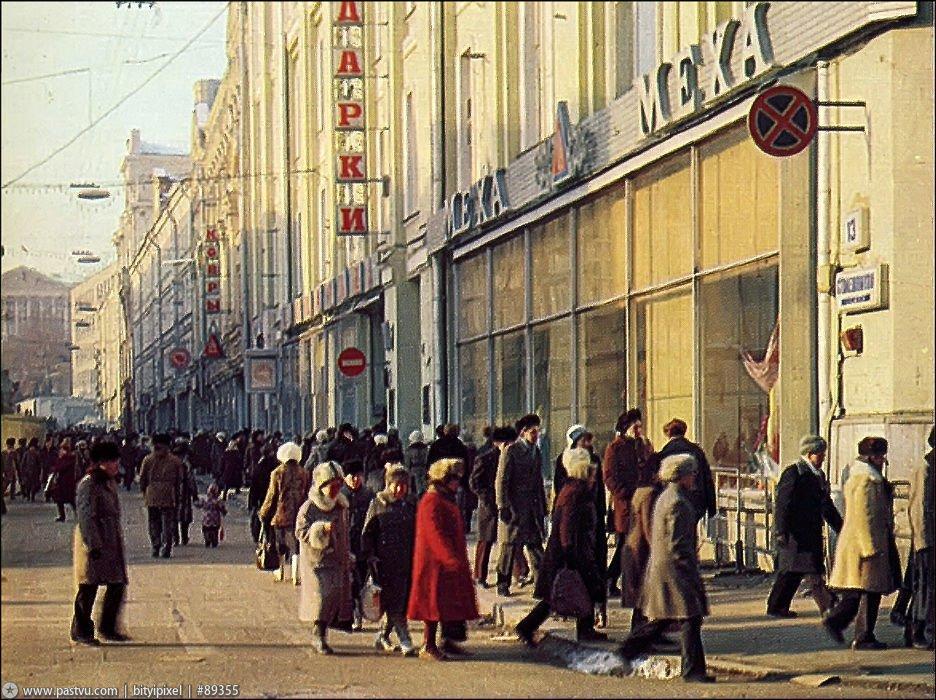
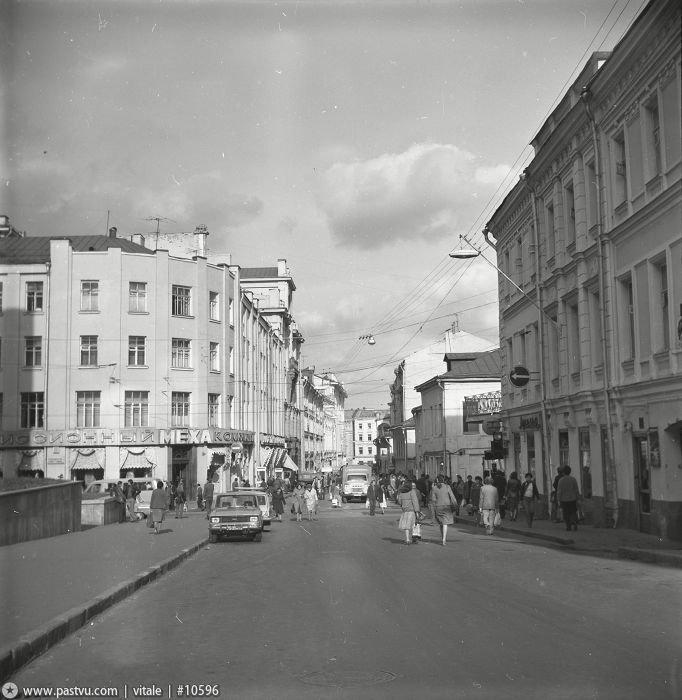
В советские годы Столешники сохранили свой торговый «статус». В переулке находилось немало магазинов, о которых старые москвичи вспоминают до сих пор. Это и знаменитый магазин «Торты», и букинистический магазин, и магазины «Меха», «Диафильмы», «Мужские сорочки», «Фрукты-Вино» и многие другие.
В 1920-е годы в состав Столешникова переулка был включён его нынешний начальный отрезок (от Тверской улицы до Большой Дмитровки), который ранее был самостоятельным Космодемьянским переулком, название своё получившим по сохранившемуся до наших дней храму святых Космы и Дамиана в Шубине (Столешников пер., д. 6)
Из утрат Столешников необходимо вспомнить дом, располагавшийся на углу с Большой Дмитровкой. На этом месте сейчас растут ёлки перед зданием бывшего института марксизма-ленинизма. В доме располагалась знаменитая типография С. Селивановского, чьи книги датируются с 1793 года. Здесь в 1827-1831 годах был напечатан один из лучших московских путеводителей того времени - четырёхтомная «Москва, или Исторический путеводитель...» И. Г. Гурьянова. Некоторое время в этом доме жил Н. М. Карамзин. Здание было снесено в начале 1970-х годов.
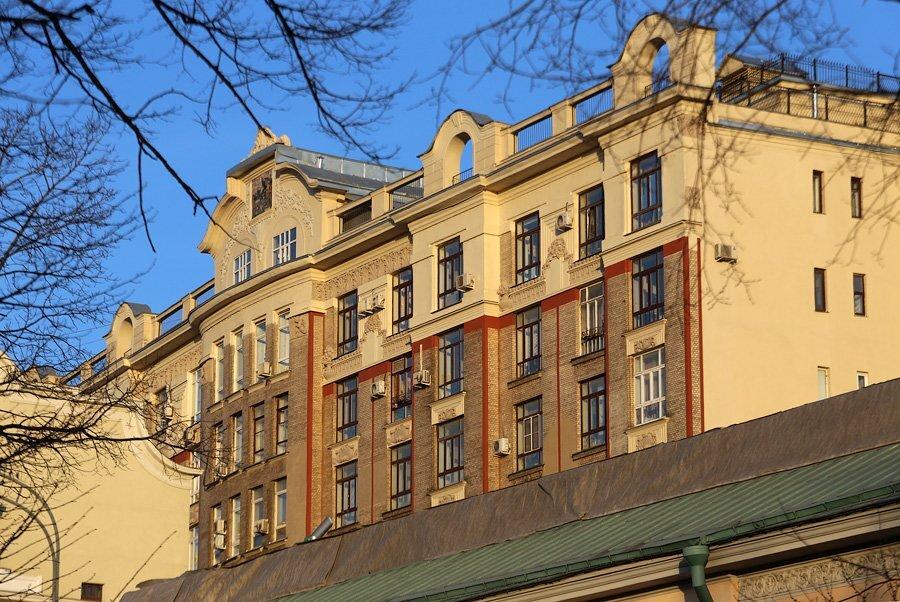
Из недавних утрат – дом № 8 по Столешникову переулку. На его месте сейчас отстроена архитектурная «реплика», примерно повторяющая формы прежнего, начала XIX столетия, здания. От старого дома сохранился только подвал, в котором до начала 1990-х годов располагался хорошо известный в Москве пивбар «Ладья», имевший неофициальное название «Яма». Также в 1997 году был уничтожен дом (№ 16) крестьянина А. Л. Васильева (1900-е годы, архитектор Л. Ф. Даукша). На его месте также появилась «реплика» с серьёзным изменением пропорций и добавлением новых деталей.
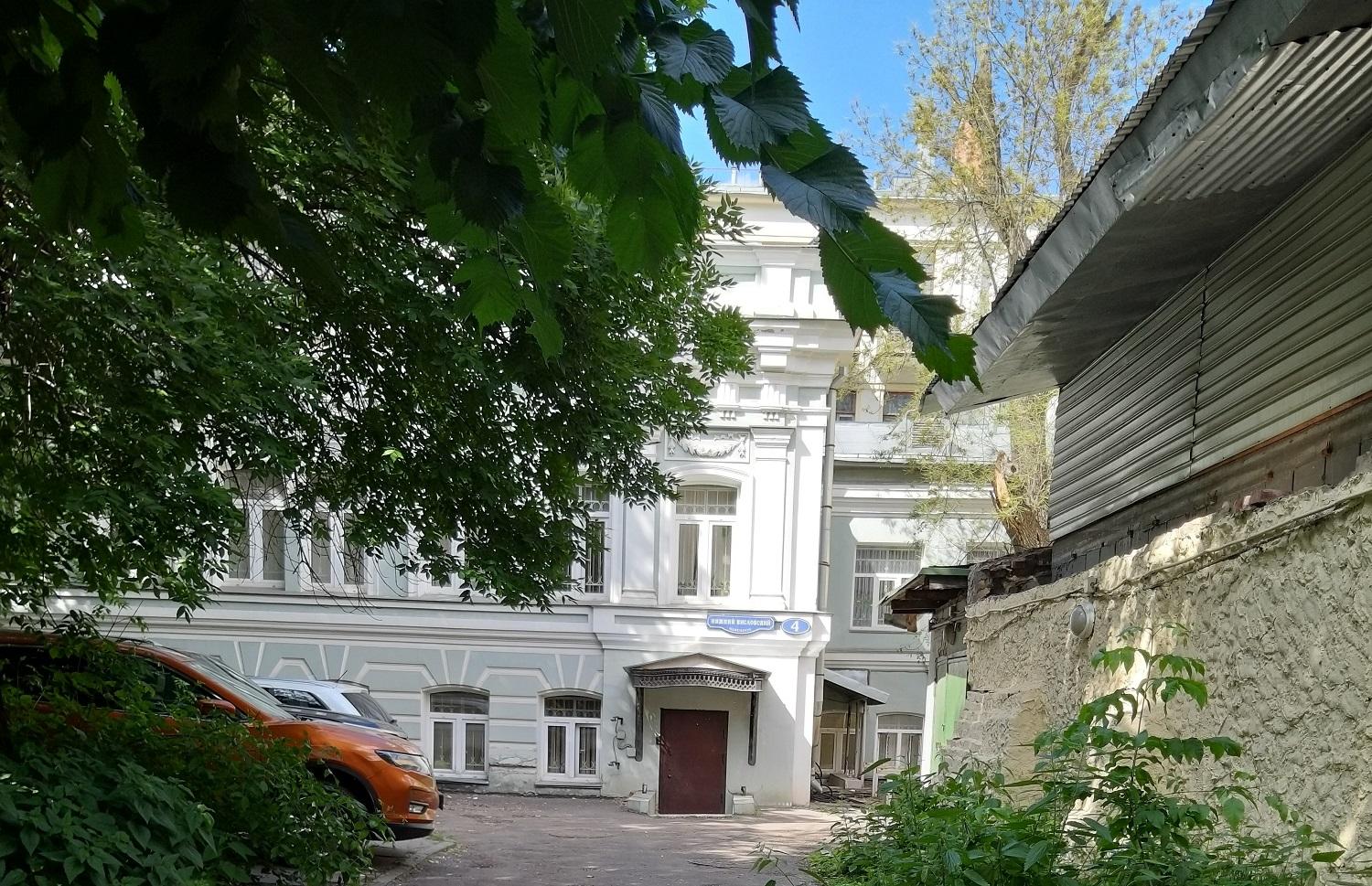
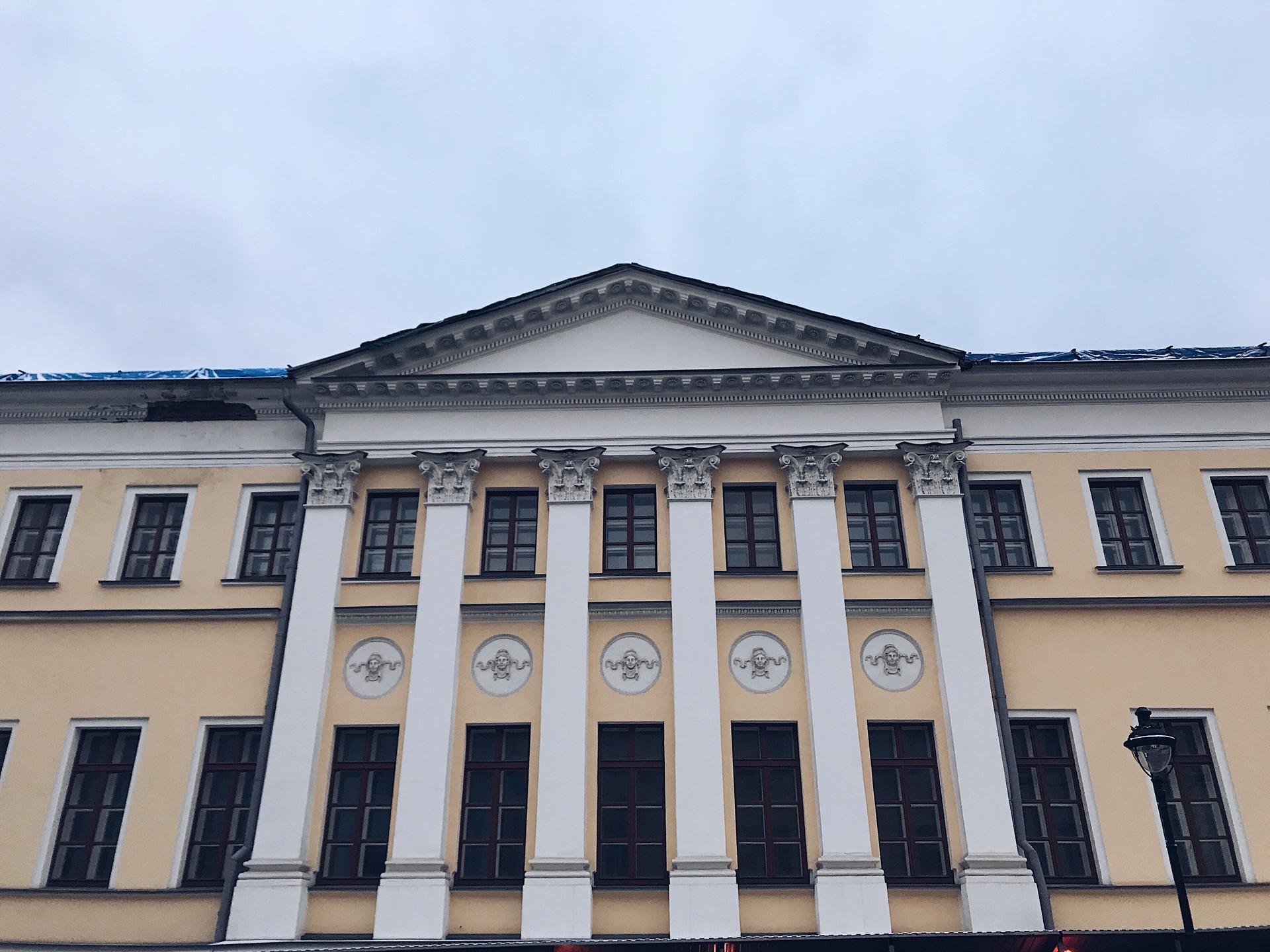
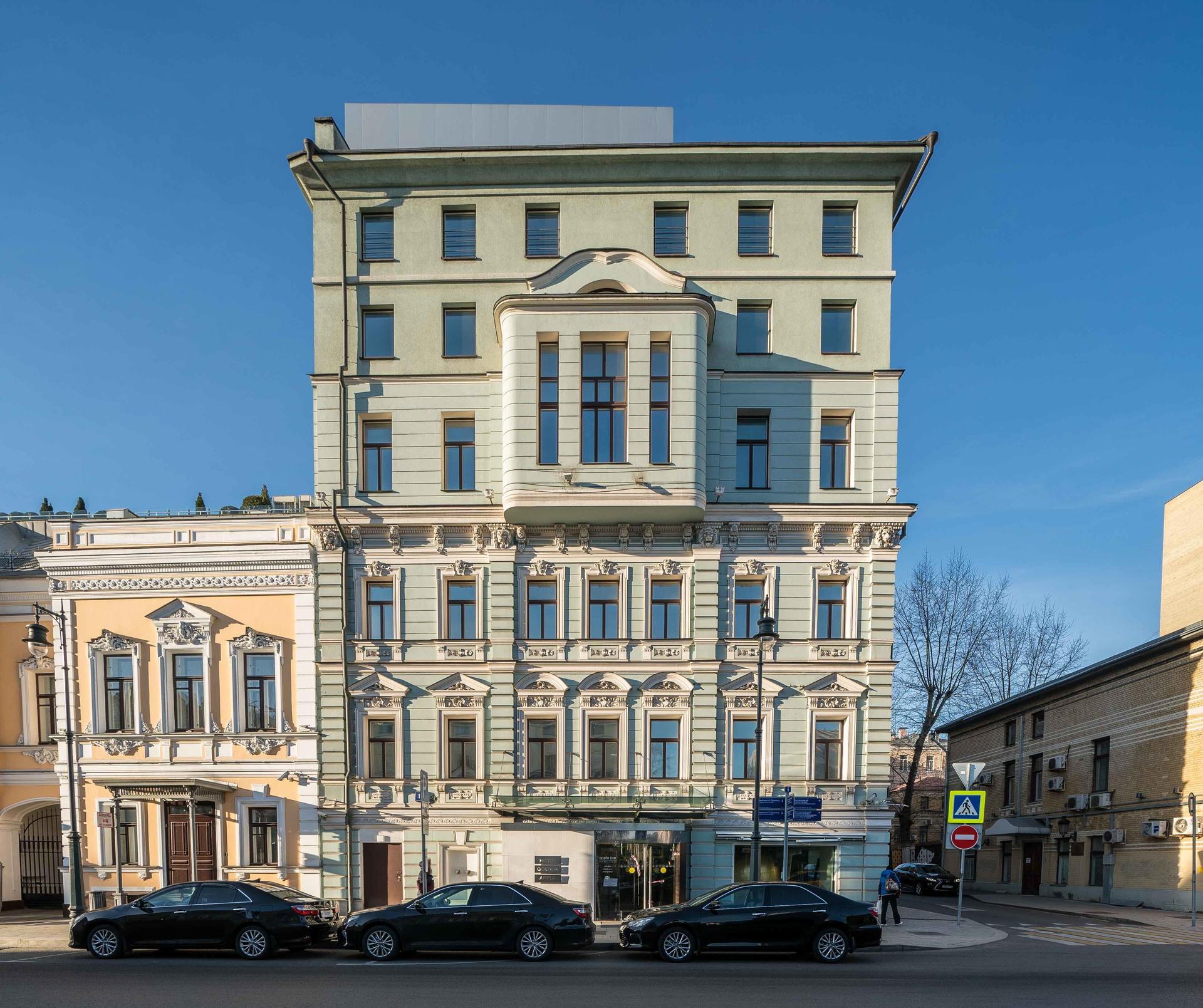
Вместе с тем в Столешниках сохранился целый ряд интереснейших памятников архитектуры и истории. К их числу относятся: палаты XVII века в Шубине (Столешников пер., д. 2/6), усадьба Кожиных (Столешников пер., д. 6), доходный дом с магазином Леве (Столешников пер., д. 7, стр. 1), дом Никифорова-Титовых (Столешников пер., д. 9), доходный дом купцов Карзинкиных (Столешников пер., д. 11), доходный дом А.С. Грачевой (Столешников пер., д. 15/13)
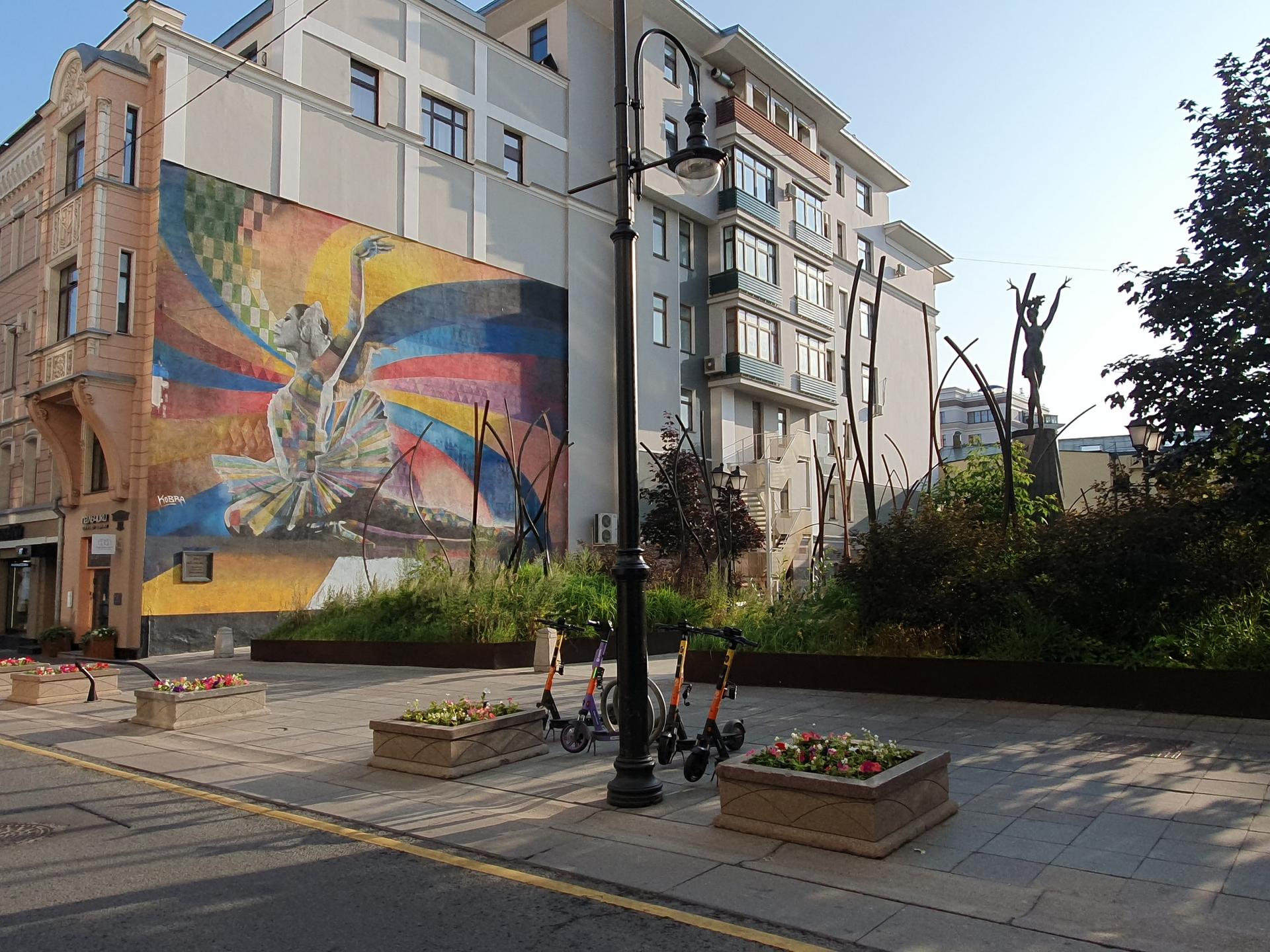
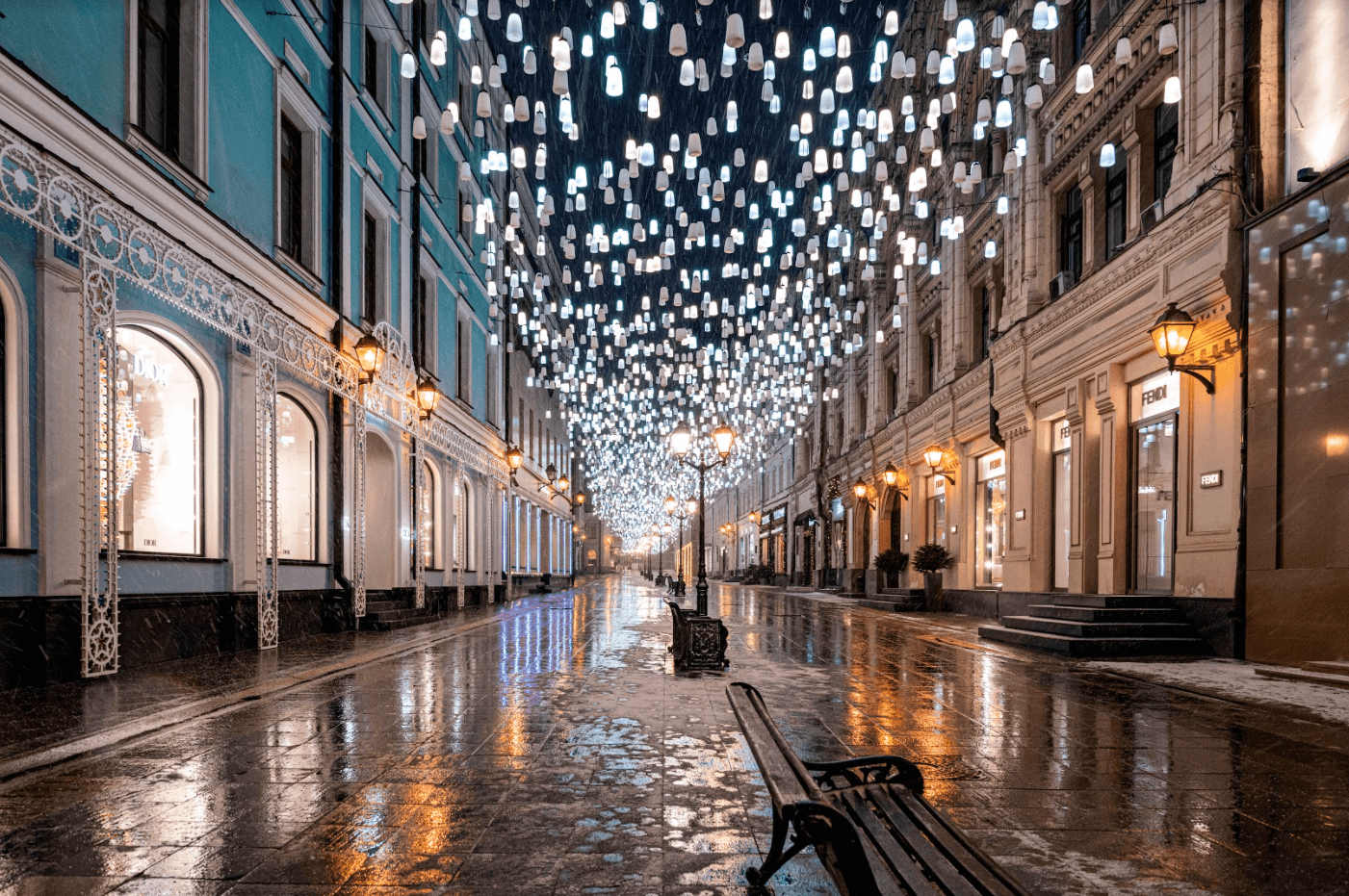
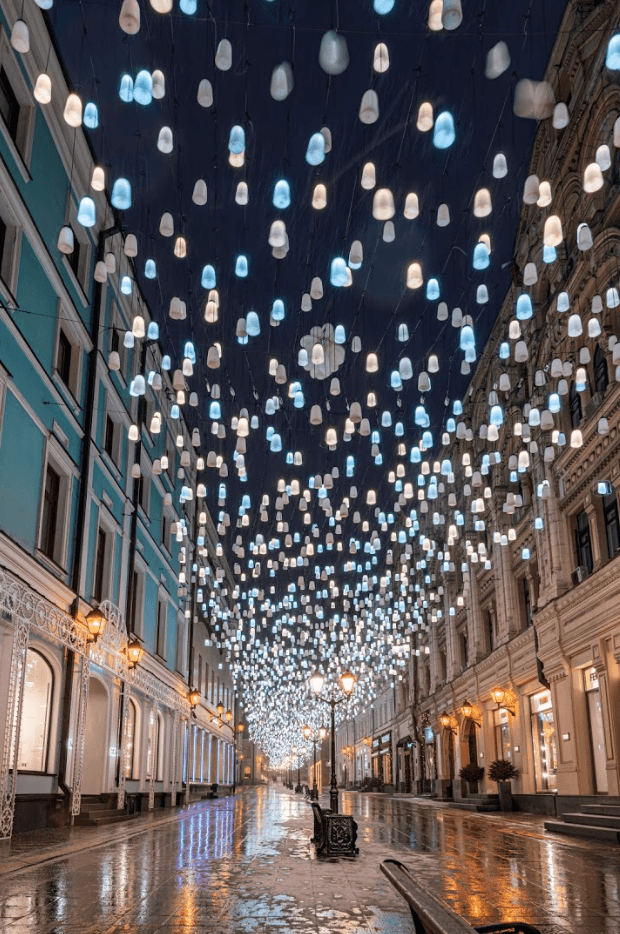
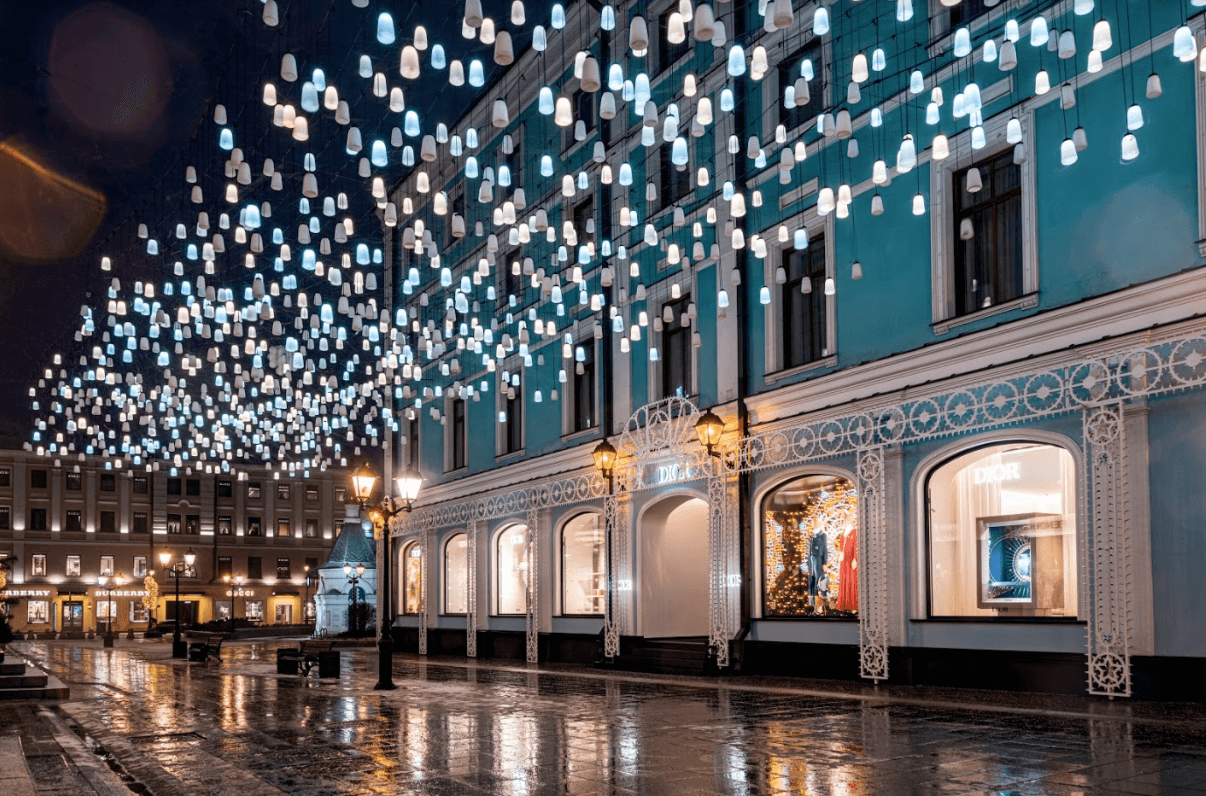
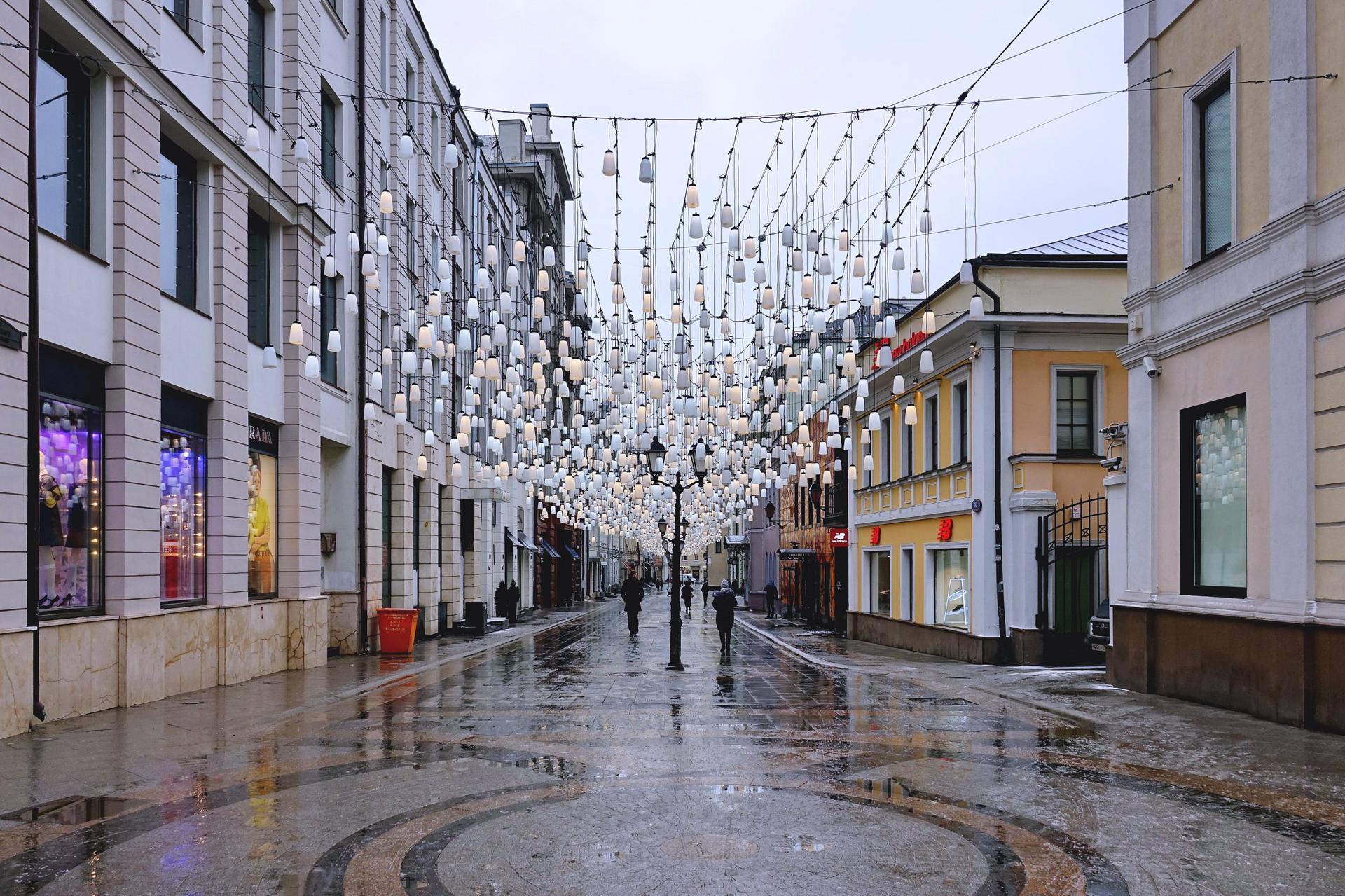
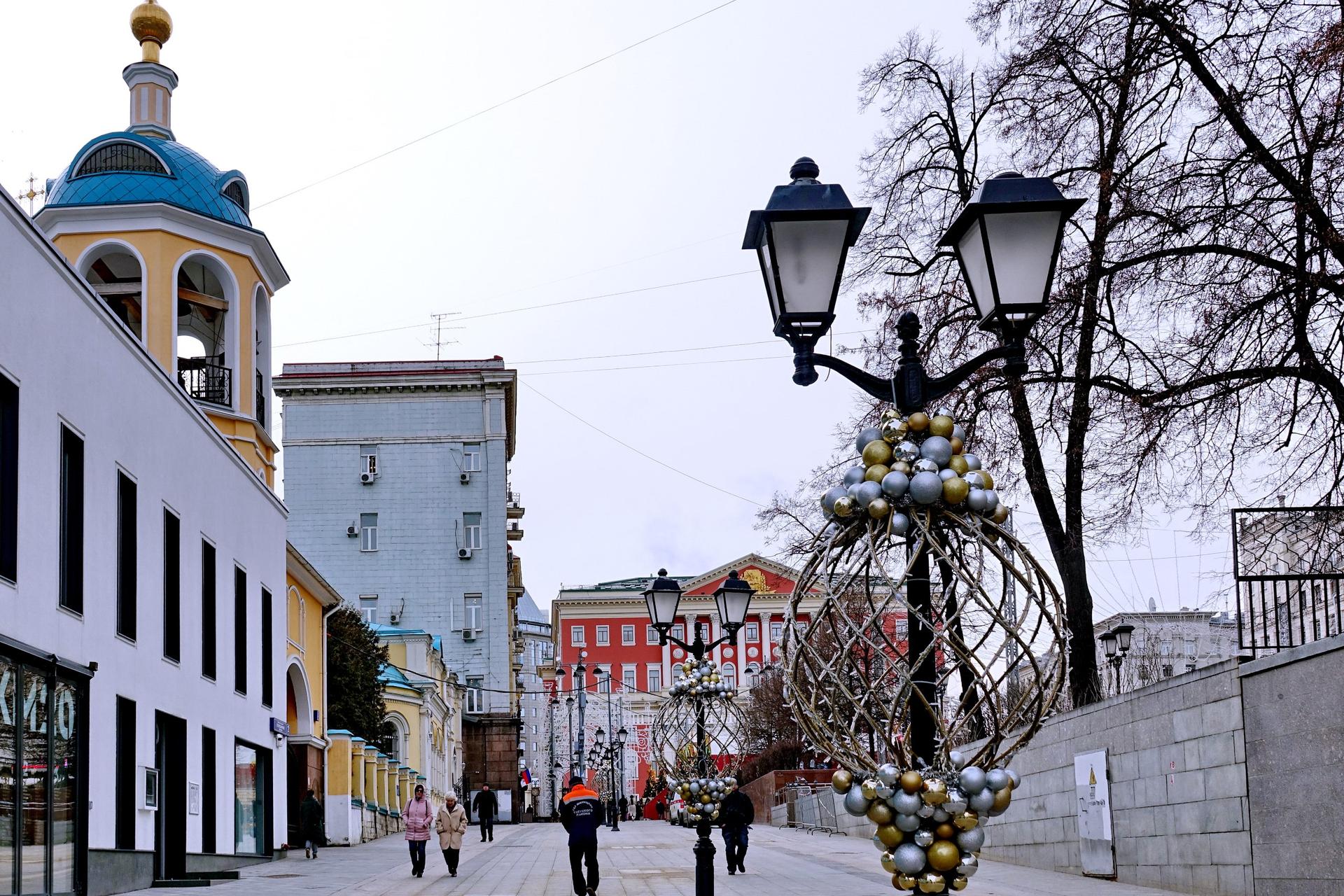
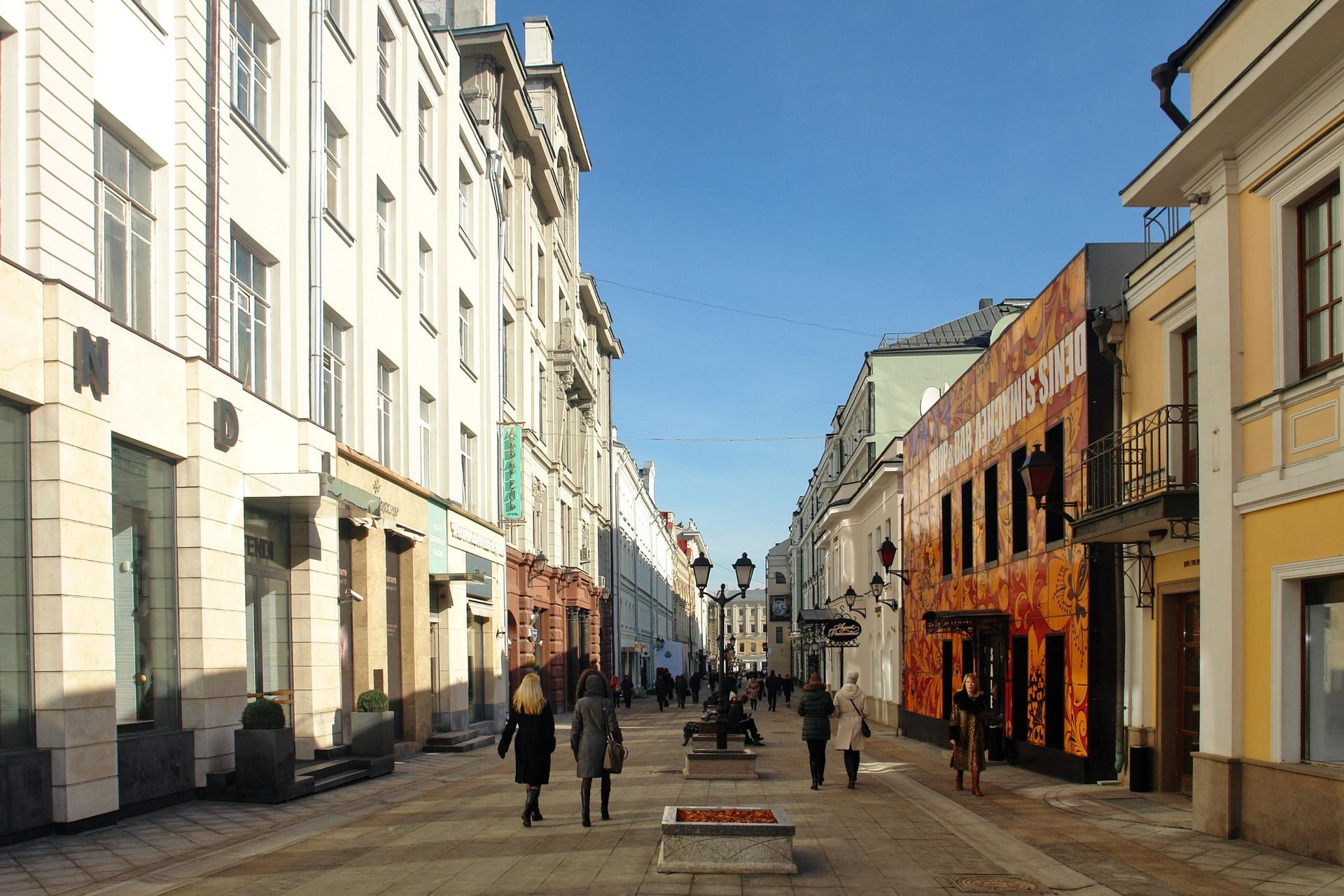
Совсем недавно Столешников переулок в рамках городской программы по комплексному обустройству исторического центра Москвы вошёл в состав пешеходной зоны, протянувшейся от Тверской улицы до Рождественки.
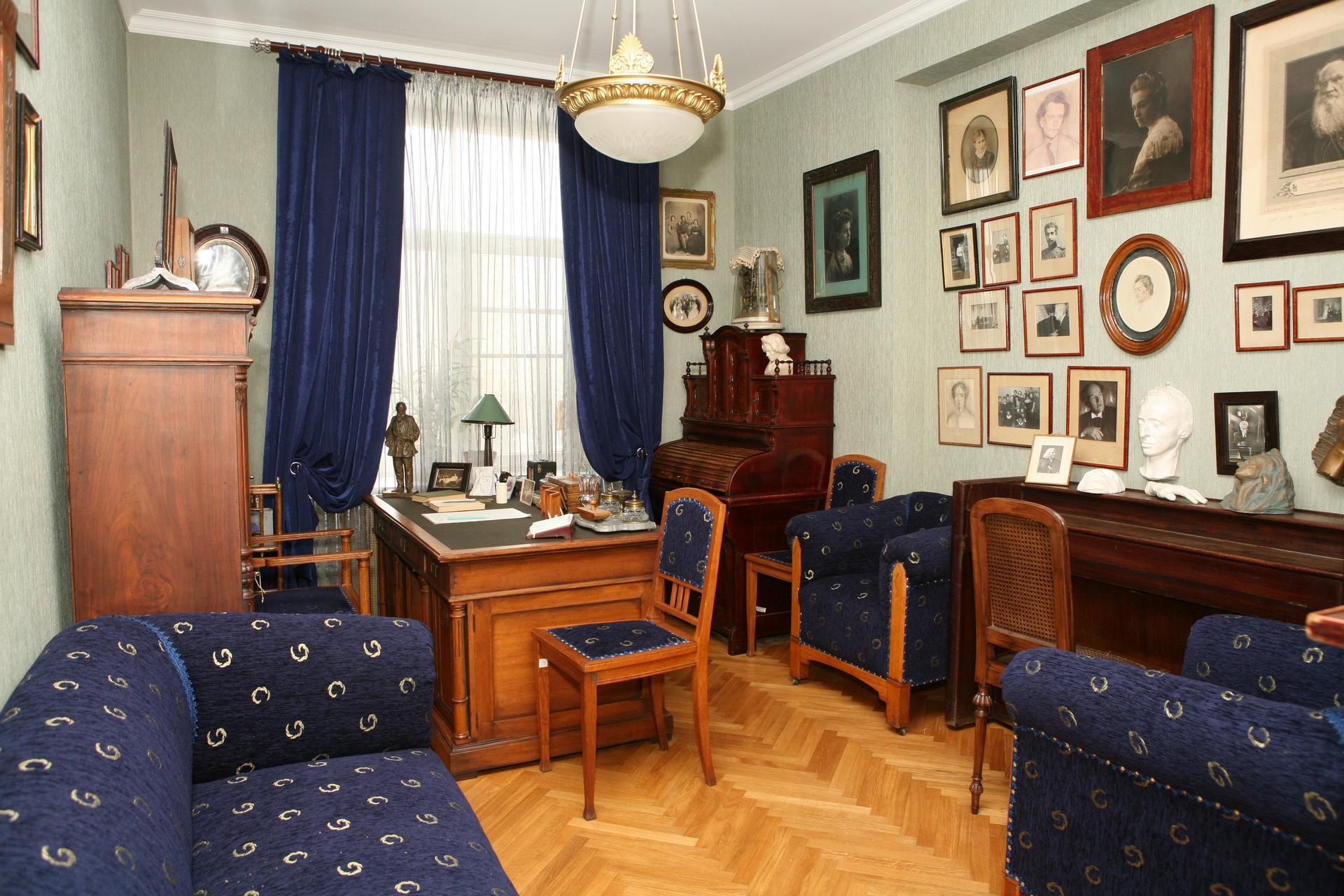
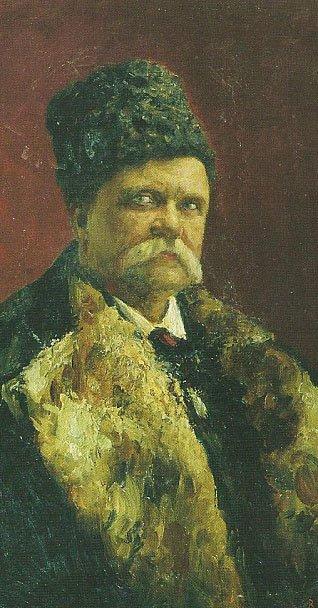
И, конечно, Столешников переулок – это переулок В. А. Гиляровского, в котором известный бытописатель Москвы прожил более полувека.
In the old days between the Big Dmitrovka and Petrovka located Christmas street got its name from the Church of the Nativity of the Blessed Virgin in Stoleshnikov. The church is located at the corner of Petrovka and has been known since 1620. In 1657 was built the stone five-domed church with a bell tower tent, which in view of the subsequent rearrangements survived until the early twentieth century. Alas, in 1927 the church was destroyed completely pointless, and in its place made a pad, mainly used as a parking lot. In 1997 this place was a memorial chapel Christmas. In the XVIII century sensible reasoning that two Christmas street, located very close to one another, confuse the Moscow toponymy, recalled the ancient settlement Stoleshnikov, was situated right next to Petrovka. Stoleshniki - weavers, tablecloths are made for the royal court. And streets with "low status" was renamed Stoleshnikov Lane. This has always been one of Moscow's main shopping streets. At the beginning of the XIX century Stoleshnikov lane was built up for the most part in small wooden houses with shops and stalls in the ground floor. In 1812 a fire burnt down the street and re-built up already, though still small, but stone houses. All high-rise buildings have appeared here only in the second half of XIX - early XX centuries. In Soviet times Stoleshniki kept their trading "status". In the alley was a lot of shops, of which the old Muscovites still remember. This famous shop "Pies" and second-hand bookshop, and shops "Fur", "filmstrips", "Men's shirts", "Fruit Wine" and many others. In the 1920s in the Stoleshnikov Lane was included his current initial segment (from Tverskaya Street to the Great Dmitrovka), which was previously an independent Kosmodem'yanskii lane, his name got on the preserved to this day the church of Saints Cosmas and Damian in Shubin [http: / /um.mos.ru/houses/3909/] (Stoleshnikov per., d. 6) Of the losses Stoleshnikov is necessary to recall the house, which was located on the corner of Bolshaya Dmitrovka. At this place now grow trees in front of the former Institute of Marxism-Leninism. The house is the famous typography S. Selivanovsky whose books are dated 1793. Here in the years 1827-1831 was published one of the best guides in Moscow at the time - four-volume "Moscow, or Historical Guide ..." IG Guryanova. Some time in this house lived NM Karamzin. The building was demolished in the early 1970s. Recent losses - the house number 8 on Stoleshnikov. In its place now rebuilt architectural "replica", roughly follows the shape of the former, early XIX century building. The old house is preserved only the cellar in which to start the 1990s, has a well-known pub in Moscow "Boat", which had the unofficial name "The Pit". Also in 1997, the house was destroyed (№ 16) peasant AL Vasiliev (1900s, architect LF Dauksha). In its place appeared as "replica" with a serious change in proportions and adding new details. However, Stoleshnikov is a number of interesting monuments of architecture and history. These include: the Chamber of XVII century in Shubin (Stoleshnikov per., D. 2/6), manor Kozhina [http://um.mos.ru/houses/usadba_kozhinykh/] (Stoleshnikov per., D. 6) apartment building with a shop leve [http://um.mos.ru/houses/dokhodnyy_dom_s_magazinom_leve/] (Stoleshnikov per., d. 7, p. 1), house-Nikiforov Titov (Stoleshnikov per., d. 9), income House merchants Karzinkin [http://um.mos.ru/houses/dom_karzinkina/] (Stoleshnikov lane., d. 11), an apartment house AS Gracheva [http://um.mos.ru/houses/dokhodnyy_dom_a_s_grachevoy/] (Stoleshnikov per., D. 15/13) Most recently, Stoleshnikov lane under the city program for integrated development of the historical center of Moscow became a part of the pedestrian zone, stretching from Tverskaya Street to Rozhdestvenka. And, of course, Stoleshnikov lane - the lane is Gilyarovskii [http://um.mos.ru/personalities/9871/], in which the famous chronicler of Moscow lived for more than half a century.